


The Big Picture |

- Spiegel: The Destructive Power of the Financial Markets
- Marc Faber: S&P won’t surpass 2011 high of 1,370
- Tuesday Afternoon Earthquake Reads
- Stephen Roach: Consumers need debt jubilee
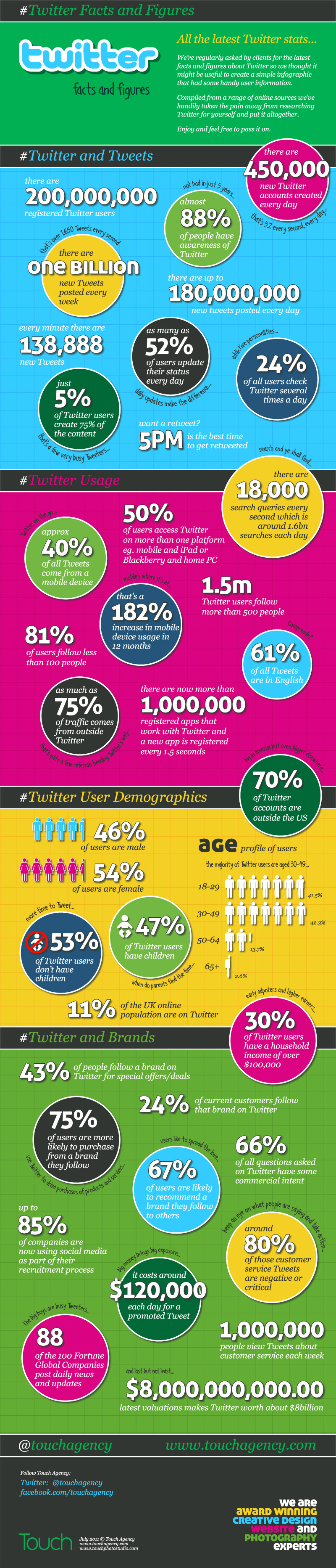
- Twitter Facts and Figures
- Bank of America Credit Spread: FUGLY
- Swiss Climber scales mountains with just pickaxes!
- Federal Reserve Emergency Loans: Liquidity for Banks
- Rosie on Recession II
- 10 Tuesday AM Reads
| Spiegel: The Destructive Power of the Financial Markets Posted: 24 Aug 2011 02:09 AM PDT Nasty article in Der Spiegel, Out of Control: The Destructive Power of the Financial Markets, which helps explain what's behind the financial transactions tax that was recently introduced by Angela Merkel and Nicolas Sarkozy. The article opens,
The vitriol for hedge fund types is ubiquitous, but there is also a some truth in the article, especially on regulatory issues. Swedish Finance Minister Anders Borg refers to people like Taylor as "like a pack of wolves." New York Governor Andrew Cuomo even gets into the mix as once likening short-sellers to "looters after a hurricane." Here are some more money quotes from the piece, which is well worth your time:
>
(click here if charts are not observable) |
| Marc Faber: S&P won’t surpass 2011 high of 1,370 Posted: 23 Aug 2011 03:52 PM PDT Marc Faber, publisher of the Gloom, Boom & Doom report, appeared on Bloomberg Television's "Street Smart" with Carol Massar and Matt Miller today. Speaking from Sao Paolo, Brazil, Faber said that the S&P won’t surpass the 2011 high of 1,370 and that investors are “better off in equities than bonds.” Faber also said that keeping money in cash in 10-Years is a “disaster.” ~~~
Faber on whether this is the market rally he's been expecting: “We had rally from the low on the ninth of August at 1,101 on the S&P to almost 1,200. Then we came right down again. Basically we did not make new lows. And now I think we can rally again for a while.” Faber on how long his view of the market is: "I think a lot of people will say the markets formed a double low and we have some technical indicators that are going to turn positive, so we could rally around 1,250, but as I said before, for me, we reached a high on May 2, 2011. 1,370 on the S&P–that we will not go through. My view is you have a lot of people with strategies that are very bullish. They have a yearend target of around 1,400-1,450 on the S&P. Then you have the super bear. I think both camps will be disappointed.” On why the markets won't come back down again to the lows that were hit in 2009: “On fundamentals one could make the case that we could go lower to around March 2009 lows at 666 on the S&P. But I think we have to be realistic that if the market dropped here another 10% or 15%, there would be for sure another quantitative easing move and other measures taken to support asset prices.” On what we'll hear from Bernanke on Friday and whether there will be a selloff of Treasures after that: “I think what [Bernanke] will say is that they are monitoring the situation, and they will take 'appropriate measures' when they are required. To some extent we are in midst of QE3 already, because by announcing the Fed will keep zero interest rates until the middle of 2013, they basically encourage financial institutions to borrow short-term and to buy 10-year Treasuries.” On how uncertainty on a global level is affecting the markets: “What I see extremely well is the stock market has traced out a major high between November of last year and June of this year and then fell sharply with very strong momentum and conviction very rapidly by close to 20%. I think that is a very important signal that we should not overlook. I think new highs are practically out of the question for the next six months to one year. We will likely move lower, but as I said, I do not think we will have a complete collapse.” On why he's not more bearish: “I agree with you. I am the greatest bear on earth, but if you compare Treasury bond yields and equities, equities look reasonably attractive. I think we will have zero and below zero interest rates for the next 10 years. In other words, inflation adjusted to keep money in cash. Finally, the mood is so negative right now as a contrarian, you do not take a huge short position when people are as bearish as they are right now and when insider buying has picked up as much. I am as bearish as the greatest bear is. It is just that I do not believe stocks will implode.” On insider buying: “The insider buying has picked up, but there is still a lot of insider selling. Compared to all the selling in the last six months the buying is relatively muted. The insiders in general are a group of people against whom I would not bet against necessarily. All I am saying is I am very bearish. I think we will have inflation. I think the Treasury market is a disaster waiting to happen. I think the economy will slow down. They're going to print money and we will go to war at some stage somewhere. So, you are probably better off in equities than in bonds. My favorite investment remains gold. As it happens the gold price is coming down, and I hope it will drop $100 or $200. Not necessarily a prediction. I think we will go down in a correction because there has been too much enthusiasm recently.” Faber commenting on Gary Schilling’s bet against copper: “I have known Gary Schilling since 1970 when we worked together. He has been a frequent bear about commodities and about copper. I happen to think copper is likely to come down, but I would not bet too heavily on it, because it takes a long time to bring on additional copper mines. Unless the Chinese economy collapses, the demand for copper will stay relatively high. If the Chinese economy collapses and Jim Chanos is right, then you want to be short not only copper, but short everything.” Faber where the 10-Year will go: “I would like to remind you that the 10-year has made a new low. [Gluskin Sheff economist] David Rosenberg was right and I was wrong. The 30-Year has not made a new low. The low in December 2008 was 2.53%. Now we’re around 3.4%. Basically we have an artificial market. The Fed has said we guarantee next to zero interest rates for the next two years. Banks and financial institutions are pouring into the 10-year because of the low rates at the present time. ” # # # |
| Tuesday Afternoon Earthquake Reads Posted: 23 Aug 2011 01:15 PM PDT My afternoon reading material:
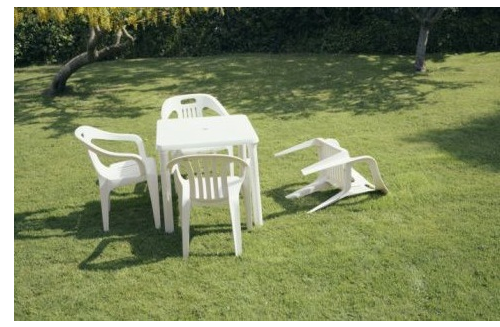
What are you reading? > Devastation from East Coast 5.9 Earthquake |
| Stephen Roach: Consumers need debt jubilee Posted: 23 Aug 2011 12:00 PM PDT Source: |
| Posted: 23 Aug 2011 11:30 AM PDT |
| Bank of America Credit Spread: FUGLY Posted: 23 Aug 2011 09:30 AM PDT This is pretty damned FUGLY: Click for larger graphic > Mark Gongloff explains the pain:
> > Source: |
| Swiss Climber scales mountains with just pickaxes! Posted: 23 Aug 2011 08:56 AM PDT |
| Federal Reserve Emergency Loans: Liquidity for Banks Posted: 23 Aug 2011 08:43 AM PDT Nice interactive graphic from Bloomberg regarding the Emergency loans made by the Fed (see yesterday’s discussion here). > Click for interactive graphic: |
| Posted: 23 Aug 2011 06:45 AM PDT Overview on Rosenberg’s points from Reformed Broker: * We are already in recession, and while this one may last awhile, there is no evidence to support claims that this recession will be as catastrophic as the one that began in 2007 (I’ve been saying this for a month now). * Both gold and Treasurys have more room to run, but tactically-speaking, buyers should hold off at today’s prices as both are overdue for a short-term pullback. * There’s no reason to be completely out of equities, but one should be underweight the amount of equities they’d own in a cyclical bull market, which this assuredly is not (this mirrors exactly what we’ve done with the stock weightings in the portfolios we’re managing). * The equities you do own ought to be defensive in nature and not cyclical, they should have good earnings visibility and solid dividends (again, he may as well have been talking my book precisely). * The best type of stimulus the government could do would be something tied to energy. Natural gas infrastructure build-out for example would put legions of Americans to work and could eventually lead to much lower energy prices for consumers leading to a higher amount of disposable income (long time readers are aware of my nat gas vehicle obsession). |
| Posted: 23 Aug 2011 06:35 AM PDT This is what I am reading this morning:
What are you reading? >
|




| You are subscribed to email updates from The Big Picture To stop receiving these emails, you may unsubscribe now. | Email delivery powered by Google |
| Google Inc., 20 West Kinzie, Chicago IL USA 60610 | |



0 comments:
Post a Comment