


The Big Picture |

- Preparing for Battle: More Costly Disasters to Come
- Counterparties
- PBS Newshour: Interconnection of U.S., European Markets Adds to Investors’ Fears
- 10 Tuesday Late Afternoon Reads
- FBR’s Paul Miller, Banking’s Latest Cheerleader
- Global Market Review: Dax, Nikkei
- Long Overdue: BofA to Spin Out Merrill?
- Aston Martin V12 Zagato
- Massive Employment Chartfest
- ISM services surprises to upside
| Preparing for Battle: More Costly Disasters to Come Posted: 06 Sep 2011 10:30 PM PDT Preparing for Battle: More Costly Disasters to Come ~~~ The world has entered a new era of catastrophes. Economic losses from hurricanes, earthquakes and tsunamis, floods, and other natural disasters increased from $528 billion (1981-1990) to more than $1.2 trillion over the period 2001-2010. The March 9.0 earthquake and massive tsunami in Japan alone caused hundreds of billions of dollars of direct and indirect costs. It has affected the Japanese macroeconomic forecast and the departure of the then-prime minister. The year before, massive earthquakes in Haiti, Chile, and New Zealand inflicted historic human and financial losses as well. Despite being the richest country in the world, America is still highly vulnerable to natural disasters. Two principal socio-economic factors directly influence the level of economic losses due to catastrophe events: exposed population and value at risk. Take Florida. It has seen its population increase from 2.8 million inhabitants in 1950 to 18.8 million in 2010 (+570%). Increased population and development means an increased likelihood of severe economic and insured losses in Florida and other hurricane-prone regions, unless cost-effective mitigation measures are implemented and the risk properly hedged. So when an earthquake occurred on the East Coast, followed by Hurricane Irene, those of us who have been tracking extreme events for years knew what would likely happen. First, the Administration would have learned the lessons from the 2005 Hurricane Katrina debacle. Evacuation would have to be required and enforced; the President, the heads of FEMA and DHS, along with local, state, and federal officials in charge of disaster management, would have to be on the front line very early; having true professionals would matter a great deal. Further, this effort and a well-articulated crisis-management strategy would have to be relayed by leading media and explained clearly. That is the way it happened; following these steps has saved numerous lives. I would say, though, that the fact that the hurricane eventually weakened and hit the Northeast during a weekend helped tremendously. This could have been much worse. For instance, evacuating part of New York City on a Wednesday and Thursday with everybody at work would have been much more complicated. Second, after the rescue effort, the time would soon come to evaluate the losses and ask the hard question: who will pay for these losses? Well, who should pay for them? While Irene caused significant wind losses in the Carolinas, a majority of the losses in the Northeast will be flood-related. Already, a political debate has started as to whether victims should receive federal disaster aid, how much, and how to make this unbudgeted spending fiscally neutral. From past experience, as emotion run high, it will be very hard for elected officials, Republicans and Democrats alike, not to help their fellow citizens whose homes have been devastated by water. As a matter of fact, my colleague Howard Kunreuther and I showed in an article published this summer in Science that over the period 1950-2010, two-thirds of all Presidential disaster declarations were flood-related. So you can count on it: disaster relief to flood victims will be forthcoming this time, too. But the debate about disaster relief misses an important fact: flood risk can be insured. Typical homeowner's insurance covers wind damage but excludes flood losses. Still, homeowners can obtain flood coverage from the federally run National Flood Insurance Program (NFIP), up to $250,000 (building and contents) and with a deductible as low as $500. Many large insurers (yours too, most likely) sell NFIP policies on behalf of the federal government and assess flood claims in exchange for receiving government fees. This program has grown significantly in recent years and provides insurance to 5.3 million policyholders, rich and poor, across the country today. The program now covers more than $1.2 trillion in assets (a 250% increase since 1990, corrected for inflation). Not a small program… Because public insurance is offered by the federal government (which does not face additional expenses that private insurance companies would, like cost of capital, return to shareholders, taxes), its cost is relatively cheap (on average $50/month). Still, as shown by our research at the Wharton Risk Center, many people don't buy flood insurance, and many of those who purchase it don't keep it for long. In the Louisiana parishes affected by Hurricane Katrina in 2005, the percentage of homeowners with flood insurance ranged from 57.7 percent in St. Bernard Parish to 7.3 percent in Tangipahoa when the hurricane hit. Only 40 percent of the residents in Orleans Parish had flood insurance. I hope Irene will show a different picture, but I would not bet on it. We also recently did the first-ever study of flood insurance tenure (the number of years that people keep their flood insurance policy before letting it lapse). Our analysis of the entire NFIP portfolio over the period 2001–2009 reveals that the median tenure of new policies during that time was only three years. Many people buy flood insurance when they buy a new house (because the bank requires flood insurance proof to authorize a federally backed mortgage if the residence is in a floodplain), but they cancel it fairly soon after. Then, they suffer a flood and regret not having kept that coverage. And don't think this behavior is specific to flood. Ninety-one percent of Californians do not have earthquake insurance today. The state is virtually bankrupted, so I forecast that all of us as taxpayers will pay when the Big One hits California. Now, you are warned! Where to go? Several prime ministers, presidents and other world leaders have now put this question of management and financing of extreme events on their agenda. Many more executive boards are doing so, too, trying to figure out how best to act strategically to protect their firms' assets and create new products to hedge catastrophe risk. To me, it's a matter of national interest. It's also a matter of good governance and competitiveness. Unless we start to get serious about making the country more resilient to natural disasters (by limiting the amount of new construction in high-risk areas, and by making sure people and firms in those areas have proper financial coverage to assure they can get back on their feet very quickly, thus reducing the need for taxpayers to pay), we won't be prepared for what the 21st century has in store for us disaster-wise. Without quite realizing it yet, America is at war against the weather. Irene is just the latest battle. More will soon follow. Erwann is a member of and occasional speaker for the Global Interdependence Center and a personal friend. We thank Erwann for sharing his post-Irene thoughts with our readers. -David R. Kotok, Chairman and Chief Investment Officer ~~~ Erwann Michel-Kerjan is an authority on managing and financing extreme events. He teaches Value Creation in the Wharton School MBA program and is the Managing Director of the Wharton Risk Management Center. Since 2008 he has served as Chairman of the OECD Secretary-General Board on Financial Management of Catastrophes. He is the author of several acclaimed books, including The Irrational Economist (with P. Slovic) and At War with the Weather (with H. Kunreuther), which received this year's prestigious Kulp-Wright Award for the most important contribution in the field of risk management and insurance.
More at erwannmichelkerjan.com |
| Posted: 06 Sep 2011 08:20 PM PDT Kudos to Felix and Ryan — the Counterparties site looks great. I don’t know if the world needs another MSM curator — they are competing with NYT’s Dealbook, FT’s Alphaville, and WSJ’s MarketBeat — but it looks like a legitimate competitor in the space. >
|
| PBS Newshour: Interconnection of U.S., European Markets Adds to Investors’ Fears Posted: 06 Sep 2011 06:44 PM PDT Here is my appearance on PBS Newshour:
Watch the full episode. See more PBS NewsHour. Full transcript here |
| 10 Tuesday Late Afternoon Reads Posted: 06 Sep 2011 01:30 PM PDT Afternoon reads:
What are you reading? >
|
| FBR’s Paul Miller, Banking’s Latest Cheerleader Posted: 06 Sep 2011 11:28 AM PDT Today’s Dick Bove wannabe is the once respected Paul Miller of FBR Capital Markets & Co. In a note to clients that revealed a stunning ignorance of fiduciary and legal obligations, Miller said FHA, FHFA, and GSEs were “acting in their own self-interest as opposed to that of the broader U.S. economy.” The details of the note was reported on by Bloomberg. Banking analyst Chris Whalen critiqued the position, stating, “Miller has gone to the dark side. Things are looking so bad for BAC, that Miller is starting to actually sound like a sell side analyst.” Whalen said that despite receiving billions in bailouts, the large public banks may be required to undergo major restructuring eventually. If MBIA and/or GSEs win in court, it could force the issue. Whalen added “Rather than doing this piecemeal through litigation, we should use the power of receivership to organize this process, treating all banks fairly.” Here’s Bloomberg:
Its a race to the bottom between European and American banks, with analyst integrity the collateral damage of the pending financial rout . . . > Source: |
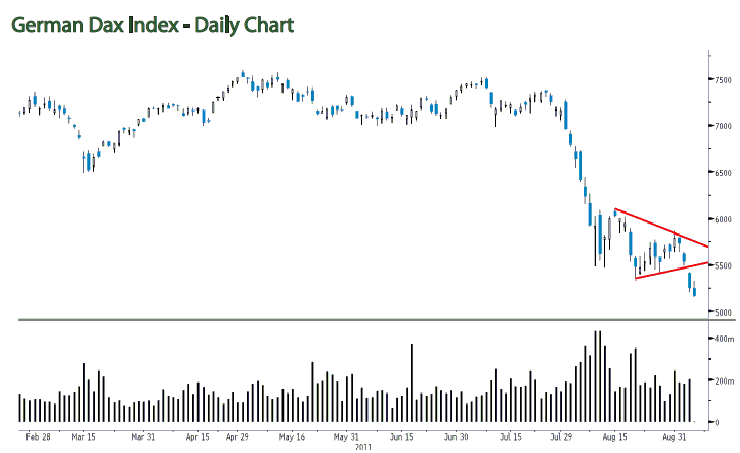
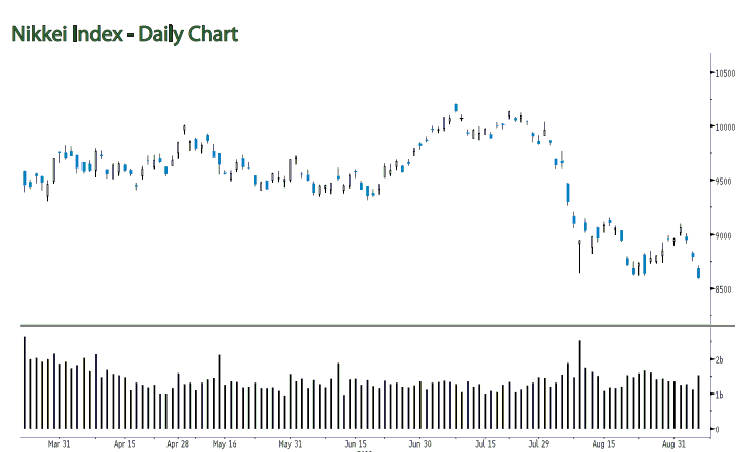
| Global Market Review: Dax, Nikkei Posted: 06 Sep 2011 09:46 AM PDT
> Kevin Lane of FusionIQ writes:
|
| Long Overdue: BofA to Spin Out Merrill? Posted: 06 Sep 2011 09:37 AM PDT Its just a rumor, but WTF: Maybe Bank of America IS following part of our advice, spinning out Merrill Lynch in a sale. I assume this is a quasi-distressed sale, otherwise we’d see an IPO (but for market conditions). Of course, a full blown pre-packged bankruptcy would be the better route. Remember, the bailouts were not about you or the economy or the financial system — it was all about rescuing big bond holders. Here’s a reminder of our consistent advice going back to late 2008, most recently published August 28:
Any buyers for Countrywide . . . ? |
| Posted: 06 Sep 2011 09:00 AM PDT Breathtakingly beautiful: The Aston Martin V12 Zagato will make its motor show debut at the Frankfurt Auto Show (September 15-16, 2011) >
via Classic Driver |
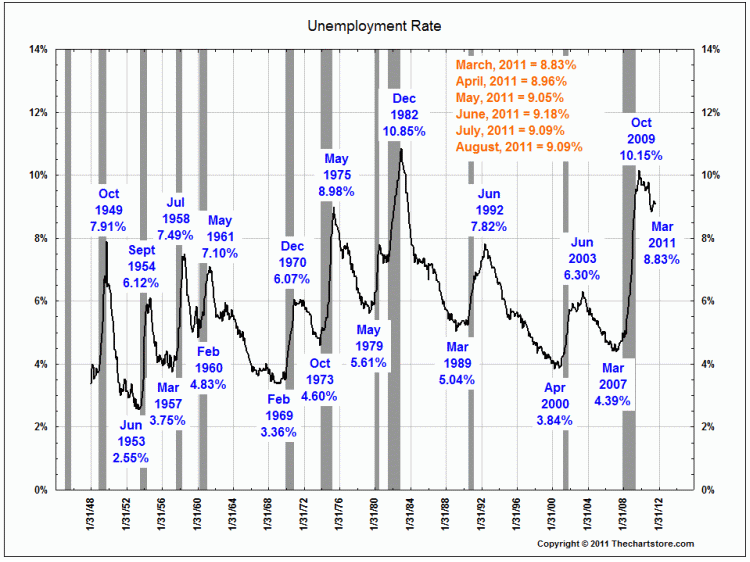
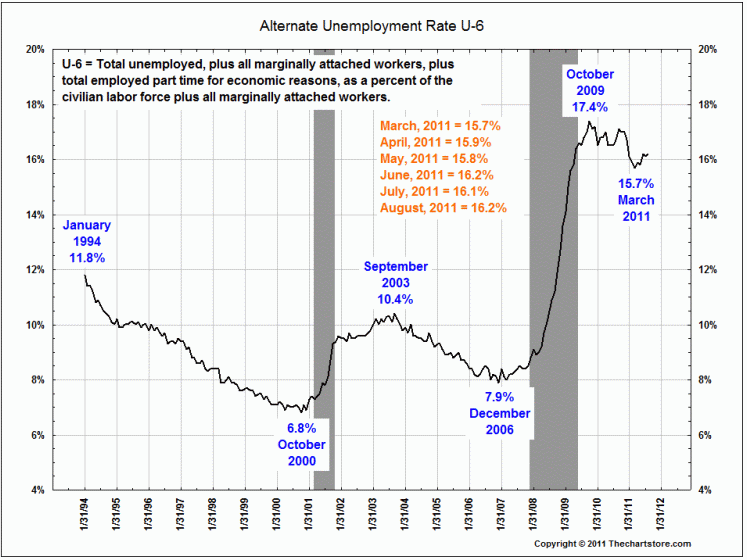
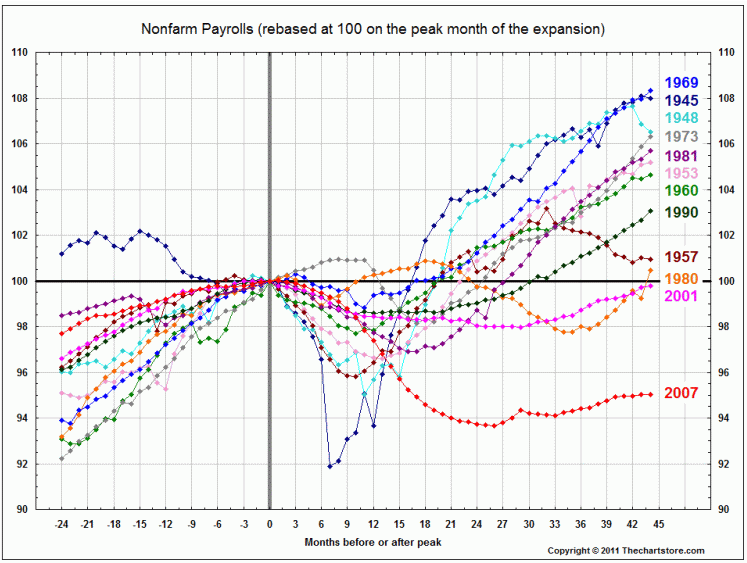
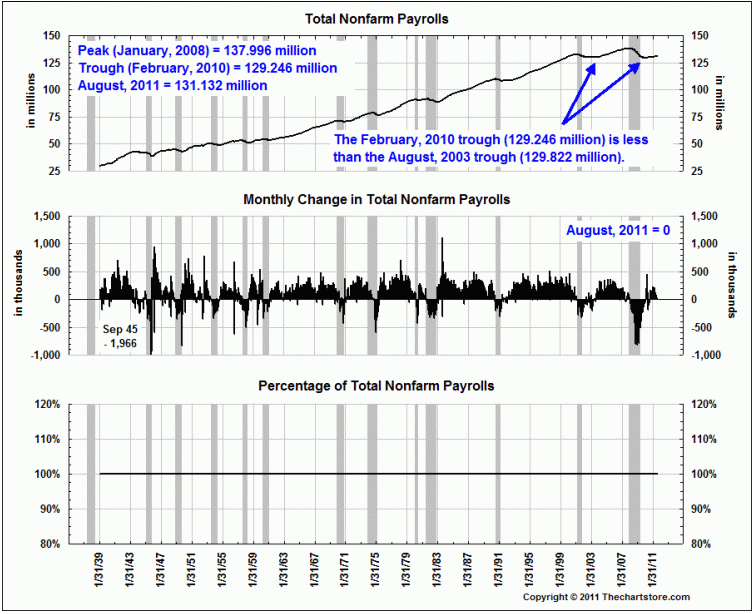
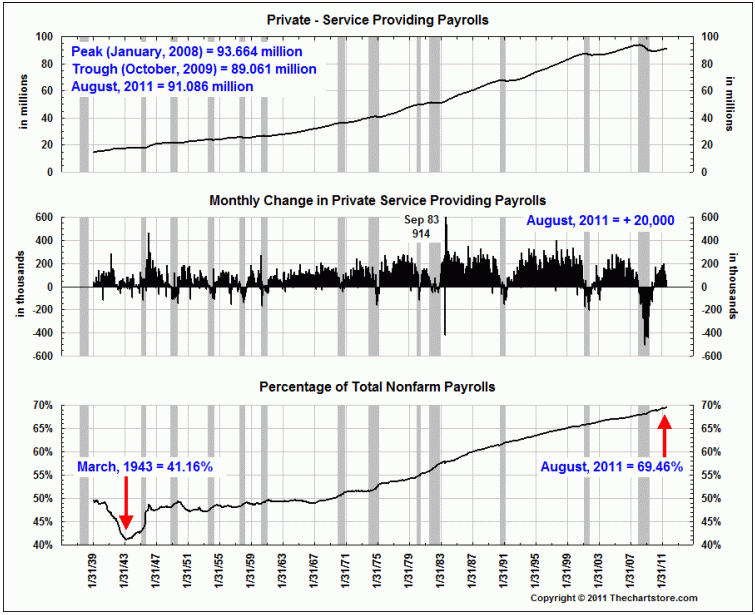
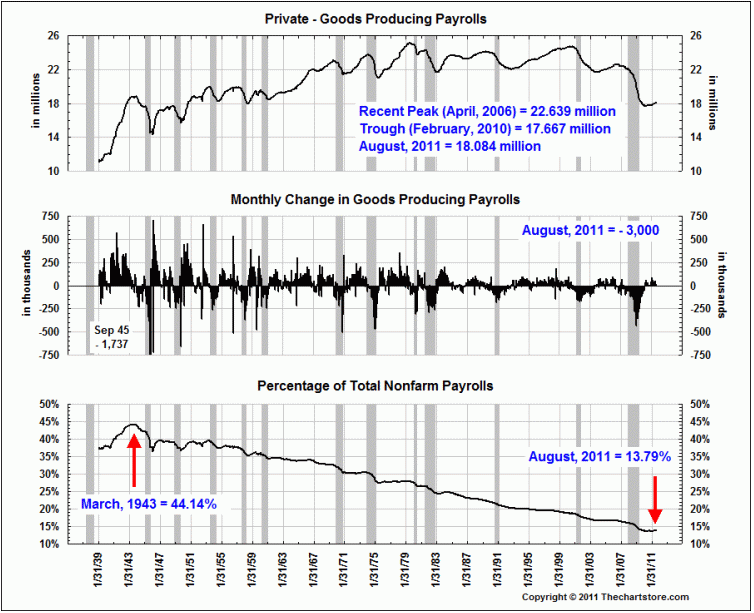
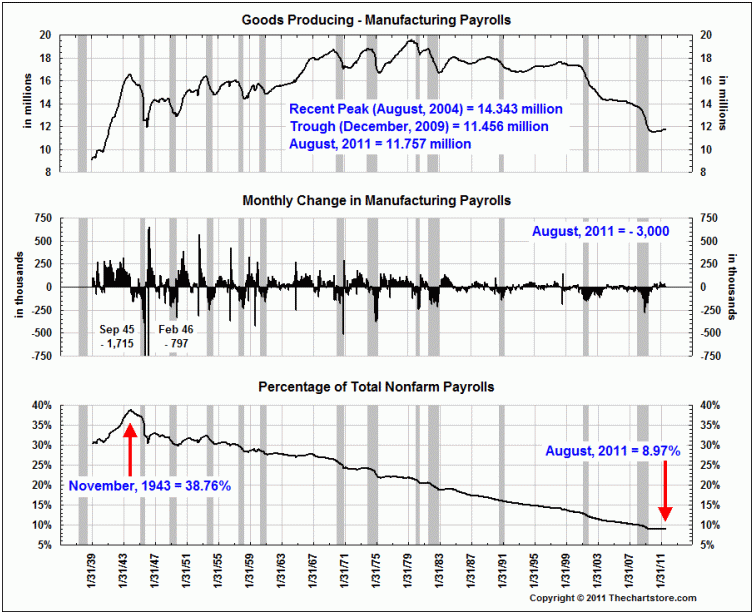
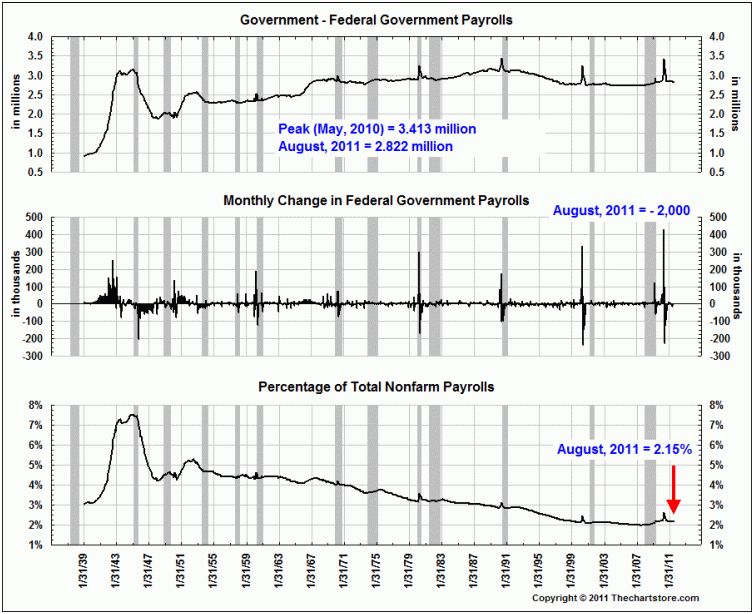
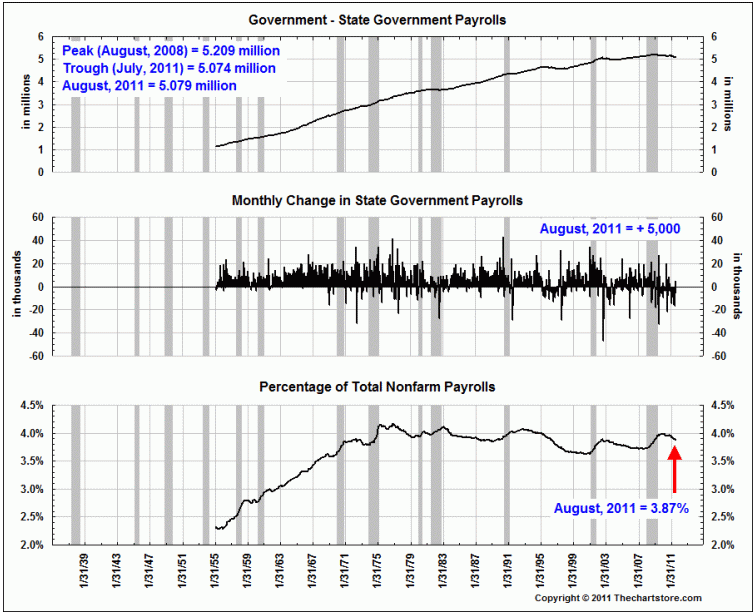
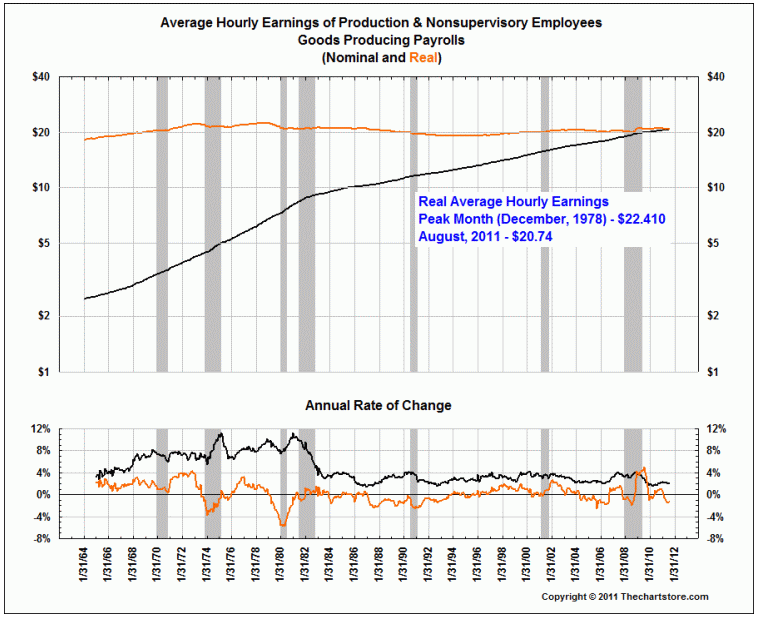
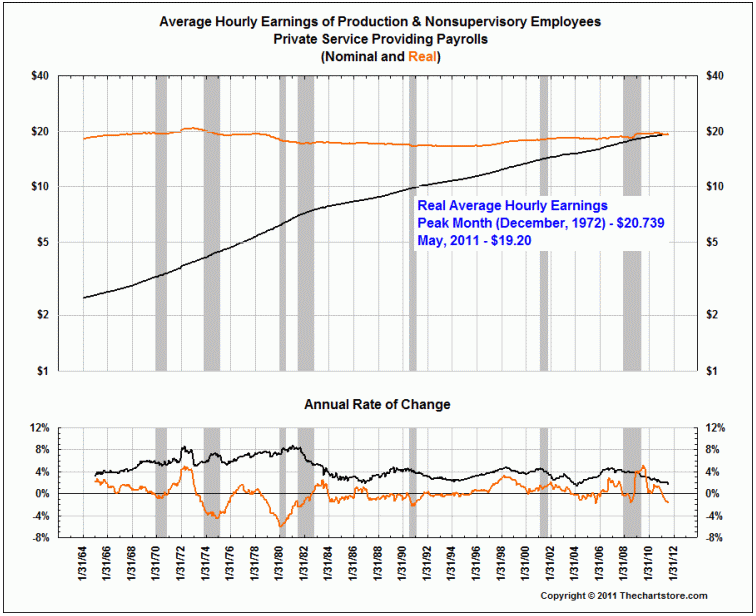
| Posted: 06 Sep 2011 08:30 AM PDT Here’s something to distract you — or perhaps help to explain? — today’s markets. Its from Ron Griess of The Chart Store, and it is a massive NFP chartfest. Enjoy: > Unemployment Rate U6 Unemployment Rate ˜˜˜ ˜˜˜ 2007-09 Compared to Post WW2 Composite Nominal and Real Average Hourly Earnings of Employees
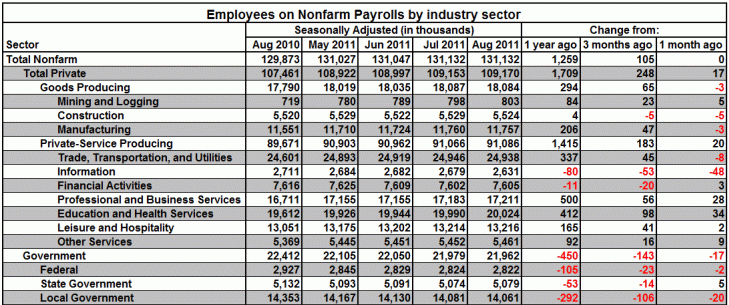
~~~ Employees on Nonfarm Payrolls by industry sector ˜˜˜ Total NFP ˜˜˜ Total Private Service Payrolls ˜˜˜ Total Private Goods Producing Payrolls ˜˜˜ Total Private Manufacturing Payrolls ~~~ Total Government Payrolls ˜˜˜ ˜˜˜ Average Hourly Wages ˜˜˜ |
| ISM services surprises to upside Posted: 06 Sep 2011 06:46 AM PDT Notwithstanding all the market turmoil in August, the ISM services index actually rose to 53.3 from 52.7 in July. The components were very mixed however. Business Activity fell .5 pt to 55.6 and puts in back in line with the 6 month avg. New Orders rose 1.1 pt to 52.8 off the lowest level since Aug ’09 in July. Backlog orders rose 3.5 pts but still remain below 50 at 47.5. Export Orders jumped 7.5 pts to 56.5 and puts it back in line with the levels seen in May and June. Employment fell almost 1 pt to 51.6, the lowest since Sept ’10. Prices Paid rose almost 8 pts to a 3 month high. Of the 18 industries surveyed, 10 saw growth, 5 contraction and the balance saw little change. The ISM did state the obvious in conclusion, “there is a degree of uncertainty concerning business conditions for the balance of the year.” Bottom line, the services sector held up much better than feared as maybe some businesses are taking a more wait and see view of global events rather than immediately altering decision making. The ISM last Thursday remaining above 50 also told a similar story. With this said a further unraveling in Europe and continued lack of traction in US economic activity and business decisions will change quickly. |








| You are subscribed to email updates from The Big Picture To stop receiving these emails, you may unsubscribe now. | Email delivery powered by Google |
| Google Inc., 20 West Kinzie, Chicago IL USA 60610 | |



0 comments:
Post a Comment