


The Big Picture |

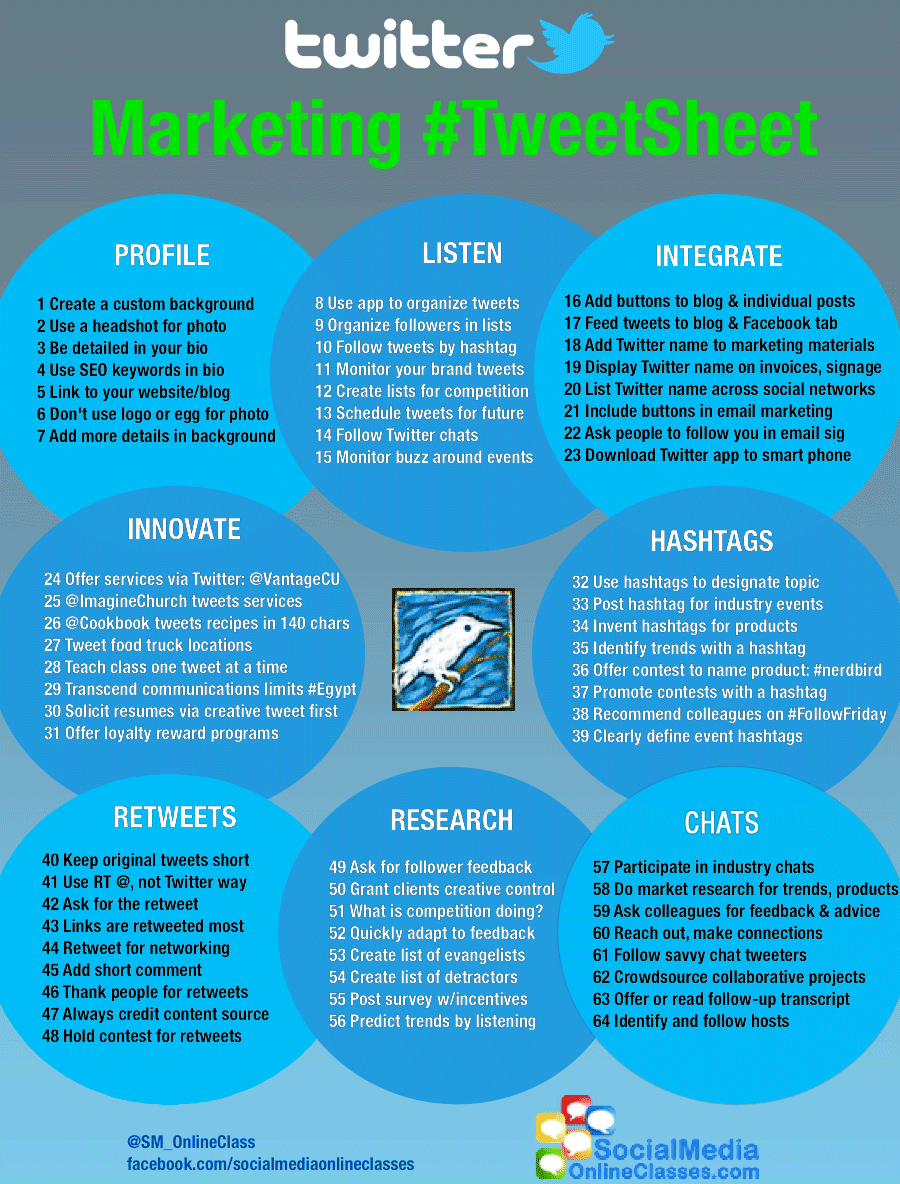
- Marketing #TweetSheet
- America’s Future: Russia and China Use Copyright Laws to Crush Government Criticism
- The (sizable) Role of Rehypothecation in the Shadow Banking System
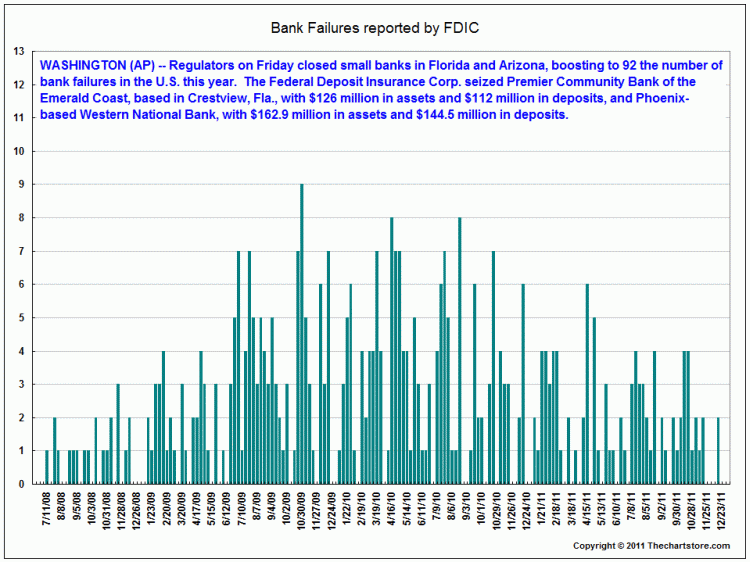
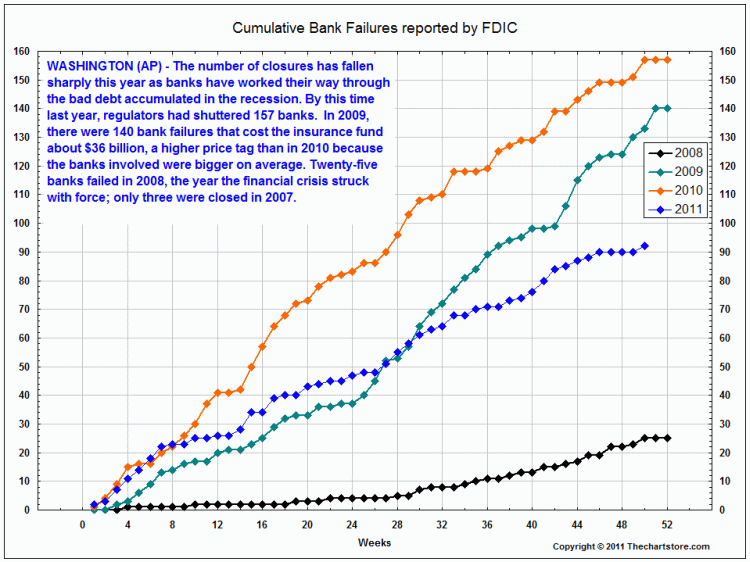
- FDIC Bank Closures
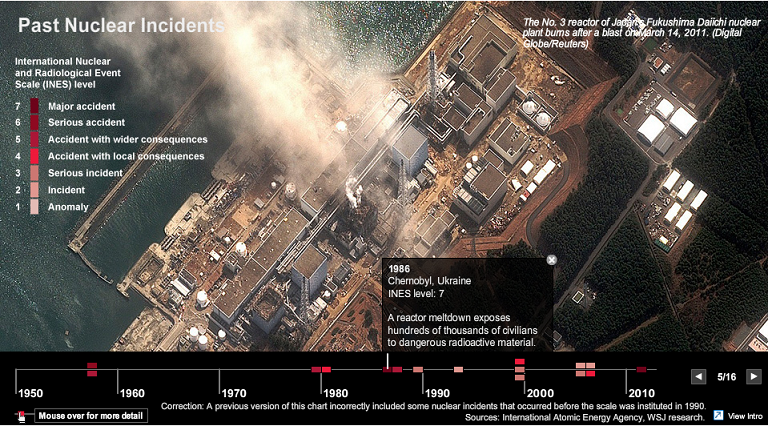
- Past Nuclear Incidents
- MF Global Collapse Reveals Systemic Risk
- G4 Central Balance Sheets /European Contagion
| Posted: 19 Dec 2011 01:30 AM PST |
| America’s Future: Russia and China Use Copyright Laws to Crush Government Criticism Posted: 18 Dec 2011 10:30 PM PST America Mimics Russia, China, Iran and MalaysiaLeading American Internet businessmen warn that the draconian copyright bill on the verge of being passed by Congress would let the US government use censorship techniques "similar to those used by China, Malaysia and Iran." If you want to know what the United States would look like after this bill is passed, just look at what's been happening in Russia: The Russian government has been crushing dissent under the pretext of enforcing copyright law. As the New York Times noted last year:
Since the American copyright bills (SOPA and PIPA) target online activities, the same thing happening to Russian critics' computers could happen to the websites of any Americans who criticize the government, the too big to fail banks, or any of the other powers-that-be. Indeed, the American copyright bill is modeled after the Chinese system. As I noted Monday:
Of course, it might seem over-the-top to worry about copyright laws being used to stifle government criticism in America … if it weren't for the fact that:
|
| The (sizable) Role of Rehypothecation in the Shadow Banking System Posted: 18 Dec 2011 05:43 PM PST The (sizable) Role of Rehypothecation in the Shadow Banking System ~~~ This paper examines the sizable role of rehypothecation in the shadow banking system. Rehypothecation is the practice that allows collateral posted by, say, a hedge fund to its prime broker to be used again as collateral by that prime broker for its own funding. In the United Kingdom, such use of a customer's assets by a prime broker can be for an unlimited amount of the customer's assets while in the United States rehypothecation is capped. Incorporating estimates for rehypothecation (and the associated re-use of collateral) in the recent crisis indicates that the collapse in non-bank funding to banks was sizable. We show that the shadow banking system was at least 50 percent bigger than documented so far. We also provide estimates from the hedge fund industry for the – churning – factor or re-use of collateral. From a policy angle, supervisors of large banks that report on a global consolidated basis may need to enhance their understanding of the off-balance sheet funding that these banks receive via rehypothecation from other jurisdictions. |
| Posted: 18 Dec 2011 01:37 PM PST Hey, its been a while since we showed our favorite Bank Charts, via Ron Griess of the Chart Store: click for larger charts ~~~
|
| Posted: 18 Dec 2011 12:45 PM PST From the WSJ: Fukushima Cold Shutdown: An Inside Look
Click to view time-line: |
| MF Global Collapse Reveals Systemic Risk Posted: 18 Dec 2011 05:00 AM PST
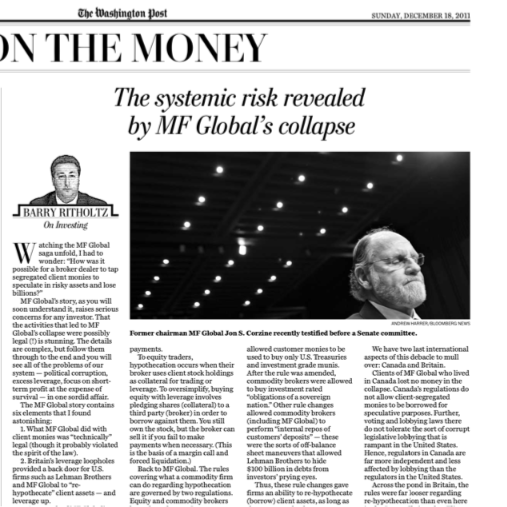
> My Sunday Washington Post column is out this morning. Today, we look at The systemic risk revealed by MF Global's collapse. As has been the case so many times, the details of this debacle are found in the regulatory changes lobbied for — and recieved — by Corzine and the MF Global legal crew. In researching this column, I discovered several deeply disturbing facts. Here’s an excerpt from the column:
The dead tree version of the paper uses a photo of Corzine that is not particularly flattering: >
> Source: Washington Post Sunday, December 18, 2011 2011 page G6 (PDF) |
| G4 Central Balance Sheets /European Contagion Posted: 18 Dec 2011 04:03 AM PST G4 Central Balance Sheets /European Contagion ~~~ "A picture is worth one thousand words." We present 13 pictures to describe the title subject, on our website, www.cumber.com. Scroll to the two chart stacks. In the first, we reflect changes in the balance sheets of the G4 central banks. The G4 central banks are the Bank of England (BOE), the Bank of Japan (BOJ), the Federal Reserve (FED), and the European Central Bank (ECB). Other central banks are important; however, the G4 comprises the four central banks managing the currency blocks of nearly 85% of the capital markets that trade in the world. Other large capital markets are linked to one of them. Therefore, China's central bank is not shown, because China manages its currency exchange rate via a peg to the others. If you capture the G4 transactional changes, you get most of the financial impacts of the world. Paging though the G4, one sees the following information leap from the charts. The central bank balance sheets of the BOE, BOJ, and ECB have all recently increased in size. That of the FED has not. In fact, the FED's balance sheet is actually slightly smaller than it was a few weeks ago. Why is two weeks so important? Two weeks have elapsed since the central banks announced a coordinated activity on November 30th. Notice how those balance sheets have expanded; note also where they have expanded. We have color-coded the various compositions of both assets and liabilities of each balance sheet. The recent growth in total assets of the four central banks is clear. The one central bank balance sheet that did not grow is that of the United States' central bank, the Federal Reserve. Notice what happened in the last few weeks when the others expanded and the FED did not. The US dollar actually started to strengthen against other currencies, particularly the euro. As we have been writing and stating for some time, there is a relationship between the foreign exchange markets and changes in the exchange rates among and between the currencies, and the actions of the central banks involved with those currencies. We see the reaction in the foreign exchange market almost at once. A central bank takes an action, makes a statement, initiates a policy – whatever the case may be – and the foreign exchange markets readjust the ratios among and between the currencies. That is apparent in the past two weeks, and it is apparent in an examination of those four central bank balance sheets. Cumberland has stacked the four central bank balance sheets so they can be flipped easily by any interested party. We will update them regularly. The other stack of charts shows the "good" countries and the "bad" countries in the Eurozone. And it shows the spreads of interest rates between the good countries and the benchmark German 10-year sovereign debt instrument, known as the "bund", and the spreads between the bad countries and the bund. Notice how the spreads peaked in almost every case a few days prior to the November 30th announcement of the change in central bank policies. We speculate that someone somewhere got wind the policy change was coming and may have made themselves a lot of money on that trade. More after the jump
We have pointed out the peaks in interest rates and in spreads with a question mark, since we do not know if these will be ultimate peaks, interim peaks, or if this is just more market volatility. Clearly, the central bank actions during the past two weeks have caused interest rates to peak and fall, both among both good and bad players in the Eurozone. Concomitantly, spreads too have narrowed among the good and the bad players. Cumberland will continuously update this series as new information is obtainable. We are experiencing an increase in visitors to our website obtaining and reviewing this information, and we are more than happy to share this with all interested readers. You are permitted to use this information and the charts. Please do so with full attribution to our firm. One conclusion is becoming evident. The central banks of the world are continuing to coordinate their efforts to meet liquidity requirements under nearly every circumstance. They have determined that they must keep the functioning of the world's financial system unimpaired. To do that, liquidity has to increase, and the manner in which they accomplish this is to expand their balance sheets. A Lehman-type liquidity constraint will not be permitted to occur again if the central banks can avoid it. In addition, on detailed examination of the balance sheets, you can see how the actions of the central bank on the asset side are balanced by rising reserve deposits on the liability side. In other words, a central bank goes into the market, buys a debt instrument or otherwise acquires an asset, pays for it or lends to a bank, and the bank then pledges it – in any case, the central bank creates a reserve or cash that within hours is redeposited at the central bank as an excess reserve deposit. There is no credit multiplier in the monetary system when the newly created central bank money is circulated right back to the central bank. Essentially, the commercial banks within each currency zone have excess reserves. They have excess liquidity, and they are electing to redeposit those reserves back with the safety of the central bank rather than do something else. That behavior reflects the uncertainty that exists throughout the financial system. For example, in the United States, a commercial bank can deposit excess reserves with the Federal Reserve System and receive an annualized interest rate of 0.25% or 25 basis points. The commercial bank could do other things as well. In the United States, we see a very large sum reflected in the liabilities side of our chart stack, in a darker green color that shows the huge excess reserve deposit at the Federal Reserve. Banks in the US are not engaged in the expansion of credit. They are redepositing their excess reserves at 25 basis points. The same thing is happening in most of the world. That is now apparent and easy to see in the color coding of the G4 central bank liability side of the balance sheets. Liquidity, liquidity, liquidity. That is the theme by which the central banks are operating today. Liquidity and solvency are two different issues. They should not be confused with one another. Greece remains insolvent as a sovereign country. In Europe and in the rest of the world, however, the insolvency is not being allowed to impart a liquidity crunch. The recent use of swaps and other vehicles to enhance liquidity continues to be expanded by the central banks of the world. Santa Claus is coming, and his name is Bernanke, Draghi, Shirakawa, or King. Whether or not their noses are red remains to be seen. ~~~ David R. Kotok, Chairman and Chief Investment Officer |

| You are subscribed to email updates from The Big Picture To stop receiving these emails, you may unsubscribe now. | Email delivery powered by Google |
| Google Inc., 20 West Kinzie, Chicago IL USA 60610 | |



0 comments:
Post a Comment