


The Big Picture |

- Sketching Interfaces Workshop
- My Newfound Respect for Hank Paulson
- My Surprise Favorite Superbowl Commercial
- 10 Monday PM Reads
- Amazon May Experiment with Physical Bookstores
- Tinkerbell Economics – The Confidence Fairy, Pixie Dust and a Sleeping Dragon
- Investing in Foreclosures: How One Company Does It
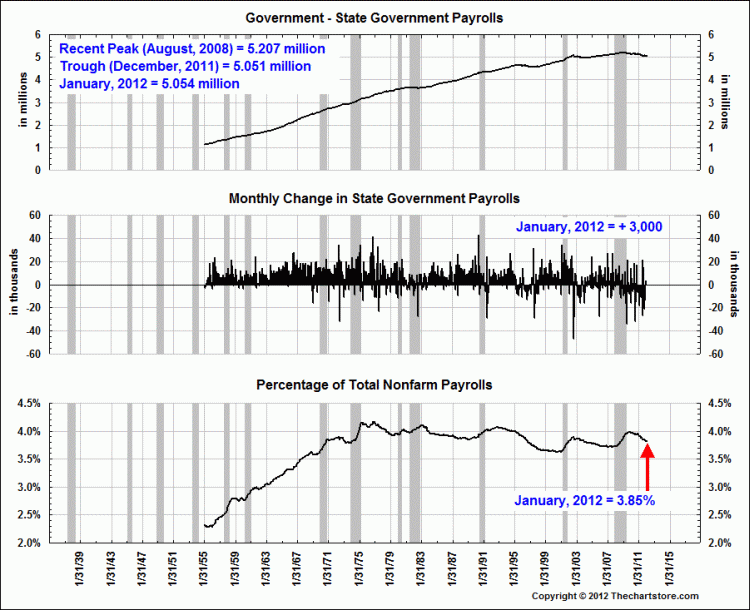
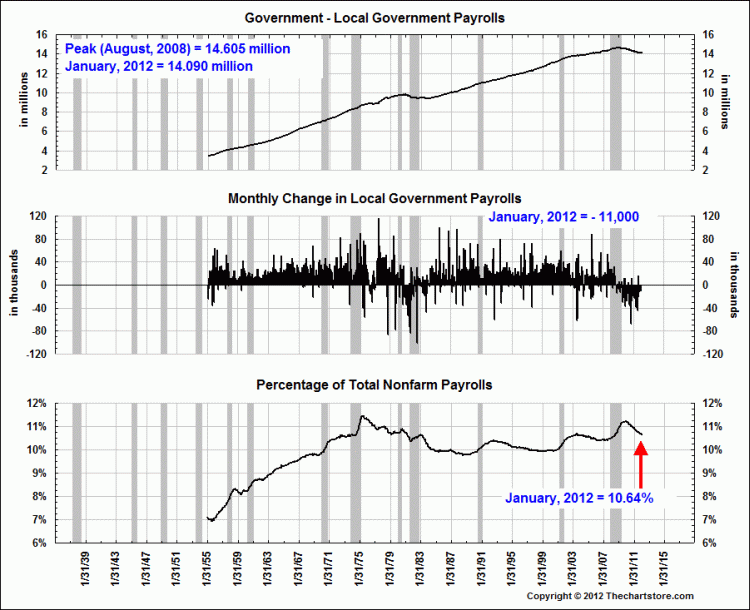
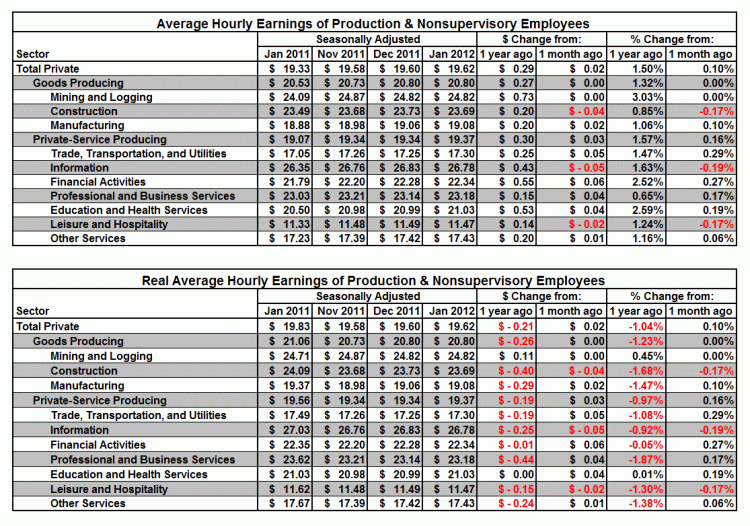
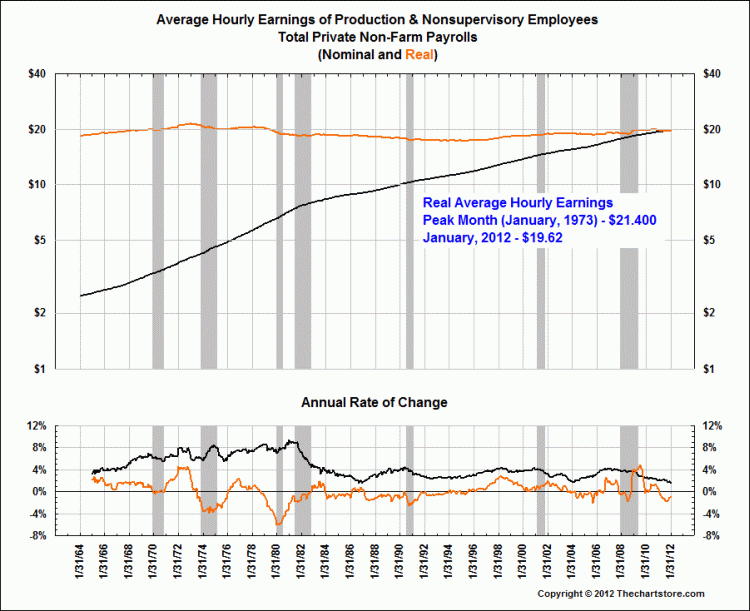
- Employment Chart Palooza
- Magazine Cover Indicator: New York “End of Wall Street”
- Who Is President Matters Much Less Than We Think
| Posted: 07 Feb 2012 01:30 AM PST |
| My Newfound Respect for Hank Paulson Posted: 06 Feb 2012 05:45 PM PST I cannot go into the details, as the entire conversation was off the record. However, I can tell you that, despite disagreeing with the bailouts & TARP that was put into place under his regime at Treasury, Hank Paulson may actually be a decent guy. When you look at the rest of the parade of folks who helped contribute to the crisis — from the people at Treasury (Paulson, Geithner, Summers, Rubin) to the Fed (Greenspan, Bernanke) to Senate (Gramm, Leach, Bliley, Schumer), there certainly is plenty of blame to spread around a bunch of unsavory characters. Greenspan deserves much more blame than Bernanke (I also believe Bernanke is a decent man). But Paulson did a few things that are not known, and probably wont be publicly revealed until the end of this year — if at all. His subsequent actions since leaving Treasury have actually surprised me. This actually comes from an adversary of his. I will reveal all when I get permission, or when the book comes out, if ever — and if not, well, you just have to trust my judgment on this. More to come later . . . |
| My Surprise Favorite Superbowl Commercial Posted: 06 Feb 2012 01:45 PM PST |
| Posted: 06 Feb 2012 01:30 PM PST My afternoon train reading:
What are you reading? > Shaky Profits Threaten U.S. Stock Rally |
| Amazon May Experiment with Physical Bookstores Posted: 06 Feb 2012 11:44 AM PST There were two announcements this weekend that may freak people out over the future of books. The first was a prominent and innovative independent bookseller announcing that she had put her store up for sale with a broker who might look for someone to take over. As with the sale of the popular store in Washington, DC, Politics and Prose, there’s a good chance this move will be seen as a bellwether for independent bookstores. After all, Roxanne Coady of Madison, Connecticut’s R.J. Julia is a financially sophisticated owner capable of making a going concern work. If she’s getting out of the business—arguably a few years too late—then there cannot be much hope for physical bookselling. And, yet, there’s news today that Amazon is planning physical bookstores or, at least, a pilot store to sell Kindles and the physical books that they publish themselves. This comes from Good E Reader:
Not even contemplated here is an even bigger opportunity whereby Amazon could open small to medium size bookshops that capitalize on the desire for a third-space complete with coffee bar. In that retail environment, Amazon could easily sell the high-volume, high-margin items taking advantage of its superior logistics and distribution skills. (And, if it wanted, could also install a print-on-demand capacity that would make it easy to walk in and purchase any one of millions of titles. Source: Amazon in the Process of Launching a Retail Store http://goodereader.com/blog/electronic-readers/amazon-in-the-process-of-launching-a-retail-store/ |
| Tinkerbell Economics – The Confidence Fairy, Pixie Dust and a Sleeping Dragon Posted: 06 Feb 2012 11:00 AM PST Dan Alpert is a founding Managing Partner of Westwood Capital. He has more than 30 years of international merchant banking and investment banking experience, including a wide variety of work-out and bankruptcy related restructuring experience. In addition to his structured finance expertise, Dan has extensive experience advising on mergers, acquisitions and private equity financings, he has expertise in evaluating and maximizing the recoveries from failed financing vehicles affiliated with a common borrower/issuer. While we may be hours away from a partial (and certainly a stopgap) agreement in the talks among the Greek government, the troika and private sector creditors, it is doubtful that a deal will emerge in a fully constructed fashion that will survive its application in the real economy. It is likely that the only common view amongst participants in the various talks is a desire to try to avoid a disorderly default. Beyond that there is a severe disconnect fostered by parallel realities that seem unable to intersect. Accordingly, a deal that can hold up both in the streets of Greece and in the markets is both illusive and unlikely. Here's why I think so. Recently I have had opportunities to meet with and question senior members of the economics establishment within the German government and the broader German intelligentsia. Our meetings were held under Chatham House rules so I can't name names, but – after several meetings with policy delegations from Germany over the past 60 days – I am prepared to sum up what appears to be the pretty-universally-held German policy position as follows (my apologies if the below evidences some degree of frustration – but these encounters leave me quite chagrined):
All of this ends with a full-throated advocacy of the concept that has become known as "expansionary austerity" which forms the bedrock of German and other core nations' policies towards the massively over-indebted periphery: Countries that have been irresponsible borrowers need only to demonstrate their fiscal discipline and prudence, reduce their indebtedness and reform their inefficiencies and over-regulation and investment and growth will resume because markets will once again have confidence in the economies of those countries. Yes, there it is…the return of the same confidence fairy that supply-siders hold out as the magic pixie dust that allows economies to fly once more without regard to the adequacy of demand or the competitiveness of a given nation relative to others. In other words Tinkerbell Economics.
There are many quite practical reasons why "Austerianism" will not work, and countless others have written on the subject at length. For the purposes of this essay I will briefly list three:
A colleague of mine, present at one of the above mentioned meetings, likened the German response, to Eurozone realities, to Act II of Richard Wagner's ring series opera, Seigfried. As Fafner the dragon is awoken from his slumber and warned by the conniving Alberich that the hero Siegfried is on his way to kill Fafner, the fearless dragon dismisses Alberich's warning and returns to sleep. The world cannot afford the luxury of sleeping on this. What is at stake here is more than the issue of recovering monies lent to Greece. A very substantial amount of European capital is at stake and plans to recover it by placing the populations of the GIPSI's under indentured servitude to their creditors are the stuff of fairies and pixie dust. It is past time to tighten the belt at both ends, recognize the money that has been lost throughout the periphery, recapitalize core institutions and bite the bullet on the secession of the defaulting nations. Sorry Tinkerbell!
|
| Investing in Foreclosures: How One Company Does It Posted: 06 Feb 2012 10:30 AM PST Buying foreclosures to turn them into rental properties is tricky business. Mack Companies, a Chicago real-estate firm, invests in about one out of every 40 homes it inspects. MarketWatch’s Amy Hoak looks at why some make the cut and others don’t.
|
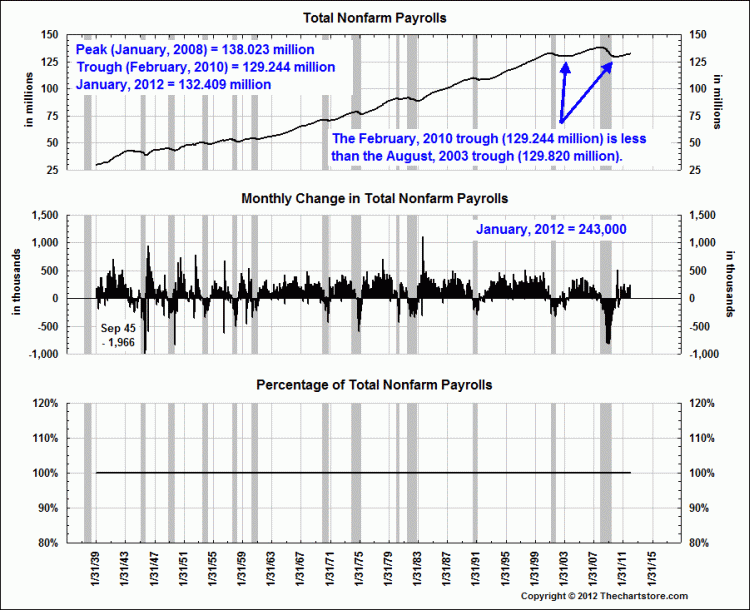
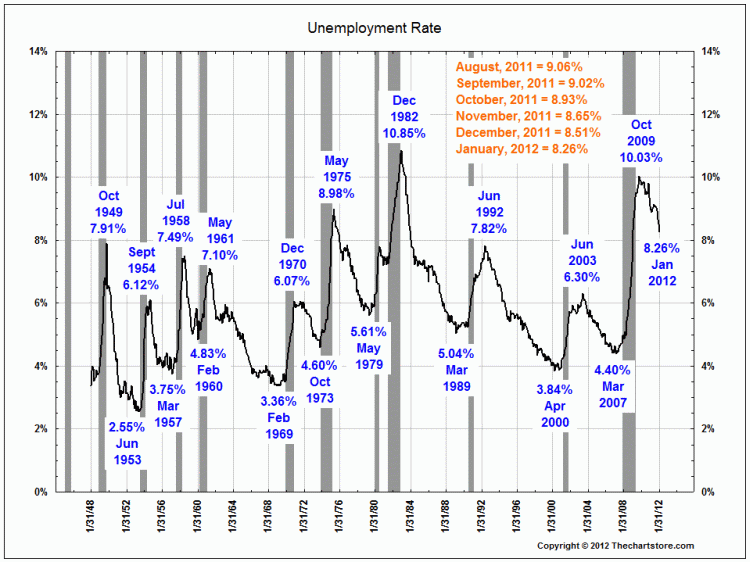
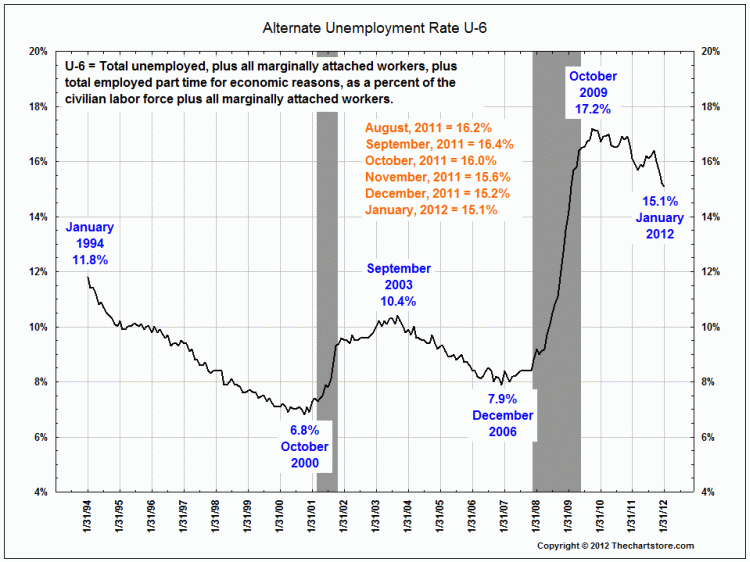
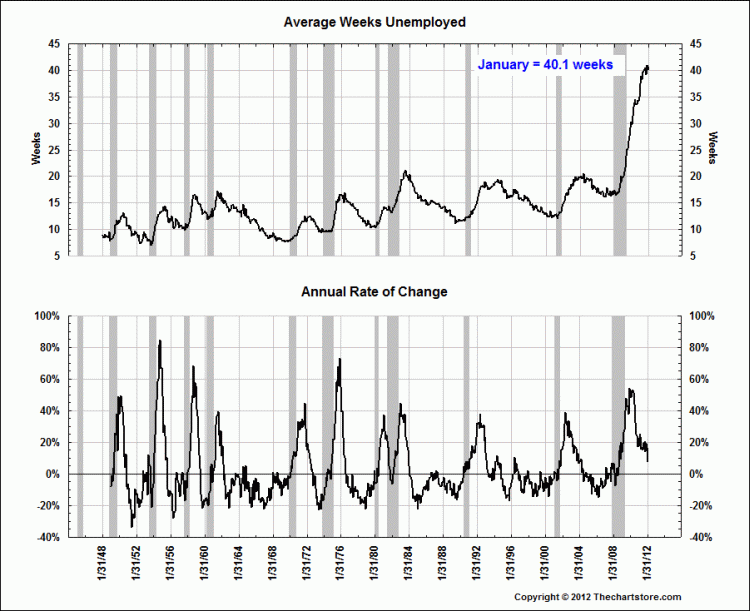
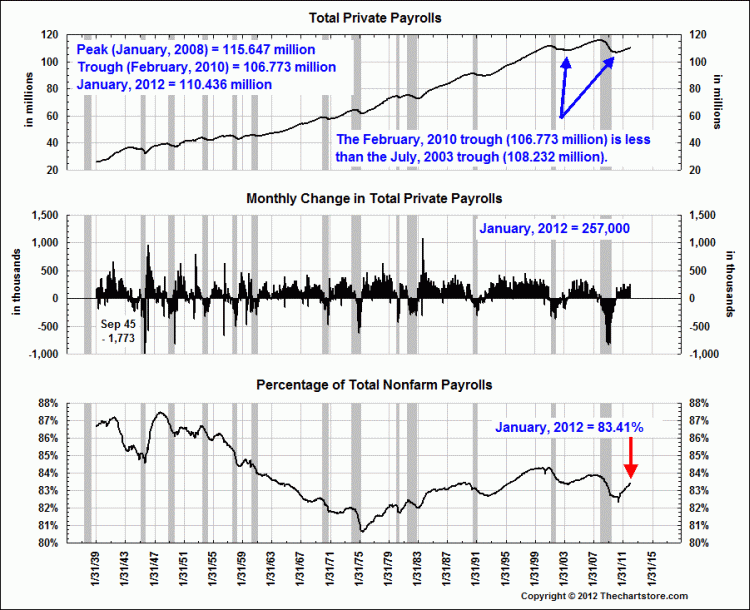
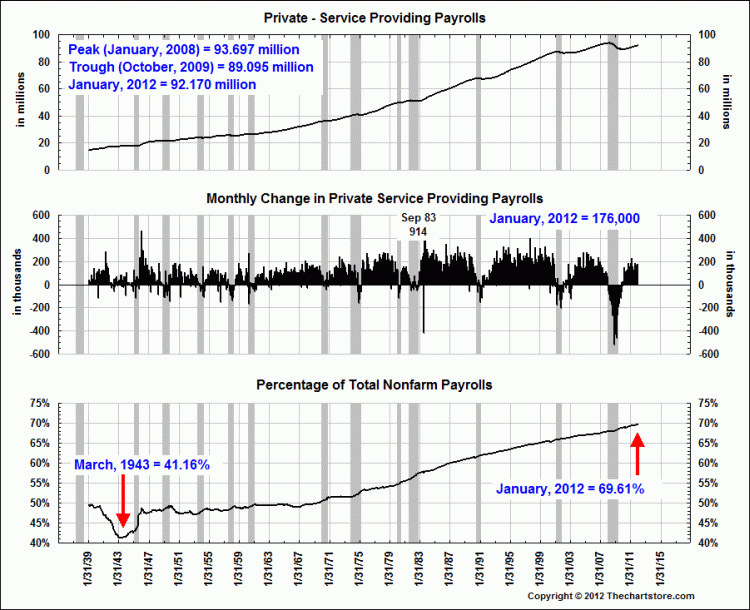
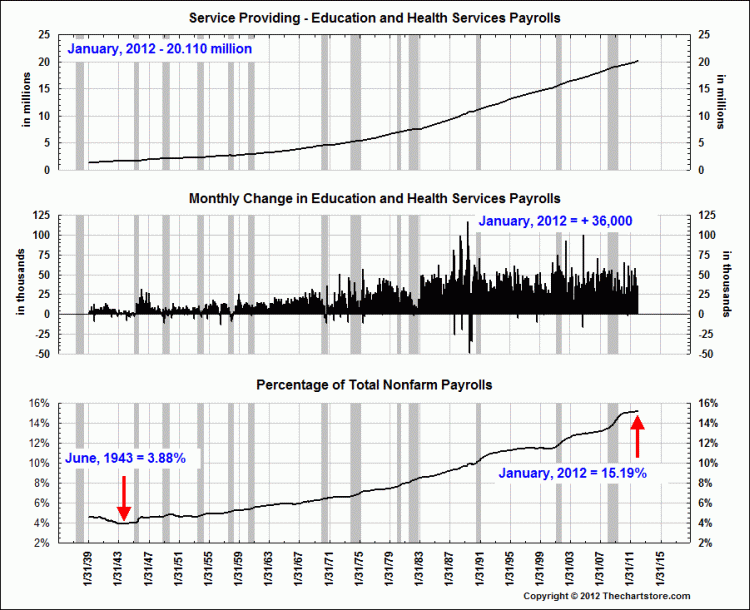
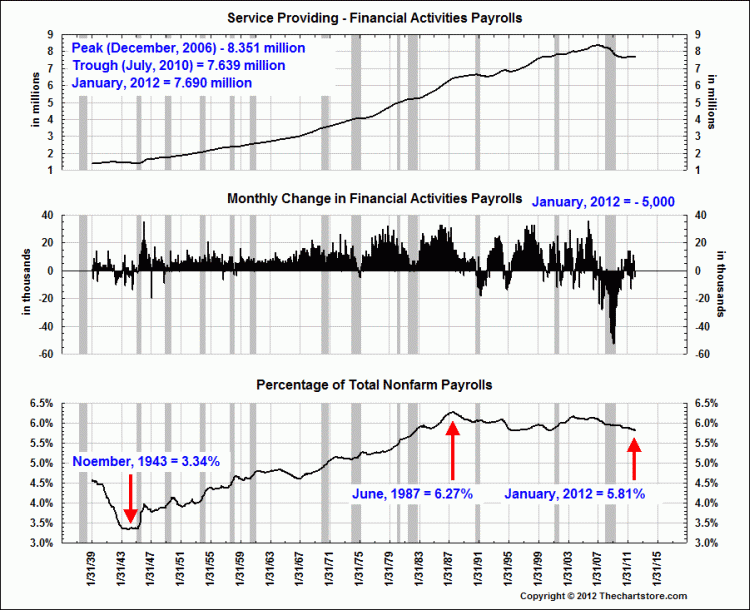
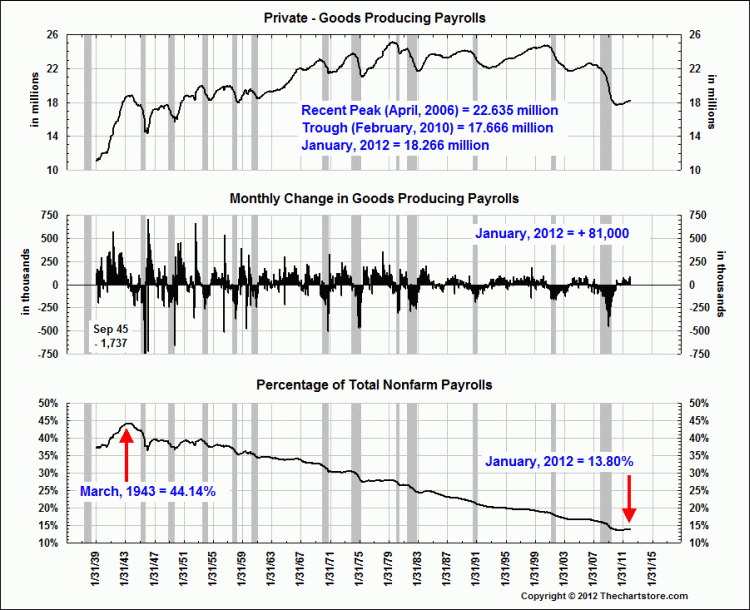
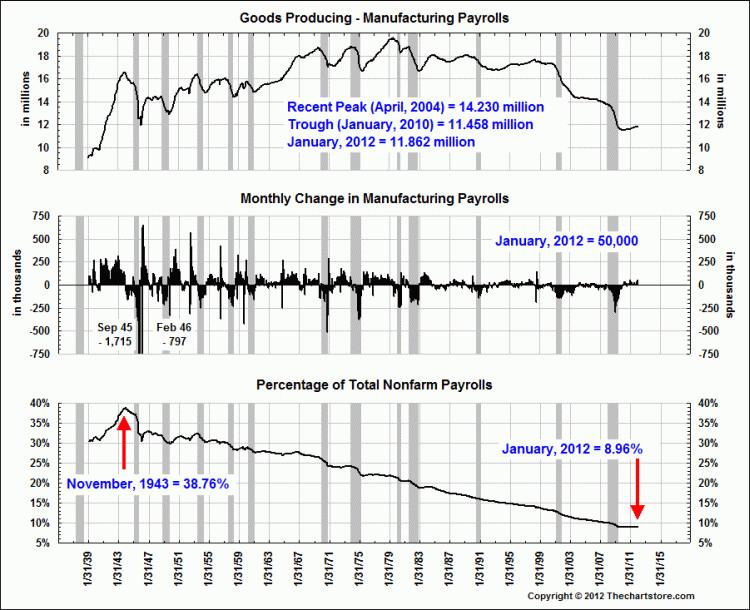
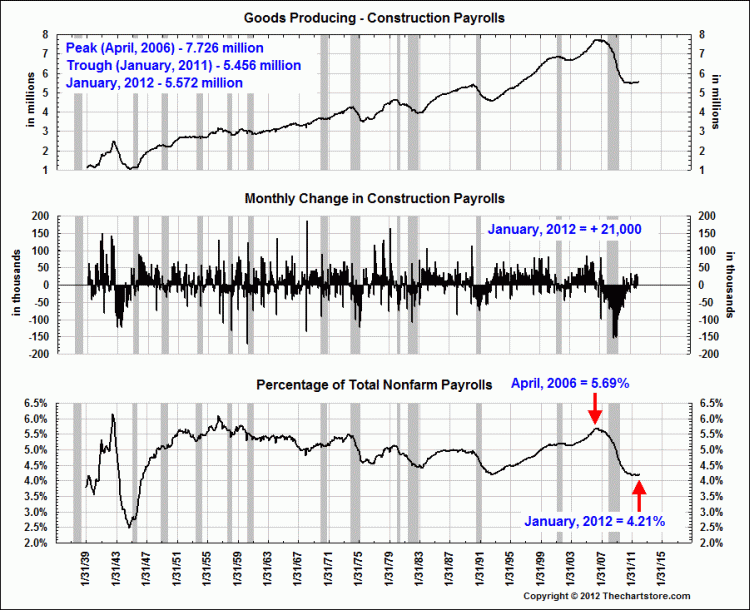
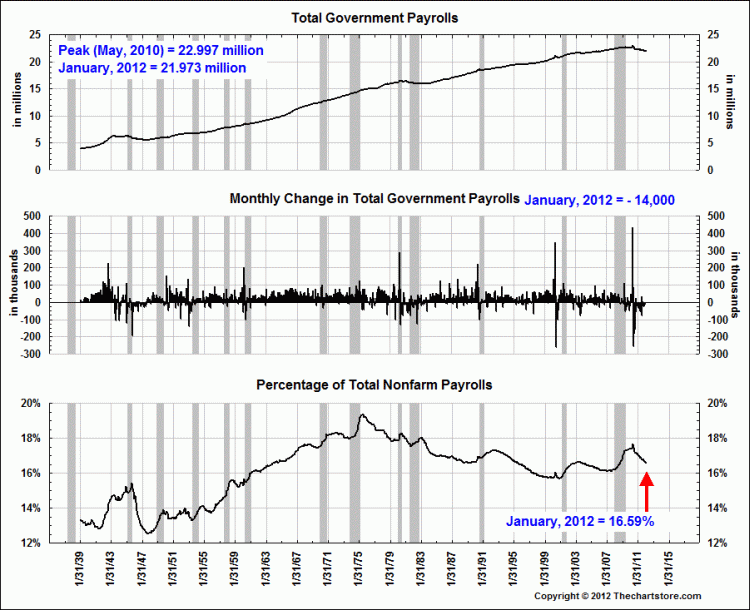
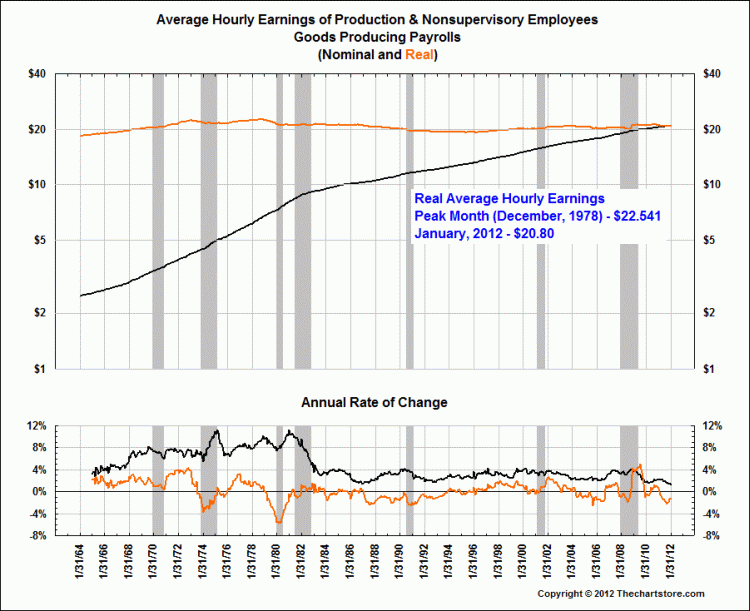
| Posted: 06 Feb 2012 09:45 AM PST Today’s Employment chart madness from Ron Griess of the Chart Store. Click to enlarge: ˜˜˜ ˜˜˜ ˜˜˜
~~~
~~~ More charts after the jump
˜˜˜ ˜˜˜ ˜˜˜ ˜˜˜ ˜˜˜ ˜˜˜ ˜˜˜ ˜˜˜ ˜˜˜ ˜˜˜ ˜˜˜ ˜˜˜ ˜˜˜ ˜˜˜ |
| Magazine Cover Indicator: New York “End of Wall Street” Posted: 06 Feb 2012 07:38 AM PST
Last week, I mentioned the Barron’s cover was somewhat bullish, with the caveat that Barron’s is a business weekly. New York magazine is more general interest — its not Time or Newsweek, because it covers Wall Street in its back yard. Meanwhile, Bloomberg is out with this headline today: Investors Fearful as Stock Rally Best Since 1987. Still, I suspect the NY Mag cover is a bullish sentiment indicator. > Source: |
| Who Is President Matters Much Less Than We Think Posted: 06 Feb 2012 07:23 AM PST |






| You are subscribed to email updates from The Big Picture To stop receiving these emails, you may unsubscribe now. | Email delivery powered by Google |
| Google Inc., 20 West Kinzie, Chicago IL USA 60610 | |



0 comments:
Post a Comment