


The Big Picture |

- OPEN THREAD: Election Factors for Investors ?
- 10 Tuesday PM Reads
- No Till Farming Practices
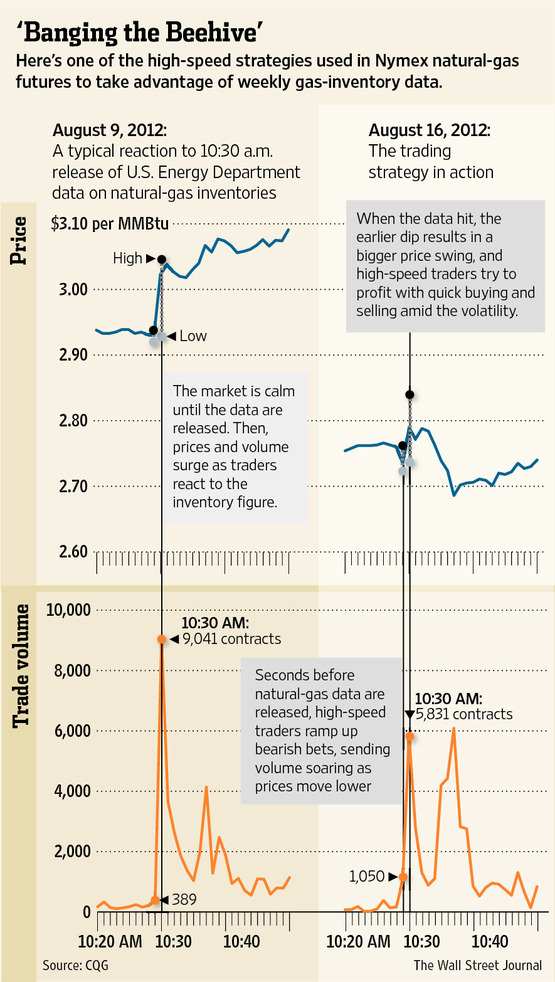
- Gas Market Stung by Rapid Traders
- This Time is Different, Again? The United States Five Years after the Onset of Subprime
- Here Comes Earning Season !
- Xbox Music
- 10 Tuesday AM Reads
- IMF concern over Japan
- Does JP Morgan’s Mortgage Putback Reserve Disclosures Make Sense?
| OPEN THREAD: Election Factors for Investors ? Posted: 16 Oct 2012 03:00 PM PDT We have the second presidential campaign debate tonight. I am wondering: What does the outcome of the election mean for investors? (I mean specifically for investors, not things that may impact investors indirectly, like estate or tax tax brackets). I can think of a few areas where there is little difference, and a few where the impact is significant:
I am sure there are more, but nothing is leaping out at me from the INVVESTOR’S PERSPECTIVE. ~~~ What say ye? |
| Posted: 16 Oct 2012 01:30 PM PDT My afternoon train reading:
What are you reading? Home Loans May Get Shield |
| Posted: 16 Oct 2012 11:30 AM PDT
Interesting discussion regarding new ways to plant and fertilize:
Source: |
| Gas Market Stung by Rapid Traders Posted: 16 Oct 2012 11:30 AM PDT |
| This Time is Different, Again? The United States Five Years after the Onset of Subprime Posted: 16 Oct 2012 09:30 AM PDT |
| Posted: 16 Oct 2012 09:00 AM PDT
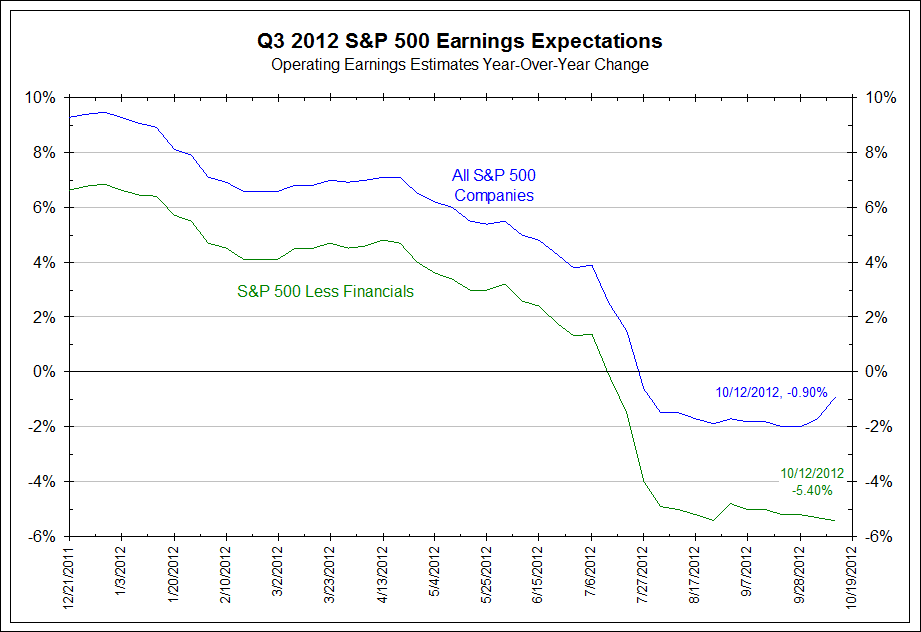
Don’t look now, but a hotly anticipated — and in some quarters, feared — earnings season is upon us. Of the first 25 “real” companies reporting, things have actually been pretty decent. The counter is that these are banks (JPM, WFC), who are much freer in the leeway in their returns, and non consumer sensitive stocks, like Johnson and Johnson and Yum Brands. Bloomberg, on the other hands, notes that earnings pessimism is at its highest levels since the crisis:
Its still early in Q3 reporting season — but with the market in rally mode these days, anything can happen once the numbers come in. |
| Posted: 16 Oct 2012 07:30 AM PDT Streaming won. That’s right. While you were lauding the sonic quality of CDs, bitching about Spotify payments and repeating endlessly that no one wanted to rent music, technologists, not married to the past, enmeshed in a sphere of creative destruction, necessary in order to win, saw what the people wanted before they knew it and delivered it. The number one music service today is YouTube. Can a dedicated music service supersede it? The iTunes Store has peaked. It’s just a matter of when Apple goes into streaming. The Cupertino company has a long history of following the innovation of others with a more highly refined product. And if you don’t think they can do this, you haven’t employed Spotify search. In a world where Google delivers exactly what you want instantly, yes, usually the first hit is the desired one, it’s frequently impossible to find what you want on Spotify. You think it’s not there, then you change search terms and voila! It’s as simple as the lack of a single play repeat button in the app… Apple gets the little things right. They provide all the solutions we need right up front. At least this was all true before Steve Jobs’s unfortunate demise. If Apple gets beaten on streaming music, if it fails to corner this market, you know the company is past its peak. Yes, it’s not about Microsoft triumphing in the music sphere. Good luck to them. Let the best man win. But it is about bringing subscription services front and center. Just like all Blu-Ray players come with Netflix apps, music apps will be part of future operating systems. Will third party delivery services survive? Jimmy Iovine tied in with HP for Beats, he’d better do so soon with MOG. Then again, HP’s in trouble, when the PC business is cratering and they’ve got no viable tablet strategy. Spotify was the pioneer. Oops, Rhapsody was the pioneer. But Rhapsody could not see that a free tier was necessary to adoption. Dope would have a small percentage of its penetration if the first hit was not free. A lousy interface and a lack of experience by the public held back Rhapsody. Then again, maybe Rhapsody was just too early. (I.e. see Apple above re timing.) With Xbox Music the old world has been put to bed. People expect the history of recorded music at their fingertips. If your business model is based on scarcity, you’re screwed. And there are cultural issues too. If you’re not insanely great, despite your music being available, it will probably be ignored. Because why listen to crap when excellence is right next door, a click away? Xbox Music is like Netflix streaming. They had it for years before everybody caught on. And what sold Netflix streaming? Word of mouth! Yup, advertising does not sell new technology and services, only early adopters spreading the word. In other words, you’d be better off reading “The Tipping Point” than getting a job at an advertising firm. I’m not saying subscription streaming services will triumph overnight. But just like digital photography, something that was heralded for a decade before it peaked, in seemingly a day, streaming will take over. Sales will not fade that same day, but will diminish quickly. And just like with digital photography kids now take thousands of pictures a year, more people will listen to more music. Will they listen to your music? Mm… You think it’s still about getting signed, getting on the radio, as if old media is gonna be king forever. That’s like saying people will use MS DOS forever. Like saying no one needs a smartphone. Like saying desktops will not be impacted by tablets. Radio ceased long ago being anything but a delivery method, there’s no soul except on talk radio. You can get the hits elsewhere. Record stores have already disappeared. Those that still exist sell tchotchkes. Apple’s hottest laptops come without disk drives. So if you think there’s a future for CDs… And the newest laptops have less storage than before. Because what you need lives in the cloud. We’re in an era of access. You’re in the business of creating demand. In a world where everything is available essentially for free at people’s fingertips. How can you motivate people to check you out and continue to listen? If you hype something bad, you’ve lost credibility. If something’s not great, it won’t be listened to again. It’s not like buying an album and playing it ad infinitum because you can’t afford new music. And if Apple can break up iLife, allowing you to buy only the components you need, via digital download, what makes you sure people still want the album, especially its weaker tracks? You can follow the horse race. You can bet on whether Microsoft ends up owning music or not. You can marvel that music is now a feature as opposed to a stand-alone item. You can complain that you’re making less initially from a stream than you did from the sale of an album. Or you can recognize that the future is here, creative destruction is a way of life, and you’re best to learn how to play by the new rules and anticipate future changes. Sure, people are going to lose their jobs. Winners and losers will be realigned. But if you don’t think this is a heyday for listeners, you don’t have ears. – http://www.twitter.com/lefsetz – http://www.lefsetz.com/lists/?p=subscribe&id=1 |
| Posted: 16 Oct 2012 07:00 AM PDT My morning reads:
What are you reading? BlackRock Hits Back in ETF War |
| Posted: 16 Oct 2012 06:40 AM PDT The RBA minutes suggests that it will cut rates further (possibly as early as next month), given a slowing China and a weaker Europe – no great surprise, the RBA has been behind the curve. “There was an increased likelihood of growth over the coming year being somewhat weaker than earlier forecast”. In addition, they added “The board judged that it was appropriate for the stance of monetary policy to be a little more accomodative”. The IMF is concerned at the rising government debt in Japan. Well, good for you IMF – Japanese debt to GDP is expected to rise to around 240% this year, the worst of any developed nation. OK, so most of the debt is held locally, but a (relatively modest?) increase in interest rates in Japan (and remember the BoJ states that they want to raise inflation to 1.0%) would have a significant adverse impact on the country. The political situation is getting more fraught (no party is likely to get a majority in elections, which should be called within the next 3 to 6 months) and the recent spat with China is not helping. In addition, Japanese manufacturers have lost their competitiveness. Japan’s trade surpluses have come to an end, as well – they are reporting deficits. I continue to watch the Yen more and more closely; The WSJ reports that some US$225bn (or 3.0% of national output) has flowed out of China in the year to September – the real number is likely to be higher. Lombard Street research estimates that capital flight is around US$300bn. Capital flight is continuing – telling you something, do you think?. Legally, Chinese individuals are not allowed to take out more than US$50k per year, by the way. The increase in capital flight is another reason why Chinese forex reserves are unlikely to rise materially in coming months – indeed, they may decline; The Greek finance minister has stated that the country needs a further 2 years to meet its targets. Thank you minister – we all know that’s what you want. However, the bigger issue is that the EZ is not going to give you a 3rd bail out package, though a further tranche of the 2nd bail out package is expected to be disbursed in November – basically throwing good money after bad; The FT reports that Spain is likely to request for a credit line from the EFSF/ESM, in order that the ECB starts to buy its short term debt. An unnamed senior official from the finance ministry suggested that Spain does not need the money though !!!!. The official added that Spain would sign up to conditionality in the form of a “memorandum of understanding”, which they believe will not require any significant new reforms. However, any request would involve the IMF monitoring the fiscal position in the country. Germany has been reluctant for Spain to seek assistance, preferring to deal with all countries that require assistance in one go, due to political problems with its Parliament, which will have to approve the bail out. In addition, Spain faces regional elections on 21st October and the Spanish authorities are reluctant to request assistance ahead of that. The unnamed official admitted that Spain would not meet its budget deficit target of 6.3% – well that was more than obvious – however, the miss is likely to be significant and, in addition, will be the case for next year, unless the targets are raised materially, another reason why Germany is concerned – however, they have no choice; Portugal announced its budget yesterday, which included a special 4.0% levy on earnings and which increases the average tax rate on earnings from 9.8% to 13.2%. The latest budget will result in E1bn of spending cuts and E4.3bn raised through taxes. To date, the Portuguese have, to date, reluctantly accepted the austerity measures imposed upon them. However, yesterdays moves were greeted by demonstrations and a national strike has been called for mid November. The increase in taxes has been made to try and keep to the upwardly revised budget deficit targets, which may well be a problem. In addition, it looks as if tax revenue in Portugal is declining, as tax rates increase – its that fiscal multiplier effect. Trying to reduce a decade + of over spending in just 3 years looks like trying to make a good attempt at committing suicide. The IMF has acknowledged that it had made a mistake in respect of the policy prescription re Portugal, but their comments clearly fell on deaf ears. Portugal will require a further bail out; Italy’s August trade deficit with the rest of the world declined to E598mn, from E2.905bn a year ago. Even better, it recorded a trade surplus with the EU of E374mn, from a deficit of E402mn a year ago. It is true that reduced demand has helped materially; The EZ August trade surplus to the rest of the world declined to E6.6bn (E10bn forecast), from E14.7bn in July, though much better than the E5.7bn trade deficit in August 2011. Exports rose by +3.7%, seasonally adjusted, from July. EZ CPI rose by +0.7% M/M in September, lower than the +0.8% forecast, or +2.6% Y/Y. Higher oil prices were a problem; German investor sentiment (the ZEW economic sentiment survey) came in at -11.5 in October, better than the -18.2 in September and the forecast of -14.9. Fifty percent of respondents believed that the German economy would be flat over the next 6 months – personally, I believe that the downside risk is higher. The current economic situation index fell to 10, from 12.6 in September. The German Finance Minister Mr Schaeuble has called for a major move towards fiscal union, including centralised budgets – must be getting fed up of missed deficit targets and over optimistic growth forecasts. The trend towards fiscal union is clear and whilst a number of EZ countries will be opposed, I really don’t see what other choice they have. Timing, well that’s the question, but Mr Schaeuble wants the issue discussed at the EU Heads of State meeting on 18/19th October. Two senior CDU MP’s (Micharl Meister and Norbert Barthle) stated that Germany was open to granting a precautionary line of credit – certainly helping the Euro and markets; UK inflation fell to +2.2% in September from +2.5% in August, the lowest since 2009, though still above the BoE’s target of 2.0%. However, rising utility prices may well result in inflation rising in coming months. As a result, the BoE is likely to have to revise its inflation forecast higher in its November inflation report, though will still be below the target of 2.0% over its 2 year time horizon; David Cameron, the UK PM and Alex Salmond signed an agreement yesterday for a referendum to be called which could result in Scotland breaking away from the UK by the end of 2014. The Scots are unlikely to vote for independence – they will be worse off, given the subsidies they receive; US September CPI rose by +0.6% M/M, slightly higher than +0.5% forecast and +0.6% in August. Y/Y, CPI came in at +2.0%, slightly higher than the +1.9% expected and +1.7% in August. Core CPI came in at +2.0% Y/Y, or +0.1%, lower than the +0.2% expected; Outlook Asian markets closed mainly higher, though India was lower and China flat. Europe is trading higher and, indeed, getting better. US futures suggest a higher open – reacting to “better” earnings. December Brent Oil is trading at US$114.67, with spot gold at US$1742. The Euro is trading at US$1.3048, higher as expectations of a Spanish bail out take hold. Awaiting today’s 2nd Presidential debate. Certainly should be interesting, with the pressure on President Obama to perform. Vikram Pandit, unexpectedly, has stepped down as CEO from Citi. Seem a bit strange, indeed more than a bit strange, to say the least, especially as they announced their earnings yesterday. Watch this space – there’s more to this announcement, I feel. Still awaiting potential action from China and the EZ, in particular. I remain long European financials – still believe they have further to run Kiron Sarkar 16th October 2012 |
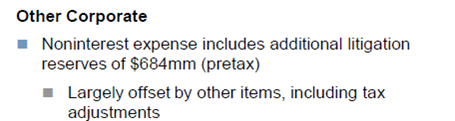
| Does JP Morgan’s Mortgage Putback Reserve Disclosures Make Sense? Posted: 16 Oct 2012 05:30 AM PDT From JP Morgan's Q3 2012 Earnings Presentation – Is JPM smoothing repurchase reserves to offset losses from repurchases? ($231 of losses vs. $218 of a reserve release):
What we learned on October 1st 2012: The Attorney General of New York, Eric Schnedierman, sued JP Morgan over fraud in EMC's Mortgage Origination Practices. "For example, as of August 2012, the cumulative losses suffered by investors in 103 subprime and Alt-A securitizations that Bear Stearns sponsored and underwrote in 2006 and 2007 totaled approximately $22.5 billion, or approximately 26% of the original principal balance of $87 billion…Another $30 billion in unpaid principal on mortgages remain in these trusts today. 43% percent of that amount, or $12.9 billion is currently 90 days past due, in foreclosure, in bankruptcy or considered real estate owned by a bank (REO). This means current investors are likely to suffer additional losses going forward. The Attorney General seeks investor damages to recoup losses, as well as other equitable relief"
Questions for JP Morgan: Your litigation related reserves only increased by $684mm in the quarter. We want to know more: - The Attorney General of New York has sued you for losses of $22-34bn. What percentage of the $700mm relates to this suit? - In light of the Attorney General suit and developments in other litigation, how is it appropriate to release mortgage repurchase reserves? - What percentage of your litigation reserves accounts for potential LIBOR manipulation penalties and charges? - What percentage of your litigation reserves accounts for potential liability from market manipulation from the London Whale? PDF’s: >>> >>> >>>> |




| You are subscribed to email updates from The Big Picture To stop receiving these emails, you may unsubscribe now. | Email delivery powered by Google |
| Google Inc., 20 West Kinzie, Chicago IL USA 60610 | |



0 comments:
Post a Comment