.

{2} GoogleTranslate (H)

English French German Spanish Italian Dutch Russian Portuguese Japanese Korean Arabic Chinese Simplified

Our New Stuff

{3} up AdBrite + eToro

Your Ad Here

Monday, December 31, 2012

The Big Picture

The Big Picture


Juliette Valduriez, Shredder Extraordinaire

Posted: 30 Dec 2012 02:00 PM PST

On the Adrian Belew post yesterday, Clay pointed us to this 24 year girl who lives in Paris.

She shreds the hell out of a number of classic rock tunes:


Lost Paradise – Juliette Valduriez


More videos after the jump

~~~
Voodoo Child – Jimi Hendrix

 
~~~

Comfortably Numb – Pink Floyd

 
~~~
I Want You (She’s So Heavy) – The Beatles

 
~~~
Gimme Shelter – The Rolling Stones

 
~~~
Breath Me – Sia

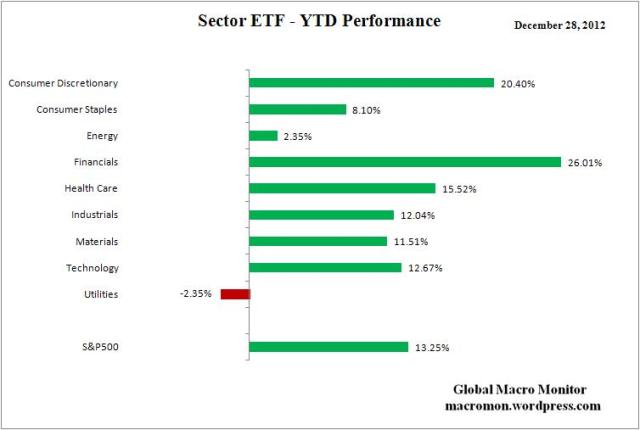
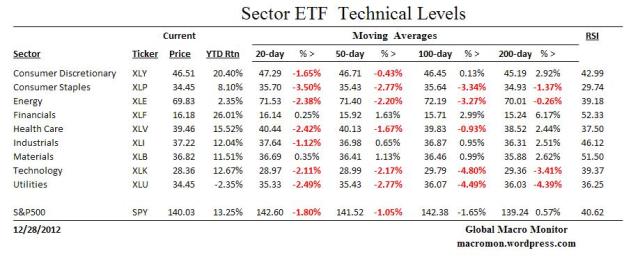
U.S. Equity Sector ETF Performance/Week Ending December 28

Posted: 30 Dec 2012 01:00 PM PST


ETF_WeekETF_QuarterETF_YTDEFT_Technicals(click here if charts are not observable)

John Cleese – a lecture on Creativity

Posted: 30 Dec 2012 08:30 AM PST

“Telling people how to be creative is easy – being creative is difficult.”


-John Marwood Cleese (/ˈkliːz/; born 27 October 1939) is an English actor, comedian, writer and film producer. He achieved success at the Edinburgh Festival Fringe and as a scriptwriter and performer on The Frost Report. In the late 1960s he became a member of Monty Python, the comedy troupe responsible for the sketch show Monty Python’s Flying Circus and the four Monty Python films: And Now for Something Completely Different, The Holy Grail, Life of Brian and The Meaning of Life.  (Continues after video)


Previously: John Cleese on the Origin of Creativity


In the mid 1970s, Cleese and his first wife, Connie Booth, co-wrote and starred in the British sitcom Fawlty Towers.

Later, he co-starred with Kevin Kline, Jamie Lee Curtis and former Python colleague Michael Palin in A Fish Called Wanda and Fierce Creatures. He also starred in Clockwise, and has appeared in many other films, including two James Bond films as Q, two Harry Potter films, and three Shrek films.

With Yes Minister writer Antony Jay he co-founded Video Arts, a production company making entertaining training films. It was founded in 1972 by John Cleese, Sir Antony Jay, and a group of other television professionals. The videos feature well known British actors, and humorously explain business concepts. Productions include Meetings, Bloody Meetings and More Bloody Meetings, and have featured Cleese, Dawn French, Prunella Scales, Hugh Laurie, and Robert Hardy.

In December 1977, Cleese appeared as a guest star on The Muppet Show. Cleese was a fan of the show, and co-wrote much of the episode. He appears in a “Pigs in Space” segment as a pirate trying to hijack the spaceship Swinetrek, and also helps Gonzo restore his arms to “normal” size after Gonzo’s cannonball catching act goes wrong. During the show’s closing number, Cleese refuses to sing the famous show tune from Man of La Mancha, “The Impossible Dream”. Kermit the Frog apologises and the curtain re-opens with Cleese now costumed as a Viking trying some Wagnerian opera as part of a duet with Sweetums. Once again, Cleese protests to Kermit, and gives the frog one more chance. This time, he is costumed as a Mexican maraca soloist. He has finally had enough and protests that he is leaving the show, saying “You were supposed to be my host. How can you do this to me? Kermit — I am your guest!”. The cast joins in with their parody of “The Impossible Dream”, singing “This is your guest, to follow that star…”. During the crowd’s applause that follows the song, he pretends to strangle Kermit until he realises the crowd loves him and accepts the accolades. During the show’s finale, as Kermit thanks him, he shows up with a fictional album, his own new vocal record John Cleese: A Man & His Music, and encourages everyone to buy a copy. This would not be Cleese’s final appearance with the Muppets. In their 1981 film The Great Muppet Caper, Cleese does a cameo appearance as Neville, a local homeowner. As part of the appearance, Miss Piggy borrows his house as a way to impress Kermit the Frog.

Cleese won the TV Times award for Funniest Man On TV — 1978-79. Many people think you are either born with creativity or you aren’t. But John Cleese explains how to become creative. John Cleese – a lecture on Creativity: In the video, he talks about such thing as the unconscious mind.

Ritholtz’s Dozen Rules for Investors

Posted: 30 Dec 2012 08:15 AM PST

These were my rules I pulled together for the Washington Post:

1. Cut your losers short, and let your winners run.
2. Avoid predictions and forecasts
3. Understand crowd behavior.
4. Think like a contrarian (but don’t always act like a contrarian).
5. Asset allocation is crucial.
6. Decide if you are an active or passive investor.
7. Understand your own psychological make up.
8. Admit when you are wrong.
9. Understand the cycles of the financial world.
10. Be intellectually curious.
11. Reduce investing friction.
12. There is no free lunch.

The first half is here, second half here.

How to separate fact and fiction online

Posted: 30 Dec 2012 05:59 AM PST

“Truth is emotional, it’s fluid, and above all, it’s human. No matter how quick we get with computers, no matter how much information we have, you’ll never be able to remove the human from the truth-seeking exercise." -Markham Nolan

By the end of this talk, there will be 864 more hours of video on YouTube and 2.5 million more photos on Facebook and Instagram. So how do we sort through the deluge? At the TEDSalon in London, Markham Nolan shares the investigative techniques he and his team use to verify information in real-time, to let you know if that Statue of Liberty image has been doctored or if that video leaked from Syria is legitimate.

The managing editor of Storyful.com, Markham Nolan has watched journalism evolve from the pursuit of finding facts to the act of verifying those floating in the ether.


Markham Nolan: How to separate fact and fiction online

Falling Off the Fiscal Cliff

Posted: 30 Dec 2012 05:55 AM PST

Falling Off the Fiscal Cliff
Jason Saving
Dallas Fed, December 2012


Issue in PDFPDF

Rarely has a Federal Reserve chairman spoken of an event in more ominous terms. Falling off the "fiscal cliff," a phrase coined by Ben Bernanke to describe a massive and abrupt shift in federal taxes and spending, may accompany the last words of "Auld Lang Syne" to begin 2013.

Commentators spanning the ideological spectrum have pronounced an economic apocalypse of varying proportions. Some have forecast that the country will slide into recession for at least two quarters and possibly all of 2013, that consumers will become even more reluctant to spend and that the international economy will suffer. The Group of 20—a collection of industrialized nations whose members (including Japan and much of Europe) face their own economic challenges—pegged the cliff as the single most significant threat to global economic growth in 2013.

These are serious claims, with wide-ranging implications not only on Capitol Hill but also for monetary policymakers. As such, it's important to better understand the fiscal cliff and its overall economic implications, examining key components, their size and how they interact.

Assessments of the fiscal cliff are complicated by the nation's high unemployment rate and slow growth in the three-and-a-half years following the end of the last recession. Most macroeconomic analyses of a fall from the cliff indicate a large hit to gross domestic product (GDP), at least in the short run. Some suggest the best alternative strategy may be to combine short-term spending with longer-term fiscal consolidation—though such a strategy may be easier said than done.

Fiscal Cliff Components

While many people view the fiscal cliff as a monolithic entity, it's actually a collection of six major provisions that happen to occur at about the same time, involving: income taxes, the alternative minimum tax, labor-market support, health care taxes, Medicare reimbursement reductions and across-the-board spending cuts.

The first and among the largest of these are income tax provisions contained in the Economic Growth and Tax Relief Reconciliation Act of 2001 and companion legislation passed in 2003. Better known as the "Bush tax cuts," the legislation included lower marginal rates on income, capital gains and dividends; a smaller "marriage penalty"; larger child tax credits; and gradual elimination of the estate tax. Extending these tax provisions would cost the government $110 billion in fiscal year 2013.

The second category concerns a design flaw in the alternative minimum tax (AMT)—a tax intended to ensure payments by high-income earners—that has increasingly ensnared middle-income earners. The AMT's brackets are not indexed to inflation, causing an ever-deeper dip into the ranks of the middle class. For budgetary reasons, lawmakers adopted a series of patches rather than a permanent fix for this glitch. Another patch would cost $90 billion in fiscal 2013.

Just how many Americans are shielded by these patches? Roughly 4 million taxpayers were subject to the AMT in tax year 2011 (Chart 1). Without a new patch, that number would immediately rise to 30 million and would escalate, possibly reaching 66 million over the next decade.

Not included in the AMT figure is an interactive effect with the 2001/03 Bush tax cuts. Because the AMT acts as a floor on how much income tax households pay, reductions in ordinary income tax rates increase AMT coverage, inadvertently broadening the AMT's reach. This effect makes patching the AMT a more expensive proposition when accompanied by extension of the Bush tax cuts. The cost—$35 billion in fiscal 2013—also increases over time.

The third category, labor-market support, encompasses unemployment insurance extensions and a payroll tax cut of 2 percentage points that were enacted as part of the Job Creation Act of 2010. Studies suggest these measures have significant stimulative macroeconomic effects over the short term. However, some analysts believe further unemployment extensions may discourage job-seeking, while the payroll tax cut may have troubling implications for the solvency of entitlement programs such as Social Security over the longer term. Extending the labor-market support package would cost $115 billion in fiscal 2013.

The fourth category includes tax increases adopted under the Affordable Care Act of 2010. Principal among them is a 0.9 percent Medicare payroll-tax increase for upper-income workers and an accompanying 3.8 percent "payroll tax" applied to the investment income of high-income households. Also included are new taxes on specific manufacturers, such as medical device makers. Postponing these taxes would cost $25 billion in fiscal 2013.

The fifth category includes currently scheduled reductions in Medicare payments to doctors, hospitals and other health care providers. In the late 1990s, Congress examined Medicare reimbursements and concluded that a slower, sustainable growth rate in payouts to doctors and hospitals was needed to help safeguard Medicare's long-run solvency. As soon as those limits began to bite, providers persuaded policymakers in 1997 to temporarily waive them, a reprieve that has continued through this year even as the gap between sustainable spending and actual reimbursements swelled to almost 30 percent. Continuing those waivers—the so-called "docfix"—would cost an estimated $10 billion in fiscal 2013.

The last component, across-the-board spending cuts, became a factor only last year. As part of the debt-limit agreement that narrowly averted a U.S. debt default in August 2011, lawmakers vowed to reach consensus on a $1.2 trillion "down payment" on deficit reduction over the next 10 years or submit to a "sequester," automatic spending cuts that would fall equally on defense and nondefense portions of the budget beginning in 2013. Canceling the sequester would raise the deficit by $65 billion in fiscal 2013.

With these components and an "other" category that encompasses smaller provisions and feedback effects, fiscal cliff consolidation amounts to $560 billion in fiscal 2013 alone (Chart 2).

Short-Term Economic Impact

To understand the economic impact of the fiscal cliff, it's important to understand the logic underlying the models agencies use to assess the macroeconomic impact of government policy.

It's assumed that as higher income tax rates and smaller government "transfer" payments for social programs take effect, individuals find themselves with less disposable income and respond by purchasing fewer goods and services. As businesses feel the effects of this adverse shift in aggregate demand, they scale back output—and employment. In this way, contractionary fiscal policy has a negative impact on the economy in the short run (though not necessarily over the long run).

The Congressional Budget Office (CBO) found that the negative economic impact of going over the fiscal cliff would be heavily concentrated in the first half of the year, with a reduction in growth of 3 percentage points.[1] Importantly, this implies the fiscal cliff would be stout enough to briefly take the country into recession, though it would likely emerge in the second half—unless the economy were hit by further headwinds. Employment over the year would be about 2 million behind where it would have been if the cliff had been addressed.

The Tax Policy Center (a joint venture of the Urban Institute and the Brookings Institution) found that disposable income would fall 4.4 percent for the middle 20 percent of households if the fiscal cliff occurred in its entirety (Chart 3). Higher-income households would be hit harder by the cliff, suffering a 7.7 percent decline, primarily because the 2001/03 tax cuts disproportionately—though not exclusively—benefit high earners. The bottom 20 percent of households would suffer the smallest decline, 3.7 percent, because several significant chunks of the cliff bypass them.[2]

Interestingly, the various components of the fiscal cliff don't contribute equally to these negative economic impacts. For example, it might appear that letting the 2001/03 tax cuts expire would have a large impact because this component is among the biggest fiscal cliff budget items, as detailed in Chart 2. However, the cuts are estimated to have the fourth-largest impact, behind the sequester, labor-market provisions and AMT patch.

The reason is that, in the short run, different fiscal policies can have a very different "bang for the buck" (often referred to in economic shorthand as a fiscal "multiplier"). When the government reduces its purchases and lays off workers, as would occur under the sequester, there is an immediate and sizable reduction in demand that feeds back into the overall economy—that's why the impact of the sequester on GDP is so large. Marginal rate cuts have the smallest multiplier because they flow disproportionately to higher-income individuals, who make the "wrong" choice from a short-run point of view and save those funds instead of spending and pumping them back into the broader economy.[3]

Longer-Run Factors

If averting the fiscal cliff has such large positive effects on GDP growth in the short run, why not avert it permanently and enjoy those effects not only in 2013 but every year thereafter? The answer boils down to one word: debt.

In the short run, most economists agree that spending borrowed funds can stimulate the economy. But over the longer term, debt incurred from these programs reduces future generations' standard of living several ways:

  • Government spending crowds out private sector investment, reducing the size of the nation's capital stock.
  • An increasingly large share of the government's budget is devoted to interest payments, eventually requiring spending cuts or tax increases.
  • The ability to adopt countercyclical fiscal policy to ease the impact of future recessions is hampered.
  • Given enough time and sufficiently large debt, even a Greek-style meltdown becomes more likely than it otherwise would be (though there's little reason to believe the U.S. is on the cusp of such a calamity).

No matter how things shake out, deficits will remain—but they'll be a lot larger under some circumstances than others. If none of the expiring fiscal cliff provisions were extended past 2012, the CBO estimates that deficits would gradually fall to 1.2 percent of GDP and remain there for the next decade (Chart 4). If the fiscal cliff and smaller "fiscal clifflets" later in the decade were deferred in perpetuity, however, annual deficits would never fall below 4 percent of GDP and would reach 5.5 percent by 2022—leaving the U.S. poorly positioned to cope with the fiscal challenges of expected Social Security and Medicare shortfalls.

In fiscal policy as in monetary policy, it's necessary to carefully weigh short-term gain against long-term pain, often when no unambiguously optimal options are available. Many have suggested that the best strategy may be visible, loose fiscal policy today, coupled with strongly worded promises to embark upon fiscal consolidation as soon as it becomes reasonable to do so. But what's reasonable is not always apparent, making such proposals easier said than done.

Perhaps the real question today is whether we have entered an era of permanently greater polarization in Congress and permanently higher fiscal policy uncertainty. If that's the case, today's fiscal cliff may be a harbinger of what's to come.


_______

Notes

    1. See "Economic Effects of Reducing the Fiscal Restraint That Is Scheduled to Occur in 2013," Congressional Budget Office, May 2012. Subsequent economic developments have been less favorable than forecast, so it is possible the actual impact of the fiscal cliff would be at least slightly greater.

    1. These estimates do not consider feedback effects caused by a fiscal-cliff-induced weakening of the economy; thus, the true numbers may be somewhat greater.

  1. This choice is "wrong" only in the sense that it doesn't provide an immediate boost to growth—no judgment is being made here about whether it is a sound choice in any other context.

10 Sunday AM Reads

Posted: 30 Dec 2012 05:30 AM PST

My Sunday morning reads:

• Ben Bernanke’s Secret Message to Congress: More Stimulus, Please (The Atlantic)
• Why Robert Khuzami Would Be a Terrible Choice to Head the SEC  Given Read (naked capitalism) see also ‘Whale’ Capsized Banks’ Rule Effort (WSJ)
• Obama Eyes $108 Billion Annual Asia Prize Vying With China Trade (Bloomberg)
• History lesson: Why the Bush tax cuts were enacted (Washington Post) see also Zachary Karabell: The bright side of the fiscal cliff (Reuters)
Nassim Taleb: My rules for life (The Guardian)
• Federal Power to Intercept Messages Is Extended (NYT)
• Greenland and Antarctica 'have lost four trillion tonnes of ice' in 20 years (Guardian) see also 2012 Arctic Report Card (Climate Watch)
• IQ 'a myth,' study says (The Star)
• Clout Diminished, Tea Party Turns to Narrower Issues (NYT) see also Is Fox Even Helping the Republicans Anymore? (Huffington Post)
• 6 Simple Rituals To Reach Your Potential Every Day (Fast Company)

What are you doing this New Year’s Eve?


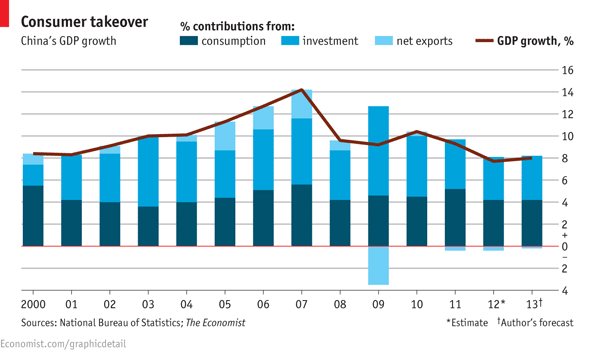
Chinese growth faces a more sober economy in 2013

Source: The Economist

Montier: Strategic Asset Allocation ≠ Static Asset Allocation

Posted: 30 Dec 2012 05:30 AM PST

The Properties of Income Risk in Privately Held Businesses

Posted: 30 Dec 2012 03:00 AM PST

.

Sunday, December 30, 2012

The Big Picture

The Big Picture


Abuses Of Power Always – Always – Expand Beyond Their Original Application

Posted: 29 Dec 2012 10:30 PM PST

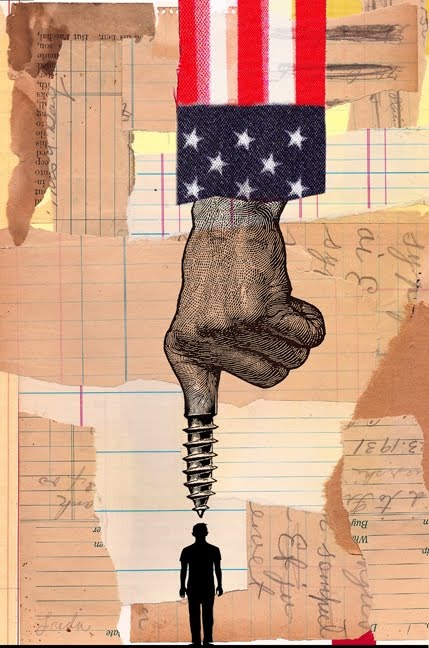
The FBI – Drowning In Counter-Terrorism Money, Power and Other Resources – Will Apply The Term "Terrorism" To Any Group It Dislikes And Wants To Control And Suppress

 The FBI   Drowning In Counter Terrorism Money, Power and Other Resources   Will Apply The Term Terrorism To Any Group It Dislikes And Wants To Control And Suppress
Painting by Anthony Freda: www.AnthonyFreda.com.


Constitutional lawyer Glenn Greenwald writes:

Documents just obtained from the FBI by the Partnership for Civil Justice Fund reveal, as the New York Times put it, that "the [FBI] used counterterrorism agents to investigate the Occupy Wall Street movement, including its communications and planning" and in general show "how deeply involved federal law-enforcement authorities were in monitoring the activities of the movement." The heavily redacted documents, which can be read here, reveal numerous instances of the FBI collaborating with local police forces and private corporations to monitor and anticipate the acts of the protest movement.

As obviously disturbing as it is, none of this should be surprising. Virtually every seized power justified over the last decade in the name of "terrorism" has been applied to a wide range of domestic dissent. The most significant civil liberties trend of the last decade, in my view, is the importation of War on Terror tactics onto US soil, applied to US citizens – from the sprawling Surveillance State and powers of indefinite detention to the para-militarization of domestic police forces and the rapidly emerging fleet of drones now being deployed in countless ways. As I've argued previously, the true purpose of this endless expansion of state power in the name of "terrorism" is control over anticipated domestic protest and unrest.

It should be anything but surprising that the FBI – drowning in counter-terrorism money, power and other resources – will apply the term "terrorism" to any group it dislikes and wants to control and suppress (thus ushering in all of the powers institutionalized against "terrorists"). Those who supported (or acquiesced to) this expansion of unaccountable government power because they assumed it would only be used against Those Muslims not only embraced a morally warped premise (I care about injustices only if they directly affect me), but also a factually false one, since abuses of power always – always – expand beyond their original application.

Mr. Greenwald is correct.

The Federal government is throwing walls of money at internal "terrorism-related" funding, even though the threat of terrorism is absurdly over-hyped (although government support for Al Qaeda and Iranian terrorists – and see this isn't helping. )

On the other hand, the government is using laws to crush dissent, and it's gotten so bad that even U.S. Supreme Court justices are saying that we are descending into tyranny.

For example, the following actions may get an American citizen living on U.S. soil labeled as a "suspected terrorist" today:

And holding the following beliefs may also be considered grounds for suspected terrorism:

As people learned in Nazi Germany, staying silent when "other" types of people are deprived of their rights only ensures that others will not lift a finger for us when repressive authorities take away our rights.

Tokyo Almost As Irradiated As Fukushima

Posted: 29 Dec 2012 10:30 PM PST

Tepco – and West Coast of America – Slammed with Radiation

We've documented the spread of radiation from Fukushima to Tokyo for a year and a half.  See this, this, this, this, this and this. Unfortunately, as the following recent headlines from Ene News show, things are only getting worse:

  • Tokyo getting 5 times more radioactive fallout than prefectures closer to Fukushima

And we've previously noted that the radiation will spread worldwide (by water and air). For example:

A new study says that the West Coast will get slammed with radioactive cesium starting in 2015 

Week in Review (12/28/12)

Posted: 29 Dec 2012 03:00 PM PST

WIR_Key Levels
~~~
WIR_Equity_Week
~~~
WIR_Bond_Week
~~~
WIR_Equity_YTD
~~~
WIR_Bond_YTD

(click here if charts are not observable)

~~~

WIR_Global Trend
~~~
WIR_Equity_MA

(click here if table is not observable)


School Shootings in the US

Posted: 29 Dec 2012 11:30 AM PST


This map displays the casualties and fatalities in school shootings in the US from 1997-2012. It is based on data drawn from the Brady Center to Prevent Gun Violence.

This is not a great chart — the size of the circles creates a perceptual problem (each school shooting doesnt cover a 200 square mile area) and the coloring of the legend is not at all intuitive (wait is purple good or bad?) — but even with that, the sheer volume of School Shootings surprised me.

6 Reasons Why APIs Are Reshaping Your Business

Posted: 29 Dec 2012 11:00 AM PST

A study on APIs to demonstrate the advantages of APIs for businesses in terms of scalability, flexibility, business development, product development, supply chain management…

by faberNovel on Dec 02, 2012

What is “Rich” in America?

Posted: 29 Dec 2012 08:59 AM PST


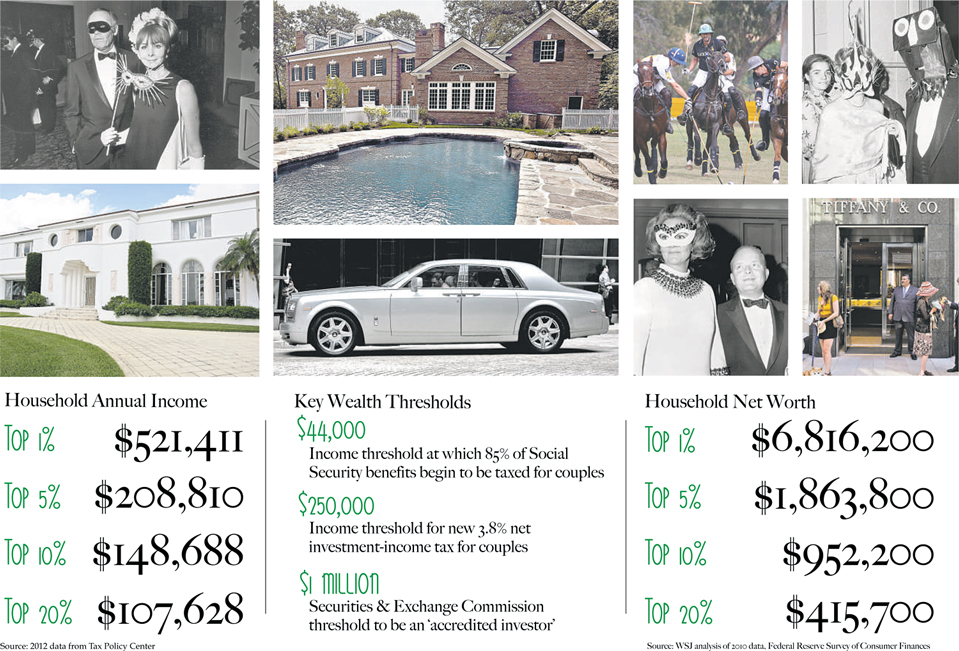
The WSJ breaks down the numbers of what it takes to be wealthy in the USA:

“The top 1% of U.S. households have a net worth above $6.8 million or at least $521,000 in income, according to data from the Federal Reserve and the Tax Policy Center in Washington. The cutoffs for the top 5% are $1.9 million in net worth, or $209,000 in income.”

Those are higher numbers than I previously had seen  . . .


Source:
Baby, You’re a Rich Man
LAURA SAUNDERS
WSJ, December 28, 2012
http://online.wsj.com/article/SB10001424127887323300404578205502185873348.html

Deprogramming Austerity Supporters

Posted: 29 Dec 2012 05:30 AM PST

Deprogramming Progressives Indoctrinated into Supporting Austerity
William K. Black
New Economic Perspectives, December 28, 2012


A little bit of economics can be a truly terrible thing, for the introductory classes in micro and macro-economics are the most dogmatic and myth-filled part of the neo-liberal curriculum.  Dogmas that have been falsified for 75 years (such as austerity) are taught as revealed truth.  The poor indoctrinated student is then launched into the world "knowing" that austerity is the answer and that mass unemployment and prolonged recessions are small prices to be paid (by others) to achieve the holy grail of a balanced budget.  Students are taught that national budgets are really just like household budgets.  These dogmas are not simply false, they are self-destructive and cruel.  Neo-liberal economics is so bad and has gone downhill at such a rapid rate that it now worships the economic analog to bleeding patients – austerity – as a response to a Great Recession.  Millions of people are indoctrinated annually into believing this long-falsified nonsense, and that includes people who consider themselves progressives.

The remarkable aspect of neo-liberal economics is that the power of its myth has survived for many progressives even after its failed dogmas caused massive economic destruction, massive elite fraud with impunity, and crony capitalism so corrupt that it cripples democracy.  Indeed, the brainwashing they received is so effective that even after the eurozone ran a massive experiment with austerity that proved (again) to be a catastrophic failure they remain neo-liberal acolytes.  This column discusses three examples that exemplify the problem.

The Guardian (U.K.)

The Guardian is the U.K.'s most famous paper of the left, but its finance editor's embrace of the neo-liberal austerity myth is passionate and inane.  Consider this remarkably incoherent discussion of the "fiscal cliff" by the paper's finance editor.

"The fiscal cliff explained: what to know about the biggest story in Washington. Is America really heading off a cliff? Why can't Congress and the president strike a deal? Get the lowdown with our handy primer."

I chose the Guardian's coverage as the first example because it begins with the most basic and common neo-liberal myth supporting austerity – a nation with a sovereign currency is really just like a household.

"So let's start at the beginning: what is the fiscal cliff?

It's not one cliff, but two things: a group of spending cuts and tax hikes that will come into effect on January 2.

Why now?

The US has about $2.3tn of money coming in, and it spends about $3.6tn. So imagine you were making $23,000 a year and spending $36,000. What would happen? You'd be in debt, and you'd have to cut your spending. The US is in the same pickle. Except, instead of a few thousand, it has to cut $1.3tn."

The U.K. did not adopt the euro, so it retains a sovereign currency.  The U.K. allows the value of the Pound to float freely and it borrows overwhelmingly in its own currency.  The Guardian, therefore, has no excuse for failing to understand a national economy like the U.S. that also has a sovereign currency.  A nation that borrows in its own freely-floating sovereign currency is not a target for bond vigilantes.  It can and should spend considerably more than it brings in through tax revenues in response to a recession.  That is what "automatic stabilizers" do.  Automatic stabilizers greatly reduce the severity and length of recessions.  Austerity does the opposite.  Nations with sovereign currencies can create money directly through key strokes on the central bank's computer or by borrowing at exceptionally low interest rates during a recession.  The U.S., the U.K., and Japan all borrow long-term (10 years) at interest rates below two percent because they have sovereign currencies.  Nations with sovereign currencies typically run budget deficits in most years.  The U.S. has run a budget deficit over the great bulk of its history.

If a household reduces its spending because its income falls during a recession there is a negligible effect on the Nation's economy.  If a national government cuts spending because a recession reduces its income it directly reduces public sector demand and indirectly reduces private sector demand.  A recession occurs when demand is seriously inadequate.  Governmental austerity inflicts a far more severe recession on the nation by further reducing demand.  A household and a Nation should follow the opposite strategy when their incomes fall sharply.  The Guardian's claim that they should follow the same strategy shows their indoctrination into one of neo-liberalism's most destructive myths.  The fact that the Guardian is making this claim in December 2012, after seeing the recession that austerity inflicted on the eurozone, proves that the problem is dogma, for only dogma is impervious to facts that repeatedly falsify its predictions.

The Guardian, of course, knows that the eurozone has been forced back into recession by the "troika's" policies, but it reverses the causality.  Here is a related piece by the same finance editor about the world's reaction to the failure to reach a deal on the "fiscal cliff."

"Q: What does the rest of the world think of this?

They think we're ridiculous, and that we're playing fast and loose with not just our own economy, but that of the world. IMF chief Christine Lagarde said the US is becoming its own worst enemy by delaying a decision. Still, this is a case of pots and kettles. It's not like Europe can really look down on us: they've been delaying the same hard decisions on spending cuts for over three years and have been on the brink of a meltdown many times since. Should we be smart enough to look at their example and avoid the same troubles? Yes, technically. But this is the nature of negotiations: they go down to the wire."

The Guardian's remarkable explanation of why the Eurozone has been forced back into recession is:  insufficient and delayed austerity!  If only the Eurozone had made promptly made deeper "spending cuts" things would have been much better.  That "logic" comes from assuming that nations are just like households.  The Guardian's answer to the fact that bleeding the patient makes the patient weaker is to bleed them more, and faster.

Note that the Guardian's finance editor also seems to believe that sovereign monetary systems like the U.S. and the U.K. suffer the same risk of "meltdown" that nations that abandoned their sovereign currencies because they adopted the euro experienced "many times."  The "meltdowns" that the eurozone nations have suffered "many times" because of the deadly vulnerability of nations that lack a sovereign currency to the toxic mix of recession, austerity, and the debt vigilantes.  The Guardian's finance expert's failure to understand such fundamental and critically important features of the financial system is a testament to the danger of dogma.

The U.S. has "avoid[ed] the same troubles" as the eurozone following the Great Recession.  It has not suffered financial "meltdowns" "many times."  It has not been thrown back into recession and it does not suffer Great Depression levels of unemployment.  The U.S. budgetary deficit has been reduced at a record rate over the last three years.  The U.S. has been able to "avoid the same troubles" as the eurozone because it has not embraced the austerity dogma and it has not given up its sovereign currency.  The U.S. did not provide remotely adequate stimulus of the kind recommended by competent economists, but the modest stimulus has been sufficient to produce a modest, sustained recovery.  The Guardian, however, implies that we have failed to avoid the eurozone's troubles after the onset of the Great Recession.

Governor Howard Dean

Governor Dean served as Chairman of the Democratic National Committee from 2005-2009.  He was an early opponent of the invasion of Iraq.  His self-description is "progressive Democrat."  He is a physician.  Dean is a frequent guest on MSNBC's evening programs.  Dean takes the position that the U.S. should go off the "fiscal cliff" because austerity is desirable.  He claims that a "balanced budget" is essential and that "everybody" should pay higher taxes to balance the budget.  He thinks, contrary to the history of the U.S., that no nation can continue to run deficits.    

On CNBC, Dean cheered for the austerity that the "fiscal cliff" would inflict on the nation.  He did so even though he believed it would cause a recession for at least six months.  He predicted that the recession would be short and mild and a small cost to reduce the deficit.  He assumed that austerity would reduce the deficit even though he conceded it would cause a recession.

Dean, a self-described progressive, and one of the nation's most prominent Democrats, is more dogmatic than Speaker Boehner on austerity.

Andrew Stern (former head of SEIU)

Andrew Stern headed one of the largest unions in America.  He made it a growing union and a political force devoted to progressive causes.  He was a member of the Bowles-Simpson (BS) deficit reduction commission appointed by President Obama.  Obama appointed co-chairs he knew were zealous supporters of austerity and unraveling and privatizing the safety net.  Erskine Bowles is a leader of the Wall Street wing of the Democratic Party and Alan Simpson is a very conservative Republican.  Stern declined to vote in favor of the BS austerity recommendations, but his vote was not based on any rejection of austerity.

"Why I Voted No On Simpson-Bowles

On December 3, 2010, I voted "no" on the Simpson-Bowles report presented to the National Commission on Fiscal Responsibility and Reform. Here is what I had to say about it at the time:

This Commission report also challenges our President to offer his plan for economic growth, and fiscal responsibility no later than his State of the Union, and challenges Congress to adopt a plan no later than Election Day 2012.

I voted no, despite my admiration for the effort, because any plan, I feel strongly, must tackle both our fiscal and investment deficit needed to create jobs and a dynamic economy. No family would willfully balance its budget by not sending their child to college. No business can successfully compete with outdated equipment. And no nation can simply cut its way into prosperity. I felt the plan should better balance revenues and spending cuts, could balance Social Security while preserving more benefits, made too many short term cuts in health care before full reform was implemented in 2018, and did not have shared corporate responsibility."

Stern now says that he regrets voting against the BS recommendations.

He pushed for the "Super Committee" to "go big" and adopt massive austerity before it statutory deadline in November 2011.

Stern's co-panelists at the conference, organized by one of Pete Peterson's groups, whose participants unanimously urged the "go big" super-austerity plan included the former CEO of the AARP, Bill Novelli.  Novelli's support for austerity is particularly noteworthy given the BS plan's proposals to cut and begin to privatize Social Security – Wall Street's unholy Grail.

Conclusion

Neo-liberal economics has devastated the global economy and produced all of the predictive failures and evil consequences that progressives have long attributed to its micro-economic myths.  Far too many progressives, however, continue to believe the similarly mythical and self-destructive macro-economic myths about deficits, debt, and austerity.  It is hard enough countering Pete Peterson's billion dollar campaign to inflict austerity and unravel and privatize the safety net.  Peterson funds myriad front groups.  We also have to counter the Wall Street wing of the Democratic Party, which dominates Treasury, OMB, the Justice Department, and the office of the Chief of Staff and favors austerity and unraveling the safety net.  We should not have to deprogram progressives indoctrinated into repeating neo-liberal economic dogmas.

Progressives should be able to observe that the neo-liberal macro-economic predictions have been consistently falsified by reality.  They should have seen documentaries like Inside Job and Capitalism: A Love Story about the catastrophic failure of neo-liberal economics and economists.  They should read sites like New Economic Perspectives and Paul Krugman's columns that explain why austerity is self-destructive and why the safety net need not, and should not, be attacked.  Progressives need to say "no" to anyone who wants to "bleed" the economy through austerity or cutting the safety net. 

Facebook Censors Prominent Political Critics

Posted: 29 Dec 2012 05:30 AM PST


censorship on Social Networking Facebook Censors Prominent Political Critics

Political Witch Hunt by Popular Social Media Sites

We've previously documented that the largest social media websites censor government criticism.

For example, Facebook pays low-wage foreign workers to delete certain content based upon a censorship list. For instance, Facebook deletes accounts created by any Palestinian resistance groups.

Today, Facebook deactivated the Facebook accounts of some of the leading American political critics.

For example, former diplomat and U.C. Berkeley Professor Emeritus Peter Dale Scott told us that his Facebook account was suddenly deactivated today without any justification.

So did Richard Gage, founder of Architects and Engineers for 9/11 Truth.

And Michael Rivero, owner of the popular website What Really Happened.

Infowars – one of the world's most popular alternative media sites – confirms that accounts for the following political commentators have been shut down:

  • Kurt Nimmo, writer for Infowars.com and formerly Counterpunch
  • Aaron Dykes of Infowars
  • Jason from Infowars
  • Infowar Artist

Indeed, Facebook told an Infowars reporter last year not to post anything political:

Be careful making about making political statements on facebook … facebook is about building relationships not a platform for your political viewpoint. Don't antagonize your base. Be careful and congnizat (sic) of what you are preaching.

And Infowars also confirms that the Facebook account for Natural News – one of the most popular alternative health sites – has been shut down.

Reports are that the Facebook accounts of a number of other political critics were suspended or deactivated today as well, including:

  • Robert M. Bowman, former director of the "Star Wars" defense program under President Ronald Reagan
  • Anthony J. Hilder, popular radio host
  • William Lewis
  • Wacboston
  • Michael Murphy
  • Mike Skuthan
  • Packy Savvenas
  • Sean Wright and Katherine Albrect

We will update this post as we receive additional information.

Adrian Belew: History & Future of Guitar Noise

Posted: 29 Dec 2012 05:00 AM PST

Chicago Humanities Festival

The electric guitar and its accessories have transformed an astounding amount since their initial invention and have been played by some extreme innovative and prodigious players. From Jimi Hendrix to modern effects laden guitar tracks, some may wonder where and how there is room to explore and develop original sound. Join Adrian Belew as he discusses techniques of new innovation as well his longstanding process of discovering the undiscovered. Adrian’s professional career as a musician starts in the 70s and includes collaboration with the Talking Heads, King Crimson, David Bowie, Frank Zappa and Nine Inch Nails among a plethora of solo work. Here Adrian reviews and demonstrates features that make modern guitars and auxiliary equipment optimal for exploring sound.

Discussion topics include midi guitars, layering and combining effects such as echo lengths with pitch shifts, exploration of compound rhythm structures and time signatures, the cutting edge of guitar design, benefits of acoustic and electric experimentation, not to mention some fun Zappa stories.

Adrian Belew: History & Future of Guitar Noise- Pt 1/3

Adrian Belew: History & Future of Guitar Noise- Pt 2/3

Adrian Belew: History & Future of Guitar Noise- Pt 3/3

Uploaded on Dec 23, 2011

10 Weekend Reads

Posted: 29 Dec 2012 03:15 AM PST

Some longer form reads to begin your extended weekend:

• Scientology: The Tip of the Spear (LA Magazine) Note: This is the article that brought Scientology into the light tears ago
Ooh a chair! Signs of Changes Taking Hold in Electronics Factories in China (NYT)
• The Structure of Scientific Revolutions at Fifty (The New Atlantis) but see The Folly of Scientism (The New Atlantis)
• The Boy Who Became a World War II Veteran at 13 Years Old (Past Imperfect)
• The Sharp, Sudden Decline of America’s Middle Class (Rolling Stone)
• The Fixers: How ‘Fix the Debt’ Won Over Wall Street and Built a Fiscal Cliff Army (NY Magazine)
• What Turned Jaron Lanier Against the Web? (Smithsonian)
• Three lessons from the near-final popular vote (Los Angeles Times) see also Setting the Stage for a Second Term (TIME)
• Alan Turing in three words (The Times Literary Supplement)
• What are the top five books you must-read? (Barking Up The Wrong Tree)

What do you have going  on this weekend?


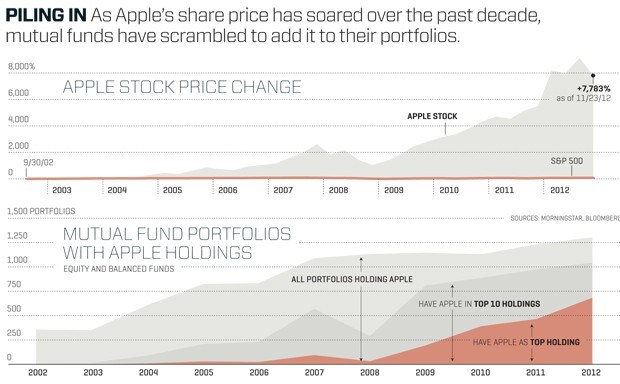
Why you’re right to be obsessed with Apple stock

Source: Fortune

Barclays Libor Advert (Modified)

Posted: 29 Dec 2012 03:05 AM PST

A Barclays advert. Changed slightly.
from Michael Spicer 5 months ago / via iMovie

Barclays Advert from Michael Spicer on Vimeo.

Hat tip Walter Palmetshofer

Crisis and Calm: Demand for U.S. Currency at Home and Abroad from the Fall of the Berlin Wall to 2011

Posted: 29 Dec 2012 03:00 AM PST

.
previous home Next

{8} chatroll


{9} AdBrite FOOTER

{8} Nice Blogs (Adgetize)