


The Big Picture |
- Nelson Mandela & South African Inequality
- BBC: Inside the US Federal Reserve
- 10 Monday PM Reads
- The Hierarchy of Innovation
- Advance Decline Line (Market Breadth) Says No Top Yet
- 10 Monday AM Reads
- A Closer Look at Hedge Fund Under-Performance
- TDS: Blackstone & Codere
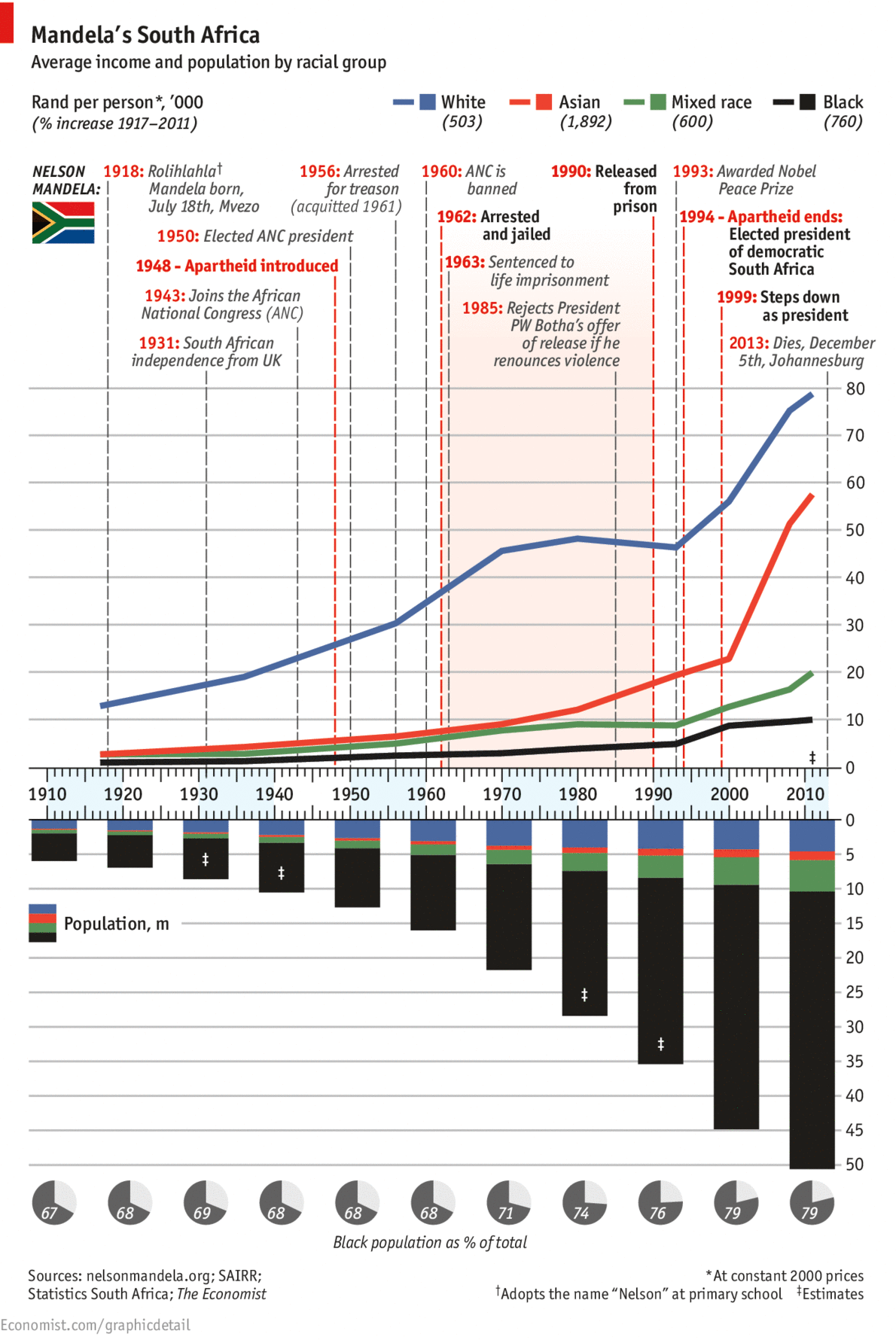
| Nelson Mandela & South African Inequality Posted: 09 Dec 2013 04:30 PM PST |
| BBC: Inside the US Federal Reserve Posted: 09 Dec 2013 04:00 PM PST |
| Posted: 09 Dec 2013 01:30 PM PST My afternoon train reading:
What are you reading?
Greece has lost more than one-fifth of its pre-crisis economy
|
| Posted: 09 Dec 2013 11:30 AM PST I find this intriguing:
From Rough Type:
Source: Rough Type |
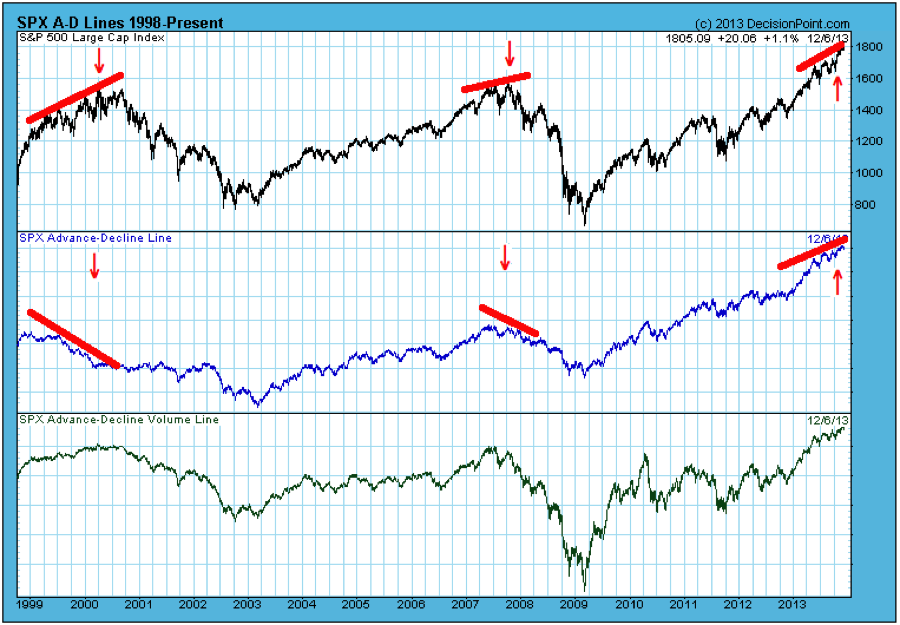
| Advance Decline Line (Market Breadth) Says No Top Yet Posted: 09 Dec 2013 09:30 AM PST
One of the best ways to identify a market that is exhausted is to look for divergences between Breadth (i.e, the numbers of Advancing equities versus the number of declining ones) and Price (ie., New Highs). That is a concept which Paul Desmond of Lowry’s has researched and written about many times over the years (See e.g., The Warning Signs of Market Tops, August 16, 2013). As the chart above shows, markets saw major divergences in both 2000 and 2008, as stocks continued to make new highs in prices but failed to do so in the advance decline line. Prices kept rising, but fewer and fewer issues were participating in the new highs. Continues here
|
| Posted: 09 Dec 2013 06:29 AM PST Good Monday morning. These are the items that will make the start of your week a little better informed:
Continues here |
| A Closer Look at Hedge Fund Under-Performance Posted: 09 Dec 2013 05:00 AM PST
Hedge fund performance – and under-performance – is an area of research I have been intrigued about for several years now. It is a complex, nuanced issue which many folks misunderstand. I was reminded of this over the weekend, courtesy of a Bloomberg article titled Hedge Funds Trail Stocks by the Widest Margin Since 2005. The numbers cited above are eye-popping: The average hedge fund is under-performing the S&P500 by over 2000 basis points this year alone. That is an astonishingly poor showing. As Saijel Kishan & Kelly Bit point out in their article, hedge funds have "underperformed the S&P 500 by 97 percentage points since the end of 2008." The last time the fund industry outperformed U.S. stocks was in 2008. That year, they lost (depending upon which industry data you use) somewhere between 19 and 29 percent; the S&P 500 declined 37 percent. Prior to 2008, you need to go back to 1993 to find similar outperformance when they were up 31 percent versus a 10 percent increase for the S&P. In a presentation at the Retirement Security conference at the Kennedy School at Harvard University this summer (The High Cost of Neuro-Financial Errors: How Cognitive Bias and Performance Chasing leads to Investing Failures) I divided the explanations for hedge fund performance into five categories: 1) Industry Size; 2) Fund Size; 3) Unhedged Hedge Funds and the Financial Crisis; 4) Drag from fees; 5) Unsmooth alpha distribution. A brief look at each will put the poor performance into some context.
Continues here |
| Posted: 09 Dec 2013 03:00 AM PST Blackstone & Codere amantha Bee investigates the shady, totally legal business dealings of a private equity firm called Blackstone. Here is the original article: Blackstone Unit Wins in No-Lose Codere Trade: Corporate Finance The Daily Show (07:00) |


| You are subscribed to email updates from The Big Picture To stop receiving these emails, you may unsubscribe now. | Email delivery powered by Google |
| Google Inc., 20 West Kinzie, Chicago IL USA 60610 | |



0 comments:
Post a Comment