


The Big Picture |
- Scientific Method: Statistical Errors
- Tig Notaro: “Hello, I have cancer”
- Truisms
- What Is Your Focus: Outcome or Process?
- 10 Weekend Reads
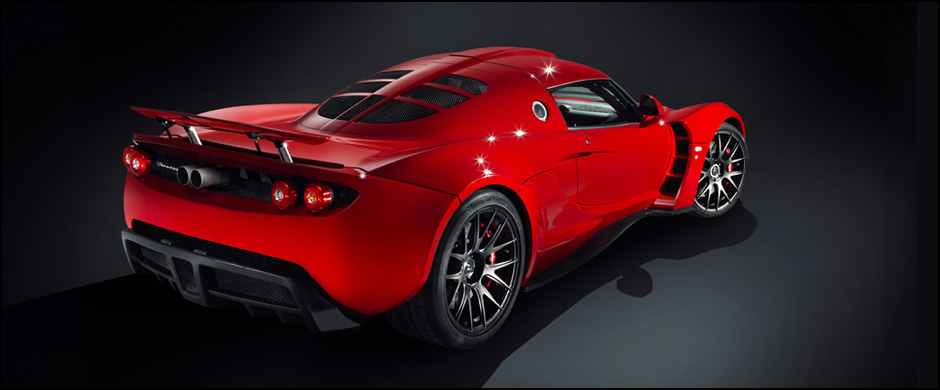
- Move Over Bugatti Veyron: Hennessey Venom GT
| Scientific Method: Statistical Errors Posted: 02 Mar 2014 12:30 AM PST
| ||||||||||||||
| Tig Notaro: “Hello, I have cancer” Posted: 01 Mar 2014 05:00 PM PST Brave and brilliant: Tig Notaro: “Hello, I have cancer” – Part 1 of 2 Tig Notaro: “Hello, I have cancer” – Part 2 of 2 | ||||||||||||||
| Posted: 01 Mar 2014 12:00 PM PST Tumblr is for porn. Facebook is for the wannabe famous. Instagram is for those who are too lazy to write. Texting is social currency. It doesn’t matter how many likes or friends or followers you’ve got, but how many people text you and how regularly, that’s how popularity is judged today. Pinterest is inexplicable to guys. Samsung is for those who hate Apple and those too cheap to buy an iPhone (not necessarily the same thing, Apple-haters will buy the most expensive Galaxy). iPhone 4s means you’re almost at the end of your contract or you’re too cheap to upgrade. Tesla means you’re more interested in status than utility, or you never drive far from home. iPhone 5c means you think iPhones really cost a hundred bucks, not north of five hundred. Windows means you got your computer from work or you’re too cheap to buy a Mac. Argue all you want, perception is everything, and perception is reality. Hip-hop is the rock and roll of the Millennials. With a dollop of Gen-X’ers thrown in. Rock and roll is the music of the baby boomers, who believe everything they’re into should last forever, but it doesn’t, just like them. Books get a lot of publicity, but barely sell. Sure, there are exceptions, but very few. Sales are irrelevant, streams are everything, but newspapers are only trumpeting Spotify plays when all the action’s on YouTube. Albums are for the creators, no one else cares, except for a cadre of extremely vocal fans. Terrestrial radio is an advertiser-laden medium for poor people. Anybody with an income is listening to satellite or streaming from their mobile device. Baby boomers buy Japanese automobiles because they remember how bad their parents’ Detroit iron was. In other words, despite all the press that GM, Ford and Chrysler are improving, boomers are sticking to Toyota and Honda, at least in California, and trends still start in California, don’t ever forget it. Binge viewing is a badge of honor. Telling everybody you stayed home to watch all the episodes of _______ garners more status than saying you went to the show, and there’s more to talk about! The Millennials want to be famous, just watch Douglas Rushkoff’s documentary “Generation Like“. Newspapers insist on fat profit margins and head for decrepitude while online sites focus on user experience first and profits last. In other words, it’s the product, stupid! Companies are constantly fighting for awareness. Ignorance reigns. Education comes through word of mouth, which also spreads falsehoods. He who knows the most truth wins. We live in an information society, what’s in your brain is paramount. Without relationships you cannot succeed. Here today, gone tomorrow, welcome to the twenty first century. You can only combat this by constantly producing. U2 released a single during the Super Bowl, it’s already been forgotten, assuming you knew its name to begin with. No one cares if Shia LaBeouf wears a bag on his head, it’s a trumped up media story. Robin Thicke will screw everything that moves, wake up and realize his career is over and lament the loss of his wife. Alec Baldwin was right about Harvey Levin, but if you think he’s retiring from public life, you believe Kim Kardashian is all natural. That’s what Alec does, turn it on in the public eye, without this oxygen he’s dead, so he’ll be back, just like Scott Shannon, ha! (“Alec Baldwin: Good-bye, Public Life“) Just because you get press for your celebrity cook/lifestyle book, don’t think we care, you’re just another loser like us. In other words, just because you promote it, that does not mean it will sell. Bitcoin may not be forever, but digital currency is. Marc Andreesen is a borderline blowhard who is pontificating on tech better than most, pay attention to what he says. You know Twitter is in crisis when regular tweeters like Michael Moore don’t. Apple is not going to revolutionize television. Content owners won’t let them. Manhattan is losing steam as an arts center, it’s just too expensive to live there. In other words, bankers can prop up institutions, but they cannot drive them forward. Millennials are not mad that technologists are crowding them out of San Francisco as much as they are that they too are not rich. Bill Gates cannot save Microsoft. Samsung is a better me-too company. Vision is everything today. Amazon, Apple, Google, Facebook. They control the world, consolidation has taken hold, it’s the next hot topic and you don’t know it yet. People give up when no one’s paying attention, whether it be music, MySpace, Facebook, Twitter… Like hula-hoops, they’re fads, interesting for a while, then abandoned. Just because something makes money, that does not mean it does not suck. | ||||||||||||||
| What Is Your Focus: Outcome or Process? Posted: 01 Mar 2014 07:00 AM PST Outcome or process — what investment focus succeeds over time?
Has this ever happened to you? In the course of a conversation, you learn about an acquaintance or colleague who made an unusually successful investment. For whatever reason, they put capital at risk into XYZ and the returns were extraordinary — far more than what is typical for your investment returns. In that situation, which of the following comes closest to your immediate thoughts?
If your thoughts were along the lines of answers 1 or 2, you are, like most investors, outcome-focused. If your thoughts were along the lines of answers 3 or 4, you are in the minority, and are process-focused. Answer 5 can fall into both camps, but the significance of each depends on the context. Let's define these two so you have a better sense of what is under discussion. Outcome is simply the final score: Who won the game; what numbers came up in a roll of the dice; how high did a stock go. Outcome is the result, regardless of the method used to achieve it. It is not controllable. You can blow on the dice all you want, but whether they come up "seven" is still a function of random luck. Process, on the other hand, is a specific methodology. It is a repeatable approach to any challenge or endeavor, be it construction or medicine or investing. And you can control a process. What kind of people are outcome-oriented? Gamblers, many (but not all) sports fans and, of course, speculators. What about the process-oriented people? They include airline pilots, professional sports coaches and, of course, long-term investors. I have never recommended a sports book in these pages – how relevant are they for investors? – but I am going to do so now: New York Giants Coach Tom Coughlin's book "Earn the Right to Win: How Success in Any Field Starts with Superior Preparation." Coughlin is a master of process. His approach to football is rigorous and data-driven. His players enter each game better prepared than the opposing team. Imagine what a huge psychological advantage it is, knowing you know much more about your opponents than they do about you. For example, the annual NFL Scouting Combine is a week-long showcase for head coaches and assistants to look over this year's draft prospects. Clipboards in hand, they prowl events evaluating more than 300 players. Before he joined the Giants, Coughlin was fired after nine seasons with the Jacksonville Jaguars. That small inconvenience did not keep him from pursuing his process, going to the combine, evaluating draft prospects. Why would a head coach without a team go to combines to evaluate players? Coughlin did not want to be at a disadvantage if he was hired again. Not coincidentally, that was where he bumped into the Giants' general manager, who was astounded by his work ethic and his commitment to process. "You don't have a team, what are you doing here?" he was asked. His response: "I will one day, and when I do I want to be ready." Not too much later, the Giants hired him, and Coughlin has since become one of the winningest coaches in NFL history. Indeed, the Jaguars' decision to let him go has been described as one of the 10 worst head coach firings of all time. According to Coughlin, this was simply the result of dedication to process. While two-time Super Bowl-winning coaches are process-oriented, Wall Street thrives by appealing to our tendency to be outcome-focused. We rank fund managers, best asset classes, top-performing sectors, highest-returning mutual funds. Note that all of these are ranked not by repeatable process, but by outcome. This is a brilliant bait-and-switch. You don't know if these outcomes were the result of dumb luck or one-time events or simply a turn of the cycle. The tease is that you, too, can have these fabulous returns if only you invest in these products. Here is the next XYZ, yours for the taking. If only. A funny thing happens the next year: A whole different set of outcomes "wins." Different sectors lead, another mutual fund is on top, a new manager is top dog. Last year's top performers? That was last year! Here are the new winners, ripe for your investment dollars. Wall Street engages in this classic outcome-oriented advertising because it pushes people's buttons. It sells. It is not just that "past performance is no guarantee of future results." But rather, that is an actively misleading goal, the legalese in fine print belied by the headline promise of great riches. I call that "the dangle." It is the tease that suckers investors in. Any Wall Street advertising that does not go into the boring details of methodology is most likely to be pushing past performance. Which brings us back to our earlier questions: If you said of your colleague who made all that money, "sounds like he got really lucky," you are probably on to something. (To the outcome-oriented investor, it may just be sour grapes.) But the process-oriented investor knows that dumb luck is not a repeatable event. It is not anything that can be relied on over time. Indeed, eventually, random outcomes all revert to the mean, meaning that streaks eventually end. Understanding this is a key part of intelligent and rational investing. Process-oriented investing is a long-term approach to putting capital at risk by owning a broad variety of asset classes, making periodic contributions and regularly rebalancing. You can just hear the marketing guys screaming, "Boring! How can we ever sex up that sort of approach?!" Focusing on your investment process, and not the outcome, should be your goal. Here is the payoff: Over the long term, a good process delivers highly desirable results, and generates better and more reliable outcomes. There is nothing boring about that. ~~~ Ritholtz is chief investment officer of Ritholtz Wealth Management. He is the author of "Bailout Nation" and runs a finance blog, the Big Picture. Twitter: @Ritholtz. | ||||||||||||||
| Posted: 01 Mar 2014 04:00 AM PST Good Saturday morn, here are my longer form reading for your weekend enjoyment:
Whats up for the weekend?
A Close Oscar Race Tightens Up
| ||||||||||||||
| Move Over Bugatti Veyron: Hennessey Venom GT Posted: 01 Mar 2014 03:00 AM PST On February 14, 2014, the Hennessey Venom GT set a new world speed record for 2-seat sports cars by reaching a top speed of 270.49 mph (435.31 km/h). The test was performed at the Kennedy Space Center on the 3.2-mile Space Shuttle landing runway. Brian Smith, Director of Miller Motorsports Park, drove the Venom GT to its record speed. A representative from Racelogic, world-renowned maker of VBox GPS data-acquisition systems, was on hand to independently verify and document the Venom GT’s highest recorded speed. ~~~
2013 Hennessey Venom GT SpecificationsPerformance
Engine
Chassis
Drivetrain
Dimensions & Capacities
The Venom GT was powered with Pennzoil Platinum® with PurePlus™ Technology, a first of its kind synthetic motor oil made from natural gas Optional Upgrades• Michelin Pilot Sport Cup ZP Tires
Source: Venom GT |


| You are subscribed to email updates from The Big Picture To stop receiving these emails, you may unsubscribe now. | Email delivery powered by Google |
| Google Inc., 20 West Kinzie, Chicago IL USA 60610 | |



0 comments:
Post a Comment