


The Big Picture |

- Surreal Satellite Images of Earth
- Top Economists, Financial Experts and Bankers Say We Must Break Up the Giant Banks
- Passive Investing: What Wall Street Prefers You Not Know
- Deregulating Derivatives: What Could Possibly Go Wrong?
- 30 Days to Better Business Writing
- Know Your Time Frame
- 10 Sunday Reads
| Surreal Satellite Images of Earth Posted: 25 Mar 2013 02:00 AM PDT There are more of these at Twisted Sifter, but the snaps below really struck me as strange and beautiful:
Click to enlarge
 |
| Top Economists, Financial Experts and Bankers Say We Must Break Up the Giant Banks Posted: 24 Mar 2013 11:00 PM PDT Bernanke: "Too Big To Fail Was A Major Source of The Crisis, and We Will Not Have Successfully Responded To The Crisis If We Do Not Address That Successfully"
Current Fed chairman Ben Bernanke said yesterday:
Bernanke joins the following top economists and financial experts who believe that the economy cannot recover unless the big, insolvent banks are broken up in an orderly fashion:
And the head of the New York Federal Reserve Bank – and former Goldman Sachs chief economist – William Dudley says that we should not tolerate a financial system in which certain financial institutions are deemed to be too big to fail. Federal Reserve Board governor Daniel Tarullo also backs a cap on the size of banks, and Former Treasury secretary under Reagan and George H.W. Bush, Nicolas Brady, says that we need to put a cap on leverage. Top Bankers Call for Big Banks to Be Broken UpWhile you might assume that bankers themselves don't want the giant banks to be broken up, many are in fact calling for a break up, including:
Indeed, a bipartisan consensus is forming regarding the need to break up the big banks. Click here for background on why so many top bankers, economists, financial experts and politicians say that the big banks should be broken up.  |
| Passive Investing: What Wall Street Prefers You Not Know Posted: 24 Mar 2013 04:00 PM PDT A remarkable 54-minute UK film featuring some of the world’s top economists and academics and demonstrating:
Passive Investing: The Evidence the Fund Management Industry Would Prefer You Not to See
Hat tip Josh at TRB
Sensibleinvesting.tv The independent voice of passive investing Investing for the future… It’s an issue none of can afford to ignore. No one’s job is safe these days… How would you cope if you lost yours? We’re all living longer too… So are you saving enough to fund 25 years or more of retirement? Can you really afford to pay for your children or grandchildren to go to university – or help them onto the property ladder? And what about all those holidays you promised yourself? We entrust the vast bulk of our investments to fund managers. Here in the UK, according to Her Majesty’s Treasury, the industry has more than four TRILLION pounds of investors’ money under management. Fund managers invest people’s savings wherever they see fit – mainly in equities, or shares in listed companies. They claim to be experts at making our making grow, using their expert knowledge to pick the shares that will outperform the market. But all too often the returns they produce are considerably lower than the average return of a benchmark index like the FTSE 100 – or the S&P 500 in the States. For veteran investment guru John Bogle, the problem is simple. Fund managers just aren’t as smart as they like to think they are. As it means trading against the view of numerous market participants with superior information, buying or selling a security is effectively just a bet. So, whilst your fund manager might lead you to believe it’s his knowledge or intelligence that enables you to beat the market, he’s really no better than a gambler. So, you might be lucky enough to choose the right fund manager. But you could just as easily pick the wrong one. According to the financial services company Bestinvest, there are currently nearly £10 billion of UK investors’ money languishing in what it calls dog funds – in other words, funds which have underperperformed their benchmark index for at least three consecutive years. Ultimately, of course, fund managers are businesses. They exist to make money for themselves. They want our business – even if it means persuading us to invest in a fund which they themselves wouldn’t want to put their own money in. It’s now time to look at what it actually costs us to invest. Fund managers are, of course, businesses. And, like all business, they have overheads. Running a big fund management company doesn’t come cheap – especially when top managers earn around £2 million a year, including bonuses. And remember, it’s you, the customer, who picks up the tab. Ultimately, though, fund managers need to make a profit. In fact they’re making around £10 billion from us every year – and that’s regardless of whether or not they manage to produce a profit for us. Part of the challenge is working out exactly what we are being charged. Investors typically use something called the annual Total Expense Ratio, or TER, to compare the cost of investing in different funds. But, the TER excludes dealing commission, stamp duty and other turnover costs that can add considerably to the expense of investing over time. So, apart from those hidden charges, what else are we having to pay? More importantly, what sort of impact do charges have on the value of our investments? And the bad news doesn’t stop there. Despite a marked increase in competition, management charges in the UK have been steadily rising over the last ten years. There are some encouraging signs for consumers. The FSA’s Retail Distribution Review will require fund managers to be fairer and more transparent when it comes to charges. In the meantime, investors should be on their guard. For more videos like this one, visit http://sensibleinvesting.tv  |
| Deregulating Derivatives: What Could Possibly Go Wrong? Posted: 24 Mar 2013 12:00 PM PDT Matt Stoller writes: Earlier this week, the House Ag Committee marked up some bills deregulating derivatives. I don't think they were expecting anyone to really notice, but there was a bunch of press on what they did. The next step in the legislative process is for the House Financial Services Committee to look at the bills. That will take place in April. Here's a round-up.
To which we are compelled to add this quote from John Kenneth Galbraith:
 |
| 30 Days to Better Business Writing Posted: 24 Mar 2013 11:30 AM PDT Discover the antidote to bad business writing and gain the edge over your competition. Give me one hour a day for 30 days and this book will make you a better writer. 30 Days to Business Better Writing by Matthew Stibbe is licensed under a Creative Commons Attribution-Non-Commercial-No Derivative Works 2.0 UK: England & Wales License. For more information visit: www.badlanguage.net/ebook. 30 Days to Better Business Writing by mstibbe  |
| Posted: 24 Mar 2013 07:00 AM PDT >
My Sunday Washington Post column is out. This morning, we look at A crucial investing question: Do you know your time frame?. Quick excerpt from the column:
I like the way the Post integrated a graphic in the dead tree version of the paper. > Source:  |
| Posted: 24 Mar 2013 04:00 AM PDT Some Sunday morning reading:
Whats for brunch?
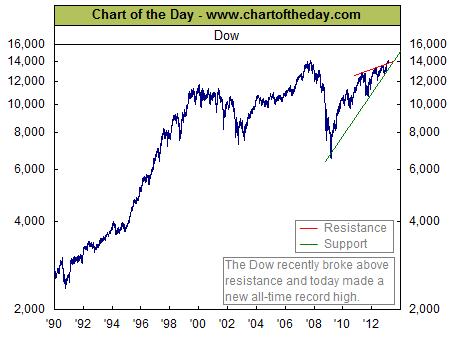
Stock Market Navigated Through Historic Boom Bust Cycles  |






| You are subscribed to email updates from The Big Picture To stop receiving these emails, you may unsubscribe now. | Email delivery powered by Google |
| Google Inc., 20 West Kinzie, Chicago IL USA 60610 | |



0 comments:
Post a Comment