


The Big Picture |

- Books Everyone Should Read
- Nervousness in over-banked Europe slams markets
- What NYC’s Very Own Silicon Alley Will Look Like
- 10 Monday PM Reads
- Economic Outlook and the Role of Monetary Policy
- Sheila Bair Takes on the Banks
- Too Many Expecting a Correction
- 10 Monday Reads
- Implementing the Volcker Rule via the FDIC
- Report from Dubai
| Posted: 26 Mar 2013 02:00 AM PDT |
| Nervousness in over-banked Europe slams markets Posted: 25 Mar 2013 10:30 PM PDT
Mess with the banks and Europe gets nervous. After getting all lathered up over the Cyprus deal, markets tanked when the head of the Eurogroup of euro zone finance ministers, Jeroen Dijsselbloem, came out with this:
Only later to be contradicted by this:
Go no further than the following two charts to understand why markets freaked out over Dijsselbloem's comments. Europe is way overbanked and vulnerable to financial sector shocks. Even in the so-called "safe haven" Switzerland the banking system is outsized relative to the country's GDP. Compare the relative size of UBS, for example, to largest bank in the U.S., JP Morgan. Nuff said. ~~~
 |
| What NYC’s Very Own Silicon Alley Will Look Like Posted: 25 Mar 2013 08:00 PM PDT Bloomberg’s Scarlet Fu reports that Cornel University is building a silicon alley to boost New York City’s tech sector. She speaks on Bloomberg Television’s “Bloomberg Surveillance.”
Bloomberg March 22 Click for video  |
| Posted: 25 Mar 2013 02:00 PM PDT My afternoon reading:
What are you reading?
To the rescue  |
| Economic Outlook and the Role of Monetary Policy Posted: 25 Mar 2013 12:30 PM PDT The Economic Outlook and the Role of Monetary Policy
It is a pleasure to have the opportunity to speak to the Economic Club of New York again.1 Today, I will focus on the economic outlook and the role of monetary policy. I will argue that the fundamentals underpinning the U.S. economy are improving and monetary policy is gaining additional traction. But this may not immediately lead to stronger growth because of the recent increase in fiscal restraint. As a result, I expect that labor market conditions will improve only slowly and that inflation will remain muted. Consequently, it will be appropriate for monetary policy to remain very accommodative. As always, my views are my own and may not necessarily reflect those of the Federal Open Market Committee (FOMC) or the Federal Reserve System. Economic Outlook: Tug of War Between Improving Fundamentals and Fiscal Restraint Let’s first examine the fundamentals, which have improved in at least six ways. First, household deleveraging is now well advanced. Household debt has declined significantly relative to income (Exhibit 1). In the same vein, the household financial obligations ratio has fallen to levels last seen in the early 1980s (Exhibit 2).2 Second, the structural adjustment in housing has largely run its course. Activity and prices are firming, supported by low interest rates. Over the past four quarters, housing starts rose by 33 percent, existing home sales climbed by 12 percent (Exhibit 3), and home prices, as measured by the CoreLogic national home price index, were up over 7 percent (Exhibit 4). Although the pace of recovery varies regionally, the U.S. housing sector as a whole is now clearly rebounding. I see the recovery in home prices as particularly important. Houses are a significant component of household wealth. In addition, as home prices begin to rise we are likely to see more transactions and more building activity. Moreover, rising house prices are likely to encourage a further loosening of credit and appraisal standards that remain unduly tight. Third, the international economic outlook has improved somewhat. Global financial market strains relating to concerns about the euro-area have receded since last summer, though recent developments in Cyprus highlight the challenges that remain. Chinese growth appears to be climbing after a slowdown in 2012 and Japan is making renewed efforts to grow faster and exit from a long period of deflation. Fourth, U.S. corporate profits relative to national income are at an all-time record (Exhibit 5) and cash balances are very high. As uncertainty recedes and the outlook improves, I expect business will increasingly shift towards real investment from mainly buying back shares and hoarding cash. Fifth, the U.S. is in the middle of an energy revolution marked by a steady rise in oil and natural gas production (Exhibit 6). Just as significant, the sharp fall in natural gas prices in the U.S. has created a huge impetus to investment in energy-intensive manufacturing, such as in petrochemicals. Because the lead times on such investment are long, this impulse will likely persist for many years. Sixth, financial conditions have become increasingly accommodative, as monetary easing has passed through to a broad range of financial asset prices. Credit spreads have narrowed and the U.S. equity market has risen sharply (Exhibit 7). The price and availability of some types of consumer loans, notably auto loans, has also improved. So why isn’t the U.S. economy growing more quickly? The fact that fiscal policy has turned significantly more restrictive is the most important reason. The impulse from state and local governments that subtracted from growth earlier in the recovery has gone from negative to close to neutral. But this has been overwhelmed by the sharp shift in federal fiscal policy from mild restraint in 2012 to much greater restraint in 2013 (Exhibit 8). The increase in payroll tax rates, the rise in high income tax rates, the increase in taxes associated with the Affordable Care Act, and now the sequester—if sustained—will result in fiscal drag of about 1 3/4 percentage points of GDP in 2013.3 I view this as an unfortunate outcome. While the U.S. must put its public finances on a sustainable footing, this should be done in a manner that best achieves both our near-term and long-term objectives. In my opinion, a U.S. fiscal policy well-suited for the current set of circumstances would start with a very mild degree of restraint in the near-term that would credibly build to substantial consolidation over the next several decades. Of course, it is for Congress to judge what combination of tax increases and spending cuts should be undertaken to achieve this. Nevertheless, the aging of our population and simple math suggest that entitlement reform would need to be part of such a plan. Also, in an ideal world, fiscal policy would have broad-based bipartisan support. That would reduce uncertainty and reassure households and businesses that the U.S. was on a sustainable long-term path. Instead, we have nearly the opposite: significant retrenchment in the near-term, but no credible action over the long-term, with partisan divisions and significant uncertainty about what will happen next. Will the sequester, for example, be sustained or not? Economic Outlook I’d also emphasize that there remains considerable uncertainty about the outlook. In particular, we can’t be confident about how much fiscal drag will blunt growth. Ultimately, though, the drag should abate. When that happens—presumably later this year, the economy should strengthen. Inflation, as measured by the personal consumption expenditure deflator, is currently below the Federal Reserve’s 2 percent objective (Exhibit 9). Substantial slack remains in labor and product markets, and underlying measures of inflation are subdued. With weak labor compensation growth, the trend growth of unit labor costs is less than 1 percent annualized, which is well below price inflation. Moreover, inflation expectations remain well anchored at levels consistent with our 2 percent longer-run objective. Thus, I conclude that the risk that inflation could significantly exceed our 2 percent objective is quite low over the next few years, even if the recovery were to strengthen considerably. U.S. Monetary Policy Initiatives Two additional initiatives followed in December. First, consistent with the September statement, the FOMC began a new purchase program of $45 billion long-dated Treasuries per month. Second, the FOMC shifted to economic thresholds from calendar-based rate guidance. The FOMC committed to keep the federal funds rate at its current level of zero to 25 basis points at least as long as unemployment remains above 6.5 percent, projected inflation on a one to two year horizon is below 2.5 percent and inflation expectations stay well anchored. Both elements of the policy stance were reaffirmed at last week’s FOMC meeting. So why did we make these changes? The additional asset purchases provide further monetary stimulus. This is appropriate given that we were falling short of our objectives.7 Moving to an outcome-based purchase program also has other advantages. In particular, expectations of the ultimate amount of purchases should change as the economic outlook evolves. This acts as an automatic stabilizing mechanism. In particular, the FOMC’s statement that purchases will continue until the labor market outlook improves substantially provides additional support for the recovery by reducing downside tail risk. The shift to rate guidance based on economic thresholds was not intended to provide additional accommodation at the time it was implemented.8 But, the adoption of thresholds does support the recovery by changing the risk profile in a different way. The thresholds make it clear that short-term rates will not be raised at the first sign of economic improvement, before a sustainable recovery has been secured. As a result, households and businesses should be more confident in undertaking additional spending and investment today. The shift to thresholds-based rate guidance has other benefits. Relative to calendar-based guidance, it provides more information about the economic conditions the Fed would need to see before raising rates.9 Importantly, the shift to thresholds should also make the eventual normalization of monetary policy smoother, a subject I will return to later. But this raises an obvious question. If quantitative thresholds are good for interest rate guidance, why not also have such thresholds for the asset purchase program? There are two reasons. There is somewhat more uncertainty about the efficacy and costs associated with asset purchases than rate guidance and we are likely to learn more about the efficacy and costs as the program unfolds. So what is this likely to mean in practice? In my view, we should calibrate the total amount of purchases to that needed to deliver a substantial improvement in labor market conditions, by allowing the flow rate of purchases to respond to material changes in the labor market outlook. This makes sense because the benefits10 of additional accommodation will gradually diminish as we get closer to our full employment and price stability objectives and become more confident that we will reach them in a timely manner.11 At some point, I expect that I will see sufficient evidence of economic momentum to cause me to favor gradually dialing back the pace of asset purchases. 12 Of course, any subsequent bad news could lead me to favor dialing them back up again. As the Chairman Bernanke said in his press conference last Wednesday “when we see that the…situation has changed in a meaningful way, then we may well adjust the pace of purchases in order to keep the level of accommodation consistent with the outlook.” The Labor Market Outlook Since we provided additional stimulus in September there has been some improvement in labor market conditions. The unemployment rate is modestly lower and private non-farm payroll growth a bit higher than earlier in 2012, which is certainly welcome. However, other important indicators including the employment-to-population ratio and job-finding rates are essentially unchanged (Exhibit 10). This suggests that the labor market is far from healthy. Moreover, our policy is based on the outlook for the labor market, not the level of employment or unemployment today. In this context I note that the recent improvement in payroll employment growth, which gets much of the attention, is out-sized relative to the growth rate of economic activity that supports it. We have seen this movie before. When this happened in 2011 and 2012, employment growth subsequently slowed (see Exhibit 11). Because growth this year will be constrained by fiscal consolidation, there is a risk that this could happen again. As a result, it is premature to conclude that we will soon see a substantial improvement in the labor market outlook. Efficacy of The Asset Purchase Program Exceeds The Costs Efficacy has two components: the effect of the purchases on financial conditions and the effect of financial conditions on the economy. Our latest purchase program has been associated with a substantial easing in financial conditions, higher equity prices, and narrower credit spreads. The resumption of additional agency MBS purchases in September pushed down MBS yields. With some lag, much of the drop in yields has been passed through to primary mortgage rates. Meanwhile, the impact of the improvement in financial conditions on the real economy has been somewhat stronger than I had expected. Since September we have seen considerable strength in the interest-sensitive sectors of the economy, including housing, autos and durable goods, in spite of the uncertainty and drag from fiscal policy. Improvement in these sectors suggests that monetary policy may be gaining additional traction. This is important because it suggests that the benefit from a given amount of asset purchases has increased. On the cost side, I conclude that costs specific to balance sheet expansion have turned out to be no greater than I had anticipated and, because we have less uncertainty about those costs, they are lower than I would have expected in a risk-adjusted sense. Let me start with three commonly cited potential costs—impairment of market functioning, the unanchoring of inflation expectations, and threats to financial stability. We carefully monitor financial markets for signs that market functioning has been impaired, looking at metrics such as trading volumes, bid-offer spreads, failures to deliver securities and our own ability to execute transactions. On some of these metrics, market functioning has actually improved in recent months. Of course, we will need to continue to monitor this, particularly if a rise in interest rates leads to less MBS issuance. But so far, so good. In terms of inflation expectations, a wide range of measures remain well anchored. For example, the 5-year, 5-year forward measure of inflation expectations calculated from Treasury TIPs versus nominal yields is well within the historical range of recent years (Exhibit 12). In contrast, assessing the potential costs in terms of financial stability is more difficult. Indeed, it is not clear to me which way the sign goes. Do asset purchases increase or reduce financial stability risks? On the one hand, information received since September suggests there is slightly greater reason for concern about potential excesses in certain corners of the financial markets. In particular, some areas of fixed income—notably high-yield bonds and leveraged loans—do seem somewhat frothy. However, I view the expected cost to society from bad outcomes here as relatively low. The broad and rapid credit creation associated with the most dangerous types of asset bubbles has been absent (Exhibit 13). The size of the asset classes in question is relatively modest and most of the investors in these assets are not highly leveraged. So if asset valuations were to adjust sharply and some investors experienced painful losses, I do not expect that such a shock would threaten financial stability. Nevertheless, we will need to keep a close eye on financial asset prices. As I noted in my first speech to the Economic Club of New York 3 years ago: On the other hand, there is a financial stability case for doing more purchases in the current context. To the extent that risky behaviors and incipient asset price bubbles are fueled by an expectation that interest rates will be “low for long,” asset purchases that strengthen the economic recovery and bring forward the date of liftoff should promote financial stability. Also, to the extent that asset purchases increase the likelihood of a sustainable recovery, this reduces the financial stability risks associated with a Japanese-style outcome of chronic deflation. Although the costs specific to the asset purchase program appear well-contained, it is also true that the costs increase as the program gets larger. In part, this is due to fact that as the balance sheet increases in size, the risk of a period of low or zero remittances to Treasury also increases. As we acquire more longer-dated assets funded with reserves, the Fed takes on more interest rate risk. This is how the policy works. A byproduct is that our net income and remittances will be unusually elevated for a while, then are likely to fall substantially for a period, before returning to more normal levels. This is because our interest expense will increase substantially when we begin normalizing rates. Also, if we were to sell assets in a rising rate environment, we could also experience some capital losses on these sales. In combination, depending on the future trajectory of short and long rates, remittances could even fall to zero for a period.14 There are several important points to make here. First, the potential impact of the purchase program on future Fed remittances was known at the onset of the program—we have no new information here. The outcome depends on how the economy evolves, how we respond, and whether we decide to sell long-dated assets in the portfolio or not. Second, it is important not to put excessive weight on the possibility of a period of zero remittances. Our mandate is economic not fiscal—our job is to return the economy to full employment and price stability. Moreover, in considering the fiscal consequences of our actions, what matters is not what happens to our remittances—that is far too narrow a perspective — but how our actions affect the federal debt-to-GDP ratio over time. This is the metric we should be focusing on in assessing the potential fiscal consequences of our actions. In this respect, it is important to note that the narrow impact of Fed remittances on the federal debt-to-GDP ratio depends on the cumulative amount, not the timing of remittances. Cumulative remittances to date have been hundreds of billions of dollars higher, all else equal, compared to if the Federal Reserve had not expanded its balance sheet. And, according to Congressional Budget Office projections, even if remittances drop sharply in future years, cumulative remittances would still likely be higher compared to the counterfactual regime in which the Fed had not expanded its balance sheet (Exhibit 14). In addition, because Fed purchases put downward pressure on long-term interest rates, this generates interest savings for the Treasury, and this benefit should be included in the fiscal cost calculations. Finally, and most importantly, to the extent that asset purchases are effective in pushing the trajectory of economic growth above what would otherwise have been the case, this will lead to higher federal government tax revenue and lower safety net spending outlays during the recovery period. This means that across a broad range of scenarios, our large-scale asset purchase program is likely to result in a lower federal debt-to-GDP ratio. To sum up, the better choice is for the Fed to pursue the policy that best achieves its mandated objectives and puts the U.S. government in a better fiscal position. This dominates a policy of fewer purchases simply so we can avoid potentially having to explain why our remittances may have fallen to zero for a short period. Issues Associated with the Normalization of Monetary Policy On this topic, let me ease three concerns I hear frequently expressed. The first is that the large amount of excess reserves in the banking system will be “dry tinder” and fuel a rise in inflation. As I have mentioned repeatedly, the ability of the Federal Reserve to pay interest on excess reserves ensures that we can control the credit creation process and prevent an upsurge in inflation. The second is that when the Fed ultimately raises the rate it pays on excess reserves, it will be providing a subsidy to the banks. IOER is not a subsidy to the banks.15 In attracting deposits or other liabilities, competition among banks16 will ensure that higher interest payments to banks on their reserves will be passed through to bank liability holders. I look forward to the day when the economy is strong enough for us to raise the interest rate on excess reserves. When that happens, deposit rates will also rise. That will be important because ultra-low rates have been a burden for many seniors and others heavily reliant on this kind of income. When we raise the IOER, it will be my mother and my mother-in-law and others like them, not bankers, who will mainly benefit. The third concern is the notion that the Federal Reserve will be slow to tighten monetary policy because this will reduce the amount of our remittances to the Treasury. This does not add up. The Fed is a central bank, not an asset management company—our commitment is to our dual mandate economic objectives—not maximizing net income or remittances. Moreover, even if we were to put any weight on this consideration, the incentives go the other way—our enlarged balance sheet creates an additional reason to tighten monetary policy in a timely way. If the Fed were to delay in raising short-term rates to protect its current earnings, inflation would rise and this would push long-term rates higher. This would just necessitate a bigger rise in short-term interest rates and a greater loss of earnings later. A much more important issue with respect to policy normalization is moderating the risk of a sharp snapback in longer-term yields. But this has less to do with the size of the balance sheet specifically than the challenge of normalizing the current stance of monetary policy in all its dimensions. There is always a risk that market participants will foreshorten the Fed’s actions. Market participants could collapse an extended sequence of steps back to the date of the first move towards normalization resulting in an abrupt tightening of financial conditions. The move to economic thresholds-based guidance for the fed funds rate should help in this regard. While the thresholds are certainly not triggers, they should help market participants adjust expectations about the likely timing of liftoff in a relatively continuous manner and guard against these expectations being pulled further forward in time than is warranted by changes in the economic outlook. Nevertheless, we will need to communicate our broader intentions very clearly. Even when purchases cease, the enlarged balance sheet will provide substantial ongoing stimulus. It is important to recognize that the Fed could remain in this posture with policy “on hold” for a significant period. As the threshold framework should make clear, there is no fixed time-frame between completing purchases and raising short term rates. Long-term yields rose sharply in 1994 and 2004 when economic recoveries got underway in earnest after sustained periods of unusually low short-term rates. Compared to those episodes, the risk of a spike in long-dated yields this time around may be somewhat lower for two reasons. First, this risk is receiving much attention. Big market moves are typically associated with surprises. For the market to reprice suddenly, I presume there would need to be some new information that led investors to significantly revise their view of the outlook or the Fed’s reaction function. Second, the Fed’s expansion of its own balance sheet may be a stabilizing influence. For example, the rise in interest rates during the prior episodes was amplified by convexity-related hedging generated by the lengthening of expected mortgage duration. This should be a less powerful force this time around because the Fed holds a substantial portion of the agency MBS market. However, we should keep up our guard. The regulatory community must continue to take steps to mitigate the vulnerability of the economy to a sharp rise in long-term rates. This includes monitoring banks’ exposure to duration risk and the quality of their risk management and capital planning, while also looking outside of the banking system because some risks may reside elsewhere. In this regard, agency mortgage REITs and the risk of large outflows from bond mutual funds are issues that deserve ongoing attention. Conclusion I do not claim that there are no costs or risks associated with our unconventional monetary policy regime. But I see greater cost and risk in moving prematurely to a policy setting that might not prove sufficiently accommodative to ensure a sustainable, strengthening recovery. I remain confident that the benefits of a stronger and earlier economic recovery will trump the costs associated with our unconventional monetary policy measures. Thanks for your kind attention. I would be happy to take a few questions. ___________________________________________________ 2 The household obligation ratio is the sum of payments on mortgage and nonmortgage debt, automobile lease payments, rental payments on tenant-occupied property, homeowners’ insurance, and property tax payments divided by disposable after-tax income. 3 Before taking into account fiscal multipliers. 4 This includes a modest boost from inventory investment following the substantial drag of the prior quarter, a recovery in farm output following last year’s drought, and less drag from defense outlays following the steep plunge of the fourth quarter. Rebuilding following the devastation from Superstorm Sandy may also provide some temporary lift this quarter. 5 In addition to reinvestment of maturing MBS. 6 At the time the FOMC was purchasing an additional $45 billion a month of longer-dated Treasury securities while selling an equivalent amount of shorter-dated securities under the Maturity Extension Program. 7 While we specified a current monthly pace of purchases the degree of stimulus depends mainly on expectations for the ultimate size of purchases and how long we are expected to hold the assets that we have acquired. 8 This was made clear in the FOMC statement that the Committee expected to reach the unemployment rate threshold at the same time as the earlier date guidance. 9 It avoids the ambiguity of what a change in the forward rate guidance would signal. Is the date being moved out, for example, because the FOMC wants to provide additional accommodation or is the move just due to deterioration in the economic forecast? 10 I draw a distinction here between efficacy and benefit. In my view, the benefit of additional accommodation would diminish as we get closer to our dual mandate objectives and become more confident in the forecast of a strengthening recovery, even if the assessment of the efficacy and cost of the tool were unchanged. 11 Of course, this expectation assumes no new information on efficacy and costs emerges that fundamentally changes my assessment of the merits of the program. 12 Assuming that the improvement in the outlook is not endogenous to the chosen policy setting to the extent that it would disappear if purchases were slowed. 13 Asset Bubbles and the Implications for Central Bank Policy, Economic Club of New York, April 7, 2010. 14 If the Fed’s net income fell below zero in a year it would record a deferred asset that it would redeem with future net income. Paid in capital and surplus would remain positive in a very wide range of scenarios. See The Federal Reserve’s Balance Sheet and Earnings: A primer and projections 15 When the Fed creates reserve balances, banks are forced to either add deposits or other liabilities to match the increase in their assets, or reduce other assets, by selling off securities, for example. In either of these responses, banks experience a cost of managing their reserves. 16 Among many other changes, the Dodd-Frank Act allowed banks to pay interest on corporate deposits, and those depositors, because they deposit large amounts, are likely more interest-sensitive, than individual depositors. Furthermore, the wholesale money market is intensely competitive, and, as evidence that reserves are distributed across banks in a way that reflects competitive considerations, note that currently, reserves are held in disproportionately large amounts by Foreign Banking Organizations. The reason I think this happens is that those FBOs do not have to pay the FDIC assessment fee on their liabilities (as they hold no U.S. deposits). That suggests that all banks face competition in attracting liabilities to match their reserve holdings, and that the FBOs, because they face a lower cost in doing so, have managed to attract those deposits at a faster clip than domestic banks. This is the sort of competition that I expect to see that will result in the interest on reserves being passed through by banks to their customers and to the broader economy.  |
| Sheila Bair Takes on the Banks Posted: 25 Mar 2013 11:30 AM PDT The former FDIC chair joins Bill to talk about American banks' manipulative practices and seeming immunity from real scrutiny or prosecution. Sheila Bair, the longtime Republican who served as chair of the Federal Deposit Insurance Corporation (FDIC) during the fiscal meltdown five years ago, joins Bill to talk about American banks' continuing risky and manipulative practices, their seeming immunity from prosecution, and growing anger from Congress and the public. "I think the system's a little bit safer, but nothing like the dramatic reforms that we really need to see to tame these large banks, and to give us a stable financial system that supports the real economy, not just trading profits of large financial institutions," Bair tells Bill.
Bair is the author of Bull by the Horns: Fighting to Save Main Street from Wall Street and Wall Street from Itself.  |
| Too Many Expecting a Correction Posted: 25 Mar 2013 09:00 AM PDT Click to enlarge
Terrific timely discussion chart from Mary Ann Bartels & Co. at MER showing the extent of bearish anticipation of a correction: Investors Intelligence (II) sentiment data shows 34% of newsletter writers are expecting a correction. The prior two corrections occurred with this level at 34.7% and 35.1% respectively. Bartels adds that “newsletter writers need to capitulate and remove their calls for a market correction in order to get a contrarian bearish sentiment extreme.” When too many investors are looking for a correction, it reflects that selling has already occurred. That implies less supply, less downside pressure, and the potential for pros to be forced back in. It is the Long-only side version of a short squeeze.
Source:  |
| Posted: 25 Mar 2013 07:00 AM PDT My holiday week Monday morning reads:
What are you reading?
Investors Finding New Calm in Crises  |
| Implementing the Volcker Rule via the FDIC Posted: 25 Mar 2013 05:29 AM PDT There has been much commentary (see this as a smart example) on the scathing Senate hearings on JPM and the London Whale last week. I wanted to take a moment to throw out a few ideas that relate to JPM’s embarrassing moment int he spotlight (again). The TBTF giant banks want to eat their cakes and have it, too. These publicly traded companies want to maximize the returns on their invested, leveraged mostly off balance sheet dollars. They still are incentivized for maximum transfer of wealth form shareholders to insiders. They want FDIC insurance so the depositors are comfortable. They do not want to suffer their own losses, preferring to lay them off on third parties (GSEs, taxpayers, etc.) where ever possible. They want low cost FOMC monies to do this with, and full tax payer support for when they inevitably crash and burn. It is the worst of 3 worlds: Socialism for the banks, crony capitalism for the insiders, with taxpayers on the hook for the downside. The Volcker rule was aimed at separating the gambling with other people’s money (OPM) from the guaranteed deposits side of banking. Originally oart of the Dodd–Frank Wall Street Reform and Consumer Protection Act, the banks have managed to thwart its full implementation via lobbying and political influence. We all understand why: The large investment banks are no longer partnerships, so their incentives remain maximizing returns, embracing enormous risk to do so. The upside is huge, while the downside risks — some reputational damage, but no financial risk or jail time — are de minimis. Hence, why Volcker and others want to separate the low risk depository institutions from the much more speculative and risky iBanks. But until the Volcker Rule is capable of protecting taxpayers, there are alternatives. To remove the taxpayer from being the ultimate guarantor of all banker speculation, I suggest the FDIC step in. The FDIC should add conditional elements to its depository insurance. The price increases for the the cost of deposit guarantees could be tied to various conditions. As these increase head the wrong way, increasing risk, the costs t the banks should scale up:
None of this works if the accounting firms facilitate banks misrepresenting their balance sheets. We must make it clear that helping bankers make criminality appear legitimate is an irresponsibility that won’t be tolerated. Thus, the FDIC should maintain a list of accounting firms that meet its standards, with the penalty for accountants that violate the standards above being they get tossed off the list. You don’t need to Arthur Anderson them, just remove a huge source of their revenues for being complicit in fraud in order to get some cooperation from them. One last thing: Any bank that ever gets bailed out again should be subject to a mandatory 10 year tax. I figure 3% of gross revenues or 15% of profits, which ever is higher, as a mandatory cost of bailouts will be a disincentive for the banks to engage in further recklessness. As Josh Rosner detailed in these pages before the hearings, JPM’s controls and risk management are laughable. Their fortress balance sheet is illusory. Despite his reputation as the smartest banker of his generation, Jamie Dimon is one banana peel away from being Dick Fuld.
Previously:  |
| Posted: 25 Mar 2013 03:00 AM PDT Report from Dubai
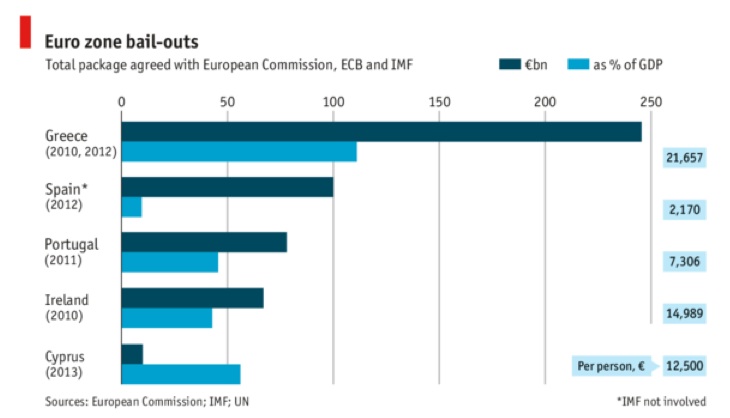
Looking at the world’s tallest building, the Burj Khalifa in Dubai, I thought of Brunelleschi and the construction of the dome of the Cathedral of Santa Maria del Fiore (the Duomo) in Florence. Centuries ago, Filippo Brunelleschi, the Italian Renaissance architect, redesigned scaffolding so that his workers could have sanitary facilities and eat 180 feet above the ground. By enabling workers to remain above ground instead of spending their time climbing up and down, Brunelleschi increased productivity and thereby cut the construction time required to complete the dome in half with his genius idea. While the construction of the entire cathedral in Florence required 130 years, Brunelleschi's work on the dome, begun in 1420, was completed by 1436 – a mere 16 years. The construction of the Burj Khalifa started in January 2004 and was completed in January 2010. The entire building was finished in less time than Brunelleschi’s crew needed to build their scaffolding. We are about to visit the Burj Khalifa. Dubai is a place of great contrasts that are immediate, robust, and continuously encountered. Here I am in the Persian Gulf and in the world's tallest building, having had the good fortune to escape another of the world's tallest buildings more than a decade ago, on September 11. Digesting these contrasts is a very intense and emotional experience. Arriving at 1:00 a.m. at the world's tallest hotel, the new JW Marriott Marquis in Dubai, one is greeted with long-legged, short-skirted women on their way to night clubs, but one shares the elevator with a burqa-clad mother and her children. In the same group are four young women from Saudi Arabia who have come to Dubai on holiday. They are bubbling with excitement because they have transitioned from one culture to another and want to experience the freedom and international collegiality of Dubai. At the JW Marriott Marquis in Dubai, employees represent 71 nations. The hotel is an incredible assemblage of restaurants, luxurious accommodations, and services; it is one of the newest marvels in a city with incredible construction underway. In neighboring Saudi Arabia, by contrast, life is austere. There are no cinemas, alcohol, or joyful exhibitions in any public place. It is hard to imagine that, an hour and half away in Dubai, the shopping malls are jammed with people from around the world. The tourism here is as intense and diverse as one might expect in Shanghai, Paris, or New York. It is an exciting time to watch new buildings surging toward the sky, and to reflect on huge accumulations of affluence coalescing into one monumental edifice after another. That is the prospect that greets the eye in Dubai. I was able to capture some fascinating images while here in Dubai. The first is a view of the city from the observation deck of the Burj Khalifa. The second is a view from the same deck looking upward to the top of the building. And the third image is of the famous hotel Burj Al Arab. Those images can be found on Cumberland's website. Now to Cyprus. We are sitting in Dubai with folks from around the world who are gathering for the Global Interdependence Center conference. It has been a fascinating day. I have toured the tallest building in the world and am relaxing in front of the tallest hotel in the world, enjoying the breeze and watching the sun set in the Persian Gulf. Cyprus is the focus of conversation everywhere. Some things are becoming obvious as the events churn to a conclusion. Here are some points shared from economists, bankers, investors, and academics who are participating in this global meeting. One: It is fairly clear to the political leadership in Europe that they goofed badly with their initial proposal. To be blunt, they blew it. Also clear is that they have learned not to attack the €100,000 baseline deposit insurance scheme. Two: The best columns on Cyprus this weekend, both in the Financial Times (FT), were by John Authers, who discussed the meaning of the crisis in terms of markets, and Tony Barber, who discussed it in terms of history, setting, and geopolitical risk. We advise that the rest of the FT material that was devoted to Cyprus be mandatory reading for anyone interested in the subject and its impact on the world economy and financial markets. Three: If you do not have the voters and legislature on your side, you lose. That was clearly the case among the Eurogroup, primarily dominated by finance ministers and politicians who ignored their respective electorates or at least some of them. That was clearly the case in Cyprus. Four: The discipline of the European Central Bank needs to be applauded. The bankers realized that the deposit tax would trigger runs, but they could not make themselves heard by the politicians and finance ministers. Their warnings were unheeded to the extent that they were able to make the argument. Bankers understand that when you promise deposit guarantees to constituent citizens, you must always deliver on them. They realize you cannot violate that promise. In a way, the Cyprus affair offers the opportunity for the Eurozone to advance more quickly. Serious central bankers and bank regulators know there must be some form of Eurozone-wide deposit insurance mechanism. They want to model it after the Federal Deposit Insurance Corporation (FDIC) that we have in the US. They now know that they have to do this quickly and that it must be credible. Events will unfold in and beyond Cyprus; and as they do, the ramifications of these developments in the last several weeks will continue to become apparent. The actions of the finance ministers have changed the rules. They offered the notion that they would contemplate the unthinkable and attempt to impose it. They were rebuffed by the political forces that represent the smaller savers and the governmental body that had to either approve the plan at its own peril or reject it. Now we are going to see the rest of this tragic theatre unfold. We will close with an excellent summary by Don Rissmiller of Strategas, whose firm is a participant in our conference here in Dubai. Don wrote:
~~~ David R. Kotok, Chairman and Chief Investment Officer, Cumberland Advisors  |



 , Seth B. Carpenter, Jane E. Ihrig, Elizabeth C. Klee, Daniel W. Quinn, and Alexander H. Boote, Finance and Economics Discussion Series, Board of Governors of the Federal Reserve System, 2013-01. See also SOMA annual report (forthcoming).

| You are subscribed to email updates from The Big Picture To stop receiving these emails, you may unsubscribe now. | Email delivery powered by Google |
| Google Inc., 20 West Kinzie, Chicago IL USA 60610 | |



0 comments:
Post a Comment