


The Big Picture |

- Playing Favorites: How Firms Prevent the Revelation of Bad News
- Bank Confiscation Scheme for US and UK Depositors
- The Ten Best Employers To Work For
- Cyprus Has Finally Killed Myth That EMU Is Benign
- Succinct Summations of Week’s Events (March 29, 2013)
- The First Honest Cable Company
- 10 Weekend Reads
| Playing Favorites: How Firms Prevent the Revelation of Bad News Posted: 31 Mar 2013 01:00 AM PDT  |
| Bank Confiscation Scheme for US and UK Depositors Posted: 30 Mar 2013 10:00 PM PDT It Can Happen Here: The Bank Confiscation Scheme for US and UK DepositorsGuest post by Ellen Brown, http://www.WebofDebt.com. Confiscating the customer deposits in Cyprus banks, it seems, was not a one-off, desperate idea of a few Eurozone "troika" officials scrambling to salvage their balance sheets. A joint paper by the US Federal Deposit Insurance Corporation and the Bank of England dated December 10, 2012, shows that these plans have been long in the making; that they originated with the G20 Financial Stability Board in Basel, Switzerland (discussed earlier here); and that the result will be to deliver clear title to the banks of depositor funds. New Zealand has a similar directive, discussed in my last article here, indicating that this isn't just an emergency measure for troubled Eurozone countries. New Zealand's Voxy reported on March 19th:
Can They Do That? Although few depositors realize it, legally the bank owns the depositor's funds as soon as they are put in the bank. Our money becomes the bank's, and we become unsecured creditors holding IOUs or promises to pay. (See here and here.) But until now the bank has been obligated to pay the money back on demand in the form of cash. Under the FDIC-BOE plan, our IOUs will be converted into "bank equity." The bank will get the money and we will get stock in the bank. With any luck we may be able to sell the stock to someone else, but when and at what price? Most people keep a deposit account so they can have ready cash to pay the bills. The 15-page FDIC-BOE document is called "Resolving Globally Active, Systemically Important, Financial Institutions." It begins by explaining that the 2008 banking crisis has made it clear that some other way besides taxpayer bailouts is needed to maintain "financial stability." Evidently anticipating that the next financial collapse will be on a grander scale than either the taxpayers or Congress is willing to underwrite, the authors state:
No exception is indicated for "insured deposits" in the U.S., meaning those under $250,000, the deposits we thought were protected by FDIC insurance. This can hardly be an oversight, since it is the FDIC that is issuing the directive. The FDIC is an insurance company funded by premiums paid by private banks. The directive is called a "resolution process," defined elsewhere as a plan that "would be triggered in the event of the failure of an insurer . . . ." The only mention of "insured deposits" is in connection with existing UK legislation, which the FDIC-BOE directive goes on to say is inadequate, implying that it needs to be modified or overridden. An Imminent Risk If our IOUs are converted to bank stock, they will no longer be subject to insurance protection but will be "at risk" and vulnerable to being wiped out, just as the Lehman Brothers shareholders were in 2008. That this dire scenario could actually materialize was underscored by Yves Smith in a March 19th post titled When You Weren't Looking, Democrat Bank Stooges Launch Bills to Permit Bailouts, Deregulate Derivatives. She writes:
One might wonder why the posting of collateral by a derivative counterparty, at some percentage of full exposure, makes the creditor "secured," while the depositor who puts up 100 cents on the dollar is "unsecured." But moving on – Smith writes:
Its "depositary" is the arm of the bank that takes deposits; and at B of A, that means lots and lots of deposits. The deposits are now subject to being wiped out by a major derivatives loss. How bad could that be? Smith quotes Bloomberg:
$75 trillion and $79 trillion in derivatives! These two mega-banks alone hold more in notional derivatives each than the entire global GDP (at $70 trillion). The "notional value" of derivatives is not the same as cash at risk, but according to a cross-post on Smith's site: By at least one estimate, in 2010 there was a total of $12 trillion in cash tied up (at risk) in derivatives . . . . $12 trillion is close to the US GDP. Smith goes on:
Perhaps, but Congress has already been burned and is liable to balk a second time. Section 716 of the Dodd-Frank Act specifically prohibits public support for speculative derivatives activities. And in the Eurozone, while the European Stability Mechanism committed Eurozone countries to bail out failed banks, they are apparently having second thoughts there as well. On March 25th, Dutch Finance Minister Jeroen Dijsselbloem, who played a leading role in imposing the deposit confiscation plan on Cyprus, told reporters that it would be the template for any future bank bailouts, and that "the aim is for the ESM never to have to be used." That explains the need for the FDIC-BOE resolution. If the anticipated enabling legislation is passed, the FDIC will no longer need to protect depositor funds; it can just confiscate them. Worse Than a Tax An FDIC confiscation of deposits to recapitalize the banks is far different from a simple tax on taxpayers to pay government expenses. The government's debt is at least arguably the people's debt, since the government is there to provide services for the people. But when the banks get into trouble with their derivative schemes, they are not serving depositors, who are not getting a cut of the profits. Taking depositor funds is simply theft. What should be done is to raise FDIC insurance premiums and make the banks pay to keep their depositors whole, but premiums are already high; and the FDIC, like other government regulatory agencies, is subject to regulatory capture. Deposit insurance has failed, and so has the private banking system that has depended on it for the trust that makes banking work. The Cyprus haircut on depositors was called a "wealth tax" and was written off by commentators as "deserved," because much of the money in Cypriot accounts belongs to foreign oligarchs, tax dodgers and money launderers. But if that template is applied in the US, it will be a tax on the poor and middle class. Wealthy Americans don't keep most of their money in bank accounts. They keep it in the stock market, in real estate, in over-the-counter derivatives, in gold and silver, and so forth. Are you safe, then, if your money is in gold and silver? Apparently not – if it's stored in a safety deposit box in the bank. Homeland Security has reportedly told banks that it has authority to seize the contents of safety deposit boxes without a warrant when it's a matter of "national security," which a major bank crisis no doubt will be. The Swedish Alternative: Nationalize the Banks Another alternative was considered but rejected by President Obama in 2009: nationalize mega-banks that fail. In a February 2009 article titled "Are Uninsured Bank Depositors in Danger?", Felix Salmon discussed a newsletter by Asia-based investment strategist Christopher Wood, in which Wood wrote:
On whether depositors could indeed be forced to become equity holders, Salmon commented:
President Obama acknowledged that bank nationalization had worked in Sweden, and that the course pursued by the US Fed had not worked in Japan, which wound up instead in a "lost decade." But Obama opted for the Japanese approach because, according to Ed Harrison, "Americans will not tolerate nationalization." But that was four years ago. When Americans realize that the alternative is to have their ready cash transformed into "bank stock" of questionable marketability, moving failed mega-banks into the public sector may start to have more appeal. Comment by Washington's Blog: The big banks have already been "nationalized" in the sense that they are state-sponsored institutions . In fact, the big banks went totally bust in 2008, and are now completely subsidized by the government. Americans may not like the idea of nationalization, but they are even more disgusted by crony capitalism … which is what we have now. Moreover, as we pointed out in 2009:
 |
| The Ten Best Employers To Work For Posted: 30 Mar 2013 12:00 PM PDT Charle Hugh Smith is an author. He blogs at Of Two Minds. ~~~ The insecurity of self-employment can generate a far more resilient life and mindset. There are all sorts of “10 best companies to work for” lists, but I’ve assembled a slightly broader list: The Ten Best Employers To Work For. Without further ado, let’s go to number 1: 1. Yourself Surprised? Expecting Google or Zappos? The National Security Agency? Nope, not even close. It’s you–yes, you, Bucko. You’re the best employer to work for. OK, on to the rest of the list: 2. Yourself Aren’t you glad I didn’t make this a “100 best employers” list? Before you start nitpicking the list: yes, there is only one of you, so the list is somewhat repetitive. And yes, there are some downsides to working for yourself. For example: 1. There’s no point in leaving a snippy note on the fridge to the sneaky co-worker who stole your bagel: oops, you ate it during coffee break #3 without noticing. Dang, accepting responsibility sucks. 2. When you launch a full-blown rant against your psycho, control-freak, demanding boss, you’re doing so in front of a mirror. Sigh–it’s just no longer fun blaming the boss. 3. Excuses don’t fly too far with clients and customers. 4. Nobody cares when you show up or how productive you are except you. 5. Shouting “Take this job and shove it” isn’t quite as satisfying. All those stupid regulations you chafed under: gone. All those impossible demands that stressed you out: gone. All those shiftless, incompetent co-workers: gone. Time cards: gone. Staff meetings: gone. People to blame for your troubles: gone. Paycheck: gone. Do you really miss anything but the last item? But really, wasn’t that paycheck the chain that bound you to serfdom? Here’s the dirty little secret of the U.S. economy: you’re already working for yourself now unless you’re in the Armed Forces or a civilian equivalent. The clock is ticking on all those promises of pensions and benefits for life you think separate you from the self-employed entrepreneur. Maybe the promises pay out for a few more years, maybe even a decade, but they are impermanent for the simple reason that the promises made (and the nation’s debts) far exceed the economy’s ability to pay those promises and debts in dollars retaining today’s purchasing power. Either the promises will be broken/defaulted, or a $2,000/month pension will buy a loaf of bread and a gallon of gasoline. There is no other end-state other than default or inflate-away-the-debt/promises. You already know how “valued” you are by your corporate/agency employer. All that rah-rah “team-building” stuff is nice for the younger employees who are still naive enough to believe the propaganda at face value, but once the layoffs start again (if they ever stopped), then all that rah-rah cheerleading loses its sparkle. Many employees are waking up to find themselves in 1099 nation: no benefits, no tax withholding, no matching 401K, no status as an employee, just a contract and a 1099 statement at year end. In a sense being self-employed simply means stripping away the artifice that somebody else is going to take care of you or give you “free money.” Once we understand the promised security is bogus, self-employment doesn’t feel so risky–it feels like embracing the risk that is hidden behind the flimsy facade of team-building, “guaranteed” pensions and all the rest of the unpayable promises. The self-employed person generally trades “security” for job satisfaction. The compensation may be higher or lower, but it will likely be lower. The earnings will likely be more sporadic and uncertain. People Are Beginning To Realize Self-Employment Isn’t All It’s Cracked Up To Be But ironically, perhaps, the insecurity of self-employment can generate a far more resilient life and mindset. Instead of counting on Big Brother in one form or another to provide retirement, the self-employed person builds their own human, social and financial capital. Those who rely on Big Brother are terribly vulnerable should Big Brother fail to make good on on his extravagant promises to 310 million people. Gaining power and control over your life doesn’t come cheap. Does anything really worthwhile come cheap? Knowledge, tradecraft, experience, networks of trusted suppliers, expertise: none of them come easy or cheap. All must be gained the hard way. No wonder self-employment is down. It’s tough to scratch out a living as an entrepreneur. It can be wearisome, but never as wearisome as a job you loathe.
Working for others is a good idea while you’re building skills and networks. By all means, work for someone else while you’re learning the ropes, and give them 150% value on the paycheck they hand you. Heck, if you find a decent employer, work part-time for them while you build your own income streams/career. You might even work part-time for several like-minded people and yourself on the side. Interestingly, this survey found that the self-employed often see their work as helping society. How many employees feel that? I mention this as an example of the intangible benefits of working for yourself. Take this Job and Love It (Pew Research) The Rise of The 1099 Economy: More Americans Are Becoming Their Own Bosses (Forbes, 7/12)
How can self-employment be falling and rising? It depends on how you count the self-employed. The Bureau of Labor Statistics (BLS) divides the self-employed into two categories, incorporated (about 5 million) and unincorporated (about 10 million). Incorporated self-employed people are often professionals such as doctors, accountants and attorneys who value the legal benefits of a corporation or LLC (limited liability company). To further confuse things, the BLS counts the incorporated self-employed as “wage earners” because they draw paychecks from themselves. So right off the bat we find a confusion between 14.5 million (total BLS self-employed) and the 10 million (the unincorporated self-employed) reported by the BLS as self-employed. Self-employment in the United States (BLS) The private research firm mentioned above clearly counted those getting 1099s as self-employed, even if they are contract workers laboring alongside employees, as is often the case in Corporate America. It appears there are about 7 million people in 1099 nation, hence the other total of self-employed you see in print, 22 million. So the conventional self-employed may be declining while the involuntary self-employed (those getting a 1099 instead of a paycheck) is rising. Of course it’s rising: the ObamaCare neutron bomb is about to go off, making employee benefits unaffordable to businesses large and small. ObamaCare: The Neutron Bomb That Will Decimate Employment (February 22, 2013) Right now the self-employed–an enormously diverse mix of everything from micro-sized eBay businesses netting a few thousand dollars a year to professional corporations–comprise about 10% of the workforce (14.5 million self-employed, a total employed workforce of about 142 million). Add in those now getting 1099s instead of paychecks (7 million) and perhaps 14% of the workforce is self-employed (or at least responsible for paying their own quarterly taxes and healthcare insurance–slick move, Corporate America!). For reasons I will discuss tomorrow, this number is very likely to rise. But why, you ask, is working for yourself so great? I’ll tell you why. Where else will you find a boss who knows your foibles, flaws and strengths so well? Where will you find a more forgiving boss, one who really understands what makes you tick? What other employer will give you the day off to go fishing because you really need a break? What other employer is going to let you keep everything you earned for the enterprise? And best of all–where else can you be boss and not have to deal with employees?  |
| Cyprus Has Finally Killed Myth That EMU Is Benign Posted: 30 Mar 2013 10:30 AM PDT Cyprus Has Finally Killed Myth That EMU Is Benign
This piece from Ambrose Evans-Pritchard is about as hard-hitting an analysis of Cyprus as I have read and really makes an interesting introduction to this week's Outside the Box. No messing around: Capital controls have shattered the monetary unity of EMU. A Cypriot euro is no longer a core euro…. The complicity of EU authorities in the original plan to violate insured bank savings – halted only by the revolt of the Cypriot parliament – leaves the suspicion that they will steal anybody's money if leaders of the creditor states think it is in their immediate interest to do so. The IMF doesn't get off easy here, either: The IMF's Christine Lagarde has given her blessing to the Troika deal, claiming that the package will restore Cyprus to full health, with public debt below 100pc of GDP by 2020. Yet the Fund has already been through this charade in Greece, and her own staff discredited the doctrine behind EMU crisis measures. It has shown that the "fiscal multiplier" is three times higher than thought for the Club Med bloc. Austerity beyond the therapeutic dose is self-defeating. I want to amplify Ambrose's comments by excerpting from another piece, by my über-liberal friend Yves Smith over at Naked Capitalist (although she might characterize herself as mainstream reasonable). But we share a healthy skepticism of large banks. As we say in Texas, it ain't over till the fat lady sings. And that would be Italy, as Ambrose points out. (Which given the original intent of that quote and that Darrel Royal of the University of Texas (way back in the day) was referring to Opera Italiana, it is appropriate – in fact, we said it first!) I have been spending a few moments here and there the last few days with my new granddaughter, Addison (and her parents). I'm now officially in a hotel room in Dallas for the duration until we can get the new place actually bought and construction done, which at best will be late summer; but I will be traveling a lot anyway the next three months, so it's just another hotel room. I am using it as an opportunity to learn minimalist living. But I am having to become acquainted with a new knowledge domain, that of architecture and design. If I was just looking at another fund or investment manager, I would feel pretty comfortable doing it on my own, but I clearly need help here and no shame in admitting it. Many of you may be in a similar boat when it comes to investing. You can leave it to the professionals entirely, but then you get the results that they design and not maybe what you really want. It works a lot better if you spend some time getting familiar with the rules and communicating your objectives. Most of you would not think (or your wives would not!) of building a home without a great deal of input. Someone has to learn that language if you want to have something that really works for your situation and budget. The same is true of investing. It is a knowledge domain that is unfamiliar to many, but it is critical to your future happiness. You really do need to get the basics down. The more you learn the better off you will be. And using professionals is important – unless you are going to spend a whole lot of time learning the rules and the tricks. In fact, it takes more than a minor investment of time and effort just to develop adequate skill to be able to pick the right professionals. Not all investment "designers" are the same level of expertise or appropriate for what you want and need. I did a lot of construction as a young man and can understand the basics even today. But I was never skilled enough to do finish work or design. We will see if I can learn enough to pick the right team in short order! Thankfully, most of you have more time to choose investment professionals. Have a great Easter weekend. I see more family coming my way and maybe Mavericks and Stars games in our future. Your can't believe what everything costs analyst, John Mauldin, Editor
Cyprus Has Finally Killed Myth That EMU Is BenignBy Ambrose Evans-Pritchard, London Telegraph The punishment regime imposed on Cyprus is a trick against everybody involved in this squalid saga, against the Cypriot people and the German people, against savers and creditors. All are being deceived. It is not a bail-out. There is no debt relief for the state of Cyprus. The Diktat will push the island's debt ratio to 120pc in short order, with a high risk of an economic death spiral, a la Grecque. Capital controls have shattered the monetary unity of EMU. A Cypriot euro is no longer a core euro. We wait to hear the first stories of shops across Europe refusing to accept euro notes issued by Cyprus, with a G in the serial number. The curbs are draconian. There will be a forced rollover of debt. Cheques may not be cashed. Basic cross-border trade is severely curtailed. Credit card use abroad will be limited to €5,000 (£4,200) a month. "We wonder how such capital controls could eventually be lifted with no obvious cure of the underlying problem," said Credit Suisse. The complicity of EU authorities in the original plan to violate insured bank savings – halted only by the revolt of the Cypriot parliament – leaves the suspicion that they will steal anybody's money if leaders of the creditor states think it is in their immediate interest to do so. Monetary union has become a danger to property. One can only smile at the denunciations of Eurogroup chief Jeroen Dijsselbloem for letting slip that the Cypriot package is a template for future EMU rescues, with further haircuts for "uninsured deposit holders". That is not the script. Cyprus is supposed to be a special case. Yet the "Dijssel Bomb" merely confirms that the creditor powers – the people who run EMU at the moment – will impose just such a policy on the rest of Club Med if push ever comes to shove. At the same time, the German bloc is lying to its own people about the real costs of holding the euro together. The accord pretends to shield the taxpayers of EMU creditor states from future losses. By seizing €5.8bn from savings accounts, it has reduced the headline figure on the EU-IMF Troika rescue to €10bn. This is legerdemain. They have simply switched the cost of the new credit line for Cyprus to the European Central Bank. The ECB will have to offset the slow-motion bank run in Cyprus with its Emergency Liquidity Assistance (ELA), and this is likely to be a big chunk of the remaining €68bn in deposits after what has happened over the past two weeks. Much of this will show up on the balance sheet of the Bundesbank and its peers through the ECB's Target2 payment nexus. The money will leak out of Cyprus unless the Troika tries to encircle the island with razor wire. "In saving €5.8bn in bail-out money, the other euro area countries will likely be on the hook for four to five times more in contingent liabilities. But, of course, the former represents real money that gives politicians a headache; the latter is monopoly central bank money," said Marchel Alexandrovich, from Jefferies. Chancellor Angela Merkel will do anything before the elections in September to disguise the true cost of the EMU project. It has been clear since August 2012 that she is willing let the ECB carry out bail-outs by stealth, as the lesser of evils. Such action is invisible to the German public. It does not require a vote in the Bundestag. It circumvents democracy. Mrs Merkel can get away with this, provided Cyprus does not leave EMU and default on the Bundesbank's Target2 claims, yet that may well happen. "I wouldn't be surprised to see a 20pc fall in real GDP," said Nobel economist Paul Krugman. "Cyprus should leave the euro. Staying in means an incredibly severe depression." "Nobody knows what is going to happen. The economy could go into a free fall," said Dimitris Drakopoulos, from Nomura. The country has just lost its core industry, a banking system with assets equal to eight times GDP, and has little to replace it with. Cyprus cannot hope to claw its way back to viability with a tourist boom because EMU membership has made it shockingly expensive. Turkey, Croatia or Egypt are all much cheaper. Manufacturing is just 7pc of GDP. The IMF says the labour cost index has risen even faster than in Greece, Spain or Italy since the late 1990s. What saved Iceland from mass unemployment after its banks blew up – or saved Sweden and Finland in the early 1990s – was a currency devaluation that brought industries back from the dead. Iceland's krona has fallen low enough to make it worthwhile growing tomatoes for sale in greenhouses near the Arctic Circle. If Cyprus tries to claw back competitiveness with an "internal devaluation", it will drive unemployment to Greek levels (27pc) and cause the economy to contract so fast that the debt ratio explodes. The IMF's Christine Lagarde has given her blessing to the Troika deal, claiming that the package will restore Cyprus to full health, with public debt below 100pc of GDP by 2020. Yet the Fund has already been through this charade in Greece, and her own staff discredited the doctrine behind EMU crisis measures. It has shown that the "fiscal multiplier" is three times higher than thought for the Club Med bloc. Austerity beyond the therapeutic dose is self-defeating. Some in Nicosia cling to the hope that Cyprus can carry on as a financial gateway for Russians and Kazakhs, as if nothing has happened. RBS says the Russians will pull what remains of their money out of Cyprus "as soon as the capital controls are lifted". The willingness of the Cypriot authorities last week to seize money from anybody in any bank in Cyprus – even healthy banks – was an act of state madness. We will find out over time whether this epic blunder has destroyed confidence in the country as a financial centre, or whether parts of the financial and legal services sector can rebound. Yet surely there is no going back to the old model, even though the final package restricts the losses to the two banks that are actually in trouble. Savers above €100,000 at Laiki will lose 80pc of their money, if they get anything back. Those at the Bank of Cyprus will lose 40pc. Thousands of small firms trying to hang on face seizure of their operating funds. One Cypriot told me that the €400,000 trading account of his father at Laiki had just been frozen, leaving him unable to pay an Egyptian firm for a consignment of shoes. The Cyprus debacle has taught us yet again that EMU has gone off the rails, is a danger to stability, and should be dismantled before it destroys Europe's post-War order. Whether it marks a watershed moment in the crisis is another matter. Italy, Spain, France and Portugal have their own crises, moving to their own rhythm. The denouement will arrive when the democracies of southern Europe conclude that recovery is a false promise and that the only way to end mass unemployment is to break free of EMU's contractionary regime. It will be decided by Italy, not Cyprus. Will Cyprus Be Contained? (Updated)By Yves Smith, Naked Capitalist In March 2007, Fed chairman Ben Bernanke said that he thought the impact of losses on subprime mortgages was likely to be contained. It took five months for events to start proving him wrong. August 2007 marked the onset of the first acute phase of the global financial crisis, when the asset-backed commercial paper market seized up. Last week, in a press conference, Bernanke indicated that he thought the likelihood of the crisis in Cyprus having larger ramifications was limited, and avoided using the "c" word. But the message was similar to that of March 2007. So now that Cyprus has agreed to resolve its problem banks on its own, the island nation has secured a short-term sovereign cash fix. As MacroBusiness described it: The restructure is enough for the IMF to agree to release a 10 billion euro bailout, which will do nothing whatsoever to address Cypriot public debt sustainability or the economy (other than hurt both). And there also is a rather visible inconsistency between the Eurocrats' insistence that Cyprus was too small to make any difference and the stock and currency market response to the news of a deal. So are we likely to see the sort of delay between the assessment and the onset of trouble, as we did in 2007, or is Cyprus a nothingburger, as the Troika and many investors contend? I welcome reader input, but I'd say the odds of knock-on effects are greater than the cheery official assessments would lead you to believe. As we've indicated before, the threat is that bank runs start in other periphery countries, based on a recognition that their bank is at risk plus a concern that they will be made to take losses, as large depositors were in Cyprus. We never thought the odds of a "hot" run, as in people lining up at banks to withdraw money, was all that high, and it's been reduced even further by the fact that depositors under €100,000 were spared. However, we think the slow-motion departure of depositors from periphery banks is likely to resume…. First, confiscating bank deposits is now on the table in any future crisis. That's toothpaste that's not going back in the tube. Commerzbank chief economist Jörg Krämer has already suggested (Google translates) "a one-time property tax levy" for Italy and "a tax rate of 15 percent on financial assets." And adding fuel to the fire, the Leader of the UK Independence Party has urged expats in the periphery countries, in particular the 750,000 British in Spain to "Get your money out of there while you've still got a chance." Second, capital controls in Cyprus mean that there are now two Euros in effect: The Euro that you can use only in Cyprus, and the Euro you can use elsewhere in the so-called "monetary union." So from the perspective of people in Cyprus, the results are in some ways worst that a breakup: rather than having depreciated dough, you have dough that has been impounded, particularly in terms of using it outside Cyprus. In each case, why wouldn't every business owner or wealthy Euro-holder in the periphery go into "First, they came for the Cypriots" mode, take economist Krämer at his word, and move their money to where they had some reason to believe it was safe? Third, these concerns may be amplified by how rapidly and visibly the Cypriot economy craters. The "rapidly" is due to the fact, as discussed in greater detail in the post from Cyprus.com below, that the Cyprus economy will suffer a one-two punch: the loss of a big chunk of wealth, plus the disappearance of much of the financial services sector, which was 45% of GDP. The author estimates a 20% to 30% fall in output in two years; that could turn out to be conservative, given that the tender ministrations of the Troika will only make a bad situation worse. This is almost certain to be a more rapid and severe decay than in Latvia or Ireland. But the "visibly" is just as important. The financial media has taken perilous little interest in the human suffering in Greece, Ireland, and Latvia (that should actually be no surprise given who their advertisers are). Oh, you'll read the stories about how many medications aren't being imported in Greece, sheets are being re-used in hospitals, suicides have skyrocketed, and trash collection is erratic at best, but these articles are few and far between. The dire conditions and the depopulation of Ireland and Latvia get even less press. By contrast, the revolt by Cyprus' parliament and the fraught negotiations have given this bailout negotiation far more profile than its predecessors. There is almost certain to be a fair amount of media coverage of the immediate impact of the bank restructurings and the capital controls. And we are also likely to get the BBC effect, which is ongoing coverage by the English press of conditions in Cyprus due to the number of expats living there (Richard Smith tells me that it was popular among RAF retirees, since their modest pensions and savings would not allow them to buy adequate housing in the pumped-up English market). That will probably produce some echo coverage in other English language press and possibly on the Continent. So the odd favor having ongoing media depictions of Cyprus' distress, which in turn would increase anxiety levels in periphery countries.  |
| Succinct Summations of Week’s Events (March 29, 2013) Posted: 30 Mar 2013 07:00 AM PDT Succinct Summations week ending March 29, 2013. Positives:
Negatives:
 |
| The First Honest Cable Company Posted: 30 Mar 2013 06:30 AM PDT Your Local High Speed Internet & Cable Provider gives it to you straight.
Facebook: http://tinyurl.com/c48d7fs Director: Nick Smith  |
| Posted: 30 Mar 2013 04:00 AM PDT My best of longer-form journalism for your weekend reading pleasure:
Whats up for the weekend?
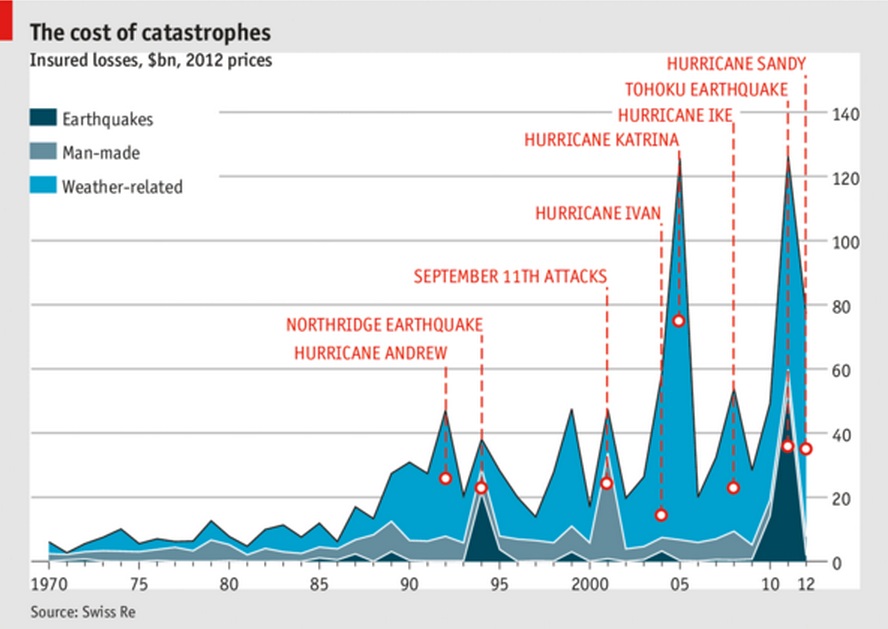
Costly calamities  |


| You are subscribed to email updates from The Big Picture To stop receiving these emails, you may unsubscribe now. | Email delivery powered by Google |
| Google Inc., 20 West Kinzie, Chicago IL USA 60610 | |



0 comments:
Post a Comment