


The Big Picture |
- Bill Black: The Heritage Foundation Makes Up Its Numbers
- Fleetwood Mac, Jones Beach Theater
- Succinct Summations of Week’s Events 6.28.13
- Homebuilders Hurt by Housing Hangover
- Questions for Investors At 2013′s Halfway Mark
- 10 Friday AM Reads
- Comedians In Cars Getting Coffee: David Letterman
| Bill Black: The Heritage Foundation Makes Up Its Numbers Posted: 29 Jun 2013 02:00 AM PDT The Heritage Foundation: Where 7.8% Growth is "Moderate" and 4.4% is "Spectacular"
Heritage Foundation is run by Jim DeMint, the former Tea Party legislator. Heritage promptly demonstrated the impact of its new leadership with its purported study of the benefits and costs of immigration that ignored the benefits and inflated the costs. Even other conservative groups were appalled – and that was before one of the co-authors of its studies' past writings on the inferiority of certain minorities that purportedly made assimilation fail became public. Heritage is one of many anti-think tanks where anyone with a progressive thought is shown the door. I wondered how the new Heritage was handling Ecuador. Ecuador is a particular problem for entities like Heritage. Heritage has an "economic freedom index." "Freedom" has a specialized meaning to Heritage – financial regulation and regulation to protect workers' health and safety tends to be treated as a decline in freedom. Simply having the government spend money – even if the spending dramatically increases health, safety, and education – can be treated by the index as making a nation less "free." Like the competitiveness indices created by the World Economic Forum, the Heritage indices represent faux empiricism in the service of ideological dogmas. Heritage sculpted its index to attempt to support its view that regulation and government spending reduce economic growth. Nations like Ecuador expose the fallacies of Heritage's index. Heritage's index has a "quick facts" component that reports that Ecuador's economic growth was 7.8% and unemployment was 4.9% (unemployment is now down to 4.1%, the best in Latin America). As I have explained in prior articles, Ecuadorian President Rafael Correa has dramatically increased spending in precisely the categories that the Washington Consensus claimed Latin American governments should concentrate their spending – health, education, and infrastructure. A million Ecuadorians have been brought out of poverty (in a nation of 15 million) under the Correa administration. The enormous emigration of Ecuadoreans prior to his leadership has been replaced by net immigration. Ecuador poses existential threats to Heritage's index and ideology. First, President Correa is a top economist whose policies are based on the view that Heritage's proposed policies are self-destructive, immoral, and economically illiterate. Correa's policies are working brilliantly and are exceptionally popular in Ecuador. Better education, health, and infrastructure are essential to spur economic growth, but they are also steps that dramatically reduce human misery and powerlessness and expand freedom. Polls showed Correa had the highest approval rating of any head of state in the Americas. Second, the three areas of government spending that President Correa has dramatically increased are the areas that the Washington Consensus said should be Latin America's top priorities. This reveals how extreme the ideological dogmas are that shaped Heritage's faux "freedom" index. The Washington Consensus, taken as a whole, is an exceptionally anti-governmental product of conservative neoclassical economic theories. Heritage, however, treats important aspects of the Washington Consensus as if they were the Communist Manifesto. Third, Correa's policies have proven so successful not despite Ecuador receiving a terrible rating in Heritage's fake freedom index, but because Ecuador did so. Heritage ranks Ecuador as 159th in the world, and falling, and classifies it as "Repressed" – its lowest category. It is a mistake to see Ecuador and Correa as clones of Venezuela and Hugo Chavez. Correa and Ecuador have demonstrated that deliberately adopting policies that produce a lower Heritage score can increase growth, add dramatically to the quality of life, and expand the citizens' freedom. Heritage responds by disparaging Ecuador's success. In its narrative accompanying its index, Heritage claims that Ecuador's "economic growth has been moderate." A 7.8% growth rate is "moderate?" I found Heritage's description of Ecuadorean growth dubious so I looked to see what descriptors they used to describe growth rates for Heritage's ideological allies. Heritage published an article trying to give Republicans credit for spurring economic growth by forcing a tax cut on President Clinton during his second term. Heritage claimed that the result of the tax cut was "spectacular growth" – "the economy grew at an annualized rate of 4.4 percent." Heritage considers 4.4% annual growth "spectacular" when Republicans (allegedly) produce it, but a 7.8% annual growth rate is only "moderate" if Correa produces. A conservative website notes our economy grew at an average annual rate of 3.4 percent under President Ronald Reagan. I also looked at how Heritage's fake freedom index described growth rates in Latin American nations that came closer to sharing Heritage's ideological dogmas. Heritage describes Peru's annual economic growth rate of 6.9% as "strong." Heritage characterizes a 6.9% growth rate for a (relatively) conservative nation as "strong" but a 7.8% economic growth rate for Ecuador as "moderate" because (a) it detests Correa and (b) ideology trumps facts and logical consistency. In Ecuador, GDP growth under Correa is particularly important because it has reduced inequality and poverty and led to an improved standard of living for virtually all citizens. Another measure of economic growth is the growth in real (adjusted for inflation) wages. Heritage has presented a chart in which it endorses the application of the phrase "Rapid Growth Scenario" to an annual growth rate in real wages of 1.4 percent. In 2012, the real growth in wages in Ecuador was 3.0 percent. That is over twice the growth rate that Heritage described as "rapid." Modern theoclassical economics has made an art form of fake empiricism produced by fake think tanks that shape their product to please their corporate founders/donors. The products may look like science, but it is simply dogma misrepresenting reality in an intellectually dishonest manner. President Correa drives entities like Heritage nuts because Ecuador has been so successful while he has been president because he championed policies they despise. It is time for the United States to embrace this success. It is bizarre that the Obama administration, which purports to support most of Correa's economic policies, shares Heritage's implacably hostility to the Correa administration. The Obama administration is already acting like Ecuador's grant of asylum to Julian Assange is a hostile act to the United States and there is great danger that it will become even more hostile towards Ecuador should Edward Snowden be granted asylum by Ecuador. A personal plea to President Obama and Secretary of State Kerry When you find you are taking your policies against Ecuador from Heritage's playbook it should alert you of the need to stop, rethink, and reboot. President Correa was reelected by a huge margin on the basis of popular support for policies that he – and you – made the heart of your electoral platforms. President Correa has been able to put those policies in place to a far greater degree than you have Mr. President – and the results have been a spectacular success. You can disagree about some foreign policies while still being strong supporters of President Correa's education, health, and infrastructure policies and the Ecuadorean peoples' support for those policies, their President, and Ecuadorean sovereignty.  |
| Fleetwood Mac, Jones Beach Theater Posted: 28 Jun 2013 04:00 PM PDT Last weekend, on a gorgeous evening, I took the missus to see Fleetwood Mac at Jones Beach Theater. They were never my kinda band, although I will admit to liking the album Fleetwood Mac. Their breakout hit, Rumors, was too commercial for me, lacking much of an edge. (Bill Clinton adopted Don’t Stop (thinking about tomorrow) as his campaign theme song) The years have treated the songs surprisingly well — they more or less hold up. My guess is because of what an interesting and brilliant guitarist Lindsey Buckingham is. (I had no idea prior). Stevie Nicks has a huge fan base who adore her, but I found her sincere but a bit ditzy, and she seemingly messed up the lyrics to Rhiannon. They are doing a national tour, and I assume they are going to get tighter as the shows go on. If you are a fan, you are encouraged to go. Everyone else can skip it.
Photos after the jump
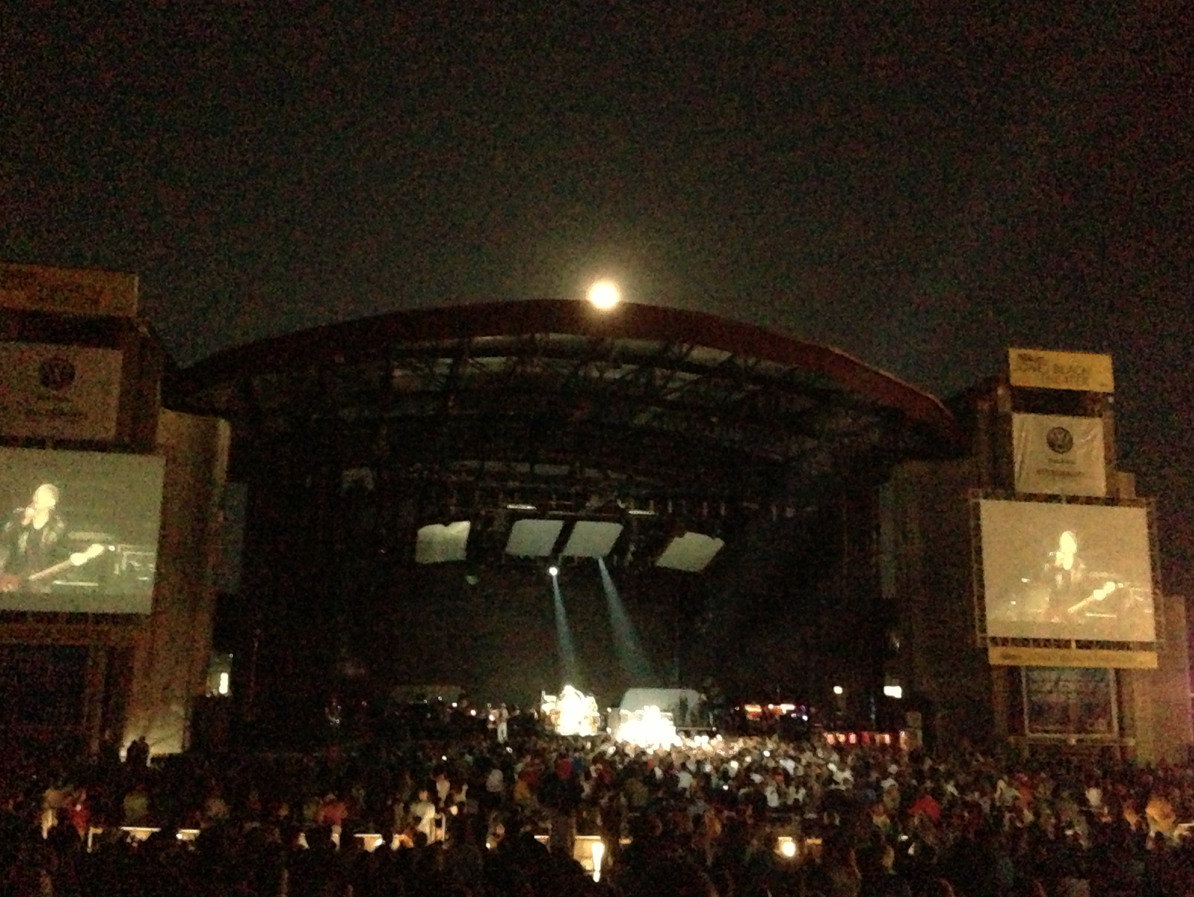
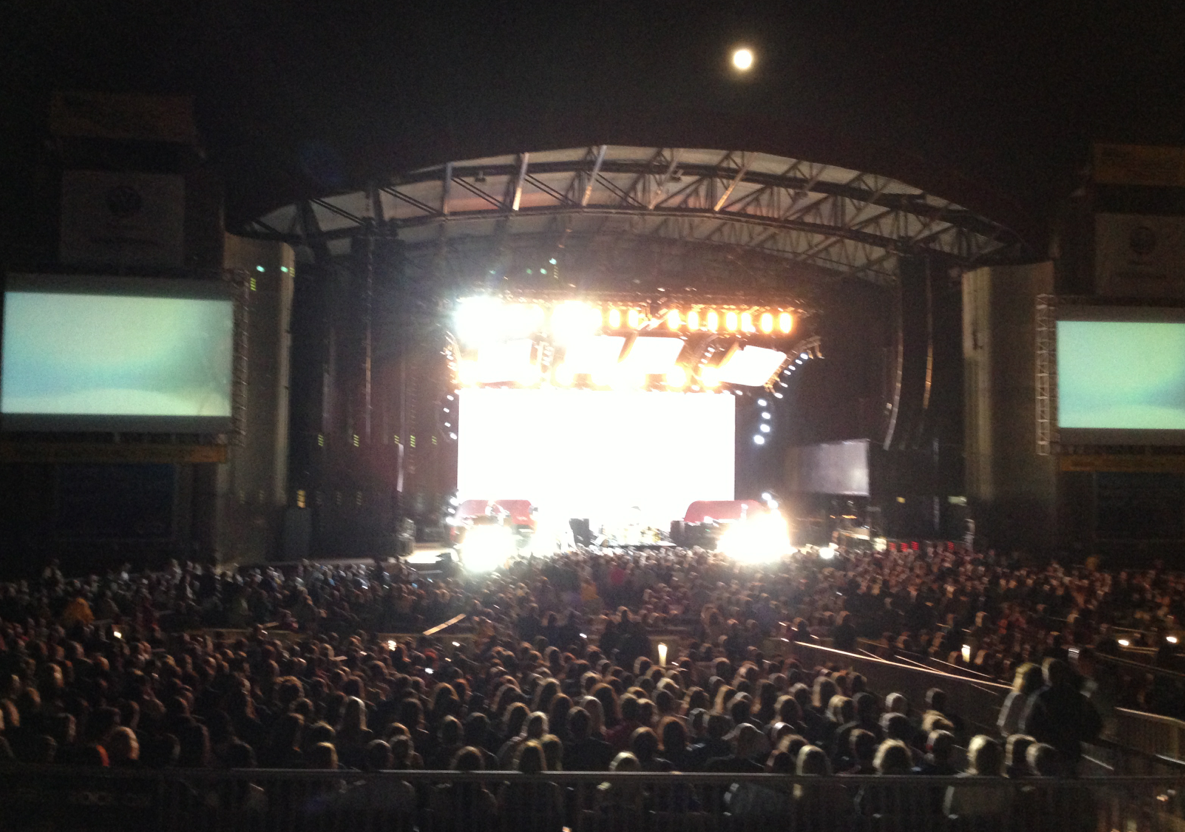
Fleetwood Mac, Jones Beach Theater, Wantagh, NY
Opening Song ~~~ Moon Climbing Over Bandshell ~~~ Fleetwood Mac does their best Pink Floyd imitation ~~~ Stage plus screens ~~~ Encore
Second Hand News Encore: Encore 2: Source: Setlist  |
| Succinct Summations of Week’s Events 6.28.13 Posted: 28 Jun 2013 12:30 PM PDT Succinct Summations week ending June 28, 2013. Positives:
Negatives:
Thanks, Batman!  |
| Homebuilders Hurt by Housing Hangover Posted: 28 Jun 2013 10:00 AM PDT The Distressing Gap
Yesterday, I posted a chart showing how weak New Home Sales were relative to existing home sales. Mark Hanson wanted to flash some color on that — here is his 3 part explanation as to why the Builders are having such a difficult time:
There you have it, from Mark Hanson.
 |
| Questions for Investors At 2013′s Halfway Mark Posted: 28 Jun 2013 05:30 AM PDT Here we are, on the last day of Q2 2013. It is no exaggeration to say that this has been an unusual and exciting year. I suspect most investors would prefer their markets with a lot less excitement. Perhaps we can begin a movement to bring back boring banking. Regardless, we don’t have to wait until New Years Eve to look back. The end of the 2nd quarter presents an opportunity to review what you have done this year, and consider what changes you may wish to make. And since its Friday, we will be sure to slip in a little philosophy when no one is looking. I don’t claim to have all the answers, but I do have many of the questions:
If you can answer these honestly, you will make yourself into a better investor. It is a painful, self-relfective process, one that is necessary if you want to grow as a capitalist . . .
 |
| Posted: 28 Jun 2013 05:00 AM PDT My morning reads:
What are you reading?
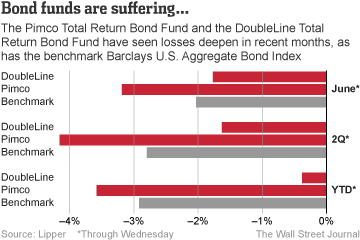
Jeff Gundlach still kicking Bill Gross’s ass  |
| Comedians In Cars Getting Coffee: David Letterman Posted: 28 Jun 2013 03:00 AM PDT “I Like Kettlecorn”
Click for video
 |






| You are subscribed to email updates from The Big Picture To stop receiving these emails, you may unsubscribe now. | Email delivery powered by Google |
| Google Inc., 20 West Kinzie, Chicago IL USA 60610 | |



0 comments:
Post a Comment