


The Big Picture |

- FDIC Bank Failures
- Qaddafi, Bernanke & Stock Markets
- The Review Factory
- The Art of FLIGHT
- The trend is your friend — until that nasty bend at the end
- Choosing Big Banks Over Little Guy, Government Dooms BOTH
- Barron’s: Buy Emerging Markets
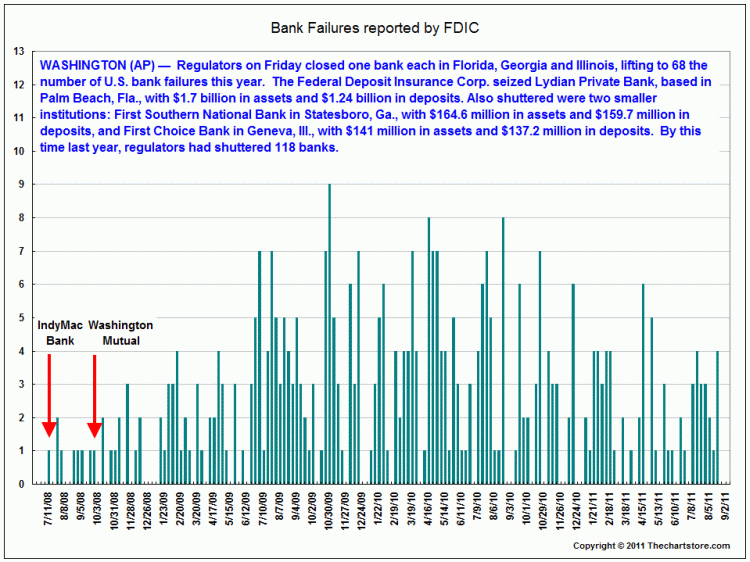
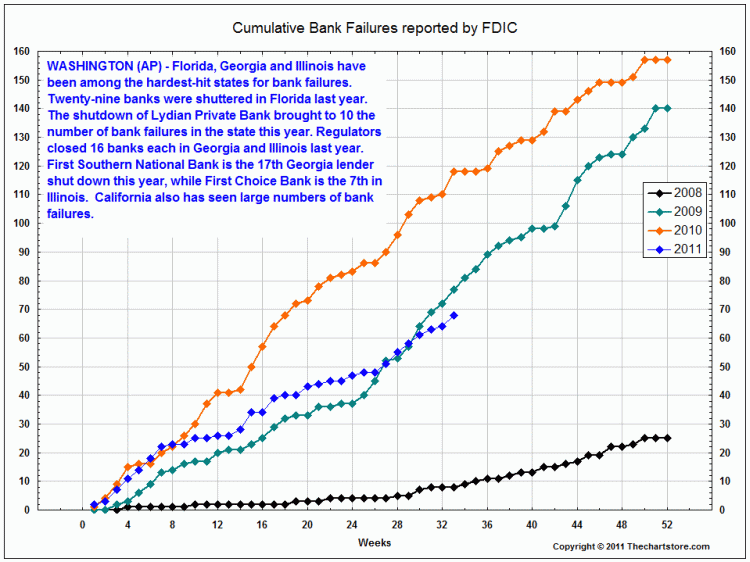
| Posted: 21 Aug 2011 03:00 PM PDT Bank Failures reported weekly by FDIC since mid-2008 ~~~ Cumulative Bank Failures reported weekly by FDIC for 2008, 2009, 2010 and 2011 | ||||||||||||||||||||||||||||||||||||||||||||||||||||||||||||||||||||||||||||||||||||||||||||||||||||||||||||||||||||||||||||||||||||||||||||||||||||||||||||||||||
| Qaddafi, Bernanke & Stock Markets Posted: 21 Aug 2011 12:30 PM PDT Qaddafi, Bernanke & Stock Markets ~~~ News reports continue to show the progressive demise of the Qaddafi regime in Libya. Rebel forces have apparently taken more of the country's oil refining (Zawiya) and processing infrastructure (Brega). Most observers give the Qaddafi regime limited time before a full regime change takes place in Libya. Watch what happens to oil prices if and when the Qaddafis lose and leave. In short order, Libyan oil production will ramp up. As it does, oil prices in world markets will fall and oil futures markets will reflect the expected increase in production of oil from Libya. The key prices to watch are those trading in Europe, like Brent. US oil prices (WTI) are no longer the leading indicator of world prices intersecting with world supply/demand. Excess inventory at Cushing, OK is complicating the pricing structure. We expect oil prices to fall when highly desirable, sweet Libyan crude production is fully resumed and enters the pipeline. Maybe, they are going to fall by a lot. This will come as a much-needed boost to the US economy and to others in the world. Remember: the oil price acts like a sales tax on consumption. To clarify this relationship we convert crude oil prices to gasoline prices and then estimate what a change in gas price will mean for the American consumer. Roughly, a penny drop in the gas price per gallon gives Americans 1.4 billion more dollars a year to spend on other than gasoline. That is a huge stimulant to the economy. The ratio is different in Europe because the gas taxes are so much higher there. Nevertheless, it is still significant. Lower gas prices could not come at a more needed time. With weakening economies around the developed world, the lowering of the consumption "tax" from high oil prices will be a welcome boost. In the US, it is possible we will see gas prices with a $2 handle, instead of the $4 handle of a few months ago. This is a large positive change for the US economy, and it is not being incorporated in the gloomy forecasts that we see. Lower oil prices also mean a lessening of inflation pressures in the energy sector. We expect to see that appear as well. "Gasoline prices moved up 4.7% in July and accounted for half the increase of the CPI. The energy price index has risen 19% in the twelve months ended in July. The core CPI, which excludes food and energy, increased 0.2% in July, which works out to a 1.8% increase during the past year. The year-to-year change in the core CPI bottomed out in October at 0.6% and has climbed steadily each month." (Source Asha Bangalore, Northern Trust) At 1.8%, the core CPI is still below the Fed's informal target. Future inflation may be a serious concern for the three dissenting presidents on the FOMC. Real growth and risk are clearly the dominant and majority view. Bernanke fears a softening of the economy and a resumption of deflation risk. He is trying to get some growth and a little more inflation. Oil price declines may get him the growth. There seems to be a long way to go before the inflation side becomes the serous threat. In May of this year, we took our then overweighted energy position to an underweight in our US stock portfolios. We were at 18% against an S&P weight of 13%. We are still underweight today. The S&P energy sector is 12.6% now; we are at 6%. Energy is the third largest sector weight in the S&P 500 index. Exxon and Chevron are large capital weights in the Dow-Jones average. Both Dow and S&P averages are in steep downtrends and both are influenced by the energy component's relative weakness. We intend to remain underweight energy for some time and will wait out the Libyan regime change and subsequent rebalancing of the world oil price and world oil markets. Meanwhile we are more optimistic than most about the US. We believe there is a large difference between a full recession vs. a period of very slow growth and low inflation. We think about this in terms of 1-2% real growth and 1-2% inflation. Taking the center points in each, one sees a 3% nominal rate of GDP expansion in the US. That will keep the employment situation weakly improving, and it will mean a continued slow recovery. It will also mean higher profits for business. The stock market correction since the April 29 high has been vicious. We sold in early May. That was a good call. We entered in July. That was a bad call. We continue to rebalance and have recently raised our stock allocation and lowered our bond allocation in balanced accounts. Our sector weighting, like the change in energy, has helped mitigate the damage. However, there is still damage. Volatility in markets remains very high. Fear and panic are seen in investor behavior and sentiment. These are usually the signs of buying opportunities and stock market bottoms. We think that is true today. We have written about the valuation metrics we use and how they indicate that stocks are strategically cheap. We are looking at some of the financials for the first time in four years. I know, everyone thinks the world is ending, and the financials are decimated. That is the old news. Tell me some new news. This is one of the most washed-out sectors one can imagine. After fours years, after many adjustments, after ongoing consolidation, after the mortgage fiasco, after Lehman-AIG—after all this, we now see banks and other financials selling well below their book values, and with substantial reserves for losses. We are on the buy side now and believe that stocks present an unusually good entry point for a strategic investor. For a short-term trader this is much more difficult. Did we have a selling climax or an interim one on August 8-9? Moreover, how much volatility is due to algorithmic trading? Most investors do not understand this force, which is driving "vol" higher and thus causing market swings to appear wild. We expect the rocky period to continue for a few more weeks. Eyes are now focused on Ben Bernanke's remarks in Jackson Hole this Friday. We agree that the speech is critical. However, we are not taking our eye off the events unfolding in Libya. They may help Bernanke and US policy more than many expect. We are nearly alone in our contrary market positions. We have witnessed a rapid 20% bear-market correction since April 29, when the S&P 500 hit 1363. Its intraday low was 1100 on August 8-9. It is testing that low now. It may go lower or the interim low may hold. The question is: where will it be in 5-7 years? By then the US economy is likely to be $20 trillion in nominal GDP. Our view: it will be higher or maybe even very much higher. We have a longer-term target of 2000 or higher on the S&P 500 index. In addition, dividend yields now exceed treasury interest while we wait. 10% of our US ETF model is in Wisdom Tree dividend ex-financial ETF. (Symbol-DTN) It has outperformed the market by 500 basis points on the way down. We are bullish. ~~~ David R. Kotok, Chairman and Chief Investment Officer | ||||||||||||||||||||||||||||||||||||||||||||||||||||||||||||||||||||||||||||||||||||||||||||||||||||||||||||||||||||||||||||||||||||||||||||||||||||||||||||||||||
| Posted: 21 Aug 2011 11:00 AM PDT
> As if you didn’t know that the many reviews were purchased:
Yelp’s business model? Not so good. This should be a boon for Zagats . . . > Source: | ||||||||||||||||||||||||||||||||||||||||||||||||||||||||||||||||||||||||||||||||||||||||||||||||||||||||||||||||||||||||||||||||||||||||||||||||||||||||||||||||||
| Posted: 21 Aug 2011 07:00 AM PDT Just when you thought the producers of “That’s It, That’s All” couldn’t top themselves comes a new breed of snowboarding entertainment. The Art of FLIGHT follows Travis Rice, John Jackson, Mark Landvik, Scotty Lago, Jake Blauvelt, Nicolas Muller, Gigi Ruf, DCP, Mark McMorris and Pat Moore as they dream up new global adventures and progress the sport to unimaginable levels. Track is by Arch Enemy – “Vengeance Is Mine”. Brain Farm has gathered an arsenal of the most advanced and progressive film making technology to bring the masses a snowboarding adventure of epic proportions. Filmed on location in Jackson Hole, Alaska, Chile, Aspen, Patagonia, British Columbia and more, FLIGHT brings the viewer along for the perfect blend of adventure/travel drama and high-energy snowboarding action. The Art of FLIGHT releases September 2011. http://ArtOfFLIGHTmovie.com | ||||||||||||||||||||||||||||||||||||||||||||||||||||||||||||||||||||||||||||||||||||||||||||||||||||||||||||||||||||||||||||||||||||||||||||||||||||||||||||||||||
| The trend is your friend — until that nasty bend at the end Posted: 21 Aug 2011 06:00 AM PDT
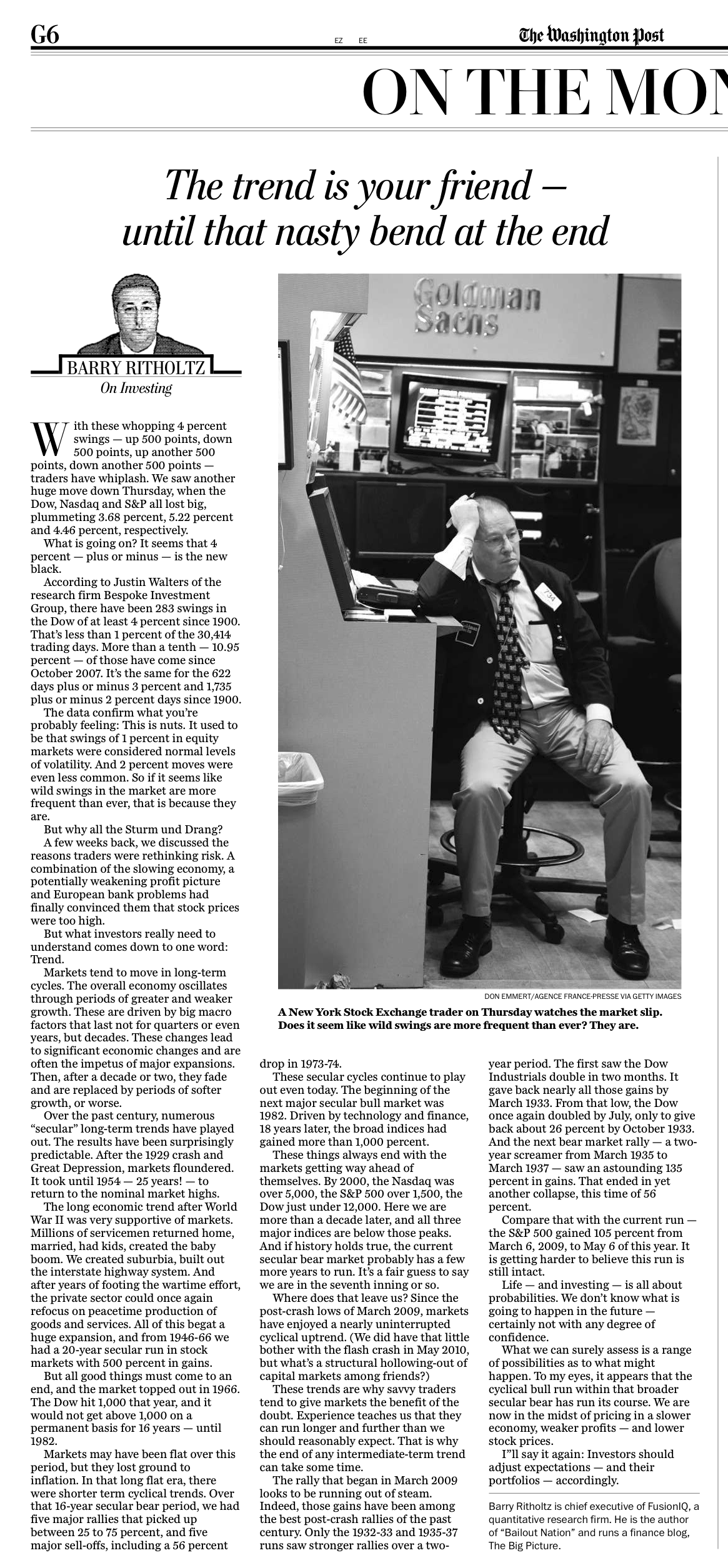
> My Sunday Business Washington Post column is out. I sometimes forget they are a mainstream paper, not a business publication, and they let me get away with things the Economist or Barron’s never would. Like the headline in the print edition is a perfect example: “The trend is your friend until that nasty bend at the end.” The online version is the more traditionally headlined: Smacked by big market swings, investors should alter their outlook. Its one of my first attempts at explaining secular market cycles to a non-investing professional audience. Excerpt:
>
> Source: Washington Post Sunday, August 21 page G6 (PDF) | ||||||||||||||||||||||||||||||||||||||||||||||||||||||||||||||||||||||||||||||||||||||||||||||||||||||||||||||||||||||||||||||||||||||||||||||||||||||||||||||||||
| Choosing Big Banks Over Little Guy, Government Dooms BOTH Posted: 21 Aug 2011 05:30 AM PDT By Choosing The Big Banks Over The Little Guy, The Government Is Dooming BOTHShould Government Help the Little Guy or the Big Banks?If the government is going to give anyone money, giving it to the little guy is arguably more fair than giving money to Wall Street fatcats. Moreover, as Steve Keen demonstrated mathematically in 2009, giving money to the debtors is much better for stimulating the economy than giving it to the creditors. In addition, because runaway inequality causes depressions, helping out the little guy helps to stabilize the economy. Government Has Picked Winners and LosersThe big banks were all insolvent during the 1980s. And they all became insolvent again in 2008. See this and this. The bailouts were certainly rammed down our throats under false pretenses. But here’s the more important point. Paulson and Bernanke falsely stated that the big banks receiving Tarp money were healthy, when they were not. They were insolvent. Tim Geithner falsely stated that the banks passed some time of an objective stress test but they did not. They were insolvent. Both the creditors and the debtors were mortally wounded by the 2008 financial crisis. The big banks wouldn’t have survived without trillions in handouts, guarantees, loans, idiot-proof profits courtesy of the government. The little guy hasn’t been helped since 2008. He has been left to suffer with his life-threatening wounds. See this, this and this. So the government chose sides. The creditors were wiped out, just like a lot of Main Street was wiped out. In one sense, the government chose who would live (the giant banks and other bailed out and favored companies) and who would die (the other 99%). But in fact, the big banks were no longer creditors after the 2008 crash. Specifically, the big banks which held the mortgages and the loans were wiped out. The government moved the arms and legs of the big banks to pretend they were still alive … and have been doing so ever since. But they were no longer going concerns after they went bust. The government pumped blood back in these dead banks and turned them into zombies. They will never come back to life in a real sense … they are still zombies, 3 years later. By Choosing Wall Street Over Main Street, the Government Has Doomed the EconomyMany of the world’s leading economists and financial experts say that by choosing creditors over debtors, the government is dooming the economy. See this and this. The big zombie banks can never come back to life, and – by trying to save them – the government is bleeding out the little guy. By choosing the big banks over the little guy, the government is dooming both. | ||||||||||||||||||||||||||||||||||||||||||||||||||||||||||||||||||||||||||||||||||||||||||||||||||||||||||||||||||||||||||||||||||||||||||||||||||||||||||||||||||
| Barron’s: Buy Emerging Markets Posted: 21 Aug 2011 03:00 AM PDT Where the Buys AreEmerging markets are cheaper than their developed counterparts with far more growth. Earnings for the MSCI Emerging Markets index are expected to grow at 15% over the long term, versus 12% for MSCI World index.
China, Brazil and South Korea, it bears noting, are among the biggest and most liquid markets in the developing world. ~~~ Source: | ||||||||||||||||||||||||||||||||||||||||||||||||||||||||||||||||||||||||||||||||||||||||||||||||||||||||||||||||||||||||||||||||||||||||||||||||||||||||||||||||||

| You are subscribed to email updates from The Big Picture To stop receiving these emails, you may unsubscribe now. | Email delivery powered by Google |
| Google Inc., 20 West Kinzie, Chicago IL USA 60610 | |



0 comments:
Post a Comment