.

{2} GoogleTranslate (H)

English French German Spanish Italian Dutch Russian Portuguese Japanese Korean Arabic Chinese Simplified

Our New Stuff

{3} up AdBrite + eToro

Your Ad Here

Friday, October 14, 2011

The Big Picture

The Big Picture


End the Symbiotic Relationship Between Big Government and Big Corporations

Posted: 13 Oct 2011 10:30 PM PDT

Conservatives and Liberals Agree: End the Malignant, Symbiotic Relationship Between Big Government and Big Corporations

The Issue that Unites Conservatives and Liberals
While many pretend that liberals and conservatives are too far apart to work together, there are actually many issues on which everyone can agree.

For example, both liberals and conservatives hate the malignant, symbiotic relationship between big government and big corporations:

Conservatives tend to view big government with suspicion, and think that government should be held accountable and reined in.

Liberals tend to view big corporations with suspicion, and think that they should be held accountable and reined in.

***

Conservatives hate big unfettered government and liberals hate big unchecked corporations, so both hate legislation which encourages the federal government to reward big corporations at the expense of small businesses.

Most Americans – whether they are conservative or liberal – are disgusted that virtually all of the politicians are bought and paid for. No wonder people of all stripes have lost all trust in our government.

And everyone hates government-enabled fraud. The big banks, of course, committed massive fraud. But the auditors, rating agencies and regulators also all committed fraud, which helped blow the bubble and sowed the seeds of the inevitable crash.

Indeed:

Both liberals and conservatives are angry that the feds are propping up the giant banks – while letting small banks fail by the hundreds – even though that is horrible for the economy and Main Street.

The Dodd-Frank financial legislation wasn't a compromise where things landed somewhere in the middle between liberal and conservatives ideas. Instead, it enshrines big government propping up the big banks … more or less permanently.

Many liberals and conservatives look at the government's approach to the financial crisis as socialism for the rich and free market capitalism for the little guy. No wonder both liberals and conservatives hate it.

And it's not just the big banks. Americans are angry that the federal government under both Bush and Obama have handed giant defense contractors like Blackwater and Halliburton no-bid contracts. [And Solyndra and other solar companies]. They are mad that – instead of cracking down on BP – the government has acted like BP's p.r. spokesman-in-chief and sugar daddy.

They are peeved that companies like Monsanto are able to sell genetically modified foods without any disclosure, and that small farmers are getting sued when Monsanto crops drift onto their fields.

They are mad that Obama promised "change" – i.e. standing up to Wall Street and the other powers-that-be – but is just delivering more of the same.

They are furious that there is no separation between government and a handful of favored giant corporations. [Indeed, Ben Bernanke has handed out more presents than Santa Claus to McDonald's Harley-Davidson, hedge funds and others.] In other words, Americans are angry that we've gone from capitalism to oligarchy.

As I noted Sunday:

The corrupt, giant banks would never have gotten so big and powerful on their own. In a free market, the leaner banks with sounder business models would be growing, while the giants who made reckless speculative gambles would have gone bust. See this, this and this.

It is the Federal Reserve, Treasury and Congress who have repeatedly bailed out the big banks, ensured they make money at taxpayer expense, exempted them from standard accounting practices and the criminal and fraud laws which govern the little guy, encouraged insane amounts of leverage, and enabled the too big to fail banks – through "moral hazard" – to become even more reckless.

Indeed, the government made them big in the first place. As I noted in 2009:

As MIT economics professor and former IMF chief economist Simon Johnson points out today, the official White House position is that:

(1) The government created the mega-giants, and they are not the product of free market competition

***

(3) Giant banks are good for the economy

And given that the 12 Federal Reserve banks are private – see this, this, this and this- the giant banks have a huge amount of influence on what the Fed does. Indeed, the money-center banks in New York control the New York Fed, the most powerful Fed bank. Indeed, Jamie Dimon – the head of JP Morgan Chase – is a Director of the New York Fed.

Any attempt by the left to say that the free market is all bad and the government is all good is naive and counter-productive.

And any attempt by the right to say that we should leave the giant banks alone because that's the free market are wrong.

The [corrupt, captured government "regulators"] and the giant banks are part of a single malignant, symbiotic relationship.

Indeed, while most Americans are in favor of free market capitalism, we don't have capitalism at the moment. Instead, we have socialism, fascism or crony capitalism, where the government allows a handful of companies to succeed by propping them up, covering up their fraud and handing them guaranteed profts … but allows everyone else to struggle.

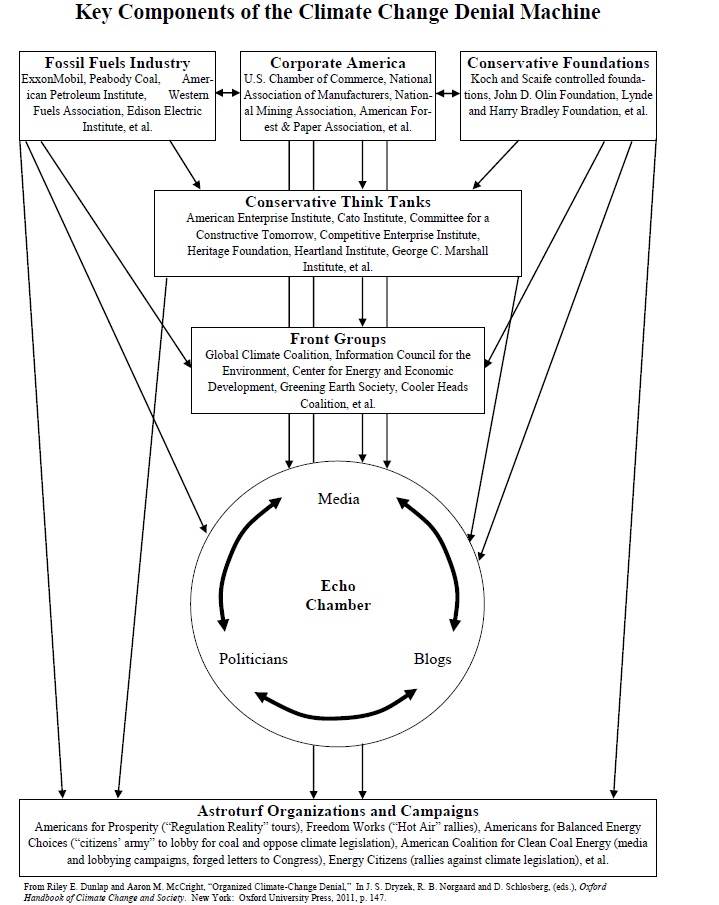
A Map of Organized Climate Change Denial

Posted: 13 Oct 2011 05:30 PM PDT

Discuss:

>


Source:: A Map of Organized Climate Change Denial
NYT, October 2, 2011

10 Thursday PM Reads

Posted: 13 Oct 2011 01:30 PM PDT

Today’s afternoon train reading :

• U.S. Incomes Seen Stagnant Through 2021 (WSJ) see also Growing Income Gap May Leave U.S. Vulnerable (Bloomberg)
• Tips from a top stock market contrarian ? (Market Watch)
• Little Banks vs. Big Banks (Slate) see also Florida says more work needed in foreclosure talks (Reuters)
• In a Down Economy, Fewer Birth (Pew Social Trends)
• The book-cooking index (Economist) see also Benford’s Law and the Decreasing Reliability of Accounting Data for US Firms (Studies in Everyday Life)
• Pogue: A Look at Apple's iCloud  (Pogues Post)
• NY Tops Massachusetts in U.S. Venture Deals for 1st Time (Bloomberg) see also Web Start-Ups Hit Cash Crunch (WSJ)
• 12 Extremely Disappointing Facts About Popular Music (Buzz Feed)
• The GOP ties itself up in knots (Washington Post) see also Supply-Sider Investment Advice (The Mess That Greenspan Made)
• New Tumblr: (Shit That Siri Says) see also Could an Apple iTV really succeed? (Digital Trends)

What are you reading?

>

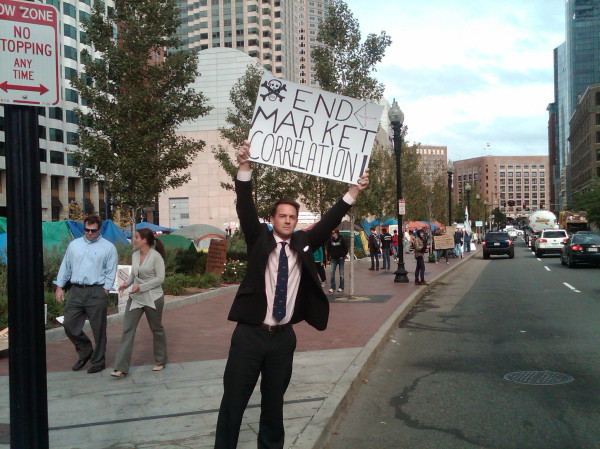
Occupy Wall Street Comes to Boston

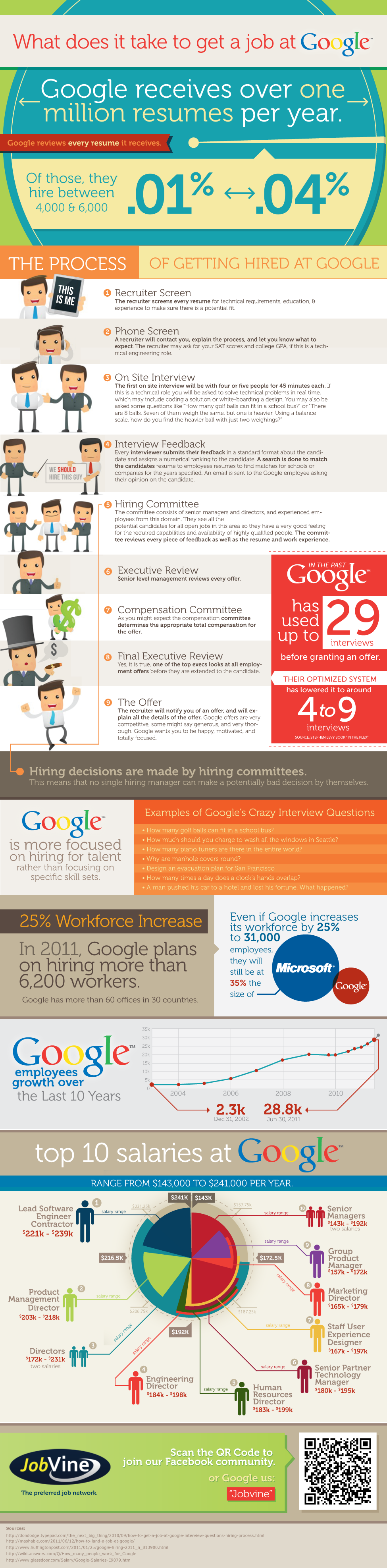
What Does It Take to Get a Job at Google?

Posted: 13 Oct 2011 11:30 AM PDT

QOTD: Too Few Arthur Andersons

Posted: 13 Oct 2011 11:00 AM PDT

Quote of the day:

“I’ll believe corporations are people when Texas executes one.”
-Seen at Occupy Wall Street rally.

Infographics: Where Data Meets Design

Posted: 13 Oct 2011 10:30 AM PDT

30 yr auction solid, some left with no other choice

Posted: 13 Oct 2011 10:01 AM PDT

In contrast to the weak 10 yr auction yesterday, the 30 yr auction was solid as the yield was 4 bps below the when issued and the bid to cover of 2.94 was well above the 12 month avg of 2.61 and the best since March. Also, direct and indirect bidders took the most since April ’10. Bottom line, if you’re a pension fund or an insurance company and the Fed tells you that short term rates are staying near zero for another two years and that they will do all they can to keep long term interest rates low, you buy as many 30 yr bonds as you can, irrespective of the pathetic yields. It’s because you are left with little choice. It’s another example of how artificially manipulated interest rates leads to poor investment decisions and a misallocation of capital.

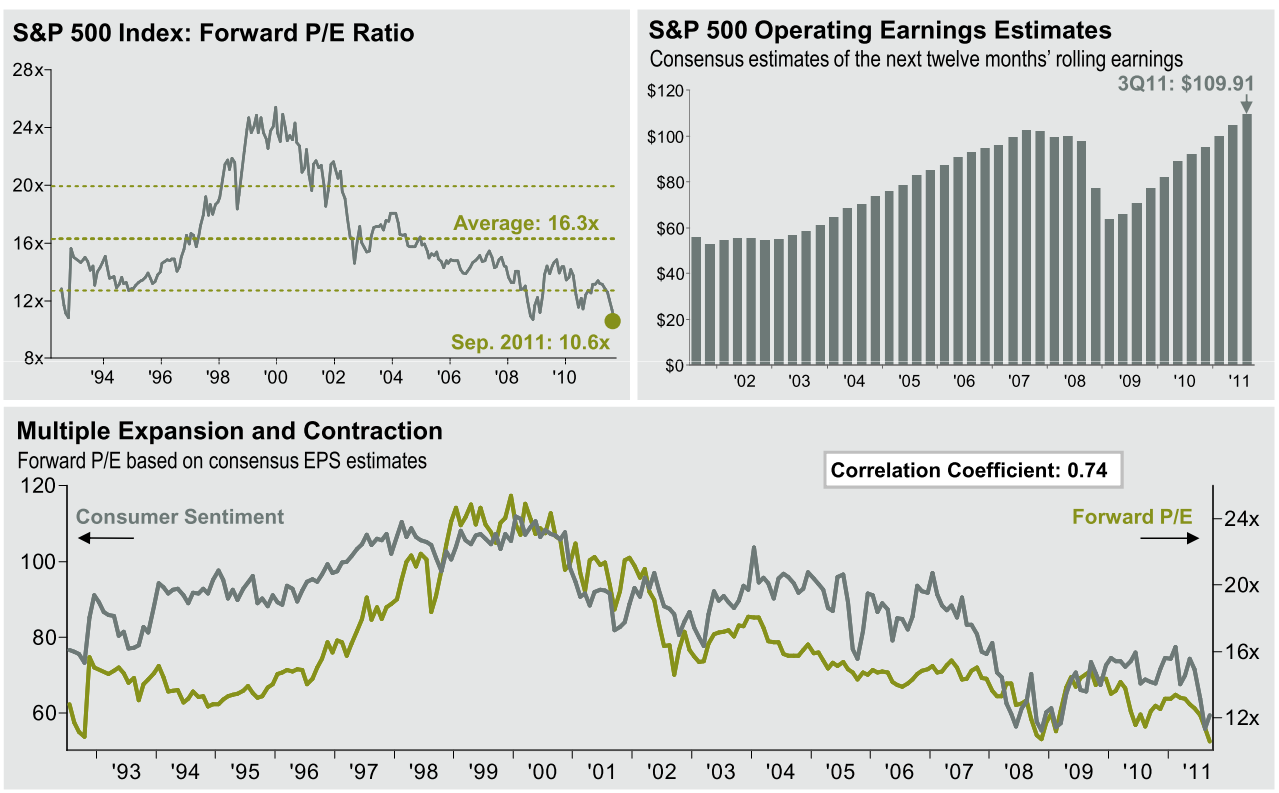
Earnings Estimates & Valuation Drivers, Q4 2011

Posted: 13 Oct 2011 08:36 AM PDT

Great chart from JPM showing the state of earnings heading into Q4 2011:

>

click for ginormous chart

Source: S&P, Compustat, Factset, JPM Asset Management

All data as of September 30, 2011

Obama’s Rating Soar After Punching Wall St Exec in Face

Posted: 13 Oct 2011 06:44 AM PDT

I think that is supposed to be Anthony Scaramucci:


President’s Approval Rating Soars After Punching Wall Street Banker in Face

10 Thursday AM Reads

Posted: 13 Oct 2011 06:30 AM PDT

Here is what I am reading this morning:

Good news: Wall Street's in a bad mood (Market Watch)
• At Ports, a Sobering Omen for Holiday Sales (WSJ) see also China Export Growth Dwindles to Slowest Pace in Seven Months as Yuan Gains (Bloomberg)
Jesse Eisinger: Between the Lines, Wall St. Banks Face a Deficit of Trust (DealBook)
• Doug Kass 10 Questions:
…..-for the Bears (Street.com)
…..-for the Bulls (Street.com)
• 'Buffett Rule' May Be Broken by 25% of Millionaire Taxpayers, Study Finds (Bloomberg) see also Buffett Builds His Tax-the-Rich Case (WSJ)
• Florida AG Pam Bondi Pressured By Targets Of Investigations To Soften Approach, Critics Say (Huff Post)
• Chanos, Gross Understand Wall Street Protest Paulson Rejects (Businessweek) see also Buffett's Son Defends Occupy Wall Street (Bloomberg)
• Romney Victory, Looks Presidential and Human (Bloomberg)
• Take Our Free Money, Please! (Slate)
• Steve Jobs leaves questions behind (Japan Times)

What are you reading?

>

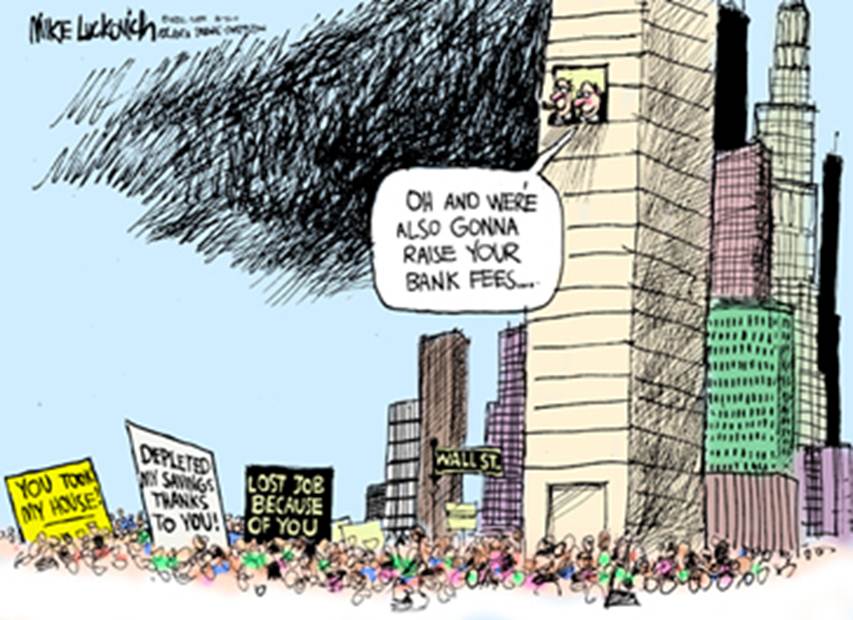
Oh, and we’re also gonna raise your bank fees…

.

0 comments:

Post a Comment

previous home Next

{8} chatroll


{9} AdBrite FOOTER

{8} Nice Blogs (Adgetize)