


The Big Picture |

- The Only Way to Save the Economy: Break Up the Giant, Insolvent Banks
- Google and Your Memory
- Is Occupy Wall Street: Just Noise?
- Dropbox startup lessons learned 2011
- A Historical Look at CEO Pay
- The Great Recession Marches On
- 10 Weekend Reads
- Ferrari 458 Italia: $225,325 plus $57,000 in options
- Bloomberg: Ritholtz on Fed Policy, Economy, OWS
| The Only Way to Save the Economy: Break Up the Giant, Insolvent Banks Posted: 22 Oct 2011 09:48 PM PDT  Painting by Anthony Freda: www.AnthonyFreda.com The Government Created the Giant BanksAs MIT economics professor and former IMF chief economist Simon Johnson points out, the official White House position is that:
This is false … giant banks are incredibly destructive for the economy. We Do NOT Need the Big Banks to Help the Economy RecoverDo we need the Too Big to Fails to help the economy recover? The following top economists and financial experts believe that the economy cannot recover unless the big, insolvent banks are broken up in an orderly fashion:
In addition, many top economists and financial experts, including Bank of Israel Governor Stanley Fischer – who was Ben Bernanke's thesis adviser at MIT – say that – at the very least – the size of the financial giants should be limited.
Even the Bank of International Settlements – the "Central Banks' Central Bank" – has slammed too big to fail. As summarized by the Financial Times:
And as I noted in December 2008, the big banks are the major reason why sovereign debt has become a crisis:
Similarly, a study of 124 banking crises by the International Monetary Fund found that propping banks which are only pretending to be solvent hurts the economy:
The big banks have been bailed out to the tune of many trillions, dragging the economy down a bottomless pit from which we can't escape. See this, this, this and this. Unless we break them up, we will never escape. If We Break Up the Giants, Smaller Banks Will Thrive … And Loan More to Main StreetDo we need to keep the TBTFs to make sure that loans are made? Nope. USA Today points out:
Dennis Santiago – CEO and Managing Director of Institutional Risk Analytics (Chris Whalen's company) – notes:
Fortune reports that smaller banks are stepping in to fill the lending void left by the giant banks' current hesitancy to make loans. Indeed, the article points out that the only reason that smaller banks haven't been able to expand and thrive is that the too-big-to-fails have decreased competition:
BusinessWeek notes:
Fed Governor Daniel K. Tarullo said:
Thomas M. Hoenig pointed out in a speech at a U.S. Chamber of Commerce summit in Washington:
On the other hand, Hoenig pointed out:
45% is about 45% morethan the amount of increased lending by the too big to fails. Indeed, some very smart people say that the big banks aren't really focusing as much on the lending business as smaller banks. Specifically since Glass-Steagall was repealed in 1999, the giant banks have made much of their money in trading assets, securities, derivatives and other speculative bets, the banks' own paper and securities, and in other money-making activities which have nothing to do with traditional depository functions. Now that the economy has crashed, the big banks are making very few loans to consumers or small businesses because they still have trillions in bad derivatives gambling debts to pay off, and so they are only loaning to the biggest players and those who don't really need credit in the first place. See this and this. So we don't really need these giant gamblers. We don't really need JP Morgan, Citi, Bank of America, Goldman Sachs or Morgan Stanley. What we need are dedicated lenders. The Fortune article discussed above points out that the banking giants are not necessarily more efficient than smaller banks:
And Governor Tarullo points out some of the benefits of small community banks over the giant banks:
It is simply not true that we need the mega-banks. In fact, as many top economists and financial analysts have said, the "too big to fails" are actually stifling competition from smaller lenders and credit unions, and dragging the entire economy down into a black hole. The Failure to Break Up the Big Banks Is Causing Rampant Fraud
Painting by Anthony Freda: www.AnthonyFreda.com Top economists and experts on fraud say that fraud is not only widespread, it is actually the business model adopted by the giant banks. See this, this, this, this, this and this. In addition, Richard Alford – former New York Fed economist, trading floor economist and strategist – showed that banks that get too big benefit from "information asymmetry" which disrupts the free market. Nobel prize winning economist Joseph Stiglitz noted in September that giants like Goldman are using their size to manipulate the market:
The giants (especially Goldman Sachs) have also used high-frequency program trading which not only distorted the markets – making up more than 70% of stock trades – but which also let the program trading giants take a sneak peak at what the real (aka "human") traders are buying and selling, and then trade on the insider information. See this, this, this, this and this. (This is frontrunning, which is illegal; but it is a lot bigger than garden variety frontrunning, because the program traders are not only trading based on inside knowledge of what their own clients are doing, they are also trading based on knowledge of what all other traders are doing). Goldman also admitted that its proprietary trading program can "manipulate the markets in unfair ways". The giant banks have also allegedly used their Counterparty Risk Management Policy Group (CRMPG) to exchange secret information and formulate coordinated mutually beneficial actions, all with the government's blessings. In other words, a handful of giants doing it, it can manipulate the entire economy in ways which are not good for the American citizen. And the political system. No wonder Nobel prize-winning economist Paul Krugman thinks that we have to break up the big banks to stop their domination of the political process. The Failure to Break Up the Big Banks Is Dooming Us to a Derivatives DepressionAll independent experts agree that unless we rein in derivatives, will have another – bigger – financial crisis. But the big banks are preventing derivatives from being tamed. We have also pointed out that derivatives are still very dangerous for the economy, that the derivatives "reform" legislation previously passed has probably actually weakened existing regulations, and the legislation was "probably written by JP Morgan and Goldman Sachs". As I noted last year:
That's bad enough. But Bob Litan of the Brookings Institute wrote a paper (here's a summary) showing that – even if real derivatives legislation is ever passed – the 5 big derivatives players will still prevent any real change. James Kwak notes that Litan is no radical, but has previously written in defense in financial "innovation". Here's a good summary from Rortybomb, showing that this is yet another reason to break up the too big to fails:
And the extreme concentration of power and control over the entire global economy of a handful of large banks means that the entire system is extremely vulnerable. Why Aren't They Be Broken Up?So what is the real reason that the TBTFs aren't being broken up? Certainly, there is regulatory capture, cowardice and corruption:
But there is an even more interesting reason . . . The number one reason the TBTF's aren't being broken up is [drumroll] . . . the 'ole 80′s playbook is being used. As the New York Times wrote in February:
In other words, the nine biggest banks were all insolvent in the 1980s. Indeed, Richard C. Koo – former economist at the Federal Reserve Bank of New York and doctoral fellow with the Fed's Board of Governors, and now chief economist for Nomura – confirmed this fact last year in a speech to the Center for Strategic & International Studies. Specifically, Koo said that -after the Latin American crisis hit in 1982 – the New York Fed concluded that 7 out of 8 money center banks were actually "underwater" and "bankrupt", but that the Fed hid that fact from the American people. So the government's failure to break up the insolvent giants – even though virtually all independent experts say that is the only way to save the economy, and even though there is no good reason not to break them up – is nothing new. William K. Black's statement that the government's entire strategy now – as in the S&L crisis – is to cover up how bad things are ("the entire strategy is to keep people from getting the facts") makes a lot more sense. |
| Posted: 22 Oct 2011 01:00 PM PDT |
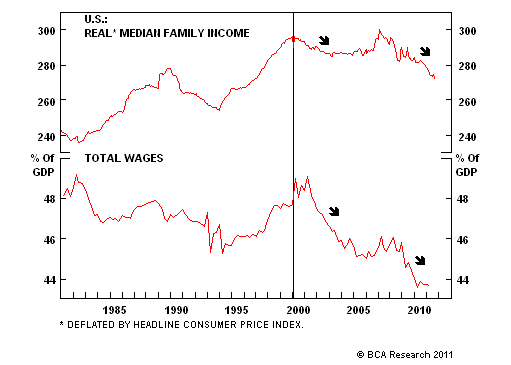
| Is Occupy Wall Street: Just Noise? Posted: 22 Oct 2011 10:00 AM PDT According to a Global Investment Strategy Special Report, the Occupy Wall Street movement symbolizes the fact that political extremism is rapidly becoming mainstream. But is it really extremism? Consider the following, from BCA:
|
| Dropbox startup lessons learned 2011 Posted: 22 Oct 2011 09:00 AM PDT Dropbox startup lessons learned 2011 View more presentations from Eric Ries |
| Posted: 22 Oct 2011 07:30 AM PDT
|
| The Great Recession Marches On Posted: 22 Oct 2011 07:15 AM PDT The Great Recession Marches On
~~~ Demand Side Blind Alleys – When Will They Ever Learn? Almost on a daily basis, whether from American politicians or European publications like the Financial Times, we are bombarded with calls for more government driven demand side stimuli. The fact that these have not worked so well in no way seems to bother their proponents. The US Federal government debt continues to careen upward and another $1.3 trillion dollar deficit was just racked up for fiscal 2011. Bernanke is rapidly reaching the point where the Fed cannot raise interest rates – the effect on the government budget would be too great. Not to worry apparently. Print money and manipulate interest rates – QEI, QEII, Operation Twist – is demand side stimulus number one. There seems to be no concern that government printing money out of thin air will eventually destroy the US dollar and distort the allocation of resources. "Not worth a Continental" was a saying that came out of America's wild printing of fiat money (called Continentals) in 1775 and history may repeat itself. Only in 1775 America was fighting a war. The Austrian School observation that the Fed's manipulation of interest rates is a version of central planning and price controls is regarded as quackery. Demand side stimulus number two is spending more government money on boondoggle projects like high speed rail to nowhere, financed by printing money or increasing government debt. Again there is no concern that the return on this government spending might be negative. Since Keynes and the Great Depression, macroeconomics has been all about demand side management. Keynesian orthodoxy dictates that if the consumer stumbles, the government must rush in to take his or her place with monetary and fiscal stimuli, no matter how economically stupid. Unfortunately in a debt/deflation global environment which we are now in, demand stimulus is an unproductive waste of resources and is hitting or will hit a bond market wall. What are needed are two things – debt/entitlement defaults and supply side measures that stimulate growth. It sounds awful I know. But in my opinion defaults—in the broad sense of reneging on obligations including but not limited to legal defaults– will turn out to be the only option for all the advanced countries. Promises that never should have been made ultimately will not be kept. As I wrote last time and have now been convinced to write a book about, the age of defaults is upon us. Supply side measures are something most macro economists – with a few exceptions – never consider. By supply side I mean those rules, regulations, laws and taxes that hold back economic growth. Supply side measures are growth enhancers and would include:
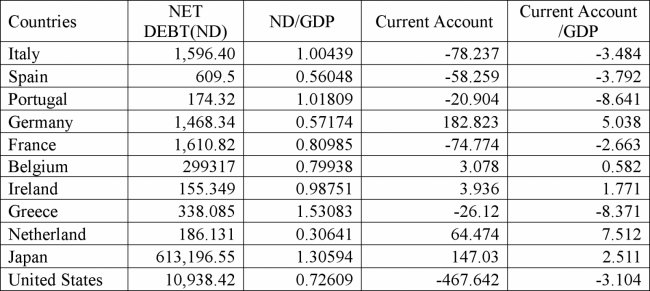
The Problem Isn’t the Euro My views on the euro haven't changed. The euro will survive. History, technology, proximity – all favor the common European currency. The euro is not the real problem. The real problem is excessive debt and unfunded entitlements combined with unfavorable demographics and a socialist, anti-growth mentality in virtually all countries. It makes a difference how Greece is dealt with. I wrote in this column over a year ago that Greece should be allowed to default just as US states did in the 1840s. Agreed, a onetime bank bailout of Greek banks may be necessary. But let Greece be rejected by the markets and not live on grudging handouts from the Germans. One may ask: how can the problems of this small country of eleven million people drag on and on as it has? The simple answer is that the Europeans don't trust markets and have only gradually come to face the fact that Greece is hopelessly insolvent and that default is the only sensible option. But it goes way beyond that. Spain, Ireland, Portugal and Italy are lined up right behind Greece as potential problem countries. And Belgium and France are not that far behind. Italy and Spain in particular face formidable government debt refunding schedules in 2012. Greece fortunately is sui generis. There is not an indicator you can name that Greece is not in a category by itself. For example as the table below shows, according to IMF estimates for 2011 Greece's net debt to GDP is an astounding 1.53% (and the IMF debt estimates for Greece are actually lower than other sources) and it is running current account deficit which is 8.3% of GDP. Its primary budget is in deficit and it is in the midst of a deep recession. Twenty percent of Greeks apparently "work" for the government. Not only has that but Greece historically been a serial defaulter, as Rogoff and Reinhart report. Greece was in default more or less continuously from 1800 until after WWII. The mindset and the institutions are socialist, not supply side. The outlook for Greece under the European imposed austerity plans is bleak. The rioting in Athens is understandable but a totally useless approach to Greece's problems. Any ambitious Greek twenty one year old, unless his or her father is a shipping magnate, should be thinking of emigrating. None of the other European countries are as bad as Greece. At least not yet. But their cost of borrowing has been rising and the ECB has had to buy their debt. Contagion is an ever present danger. If one or more of these countries require major future bailouts and/or face default, Europe has a major banking crisis. I would make the following points:
Time: 2011 Units: National Currency Scale: Billions Source: IMF Source: |
| Posted: 22 Oct 2011 04:40 AM PDT Some reads to start off your weekend:
What are you reading? > The Buffett Tax
|
| Ferrari 458 Italia: $225,325 plus $57,000 in options Posted: 22 Oct 2011 04:30 AM PDT My New Birthday present is here!
You know that is not true because I would never buy any car in that ugly gray, and I prefer 3 pedals and a stick over those damned paddle shifters . . . > Source: |
| Bloomberg: Ritholtz on Fed Policy, Economy, OWS Posted: 22 Oct 2011 04:12 AM PDT Barry Ritholtz, chief executive officer of FusionIQ, talks about the impact of Federal Reserve monetary policy on the U.S. economy. Ritholtz also discusses the Occupy Wall Street protests. He speaks with Matt Miller on Bloomberg Television’s “Bottom Line.” Oct. 21 (Bloomberg) |

 Moreover, the big banks are still dumping



| You are subscribed to email updates from The Big Picture To stop receiving these emails, you may unsubscribe now. | Email delivery powered by Google |
| Google Inc., 20 West Kinzie, Chicago IL USA 60610 | |



0 comments:
Post a Comment