


The Big Picture |

- The Rotten Heart of Europe
- Friday Night Jazz Waste: Amy Winehouse
- Succinct summation of week’s events (12/09/11)
- Comments From Paris
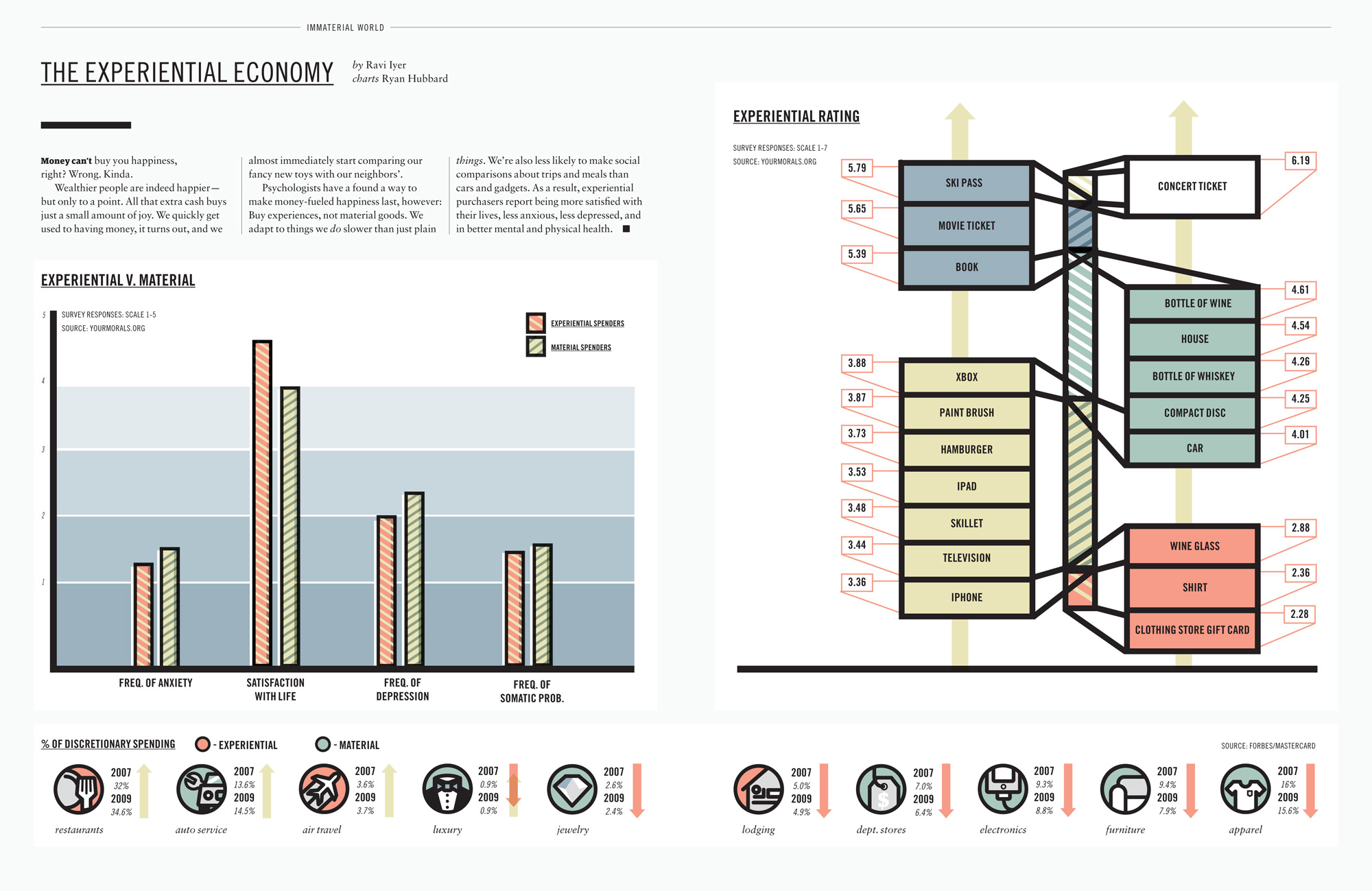
- Can Money Buy Happiness?
- ECRI Sticks With Its Recession Call
- Gift Guide I
- Confidence grows at holiday time
- The Covert Intelligence War Against Iran
- What Would The Euro Look Like In The Event Of A Breakup?
| Posted: 09 Dec 2011 10:30 PM PST
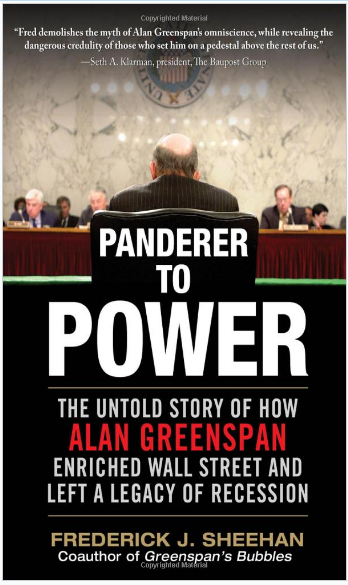
His new book, Panderer for Power: The True Story of How Alan Greenspan Enriched Wall Street and Left a Legacy of Recession, was published by McGraw-Hill in November 2009. He was Director of Asset Allocation Services at John Hancock Financial Services in Boston. In this capacity, he set investment policy and asset allocation for institutional pension plans. ˜˜˜ The Rotten Heart of Europe To Americans, European problems may seem as remote as they did in 1939. There is a good chance, though, that the crumbling financial structure will not be “contained” or “ring-fenced”: the latter being the common description of how Europe had isolated itself from Italy’s difficulties. That lasted a week or so. We may soon discover the extent of American exposure to European financial insolvency. The catalyst for this coming weekend’s European Union meeting is the failure of Europe’s daisy-chain finance. On Monday, December 5, 2011, Bill King (The King Report) wrote of the latest: “European solons are proposing another Daisy Chain Bailout scheme – bankrupt and near-bankrupt European nations will inject money that they must borrow from the IMF so they can in turn borrow the money that they borrowed and then lend to themselves.” Wendy’s toes are curled around the end of Captain Hook’s gangplank. The creditworthiness of the fractured institutions is not trusted: the commercial banks, the national central banks, the ECB, the EFSF, and most importantly, the Bundesbank. On November 23, 2011, the Bundesbank attempted to auction €6 billion of 10-year German government bonds. It received bids for €3.8, or 61% of the total. Neil Jones at Mizuho Corporate Bank Ltd. in London told Bloomberg: “If investors do not wish to buy bunds, they do not wish to buy Europe.” Right-ho. The purpose of this dispatch is to dispel rumors that current front-page treaty talks have any economic meaning. The European and U.S. stock markets react with a 3% or 4% gain after vague announcements, but we are getting closer to a day when the false prophets are stripped bare. The euro cannot survive in its current form. To understand this, we will return to its introduction. Some dates: The 1992 Maastricht Treaty formally established the intent of a single currency. The euro acquired electronic legitimacy on January 1, 1999. For instance, it was henceforth used in electronic bank transfers. The national currencies were locked at a specific rate to the euro on that date. On January 1, 2002, euro coins and bills became legal tender. The euro was introduced after the finances of 10 (or 11, we’ll skip over this) countries had “converged,” meeting such criteria as national budget deficits less than 3% of GDP and a debt ratio less than 60% of GDP. It is now the currency of 17 European countries. Most, if not all, played games to meet these requirements. This was not a secret. The preferred method of cheating has been to fabricate or ignore. On June 5, 2000, when Greece was admitted into the not very exclusive euro club, Austrian Finance Minister Karl-Heinz Grasser told reporters: “Greece will become a member for sure. It meets all the requirements for membership.” A leading requirement was to not tell reporters the truth. French Finance Minster Laurent Fabius offered a more discreet assessment, as would be expected from a graduate of the École Nationale d’Administration (the training ground for advanced French bureaucrats): “Greece has made a huge improvement.” The euro, and more generally, the European Union, has been a bureaucratic racket from the beginning. Brussels protects its own interests first. It does not weigh the success of its ventures by how the masses subject to its mandates fare. The euro had its flaws, but the paper pushers never answer for mistakes. Like the Federal Reserve or the Gang of Four, they are unaccountable. (The latter offers some hope.) Human tissue is Play-Doh in their hands to be molded into what Superior Persons call their “European Project.” When trouble loomed, the Eurocrats looked the other way: “Except for being told by the EU and ECB to get its financial house in order, Greece was not punished for cheating. In 2005, Germany and France helped loosen the rules when they forced through the relaxation of the anti-debt “stability pact,” despite knowing that Greece had been above the 3% threshold for the previous three years.” (Gold Alert, May 27, 2011) The great flaw was already evident: countries could spend and tax as they wished (or didn’t wish) while issuing bonds as if they were as creditworthy as the Bundesbank. It is only natural that Italy shoveled out bonds, borrowing and spending, until its debt grew to be the third largest sovereign bond market in the world, without a chance now of repayment at par. Former European Central Bank Chief Economist Otmar Issing was quoted by Bloomberg on May 26, 2011: “Greece cheated to get in, and it’s difficult to know how we should deal with cheaters.” In fact, this is a matter of character, not law: “The grand plan outlined by France and Germany on Monday for European Treaty change breaks no new ground in terms of ideas – all the proposals already exist in various legal acts, the only problem is they have never been observed in practice.” (Reuters – December 5, 2011) The Eurocrats are meeting this weekend to discuss a treaty that will – do nothing, even in today’s frantic quest to sign a scrap of paper that will satisfy potential bond buyers. A carrot was dangled, but quickly withdrawn. From Ambrose Evan-Pritchard in the Daily Telegraph: “[German Chancellor Angela] Merkel seems to have backed off on demands that budget breaches will be justifiable before the European court, so the Treaty chatter is mostly Quatsch, betises, and eyewash.” By the way, the effectiveness or necessity of rules is not discussed nearly as much as whether they are breached. The rules seem to be an end in themselves. The real problem, of divergent national economies operating in a single financial system, while countries spend and tax with very different priorities, has not changed. It remains – just talk. Recall that the catalyst is disintegrating finance. Aside from the Bundesbank auction, an unknown number of banks cannot borrow from each other, so are drawing on the European Central Bank, which, itself, is highly leveraged, is holding Greek and Italian bonds at par, and is cheating on its constitutional restriction that it cannot bail out nations. Europe has begged around the globe for capital investment, to no avail. Portugal carried its tin cup to Angola, a former colony. The Angolans responded “nyet.” Thwarted by its African sidekick, Lisbon officials validated Angola’s wariness by confiscating €5.6 billion from Portuguese pension funds to fill its budget gap. Isn’t technology wonderful? Tanks and troops slogging across continents warned of such heists in the past. Americans beware. Of importance: the financial woes are REAL; the advertised solution is pretense. There is no financial “solution” as the loungers and idlers at European Union cocktail parties would define solution. They want a “fix” under the assumption the European Project could not possibly suffer from a design flaw. They designed it. The Belgian bureaucrats expect the ECB to deploy enormous monetary firepower (€2 to €5 trillion) to relieve them of all this financial talk. To do so would break the law, not a consideration eurocrats or eurocratic periodicals mention. Bernard Connolly, in The Rotten Heart of Europe: The Dirty War for Europe’s Money (1995), wrote that monetary union “is not only inefficient but undemocratic. A danger not only to our wealth but also our freedoms, and ultimately, our peace. The villains of the story… are bureaucrats and self-aggrandizing politicians.” Monetary union “is a mechanism for subordinating the economic welfare, democratic rights, and national freedom of the European countries to the political and bureaucratic elites whose power-lust, cynicism, and delusions underlie the actions of the vast majority of those who now strive to create a European superstate.” Connolly is now an economic consultant (Connolly Insight) who wrote this book after his eye-opening experience inside the Eurocracy. There is a single copy available on Abebooks, for $1443.52. It was 97 years ago when German Chancellor von Bethmann-Hollweg asked the British ambassador in Berlin, Sir Edward Goschen, why England would defend Belgium’s neutrality. His Majesty’s Government had signed a treaty to do so, in 1839. Bethmann-Hollweg replied this was a “scrap of paper.” It has been a deplorable century for the law, agreements, and treaties since that confrontation in 1914, the same year the International Gold Standard unraveled. Now, the stellar leadership mentioned above and in the United States are worming their way to a poetic conclusion. Currencies will not be worth the money they are printed on. |
| Friday Night Jazz Waste: Amy Winehouse Posted: 09 Dec 2011 03:00 PM PST
On to the new album, Lioness: Hidden Treasures. To quote Rolling Stone, “This is a sad record. A grab bag of outtakes, unreleased tracks, demos, covers and song sketches, these recordings feel like a gut punch. They remind you, first and foremost, of that voice – one of pop music’s most instantly recognizable vocal imprints, a sound that leapt out of your speakers and seized you by the ears. Here, as always, Winehouse’s singing is both raggedy and dramatic, winking and insouciant, full of high drama and a breezy sense of play – sometimes all those things at the same time . . . It’s hard not to believe that Winehouse died with her best work in front of her. We’ll never hear those records, and the silence is deafening.” Videos & Pictures and more after the jump . . .
Videos Here’s a stripped down acoustic version of Valerie, that does a nice job showing off her voice: She gives the same treatment to the big single Rehab and to You Know I’m No Good (Studio video for You Know I’m No Good video) and Love is a Losing Game The title song, Back to Black and Tears Dry on Their Own Picture below
|
| Succinct summation of week’s events (12/09/11) Posted: 09 Dec 2011 12:30 PM PST Succinct summation of week’s events: Positives:
Negatives:
|
| Posted: 09 Dec 2011 11:30 AM PST "I simply do not know where the money is." Former MF Global CEO Jon Corzine. Current events again support the notion of a three-silo approach to money management. Cumberland has recommended and supported that concept from inception. MF Global is the latest example of what can happen when you mix custody with advice and transactions. We witnessed this during the explosion involving Madoff. We have seen it occur in other, lesser-known firms. Now we see it writ large in this most recent sad tale. The safety of investing in asset management is greatest when the parties are independent; when all fees and expenses are separately shown; and when the clients, consultants, and professionals can evaluate each party and process independently. This three-silo approach simply means to separate custody: the safe-keeping and accounting of assets, from transactions; the brokerage, exchanges, and intermediary actions by which one transacts and accomplishes the purchase or sale; and the advisor, the consultant, the recommending party, or the analytical professional who offers help to the investor. By separating all three, you diminish the risk of the types of events that we continue to read about in the media as this ongoing financial crisis unfolds. MF Global is the latest in a saga that has other names attached, such as Lehman Brothers, Madoff, Nadel, and so forth. Since 1973, when my now-deceased founding partner, Shep Goldberg, and I created Cumberland Advisors, we sponsored the notion of a complete division of services. Cumberland does not take custody of client funds. Cumberland is not a broker dealer, and does not transact for commission. We are only a fee-for-service advisor. We only advise on separate accounts, not comingled funds. It is this latest tragic event that requires a restatement of this basic principle. The world is such that we now confront a continuum of tragic events on a daily basis. We cannot depend on the regulators to protect us. Clearly, they can falter. We cannot depend on the rating agencies to accomplish valuations that give us comfort that there is soundness and creditworthiness. Clearly, they have failed. The nature of the world today is that one has to be self-sufficient and seek safety in the way things get structured. In our view, separating every service, evaluating it independently, and avoiding comingled assets is one of the soundest principles. It matches diversification of risk as the type of approach that can protect investors in a world that seems to be rife with Lehmans, Madoffs, MF Globals, and others yet to be revealed. In Paris, fear is growing among investors, bankers, and financial professionals. They recall the history of previous generations, when governments failed. They worry about an end to the grand “rapprochement” that led six decades of peace. Does the euro crisis portend that era may be drawing to a close? They watch from afar as another American firm blows up, as another Federal Reserve primary dealer joins the list of failures, alongside Countrywide and Lehman Brothers. It is raining here. The holiday lights are dimmed by fog, just as the outlook is dimmed by uncertainty. Source: |
| Posted: 09 Dec 2011 11:00 AM PST The Experiential Economy: |
| ECRI Sticks With Its Recession Call Posted: 09 Dec 2011 09:00 AM PST Chick to enlarge: Source: Bianco Research LLC > The Weekly Leading Index (WLI) growth indicator of the Economic Cycle Research Institute (ECRI) posted -7.8 in its latest reading, data through November 25. The latest public data point is more negative than last week’s downwardly revised -7.4 (previously -7.3). See also the recent Bloomberg interview with Lakshman Achuthan, the Co-founder of ECRI (video). Their Recession Call remains intact. |
| Posted: 09 Dec 2011 07:53 AM PST The first of our Holiday shopping guides came out last night. All sorts of fun stuff for all budgets. |
| Confidence grows at holiday time Posted: 09 Dec 2011 07:12 AM PST Holiday cheers in the preliminary Dec UoM confidence figure where it rose to 67.7 from 64.1, the best since June and compares with expectations of 65.8. Confidence is back to in line with the average ytd of 67.2. The bulk of the improvement was in the Economic Outlook component which rose to 61.1 from 55.4 as Current Conditions were up just .3 pts to 77.9. Likely mostly due to the lowest level of gasoline prices since Feb (since consumers see the prices everyday), one year inflation expectations fell to 3.1% from 3.2%, the lowest since Dec ’10. Bottom line, its good timing to have an improvement in confidence as we are in holiday season but whether the individuals called over the phone in this survey are watching the headlines out of Europe or not won’t be noted until 2012 when the recession there impacts us here. |
| The Covert Intelligence War Against Iran Posted: 09 Dec 2011 07:00 AM PST The Covert Intelligence War Against Iran ~~~ Today I offer a topic that might have missed your “news-net” coverage of the eurozone crisis, US debt insanity, and a possible global recession. Folks, we may have the modern-day equivalent of the Cold War on our hands. Go ahead and let go of the images of McCarthy at the podium, the Sputnik launch, and reel footage of schoolchildren ducking under desks; this cold war likens more to Tom Cruise’s Mission: Impossible than the original with Peter Graves. I’m referring to ongoing covert operations against Iran over its quest for nuclear capabilities, and its staunch position against the existence of Israel. After the defection of nuclear officials, the Stuxnet computer worm, and a few questionable “explosions,” it is becoming increasingly clear that a cold war is being waged (and has been, since at least 2007) to ensure, simply put, some level of peace in the Middle East. Take a look at this Security Intelligence Report (a short read) from my friends over at STRATFOR. And lest you forget why these spy missions matter beyond the Mission: Impossible intrigue they offer, recall that Iran is conveniently located on the narrow Strait of Hormuz, through which passes 40% of the world’s seaborne oil. So a covert mission gone wrong or an Iranian countermove could elevate the current financial crisis into something of epic proportions. This is the kind of phenomenal information I expect from STRATFOR, and <<you can too, with their special rate, available only to OTB readers>>. This email will not self-destruct in 5 seconds. John Mauldin, Editor The Covert Intelligence War Against IranDecember 8, 2011 | 1725 GMT
By Scott Stewart There has been a lot of talk in the press lately about a “cold war” being waged by the United States, Israel and other U.S. allies against Iran. Such a struggle is certainly taking place, but in order to place recent developments in perspective, it is important to recognize that the covert intelligence war against Iran (and the Iranian response to this war) is clearly not a new phenomenon. Indeed, STRATFOR has been chronicling this struggle since early 2007. Our coverage has included analyses of events such as the defection to the West of Iranian officials with knowledge of Tehran’s nuclear program; the Iranian seizure of British servicemen in the Shatt al Arab Waterway; the assassination of Iranian nuclear scientists; the use of the Stuxnet worm to cripple Iranian uranium enrichment efforts; and Iranian efforts to arm its proxies and use them as a threat to counteract Western pressure. These proxies are most visible in Iraq and Lebanon, but they also exist in Yemen, Afghanistan, Syria, the Palestinian territories, Saudi Arabia and other Gulf states. While the covert intelligence war has been under way for many years, the tempo of events that can readily be identified as part of it has been increasing over the past few months. It is important to note that many of these events are the result of hidden processes begun months or even years previously, so while visible events may indeed be increasing, the efforts responsible for many of them began to increase much earlier. What the activities of recent months do tell us is that the covert war between Iran and its enemies will not be diminishing anytime soon. If anything, with the current withdrawal of U.S. troops from Iraq and Iranian nuclear efforts continuing,we likely will see the results of additional covert operations — and evidence of the clandestine activity required to support those operations. Ramping UpAll eyes were on this covert intelligence war after The New York Times published an article Jan. 15 reporting that the United States and Israel worked together to create and launch Stuxnet against the Iranian nuclear program. The visible events related to the intelligence war maintained a relatively steady pace until Oct. 11, when the U.S. Department of Justice announced that two men had been charged in New York with taking part in a plot by the Iranian Quds Force to kill Saudi Arabia’s ambassador to the United States, Adel al-Jubeir, on U.S. soil. In early November, a new International Atomic Energy Agency (IAEA) report was issued detailing Iranian efforts toward a nuclear weapons program. While this report did not contain any major revelations, it did contain new specifics and was more explicit than previous IAEA reports in its conclusion that Iran was actively pursuing a nuclear weapons program. The IAEA report resulted in an Israeli-led diplomatic and public relations campaign urging more effective action against Iran, ranging from more stringent sanctions to military operations. Then, in the early afternoon of Nov. 12, explosions occurred at an Islamic Revolutionary Guard Corps (IRGC) ballistic missile base near Tehran, killing 17 people, including a high-ranking IRGC commander who was a critical figure in Iran’s ballistic missile program. Iran has insisted the blast was accidental, but speculation has since spread that the explosion could have been part of a sabotage operation carried out by Israeli intelligence. Israeli intelligence officials also have undertaken not-so-subtle efforts to ensure that outside observers believe they were responsible for the blasts. Later on Nov. 12, the Bahraini government went public with the discovery of an alleged plot involving at least five Bahrainis traveling through Syria and Qatar to carry out attacks against government and diplomatic targets in Bahrain. Iran vehemently denied it was involved and portrayed the plot as a fabrication, just as it responded to the alleged plot against the Saudi ambassador. The next day, the Iranian press reported that Ahmad Rezai, the son of Mohsen Rezai — who is the secretary of Iran’s Expediency Council, a former IRGC commander and a presidential contender — was found dead at a hotel in Dubai. The deputy head of the Expediency Council told the Iranian press that the son’s death was suspicious and caused by electric shocks, while other reports portrayed the death as a suicide. On Nov. 20, the Los Angeles Times reported that U.S. intelligence officials confirmed the CIA had suspended its operations in Lebanon following the arrest of several of its sources due to sloppy tradecraft on the part of CIA case officers assigned to Beirut. Following this report, the Iranian government announced that it had arrested 12 CIA sources due to tradecraft mistakes. We have been unable to determine if the reports regarding Lebanon are true, merely CIA disinformation or a little of both. Certainly, the CIA would like the Iranians to believe it is no longer active in Lebanon. Even if these reports are CIA spin, they are quite interesting in light of the Oct. 11 announcement of the thwarted assassination plot in the United States and the Nov. 12 announcement of the arrests in Bahrain. On Nov. 21, the United States and the United Kingdom launched a new wave of sanctions against Iran based on the aforementioned IAEA report. The new sanctions were designed to impact Iran’s banking and energy sector. In fact, the United Kingdom took the unprecedented step of totally cutting off Iran’s Central Bank from the British financial sector. The Canadian government undertook similar action against the Central Bank of Iran. On Nov. 28, there were unconfirmed press reports of an explosion in Esfahan, one of Iran’s largest cities. These reports were later echoed by a STRATFOR source in Israel, and U.S. sources have advised that explosions did occur in Esfahan and that they caused a significant amount of damage. Esfahan is home to numerous military and research and development facilities, including some relevant to Iran’s nuclear efforts. We are unsure which facilities at Esfahan were damaged by the blasts and are trying to identify them. Elsewhere on Nov. 28, Iran’s Guardians Council, a clerical organization that provides oversight of legislation passed by Iran’s parliament, approved a bill to expel the British ambassador and downgrade diplomatic relations between the two countries. The next day, Iranian protesters stormed the British Embassy in Tehran, along with the British Embassy’s residential compound in the city. The angry — and well-orchestrated — mob was protesting the sanctions announced Nov. 21. Iranian authorities did not stop the mob from storming either facility. On Dec. 1, the European Union approved new sanctions against some 180 Iranian individuals and companies over Iran’s support of terrorism and its continued nuclear weapons program. The European Union did not approve a French proposal to impose a full embargo on Iranian oil. In the early hours of Dec. 4, a small improvised explosive device detonated under a van parked near the British Embassy building in Manama, Bahrain. The device, which was not very powerful, caused little structural damage to the vehicle and none to the building itself. The next day, an unnamed U.S. official confirmed Dec. 4 reports from several Iranian news outlets that Iran had recovered an RQ-170 “Sentinel” unmanned aerial vehicle (UAV) in Iranian territory. The Iranian reports claimed that Iranian forces were responsible for bringing down the Sentinel — some even said the Iranians were able to hack into the UAV’s command link. U.S. officials have denied such reports, and it is highly unlikely that Iran was able to take control of a UAV and recover it intact. OutlookThe United States is currently in the process of completing the withdrawal of its combat forces from Iraq. With the destruction of the Iraqi military in 2003, the U.S. military became the only force able to counter Iranian conventional military strength in the Persian Gulf region. Because of this, the U.S. withdrawal from Iraq will create a power vacuum that the Iranians are eager to exploit. The potential for Iran to control a sphere of influence from western Afghanistan to the Mediterranean is a prospect that not only frightens regional players such as Israel, Saudi Arabia and Turkey but also raises serious concerns in the United States. As we have noted before, we don’t believe that a military attack against Iran’s nuclear facilities alone is the answer to the regional threat posed by Iran. Iran’s power comes from its ability to employ its conventional forces and not nuclear weapons. Therefore, strikes against its nuclear weapons program would not impact Iran’s conventional forces or its ability to interfere with the flow of oil through the Strait of Hormuz by using its conventional forces asymmetrically against U.S. naval power and commercial shipping. Indeed, any attack on Iran would have to be far broader than just a one-off attack like the June 1981 Israeli strike at Osirak, Iraq, that crippled Saddam Hussein’s nuclear weapons program. Because of this difficulty, we have seen the Israelis, Americans and their allies attacking Iran through other means. First of all, they are seeking to curb Iran’s sphere of influence by working to overthrow the Syrian regime, limit Syria’s influence in Iraq and control Hezbollah in Lebanon. They are also seeking to attack Iran’s nuclear program by coercing officials to defect, assassinating scientists and deploying cyberwarfare weapons such as the Stuxnet worm. It is also necessary to recognize that covert action does not occur in a vacuum. Each covert activity requires a tremendous amount of clandestine intelligence-gathering in order to plan and execute it. With so much covert action happening, the clandestine activity undertaken by all sides to support it is obviously tremendous. But as the frequency of this activity increases, so can sloppy tradecraft. Finally, as we examine this campaign it is remarkable to note that not only are Iran’s enemies using covert methods to stage attacks on Iran’s nuclear program and military capabilities, they are also developing new and previously unknown methods to do so. And they have shown a willingness to allow these new covert attack capabilities to be unveiled by using them — which could render them useless for future attacks. This willingness to use, rather than safeguard, revolutionary new capabilities strongly underscores the importance of this covert campaign to Iran’s adversaries. It also indicates that we will likely see other new forms of covert warfare emerge in the coming months, along with revolutionary new tactical applications of older forms. Source: JohnMauldin.com |
| What Would The Euro Look Like In The Event Of A Breakup? Posted: 09 Dec 2011 07:00 AM PST
> The Financial Times – The terrible consequences of a eurozone collapse
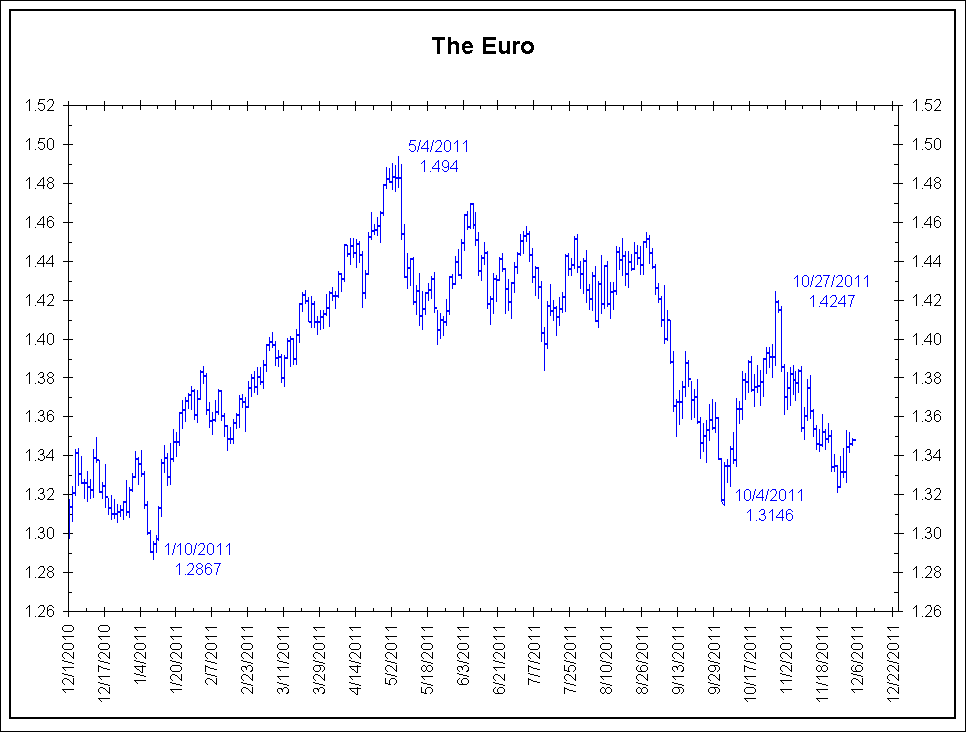
Comment: Looking at the chart of the euro above, we can't help but notice a complete lack of trend one way or another. Given all the stress in Europe, it is amazing that the currency is relatively unchanged on the year. After all, the Intrade.com markets are pricing in a 63% chance that at least one country drops the euro by the end of 2014. So why hasn't the currency dropped appreciably in anticipation of such an occurrence? The problem with this line of reasoning is that nobody knows what a "new euro" might look like. Will countries such as Greece be kicked out of the euro, leaving a currency that more closely resembles the old Deutsche Mark? This would likely result in a rally. Or, will Germany and their more fiscally sound counterparts exit the euro, leaving the PIIGS to fend for themselves? Barring a historic precedent for such a dismemberment, nobody is entirely sure what the euro might look like in such an event. Until leadership in the EU resolves these issues, we would not be shocked to see the euro continue to trend sideways as it has most of this year. Will the summit currently underway provide any of these answers? Tune in tomorrow to find out. Source: Arbor Research |











| You are subscribed to email updates from The Big Picture To stop receiving these emails, you may unsubscribe now. | Email delivery powered by Google |
| Google Inc., 20 West Kinzie, Chicago IL USA 60610 | |



0 comments:
Post a Comment