If ever there was a word that you'd expect to find in a Harry Potter novel, it's re-hypothecation. This a classic example of financial people inventing impenetrable terminology to make their business look like a black art. "Oooh, re-hypothecation, it must be magic!"
Well it isn't.
The term “re-hypothecation” came up a lot during the MF Global meltdown; It's quite a common term in the securities market – but what does it mean?
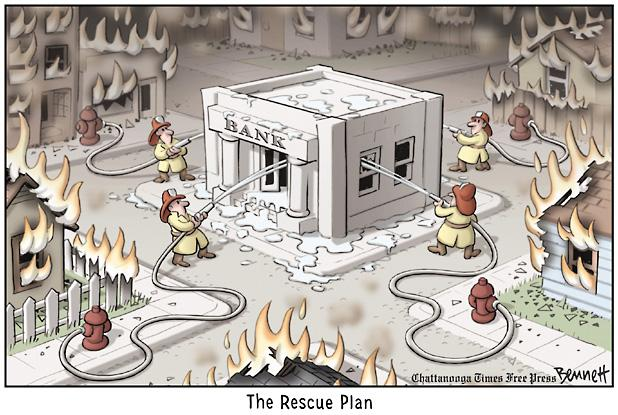
To explain re-hypothecation, we have to explain hypothecation. And hypothecation is pretty simple. It's when you lend someone money and let the borrower keep the collateral.
>
Source: Re-hypothecation: How it’s related to MF Global Paddy Hirsch Marketplace Jan 4, 2012 http://www.marketplace.org/topics/business/whiteboard/re-hypothecation-how-its-related-mf-global
That analysis tested and reviewed simple timing models, using a 10-month moving average on various asset classes as a signal to enter and exit asset holdings. Compared with traditional "Buy & Hold" investing, the performance improvements across all asset classes were quite significant. The methodology has the advantage of being objective, unemotional and mechanical (fee free to insert “first wife” joke here).
The timing strategy works as an effective risk management tool that enabled investors to miss most of the fall in major bear markets. It also captured a significant portion of the subsequent rally. Signals were infrequent, not prone to false positives, and avoided "whiplash" – the many false buy and sell signals that typically plague timing systems.
As an example, look at the 2007-09 bear market. It peaked in October 2007 at 14,100, and bottomed in March 2009 at 6,500. Using the 10 Month Moving Average, traders would have exited the Dow Jones Industrials ~12,650 (1/31/08), and avoided the next 6,000 points down. The re-entry was July 31, 2009, at 9100.
Improving the methodology
I describe this quantitative method as symmetrical: The identical signal that triggers exits (markets breaking below their 10-month MA) also triggers entries (markets breaking above their 10-month MA).
However, in my experience, market tops and bottoms, are asymmetrical. They have very different characteristics in terms of timing, investor psychology, trading activity, market breadth, economic factors, and internal metrics. Tops are much more of a process, as buyers slowly lose their ardor for equities. Bottoms are more of an event, as sellers capitulate and dump holdings. Hence, tops develop over longer periods of time, while bottoms tend towards a faster more climactic event.
Thus, a ripe place to explore for possibly improving the original quantitative methodology might be on the entry side. Is it possible to identify a better entry than the 10 month MA?
I have been discussing this with Meb, and we plan on exploring a variety of factors related to (in alphabetical order): Earnings, economic data, Fed funds, insider buying, market price, reversions, sentiment, trend, valuation, volatility, and yield curve. If anything comes of this, we will publish our findings at SSRN or some other suitable journal.
Question: What other metrics are worthy of market timing exploration? If Traders use a 10 month MA as their exit, what might enhance their entry price?
The goal is an entry determined by a systematic, objective, data driven, metric, with modest drawdowns and limited false signals.
“What does that mean– your ‘PM Train reading’ ?” demanded a nonspecific reader in a specifically hostile voice. It is quite literal: I take a train home; these are the items on my Instapaper (really) I have not gotten to read yet, but will on the way home:
• Mihm: Lessons for Europe From America’s First Great Depression: (Bloomberg) • U.S. Tax Haul Trails Profit Surge (WSJ) • Bill Gross: Towards the Paranormal (Pimco) • Greek, Italian cash heads for hills, or under pool (Reuters) see also World's Biggest Economies Face $7.6 Trillion Bond Tab as Rally Seen Fading (Bloomberg) • Dimon Says JPMorgan Is Expanding Amid 'Hostility' Toward Banks (Bloomberg) Hostile? Fuck you! • Dylan Goes Eclectic: As 'An Advocate Who Hosts a Show,' Can MSNBC's Ratigan Broadcast Nuance to the Masses? (Observer) see also How Many Stephen Colberts Are There? (NYT) • Why Best Buy is Going out of Business…Gradually (Forbes) • Domo Arigato, Mr. Roboto (BoingBoing) • Huntsman: No One Cares About Iowa (Fox News) see also Just Who Votes In The Iowa Republican Caucuses? (TPM) • King of the Cosmos: Profile of Neil deGrasse Tyson (Carl Zimmer)
What are you reading?
>
Dimon: Why ARE people hostile to Banks? Its a conundrum!
This graph (based on authorial attributions quantified by William J. Dowlding in the book Beatlesongs) traces songwriting contributions within the band.
Joseph Saluzzi (jsaluzzi-at-ThemisTrading.com) and Sal L. Arnuk (sarnuk-at-ThemisTrading.com) are co-heads of the equity trading desk at Themis Trading LLC (www.themistrading.com), an independent, no conflict agency brokerage firm specializing in trading listed and OTC equities for institutions. Prior to founding Themis, Sal and Joe worked for more than 10 years at Instinet Corporation, pioneers in the field of electronic trading, and at Morgan Stanley.
~~~
One Week!
>
Ok, Let's start the new year with a quiz. Which of the above pictures can NOT be best described as having a life expectancy of one week? Take your time; it is not a latency-sensitive problem. The answer is… the Kardashian-Humphries marriage! Yes, that lasted three days, and not a week.
As for the other choices, the luna-moth has a life expectancy of exactly one week. It has no mouth, and is born to just romance a mate and die. It lives for love, yes. And the other choice refers to our latest and greatest derivative, the one-week option. According to Andy Nybo, head of derivatives at Tabb Group LLC, "if you're looking for what's been driving the market this year, a lot of it can be attributed to short-term options." In the article that he is quoted, One-Week Contracts Lift Volumes to Ninth Straight Record: Options (Nina Mehta, Whitney Kisling, and Katia Porzecanski), trading in these one-week contracts is largely responsible for exchange-listed options volume reaching a ninth straight annual record.
While the article talks about how this product is retail-friendly, with a lot of "bang for the buck" due to limited time value of the options, and that it is useful for covered call writing, we at Themis think there are other reasons that the exchanges have been focusing on these short term derivative instruments: they are what the exchanges' biggest customers want to trade. Why? HFT "market makers" want products that are short term, higher volume, and with limited-trading-risk, for them to play rebate arbitrage. For them one-week options are rocket fuel for their rebate-arbitrage strategies, and more so than long term options, where they play less, as well as equity shares in Berkshire Hathaway.
You see, since Reg NMS's implementation, exchanges have not been really been making money on regular equity trading. Their growth has come from market data services, access services, and derivative trading volume. Cash equity trading revenue has pretty much declined for all the major exchanges, and issuer revenue has been flat. Just gander at Nasdaq's revenue breakdown since the implementation of Reg NMS in 2007 to see what we mean.
This is why for-profit exchanges perpetually follow the money, and what their largest HFT clients want, instead of what is good for investors.
Actually, as for-profit business entities, what is to stop them from shutting down the trading of stocks period, if stock trading continues to suffer from margin pressure and investor flight? Where then will we look to invest and trade in Proctor & Gamble, Prudential, McDonald's, and Abbott Labs?
“Disdain for the uber-rich was unthinkable until —
“It wasn’t the crash of 2008 that led to their fall from grace, nor exposure of the greed and stupidity that required a massive public rescue. It was their graceless reaction to the bailouts: no apologies, remorse or gratitude — even faked; just more arrogance, bonuses, takeovers, foreclosures. Wall Street begged to be occupied. The Unrepentant Financier could have been Time’s Person.”
The Risks to Watch in 2012 Tue 03 Jan 12 | 07:34 AM ET Highlight transcript below to create clip Transcript: Print | Email 2011 was a year that saw dictators topple devastating natural disasters. the end of one war and the continuation of another and the global economy that still struggling. joining is now with the 2012 outlook is ian bremer, co-author of top risks for 2012 report. he’s here exclusively. a lot happened in 2011. a lot happened that we didn’t predict. this whole arab spring. i don’t know if that was on your list. it wasn’t on a lot of people’s lists. a lot of other things happened. when you look at 2012, let’s go through the list, i don’t know if you want to do it as a countdown. we can count down from the backside or start at number one. i think starting at number one is the way to go. biggest risk for investors and for the world, 2012 is — i’m glad that we didn’t have that at the beginning of 2011. seven talking about it the first couple months. frankly, it didn’t pan out. made a lot of headlines. but if you ask me have we seen lots of dictators topple in the middle east, we had tunisia. there is a lot of instability there. top risk for 2012, with international intervention, a lot of instability. that is true. the biggest risk is the end of the 9/11 era. the reason i say that is we’re seeing contemplation of politics and economics absolutely. explain what you mean about that. the end of a 9/11 era. two parts of it. the first is that we’ve been focusing for the last ten years on geopolitics as being primarily security issue and bin laden’s dead. al qaeda functionally is much less of a threat. we’re out of iraq. we have ended the threat if we have ended the threat if afghanistan. we’re tilting towards asia. not because it’s the big security threat, but because it’s an economic threat. clinton’s doctrine, the closest the u.s. has to a foreign policy doctrine is economic state craft and pay attention to the chinese. so geopolitics should be driven by economics. at the same time, when you think about what is driving investments out there, whether it’s emerging markets, becoming more important for global growth where politics create more instability and more volatility for the market, the fact that in the developed world, investors are concerned about what the politicians are going to do. whether it’s in europe or japan. finally, this rebalancing between the developed and developing countries. that’s really creating a backdrop which brings politics and economics together. you tell your investor clients this thesis and what should they do with it? what it means is all of the risk that’s are out there, i think politics are overplayed in 2011, like all the elections going on, but the backdrop creates much less willingness to go out and place your bets. and so it means that despite the fact that a lot of the numbers in 2012 are going to look better than people. you’re not going to seat crash of liquidity coming in. you’re not going to be seeing companies — where is euro contagion not on your list? actual fragmentation in 2012 isn’t going to happen? because it’s going to happen in 2013 or what? europe is definitely a risk. it’s not the euro-zone falling apart. it’s that germans continue to find ways and the ecb to play this out. sean, jump in. do you agree with this? on the first point about our withdrawing from afghanistan and middle east, it’s happening in part because we can’t afford it anymore. the cost was — so that’s the negative. getting rid of the negative. those wars cost us $3 trillion. the u.s. government debt is $15 trillion. the easy solution is get rid of the war exposure and help improve the debt to gdp. also, there’s no question that the gravitas is moving to asia. why not focus on that? the big structural problem that has yet to be solved and actually is equal or maybe even ov overshadows the eu is emergence of china and their interest in holding high reserves because they don’t have the social safety net. it’s causing major dislocations that people don’t know how to deal with. and in the past, it’s been very easy to rebalance budgets. that’s not happening. it’s likely to be tensions over the next couple of years. ian, china? china is a challenge for the u.s. put it on your risk spectrum? well, there is a big leadership transition in china as there are around many countries around the world. that is not a significant risk. currency is not a significant risk. we’re going to top it. but there are a few that are major. indigenous innovation and security issues, direct security issues in asia between the u.s. and china. if you’re an investor, you do what with it? if i’m an investor, i wore why about western multinationals that are exposed to china’s corporations and are going to start losing that bet. that’s going to start having a negative impact on their abilities. on the security front, there are a number of countries in asia that are not going to have the capacity to pick it. they’ll be in one camp or another. asian securities is an area where you would love to integrate politically and securitywise throughout united states, economically towards chib. it’s just not going to work through 2012. the united states on the one hand for the same reasons that sean mentioned isn’t going to be willing to pay the kind of money to insure security guarantees for the countries when they don’t get the economic benefits. more importantly, the chinese are going to be completely unwilling to allow those countries to maintain the security relationships given their increased political and economic clout. isn’t the biggest thing about risk is you don’t know where the next real risk or the next real problem is going to come from. you don’t know where the surprises are coming from. but the fact that so many of the questions come from political instability and when you look at countries much more unstable, that’s where shocks come. you didn’t know the arab spring was going to come. but you absolutely knew that a country like tunisia would be vulnerable and saudi arabia was not. so you need to pay attention to underlying ideas. give me the one big surprise in 2012. if there is something on your list that would blow people’s minds that may not come true but that you worry about. actually, the surprises this year are on the good front they’re the red herrings. people are so focused on economics coming together, you have over 50% of the world’s gdp has elections coming up this year. actually not a big deal from a pashgt p market perspective. not in the u.s., not in china, not in rush yachlt these are big, big elections. everyone is saying 2012 is the year. all of the transitions don’t matter nearly as much as the other instabilities. ian bremer, thank you very much. appreciate it. when is that book coming out? we’ll be looking for that. ian bremer, appreciate it very much. all right. when we come back, we’ll talk



 ) traces songwriting contributions within the band.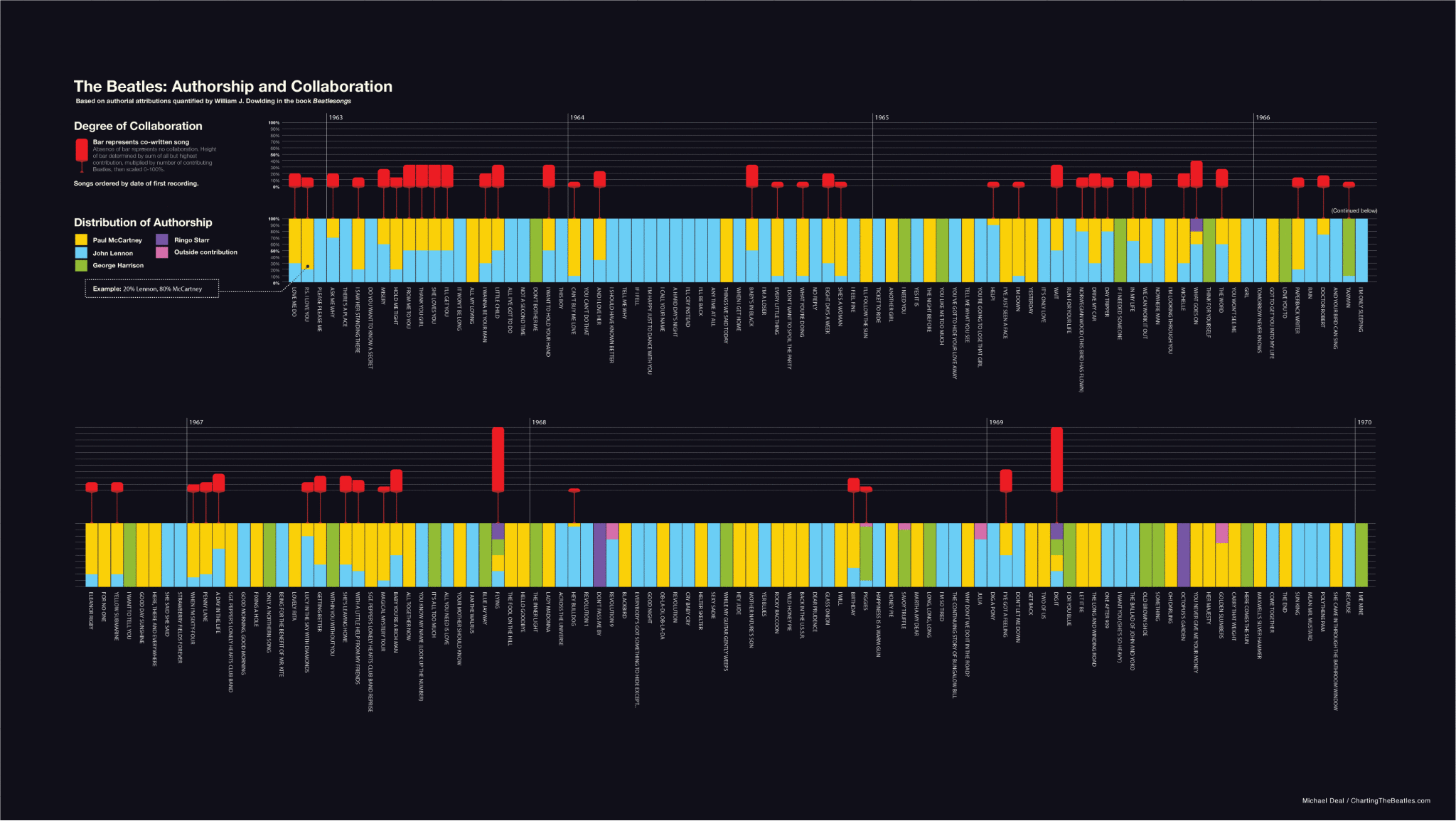





0 comments:
Post a Comment