


The Big Picture |

- Is Email Dead?
- China Update, Part 2
- Movie Industry Is Making Money from Technologies It Claimed Would KILL Profits
- Succinct Summation Of Week’s Events (01/13/2012)
- Bear Tagging
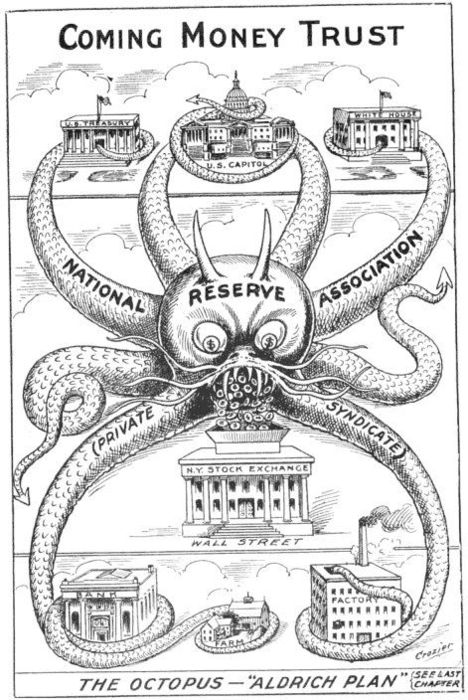
- The Coming Money Trust (1912)
- Ratigan: Interests of Corporation Not Aligned with American People
- S&P downgrades coming
- 10 Friday AM Reads
- Mediocre December Retail & the Slowing Economy
| Posted: 14 Jan 2012 01:30 AM PST |
| Posted: 13 Jan 2012 10:30 PM PST China Update, Part 2 Developments in China have our attention as 2012 gets underway. David Kotok, in "China Update, Part 1," wrote about some disturbing indications that China is tightening restrictions on the freedom of speech. Last month I wrote in "Reassessing China Equities" about more positive indications in the economic policy sphere that suggested the slowdown in the Chinese economy will be moderate and brief and that Chinese stocks will likely regain their relative strength in the coming months, following their significant underperformance in 2011. More recent data is confirming the redirection of policies towards stimulating the growth of the Chinese economy. The supply of loans from commercial banks in December, some Rmb640.50 billion, was considerably above the volume for November, Rmb562.2 billion. The 13.6% growth in the M2 measure of the money supply in December was up from 12.7% in November. Also, fiscal spending is speeding up. An upside surprise in the December Purchasing Managers Index (PMI) and better-than-expected export growth are leading to a scaling up of estimated GDP growth for the year 2011. We now expect the growth for 2011 to be reported as 9.2%. We are projecting 2012 growth at 8.8%, followed by a return to 9+% growth in 2013. The Chinese currency is likely to continue to strengthen at a controlled moderate pace of around 3% per annum. Looking out further, to a not very distant future, the December 31 issue of the Economist reports on its analysis that by 2018 China's GDP in US dollar terms, converted at market prices, will exceed that of the United States. Last year, only seven years earlier, US GDP was approximately twice that of China's. Our own long-term economic scenario similarly projects 2019 as the year that China's GDP eclipses that of the United States. Already China leads the world in manufacturing and in purchases of cars. By 2019 China will have also become the world's largest market for consumer and industrial products. On a per-capita basis the average American will still be much better off than the average Chinese in 2019. Nevertheless, China's role in the global economy, already great, will become even more predominant. Japan revealed it understands this when last month it announced jointly with China an agreement for Japan to buy Chinese sovereign debt, despite the difficult past of these two countries. While China's capital market will still be 30% smaller than that of the US, it is expected to increase at more than twice the rate of the US market. The importance of such projections for international investors is evident. We have written about the growing number of US-listed China ETFs, 19 equity ETFs at last count. There is now over $8 billion in China ETF assets, with a daily trading volume of over $900 million. Chinese equities, as measured by the broad-based SPDR S&P China ETF, GXC, that we prefer for our portfolios, slumped by 8.4% over the December 1-19 period; but they have since trended upward, surpassing their December high by January 12. As we anticipated, China has returned to outperforming the emerging markets benchmark. Over the past thirty days (through January 11), GXC has gained 1.7%, whereas the iShares MSCI Emerging Markets ETF is up only 0.3%. We have recently added to our China positions in our International, Emerging Market, and Global Multi-Asset Class portfolios. ~~~ This commentary was written by , Cumberland's Chief Global Economist. He joined Cumberland after years of experience at the OECD in Paris. His bio is found on Cumberland's home page, www.cumber.com. He can be reached at Bill.Witherell@cumber.com. |
| Movie Industry Is Making Money from Technologies It Claimed Would KILL Profits Posted: 13 Jan 2012 01:30 PM PST The Movie Industry Has Been Screaming for Almost 100 Years that New Technologies Would Kill Profits … And Yet Most of Its Income Comes From the EXACT TECHNOLOGIES It Whined AboutSteve Blank makes an important point:
Max Keiser alleges that movie and music industry execs are horrible businessmen for trying to protect an outdated business model through SOPA and PIPA: |
| Succinct Summation Of Week’s Events (01/13/2012) Posted: 13 Jan 2012 12:18 PM PST Succinct summation of week’s events: Positives:
Negatives:
|
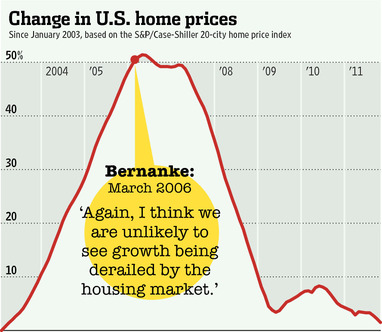
| Posted: 13 Jan 2012 09:00 AM PST |
| Posted: 13 Jan 2012 08:30 AM PST via Mises, we get this awesome critique of the Fed, circa 1912 (The Federal Reserve was created in 1913): >
> Thanks, James! Source: |
| Ratigan: Interests of Corporation Not Aligned with American People Posted: 13 Jan 2012 08:03 AM PST |
| Posted: 13 Jan 2012 07:22 AM PST With the likelihood of an S&P credit downgrade of France, Spain, Italy, Belgium and Portugal, it’s important to understand that #1, they are just following what the markets have priced in and #2, Fitch and Moody’s in some circumstances have already moved ahead of S&P. With respect to France, they will likely lose their AAA rating at S&P but Fitch specifically said earlier in the week that they will maintain their AAA rating for them thru 2012. On Italy, S&P is currently at A, in line with Moody’s and one notch below Fitch. A downgrade will likely take them to A-. With Belgium, S&P is at AA, one notch above Moody’s and one below Fitch. Portugal has a BBB- S&P rating, two notches above Moody’s and one above Fitch, so catch up is what S&P would be doing with them. With Spain, S&P is already one notch above Moody’s at AA-. We’ll also see whether Austria loses its AAA rating. Following a French downgrade, the EFSF will also lose its AAA rating but buyers of EFSF bonds have certainly been put on notice that it was a high likelihood. I say this all from a credit perspective because equity markets have behaved with a much more sanguine view of things that doesn’t fully square with the reality of a very tenuous global economy. |
| Posted: 13 Jan 2012 06:45 AM PST Early morning reads for the week:
What are you reading? > |
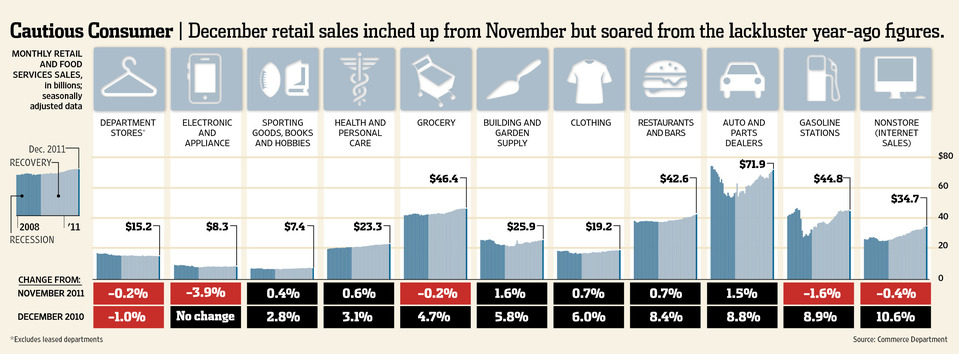
| Mediocre December Retail & the Slowing Economy Posted: 13 Jan 2012 06:00 AM PST
> For the past few months, I have been debating a few folks about my concerns 0ver Retail Sales. Based on the early data, anecdotal evidence of aggressive discounting, and the ongoing delveraging of US consumers, it looked like expectations were too high. The actual sales failed to live up to the hype. My initial pushback was due to the widely touted shopper survey from the National Federation of Retailers, whose annual idiocy manages to fool journalists and mislead the public each year. But the bigger issue is the broader environment — I need not remind readers that this is not a robust cyclical recovery, but rather, a limping, post-credit crisis healing process. Expectations of a riproaring public shopping spree were simply wishful thinking. And now, the data officially confirms this. For the month of December, sales rose a pitiful 0.1%. Back out autos, and they fell 0.2%. This is the third consecutive month of decelerating growth, according to data from the Commerce Department. Food, gasoline and clothing all suffered from rising input costs — the gains you see in those sectors are primarily inflation. Even internet sales, a secular shift in spending habits, rose only 10% in December. They had been previously rising at a 15% rate. The one true bright spot was Autos — following the freeze during the crisis, we now have a much older average aged fleet of US autos, and they are overdue for replacements. What is going to be even more disappointing are margins and profits. To achieve the even mediocre sales data, retailers slashed prices, cut into margins, and offered steep discounts to lure consumers. They will see this reflected in their earnings. Aside from a few specialty sellers — think Apple and Lulu Lemon — we will see quite a few disappointments in the sector when the Retail Sales companies report their Q4 earnings next week. Watch for changes in guidance for the first half of 2012. Those of you who may have downplayed the potential for a recession to start over the next 12-18 months way want to revisit your views on this. It is far from the low possibility many economists have it pegged at. > Previously: Beware the retail hype (December 10th, 2011) Source: |

| You are subscribed to email updates from The Big Picture To stop receiving these emails, you may unsubscribe now. | Email delivery powered by Google |
| Google Inc., 20 West Kinzie, Chicago IL USA 60610 | |



0 comments:
Post a Comment