


The Big Picture |

- How Often Does the Film Industry Cry Wolf Over Piracy?
- Succinct Summation Of Week’s Events (01/27/12)
- Zero Rates Through Late 2014? PUHLEASE!
- George Soros Shares His View on Europe
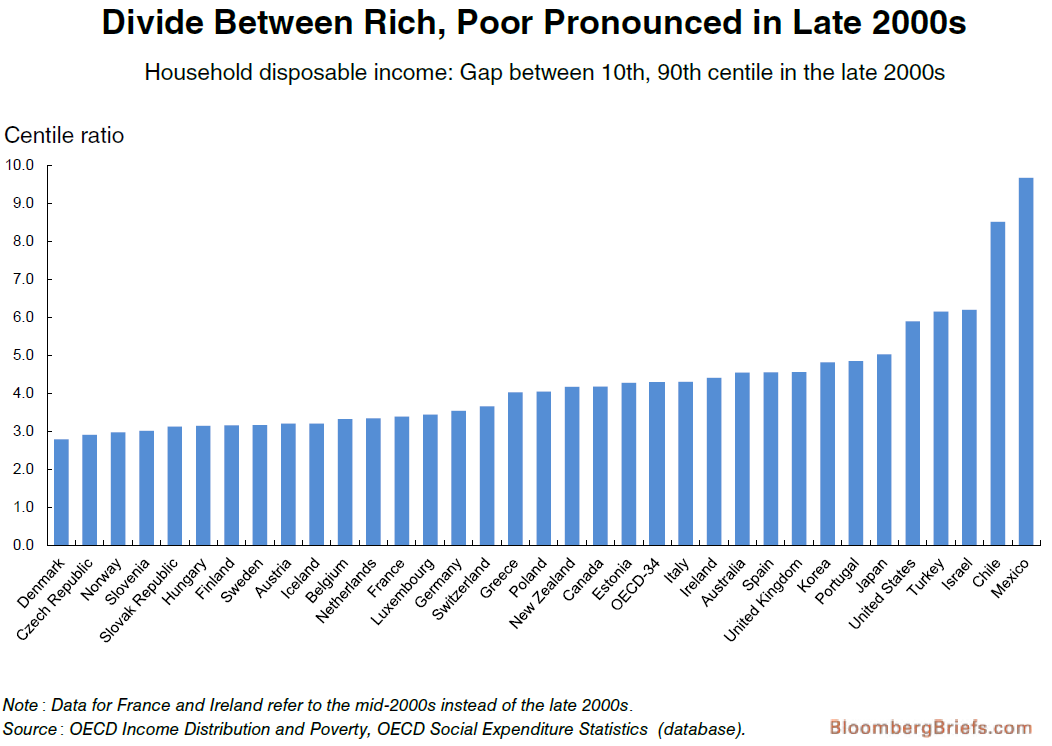
- OECD Report: Linking Income Distribution With Growth
- Dow Jones Presentation on Correlation
- 10 Friday AM Reads
- REAL GDP touch light, NOMINAL GDP very light
- Living In A QE World
- Correlation Nation Presentation
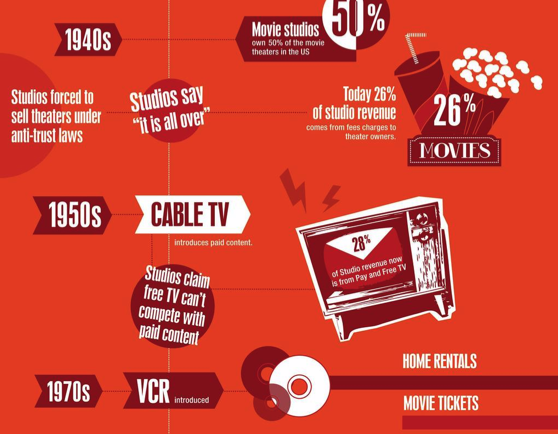
| How Often Does the Film Industry Cry Wolf Over Piracy? Posted: 27 Jan 2012 03:39 PM PST Via TechDirt, we learn the frequency with which Hollywood insists every new technology will destroy the movie business: > giant infographic after the jump
|
| Succinct Summation Of Week’s Events (01/27/12) Posted: 27 Jan 2012 12:30 PM PST Succinct summation of week’s events: Positives:
Negatives:
|
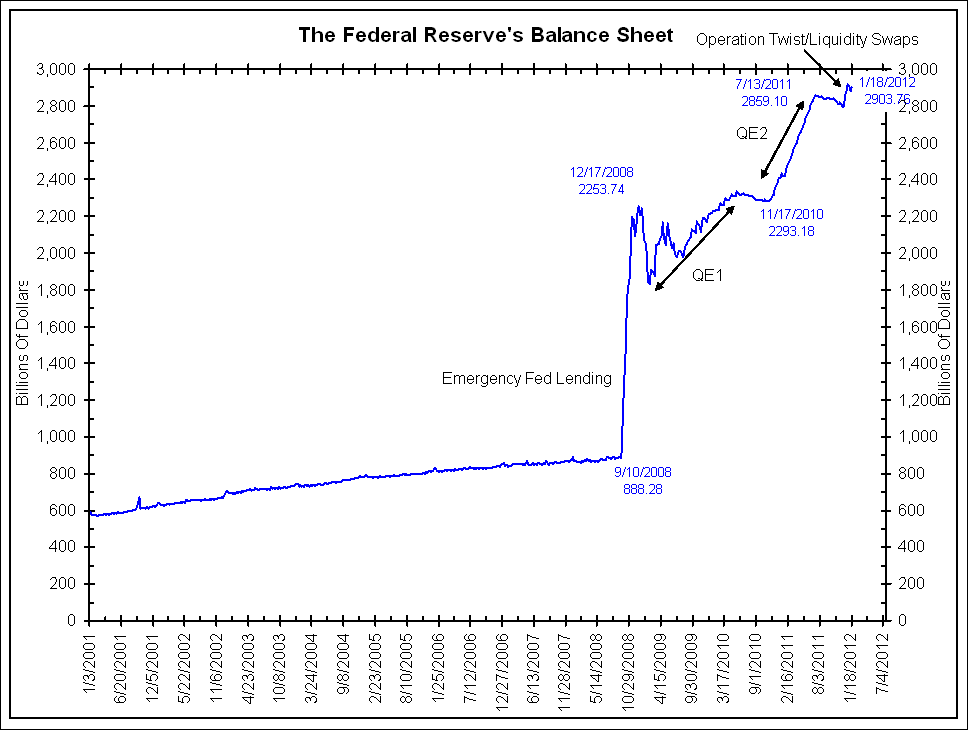
| Zero Rates Through Late 2014? PUHLEASE! Posted: 27 Jan 2012 11:10 AM PST It is irresponsible for the Fed to state that it will keep rates exceptionally low through at least late 2014. No one, least of all the misguided seers at the Fed, knows what inflation, the economy, the dollar, etc. will be in coming quarters, let alone two years. Please recall that we mockingly said that the Fed would in the future announce that it would keep rates exceptionally low through 2014, then through 2015, then through infinity. The reason for the 'late 2014' verbiage is the Fed wanted to throw a bone to The Street because it did not announce the much-desired QE 3.0. Stocks and commodities rallied on the 'late 2014' clause because the usual suspects, as they have for the past two years, spin every FOMC Communiqué as an indication of imminent QE 3.0 implementation. The Fed stating that it will keep interest rates exceptionally low through 2014 is a symbolic act, like Warren Buffett stating that he would like to pay more taxes. The Fed, like most of the known world, has downgraded its economic assessment for 2012. Information received since the Federal Open Market Committee met in November December suggests that the economy has been expanding moderately, notwithstanding some apparent slowing in global growth. While indicators point to some further improvement in overall labor market conditions, the unemployment rate remains elevated. Household spending has continued to advance, but growth in business fixed investment appears to be increasing less rapidly has slowed, and the housing sector remains depressed. Inflation has moderated since earlier in the year been subdued in recent months, and longer-term inflation expectations have remained stable… The Committee continues to expect a moderate pace of expects economic growth over coming quarters to be modest and consequently anticipates that the unemployment rate will decline only gradually toward levels that the Committee judges to be consistent with its dual mandate. Does anyone with a modicum of sense believe that the risible 'late 2014' assertion will compel business executives to suddenly go into economic expansion mode? PUHLEASE! The Fed unwittingly has demonstrated its effeteness. In the face of a slowing global economy all the Fed can do is provide a symbolic pledge and maintain 'financial repression' for three more years. Bonds soared on the Fed's economic downgrade and absence of QE 3.0 implementation or pledge. If the economy is stumbling with exceptionally low [record] rates for the past two years, why should the economy improve if policy remains the same, no matter how long it is extended into the future? Insanity is doing the same thing over and over again, but expecting different results. – Albert Einstein One thing that the Fed did accomplish with its dovish rhetoric is it supercharged commodity prices. Gasoline prices, which are extremely politically sensitive, are at an all-time January high. When traders and commercials pour into gasoline for the drive season, gasoline could reach new all-time highs. Just like in 2011, commodity inflation early in the year, due to the Fed's insane policies, crushed the economy and fomented civil unrest globally. What did Einstein quip about 'insanity'?
If one trusts the Fed, then one must believe that the Fed sees, at the best, no economic improvement until late 2014 and/or a financial system that remains on the brink due to big zombie banks. There is no other reasonable explanation to project ZIRP or NZIRP for almost three more years. Fed doves keep pontificating about 'inflation targeting' because fraudulent inflation accounting provides them with a rationalization to keep creating credit. Easy Al and Ben utilized this scam. Fed doves for the past few quarters have used unemployment as in pertains to the Fed's dual mandate as an excuse for QE. Why doesn't the Fed provide a target employment rate like it has for inflation? Because the Fed knows that the US's unemployment problem is structural. This means most, if not all of the Fed knows that it has little control over unemployment. The FOMC Minutes: The maximum level of employment is largely determined by nonmonetary factors that affect the structure and dynamics of the labor market… [Why scapegoat employment, B-Dud?] MoJo) http://www.federalreserve.gov/newsevents/press/monetary/20120125c.htm After the disastrous results of QE 2.0 and Ben's subsequent admission that QE was no longer devoid of malicious affects, we surmised that the Fed would save QE 3.0 for a big bank or systemic failure; but it would utilize verbal intervention. This has transpired. The incessant braying by various officials that Fed monetization of some asset is warranted now or 'if needed' is the major prop under the economy and markets. This keeps assets from deflating and the dreaded debt deflation at bay. We believe that Ben realizes that he can keep the game going via verbal intervention; so there is no need to implement QE 3.0 until a crisis appears. We also believe the Fed's perception that it must rely on verbal intervention to keep the game going is the reason for the Fed's new found desire to convey its forecasts and intentions to the public. We opined that the Fed is becoming more public because it is disappointed that the markets are not behaving like Fed officials and their models desire. Ben von Havenstein Bernanke issued a notable disclaimer in his press conference yesterday when he admitted that Fed interest rate forecasts are NOT unconditional pledges; they're 'projections'. Then why did the Fed make the risible 'through late 2014' pledge, Ben? We know, to keep the new economy, which is rank financial speculation, going, of course. Ben on the Fed's forecasting veracity, when reporters noted its repeated errors: “Our ability to forecast three and four years out is obviously very limited,”… http://www.federalreserve.gov/newsevents/press/monetary/20120125c.htm Ben said expanding the Fed's balance sheet is an option and there will be no asset sales until at least 2015. The Fed has refuted President Obama and Little Timmy's claims that the US economy is strengthening. Ben issued other blatant lies, courtesy of WSJ: "At levels of inflation this low, interest rates should fully compensate for the losses to savers." Bernanke reiterates that the Fed is not unaware of the problems that low interest rates cause to savers and pension funds, he says. http://blogs.wsj.com/economics/2012/01/25/live-blog-bernanke-press-conference/?mod=wsj_share_twitter Bernanke said the Fed eschews the CPI as an inflation gauge. It uses the Commerce Dept's PCE. The reason is elementary, my dear Watson. CPI (3.2%) is well above the Fed's 2% inflation target. PCE is 1.7%. A more accurate gauge of inflation – using pre-1980 methodology – shows inflation is over 10% Ben von Havenstein Bernanke employs inflation metric shopping in order to justify his monetary abuse. Even the most Fed-apologetic pundits agree that the Fed is trying to reflate because it's the only remedy. Wednesday's action and verbiage strongly confirms our view that Fed monetization is the sole prop. The market ignores Europe, Iran, earnings and global recession on the hope that the prop trumps all. But as 2011 demonstrated, events and news can usurp confidence in the prop at any moment. We have incessantly noted that stocks tend to rally into FOMC meetings on hope of QE or dovish braying and then reverse soon thereafter. Even when the Fed has disappointed the market by not implementing QE, the usual suspects have spun Fed verbiage as a guarantee of imminent QE. This occurred repeatedly last year. Furthermore, even after Ben von Havenstein Bernanke on April 27 explicitly stated that QE no longer was bereft of ugly consequences stocks and commodities rallied for four days. Then they reversed harshly.
Source: The King Report |
| George Soros Shares His View on Europe Posted: 27 Jan 2012 09:00 AM PST
|
| OECD Report: Linking Income Distribution With Growth Posted: 27 Jan 2012 08:30 AM PST |
| Dow Jones Presentation on Correlation Posted: 27 Jan 2012 08:00 AM PST If you missed yesterday’s discussion on Correlation at the Dow Jones Expert series lecture, the PowerPoint is here |
| Posted: 27 Jan 2012 06:36 AM PST Last reads of the week:
What are you doing this weekend? >
|
| REAL GDP touch light, NOMINAL GDP very light Posted: 27 Jan 2012 06:04 AM PST After 3 quarters in a row that averaged just 1.2%, Q4 GDP grew 2.8%, a touch below expectations of 3.0% BUT Nominal GDP grew well below forecasts. Because the price deflator was up just .4% vs the estimate of 1.9%, Nominal GDP was up 3.2% vs the estimate of 4.9%. Personal Consumption rose 2.0% vs the forecast of 2.4%. Fixed Investment rose 3.3% helped by a 5.2% increase in equipment and software spending and residential construction rose by 10.9%. Trade was a slight drag on GDP growth and government spending was as well led by a 12.5% decline on national defense spending. State and local government spending fell by 2.6%. Inventories added almost 2 % pts to growth and taking out this influence saw Real Final Sales rise just .8% vs 3.2% in Q3. Thus, inventories were a large swing factor in the Q4 rebound. Bottom line, Real GDP was near estimates but nominal GDP was the weakest since Q3 ’09 and Real Final Sales were the 2nd softest since Q1 ’10. Thus, very mixed is how I would best describe this economic recovery and firm footing we don’t have in the face of a European slowdown and Asian moderation. |
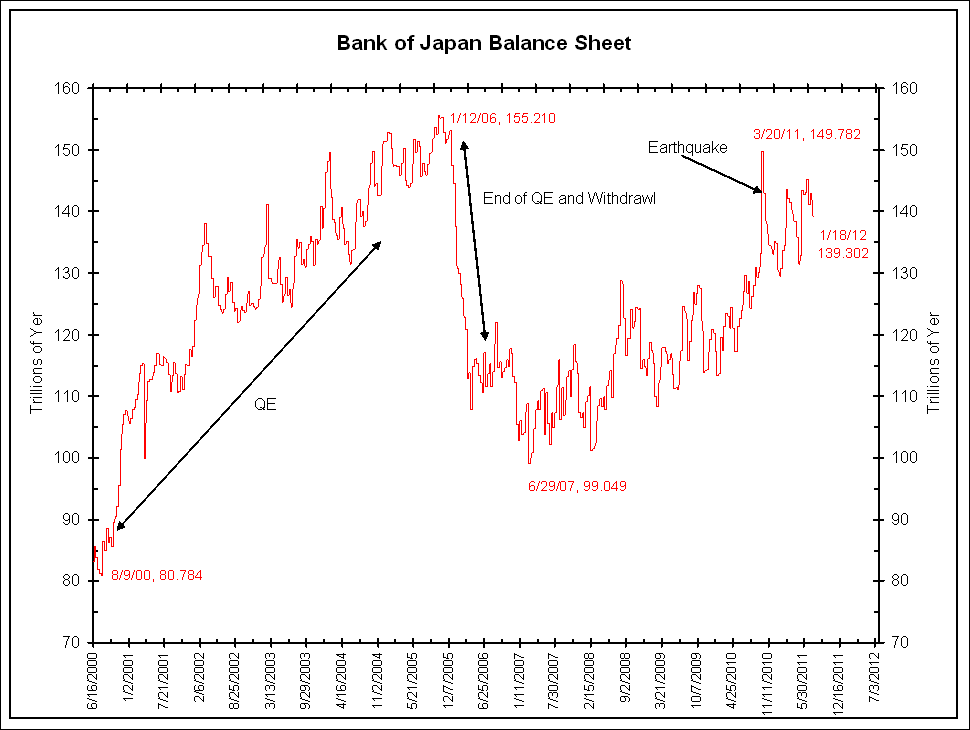
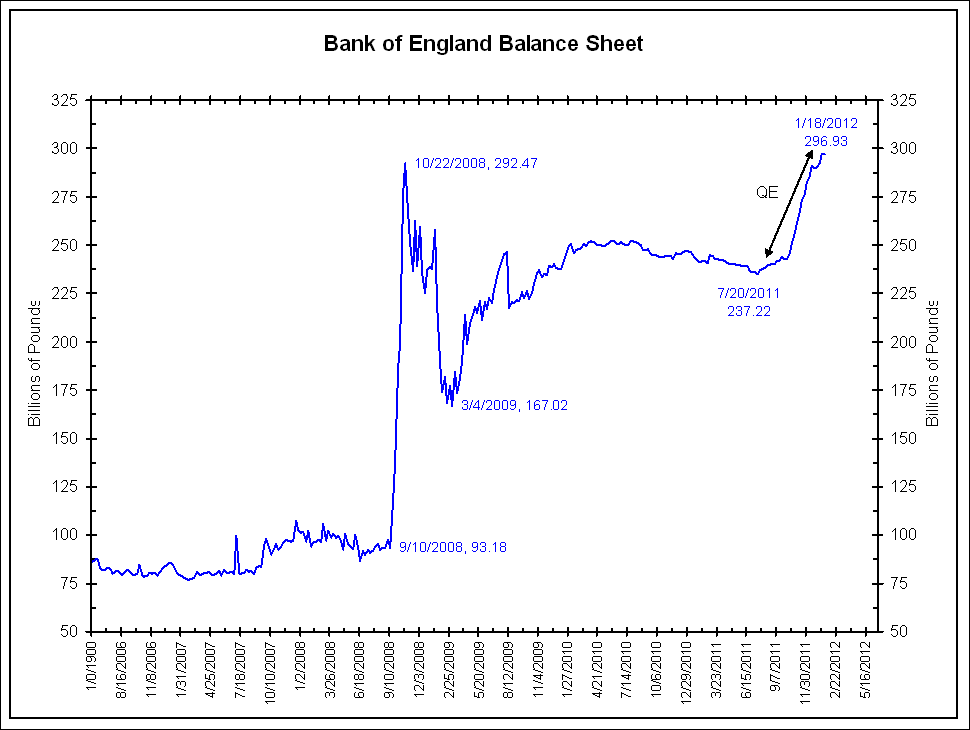
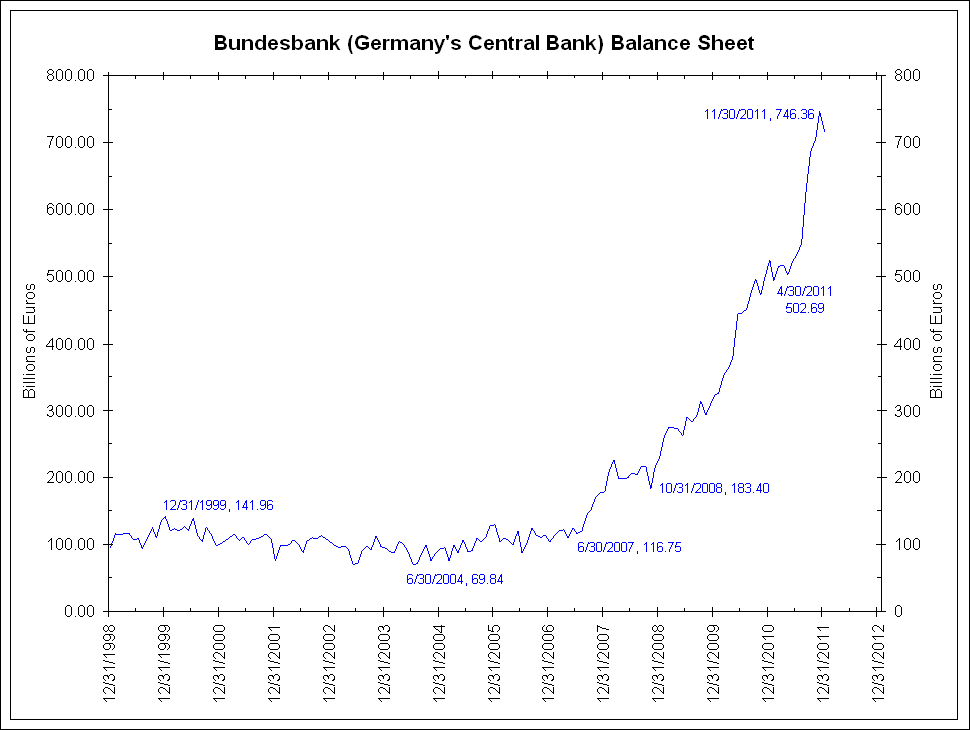
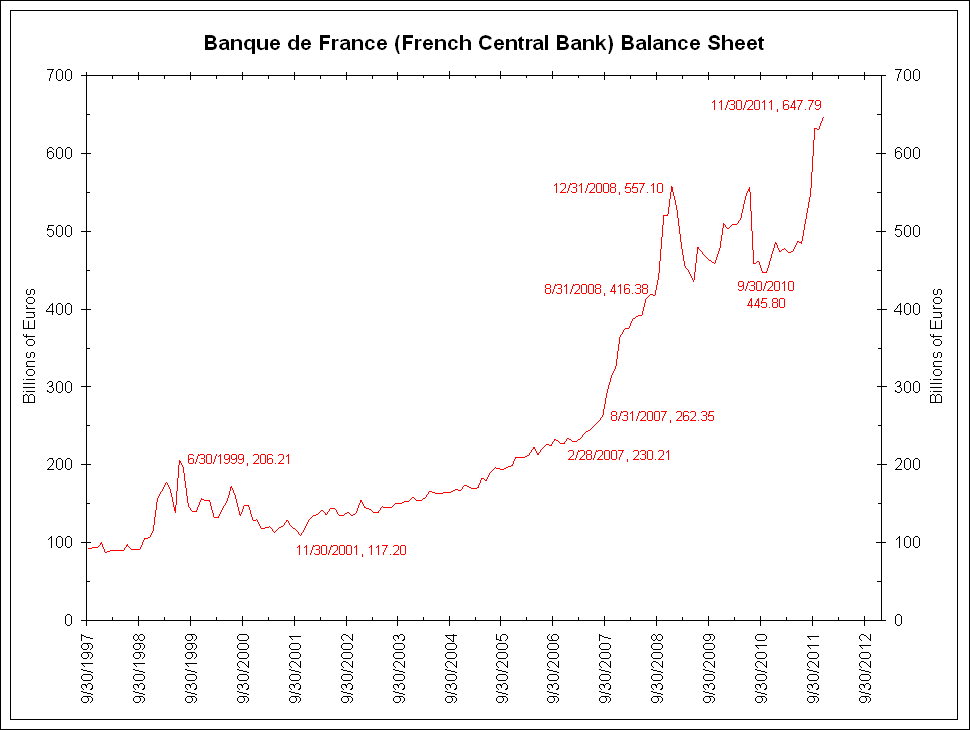
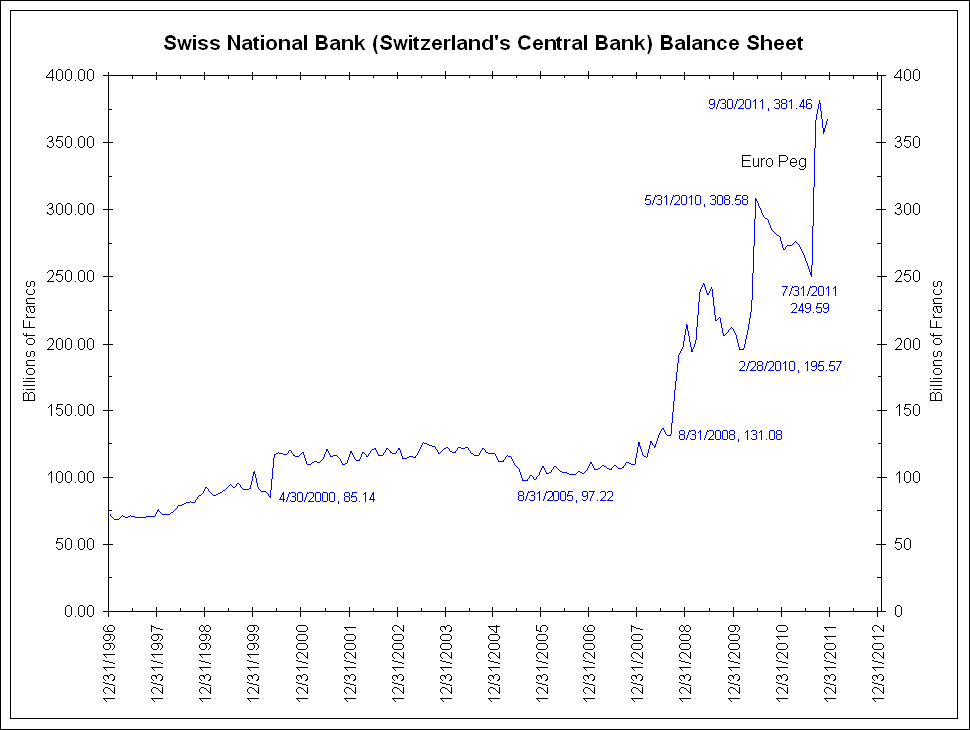
| Posted: 27 Jan 2012 05:15 AM PST All Central Bank Balance Sheets Are Exploding Higher, Or Engaged In QE The degree to which central banks around the world are printing money is unprecedented. The first eight charts below show the balance sheets of the largest central banks in the world. They are the European Central Bank (ECB), the Federal Reserve (Fed), the Bank of Japan (BoJ), the Bank of England (BoE), the Bundesbank (Germany), the Banque de France, the People's Bank of China (PBoC) and the Swiss National Bank (SNB). Noted on the charts are significant events or growth rates. Shown is the size of each respective balance sheet in its local currency. Note that all are exploding higher as every chart goes from the lower left to the upper right. Most are still making new all-time highs. If the basic definition of quantitative easing (QE) is a significant increase in a central bank's balance sheet via increasing banking reserves, then all eight of these central banks are engaged in QE. > Click to enlarge:
˜˜˜ ˜˜˜
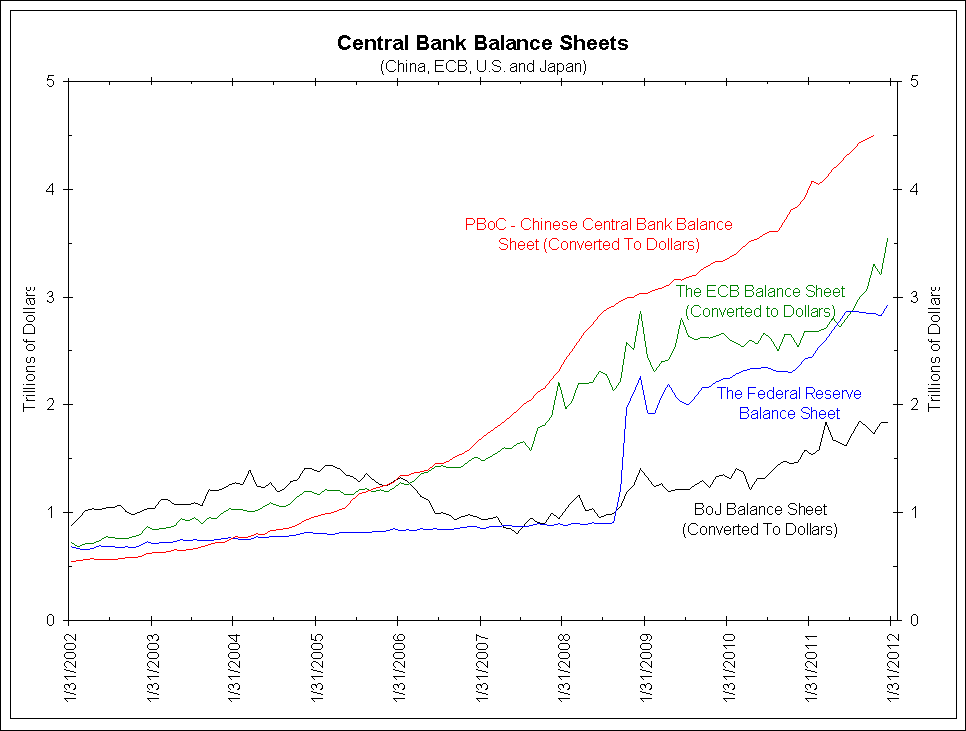
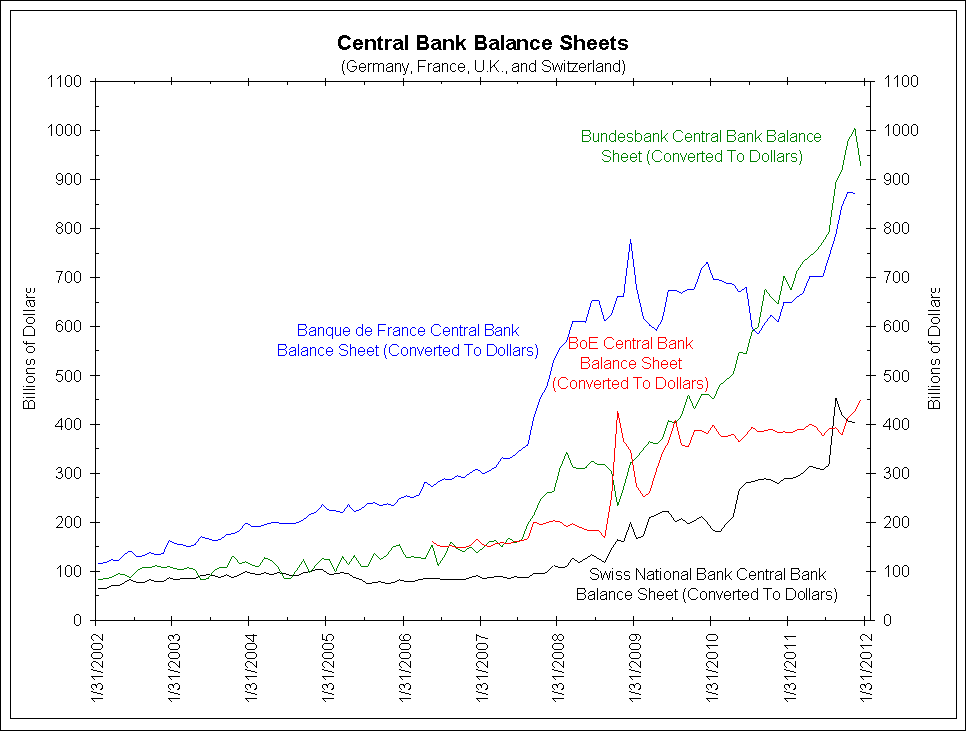
˜˜˜ ˜˜˜ ˜˜˜ > Comparing Central Bank Balance Sheets For comparison's sake, we converted the eight balance sheets above into dollar terms. The four largest, the PBoC, the Fed, the BoJ and the ECB are shown in the first chart below. The second four, the Bundesbank, Banque de France, the BoE and SNB are shown in the second chart below. We split them up because of their vastly different scales. In the first chart, note that the balance sheets of the PBoC and the ECB are larger than the Federal Reserve when converted to dollars. The BoJ used to be the largest balance sheet in dollar terms until 2006.
When shown in dollar terms below, the Bundesbank is the largest of the "second four" central banks. Further, its growth rate over the last five years has been among the highest. This is surprising since the Bundesbank is considered the "hard money" central bank.
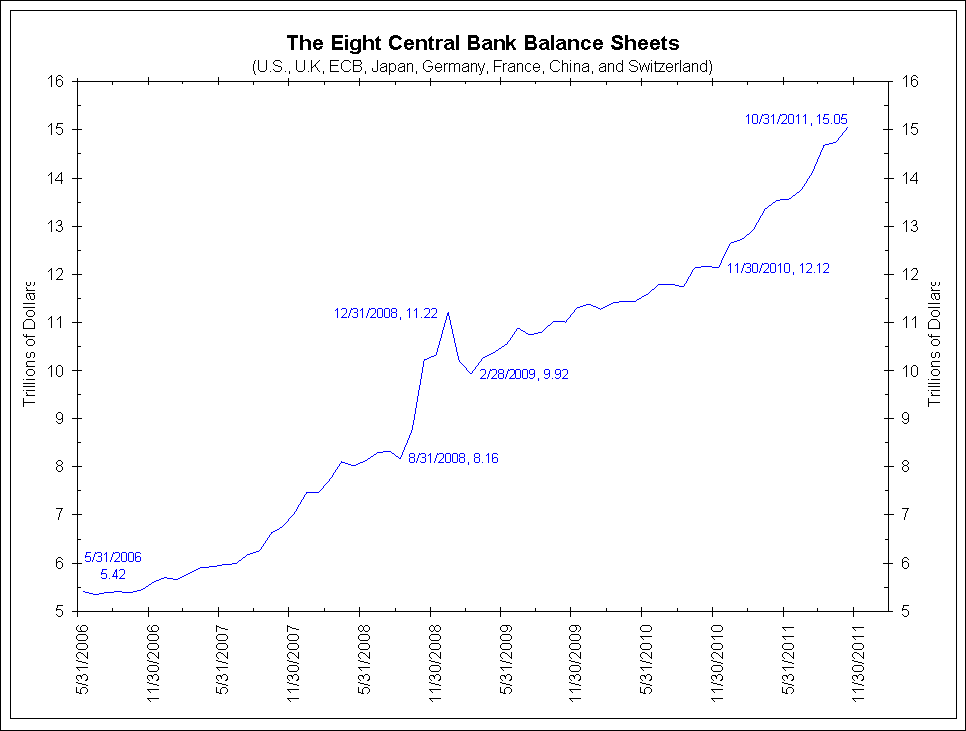
Combining Central Bank Balance Sheets The next chart below adds up the eight largest central bank balance sheets in dollar terms. It is only current through October as that is the latest number from the PBoC. The combined size of these eight central banks' balance sheets has almost tripled in the last six years from $5.42 trillion to more than $15 trillion and is still on the rise!
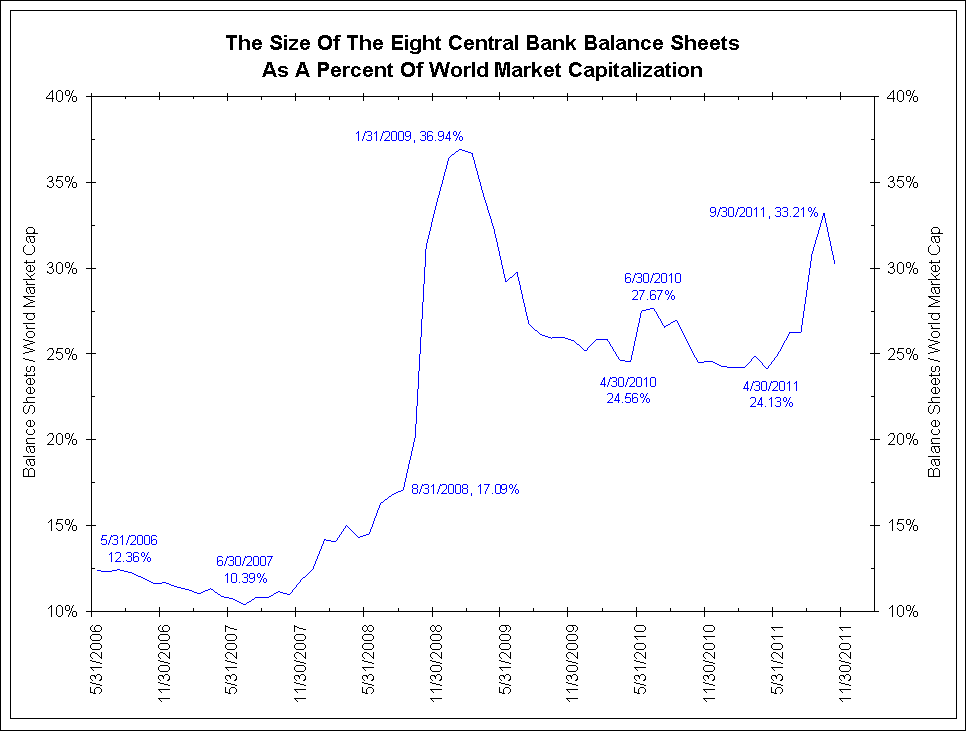
Central Banks Equal To One-Third Of World Equity Values As noted above, QE is an expanding of balance sheets via increasing bank reserves. The purpose of QE, as explained by this Bank of England video, is to increase bank reserves through purchases of fixed income securities in order to lower interest rates. This makes fixed income securities relatively unattractive/overvalued and pushes investors out the risk curve. This should increase buying for riskier assets such as stocks, pushing them higher in price. Theoretically these higher prices should lead to a wealth effect and increased economic activity. Given this definition and purpose, it is fair to compare the size of these balance sheets (now $15 trillion) to the capitalization of the world's stock markets (now $48 trillion). This is shown in the chart below. Prior to the 2008 financial crisis, the eight central bank balance sheets were less than 15% the size of world stock markets and falling. In the immediate aftermath of Lehman Brothers' failure, these eight central bank balance sheets swelled to 37% the capitalization of the world stock market. But keep in mind that the late 2008/early 2009 peak was due to collapsing stock market values combined with balance sheet expansion via "lender of last resort" loans. Recently, the eight central bank balance sheets have spiked back to 33% of world stock market capitalization. This has come about not by lender of last resort loans, but rather by QE expansion (buying bonds with "printed money") even faster than world stock markets are rising.
What Does It All Mean? In our conference call earlier this month we said (page 12): 2011 was so difficult because all stocks seemingly moved together. It was as if every S&P 500 company had the same chairman of the board that knew only one strategy, resulting in a high degree of correlation between seemingly unrelated companies. Massive central bank involvement in the markets risks returning us to a de facto centrally planned economy. Those S&P 500 companies all have the same chairman; it is Ben Bernanke because his policies are affecting everybody. That is what makes money management so difficult. Correlations will ebb and flow; they always do. But what makes them go away? This will only happen when governments and central banks go away. But if they go away, then does that not mean things get ugly? Maybe they do get ugly, but it also means that we sort out the excesses in the market. We reward the people that do the right thing and we punish the people that do the wrong thing. And we have an adjustment process that may be ugly, but then we have a period of long expansion. Central banks are ruling markets to a degree this generation has not seen. Collectively they are printing money to a degree never seen in human history. So how does this process get reversed? How do central banks pull back trillions of dollars of money printing without throwing markets into a tailspin? Frankly, no one knows, least of all central banks as they continue to make new money printing records. Until a worldwide exit strategy can be articulated and understood, risk markets will rise and fall based on the perceptions and realities of central bank balance sheets. As long as this is perceived to be a good thing, like perpetually rising home prices were perceived to be a good thing, risk markets will rise. When/If these central banks go too far, as was eventually the case with home prices, expanding balance sheets will no longer be looked upon in a positive light. Instead they will be viewed in the same light as CDOs backed by sub-prime mortgages were when home prices were falling. The heads of these central banks will no longer be put on a pedestal but looked upon as eight Alan Greenspans that caused a financial crisis. The tipping point between balance sheet expansion being bullish for risk assets versus bearish is impossible to know. Given the growth rate of central bank balance sheets around the world over the past few years, we might not have to wait too long to find out. Enjoy it while it is still bullish. Source: Bianco Research |
| Correlation Nation Presentation Posted: 27 Jan 2012 04:36 AM PST As always, here is yesterday’s presentation for the Dow Jones Expert series. All of these charts have been on the blog before; the newest correlation slides are towards the back: > |



| You are subscribed to email updates from The Big Picture To stop receiving these emails, you may unsubscribe now. | Email delivery powered by Google |
| Google Inc., 20 West Kinzie, Chicago IL USA 60610 | |



0 comments:
Post a Comment