.

{2} GoogleTranslate (H)

English French German Spanish Italian Dutch Russian Portuguese Japanese Korean Arabic Chinese Simplified

Our New Stuff

{3} up AdBrite + eToro

Your Ad Here

Tuesday, June 12, 2012

The Big Picture

The Big Picture


The Myth Of Cash On The Sidelines Has Now Been Revised Away

Posted: 12 Jun 2012 02:00 AM PDT

Real Time Economics – Number of the Week: Corporations Not Hoarding Cash
$496.5 Billion:
How much less cash U.S. corporations had at year-end 2011 than previously believed.  The Federal Reserve on Thursday came out with its quarterly "flow of funds" report, which for two years now has reflected the steady increase in the amount of cash on corporate balance sheets. Sure enough, the report showed that corporate cash ticked up yet again in the first quarter of the year by around $12.6 billion, to $1.74 trillion. … In other words, the big pile of cash sitting idly on the sidelines? "Boom, it's all gone now," says James Bianco of Bianco Research. Mr. Bianco has long been skeptical of the cash-hoard narrative. Even before the revision, he argued that the rise and fall of the real estate bubble distorted the corporate cash picture, making cash look artificially small as a share of assets when property values were rising, and then artificially large when prices collapsed. Better, Mr. Bianco argues, to strip out real estate and look at cash as a share of financial assets, which showed a much milder run-up in cash holdings using the old data, and now shows no run-up at all. "It was slightly above average and now it's not even that anymore," Mr. Bianco says.

Comment

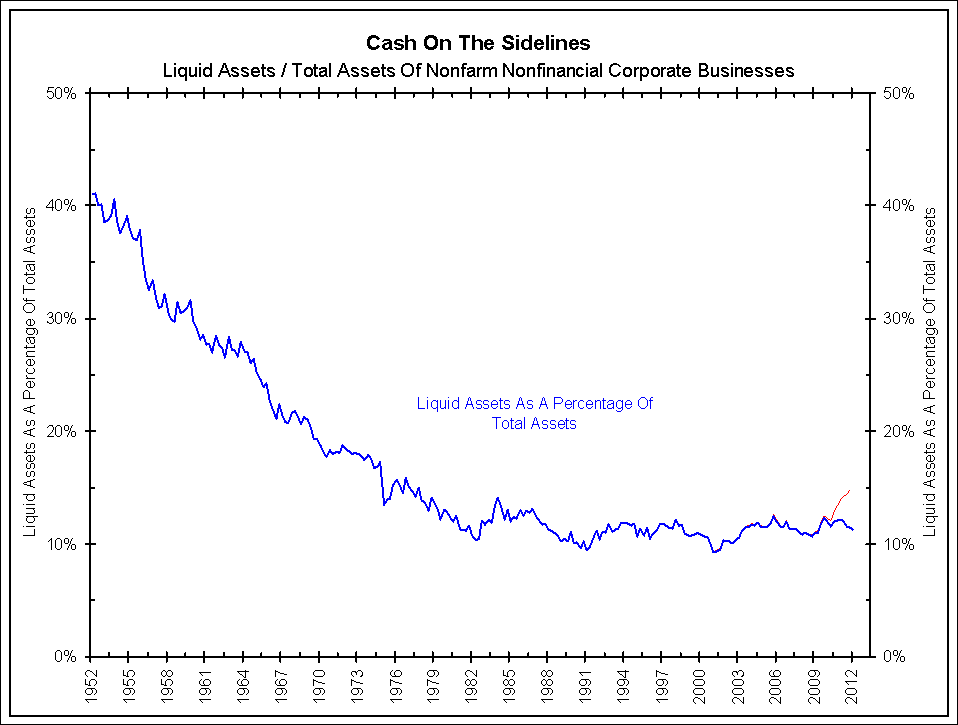
Last Thursday the Federal Reserve released its quarterly Flow of Funds data, current through March 31. One of the more popular headlines from this data concerns the record amount of "cash on the sidelines." As the story above points out, the Federal Reserve has revised estimates of how much cash companies are holding.  The blue line in the chart below shows the latest release while the red lines shows the previous estimates.  Through Q1 2012, nonfarm nonfinancial corporate businesses held $1.74 trillion in liquid assets on their balance sheets.   In the latest revision, nearly half a trillion dollars of cash disappeared.
Where did the cash go?  It disappeared as the Federal Reserve is now saying it never existed in the first place.

Click to enlarge:
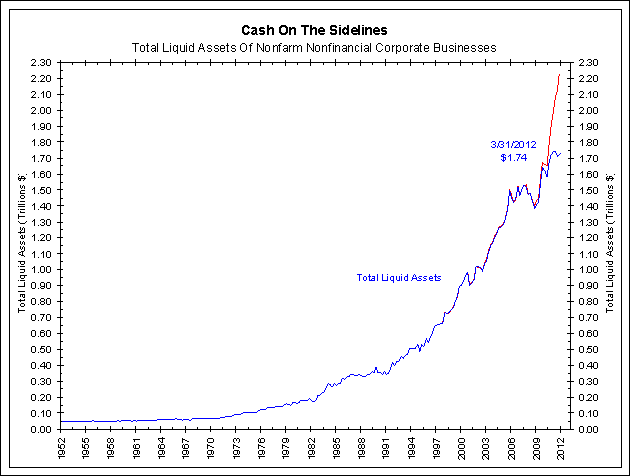
Liquid assets held on companies' balance sheets is a nominal number, much like the nominal level of GDP, that rarely decreases.  This series must be compared to other balance sheet items for relevance. The chart below shows liquid assets as a percentage of total nonfarm nonfinancial corporate business assets since 1952. By this measure, the "cash on the sidelines" argument is far less compelling (blue line), especially after revisions (red line).
When examined over a shorter time frame, as shown below (same chart as above, shorter time frame), the percentage of cash on the sidelines was revised from the upper end of its range of the past 30 years to the middle.
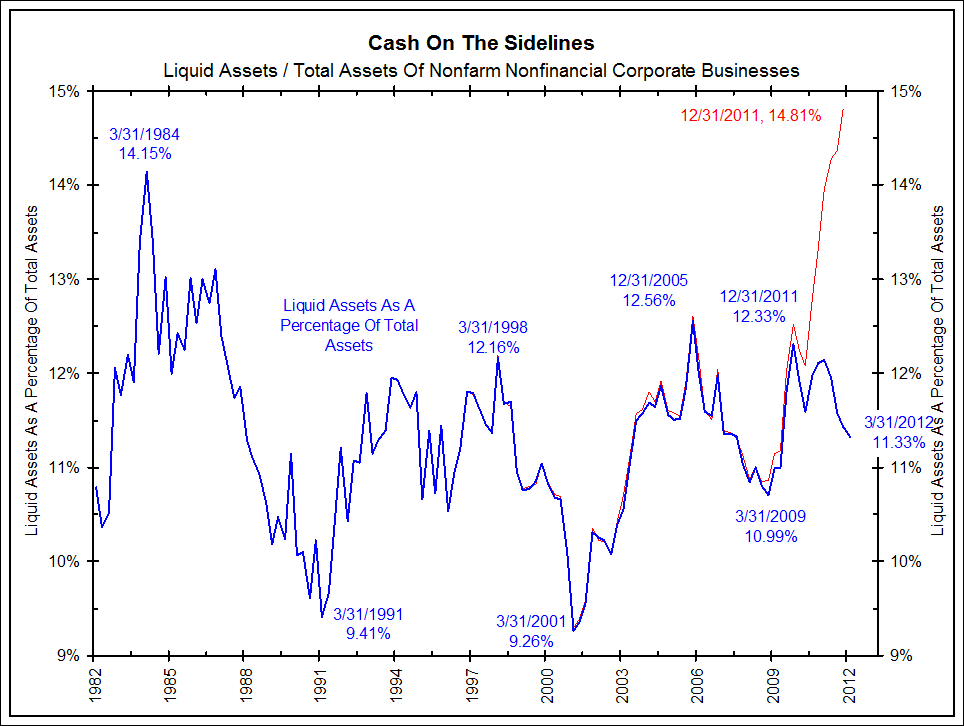
We have argued in the past that the potential of excess cash on the sidelines to help buoy the markets once invested was minimal.  After considering the latest revisions, this becomes even more true.

For an updated look at all of our charts from the Federal Reserve's Q1 2012 flow of funds report click here.

Source: Bianco Research

Open Thread: Ugly Reversal

Posted: 11 Jun 2012 04:30 PM PDT

Sunday evening, the Futures were up 17 points, Dow up 144 at the peak (about 1.5%).

Today, up weak, sold off after Europe closed poorly, then collapsed in the last hour.

Is this a one off, or are we setting up for a wild week of selling.


Its an open thread — what say ye?


Gold As A Safe Haven

Posted: 11 Jun 2012 04:00 PM PDT

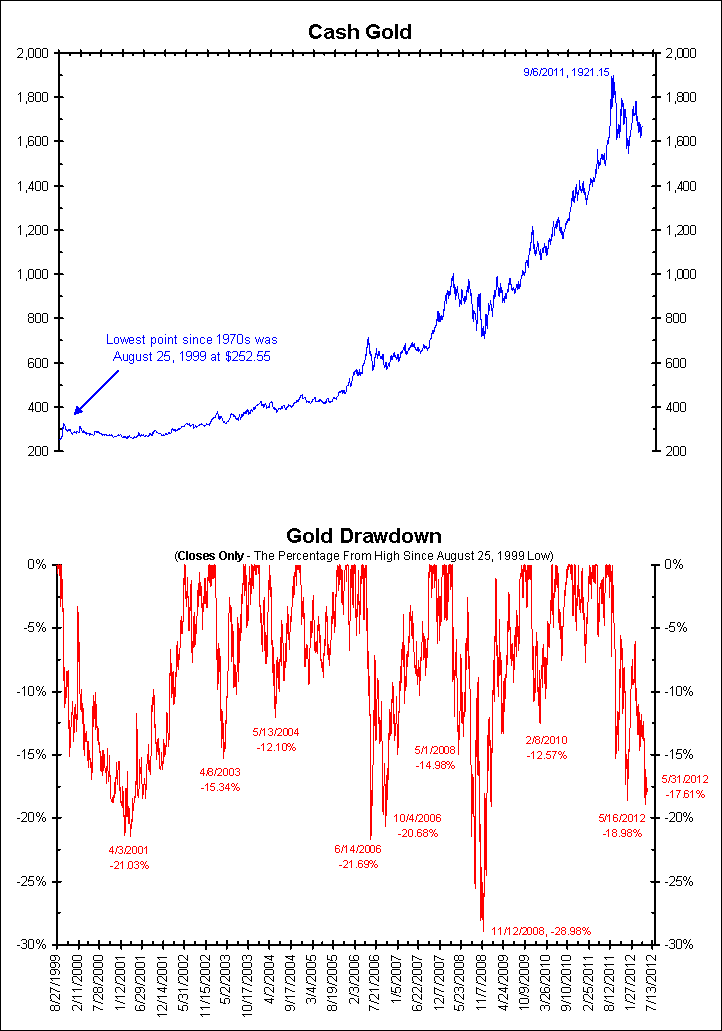
Click to enlarge:

The Wall Street Journal – Gold Investors Rush for the Exits
Gold's status as a safe haven is looking shaky. Investors often have rushed to gold during flare-ups in the European crisis. But as they weigh Greece's future in the euro zone and fret about Spain's credit-market woes, fewer investors are seeking out the precious metal…Bullion hasn't been in negative territory this late in the year since 2008, when investors were liquidating assets and scrambling for refuge. Instead, investors are finding more comfort in U.S. Treasurys and German bonds. "They're trumping gold as a safe haven," said James Steel, a gold analyst at HSBC. The problem for gold is that demand for Treasurys is leading to a rising U.S. dollar. That hits gold, which is priced in dollars, by making it more expensive for buyers who hold other currencies.

Source: Bianco Research

From Neuron to Whole Brain

Posted: 11 Jun 2012 02:00 PM PDT

10 Monday PM Reads

Posted: 11 Jun 2012 01:30 PM PDT

My afternoon train reading:

• Family Net Worth Drops to Level of Early '90s, Fed Says (NYT) see also Planning a Financial Tuneup (NYT)
• European elites can’t stop themselves crashing their own project (Chatham House)
• What’s wrong with economics? (Stumbling And Mumbling) see also The Wrong Austerity Cure (Project Syndicate)
• America's Hidden Austerity Program (Economix)
• Hospitals await health care ruling (Mansfield News Journal) see also With New Prediction Algorithm, a Patient’s Past Foretells His Medical Future (Popsci)
• China’s Key Economic Data (Dr. Ed’s Blog)
• America's Class War (New Yorker) see also Workers Lost Ground During Recession As Bosses Gained (Bloomberg)
• How Delaware Became the King of U.S. Corporate Charters (Bloomberg)
• WWDC 2012: Apple keynote liveblog (Venture Beat) see also Google Outsells, but Apple Cultivates Loyalty of App Developers (NYT)
• $422,000 to stream a movie? The continued “success” of phone cramming (Ars Technica)

What are you reading?


>
Foreign Revenue Could Be Lost in Translation

Source: WSJ

Facebook + Nasdaq = Faceplant

Posted: 11 Jun 2012 11:00 AM PDT

However big a clusterfuck you may have previously believed the Facebook IPO was, this WSJ article – Nasdaq CEO Lost Touch Amid Facebook Chaos — makes you realize it was actually worse, much worse.

The Journal politely but devastatingly skewers Nasdaq for the bungled IPO trading. The words that come to mind is inexcusable and incompetent. (No mention of HFT though)

That said, the train wreck most likely would not have happened had Facebook not been so wildly over valued at $104 billion dollars. That was what filled the warehouse with dangerous vapors, waiting for a spark.

Nasdaq’s snafu provided the igniter.


click for larger graphic


Source:
Nasdaq CEO Lost Touch Amid Facebook Chaos
JENNY STRASBURG, ANDREW ACKERMAN and AARON LUCCHETTI
WSJ, June 11, 2012 
http://online.wsj.com/article/SB10001424052702303753904577454611252477238.html

Is Italy Next?

Posted: 11 Jun 2012 08:45 AM PDT


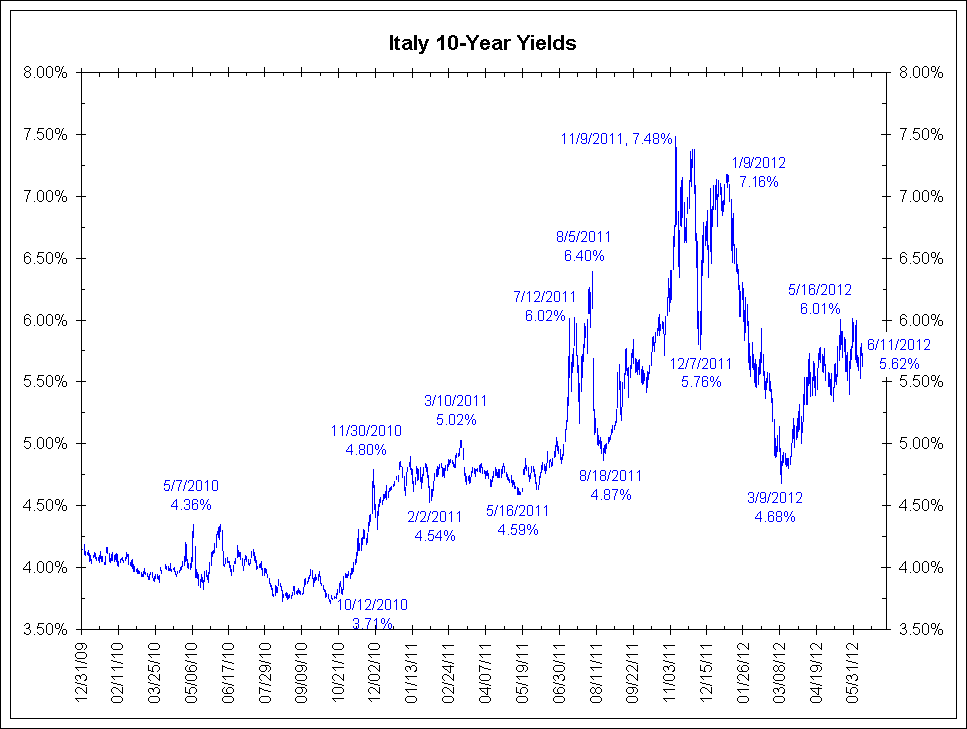
chart courtesy of Bianco Research


The initial market enthusiasm for the bailout of Spain’s banks seems to have faded, as reality sets in. What will be done with Portugal, Ireland and Greece is secondary to what happens with Spain and perhaps more importantly Italy, the 4th largest economy on the continent.

Here is Bloomberg:

“The 100 billion-euro ($126 billion) rescue for Spain's banks moved Italy to the front line of Europe's debt crisis as an initial rally in the country's bonds fizzled on concern it may be the next to succumb. Italy's 10-year bonds reversed early gains today in the first trading after the Spanish bailout and fell for a fourth day, sending the yield up 20 basis points to 5.98 percent . . .

Italy has 2 trillion euros of debt, more as a share of its economy than any developed nation other than Greece and Japan. The Treasury has to sell more than 35 billion euros of bonds and bills per month — more than the annual output of each of the three smallest euro members, Cyprus, Estonia and Malta.”

Italy is a huge economy, and any danger there has enormous repercussions.


Source:
Italy Moves Into Debt-Crisis Crosshairs After Spain
rew Davis and Nadine Skoczylas
Bloomberg Jun 11, 2012
http://www.bloomberg.com/news/2012-06-10/italy-moves-into-debt-crisis-crosshairs-after-spain-bank-rescue.html

Will Spain’s Bailout Save Europe?

Posted: 11 Jun 2012 07:30 AM PDT

Despite an agreement to bailout Spain’s banks, Europe still faces tough times ahead, including an election in Greece this weekend. Martin Wolf, Financial Times chief editorial commentator, discusses the future of the euro zone


Monday, 11 June 2012 7:03 AM ET

10 Monday AM Reads

Posted: 11 Jun 2012 07:00 AM PDT

My reads to start the week:

• A to Z of bad banking (Independent) see also Big U.S. Banks Brace for Downgrades (WSJ)
• Ten of the largest S&P 500 companies generated 23% of Q1 sales from Europe (FactSet)
• The €249bn hole (FT Alphaville) see also In Europe, Banks Borrowing to Stay Ahead of the Tide (NYT)
• Subordination 101: A Walk Thru For Sovereign Bond Markets In A Post-Greek Default World (Zero Hedge)
• Shortage of homes for sale creates fierce competition (LA Times)
• Euro Breakup Precedent Seen When 15 State-Ruble Zone Fell Apart (Bloomberg) see also Is Global Finance a Ponzi Scheme? Ask a Russian Expert (Bloomberg)
• More Troubles for Chartists Ahead? (Price Action Lab Blog)
• Playing Until the Germans Lose Their Nerve (Spiegel.de) see also Europe Needs a German Marshall Plan (NYT)
• On the Introduction of the Startup Act 2.0 (Mike Bloomberg)
• Senate Dealmaker Baucus Turns to Rewrite of U.S. Tax Code (Bloomberg)

What are you reading?


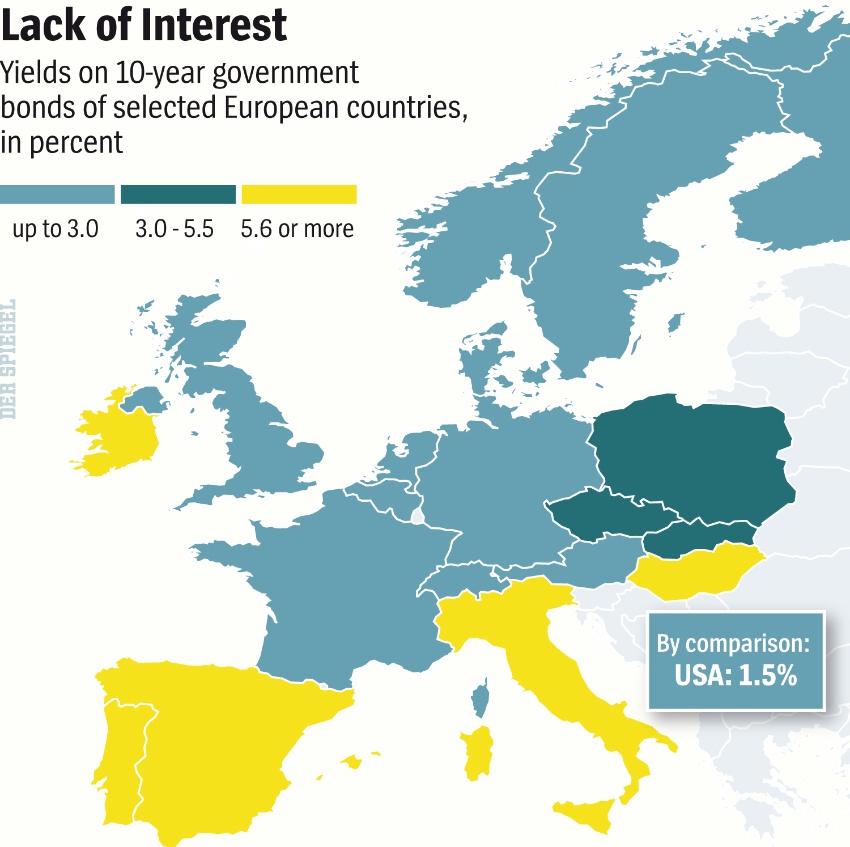
Big Investors Don't Know Where to Put Their Cash

Source: Spiegel.de

Bianco: Euro Bonds Won’t Resolve EU Debt Crisis

Posted: 11 Jun 2012 06:44 AM PDT

James Bianco, president of Bianco Research LLC, and Mort Zuckerman, chairman and chief executive officer of Boston Properties Inc., talk about Europe’s sovereign-debt crisis. They speak with Trish Regan and Matt Miller on Bloomberg Television’s “Street Smart.”


Source: Bloomberg, June 7 2012

.

0 comments:

Post a Comment

previous home Next

{8} chatroll


{9} AdBrite FOOTER

{8} Nice Blogs (Adgetize)