


The Big Picture |

- Apple’s Maps Made Me A Record Setting Half-Marathoner
- 10 Tuesday PM Reads
- Debunking Jack Welch’s Jobs Data Conspiracy Theory
- Give me all the 3 yrs you can no matter the skimpy yield
- Things I don’t Understand
- QOTD: What Do You Call a Stock Down 90%?
- IMF much gloomier about the global economy
- 10 Tuesday AM Reads
- Watch The Big Picture Conference Live on Fora.TV
- 10 Places To See…. Before They’re Gone
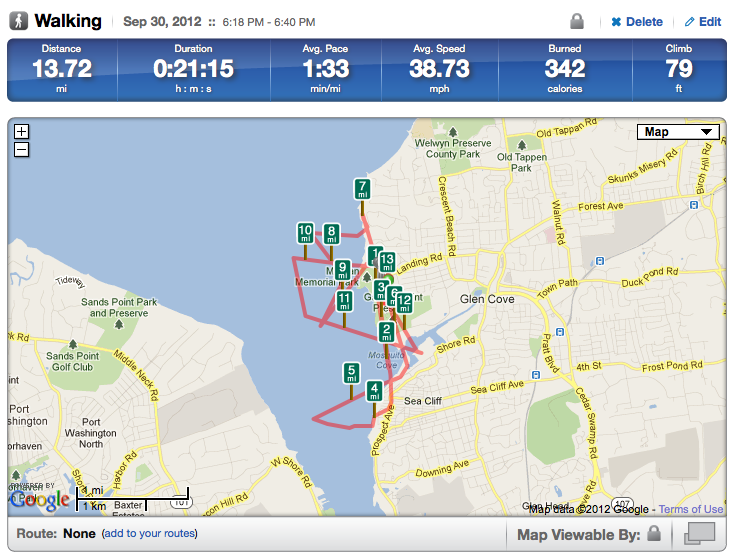
| Apple’s Maps Made Me A Record Setting Half-Marathoner Posted: 09 Oct 2012 04:30 PM PDT Move Over Paul Ryan: Thanks to my upgrading my iPhone 4 to IO6, Runkeeper no longer uses Google Maps — it uses Apple maps. So my usual 2 mile 25 minute walk became a record setting half-marathon.
|
| Posted: 09 Oct 2012 01:30 PM PDT My afternoon train reading:
What are you bookmarking?
Map of the Market
|
| Debunking Jack Welch’s Jobs Data Conspiracy Theory Posted: 09 Oct 2012 12:05 PM PDT |
| Give me all the 3 yrs you can no matter the skimpy yield Posted: 09 Oct 2012 11:33 AM PDT The 3 note auction was solid. The yield was .346%, just under the when issued and the bid to cover was 3.96, the most since at least 1993 exceeding the previous high of 3.94 in Sept. Also, direct and indirect bidders took the most amount of a 3 yr since Nov ’11. Bottom line, the 3 yr maturity has two big things going for it, for now. Number one, the Fed has told us their intent is to keep rates pinned to near zero “at least through mid-2015″ and secondly, the growing global economic concerns will keep a solid bid to liquid, short term maturity instruments irrespective of their current yields. |
| Posted: 09 Oct 2012 09:30 AM PDT |
| QOTD: What Do You Call a Stock Down 90%? Posted: 09 Oct 2012 08:30 AM PDT I love this joke/quote from David Einhorn:
Remember that the next time someone exhorts you to buy a stock because it has gotten shellacked . . . Hat tip Josh |
| IMF much gloomier about the global economy Posted: 09 Oct 2012 07:25 AM PDT The Governor of the PBoC, states that the Chinese economy is facing a “relatively big downward pressure” and that the PBoC is to take more preemptive and targeted measures in respect of monetary policy. The Shanghai Composite closed +2.0% higher today; The IMF has reduced its growth forecast for China to +7.8% for the current year, from +8.0% previously, rising to +8.2%, from +8.4% previously in 2013 – still too optimistic; The PBoC injected Yuan 265bn (US$42bn) into the money markets today to reduce lending rates. However, it looks as if liquidity needs will persist – need to check out. Copper consumption is set to fall this year, the 1st time since 2008, though are expected to increase modestly next. Rio came out with very cautious comments on China today; The Chinese have been “investing” and offering aid to African countries for some time. However, the “aid” comes with certain attached strings. In addition, the Chinese are also exporting their people to the continent. A number of Africans resent the “invasion” by the Chinese. Bloomberg reports on a conflict involving illegal gold mining by Chinese nationals ,who are armed, in Ghana. These kind of conflicts will escalate. To date, the Chinese have been supported by the regimes in many African countries, who have, lets say “benefited” from their presence. Times change though; J P Morgan forecast that Japanese GDP this Q could decline by -0.8%, much lower than the zero growth previously forecast. Japanese GDP is expected to have expanded by +0.2% in the 3rd Q this year. The sharp decline in exports to China, which is Japan’s largest export market, due to tensions over territorial claims to islands in the South China seas, is the main reason cited for the decline in exports; The Japanese September service sector sentiment index fell to 41.2, from 43.6 in August. Japan’s current account surplus increased in August, the 1st time in 18 months, though will be temporary – the clear trend is for the surplus to decline. Japanese exports fell -5.8% in August Y/Y, the 3rd consecutive monthly decline, with exports to China lower by -9.9% ; It looks as if the series of economic reforms proposed by the invigorated Indian PM, but most likely, by the newly appointed Finance Minister, may have a reasonable chance of being voted through, due to a divided opposition. It’s still up in the air, especially nationwide implementation of the multi brand foreign retailer initiative, but the ruling coalition does have a sporting chance. In normal circumstances, bureaucracy, corruption and other familiar problems would have stifled the reform proposals to death, but this time around, maybe, just maybe…….in any event, the administration needs to do something ahead of the national elections to be held in May 2014 at the latest; The IMF forecasts that Indian GDP will decline to a decade low +4.9% this year, well below the +6.1% forecast previously. It forecast that GDP will rise to +6.0% next year. The fiscal deficit needs to be tackled. They urged investment into infrastructure – very much needed Labour unrest in the mining industry is likely to spread across other sectors in South Africa. The country, for the moment, is witnessing strong capital inflows as a result in government bonds being included in the World Government Bond Index earlier this year. Credit Suisse estimates that some US$7bn to US$9bn will flow into the country, roughly half of which has already been invested. Once the re balancing is completed (expected to be relatively soon), pressure on the Rand could well increase. The ANC faces a leadership election in December, adding to the uncertainty. The youth wing of the ANC has called for a nationalisation of the mining sector. With demand for base metals and coal declining, South Africa looks as if it will face increasing pressures. I remain bearish on the Rand (Source FT);
The IEA forecasts that Iraq will double its oil output by the end of the decade and by the 2030′s will become the 2nd largest oil exporter after Saudi Arabia. Iraq will account for 45% of anticipated growth in global oil supply over the current decade. At present, Iraq exports 2.6mn bpd, the highest in three decades, which could more than double to 6.1mn bpd by 2020. However, the government needs to pass a hydrocarbon law, which has been bogged down. In addition, the central authorities have to deal with the Kurdish autonomous region. (Source FT); Reports suggest that the 50% Russian shareholders (AAR) in TNK-BP are now considering selling their shareholding rather than buying BP’s stake – no great surprise. Rosneft, certainly for the moment, appears to have the upper hand, with AAR squeezed. Whether there will be any buyers of AAR’s stake remains the question; The EU is to discuss a single budget for countries that use the Euro, at the heads of state meeting on the 18/19th October. A number of countries in the EU, including those who do not use the Euro seem to be in support of the measures. It is, of course, a key German demand. However, trying to persuade Southern European countries to stick to budget targets is going to be difficult. Nevertheless the process towards fiscal union continues. Banking union is also being discussed. With monetary union, the EZ is heading towards political union, another German aspiration. However, these measures will take years to enact and certainly unlikely ahead of the European Parliamentary elections in June 2014; It seems as if the Troika’s report on Greece, which is deemed a prerequisite for further bail out funds to be disbursed (if favourable), will be delayed till November. There were allegations that the report would be delayed till after the US Presidential elections – officially denied by the EU. Officially denied – must be true then !!!!. Certain sources suggest that the Troiks report will forecast that debt to GDP will be in the order of 150% by 2020, as opposed to a target of 120%. Debt to GDP is expected to be 170.7% in 2012, rising to 180.8% in 2013. And the charade continues; As expected Mrs Merkel was given an exceedingly warn welcome today – though not in a good way. Protesters shouted abuse and some 7k of police had to cordon off the area where she visited for just 6 hours. The protests were the biggest since the IMF popped up. The trip does not seem sensible to me – the Greeks are furious and could create yet more violence and the German’s seeing their Chancellor heckled and worse may be even more reluctant to support the country; The IMF forecasts that the Spanish budget deficit will hit 7.0% (I believe much higher) this year and 5.7% in 2013, above the target of 6.3% and 4.5% respectively. Debt to GDP will be 90.7% this year and 96.9% next. I continue to believe that Spain ultimately will have to restructure its debts – the current debt load, increasing materially, is unsustainable; Moody’s assigned the ESM an Aaa rating, with a negative outlook, with Fitch at AAA. It looks as if the ESM is getting ready to start leveraging up through the issue of bonds – it is to have a series of investor meetings with potential investors; Italy’s budget deficit to GDP came in at 5.0% at the end of the 2nd Q, similar to that in the corresponding period in 2011. The IMF believes that the Italian budget deficit will amount to -1.8% next year, higher than the -0.5% target. Q2 GDP came in at =-.8% Q/Q, or -2.6% Y/Y France’s August trade deficit came in at E5.286bn, higher than the E5.0bn expected and the E4.062bn in July. The economic situation in France continues to deteriorate and its current growth estimates (higher than the IMF’S) are optimistic to say the least. The IMF forecasts that France’s budget defit will come in at 4.7% of GDP in 2012 and 3.5% next year, higher than the 3.0% forecast;
The IMF has cut its GDP forecast for the UK to -0.4%, from -0.2% previously and, in addition, reduced its growth estimates for 2013 to +1.1%, from +1.4% previously. The IMF has urged the UK to consider a plan B, though the UK government is committed to its policy, fearing a credit downgrade – which will come, in any event, though. UK industrial production came in at -0.5% M/M in August, in line with expectations and -1.2% Y/Y, slightly worse than the -1.1% expected. The UK total trade deficit rose massively to Stg 4.169bn in August, to Stg 1.705bn in July; The UK PM, Mr Cameron came exceedingly close to promising a referendum on the UK’s membership of the EU. Alarmingly, politicians are talking about restricting freedom of movement within the EU – unlikely;
John Mauldin has written an excellent article on the extreme views expressed by many, including Mr Jack Welsh, formerly CEO of GE, relating to the veracity of the NFP data, issued by the US Bureau of Labour Statistics (“BLS”). Such conspiracy theories/views are a complete nonsense and you will have to read John’s article, who explains the issues involved in great detail. Conspiracy theories always have a certain momentum, but to allege that BLS data is fixed, is absurd. The data is what it is – whilst certainly not perfect, it really should viewed on a longer term trend basis, rather than as a 1 month snapshot of the status of US employment. Amusingly, I attended a lunch following the release of the NFP data last Friday. There was no debate/allegations as to the veracity of the NFP data, but there was much comment on alleged accounting issues employed by GE, during Mr Jack Welsh’s stewardship of the company. It was, I assure you, quite amusing. Basically, ignore the silly remarks by Mr Welsh, who really should know better; The US NFIB, small business optimism index came in at 2.8 in September, slightly weaker than the 93.5 expected and 92.9 in August. Businesses are putting off investment and hiring decisions until after the Presidential elections and the outcome of the fiscal cliff is known; The US earnings season starts today, with Alcoa announcing its results after US markets close. Analysts expect US 3rd Q earnings to decline by -2.7%, as compared with the corresponding period last year, the first decline in 11 consecutive Q’s. 4th Q earnings forecasts will have to be revised lower – its the same old game. Revenues and forward looking statements of Us corporations will be scrutinised even more carefully. The financials are expected to do better; The IMF has warned that the failure of US and EZ policy makers to deal with fiscal issues adequately threatens to slow an already weak global economy, possibly resulting in another global recession. The IMF has downgraded its forecast for economic output to +3.3% this year and +3.6%, from +3.5% and +3.9% previously – no doubt another downgrade will come. The above forecast assumes that US authorities will deal with issues relating to the “fiscal cliff” and that the EZ buys sovereign debt of certain peripheral countries, together with committing to economic reform and closer integration. Well, we all certainly hope so as well, but……They urged Germany to accept a higher inflation rate and cautions against a rapid reduction in debt, whilst advocating structural reforms;
Outlook The main Asian markets (ex Japan) closed higher, with Chinese markets up around +2.0% on hopes of a stimulus programme. European markets are flat to marginally higher, ex Spain which is some -0.9% lower. US markets have opened marginally weaker. November Brent is up at US$113 – don’t understand, with gold at US$1773. The Euro, well its trading around US$1.2914. I remain neutral on equity markets, though am following currencies. Whilst the Rand popped today, the economic and political situation continues to deteriorate. I remain bearish, as I do of the A$ and the Euro. A number of you have asked whether I have a web site. I’m afraid I do not, but have decided to set one up when I get back to the UK – most likely in November. Will keep you posted. Kiron Sarkar 9th October 2012 |
| Posted: 09 Oct 2012 07:15 AM PDT My morning reads:
What are you reading?
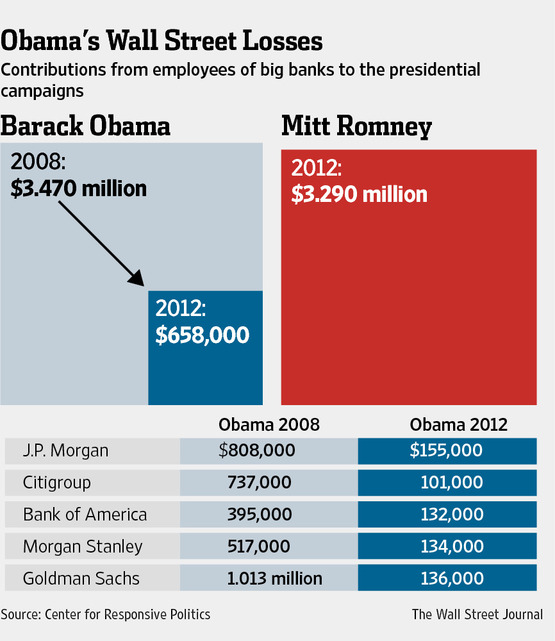
Goldman Turns Tables on Obama Campaign |
| Watch The Big Picture Conference Live on Fora.TV Posted: 09 Oct 2012 06:00 AM PDT
Fora.TV will have a all the videos from this year’s conference available for a single price or as individual views a few weeks after the conference. But you’ll also be able to tune in all day during the conference if you can’t make it to New York. 8:30 Introductions 8:45 Neil Barosfsky Bailout: An Inside Account of How Washington Abandoned Main Street While Rescuing Wall Street 9:30 Dylan Grice in conversation with Rich Yamarone A Great Disorder Comes 10:15 –break– 10:30 James O’Shaughnessy What Works on Wall Street 11:15 Barry Ritholtz, This is Your Brain on Stocks 1:00 David Rosenberg NAVIGATING THE NEW NORMAL: Risks, Challenges and … Opportunities 1:45 Jim Bianco Reality vs. Wishful Thinking: Bear Markets and the Business Cycle, a 110 Year View
3:15 –break– 3:30 Bill Gurtin Municipal Bonds: Mispricing & Inefficiencies 4:15 Sal Arnuk, Scott Patterson & Josh Brown High Frequency Trading and Its Discontents |
| 10 Places To See…. Before They’re Gone Posted: 09 Oct 2012 05:00 AM PDT |




| You are subscribed to email updates from The Big Picture To stop receiving these emails, you may unsubscribe now. | Email delivery powered by Google |
| Google Inc., 20 West Kinzie, Chicago IL USA 60610 | |



0 comments:
Post a Comment