


The Big Picture |

- 10 Tuesday PM Reads
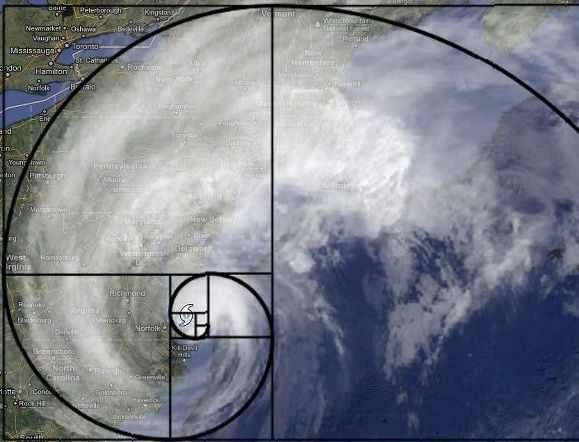
- Fibonacci Hurricane (Sandy)
- BoJ disappoints – so what’s new
- Misunderstanding Financial Crisis: Why We Don’t See Them Coming
| Posted: 30 Oct 2012 01:30 PM PDT My afternoon hurrication reads:
What are you reading?
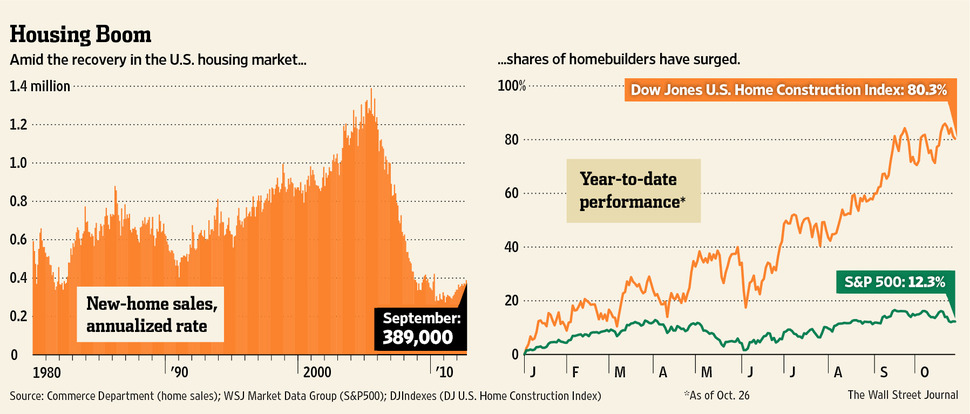
Homebuilder Boom |
| Posted: 30 Oct 2012 12:13 PM PDT |
| BoJ disappoints – so what’s new Posted: 30 Oct 2012 07:42 AM PDT Australian new home sales declined by -3.7% in September M/M, the 3rd consecutive monthly decline. The Australian economy is slowing and I would expect the slowdown to continue given, in particular, a weaker China; |
| Misunderstanding Financial Crisis: Why We Don’t See Them Coming Posted: 30 Oct 2012 05:00 AM PDT In his new book MISUNDERSTANDING FINANCIAL CRISES: Why We Don't See Them Coming, Gary Gorton explores how the economic "Quiet Period" from 1934-2007 left economists fundamentally unprepared for the financial collapse that was to come. Gorton offers a back-to-basics overview of financial crises, showing they are not rare events caused by a perfect storm of unconnected factors. Rather, he argues that financial crises are due to an inherent feature of market economies: the vulnerability of short-term bank debt. He explains that the most recent crisis revealed this vulnerability, but this time, unlike in the Great Depression, the debt was in the wholesale banking market. Regulations that prevented crises since 1934 did not keep up with the innovation in the financial sector, due largely to misunderstandings on behalf of economists. A clear account of the intricacies of the financial market, MISUNDERSTANDING FINANCIAL CRISES provides an authoritative challenge to prominent schools of thought within economics in order to offer a better way for economists to think about markets and regulation necessary to address the threat of future financial disasters. Misunderstanding Financial Crisis (Oxford | Nov. 1st | Hardcover | 296 pages | $29.95 | ISBN: 9780199922901) Advanced Praise: "The book offers essential insights into the mysteries of the recent financial crisis. Gorton has the rare depth of understanding to explain the elements and similarities of a wide array of historical crises. Fascinating reading." "Professor Gorton has produced an excellent, readable and incisive account of the recent financial crisis in historical perspective. We, as economists, have an obligation to understand our own profession’s failings in the policy framework leading up to the financial crisis. Gorton shows us that blind faith in mathematical models of idealized economies can lead to blind spots in regulators’ view of economic reality. This phenomenon had disastrous consequences during the 2008-2009 financial crisis, as intricately documented in this book. The book presents important lessons for how financial regulatory reform should be designed and implemented in the future. In addition, it provides a cautionary tale for economists to rethink their approach to policy advice more generally." "Financial Crises have been a feature global finance for centuries, but economists and other analysts still struggle with the subject. If anything, since the events of 2007-2009 and the more recent crisis in Europe our fears have only grown larger. In this timely new book Gary Gorton reviews history, theory and evidence concerning financial crises, their causes and possible research and policy responses. It is at the same time very thorough and very interesting, and will no doubt appeal to academics and practitioners." Praise for Slapped By the Invisible Hand: “To understand the actual moment and mechanism of crisis, the definitive take is Yale economist Gary Gorton’s, in the delightfully titled Slapped by the Invisible Hand. Gorton’s is a challenging book for a non-finance type, but there is no better technical explanation of the panic.” "Slapped by the Invisible Hand tells us that there were bank panics—systemic crises—in 1873, 1884, 1890, 1893, 1896, 1907, and 1914. On the other hand, there were no systemic crises from 1934 to 2007. The problem, as Gorton makes clear, is that the Quiet Period reflected a combination of deposit insurance and strong regulation-undermined by the rise of shadow banking. So we have a choice: restore effective regulation or go back to the bad old days." “It’s must-reading for anyone who wants to understand the recent economic unpleasantness.” “Slapped by the Invisible Hand is essential to understanding the deep weakness in the banking sector that led to the financial crisis. Like consumer banks before the Great Depression, the ‘shadow banking market’ is vulnerable to runs and panics and hysteria, and we are all, in turn, vulnerable to it. By looking beyond this financial crisis to the systemic flaws that make us vulnerable to all sorts of crises, Gary Gorton has created a necessary guidebook for what’s happened, and what needs to be done.” About the Author: |
| You are subscribed to email updates from The Big Picture To stop receiving these emails, you may unsubscribe now. | Email delivery powered by Google |
| Google Inc., 20 West Kinzie, Chicago IL USA 60610 | |



0 comments:
Post a Comment