


The Big Picture |

- Religious Leaders Slam Bankers
- Apple vs. Samsung = A Campaign vs. Google
- Books Bought By Big Picture Readers (September 2012)
- 10 Thursday PM Reads
- Foreclosure Inventory Levels Still Declining
- Public Greek bondholders vs Greece
- In the Pipeline
- Japanese politicians urging the BoJ to act
- 10 Thursday AM Reads
- Forward Markets: Macro Strategy Review
| Religious Leaders Slam Bankers Posted: 04 Oct 2012 10:30 PM PDT
Church of England: Bankers Should RepentWe've extensively documented that Jesus, his apostles, and ancient Jewish leaders would all be furious with modern bankers. We've also noted that the first Christians and Jews insisted on debt forgiveness as one of their core tenants. Indeed, the founders of all of the great religions taught that forgiveness of debt is the core of spirituality. Usury was condemned by virtually all of the world's religions. And Dante's Inferno is populated largely with usurers, misers and other "financial sinners". It's not just the ancients … The Church of England recently submitted comments to the British parliamentary commission investigating the Libor rate-fixing scandal and other recent banking misdeeds, saying that bankers should repent:
The Wall Street Journal notes:
The former Archbishop of Canterbury agrees:
And it's not just naive clergymen saying this. The fourth most powerful bishop in the Church of England – a former derivatives trader – is singing from the same hymn sheet. Religious Leaders Worldwide Condemn Banking PracticesGerman Protestant and Catholic leaders slammed big banks for their "culture of greed", in which "money has become akin to God", and said:
The Pope noted:
He also wrote:
Rabbis have called for banks to help homeowners hold onto their homes:
To this day, Islamic leaders prohibit the buying and selling of debt, and forbid usury. Indeed, religious and spiritual traditions worldwide demand a reform to the banking system … so that it stops serving the handful of banking executives and starts to serve the community and the well-being of all people. |
| Apple vs. Samsung = A Campaign vs. Google Posted: 04 Oct 2012 04:45 PM PDT If you haven't noticed the epic battle taking place between Apple and Samsung you must have been living in a cave for the last several months. Apple revolutionized the cell phone industry with the debut of the iPhone in 2007. Like any technological advance, it was only a matter of time until the imitators arrived. Late last year, Apple filed suit against Samsung, who they claim has twelve products infringing on seven of Apple's patents. Juror's agreed and hit Samsung with over a billion dollars in damages. Now the question is how will Samsung choose to appeal this decision and more importantly what kind of impact could a verdict like this have on the smartphone and tablet markets?
|
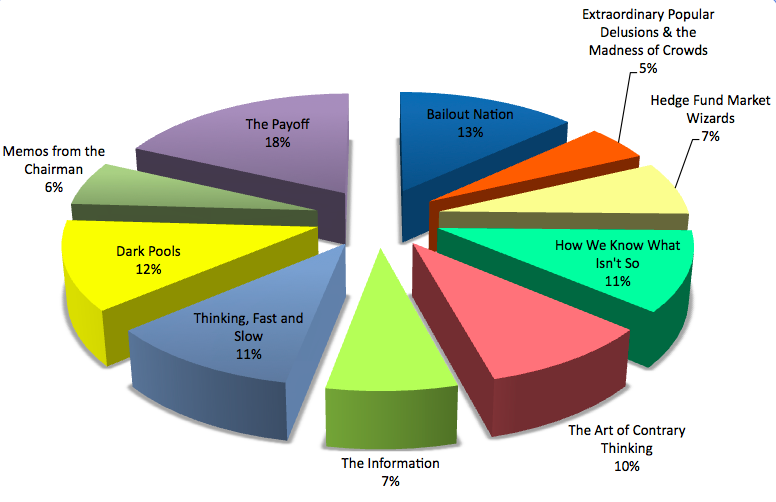
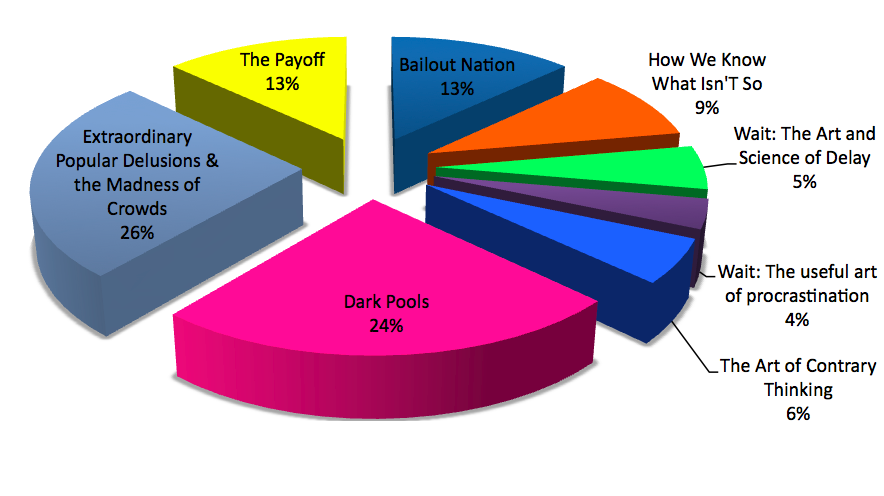
| Books Bought By Big Picture Readers (September 2012) Posted: 04 Oct 2012 04:30 PM PDT Click to enlarge: Once again, its time to peruse the data to see which books TBP readers bought last month. Amazon's embed code lets me track every click from these links — how many people look at the page, how many books get seen, and/or collectively purchased. Its anonymous — I don't know who bought what — but there's lots of data on the various books generated. These were the most popular TBP books for September:
˜˜˜ Click to enlarge:
These were the most popular TBP Kindle eBooks for September:
|
| Posted: 04 Oct 2012 01:30 PM PDT My afternoon train reading:
What are you reading? X |
| Foreclosure Inventory Levels Still Declining Posted: 04 Oct 2012 11:30 AM PDT Foreclosure Inventory by State Map click for larger map
We know why foreclosure inventory is still falling (as of August). Te combination of foreclosure abatements and private equity (and other) investor purchases are skimming the cream off of the top. What is interesting is where these are concentrated in — I’m a sucker for a good map.
Source: |
| Public Greek bondholders vs Greece Posted: 04 Oct 2012 09:46 AM PDT Even with the about 90% writedown of Greek debt held by private bondholders, Greece of course is still choking on way too much debt relative to the size of its economy which continues to shrink for the 6th year. Notwithstanding every attempt on the part of the EU and IMF to get Greece more money via existing bailout facilities on the condition that Greece adheres to current demands, there is no way Greece will be able to pay off the debt owed to public bondholders such as to Euro zone governments, the IMF, and the ECB. These entities must eventually take a hit if Greece has any economic chance under current circumstances. To this, Draghi in his press conference reiterated that he will not take a hit to his 50b+ euro holdings of Greek debt when he said “rescheduling Greek bonds would be monetary financing.” As we know, he’s treating the bond buys under their SMP program as senior to private bondholders but changed his mind on any new purchases under OMT which would be pari passu. This game will be a major sticking point going forward and Greece’s PM is highlighting it by just saying he “would ask Draghi for more accommodating terms on Greek debt the ECB holds” according to DJ. He then said it “would be ‘very positive’ if the ECB rolled over Greek bonds.” |
| Posted: 04 Oct 2012 09:30 AM PDT I love this graphic from BusinessWeek:
click for ginormous graphic
Source: |
| Japanese politicians urging the BoJ to act Posted: 04 Oct 2012 07:15 AM PDT Australian retail sales rose by just +0.2% in August M/M, lower than +0.4% expected, but better than the decline of -0.8% in July. Traders are pricing in an over 70% probability for a further rate cut by the RBA next month – seems optimistic to me; Japanese politicians are pressing the BoJ far, far more recently. A new Governor of the BoJ will be appointed in coming months, as the current incumbent, Mr Shirakawa retires. The measures proposed by politicians (buying foreign bonds), if enacted, will weaken the Yen. Whilst its still a bit early, I do believe its worth watching to see whether, finally, the graveyard trade, ie shorting the Yen, makes sense. The newly appointed Japanese Economy Minister, Mr Maehara, is to attend tomorrow’s BoJ meeting, the 1st time a politician has attended a BoJ meeting for nearly a decade – confirms the increasing concern and strong desire for action by the ruling Japanese party, who will be facing an election shortly and are well behind in the polls;
The Indian government is to consider proposals to lift caps on foreign investment in the insurance and pensions industry. The Government is considering raising the maximum foreign equity holding in an insurance company to 49%, from 26% currently. In addition, they may allow foreigners to acquire a 26% holding in pension funds management. After a long period of policy gridlock, the PM seems to have taken his pep pills and is moving on. The proof, as usual, is in the eating – ie delivery is the important issue. However, this time around, I believe its worth giving the Indian government the benefit of doubt – policy paralysis will not get them reelected. Indian markets rose to a 1 year high today and the Rupee strengthened. Indian services PMI rose to 55.8 in September, from 55.0 in August. The Indian Rupee has risen by over 6.0%, since the government announced reform measures in mid September; The Russian Central Bank forecasts that Russia will face a current account deficit in 2015 – most likely earlier if the oil prices declines further. They have assumed that the oil price will be around US$104 in 2015. Russia’s state spending is rising fast and needs a higher than US$110 oil price shortly. (source FT); Oil prices declined materially (over US$3) yesterday following a report that US production has risen (OK, just 11k bpd) to 6.52mn last week, though the most since 1996. Total demand fell -0.3% to 18.3mn bpd in the 4 weeks to 28th September, the lowest level since April. The US met 83% of its energy needs in the 1st 6 months of 2012, the highest since 1991. Is this the start of the much talked about US energy self sufficiency?. If it is, and there a strong argument in favour, it will be a game changer, not just in the US, but globally (Source CNBC); The European Banking Authority (“EBA”) has stated that European banks will need to keep core Tier 1 capital at 9.0% of their risk weighted assets for an indefinite period of time. Banks will have to prove to the EBA that they will have to comply with the Basel 111 rules. Its going to be interesting to see what responsibilities the EBA retains, once the ECB takes over supervision of EZ banks, possibly just the systemically important, as the Germans wish; Further disagreements between the Troika and the Greeks. The Greeks have forecast that the economy will decline by -4.0%, rather than the decline of -5.0% forecast by the Troika. Its the old game of countries fiddling forecasts ie forecasting more optimistic scenarios to reduce austerity measures. The same game is being played out in Spain (see below) and France. Interestingly, Draghi stated today that extending the maturity of Greek bonds held by the ECB would be the monetary financing of an EZ country and therefore illegal. The Greeks have been trying to get the ECB to do exactly that – nice try, but no cigar; Portugal announced a series of tax hikes to try and stick to its bail out targets. The measures, which include spending cuts, amount to 3.0% of next years forecast GDP. Recently, there has been significant public opposition to further austerity measures (and the government had to back track on some measures), a major change from the past, when the Portuguese seemed to “accept” the austerity measures imposed upon them. A general strike has been called for 14th November. Portugal has managed to exchange E3.75bn of debt due next year for longer term debt. However, Portugal will need a further bail out; France, Italy and Spain are to meet on the sidelines of the Mediterranean Summit in Malta this Friday. France is looking more like a Mediterranean country day by day, rather than a Northern European nation; The Governor of the Bank of Spain states that the government must introduce additional measures to achieve its budget targets next year. To date, Spain has played the game of announcing optimistic forecasts to reduce austerity measures/increase taxes. He believed that the contraction in Spain could amount to -1.5%, much higher than the government forecasts. The Governor added that the 2012 budget deficit target was also at risk – at risk !!!, it certainly wont be met. The head of Catalonia voiced similar concerns and, in addition, stated that regional deficits should be increased to 1.5%, from 0.7% at present. Mr Schaeuble, the German finance minister, reported that Spain could ask for a bail out, though only when the forecasts were verified ie stop trying to fiddle the books; The ECB has kept its interest rates on hold at 0.75%, as expected. At the press conference today, Mr Draghi stated that the ECB is ready to buy short term debt, once countries requested assistance from the ESM/EFSF. He added that conditions for countries to benefit from ECB bond purchases need not “be harsh” and urged governments to act. Inflation is expected to be above 2.0% this year, though decline below in 2013 – however, there were no 2nd round effects ie inflation is not a problem; As expected, the Bank of England has kept rates on hold and the size of the Sterling 375bn asset purchase programme (QE) unchanged. US ISM non manufacturing composite index for September came in at 55.1, as opposed to expectations of 53.4 and 53.7 previously, the fastest rate of growth since March. The index covers some 90% of the US economy. The employment component declined, though was still above 50 at 51.1, down from 53.8 in August. However, the business activity index rose by 4.3 points to 59.9. The new orders component came in at 57.7, from 53.7. Exports were weaker at 50.5, as compared with 52.0 previously; Listened to the 1st of the US Presidential debates last night. It was clear that Governor Romney won the debate. A CNN poll reported that 67% of respondents believed that Governor Romney won the debate, as opposed to just 25% who favoured President Obama. President Obama, surprisingly, seemed hesitant and on the defensive. Should boost Governor Romney’s campaign, but he needs to do a lot more for him to have a chance; US initial jobless claims increased by 4k to 367k in the week ended 29th September, lower than the 370k forecast. The 4 week average was unchanged at 375k. Outlook Asian markets closed higher following better US data. European markets are modestly higher. US markets have opened modestly higher – some +0.3% higher.The Euro rose on Draghi’s comments – currently US$1.2990. Gold is trading at US$1786, with oil (November Brent) at US$109.55, higher than yesterdays close. US NFP data tomorrow will be important. Kiron Sarkar 4th October 2012 |
| Posted: 04 Oct 2012 06:57 AM PDT My morning reads:
What are you reading?
Buoyant Markets Must Navigate Treacherous Earnings Season |
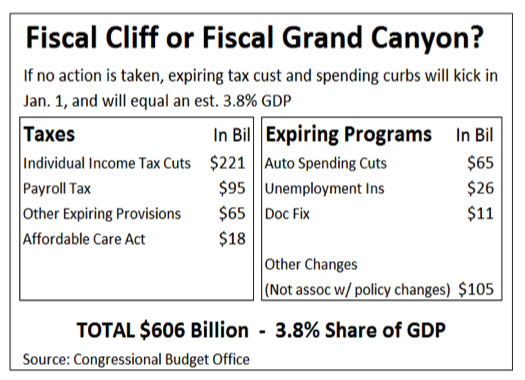
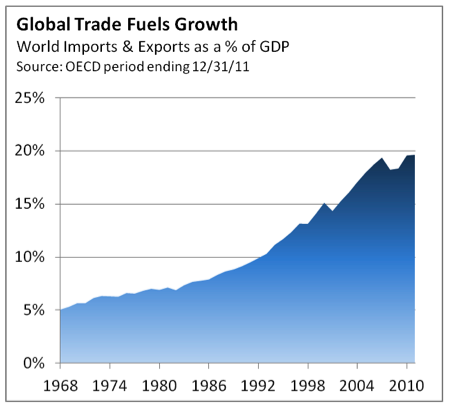
| Forward Markets: Macro Strategy Review Posted: 04 Oct 2012 05:30 AM PDT Forward Markets: Macro Strategy Review Macro Factors and Their Impact on Monetary Policy, The Economy and Financial Markets Summary In recent weeks, the European Central Bank (ECB), Federal Reserve and Bank of Japan have announced plans to expand their balance sheets through purchases of debt in various markets. Each central bank is fighting the same war with a shared goal: strengthening economic growth to prevent a deep global slowdown/recession that could lead to a debt-deflationary spiral. History suggests that post-credit bubble battles with deflation are especially daunting, with deflation dominating. Since 2010, coordinated responses by central banks whenever deflation has appeared to be gaining traction, has resulted in an ebb and flow in the financial markets, which we expect to continue. However, if central bank programs fail to engender sustainable economic expansions in the U.S., Europe, Britain and Japan by mid-2013, then equity markets will be mispriced and potentially very vulnerable. With global growth slowing, any rise in protectionism, either in the form of currency devaluation, tariffs on imports or trade barriers, would only serve to slow global growth further. We expect protectionism to increase during the next two years. Fiscal Cliff or Fiscal Grand Canyon?
The odds of the entire enchilada being allowed to take hold are extremely low. That isn't as bold of a statement as it may sound. After all, we are dealing with Congress, and Congress has rarely confronted a tough decision it didn't decide to postpone or only partially address. However, the issue of government promises that cannot possibly be fully funded is the elephant in the Capitol that neither party can ignore any longer. This issue will dominate political discussion for the next three to five years at a minimum. And, ultimately, how we as a nation choose to close the gap between funding and promises made will reflect our true character.
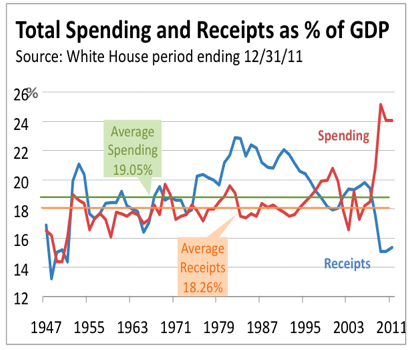
The enacted budget for this year calls for spending of $3.796 trillion, or 24.8% of this year's $15.3 trillion in GDP. Tax receipts are projected at $2.469 trillion, or 16.1% of GDP. The short fall between spending and receipts is estimated at $1.327 trillion. This represents 34% of the $3.796 trillion in spending, and means we are borrowing 34% of this year's budget. With spending near 24.8% of GDP and receipts just 16.1%, the gap is 8.7% of GDP. Compared to the 64-year average of 0.79% (spending 19.05%, receipts 18.26%), this seems more like a "fiscal grand canyon" than a cliff. Building a bridge over our fiscal grand canyon will take years and a high degree of compromise. Unfortunately, one party refuses to consider tax increases, while the other party will not even accept a reduction in the spending growth rate. In the 1940s we came together as a nation since we perceived the threat from Germany and Japan was real. We had a sense of urgency because we understood there was no time to waste dickering over the details. We took pride in making the necessary sacrifices, however small, while many others made the ultimate sacrifice. There are several differences between the fiscal crisis we face today and World War II. Most Americans do not realize or accept that the fiscal grand canyon is real, and poses a serious threat to our country. As a result, our political parties believe they have all the time in the world to indulge in ideology rather than compromise. In the 1940s, the threat came from outside our borders, so it was far easier to unify the nation. No one outside our borders created the fiscal grand canyon. We did this to ourselves incrementally over a period of decades. It takes humility to accept responsibility for our mistakes, and wisdom to resist the temptation to point fingers at others. The best news is since we created the fiscal grand canyon, we can fix it. All we have to do is build a bridge based on compromise, common sense and determination. We put a man on the moon in less than nine years, so we can get our economy back into balance within 10 years if the plan is based on common sense and we are determined. One of the mistakes Europe has made is forcing countries to slash government spending while a country is in recession. The Europeans (Germans) have a staunch belief that getting a country's budget down to 3% of GDP as fast as possible is some sort of panacea, or retribution on the spendthrifts in the EU. Under the current circumstances, it's a financial form of bloodletting, which is why Greece and Spain continue to weaken. Our economy is recovering from a credit bubble that took 30 years to create, and it will take time for all the imbalances to be righted, whether we like it or not. The plan must be gradual so the adjustments, some combination of tax increases and slowing down the growth rate of government spending, are spread out over the next six years. The goal is that within six years, government spending will be down to 19.05% of GDP, and receipts up to at least 18.26%, their long-term averages. With tax receipts currently at 16.1% of GDP and spending near 24.8% of GDP, we have two problems, so we need two solutions. At the risk of standing on a soapbox, Congress never explains the budget process. This can be self-serving and misleading for most Americans. Every year Congress establishes a baseline spending level for each of the next seven years. Each year's spending level becomes the baseline. All future changes in spending are referenced to the baseline. For instance, if spending on defense and Medicare is budgeted to increase by 3% in the next two years, any additional spending above the baseline's 3% growth rate is deemed an increase in spending. Any reduction below the baseline's 3% growth rate is called a cut in spending. So, if the growth rate of next year's spending on defense and Medicare were lowered from 3 to 2.9%, members of Congress would say they cut spending, even though spending is going to increase 2.9%. In order to lower government spending from 24.8% of GDP to 19.4% over the next six years, Congress could consider only spending 99% of next year's baseline for every item in the budget. One advantage to this approach is there would be nothing to debate since every program is cut and every program is impacted to the same degree. If this process was continued for the next six years, the increase in government spending against the baseline would gradually slow.
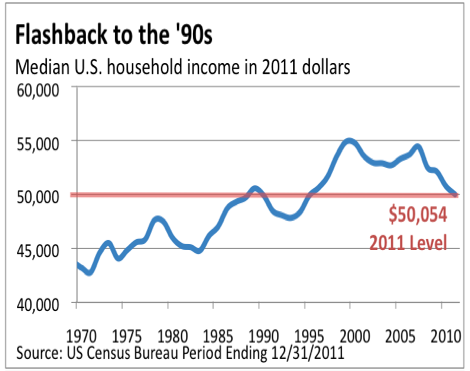
The average CEO of an S&P 500 company is making 780 times the median income of the average worker's $50,054 income, or about $3.9 million. We're no fan of higher taxes, but the imbalance in income distribution is a problem that can only be addressed in the short run with higher taxes, since company boards are unlikely to change compensation packages. If Congress chose to increase taxes on the top 10% of wage earners so an additional $125 billion in tax receipts were generated, those funds could reverse the $95 billion in higher taxes workers will pay in 2013 when the 2% reduction in social security taxes is reversed. For the average worker that will amount to about $20 a week. Median household income has declined in each of the last four years, and is now down to 1995 levels, which coincidently is when income going to the top 1% exceeded 15% for the first time since 1942. Corporate balance sheets have never been stronger, with most companies holding a significant level of cash. We have millions of unemployed who just want a job and millions more wanting to work full time instead of part time. The only thing we have to fear is uncertainty. A plan that incorporates common sense goals and the path to reach them would eliminate much of the uncertainty that keeps business owners from moving forward. Our country is facing a crisis that calls for leadership, and someone who can communicate the scope of our crisis with a sense of urgency, as well as convince the American people it is time for collective sacrifice. It wouldn't hurt if both parties made John F. Kennedy's mantra their own: "Ask not what your country can do for you – ask what you can do for your country." Enough of the soapbox. FEDERAL RESERVE The primary benefit of the Fed's decision to launch QE3 now is the certainty provided by targeting improvement in the labor market, and continuing until job growth improves. With so much uncertainty surrounding fiscal policy, developments in Europe, and growth in China, there can be no doubt about the direction of monetary policy in the U.S. The Fed's decision to not have an ending date or a ceiling on its purchases is brilliant. For the foreseeable future, there will be no countdown to the end of QE3, no possibility for conjecture about a QE4, and mercifully no debate about whether they will or won't or should do QE4. The Federal Reserve is simply all in. GDP growth in the second quarter was 1.7%, and as the Fed noted in its Federal Open Market Committee press release, "Economic activity has continued to expand at a moderate pace in recent months. Growth in employment has been slow, and the unemployment rate remains elevated. Household spending has continued to advance, but growth in business fixed investment appears to have slowed." Effectively the economy is growing at stall speed, which means it is vulnerable to significant downside risks posed by strains in global financial markets. What the press release tactfully did not mention are the significant risks from fiscal policy that Congress must address very soon. In 2013, fiscal policy will be a drag on economic growth. The only unknown is how much of a drag. By announcing QE3 now, the economy may get a bit of a lift before the drag from fiscal policy begins to bite in the first half of 2013. According to the laws of physics, it takes less energy to lift an object that is in a state of stasis, than one which is falling, since energy is expended arresting the decline. We thought the Federal Reserve would wait to see how Congress dealt with the fiscal cliff, and keep QE3 as their "ace in the hole." The Fed chose to get out ahead of the curve and not wait to act until slowing materialized. One of the mistakes the Fed made in 2008 was being behind the curve. We think the Federal Reserve made the right choice.
U.S. ECONOMY
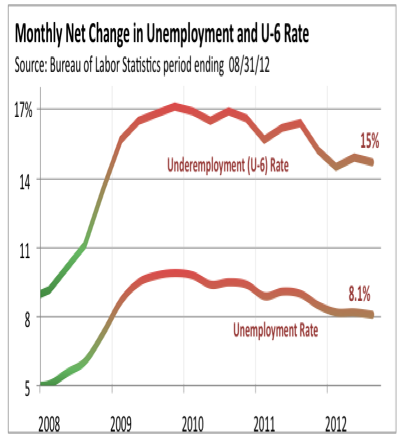
According to the National Employment Law Project, a majority of jobs lost during the recession were in the middle range of wages. Their analysis included 366 occupations traced by the U.S. Department of Labor. They created three equal groups, with each representing one-third of total employment in 2008. Officially, the recession began in December 2007 and ended in June 2009. The middle-third group had median wages of $13.84 to $21.13 and accounted for 60% of job losses between January 1, 2008 and early 2010. Unfortunately, only 22% of all jobs created since early 2010 have been in the middle-third of the labor market. This data strongly suggests that many workers are being forced to accept lower paying jobs, since the lower-third group has accounted for 58% of total job growth since early 2010, but only accounted for 21% of jobs lost during the recession.
Consumer spending is 70% of GDP and has more than 30 times the impact of housing. Wages have increased a measly 1.7% from a year ago, while the real cost of living has risen by almost twice that amount. If Congress rescinds the 2% reduction in social security taxes, the net pay for the median worker will fall by $1,000. While improvement in housing is certainly a plus, the health of the labor market, and how Congress handles the fiscal grand canyon dwarfs the impact of housing. After reviewing how weak the labor market continues to be, it is easy to understand why the Federal Reserve decided to target improvement in the labor market going forward. Its actions will help on the margin, but there is no meaningful direct link between buying mortgage-backed securities and job growth. The global economy is slowing, and there will be some drag on growth in the U.S. in 2013, no matter how well Congress handles the fiscal grand canyon. EUROPE The underlying problem that has spawned Europe's sovereign debt and economic crisis is too much debt and too little economic growth. The end game for Greece came when its cost of borrowing rose to unsustainable levels, freezing Greece out of the capital markets, and into the arms of the European Union. The terms demanded that Greece lower its budget deficit to 3% of GDP by implementing severe austerity measures that have only deepened its recession and made it more difficult to shrink its deficit.
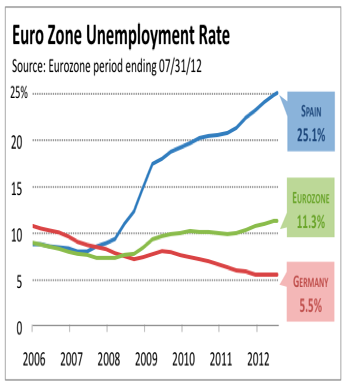
The unemployment rate in Spain is 25.1%, the economy is in recession, real estate values continue to fall and bad loans keep climbing. In July, the Bank of Spain reported that bad loans at Spanish banks rose to 9.8% of total assets. In June, Spain experienced a net capital outflow of more than $70 billion, according to the latest data available. This has caused the loan-to-core deposit ratio to soar to over 180% in July, forcing Spain's banks to borrow $525 billion from the ECB. In October, Spain needs to refinance more than $30 billion, and, without a backstop from the ECB, it could prove challenging to float that much paper without causing yields to spike. Spain has already pruned its budget in order to meet its budget deficit target of 3% in 2014. Last year's deficit was 9.0% (barely higher than the United States' 8.7% deficit), and a contracting economy will only make it harder to reach. Having already cut spending, Prime Minister Mariano Rajoy is reluctant to ask for the ECB's help, since it will open the door for more cutbacks. That won't bolster his political popularity, which is already falling. We don't think he has any choice.
China and the Potential for a Rise in Protectionism Global growth has been slowing as we suggested at the beginning of this year. Monetary policymakers are concerned, which is why the ECB is launching OMT, the Fed is cranking up QE3, and the Bank of Japan has expanded its asset purchasing plans. These new programs would not be needed, if prior efforts had succeeded in establishing self-sustaining recoveries. Over the next 12 months, there exists a high probability that U.S. growth will remain under 2%, Europe will continue to flounder and growth in China may slip further. This is not a pretty picture, and could provide a fertile environment for protectionism, as politicians play on public sentiment and enact laws to protect jobs and garner votes.
Since China has arguably been the main beneficiary from trade growth over the past decade, and is the world's largest exporter, we expect China to be the target of trade disputes in the next two years. We expect China to respond aggressively, which will escalate trade frictions, and lead to more "Buy American" and "Buy European" campaigns. There is an old Chinese curse that seems appropriate for the situation: "May you live in interesting times." Macro Strategy Team Investing involves risk, including possible loss of principal. The value of any financial instruments or markets mentioned herein can full as well as rise. Past performance does not guarantee future results. This material is distributed for informational purposes only and should not be considered as investment advice, a recommendation of any particular security, strategy or investment product, or as an offer or solicitation with respect to the purchase or sale of any investment. Statistics, prices, estimates, forward-looking statements, and other information contained herein have been obtained from sources believed to be reliable, but no guarantee is given as to their accuracy or completeness. All expressions of opinion are subject to change without notice.
|





| You are subscribed to email updates from The Big Picture To stop receiving these emails, you may unsubscribe now. | Email delivery powered by Google |
| Google Inc., 20 West Kinzie, Chicago IL USA 60610 | |



0 comments:
Post a Comment