


The Big Picture |

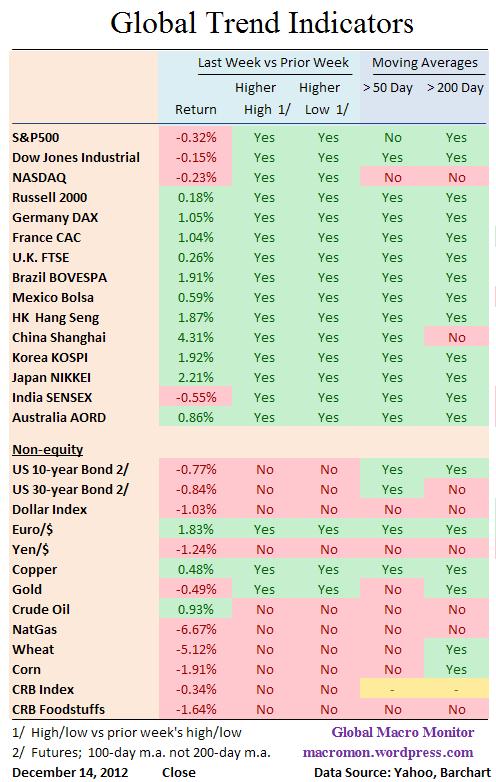
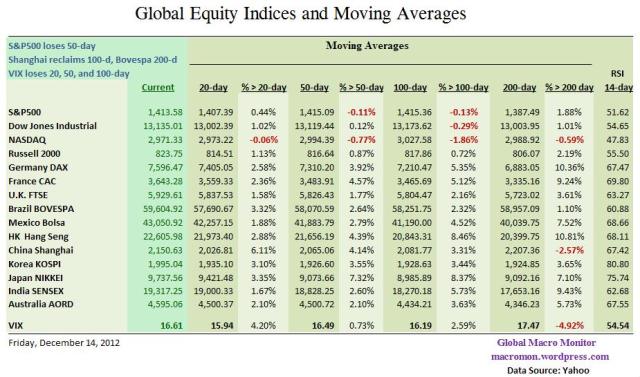
- Global Trend Indicators
- Interview: Ray Dalio, David Rubenstein, Steve Schwartzman
- Apple’s Problem? The Law of Large Numbers
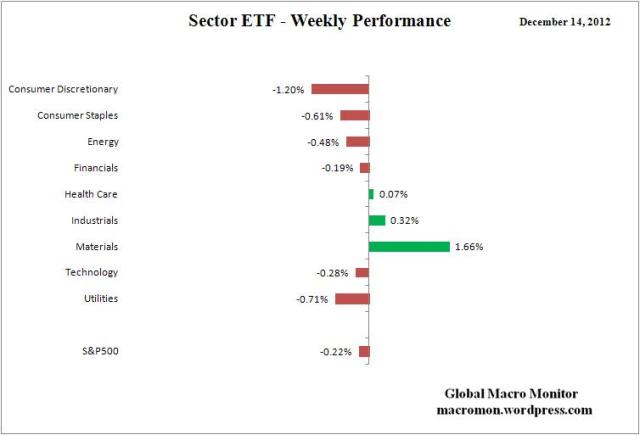
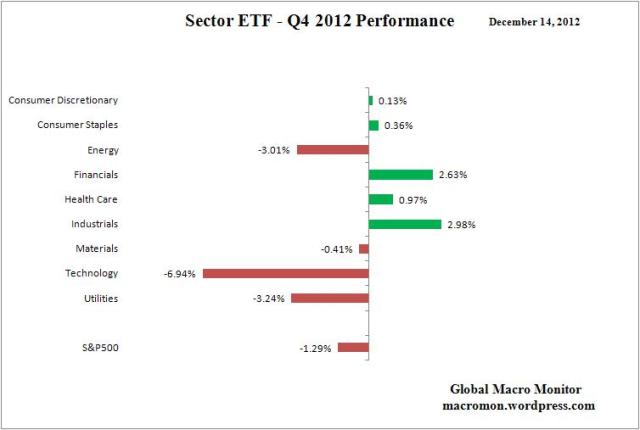
- U.S. Equity Sector ETF Performance
- 2013 Tech Trends
- The Pernicious Staying Power of Really Bad Ideas
- Aston Martin V12 Vantage Roadster
- 10 Sunday Reads
- William Ackman: Everything You Need to Know About Finance and Investing
- The Human Cost of Recessions: Assessing It, Reducing It
| Posted: 16 Dec 2012 08:00 PM PST |
| Interview: Ray Dalio, David Rubenstein, Steve Schwartzman Posted: 16 Dec 2012 02:30 PM PST |
| Apple’s Problem? The Law of Large Numbers Posted: 16 Dec 2012 01:30 PM PST Apple's brutal downdraft continues, down over $20 on the day as I write this (BR: closed 509.79 off -19.90. or -3.76%). What's the problem? Lack of lines for the iPhone5 in China? Maybe today's catalyst. We think, however, the market is coming to the conclusion the company has a scale problem. That is, it is just too darn large. We posted earlier in the week about the relative size of Apple's earnings. In the last four quarters, for example, Apple's earnings totaled $41.7 billion, which was 21 percent more than the combined earnings of Microsoft, eBay, Google, Yahoo, Facebook, and Amazon! For even more perspective take a look at the chart below. Apple's average revenue estimate for next fiscal year is $222 billion, which, would rank as the 47th largest GDP out of the 186 countries monitored by the IMF. Thus, with relatively little reoccurring revenue, Apple has to wake up on the first day of every fiscal year and generate annual sales of iPhones, iPads, and iMacs equivalent to Ireland's GDP or a combined Hungary and Morocco. That's a big nut. This is a problem probably very few companies experience. Is growth still possible? No doubt. And if any company can do it, it's Apple. But the growth rate is starting to run up against a hard wall of the law of large numbers, or, at least, the perception that it is. Maybe this why the stock looked so cheap in terms of its PE during the last few years of extraordinary growth
(click here if chart is not observable) |
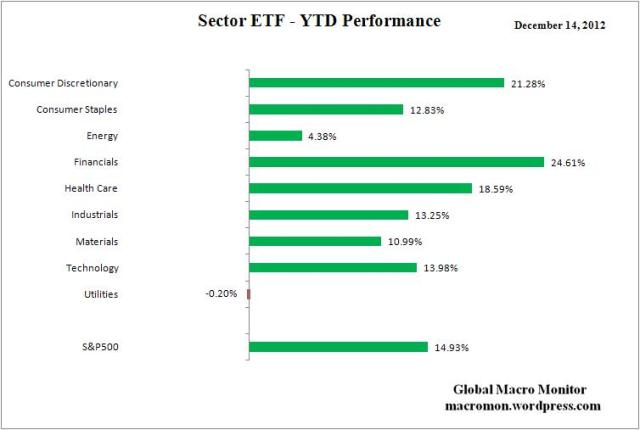
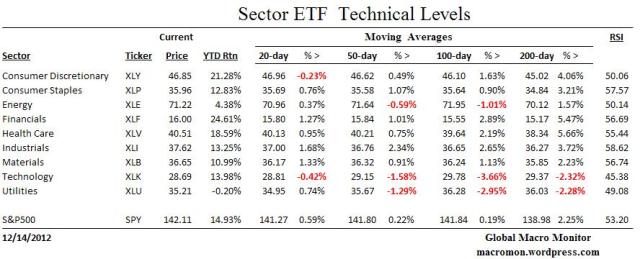
| U.S. Equity Sector ETF Performance Posted: 16 Dec 2012 12:30 PM PST |
| Posted: 16 Dec 2012 10:00 AM PST Yes, it's already that transitional time when our current year ends and another begins, and today and tomorrow are quickly changing hands. Rather than look back at significant trends of the past 366 days (2012 was a leap year, remember?), we asked a wide variety of technologists, designers, and strategists across frog's studios around the world to take a look to the future. The near future, that is. "Near" in that 2013 is not only upon us, but also "near" in that these technologies are highly feasible, commercially viable, and are bubbling up to the surface of the global zeitgeist. We believe you'll be hearing a lot more about these trends within the next 12 months, and possibly be experiencing them in some form, too. Here’s our second annual list of Tech Trend predictions for the coming year. There are 20 individual forecasts and, new for 2013, we’ve also related each prediction to larger waves in business, culture, and innovation.
2013 Tech Trends from frog by frog on Dec 05, 2012 |
| The Pernicious Staying Power of Really Bad Ideas Posted: 16 Dec 2012 07:00 AM PST
> My Sunday Washington Post Business column is out. This morning, we look at the pernicious staying power of bad ideas. The print version had the full headline Zombie ideas: Why don't bad notions ever die? while the online version is the simpler: Why don't bad ideas ever die? Here’s an excerpt from the column:
I really like what the Post did in the dead tree version of the paper — the above paragraph is in huge type, with the bad ideas (below) mostly on the left side of the page and the explanations on the opposite other. I’ll see if I can get a good snap of it (the eReader the Post uses produces terrible graphics). The bad ideas discussed include:
And the general explanations for our all too human failings include:
Source: |
| Aston Martin V12 Vantage Roadster Posted: 16 Dec 2012 05:00 AM PST |
| Posted: 16 Dec 2012 04:30 AM PST I prefer not to discuss child massacres this morning: Here is what else is happening today:
What are you having for brunch?
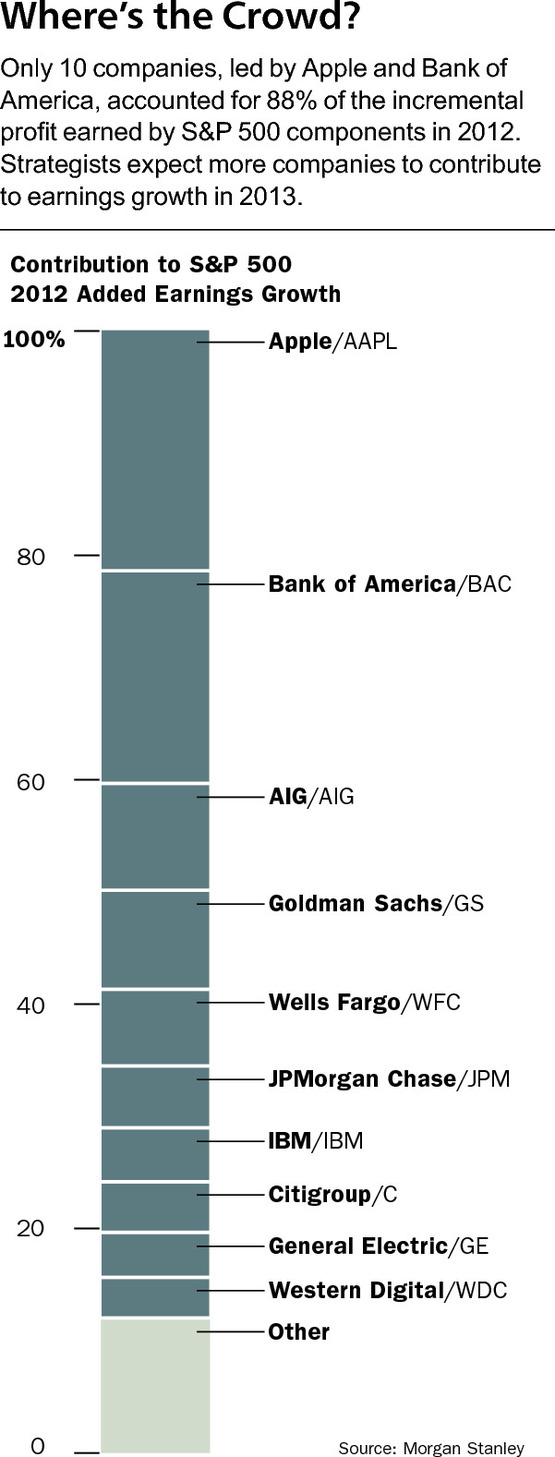
Only 10 Companies created 88% of S&P500 Earnings Growth in 2012 |
| William Ackman: Everything You Need to Know About Finance and Investing Posted: 16 Dec 2012 04:00 AM PST hat tip Market Folly Published on Nov 27, 2012 William Ackman: Everything You Need to Know About Finance and Investing in Under an Hour. WILLIAM ACKMAN, Activist Investor and Hedge-Fund Manager We all want to be financially stable and enjoy a well-funded retirement, and we don’t want to throw out our hard earned money on poor investments. But most of us don’t know the first thing about finance and investing. Acclaimed value investor William Ackman teaches you what it takes to finance and grow a successful business and how to make sound investments that will grant you to a cash-comfy retirement. |
| The Human Cost of Recessions: Assessing It, Reducing It Posted: 16 Dec 2012 03:00 AM PST |



| You are subscribed to email updates from The Big Picture To stop receiving these emails, you may unsubscribe now. | Email delivery powered by Google |
| Google Inc., 20 West Kinzie, Chicago IL USA 60610 | |



0 comments:
Post a Comment