


The Big Picture |

- Social Media Sites Censor News
- Grassley: HSBC Should Face Criminal Charges
- Open Thread: Bloomberg for Treasury Secretary
- 10 MidWeek PM Reads
- Credibility Ranking of Tweets during High Impact Events
- Why are Cash-Rich Companies Being Subsidized by Tax-Poor Governments?
- 10 MidWeek AM Reads
- Japanese trade deficit widens further
- Interest rates/Japan/Europe
- 5 Signs Plaintiffs Are Winning RMBS War
- Market Rallies as Fiscal Cliff Deal Fails
- Hallelujah – The Voice (Tribute to Newtown Victims)
| Social Media Sites Censor News Posted: 19 Dec 2012 10:30 PM PST
|
| Grassley: HSBC Should Face Criminal Charges Posted: 19 Dec 2012 04:03 PM PST United States Senator Charles Grassley (R – Iowa) and Bloomberg Contributing Editor Neil Barofsky talk with Bloomberg Law’s Lee Pacchia about HSBC’s recent settlement with US authorities over claims the bank engaged in money laundering for drug cartels and terrorist organizations. Grassley is the ranking Republican on the Senate Judiciary Committee.
|
| Open Thread: Bloomberg for Treasury Secretary Posted: 19 Dec 2012 04:00 PM PST Should Obama appoint billionaire Technocrat Mike Bloomberg to run Treasury, or should he appoint someone else, who by comparison (and almost by definition) will be less competent.
Discuss. |
| Posted: 19 Dec 2012 01:30 PM PST My afternoon train reads:
What are you reading?
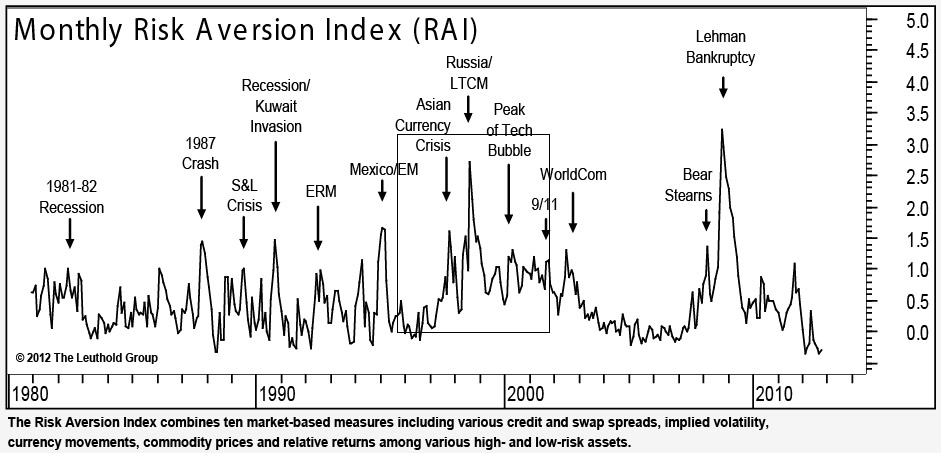
In a World Full of Risk, Why Are Investors So Calm? |
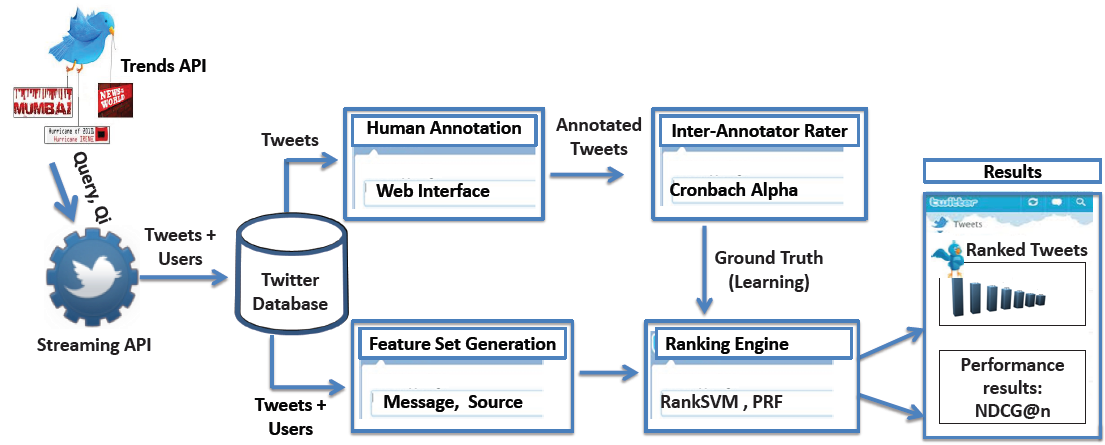
| Credibility Ranking of Tweets during High Impact Events Posted: 19 Dec 2012 11:30 AM PST
I don’t know why I find the chart above from this paper so intriguing . . .
Source: |
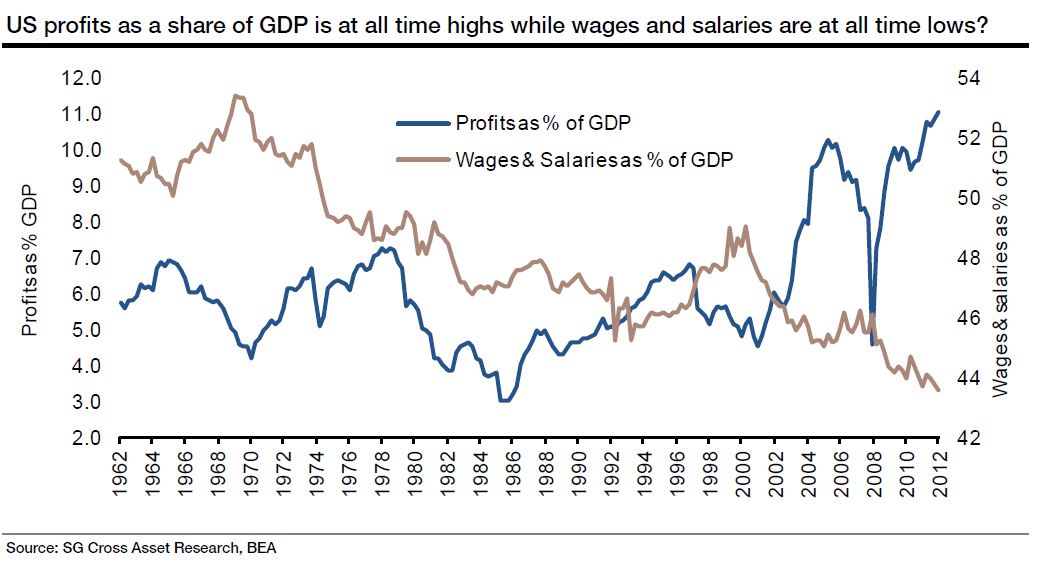
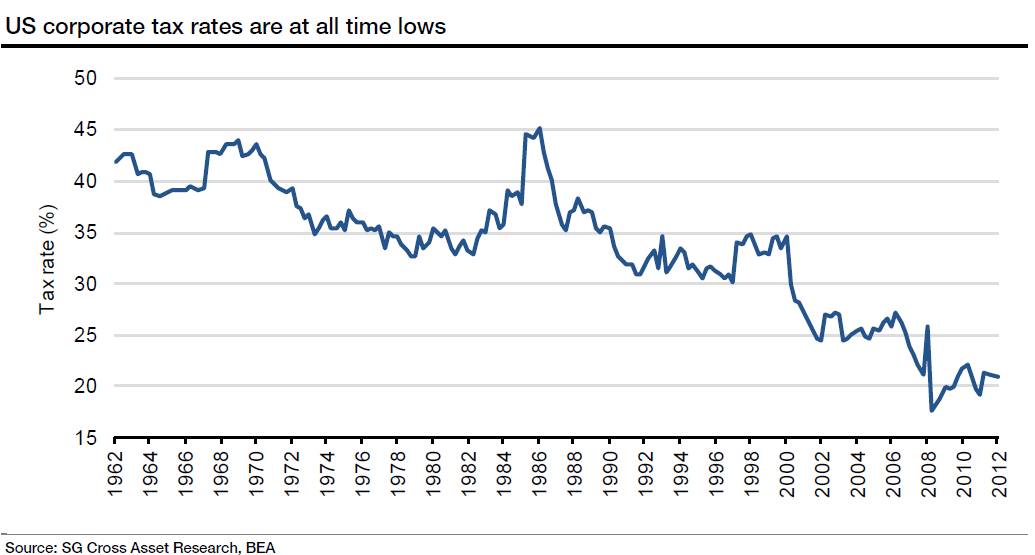
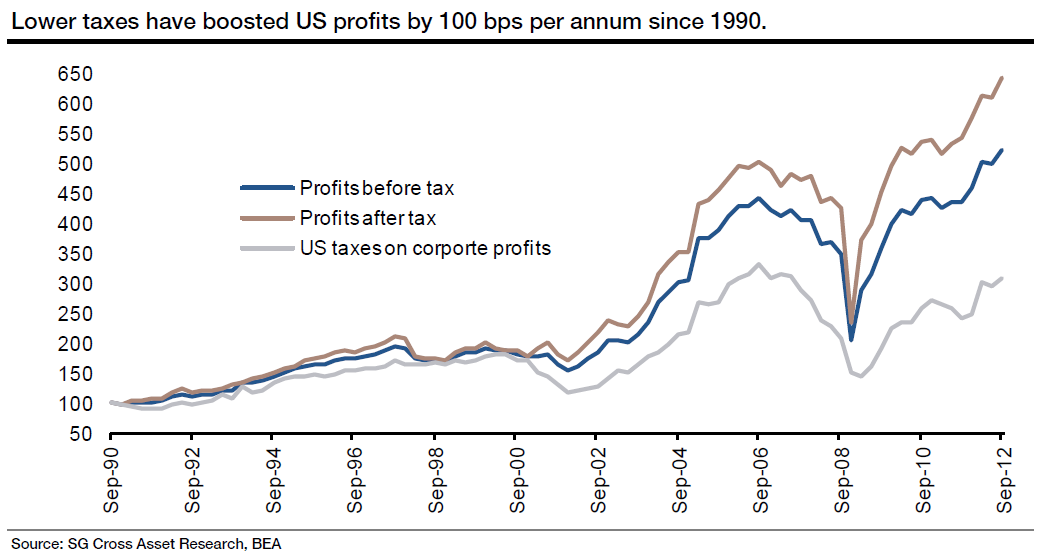
| Why are Cash-Rich Companies Being Subsidized by Tax-Poor Governments? Posted: 19 Dec 2012 09:15 AM PST
The latest Q3 US national accounts data shows profits as a share of GDP are at historical highs. Meanwhile household's share is at all time lows (see chart). Will pressure from the electorate force to address this imbalance? In the UK, we witnessed just what SocGen described as “the public lynching of Starbucks, Amazon and Google” as public ire has shifted “very swiftly from banker bashing to corporate bashing.” Forget the official tax rate, and look at the actual tax dollars US and European companies have been paying. Societe Generale warns that there is risk to these rates going forward — and that could have implications for profitability.
Source: |
| Posted: 19 Dec 2012 06:45 AM PST My morning reads:
What are you reading?
With Instagram, Facebook Spars With Twitter |
| Japanese trade deficit widens further Posted: 19 Dec 2012 06:30 AM PST RBA Governor Mr. Stevens believes the non-mining sectors of the Australian economy may not adequately make up for the expected slowdown of the mining sector and that "monetary policy has limits" in respect to "fine-tuning" the imbalance in the short-term. Mr. Stevens sees "further confirmation that the peak in resource-sector investment is near" and believes that the A$ "seems a bit on the high side" and further comments that the RBA is "wary" of taking action on monetary policy for fear of encouraging an "asset credit buildup". Mr Stevens remains cautious – an interest rate cut in February does not look likely, based on the current situation. (Source: Bloomberg); The World Bank has revised its 2013 Chinese GDP forecast higher, to +8.4%, up from +8.1% previously. With the new regime taking over, Chinese data should be positive in the next year, though having said that, Chinese data should always be treated with extreme scepticism. I remain positive on China in the short term (next year), though the economy, which remains dependent on fixed asset expenditure, over emphasis on SOE's and exports, is an unsustainable economic model in the medium to longer term. A consumption led economy has failed to materialise, in particular given the lack of a social safety net – people have to maintain a high level of savings to pay for education, health and pensions. However, in the short term, I remain positive on China; Japanese PM Shinzo Abe has sought an accord with BOJ to set a minimum inflation target of 2%. Pressure is being put on BOJ to boost asset purchases which some analysts believe will start as early as tomorrow; Japanese exports in November were -4.1% lower Y/Y (though better than the -5.5% decline expected) and have declined for the 6th month, increasing the trade deficit to Yen 953.4bn ($11.3bn) in November, as compared with Yen 549bn in October and Yen 1.04tr expected, the third largest on record. Imports increased by +0.8%. Interestingly, exports to the U.S. (up +5.3% YTD), exceeded exports to China for the first time since December 2008 (YTD exports to China are -14.5% lower). Exports to the EU have declined by -20% YTD and have been down for over 1 year. Vehicle exports have received the brunt of the decline, falling 68% in November, following an 85% decline in October. Construction and mining equipment has fallen 75%. The trade deficit YTD to November increased to Yen 6.28tr (US$74Bn ), more than double the record deficit of Yen 2.6tr in 1980. Despite this, the Nikkei rose to its highest since March on the basis that economic stimulus measures will be adopted by the new government and that the Yen will weaken further. The Yen continues to weaken; The Indian Government continues with its reforms. The Rupee has been rising and is currently at a two week high against the US$. The Sensex is also climbing on increasing optimism of positive economic reforms. Yesterday, the Indian lower house approved a bill which increases foreign shareholders voting rights from 10% to 25%, clearly positive. The Reserve Bank is expected to issue more banking licences, also good news. However, the government has postponed plans to allow increased foreign investment in the insurance sector and, in addition, proposed legislation which would, if passed, have enabled the acquisition of land – too contentious at present. Legislation to improve corporate governance, increase accountability of directors and auditors and make boardroom decisions more transparent was also introduced in the Companies Bill. The reforms, started following the appointment of the new finance minister, have been positive; The World bank reported that growth in East Asia will accelerate to +7.9% in 2013, from +7.5% this year (previously +7.2%), as China recovers, reducing the need for lower interest rates. The region accounts for approx 40% of global GDP. The World Bank believes that economies in the region are working at near full capacity, so do not need further stimulus – interesting as China clearly has significant spare capacity !!!. Risks derive from Europe, in particular, though they believe they have lessened. They expect inflation to continue to decline. Capital inflows from developed economies need to be watched to ensure that they do not result in over stimulus and/or higher exchange rates; S&P raised Greece's credit rating to B- with a stable outlook, up from the previous selective default rating. S&P cites the determination of the EZ to keep Greece in the EZ, as the reason. Well, OK, but stable outlook !!! The ECB will accept Greek debt as collateral, though will be subject to a "special haircut"; Italian October seasonally adjusted industrial orders came in flat M/M, much lower than the +1.0% expected and as compared with -4.0% in September. Italian economic data has been weaker recently. The Italian 2013 budget has been delayed (Mr Berlusconi ?), allegedly by a few days. Mr Berlusconi is also calling for a delay in the forthcoming general elections. His party, the PDL is polling just 20% at present and he hopes that a delay will improve his chances – no hope Mr B. The Italian President urged that passage of the 2013 budget should be implemented immediately and saw no reason to delay general elections; German December IFO business climate index came in at 102.4, slightly higher than the 102.0 expected and 101.4 in November and higher for the 2nd consecutive month. The current situation component came in at 107.1, lower than the 108.0 expected and 108.1 in November. However, the expectations component, came in at 97.9, much higher than the 96.4 in November and 95.2 in November and the highest since May. Recent views on Germany appear overly pessimistic to me. Yes Q4 GDP is likely to contract (-0.2%/-0.3% forecast) with Q1 2013 flat, though German manufacturers are increasing exports to non-EZ countries, in particular to Asia and the US; The IFO institute was positive, stating that export expectations have improved and that business over the Christmas period was going well, especially in the electronics and sporting goods sector. The Euro improved on the news and is at a 7 month high against the US$; Fitch warns that the Dutch credit rating could come under pressure if their fiscal situation comes in worse than forecast. The Dutch 2013 budget deficit is unlikely to meet its target. Holland is one of just 4 EZ countries with a AAA rating; The French have adopted regulation which is described as an "Ultra-Light Volcker Rule" whereby they will split the proprietary trading desks from the traditional bank activities. It will forbid banks taking positions in hedge funds, curtail high frequency trading and speculating on farm related commodities. However it allows market making functions to still remain within the main remit of the bank and only asks that the riskier trading practices be separated into separate legal units, protecting the core financing functions relating to the economy and deposits from riskier practices. The French are the first to adopt such rules for their banks in the EU. It has also been reported that France is in the process of setting up a system whereby failing banks are wound down without the need for tax payers money, i.e. bondholders and shareholders will be hit for the expense. (Source Bloomberg); The EZ October seasonally adjusted current account came in at E3.9bn, higher than the upwardly revised E2.4bn in September – Euro positive. Demand in the EZ, in particular in the peripheral EZ countries has collapsed. The current account surpluses are expected to continue EZ October seasonally adjusted construction output came in at -1.6% M/M, somewhat worse that the revised -1.3% in September; Minutes from the UK's monetary policy committee ("MPC") of the BoE voted 8 to 1 to keep its asset purchase facility unchanged at £375bn and 9 to 1 to keep interest rates on hold. The minutes revealed that MPC members expect inflation to remain above 2.0% over the next year or so. Hmmmm. The UK economy is expected to contract in Q4, though come in broadly flat in early next year. The problems within the EZ , whilst lessening, continue to be a drag on the UK economy, with declining competitiveness impacting exports. Fitch warned today that the UK could lose its AAA rating if extended economic weakness causes a slippage in achieving fiscal targets. I continue to believe that the is a high probability of the UK losing its AAA rating next year; US November housing starts came in at 861k M/M, slightly lower than expectations of 872k and a revised 888k in October. November building permits came in 899k, better than the 875k expected and the revised 868k in October. The US residential housing sector continues to improve, a trend I expect to continue into next year. In addition, residential construction should add to GDP next year; US oil production rose to 766k bpd, the highest in 15 years and is expected to be 6.41mn bpd this year, a 14% increase from 2011, according to the US Dept of Energy. The increasing rate of growth suggests that the US will exceed production from Saudi Arabia (November production 9.7mn bpd) by 2020. Net petroleum imports have declined by around 38% since the 2005 peak and now represent 41% of demand, down from 60%, 7 years ago. Combined with a record production of natural gas, the US should be in a hugely competitive position in coming years. Energy intensive and petro chemical industries should expand, given the locally produced and cheaper energy. I don’t believe that markets have fully appreciated the impact of this dramatic change in locally produced oil and gas – hugely positive for the US and the US$ in the medium/long term. (Source Bloomberg); Outlook: Asian markets closed higher, with European markets following. US futures suggest a slightly higher open, having closed over +1.0% yesterday, on improving hopes of a deal on the fiscal cliff. Spot gold is trading at US$1667, once again lower on increased risk appetite generally. Can’t see the attractiveness of gold at present. February Brent is higher and is currently trading at US$109.71. RSI indicators suggest that equity markets are somewhat overbought. However, I believe that the traditional positive momentum during the upcoming period should sustain markets, in particular as a deal on the fiscal cliff is agreed. On the other hand, government bond yields in respect of a number of the major developed economies (US, UK and Germany, for example) look particularly low, suggesting a sell off to little old me. The Nikkei is trading at its highest since April this year, closing +2.4% today and above the 10,000 level. The Yen continues to weaken and is at its August 2011 low against the Euro. The BoJ meets tomorrow and is expected to increase its asset purchase programme by between Yen 5tr to Yen 10tr. I continue to be short the Yen, which continues to weaken and is currently trading at Yen 84.56 against the US$. The Euro continues to strengthen, currently US$1.3289. The A$ is weakening, in particular against the Euro, though also against the US$, currently US$1.0487 – at long last. I remain positive on equity markets. Kiron Sarkar 19th December 2012
|
| Posted: 19 Dec 2012 05:58 AM PST In response to the near 2 month high in the 10 yr Treasury yield, Bankrate.com said the average 30 yr mortgage rate rose to a 3 1/2 week high at 3.45%. It’s obviously still historically low but the move higher dilutes the Fed’s best attempts to lower it further. The day before the MBS driven QE3 began, the 30 yr FNMA coupon was 2.36%. It closed yesterday just 6 bps lower. Also, the Fed has spent about $650B on buying Treasuries 6-30 yrs out in the OT program begun on Sept 21, 2011. The day before it started the 10 yr yield was 1.94% and the 30 yr was 3.2% vs 1.82% and 3.0% respectively today. A lot of money has been spent between OT and QE3 for very little incremental reward. The true cost, yet to be determined, will of course occur when the likely market forced exit begins. More likely to seasonal distortions at yr end rather than the uptick in mortgage rates, the MBA said refi’s fell 13.8% and purchases were lower by 4.8%. Ahead of tomorrow’s decision from the BoJ, the yen is falling again and the Nikkei rallied another 2.4% to above 10,000 for the 1st time since April. In Europe, the euro is rising to near an 8 month high after Germany’s IFO business confidence figure rose 1 pt to 102.4 vs the est of 102. The drop in the Current component was offset by a 7 month high in Expectations. The ECB said they will again start accepting Greek bonds as collateral for repo. The Greek 10 yr bond is at a new high at .48, up another 2.5 pts. Lastly, Spanish PM Rajoy said “We have taken the decision to not ask” for a bailout but that doesn’t rule out “in the future we won’t take the decision to ask for it.” |
| 5 Signs Plaintiffs Are Winning RMBS War Posted: 19 Dec 2012 05:30 AM PST Mortgage Lit Roundup: Five Signs That Plaintiffs Are Winning the RMBS War
A lot can happen in a few months. I've largely taken a break from blogging over the last quarter, as the demands of becoming a new father and joining a new law firm (see "Legal Practice" link in the header) have kept my plate plenty full. But of course the world of mortgage litigation takes no breaks, and in fact things have been heating up in a big way over the last few months in the lawsuits over soured mortgage backed securities. While the mainstream media has seemed to tire a bit of this story over the last year, in part as a result of the lack of headline-grabbing criminal prosecutions or dramatic case resolutions, it is just now starting to return to the topic in a big way. Notably, the New York Times made waves with a story last week about the toll this litigation is taking on banks' balance sheets – something folks like Manal Mehta and yours truly have been talking about and predicting for years.
Nevertheless, I can't help but agree that we're reaching a critical point of reckoning in the arc of post-crisis litigation – the inflection point at which banks can stall no longer and must either acknowledge the true cost of their and their affiliates' irresponsible lending or risk trials and adverse judgments. Importantly, we are beginning to see clear victors emerge in the litigation battles that had been raging in board rooms and court rooms over the last four years. This, in turn has forced banks to launch flank attacks at some of their most ardent litigation counterparties. In the face of these efforts, I've compiled my top five signs that this war of attrition is tilting in favor of RMBS plaintiffs. Sign No. 5: Walnut Place (Baupost) Back from the Dead This past summer, I started hearing rumblings that investors were packing it in, cashing in their chips and giving up on RMBS litigation. The poster child for this theory was The Baupost Group hedge fund, also known by its litigation alias Walnut Place, which had been among the most vocal objectors to the $8.5 billion global settlement between Bank of New York and Bank of America over Countrywide RMBS. After suffering the disheartening dismissal of its claims against BofA at the hands of Judge Kapnick, and the confirmation of that dismissal by the New York appellate court, Walnut Place withdrew its objections to the global settlement and soon began offloading its positions in Countrywide bonds. However, it turns out that rumors of the fund's demise in the world of RMBS litigation were greatly exaggerated. On September 4, the Law Debenture Trust Co. of New York, as trustee for a Bear Stearns RMBS trust, filed an amended complaint against Bear Stearns lending unit EMC (now owned by JP Morgan), demanding that it buy back more than 1,000 loans that allegedly breached one or more reps and warranties. A status report filed prior to the filing of the Amended Complaint (available here courtesy of Reuters) identified the Ashford Square Entities, wholly owned subsidiaries of Baupost, as the owners of 50.4% of the Trust and the representative of the certificateholders who are directing the trustee. What's interesting about this filing (redline version available here), is that it's direct evidence of a development I've predicted for some time – that discovery obtained by the monolines in their more advanced litigation against the banks would embolden bondholders and provide them with a treasure trove of ammunition to use in their own lawsuits. Indeed, Baupost's Amended Complaint now includes allegations of a fraudulent "double-dipping" scheme at EMC/Bear Stearns/JPMorgan that first appeared in a lawsuit by Ambac against EMC back in January 2011 (these allegations have now popped up elsewhere, as we will see later in this post). This is the first bondholder suit of which I'm aware to include these charges, as the Amended Complaint notes that discovery obtained in other suits against EMC shows a pattern of denying investor repurchases while seeking compensation from third party originators for the very same defects. On top of that, the Amended Complaint contains the detailed results of an extensive file review of the loans at issue, revealing that well over 80% of the loans in the Trust were found to materially breach reps and warranties, and laying out some of most egregious underwriting errors. Though BofA has born the brunt of mortgage litigation attacks over the past couple of years, JP Morgan is beginning to hear the drum beat of an RMBS army advancing in its direction.
Sign No. 4: Regulators (Finally) Jump Into the Fray It has certainly been a long time coming, but it appears that regulators are finally starting to take discernible steps towards bringing accountability to at least some of those who contributed to the mortgage crisis. As most are aware, New York Attorney General Eric Schneiderman filed a lawsuit against JP Morgan on October 1 that was premised on the same double dipping conduct by Bear Stearns and EMC that was the subject of Ambac's Amended Complaint in January 2011. The lawsuit was touted in a DOJ press release as "the first legal action from the RMBS Working Group." It accused JP Morgan of two claims under New York law: securities fraud under Article 23-A of the Martin Act (the General Business Law) and persistent fraud or illegality under Section 63(12) of the Executive Law. Schneiderman also announced that he hoped this case would be a "template for future actions" against other players in the securitization market, sending a signal that this would be the first of several lawsuits on this topic. On November 20, Schneiderman made good on this promise, suing Credit Suisse over similar charges related to a fraudulent double dipping scheme. The similarity of these two lawsuits is striking – and I'm not sure if this is more a result of Schneiderman using the JP Morgan action as a literal template (he has been accused of using a cut-and-paste style of lawyering) or the fact that the big banks tend to engage in the same exact types of fraud at the same times (but if you listen to the bank defenses in the LIBOR cases, "rogue traders" came up with all of the same brilliantly fraudulent schemes independently and without any collusion of any sort, and certainly without the knowledge or participation of upper management). Most commentators who have written about these filings have been largely critical, and I have my own gripes, so I'll get those out of the way first. Primarily, I'm disappointed by the fact that the allegations in the complaints (here are links to the complaints against JP Morgan and Credit Suisse, so you can view them for yourself) are essentially carbon copies of those leveled by Ambac and other bond insurers against EMC and JP Morgan, and those leveled against Credit Suisse by MBIA, respectively, allegations that were first made nearly two years ago. I would have thought that with all of the subpoena and investigative powers that the RMBS Working Group purportedly had at its fingertips, it would have had something to add to the evidence that private plaintiffs had already obtained through ordinary discovery. If they weren't going to add anything of their own, then why did it take the Working Group two years to file its first complaint? Waiting until a month before the election likely had political benefits, but the running of the statute of limitations has cost the AG the ability to go after conduct occurring prior to 2006. Moreover, I'm disappointed that these are entirely civil complaints, meaning that more than four years after the onset of this crisis, we still have seen no criminal charges brought against players who contributed to the mortgage meltdown. As I have said repeatedly, only criminal charges against firms or individuals would truly deter this sort of complex financial fraud and prevent firms from simply "pricing in" civil penalties into the cost of doing business. The complaint does not even bring any civil claims against individuals, even further guaranteeing that no decisionmakers will feel any real pain from this suit. Finally, the suits appear to have been brought entirely under the auspices of the NYAG's office, featuring only claims under New York law and taking advantage of none of the federal powers to which Schneiderman was reported to have access. If Schneiderman really wanted to demonstrate the power and support that his Working Group carried, he likely would have preferred to list the DOJ as a co-plaintiff. All complaining aside, however, I have to say that I was gratified to see that these complaints were filed at all. After months of seeing little activity from the RMBS Working Group, we finally have something to point to as a sign that regulators really do give a hoot about the massive fraud that was and continues to be perpetrated against institutional investors, insurance funds and taxpayers in connection with mortgage bonds. Rather than focusing on a symptom of the bigger problem, such as the both-sides-of-the-deal type allegations that the SEC brought against JP Morgan, Goldman, Citigroup and others for selling their clients collateralized debt obligations (securitizations of other securitized assets) as they became aware of the collapsing house of cards, this lawsuit focuses on the heart of the problem – the sale and securitization of knowingly defective loans on which the subprime securities were built. This is an important development because it gives credence to all the private lawsuits surrounding this conduct, showing that third party regulators consider the banks' conduct to have been illegal and worthy of their attention. This provides private litigants with the political cover to continue their existing legal battles and bring new actions, while also promising to uncover additional evidence to aid in those pursuits. Finally, this action encourages other regulators to jump on the RMBS litigation bandwagon or risk looking like wallflowers while more active agencies gain positive publicity and potential returns for their constituents. We've already seen some evidence of that last point. On October 9, the Manhattan U.S. Attorney, in conjunction with HUD, sued Wells Fargo Corp. over allegations of falsely certifying mortgages that were federally insured. This comes on the heels of similar suits against CitiMortgage, Flagstar, Deutsche Bank, and Allied Home Mortgage. While not an entirely novel type of suit, the tone of the fraud allegations against Wells Fargo and the fact that they extend to Wells' alleged fraudulent cover-up when faced with subpoena, suggest an increasingly aggressive campaign by the DOJ. This was later confirmed when U.S. Attorney Preet Bharaha, on behalf of the DOJ, filed a civil fraud complaint against Countrywide and BofA on October 24, seeking over $1 billion in damages for systematically deceiving the GSEs about the loans it was selling to them, and then refusing to honor contractual obligations to repurchase defective loans. This is by far the most aggressive legal action taken by the DOJ to date with respect to improper origination practices. In addition, regulators responsible for conserving the assets of failed institutions have become more active in recent months. On August 10, the FDIC sued a dozen banks over misrepresentations in the offerings of $388 million in securities sold to the failed Colonial Bank. Apart from attorney's fees and court expenses, this lawsuit seeks $189 million in damages. On August 21, the FDIC sued Goldman Sachs, JP Morgan, BofA, Deutsche Bank and Ally Financial's Residential Funding Securities LLC in three separate lawsuits in Texas over misrepresentations in the offerings of $5.4 billion of securities sold to the failed Guaranty Bank. These three suits seek over $2 billion in damages. The National Credit Union Administration ("NCUA"), a federal regulator that supervises and insures the nation's credit unions, was forced to step in as conservator for five credit unions that failed in 2009-10 due in large part to their massive RMBS holdings. Having been saddled with approximately $50 billion in battered RMBS from these institutions, the NCUA proceeded to take aggressive legal action with respect to certain issuers of private label RMBS, beginning with lawsuits against Royal Bank of Scotland, Goldman Sachs, and J.P. Morgan in June, July and August 2011, respectively. Several more suits followed over the next year. The NCUA later became the first regulator to recover losses on behalf of failed banking institutions when it settled three such suits – against Citigroup, Deutsche Bank and HSBC – to the tune of $170 million. Since September 2012, the agency has now filed three additional lawsuits on behalf of now-defunct credit unions, including a suit against Credit Suisse surrounding alleged misrepresentations in the sale of $715 million worth of RMBS, a suit against Barclays over the sale of $555 million in RMBS, and a suit against UBS over the sale of $1.1 billion in RMBS. At last count, the NCUA had nine lawsuits pending against various issuers of RMBS securities on behalf of failed federal credit that collectively paid $8.45 billion for the bonds. If regulators acting on behalf of failed institutions feel compelled to bring actions to recover losses associated with MBS, you would think we'd see more such lawsuits from private institutions. But, alas, agent-principal conflicts and political considerations prevent more investors from becoming active litigants. Still, the recent actions by regulators show that the private investors who have sued are making headway, and they're now gaining political cover and additional ammunition that can only help their efforts. Sign No. 3 – Smoke Meet Gun Establishing a claim of civil fraud requires knowing misrepresentation, made with the intent to mislead, on which the intended target reasonably relies to its detriment. As I have been quick to point out, without smoking gun evidence that shows knowledge of falsity and intent to mislead, it is incredibly hard to prove civil fraud in a court of law. Though the double dipping charges discussed above certainly suggest bad faith on the part of the banks, they don't necessarily fall squarely into this tight definition of fraud. With the latest lawsuit by MBIA, however, I think plaintiffs have found the smoke for their guns. On September 14, MBIA sued JP Morgan (as successor to Bear Stearns) over conduct that, if proven, can only be described as blatant fraud. MBIA accuses Bear of duping the bond insurer to provide financial guaranty insurance for a GMAC securitization by showing it a doctored due diligence report that concealed the true rate of defects in the deal's loans. I have heard whispers about this type of conduct for years, but no evidence had ever emerged publically to back it up. It was common industry practice for issuers to provide potential insurers with a supposedly independent due diligence report provided by a third party, like Clayton or Bohan. This report, evaluating the conformance of a sample of loans to the governing laws, contracts and underwriting guidelines, was supposed to provide the insurer with an accurate picture of the risk of the underlying loan pool, allowing it to gain comfort with accepting and pricing the risk. However, as MBIA now alleges, it ultimately learned that the report it was shown by the issuer had been "scrubbed" or doctored, and the adverse findings had been deleted from the report before it was turned over to the insurer. How did MBIA find this out? It got the original due diligence report from Mortgage Data Management Corporation. By comparing the findings in both, MBIA was able to discover that 50 columns of adverse findings in the spreadsheet had simply been removed by Bear Stearns to make the loans appear far rosier. If this isn't evidence of blatant civil (and criminal) fraud, I don't know what is. Prosecutors looking to make a name for themselves, take notice (and if you're looking for individuals to prosecute, how about the person who went into the document to delete the adverse findings, as well as the manager that instructed this person to do so?). The important takeaway from this case is that it further erodes the "global catastrophe" defense that banks have been hiding behind for years – that they had no knowledge of how the market would turn, and that it was this unforeseen catastrophe of housing price collapse, unemployment and credit crunches that caused these deals to fail, not anything they could have controlled. This evidence of scrubbing shows that banks were well aware of how poor these loans were underwritten (and thus how likely they were to fail), and shouldn't be able to have that conduct whitewashed by the crisis that followed. Though the mantra of Wall St. may have been to make sure some other patsy was holding the bag when the music stopped, the law allows these transactions to be reversed in certain situations. And when that unsuspecting third party can show that someone went into a spreadsheet, erased problematic findings of an independent due diligence provider, and then passed the report of as authentic, that third party has as good a chance as any of winning in court. Sign No. 2 – We Finally Have a Trial As I mentioned above, the mainstream press seemed to grow tired of RMBS litigation news of the last year due to the slow pace of these lawsuits. More than four years after their filing, many were still winding their way through discovery and motions for summary judgment, and no trials or dramatic resolutions were available to report. That all changed this fall, when bond insurer Assured Guaranty went to trial against Flagstar seeking $116 million in a case over soured RMBS in the Southern District of New York. Presiding over the trial was Judge Jed Rakoff, who should be familiar to readers of the Subprime Shakeout for his outspoken opinions and willingness to challenge both regulators and the big banks over their handling of the mortgage backed securities problem. And if Rakoff's reputation didn't make Flagstar nervous heading into a bench trial, the opinion Hizzoner issued just before trial certainly should have. Though he had denied Flagstar's motion for summary judgment back in February, he issued his explanation for this ruling in September, and it was a godsend for RMBS plaintiffs. I've written extensively about the banks' most important and oft-repeated defense — that there were intervening causes that were responsible for the damages investors and insurers suffered, and those plaintiffs must prove that their losses were directly caused by poor underwriting. Every judge to have reviewed this issue has ruled that this was not the case — plaintiffs must only show that poor underwriting increased their risk, not that it led directly to default. However, these opinions had been limited to the bond insurance context. Though Rakoff's was similar, and he explicitly noted that he agreed with Judge Crotty's analysis from Syncora v. EMC, the logic of Rakoff's opinion could much more readily extend to investor putbacks. Rakoff's primary holding, similar to prior holdings on this topic, was that Assured "must only show that the breaches materially increased its risk of loss. Put another way, the causation that must here be shown is that the alleged breaches caused plaintiff to incur an increased risk of loss." But in support of this holding, Rakoff noted that:
By focusing on the language in the pooling and servicing agreements – the same language to which investors will look to assert their own repurchase claims – rather than solely on the "interests" of the party asserting the claim, Rakoff has given bondholders a large hook on which to hang their hats when they reach this stage of their lawsuits (which are about two years behind bond insurer suits). More immediately, Rakoff has given Flagstar and Assured an indication that he's not buying the bank's defenses. This indication was only further confirmed by the trial itself, which was simply fascinating (at least to me). Because this was a bench trial, meaning that the case was not tried before a jury and Judge Rakoff was the sole factfinder, Rakoff had broad latitude to insert himself into the trial proceedings, and he took advantage. Repeatedly throughout the trial, Rakoff interrupted counsel presentations or questioning of witnesses to ask his own questions and point out inconsistencies he found in the loan documents. One example, discussed at length by commentators, including Alison Frankel here, was when Rakoff questioned Flagstar's underwriting manager regarding a borrower who listed himself as both a Detroit police officer and the president of a mortgage broker. Rakoff expressed extreme skepticism about whether it was plausible that this individual held both jobs, and whether he should have received a loan at all. Though Rakoff had chosen this loan at random from a pool of 20 loans being reviewed at trial, in my experience, it was more an example that proved the rule than an anomaly. What I found when I began coordinating reviews of subprime and Alt-A loans for clients at the outset of the Mortgage Crisis was that the overwhelming majority had no business being made, and you couldn't throw a dart at these loan files without finding a red flag. It was based on this experience that I concluded that investors had hundreds of billions of dollars worth of valid putback claims on their hands, if only they had the intestinal fortitude to pursue them. I also had experience presenting these sorts of underwriting defects to mediators during attempts to settle mortgage putback cases on behalf of mortgage insurance clients. These mediators were often retired judges with no experience evaluating mortgage backed securities or underwriting guidelines, but all had expertise in evaluating contracts. It was thus relatively simple to educate them about the meaning of representations and warranties in the trust agreements, and all came away agreeing that, were they to have to make a ruling, they would agree that the overwhelming majority of our adverse findings constituted material rep and warranty breaches. It does not surprise me that Rakoff, a seasoned and well-respected jurist, would have little trouble finding blatant underwriting defects in the subject loan files. Even more striking was the straightforward manner in which Rakoff cut through the continued efforts of Flagstar to frame the claims in a backward-looking, results-oriented manner based on the borrower's payment or employment history post-origination. Manal Mehta of Sunesis Capital highlights the following three passages as directly debunking the banks' logic for their minimal private label putback reserves:
From my perspective, Rakoff has nailed it. The reps and warranties made by originators and issuers were made as of the date the securitization trust closed and the securities were sold to investors. The question is whether a reasonable underwriter using an objective methodology should have found that the borrower was likely to repay the mortgage. Whether the borrower ultimately paid is immaterial – underwriting is all about trying to control the risk at the outset. In other words, even a blind underwriter can sometimes find a bone (a risky borrower who actually does repay the mortgage), but that doesn't mean it was acceptable for him or her to ignore underwriting guidelines just to push more loans through to closing. Insurance companies, like investors, had a right to rely on the loan origination process that was represented in the contracts and offering documents. The abandonment of that process, in and of itself, entitles these aggrieved parties to recover, regardless of whether borrowers made one payment or 60. Thus, it seems likely that Rakoff is going to come back with a sledge hammer of a ruling against Flagstar on the merits of Assured's putback claims. And though he did not rule directly on this issue, based on the way the trial proceeded with a focus on a small pool of 20 loans, it appears that Rakoff will allow summary evidence to be presented as a proxy for the remaining 15,000 loans in the pool (a.k.a. sampling). If he does, this will be the biggest nail yet in the coffin of the banks' loan-by-loan defense. Sign No. 1 – BofA Resorts to Flank Attacks Readers of this blog know that one of the cases I've been covering in the most depth, and the one that will likely have the biggest impact on handicapping legacy RMBS exposure, is MBIA v. Countrywide, BofA. As one of the earliest-filed RMBS cases, and featuring two of the strongest legal teams on either side in an all-out bet-the-company litigation, this case has generated important rulings in every major facet of securitization case law. Now in its fourth year of litigation, the case has finally reached the last pleading hurdle before trial, and each side has presented two motions for summary judgment – one on Countrywide's liability for fraud and breach of contract, and one on Bank of America's liability as a successor-in-interest to Countrywide. Hearings on these motions began last week, with MBIA's attorney, Philippe Selendy, from the New York office of Quinn Emanuel Urquhart & Sullivan, raising eyebrows by announcing in court that at least $12.7 billion in Countrywide loans were materially defective. I could write an entire article about the arguments raised in these motions, and how they're likely to play out, but I will leave that for another day. The long and short of it is that neither side is likely to knock out the other side's case in summary judgment, and while the issues may be narrowed significantly by Judge Bransten, we are going to see a trial in this case if it doesn't settle first. Apparently sensing this, BofA has begun leaning even more heavily on a strategy of flank attacks against MBIA, turning the dispute between the parties into a conflagration of all-out corporate warfare. This, to me, is the most important takeaway from the latest developments in this case – the indication from BofA that it doesn't believe it can win on the papers or knock out MBIA's legal claims head on. We've already seen some of this in the battle between the parties. BofA has emerged as the leader in a consortium of banks that sued MBIA and the New York Insurance Department in separate cases over MBIA's transformation, hoping to unwind that transaction and push the parent to the brink of insolvency. Though we're approaching six months and counting since the conclusion of the merits hearing in the first transformation case (the Article 78 proceeding before Judge Kapnick), my initial assessment still holds: that BofA is unlikely to obtain a victory at this stage, as the judge is obligated to give broad deference to the Insurance Commissioner's decision to approve MBIA's transformation. But this has not stopped the nation's former number one bank from trying to squeeze the monoline six ways from Sunday. The latest skirmish began when MBIA announced that it was seeking to change the terms governing almost $900 million of bonds, to eliminate cross-default provisions that would allow bondholders to immediately demand payment from the parent company if MBIA Insurance was seized by regulators. In layman's terms, MBIA was seeking to shore up the parent by isolating the insurance company and preventing the troubled subsidiary from dragging the parent down with it. Of course, if you believe MBIA, the insurance company is only in trouble because BofA refuses to buy back the defective loans that it duped MBIA into insuring. Of course, BofA wasn't about to let MBIA get away with this. So, BofA came back with a tender off of its own – seeking to buy $329 million worth of MBIA bonds to block the insurer's efforts. BofA justified the move by saying that if the insurer succeeded with its consent solicitation, "the risk of MBIA Insurance Corporation being placed in rehabilitation or liquidation will increase, which would jeopardize all policyholder claims, including Bank of America's." MBIA's request to bondholders was accompanied by an offer to pay $10 per $1,000 of notes to those who consented. Meanwhile, in its counter offer, BofA offered to pay bondholders as much as a 22 percentage point premium on bonds governed by one of two indentures MBIA was trying to amend. MBIA's stock went on a roller coaster that week, as theses various developments played out. Ultimately, MBIA announced that it was successful in its consent solicitation but that didn't stop BofA from purchasing $136 million worth of MBIA bonds, anyway. Christian Herzeca posted a couple of great articles on his blog (available here and here) regarding the strategy (or lack thereof) behind this move by the banking giant. Herzeca's takeaway was that BofA was gearing up to settle with MBIA, and was gathering assets that they could wrap up into an eventual settlement to cloud the bottom line dollar amount (a la the Syncora Settlement). I tended to think that BofA was gearing up for the opposite – a long, drawn out battle to the death, in which they were gathering any tools they could use to put pressure on MBIA to cave cheaply. Well, we didn't need to linger in suspense for long. This past Friday, BofA sued MBIA yet again, claiming that the insurer had tortiously interfered with BofA's tender offer to buy MBIA bonds. Yes, that's right – BofA tried to block MBIA's consent solicitation, and when that failed, it sued MBIA for tortiously interfering with BofA's attempted tender offer. It goes without saying that there is no love lost between these companies, but their escalating battle is starting to take on a certain Through the Looking Glass kind of flavor. What I read from these shenanigans is that MBIA is trying to buy some time to see its putback litigation against BofA through to completion. It realizes that every day that goes by without obtaining any of the recoveries it booked from this litigation makes the insurance subsidiary's balance sheet look that much weaker, and thus at greater risk of intervention from regulators. BofA also knows this, which is why the bank's primary strategy is to drag out these recoveries as long as possible, hoping that liquidity pressure and/or pressure from regulators will force MBIA to settle otherwise ironclad claims at pennies on the dollar. And since this case is such a widely-watched bellwether, a cheap settlement here sets the ceiling for the torrent of other putback litigation BofA is beating back. By amending the cross-default provisions in its bonds, MBIA is basically saying, we're not afraid to go down with this ship. We are betting the company (at least the insurance subsidiary) on this putback litigation, and we will litigate as long as we have to in order to get the recoveries we deserve. BofA apparently felt this move was dangerous enough that it was willing to launch it's own tender offer, and then file a lawsuit when they lost, in an attempt to undo the amendment MBIA achieved. This, in turn, means that MBIA has exposed BofA's litigation strategy for what it is, and has come up with an effective plan of attack. When all is said and done, watching these elaborate corporate machinations play out is somewhat gratifying, because it confirms a hypothesis I formed over four years ago when I first began covering this litigation: that these insurer and investor putback claims were so strong, and based on such powerful and extensive evidence of irresponsible lending in the pre-crisis loan files, that the banks had no viable defense. Nor could the banks acknowledge the liability because the magnitude of the potential payouts could reveal the banks to be insolvent. Therefore, the only logical response was for the banks to try to drag out the recoveries as long as they could (the "loan-by-loan" strategy), and to try to earn their way out of this problem. Nothing I have seen in four years since has persuaded me otherwise; instead, this flurry of collateral attacks by Bank of America has only convinced me that my assessment was spot on. One of the main purposes of the rule of law and the civil justice system is to redistribute losses in a socially expedient manner. It's just too bad that the wheels of justice grind so slowly that aggrieved parties can run the risk of going bankrupt before they can recover what they're owed. Epilogue I don't mean to paint an overly rosy picture of RMBS litigation and imply that there have been no adverse decisions for RMBS plaintiffs. Certainly, we've seen a few oddball decisions that have limited recoveries where financial guaranty insurers continued to accept premiums after realizing there were breaches in the pools, or limiting putback recoveries to loans that had not yet been charged off, but as I will explain in future posts, these non-binding decisions are largely idiosyncratic and difficult to justify in any logical manner. For that reason, they are unlikely to be seen as persuasive by the other judges who are wrestling with these cases. Instead, the overwhelming majority will go the way that Bransten, Pauley, Crotty, and Rakoff have gone thus far, and conclude that even in Wonderland, the banks can't escape the inevitable conclusion that they're on the hook for the shoddy mortgages they sold. ~~~ Hat tips to Manal Mehta, Deontos, Alison Frankel and Sari Krieger for keeping me up-to-date on many of these developments. About Isaac Gradman is an attorney, consultant, book editor, and one of the nation’s leading experts on mortgage backed securities litigation. He authors The Subprime Shakeout mortgage litigation blog, am the Managing Member of MBS consulting firm IMG Enterprises, LLC, and am the editor of the newly released book, “Way Too Big to Fail: How Government and Private Industry Can Build a Fail-Safe Mortgage System,” by Bill Frey. Follow him on Twitter @isaacgradman |
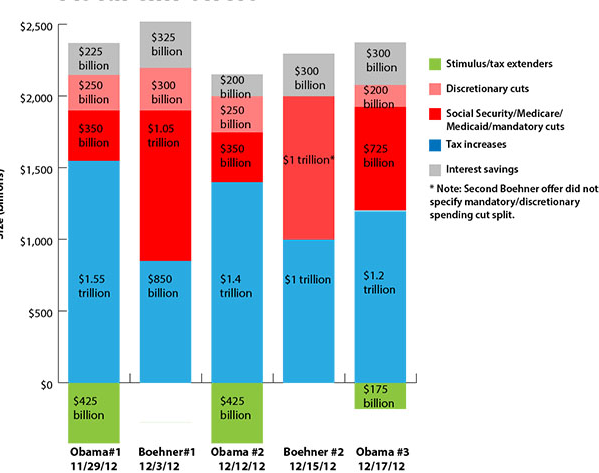
| Market Rallies as Fiscal Cliff Deal Fails Posted: 19 Dec 2012 04:27 AM PST It has been my position that Sequestration is not that big a deal, it is likely to be eventually resolved with minimal impact, oh, and even if implemented, it is a minor hit to GDP. If you want the corollaries to this, it is the creation of an incessant media noise machine, initially CNBC but now enjoying the widespread MSM adoption of a congressional sex scandal. Its meaningless in the long run, but it generates page views. If you want to reveal your ignorance in the matter, just use the phrase “Fiscal Cliff” — its code for “I haven’t any idea what I am talking about, but lets jump on the bandwagon and hope no one notices.” To wit: the hardening of positions as the supposed deal has fallen apart. Both political parties seem to simultaneously want AND be afraid of a deal. President Obama put Social Security on the table — it has nothing to do with the deficit, and has therefore enraged his core supporters. House Speaker Boehner put tax increases on the table, and suffered a rear guard revolt. His job is in danger, with a few names floated as replacing him. Each side seems to be secretly hoping for a miracle, namely, sequestration occurs, and the other guys get blamed. I guess this is what passes for leadership these days. Now, with deals falling apart and positions hardening, it means the end of the market rally. Or does it? As the chart below shows, myriad deals points have been floated, endorsed, critiqued and rejected. All the while, Santa has come to Wall and Broad. The S&P500 is 100 points higher than where it was a month ago, despite little motion on a deal. Regardless of what your views on the current theater of the absurd in DC, the one thing that is inarguable is that as the compromise deals have fallen apart, the markets have shrugged it off and powered higher. I have repeatedly stated that day-to-day action is nearly all noise, and most explanations are after-the-fact rationaliztions. Every rally ends, and this one could sputter to an end today. But I am curious as to how the Rise Above clown show will explain the current market action if it continues to power higher in the face of (the horror!) uncertainty . . .
Sequestration Offers and Counteroffers
Source: Wonkblog
|
| Hallelujah – The Voice (Tribute to Newtown Victims) Posted: 19 Dec 2012 03:30 AM PST Hallelujah – The Voice (Tribute to victims with Leonard Cohens)
click for video
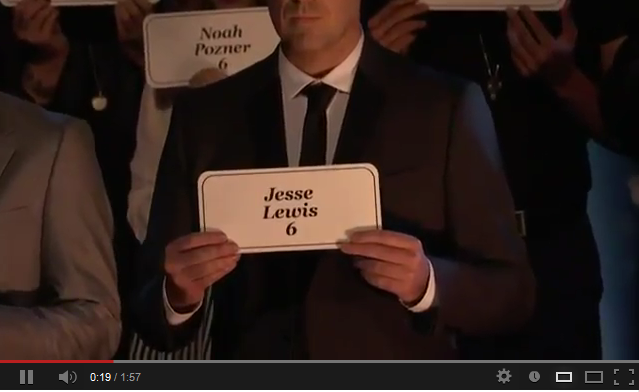
The coaches and artists pay tribute to the Connecticut shooting victims with Leonard Cohen’s “Hallelujah.” Christina Aguilera , Adam Levine & Three days after the shootings in Newtown, Conn., NBC’s reality talent show The Voice kicked off its third season finale with a touching tribute performance for the 20 schoolchildren and 6 adult staff members killed at Sandy Hook Elementary School. All 20 of the show’s contestants came together on stage, joined by judges Cee Lo Green, Christina Aguilera, Blake Shelton, and Adam Levine, along with hosts Carson Daly and Christina Milian. Each singer held up a placard with the name and age of one of the 26 people killed at the elementary school. Thanks Dougie ! |





| You are subscribed to email updates from The Big Picture To stop receiving these emails, you may unsubscribe now. | Email delivery powered by Google |
| Google Inc., 20 West Kinzie, Chicago IL USA 60610 | |



0 comments:
Post a Comment