


The Big Picture |

- Nate Silver: Why Gun Rights Rhetoric Is Winning
- Gift Giving Guide for the Traders in Your Life
- 10 Tuesday PM Reads
- U.S. Bank as Trustee v Merrill Lynch Mortgage Trust
- Infographic: 2012 Internet & Mobile Trends Report
- QE til 6.5% Unemployment? How’s 2018 sound?
- Chinese home prices rise
- 10 Tuesday AM Reads
- Welcome to Crony Capitalism
- Know Your Myers-Briggs Type Indicator Type
- Facebook Destroys Instagram
- Rare Shocks, Great Recessions
| Nate Silver: Why Gun Rights Rhetoric Is Winning Posted: 18 Dec 2012 07:44 PM PST Nate Silver, author “FiveThirtyEight” blog, talks with Bloomberg’s Tom Keene about the discussion over gun right vs. gun control in the United States. He speaks on Bloomberg Television’s “Bloomberg Surveillance.” |
| Gift Giving Guide for the Traders in Your Life Posted: 18 Dec 2012 04:00 PM PST Gather round for the Trader version of our Shopmas suggestions. These aren’t the usual Bull & Bear cliches you typically see — its all good stuff for the trader in your life. (You can see out earlier suggestions: part one, part two and part three) This round of Shopmas ideas is for the guy who executes your trades and helps you work out of trouble — the list has something for everybody, be it gunslinger, technician or clerk on your holiday shopping list whose P&L has been very, very good. With tongue firmly placed in cheek, here is our gift giving guide for the trader in your shop Go forth and stimulate : ~~~
This 300-page sticky notepad is perfect for your best poison pen notes, letters of resignation, hit lists, and office to-do’s. Murder, Ink comes complete with blood spattered pen, so it’s sure to make a statement on your desk right beside that suspiciously sharp letter opener. Each pad and pen is packed In a full-color illustrated giftbox.
• WTF Stamp $9 Every desk gets trade confirms they don’t recognize — the standard response is “DK” (Dont Know).
These days, trades are coming back that are simply too silly to DK — they demand, a WTF!?! ~~~ • Trading/Wall Street Movies: After a long day in the turret, what can be more relaxing than kicking back and watching films about trading? Here are 4 recommended flicks for your keyboard jockey: -Eddie Murphy Trading Places ($13) Only tangentially related to trading, but filled with lots of oft quoted lines, this comedy is good for everyone. ~~~ • Paul Wilmott Introduces Quantitative Finance $57
Adapted from the comprehensive, even epic, works Derivatives and Paul Wilmott on Quantitative Finance, it includes carefully selected chapters to give the student a thorough understanding of futures, options and numerical methods. Software is included to help visualize the most important ideas and to show how techniques are implemented in practice. There are comprehensive end-of-chapter exercises to test students on their understanding. ~~~
Years ago, I was wearing a Ted Baker tie to a Fox News shooting. Just before we shot, I went to change into something much less loud, and the director stopped me, saying "TV washes everything out — the bright tie will pop. It works well — Trust me on this." I did, it did, and now all of my favorite ties come from Ted Baker. They are bright, colorful and fun. If you must wear a noose around your neck for work, well then this is the way to go. NYC just opened a new Ted Baker Store on 5th Avenue. And for you bargain hunters, you can find Ted Baker on sale at Century 21 — normally $89, on sale for $30-40. ~~~ • Olympus 142665 DM-620 SLV Voice Recorder $107
- Great audio recording quality Requires an adapter to plug into a phone jack ~~~
Investors have too often extrapolated from recent experience. In the 1950s, who but the most rampant optimist would have dreamt that over the next fifty years the real return on equities would be 9% per year? Yet this is what happened in the U.S. stock market, as the optimists triumphed. Sometimes an optimist is someone who never had much experience — and this book extends that experience across regions and across time, presenting a comprehensive and consistent analysis of investment returns for equities, bonds, bills, currencies and inflation, spanning sixteen countries, from the end of the nineteenth century to the beginning of the twenty-first. ~~~ • Books for the Trader's Library Three different book shelves for the different traders in your life. The Newbie Trader (Starter pack) The Historian The Technician ~~~
Spark 'em up with the Lotus 21 Twin Flame Torch Lighter ($49) — A great piece of hardware (I own two) ~~~ • Parrot AR.Drone 2.0 Quadricopter Controlled by Smart Phones/Tablets – Orange/Blue $300
Sometimes, you cannot get out of your chair, but you need to see whats going on in other parts of your hedge fund. The Quad receives 720p high-definition live video streaming to smartphone or tablet while flying; you can record & shares videos & pictures straight from the copter — great for compliance or sharing trails of inside information with the SEC to save your own bacon! Send incriminating evidence straight from your live flight videos in HD and send them directly to YouTube ~~~
These are solid, high performance multi-filter air cleaner is very quiet,efficient and effective. The Hepafilters can clear the air in a dirty trading room in 20 minutes. Pulls all of the contaminants, pollens, dust, smoke, allergens from the air and holds them in replaceable filters. The size of these should be a function of the size of the room they go in. Energy Star 3-speed air purifier with HEPASilent technology ~~~ • Spa Massage De-Stress Muscle Release: $150-500 This deeply restorative treatment is specifically designed for tight, stressed and aching muscles. Too many hours spent sitting on the trading desk leaves your body stiff, tight and painful. Swedish and cross muscle fiber massage techniques with stretching and draining are combined with essential oils known for their beneficial effects on the circulation. Try the Nickel Spa for Men: They do massages, manicure/pedicures, facials, and the infamous "Boyzillian" (if you have to ask, you don't want to know). ~~~ • Pax premium loose leaf vaporizer $250
“Easy to use, very solid and high quality. Feels right when you have it in your hand. Taste is awesome without the harshness. Extremely satisfied and not disappointed at all." ~~~
Gorgeous heavy duty briefcase comes in a variety of colors + a 100 year warranty. Its not light, but if you ever have to make a dash for the border, this is the bag you want to throw your bearer bonds into. -Crafted from 100% Full-grain boot Leather but thicker. http://www.amazon.com/exec/obidos/ASIN/B003JX5ANW/thebigpictu09-20 ~~~
The Aeron Chair? Thats so 1990s. This is the chair for anyone stuck in their seat for long periods of time and who needs to be alert, rested and comfortable (but not too comfortable). You point. You click. You fixate on your computer screen. And you sit still for hours. Mesmerized. Your body screams, “Move!”–unless you’re seated in Embody. Designed specifically for people who sit at computers, Embody makes you feel like you’re floating. It promotes health-positive sitting, creating harmony between you and your computer to help you focus on your work and think more clearly. In fact, it’s the first work chair that supports your body and your mind. ~~~
Especially if you are willing to take a day off from trading and go midweek — Weekdays (18 Holes): $130.00 ~~~ • CineMassive Trio Gemini 17D 6 Screen holder : $1,749
Using a multi-screen display for the first time is often described as feeling like having received a new lobe of brain. ~~~ • Caddy for a Cure: ($5,000 and up) For the avid golfer who is having an especially good year.
The guys I know who did this lost their minds, saying it was the greatest experience on a golf course they ever had. And, 100% of the proceeds goes to charity. ~~~ • Breguet Grande Complication Tourbillon Messidor $154,200 For the star trader on your team, this little gift will let him know that he — and his P&L — are appreciated by senior management. Sure, the rest of the office may resent the indulgence of this gift, but they are easily replaced off of Craig’s list.
~~~
That’s our tongue in cheek guide to Gift for Traders for 2012. If you have any other gift suggestions, by all means use the comments |
| Posted: 18 Dec 2012 01:30 PM PST My afternoon train reads:
What are you reading?
How Big Deficits Became the Norm |
| U.S. Bank as Trustee v Merrill Lynch Mortgage Trust Posted: 18 Dec 2012 11:40 AM PST MERRILL LYNCH MBS TRUST SUES BANK OF AMERICA OVER MBS –> Trustee Lawsuits beginning –> This is an important development in MBS litigation. *U.S. BANK AS TRUSTEE SUES MERRILL LYNCH AND BofA – REPRESENTED BY QUINN EMANUEL (SAME LAYWERS AS FHFA AND MBIA) Hat tip Manal Mehta
Plaintiffs Merrill Lynch Mortgage Investors Trust, Series 2006-RM4 ("RM4 Trust") and Merrill Lynch Mortgage Investors Trust, Series 2006-RM5 ("RM5 Trust", and collectively, the "Trusts"), by U.S. Bank National Association ("U.S. Bank"), not in its individual capacity but solely as current trustee with respect to the Trusts (the "Trustee"), by its attorneys, Quinn Emanuel Urquhart & Sullivan LLP, for their Complaint against Merrill Lynch Mortgage Lending, Inc. ("Merrill", the "Sponsor", or "Merrill Sponsor"), Merrill Lynch Mortgage Investors, Inc. ("Merrill Depositor"), and Bank of America, National Association ("Bank of America") (all collectively, "Defendants") allege as follows:
1. In this action, Plaintiffs are two securitization trusts that hold and administer mortgage loans on behalf of investors who own securities collateralized by such loans. Plaintiffs seek to enforce their contractual rights against the parties that orchestrated the securitizations and created the two Trusts, sold defective loans into the Trusts, and have refused to repurchase such loans in violation of the contracts governing the securitizations. 2. In 2006, as a part of its effort to increase its share of the then-highly profitable residential mortgage-backed securities ("RMBS") market, Merrill bought over 6,000 mortgage loans ("Mortgage Loans") with original principal balance of over $1.1 billion dollars from a third-party loan originator, ResMAE Mortgage Corporation ("ResMAE"). Through the process of securitization, Merrill turned these mortgages into tradable securities in the form of certificates ("Certificates"). Certificates were issued by the RM4 Trust and the RM5 Trust on September 27, 2006 and October 27, 2006 for the RM4 Trust and RM5 Trust, respectively, and sold to investors, which resulted in over a billion dollars of proceeds to Merrill Depositor. Each Certificate entitles its holder to cash flows from the loan payments on the corresponding mortgages. 3. Merrill accomplished each securitization primarily through three contracts: • The Master Mortgage Loan Purchase and Interim Servicing Agreement (the "Purchase Agreement") (a copy of which is attached hereto as Exhibit A), pursuant to which Merrill purchased Mortgage Loans from ResMAE; • The Mortgage Loan Sale and Assignment Agreement (each, a "Sale Agreement") (copies of which for each Trust are attached hereto as Exhibit B), pursuant to which Merrill Sponsor transferred the Mortgage Loans to an affiliated entity Merrill Lynch Mortgage Investors, Inc. that acted as a depositor; and • The Pooling and Servicing Agreement (each, a "PSA") (copies of which for each Trust are attached hereto as Exhibit C), pursuant to which Merrill Depositor transferred the Mortgage Loans to the Plaintiff Trusts. (collectively, the "Trust Agreements"). 4. To facilitate the sale of the Certificates to investors, who had no independent means of verifying the characteristics of the underlying mortgage loans, Merrill and ResMAE made extensive representations and warranties in the securitization documents about the quality and characteristics of the Mortgage Loans underlying the corresponding Certificates. The accuracy of the representations and warranties were a key component to closing a securitization transaction because, among other reasons—unlike Merrill and ResMAE—investors were not given access to the related loan origination files and could not have independently confirmed the loans' credit characteristics. Accordingly, the veracity of these representations and warranties were the drivers of the loans' risk profile. 5. In the Purchase Agreement, pursuant to which Merrill purchased the loans from ResMAE, the loan originator, ResMAE represented, among other things, that the loans complied with underwriting criteria, were issued to borrowers with sufficient income to repay them, and were backed by properties valuable enough to allow investors to recoup the value of the loan through foreclosure. If any of the loans were found to breach representations and warranties, ResMAE committed to buy back the loan. Merrill's rights against ResMAE were then assigned to the Trusts. 6. In the securitization process, Merrill also made its own representations and warranties in the Sale Agreements concerning loans' quality, restating many of ResMAE's promises verbatim for the benefit of the Trusts (listing specific representations and providing that such representations "are hereby restated by the Sponsor as of the Closing Date"). In addition, Merrill contractually guarantied ResMAE's performance under the Purchase Agreement, ensuring that the risk of non-conformance with representations and warranties was not borne by the Trusts. The right to enforce Merrill's representations and warranties was assigned to the Trusts. 7. Merrill's promises were designed to give investors comfort that not just ResMAE but also Merrill ultimately stood behind the quality of the loans. If the loans did not hold up to their stated standards, not only was ResMAE liable for repurchases, but so was the sponsor of the deal, Merrill. Merrill's "backstop" guaranty allowed Merrill to market the deal to investors on favorable terms, as certificateholders received two layers of protection for the mortgage quality, and were assured that the Sponsor, Merrill, had done its diligence and stood behind the loans. This was also important because, at the time, ResMAE was financially a much less secure institution than Merrill, as its bankruptcy only three months after the securitizations bore out. 8. By the time of the bankruptcy, filed in February 2007, a number of the loans in the Trusts suffered from early payment defaults ("EPDs"), where the borrowers missed either the first or second monthly payment under their mortgages. These EPDs violated ResMAE's and Merrill's representations and warranties. Accordingly, the Trusts, through LaSalle Bank, National Association, acting in its capacity as the original trustee with respect to the Trusts ("LaSalle"), filed claims against ResMAE in bankruptcy, demanding that ResMAE repurchase the EPD loans or otherwise compensate the Trusts. 9. In July 2008, LaSalle, then a subsidiary of Bank of America, consented to a settlement of the bankruptcy claims against ResMAE on behalf of five Merrill-sponsored trusts, including the Plaintiff Trusts (the "Bankruptcy Settlement"). Merrill, which had filed its own claims against ResMAE on EPD loans it held on its balance sheet, likewise consented to the Bankruptcy Settlement. The settlement provided that Merrill and the Merrill-sponsored trusts would collectively accept a lump sum from the bankruptcy estate as consideration for releasing their individual bankruptcy claims against ResMAE. They would separately allocate that sum among themselves. LaSalle sent a notice to investors informing them of the settlement with ResMAE. Because ResMAE had very limited funds to satisfy a large number of bankruptcy claims, the Trusts ultimately received only a small part of the money owed for those EPD loan breaches. 10. To allocate the proceeds, Merrill and the trusts entered into a second settlement agreement later that year (the "Allocation Agreement"). By the time of the Allocation Agreement, Bank of America had taken over as the trustee for the Plaintiff Trusts (in this capacity, "Bank of America as Successor Trustee"), and its parent, Bank of America Corporation, was in the process of acquiring Merrill. The Allocation Agreement is dated "as of December 31, 2008," the day before Bank of America's acquisition of Merrill closed, but the date stamped on the faxed signature page for the Allocation Agreement is January 22, 2009, which suggests that the settlement was not signed until three weeks after Bank of America acquired Merrill and less than a month before Bank of America as Successor Trustee resigned as trustee due to the obvious conflict of interest. Bank of America as Successor Trustee did not send a notice to investors, informing them of the Allocation Agreement or its terms. 11. In late 2011 and early 2012, forensic review of Mortgage Loan files ("Origination and Servicing Files") from both Trusts was undertaken and payment analysis of certain Mortgage Loans was conducted. These reviews found that at least 1,221 loans for the RM4 Trust and 1,411 loans for the RM5 Trust suffered from breaches of representations and warranties and did not have the represented characteristics. The breaching loans were subject to the cure and repurchase provisions in the transaction documents due to defects relating to, among other things: a) Misstatement of Income and Employment. Loan documents for many loans misstated the borrowers' incomes, misstated the borrowers' employment, or listed incomes that were clearly not reasonable for the borrowers' stated occupations. b) Misstatement of Debts. Loan documents for many loans misstated the borrowers' existing debt obligations, despite clear indications that the borrowers had more debts than were listed in the borrowers' applications. c) Misstatement of Debt-to-Income Ratios. A borrower's "debt-to-income" ratio (or "DTI" ratio) compares the borrower's monthly debt obligations to the borrower's monthly income. The higher the DTI ratio, the greater the likelihood of a default. For many Mortgage Loans, the actual DTI ratios were far higher than represented. d) Misstatement of Property Value. Property value is an essential loan characteristic that allows investors to make sure that they could recoup the loan amount in full through foreclosure if the borrower defaults. Merrill misrepresented the true values of the underlying properties throughout the Trusts' mortgage loan pools. e) Misstatement of Loan-to-Value Ratios. A property's "loan-to-value" ratio or "combined loan-to-value" ratio ("LTV" and "CLTV" ratios) expresses the amount of the Mortgage Loan as a percentage of the property's total value. The higher the LTV or CLTV ratio, the greater the likelihood of default because the borrower has less equity invested in the property. For many Mortgage Loans, the actual LTV and CLTV ratios were far higher than the ratios represented by Merrill. f) Misstatement of Owner-Occupancy Status. Borrowers who live in mortgaged properties are much less likely to default than borrowers who do not, which is reflected in the industry practice of assessing higher lending rates to non-owner occupied properties. If a property is not owner-occupied, then the risk of default increases. Loan documents for many loans listed properties as being "owner occupied," despite clear indications that this was not the case. 12. These defects constitute breaches of multiple representations and warranties under the Purchase Agreement and Sale Agreements that were independently made or guarantied by Merrill. (The breaches for the Mortgage Loans are catalogued in the reports attached hereto as Exhibit D and Exhibit E.) These defects alone and in combination show that the loans in the two Trusts did not have the credit quality they were represented to have, and that there is a higher likelihood that the borrowers would fall behind on their loan payments or would default on their loans altogether, as many in fact did. The increased risk of borrowers' delinquencies and defaults materially and adversely affects the value of the Mortgage Loans and the interests of Certificateholders therein. 13. Having been liquidated in bankruptcy, ResMAE can no longer fulfill any of its contractual repurchase obligations and thus Merrill must repurchase loans under the terms of the Sale Agreements. 14. Promptly upon becoming aware of the defects, beginning in March 2012 and continuing as the loan file investigation bore results, the successor Trustee U.S. Bank started to inform Merrill of the results of the review of the Origination and Servicing Files (See Ex. F; Ex. G1). According to the terms of the Trust Agreements, when Merrill learns that a loan in the pool is defective, it must buy back the loan from the Trust within 75 days. But despite being on notice of particular defects in at least 2,632 Mortgage Loans in the two Trusts, Merrill refused to honor its repurchase obligations to the Trusts. 15. Instead, Merrill claimed that all of its liability to the Trusts had been released in connection with the ResMAE bankruptcy settlement. Merrill informed the Trustee that the Allocation Agreement, which allocated proceeds of the Bankruptcy Settlement among the Trusts and Merrill, somehow released Merrill of all its liability to the Trusts. This would be an illogical result, given that claims had not been asserted against Merrill in connection with the bankruptcy proceeding. The papers in the bankruptcy court described the settlement as concerning only claims made against ResMAE and the notice that LaSalle sent to certificateholders disclosing the settlement and soliciting objections only discussed the release of claims against ResMAE. 16. Merrill's position cannot hold. It is clear from the language and circumstances that the release of claims against Merrill in the Allocation Agreement only addressed allocation of the Bankruptcy Settlement proceeds and did not release Merrill from any independent liability it had to the Trusts. Indeed, Bank of America as Successor Trustee under the terms of the Trust documents, had no authority to release Merrill (its affiliate) from any such claims, and any such release would be void. 17. Separately, the Trusts also assert claims against Bank of America, as successorin-interest to the initial servicer, Wilshire Credit Corporation ("Wilshire"), and as successor servicer itself. Those companies have modified 247 delinquent Mortgage Loans in the RM4 Trust and 296 delinquent Mortgage Loans in the RM5 Trust. During the modification process, Wilshire and Bank of America as servicer would have examined the loan files and in the process would likely have discovered breaches of representations and warranties in the loan pools. However, despite their likely discovery of breaches, neither Wilshire nor Bank of America, as servicer has notified the Trustee of any such breaches. Indeed, documentation in the loan servicing files uncovered during the loan file investigation confirms that Wilshire and Bank of America knew of information indicating breaches because that information was contained in the servicing files they created. In one instance, for example, the borrower claimed to earn $6,700 per month on the loan application, but subsequent bankruptcy filings included in the servicing file reflected an income of only $2,122 per month. To the extent the servicer, i.e., Wilshire or its successor, Bank of America, became aware of breaches of representations and warranties in the process of servicing the loans, their failure to notify constitutes a breach of their contractual obligations to do so under Section 2.03(c) of the PSAs. 18. In sum, Merrill has breached the Sale Agreements and the PSAs. These breaches materially and adversely affect the value of the Mortgage Loans and the interests of the Certificateholders therein because, among other things, the risks of delinquency and default associated with the Mortgage Loans were higher than what the Trusts bargained for, and, as a result, the value of the Mortgage Loans and Certificates is diminished. Wilshire's and Bank of America's likely conduct as servicers likewise breaches their obligations under the PSAs as Servicer. 19. Finally, and alternatively, if the Allocation Agreement is interpreted to release Merrill from liability to the Trusts as Merrill asserts, very troubling questions would be raised as to how Bank of America as Successor Trustee could have released its own affiliate, given its role as a trustee with respect to the Trusts, without meaningful consideration, disclosure to Certificateholders, or court approval. In such event, the release of Merrill from liability to the Trusts would be void and unenforceable as a product of self-dealing and beyond Bank of America as Successor Trustee's authority as a trustee with respect to the Trusts. In addition, Bank of America as Successor Trustee would also be liable to the Trusts for any losses resulting from any such release. 20. Therefore, the Trusts, acting through the Trustee, now bring this action for breach of contract, specific performance, and declaratory judgment to enforce the obligations of Merrill and Bank of America as Successor Trustee under the PSAs and the Sale Agreements, and in the alternative, for damages suffered as a result of Bank of America's release of the Trusts' claims against Merrill.
PARTIES 21. Plaintiff Merrill Lynch Mortgage Investors Trust, Series 2006-RM4 is a New York common law trust established pursuant to the respective PSA. U.S. Bank National Association is a national banking association, organized and existing under the laws of the United States with its main office in Cincinnati, Ohio. U.S. Bank presently serves as Trustee for the RM4 Trust pursuant to the respective PSA, and has served as Trustee since March 31, 2009. 22. Plaintiff Merrill Lynch Mortgage Investors Trust, Series 2006-RM5 is a New York common law trust established pursuant to the respective PSA. U.S. Bank presently serves as Trustee for the RM5 Trust pursuant to the respective PSA, and has served as Trustee since March 31, 2009. 23. Defendant Merrill Lynch Mortgage Lending, Inc. is a Delaware corporation with its principal place of business in New York, New York and is a subsidiary of Bank of America Corporation. It is engaged in the business of, among other things, acquiring residential mortgage loans and selling those loans through securitization programs. It acted as the Sponsor for each of the Trusts. 24. Defendant Merrill Lynch Mortgage Investors, Inc. is a Delaware corporation with its principal place of business in New York, New York. It is a subsidiary of Bank of America Corporation. Merrill Lynch Mortgage Investors, Inc. was the depositor for each of the Trusts. 25. Defendant Bank of America, National Association is a nationally-chartered United States bank with substantial business operations and offices in New York, New York. It is a wholly-owned subsidiary of Bank of America Corporation. It acted as the trustee for each of the Trusts from October 2008 until April 2009. In addition, it is a successor by merger to LaSalle, which was the initial trustee for each of the Trusts. Bank of America Corporation acquired LaSalle in October 2007 and remained as trustee until the end of March 2009. Bank of America is also the current Servicer for each of the Trusts and a successor-in-interest to the initial servicer, Wilshire.
JURISDICTION AND VENUE 26. This Court has jurisdiction over this proceeding pursuant to CPLR §§ 301 and 302 because the Defendants have offices in New York. Additionally, each Trust was formed under New York law pursuant to the respective PSA. 27. Venue is proper in this Court pursuant to CPLR § 503(a) and (c) because each Defendant is a domestic or foreign corporation authorized to transact business in the State of New York, with principal offices in New York County. FACTUAL BACKGROUND I. MERRILL CREATED THE SECURITIES BY PACKAGING OVER 6,000 RESIDENTIAL MORTGAGE LOANS ORIGINATED BY RESMAE 28. This case concerns residential mortgage-backed securities and breaches of representations and warranties made by Merrill, the entity that organized the securitizations. As the name suggests, these are asset-backed securities (termed Certificates), secured by a pool of mortgage loans made to borrowers for the purchase of residential properties. The Certificates are owned by investors and represent beneficial ownership interests in the respective Trust. In general, distributions of interest and principal on the Certificates are made from payments on the Mortgage Loans underlying the respective Trust. Essentially, as borrowers make payments on the underlying loans, those funds are pooled and distributed to the holders of the securities in accordance with the related securitization documents. 29. The ability of the transaction parties to successfully create and market the RMBS and mortgage loan sales rests on the following essential elements: (i) contractual obligations, payments and other rights set forth in the securitization documents; (ii) representations, warranties and covenants of the institutions that created the RMBS; and (iii) those institutions' commitment to performing their contractual obligations (such as the cure or repurchase obligation). Absent these contractual rights, Merrill could not collect hundreds of millions of dollars of sales proceeds for the Trusts. 30. In an RMBS securitization, the trust and trustee hold the mortgage loans for the benefit of the certificateholders, but the certificateholders ultimately bear the economic consequences of the mortgage loans' performance or underperformance. The characteristics and risk profiles of those mortgage loans drive the securitization: they affect the interest rates the certificates pay, the amount of certificates that can be issued with certain rating, and the extent of protection or "credit enhancement" built into the securitization.2 Consequently, the value of the mortgage loans—and with them, the price that the certificateholders are willing to pay for the corresponding certificates—is directly contingent on the credit quality of the underlying mortgage loans and the repurchase remedy for breaches of the representations and warranties that accompanied the loans. 31. In the two securitizations at issue here, ResMAE made (or "originated") the Mortgage Loans to individual borrowers. In 2006, Merrill bought the Mortgage Loans from ResMAE pursuant to its Purchase Agreement with ResMAE and trade confirmations for individual purchases. Merrill then transferred 6,089 such Mortgage Loans with an aggregate principal balance of over $1.1 billion to an affiliate depositor entity, Merrill Lynch Mortgage Investors, Inc., pursuant to an individual Sale Agreement for each Trust. In the Sale Agreements, Merrill assigned to Merrill Depositor its rights to enforce ResMAE's repurchase obligations in the Purchase Agreement and committed to repurchasing the breaching loans, should ResMAE fail to do so. 32. Merrill Depositor in turn conveyed the Mortgage Loans to each Trust (also known as "depositing" the Mortgage Loans) and assigned all of its rights in the Purchase Agreement and the Sale Agreements to the Trusts, in each case pursuant to a PSA. The Trustee is the Party identified under the PSAs with respect to enforcement of the Sale Agreements and the Purchase Agreement on behalf of the Trusts. 2 Credit enhancements are features of RMBS that raise the security's credit quality above that of the underlying collateral pool (e.g., extra cash reserves or subordinate securities that will bear losses first). 33. The PSAs, which created and govern the Trusts, outline the substantive rights and obligations of parties to the transaction and outline administration of the Trusts. The PSAs were created by Merrill Sponsor, its underwriter affiliate Merrill Lynch, Pierce, Fenner & Smith Incorporated ("Merrill Underwriter"), Merrill Depositor and their counsel. The PSAs are cited in the offering materials to describe administration of the Trusts and rights of the Certificateholders, and are generally relied upon by investors in purchasing the Certificates. 34. The following diagram shows an overview of the transactions and the parties involved. From a glance, it is easy to see that each transaction was designed to allow Merrill and its affiliates to securitize Mortgage Loans and sell the resulting securities to investors. 35. The RM4 Trust and the RM5 Trust then issued securities, termed Certificates, pursuant to the respective PSAs on September 27, 2006 and October 27, 2006, respectively. The Certificates issued by each Trust were backed by the ResMAE Mortgage Loans purchased by such Trusts and each represented an interest in the respective Trust. The Trusts each conveyed their Certificates back to Merrill Depositor, which in turn passed them to the Merrill Underwriter for sale to the public. 36. Another Merrill affiliate, Wilshire, acted as the Servicer following the issuance of the Certificates in each of the Trusts. Wilshire was subsequently acquired by Bank of America Corporation along with Merrill and Bank of America ultimately took over as the Servicer for each of the Trusts.
II. MERRILL GUARANTIED THE CREDIT QUALITY OF THE MORTGAGE LOANS. 37. Because payments made to Certificateholders depend on payments made by borrowers on the underlying Mortgage Loans, the credit quality of the Certificates depends on the credit quality of the underlying Mortgage Loans and the availability of contractual remedies against a sound institution that can repurchase those loans or otherwise compensate the Trust if the representations and warranties are breached. 38. The most important information about the credit quality of the Mortgage Loans is contained in the mortgage origination files, which were assembled by ResMAE when making the loan. These files normally contain the borrower's loan application, verification and analysis of the borrower's income, employment, assets, and debts, the borrower's credit report, an appraisal of the mortgaged property's value, and a statement of the property's occupancy status. 39. Investors in the Trusts were not given access to the individual origination files for a variety of reasons (efficiency and protection of borrower's private information among them). To create the Certificates that could be marketed to investors without access to the underlying collateral, extensive representations and warranties were made in the securitization documents about the quality and characteristics of the Mortgage Loans underlying the respective Certificates by the parties who did have access to the Mortgage Loans—Merrill and ResMAE. The veracity of the representations and warranties was a key component to each securitization transaction. 15 40. ResMAE made representations and warranties in the Purchase Agreement and in a "bring down letter" that restated certain representations and warranties as of the Closing Date. The Merrill Sponsor made its own representations and warranties and restated certain of the representations and warranties originally made by ResMAE in the Sale Agreement. At a minimum, for the restated representations and warranties, the Trusts could look to Merrill if ResMAE were unable to live up to its representations, warranties, and covenants including ResMAE's obligation to repurchase any breaching loans. Specifically, Merrill stated in Section 1.04(b) of the Sale Agreement: To the extent that any fact, condition or event with respect to a Mortgage Loan constitutes a breach of both (i) a representation or warranty of the [ResMAE] under the [Purchase] Agreement or Bring Down Letter and (ii) a representation or warranty of the Sponsor [Merrill] under this Agreement, the sole right or remedy of the Depositor with respect to a breach by the Sponsor of such representation and warranty (other than a breach by the Sponsor of the representations and warranties made pursuant to Sections 1.04(b)(vi) and 1.04(b)(vii)) shall be the right to enforce the obligations of the [ResMAE] under any applicable representation or warranty made by it; provided, however, that to the extent [ResMAE] fails to fulfill its contractual obligations under the [Purchase] Agreement then the Depositor shall have the right to enforce such obligations of [ResMAE] against the Sponsor." (Emphasis added.) It is reasonable to conclude that this backstop guaranty was essential to Merrill's ability to sell the Mortgage Loans to the Trusts and Certificates to investors on favorable terms because investors would have necessarily been less willing to purchase Certificates backed only by representations and warranties of a less secure financial institution— ResMAE. Indeed, ResMAE went into bankruptcy only three months after the Certificates were issued. 41. Section 2.03 of the PSAs summarized the backstop guaranty as follows: In addition to the representations and warranties of [ResMAE] in the [Purchase] Agreement that were brought forward to the Closing Date pursuant to the Bring Down Letter with respect to each Mortgage Loan [i.e., representations that were not made or restated by Merrill], [ResMAE] made certain additional covenants 16 regarding such Mortgage Loan, as set forth in the [Purchase] Agreement [i.e., representations that were made or restated]. With respect to any breach of such additional covenants that materially and adversely affects the interests of the Certificateholders in such Mortgage Loan, the Sponsor shall repurchase such Mortgage Loan in accordance with this Section 2.03. (Emphasis added.) 42. Merrill's backstop guaranty and representations covered numerous key aspects relating to loan quality. Merrill represented and warranted that the information set forth in the related mortgage loan schedule, which included owner-occupancy status, the appraised value of the property, the loan-to-value ratio, and the borrower's debt-to-income ratio, "is complete, true and correct." (Purchase Agreement, Ex. A, § 7.02(1); remade and restated as of the Closing Date by Merrill in Sale Agreements, Ex. B, § 1.04(b)(iv).) 43. Merrill also provided a backstop representation that "[t]here is no default, breach, violation or event of acceleration existing under the Mortgage or the Mortgage Note and no event which, with the passage of time or with notice and the expiration of any grace or cure period, would constitute a default, breach, violation or event of acceleration." (Purchase Agreement, Ex. A, § 7.02(19), remade and restated as of the Closing Date in Sale Agreements, Ex. B, § 1.04(b)(iv).) A common event of default under the mortgage note is a borrower's misrepresentation about income, employment, and intent to occupy the property, as well as the borrower's failure to make timely payments on the mortgage loan. 44. Merrill also provided a backstop representation that "the Mortgage Loan is in compliance with all requirements set forth in the related Trade Confirmation, the Mortgage Loan is not an Ineligible Loan as set forth in the related Trade Confirmation and the characteristics of the related Mortgage Loan Package as set forth in the related Trade Confirmation are true and correct." (Purchase Agreement, Ex. A, § 7.02(2), remade and restated as of the Closing Date by Merrill in Sale Agreements, Ex. B, § 1.04(b)(iv).) On information and belief, each Trade 17 Confirmation in turn represented that "Mortgage Loans were underwritten in accordance with the underwriting guidelines of Seller [ResMAE] in effect at the time of origination" and defined "Ineligible Loans" as loans whose inclusion "would cause rating agencies to be unwilling to rate securities backed by that loan pool, delinquent loans, and loans with LTV greater than 100% or DTI great than 60%, among others. 45. Merrill also provided a backstop representation that it had "no knowledge of any circumstances or condition with respect to the Mortgage, the Mortgaged Property, the Mortgagor or the Mortgagor's credit standing that can reasonably be expected to cause the Mortgage Loan to be an unacceptable investment, cause the Mortgage Loan to become delinquent, or adversely affect the value of the Mortgage Loan." (Purchase Agreement, Ex. A, § 7.02(34), remade and restated as of the Closing Date by Merrill in Sale Agreements, Ex. B, § 1.04(b)(iv).) This was a broad representation intended to give investors comfort that the process used in originating the Mortgage Loans followed accepted underwriting practices and was free from fraud, misrepresentation, and negligence. 46. A full list of all relevant representations and warranties appears in the Purchase Agreement and the Sale Agreements. They are incorporated here by reference. (Purchase Agreement, Ex. A; Sale Agreements, Ex. B). 47. In the event that a breach of representation and warranty with respect to a specific loan is discovered "which adversely affects the value of a Mortgage Loan or the Mortgage Loans," the Purchase Agreement requires ResMAE to promptly cure the defective loan or, failing that, buy back the loan from the Trust within 75 days. If ResMAE fails to perform, Merrill must step in and cure or repurchase the defective loan pursuant to Section 1.04(b) of the Sale Agreements. 18 48. In addition to guarantying ResMAE's obligations, Merrill made several direct representations in Section 1.04(b) of the Sale Agreements, including that "[n]one of the Mortgage Loans are 'high cost' as defined by applicable predatory and abusive lending laws." High cost mortgage loans are loans with an interest rate or closing costs that exceed the statutory maximum. When Merrill's representation concerning high cost loans is breached, Merrill must "[w]ithin 60 days of the discovery of any such breach, . . . either (a) cure such breach in all material respects" or "(b) repurchase such Mortgage Loan or any property acquired in respect thereof." (Sale Agreement, § 1.04(b).) 49. Through the provisions in the Sale Agreements, as reflected in the PSAs, these securitizations are structured to provide a backstop guaranty by Merrill for ResMAE's performance as to repurchase provisions related to the Mortgage Loans. The securitizations are structured so that ResMAE and Merrill, and not the Trusts, carry the risk of any discrepancy between the stated and actual loan characteristics. This makes sense because ResMAE and Merrill (unlike the Trusts) were the parties tasked with reviewing the loan documentation in connection with the purchase and securitization of the Mortgage Loans. The Trusts and the Certificateholders rely on the truthfulness and accuracy of the representations and warranties because they could not perform the diligence done by the loan originator and Sponsor prior to purchasing Certificates. By making representations and warranties and guarantying ResMAE's representations and obligations through the backstop, Merrill sought to assure the Trusts and investors that it had done its diligence and itself was at risk if the representations and warranties were untrue. 50. Just three months after the two securitizations closed, ResMAE filed for bankruptcy and thus the very risk of ResMAE's non-payment that Merrill's backstop was 19 intended to mitigate in fact materialized. Because ResMAE has been liquidated, it can no longer fulfill its contractual obligations. Accordingly, Merrill is obligated to repurchase the breaching loans identified by the Trusts, including any loans for which Merrill has individual notice of breaches. Merrill is also obligated to repurchase loans that breach its direct representation and warranty concerning high cost loans. III. A REVIEW OF ORIGINATION AND SERVICING FILES SHOWS BREACHES OF REPRESENTATIONS AND WARRANTIES REGARDING THE MORTGAGE LOANS. 51. A lengthy (and expensive) review of Origination and Servicing Files for certain of the Mortgage Loans in each Trust and payment default analysis with respect to certain mortgage loans were undertaken in late 2011 and early 2012. The review and the analysis found breaches in the mortgage pools that collateralize the two Trusts. Of the loans reviewed, at least 73% of the loans in the RM4 Trust and at least 76% of the loans in the RM5 Trust breached representations and warranties in a manner that materially and adversely affects the value of the Mortgage Loan and the interest of the Certificateholders therein. 52. These breaches are described in the reports attached hereto as Exhibit D and Exhibit E, which are incorporated here by reference. The reports summarize each of the examined Mortgage Loans and specify the representations and warranties that were breached for the Group 1 and Group 2 loans at issue.3 The Trustee has given Merrill notice of the breaches, pursuant to Section 1.04(b) of the Sale Agreements and Section 2.03 of the PSAs. Accordingly, Merrill must repurchase the non-compliant loans identified by the Trustee, as well as any other loans that breach representations and warranties. 53. What follows is a summary of some of the typical types of breaches. 3 Even more detailed reports were provided to Merrill by the Trustee. Because the reports include identifying private information about specific borrowers—such as addresses and employment status—the complete reports could be offered to the Court after the parties and the Court have had the opportunity to discuss a protective order. 20 A. Borrowers' Incomes and Employment Were Misstated 54. A borrower's income drives the borrower's ability to repay a Mortgage Loan; the borrower has to earn enough money every month to make the required loan payment. A borrower's ability to repay a loan is also impacted by her employment status; the borrower must have a job that will provide a steady stream of income for the foreseeable future, putting the borrower in a financial position to make the required loan payments over time. If the borrower's income is not commensurate with the amount of the loan payments, and/or the borrower does not have steady employment, then the likelihood of that borrower defaulting increases and the loan's risk profile is negatively impacted. 55. In addition, a borrower's income represents both the saving potential of the borrower and the likely ability of the borrower to gain subsequent employment at a particular income level. Borrowers with higher income are able to save more for future periods, including "rainy days;" borrowers with higher income are also more likely to gain future employment at similar income levels. 56. An inflated income and/or misrepresented employment information thus negatively alters the Mortgage Loan's risk profile, and, accordingly, negatively affects the pricing and marketability of the loan and of the Certificates collateralized by the loan on day one. If the borrower's income or employment does not allow her to make timely payments on the loan, then the likelihood that she will default increases, which in turn negatively impacts the actual risk profile of the corresponding loan, thereby reducing the value of the loan and the interest of the Trust and Certificateholders therein. 57. Merrill represented that ResMAE applied guidelines that required it to confirm the borrower's income. The income was then used to calculate the debt-to-income ratios that Merrill represented to be accurate in Section 1.04(b) of the Sale Agreements. For example, 21 according to the Prospectus Supplement for each securitization, prepared by Merrill,4 "ResMAE's underwriters verify the income of each applicant under the Full Documentation and Limited Documentation programs." (Prospectus Supplements, at S-36.) The full documentation program required the borrower to provide "verification of stable year to date income and the preceding year's income." (Id.) Under a limited documentation program, borrowers were "qualified based on verification of adequate cash flow by means of personal or business bank statements." (Id.) 58. ResMAE's guidelines further provided that "under all programs, the income stated must be reasonable and customary for the applicant's line of work." (Id.) The guidelines also required a pre-closing audit "to confirm that the borrower is employed as stated on the mortgage application," whether through phone contact to the place of business, by obtaining a valid business license, or through Nexis On-Line Services. (Id.) According to Merrill, "[t]he underwriting staff fully review[ed] each loan to determine whether ResMAE's guidelines for income, assets, employment and collateral are met." (Id. at S-36.) Merrill further represented that ResMAE performed additional verification of the underlying income and employment documents during the post-funding audit. (Id. at S-37). 59. The forensic review found that many borrowers had listed incomes or occupations that were patently unreasonable, should have set off red flags during the underwriting process, and/or were not verified. For example: (a) Borrower stated on his loan application that he was a technician of a maintenance company, earning $9,950 per month. However, the 2005 W-2 submitted with the application was altered: it stated that the borrower earned $105,000 in 2005, but the same W-2 from the loss mitigation file 4 See MLMI 2006-RM4 Prospectus Supplement, available at http://www.sec.gov/Archives/edgar/data/ 1374555/000095012306012027/y25175e424b5.txt; MLMI 2006-RM5 Prospectus Supplement, available at http://www.sec.gov/Archives/edgar/data/1378278/000095012306013054/y26012e424b5.txt. 22 showed income of only $39,751. The DTI using the actual income was 124.22%, exceeding the permitted maximum of 47.57%. (b) The borrower stated on his application that he worked as a foreman for an aerospace company, earning $11,200 per month. ResMAE's guidelines required that "the income stated must be reasonable and customary for the applicant's line of work." (Prospectus Supplements, at S-36.) The stated income is unreasonable and should have put the underwriter on notice of misrepresentation. In addition, when contacted by the forensic review firm, the borrower's employer stated that the borrower's monthly income was only $2,036 at the time. The DTI using the actual income was 100.25%, exceeding the permitted maximum of 41.24%. (c) The borrower stated on his loan application that he worked as a nurse, earning $6,900 per month. However, the employer subsequently verified that the borrower was a program specialist at the time of the loan origination, and not a nurse, and that he was earning only $2,365.12 per month. The DTI using the actual income was 125.93%, exceeding the permitted maximum of 41.24%. 60. Such misstatements of borrowers' income and employment breach many of Merrill's representations and warranties, including without limitation its representations concerning the accuracy of the loan schedule, compliance with trade confirmation requirements (including with respect to underwriting guidelines), and absence of events of default and adverse conditions. Where there is a breach of a representation and warranty regarding a borrower's income and/or employment, the risk of default is greater, and thus the value of the Mortgage Loan is diminished. Therefore, such breaches by ResMAE and Merrill materially and adversely affect the value of the Mortgage Loans and the Certificateholders' interest therein. B. Borrowers' Debts Were Misstated 61. A borrower's level of debt impacts his ability to repay a loan; the less debt the borrower has at the time he takes out the loan, the more funds he will have available to make his loan payments. A borrower must not have a debt load that would make it difficult or impossible for him to make the required payments. The greater the borrower's debt, the greater the likelihood that he will default, which in turn negatively impacts the actual risk profile of the 23 corresponding loan, thereby reducing the value of the loan and the interest of the Trust and Certificateholders therein. 62. Merrill represented that ResMAE applied guidelines that required it to assess the borrower's level of indebtedness. According to the RM4 and RM5 Prospectus Supplements, "ResMAE consider[ed], among other things, a mortgagor's credit history, repayment ability and debt service-to income ratio." (Prospectus Supplements, at S-35.) Merrill also represented in the Prospectus Supplements that in evaluating the credit quality of the borrowers, ResMAE used credit bureau risk scores, which list the borrower's past and present debts. (Id. at S-35 – 36.) ResMAE also verified credit rating and documentation in the course of post-funding audit. (Id. at S-37). 63. The forensic review found that many borrowers had misrepresented their debts, frequently not disclosing recent home purchases. For example: (a) A mortgage application failed to disclose all of the properties that the borrower owned at the time of origination. In the months prior to the loan's closing, the borrower purchased five other properties with liens totaling over $2.2 million. (b) A mortgage application failed to disclose all of the borrower's properties that the borrower owned at the time of origination. In the weeks prior the loan's closing, the borrower purchased four other properties with liens totaling over $2.1 million. 64. Such misstatements of borrowers' debts breach many of Merrill's representations and warranties, including without limitation its representations concerning the accuracy of the loan schedule, compliance with trade confirmation requirements (including with respect to underwriting guidelines), and absence of events of default and adverse conditions. Accordingly, misstatements of the borrower's debts materially and adversely affect the value of the Mortgage Loans and the interest of the Certificateholders therein. 24 C. Debt-to-Income Ratios Were Misstated 65. A key measure of a borrower's ability to afford mortgage payments is "debt-toincome" ratio (or "DTI" ratio), which compares the borrower's monthly debt obligations to his monthly income. The higher the DTI (i.e., the greater the percentage of monthly income a borrower must devote to debt payments), the greater the risk on day one that the borrower will be unable to repay his Mortgage Loan due to high debt levels. Conversely, a lower DTI allows the borrower to save money to make mortgage payments during adverse economic conditions. 66. Merrill represented that ResMAE applied guidelines that provided for maximum DTI ratios for different types of loan products. For example, for full documentation and limited documentation programs, DTIs had to be 55% or less for loans with loan-to-value ratios of 85% or less and 50% or less for loan-to-value ratios greater than 85%. (Prospectus Supplements, at S- 38.) For stated documentation program, ResMAE required a DTI of 50% or less. (Id.) 67. Merrill provided the Trusts with the DTI ratio for each loan and represented that, in each case, the stated DTI ratio was correct. (See Sale Agreements, Ex. B, § 1.04(b)(i), (iv); Purchase Agreement, Ex. A, § 7.03(1).) 68. The forensic review found that the true DTI ratio for many of the borrowers was higher than the ratio represented and warranted by Merrill, and was often much higher than the maximum DTI ratio allowed by the guidelines. For example: (a) A mortgage loan was made subject to a maximum DTI ratio of 55%. But the borrower's true DTI ratio, calculated using the borrower's actual income and debts, was 354.08%. (b) A mortgage loan was made subject to a maximum DTI ratio of 50%. But the borrower's true DTI ratio, calculated using the borrower's actual income and debts, was 215.6%. 69. Such misstatements of borrowers' DTI ratios breach many of Merrill's representations and warranties, including without limitation its representations concerning the 25 accuracy of the loan schedule, compliance with trade confirmation requirements (including with respect to underwriting guidelines), and absence of adverse conditions. Higher than represented DTI ratios negatively impact the ability of the borrower to repay the Mortgage Loan, which in turn negatively impacts the actual risk profile of the corresponding loan, thereby reducing the value of the loan and the interest of the Trust and Certificateholders therein. Accordingly, misrepresentations of DTI ratios materially and adversely affected the value of the Mortgage Loans and the interest of the Certificateholders therein. D. Properties' Appraised Values Were Misstated 70. An accurate appraisal of the property's value is fundamental to ensuring that the investor is not being asked to lend more than the property is worth and that it could recoup the loan amount in full through foreclosure if the borrower defaults. Merrill and ResMAE made extensive representations concerning appraisal processes that were ostensibly intended to determine the true value of the property. For example, the Purchase Agreement provided that "the Mortgage File contains an appraisal of the related Mortgaged Property which satisfied the standards of the [ResMAE's] underwriting guidelines and prudent mortgage lenders in the secondary mortgage market was made and signed, prior to the approval of the Mortgage Loan application, by a qualified appraiser, duly appointed by the Seller, who had no interest, direct or indirect, in the Mortgaged Property." (Purchase Agreement, Ex. A, § 7.02(29), applicable by virtue of Purchase Agreement, Ex. A, § 7.02(2), remade and restated as of the Closing Date in Sale Agreements, Ex. B, § 1.04(b)(iv).) 71. In addition, Merrill provided the Trusts with the appraised property value for each loan and represented that, in each case, the stated value was correct. (See Sale Agreements, Ex. B, § 1.04(b)(i), (iv); Purchase Agreement, Ex. A, § 7.03(1).) 26 72. The forensic review found that the true appraised value for many of the borrowers was significantly lower than the value represented and warranted by Merrill. For example: (a) The appraisal dated July 5, 2006 valued the property at $640,000, even though the property had been purchased just five months before for $379,039 and had no improvements since the purchase. A retroactive appraisal by the forensic review firm valued the property at just $439,000, based on comparable sales at the time of origination. Further investigation uncovered that in 2008, the loan officer and the borrower were charged with conspiracy, wire fraud, money laundering and aiding and abetting mortgage fraud. According to the indictment, the property was purchased through straw buyers, the appraisal values were inflated, and final HUDs falsified. (b) The appraisal at origination valued the property at $325,000, even though the same property had been purchased for $280,000 just two months earlier and had no documented improvements since the purchase. The applicable guidelines required the lesser of the current appraised value or the original purchase price, plus the documented cost of improvements, to be used to calculate the property's value when the property is owned for less than 12 months. Accordingly, the lesser value of $280,000 should have been used. 73. Such misstatements of the appraised value breach many of Merrill's representations and warranties, including without limitation its representations concerning the accuracy of the loan schedule, compliance with trade confirmation requirements (including with respect to underwriting guidelines), and absence of adverse conditions. Lower than represented appraised values negatively impact the ability of the investor to recoup the amount of the Mortgage Loan, which in turn negatively alters the Mortgage Loan's risk profile, and negatively affects the pricing and marketability of the loan and of the Certificates collateralized by the loan on day one. Accordingly, misrepresentations of the property values materially and adversely affected the value of the Mortgage Loans and the interest of the Certificateholders therein. E. Loan-to-Value and Combined Loan-to-Value Ratios Were Misstated 74. Another key measure of a borrower's likelihood to default is the loan-to-value ratio (or "LTV" ratio), which expresses the amount of the mortgage loan as a percentage of the 27 total appraised value of the property. For example, if a borrower borrows $80,000 to buy a house worth $100,000, then the LTV ratio is $80,000/$100,000, or 80%—the remaining $20,000 of the house's value reflects the borrower's 20% equity stake in the house. A combined loan-tovalue ratio (or "CLTV" ratio) expresses the amount of all of the loans secured by a property as a percentage of that property's appraised value; that is, it accounts for any additional liens. 75. A borrower with a sizable equity stake in a property has more to lose than a borrower with a small stake; thus, a borrower with a large equity position has financial incentives not to default and lose his equity. Conversely, a borrower with little or no equity stake in a property has little financial incentive to avoid default. And if a borrower with a small equity stake does default, then there is a greater risk that the resulting foreclosure will produce a loss for the lender—or, in this case, for the Certificateholders who are entitled to the loans' cash flows. The higher the LTV and CLTV, the greater the likelihood that the borrower will default. 76. Merrill represented that ResMAE followed guidelines that restricted the types and amounts of loan products available to borrowers based on the subject properties' LTV ratios. The underwriting guidelines established the maximum permitted loan-to-value ratio for each loan type based upon various risk factors. (See Prospectus Supplements, at S-35.) For example, to qualify for a 100% LTV within "A" risk category for a mortgage loan originated after May 2006, borrower had to have a FICO score of at least 600, have at least two years since any foreclosure activity, and have no liens or judgments affecting title. The maximum allowable LTV would then be "reduced [for specific loans] based on fico score, reduced income documentation, non-owner occupied properties" and other factors. (Prospectus Supplements, at S-37.) 28 77. In the loan information provided to the Trusts, Merrill made specific representations regarding the LTV and CLTV ratios of the loans in the Trusts. In Mortgage Loan Schedule provided to the Trusts, Merrill represented that no loan had an LTV or CLTV ratio greater than 100%. Indeed, the Prospectus Supplements stated that the average original loan-to-value ratio of the Mortgage Loans was 82.26% for the RM4 Trust's loans and 83.86% for the RM5 Trust's loans. Merrill further represented for both Trusts that no Mortgage Loan had a combined loan-to-value ratio greater than 100.00%. 78. The forensic review found that the true LTV and CLTV ratios for many of the properties at issue were higher than those represented by Merrill, and were often much higher than the maximum CLTV ratios allowed by the guidelines. For example: (a) The Mortgage Loan Schedule stated that the loan had an LTV of 95%. But the property's actual LTV was 139%. (b) The Mortgage Loan Schedule stated that the loan had an LTV of 90%. But the property's actual LTV was 113.3%. Such misstatements of the properties' LTV and CLTV ratios breach many of Merrill's representations and warranties, including without limitation its representations concerning the accuracy of the loan schedule, compliance with trade confirmation requirements (including with respect to underwriting guidelines), and absence of adverse conditions. These breaches materially and adversely affect the value of the loans in each of the two Trusts and the interest of the Certificateholders therein because, among other things, borrowers with a smaller equity stake in the property are more likely to default. F. Properties' Owner-Occupancy Statuses Were Misstated 79. If a property is not owner-occupied, then the likelihood that the borrower will default increases, which in turn negatively impacts the actual risk profile of the corresponding loan on day one, thereby reducing the value of the loan and the interest of the Trust and 29 Certificateholders therein. Borrowers who live in mortgaged properties are known to be less likely to "walk away" from those properties and default on their mortgage obligations than borrowers who buy residential properties as investments or as vacation homes. 80. Merrill represented that ResMAE followed guidelines that required greater equity for non-owner occupied properties. ResMAE's guidelines stated that "[l]oan-to-value ratios are reduced based on . . . non-owner occupied properties, second homes, properties with 3-4 units." (Prospectus Supplements, at S-37.) 81. Merrill provided the Trusts with "a code indicating whether the Mortgaged Property is owner-occupied" and represented that in each case, the owner-occupancy information was correct. (See Sale Agreements, Ex. B, § 1.04(b)(i), (iv); Purchase Agreement, Ex. A, § 7.03(1).) In all, Merrill represented that 95% of the RM4 Trust's properties and 94% of the RM5 Trust's properties were owner-occupied. 82. The forensic review found that many of the subject properties listed as "owneroccupied" were not, in fact, occupied by the borrower. For example, in one instance, a mortgage loan stated that the subject property was to be owner-occupied, but the appraisal in the loan file marked the property as tenant occupied. The review of the borrower's driver's license, vehicle and voter registration records, as well as a subsequent bankruptcy filing, also showed that the owner continued to reside at his previous address. In another instance, the fact that the property was located 119 miles away from the stated business address indicates that the borrower did not intend to occupy the property. 83. Such misstatements of owner occupancy breach many of Merrill's representations and warranties, including without limitation its representations concerning the accuracy of the loan schedule, compliance with trade confirmation requirements (including with respect to 30 underwriting guidelines), and absence of adverse conditions. These breaches materially and adversely affect the value of the loans in each of the two Trusts and the interest of the Certificateholders therein because, among other things, borrowers that do not occupy the property are more likely to default. G. Loans with Payment Defaults Were Included in the Trusts 84. Merrill represented that "there is no default, breach, violation or event of acceleration existing under the Mortgage or the Mortgage Note and no event which, with the passage of time or with notice and the expiration of any grace or cure period, would constitute a default, breach, violation or event of acceleration." (Purchase Agreement, Ex. A, § 7.02(19); remade and restated as of the Closing Date by Merrill in Sale Agreements, Ex. B, § 1.04(b)(iv).) However, at the time of the respective securitization's closing, at least 135 loans in the RM4 Trust and at least 108 loans in the RM5 trust were delinquent, which constitutes a default under the Mortgage Note. A loan for which the borrower is not making payments negatively impacts the risk profile of the loan, and, accordingly, adversely and materially affects the pricing and marketability of the loan and of the Certificates. A loan that is delinquent early, on the securitization's closing date, is already impaired and is more likely to fail to perform. The value of Certificates backed by non-performing loans is lower. H. A High Cost Loan Was Included in the RM5 Trust 85. Loan originators are prohibited by applicable predatory and abusive lending laws from issuing high cost loans, i.e. loans with interest rates or closing fees that exceeded the statutory maximums. Borrowers given a high cost loan are less likely to be able to afford the monthly payment on the loan and are more likely to default. Thus, whether the loan is predatory impacts the risk profile of the loan and, accordingly, adversely and materially affects the pricing and marketability of the loan and of the Certificates collateralized by the loan on day one. 31 86. Merrill represented in Section 1.04(b) of the Sale Agreement that none of the Mortgage Loans it sold into the Trusts were high cost loans. However, at least one loan in the RM5 Trust was a high cost loan, because its loan fees, totaling, $14,530.70 exceeded the applicable high cost fee limit by $2,205.71. This breach materially and adversely affects the value of the loan and the interest of the Certificateholders therein because, among other things, borrowers with high cost loans are more likely to default. IV. SUCCESSOR TRUSTEE BANK OF AMERICA DID NOT RELEASE THE TRUSTS' REPURCHASE CLAIMS AGAINST MERRILL 87. In breach notices submitted on March 16, 2012, March 19, 2012, March 20, 2012, April 19, 2012, May 4, 2012, May 23, 2012, and December 14, 2012, the Trustee notified Merrill of the breaching loans identified to date and demanded that Merrill repurchase them. Merrill responded that it has no repurchase obligations for the Trusts' loans because Bank of America as Successor Trustee, as former trustee and Merrill affiliate, supposedly released Merrill of all liability when it executed the Allocation Agreement on behalf of the Trusts, allocating the proceeds from ResMAE bankruptcy to several trusts and three Merrill entities. By its terms, the Allocation Agreement did no such thing. And even if it did, it would be void because Bank of America as Successor Trustee lacked authority to release its own affiliate's liability to the Trusts. Alternatively, if the release is effective, Bank of America as Successor Trustee is liable for acting against the interests of the Trusts without authorization and for the benefit of its own affiliate. A. The ResMAE Bankruptcy Concerned the Trusts' EPD Claims Against ResMAE Debtor 88. In February 2007, just three months after the securitizations closed, ResMAE filed for Chapter 11 bankruptcy protection. 32 89. Two months later, in April 2007, LaSalle filed claims on behalf of the Trusts against ResMAE for breaches of representations and warranties related to five MLMI trusts, including the Trusts at issue in this case. These claims concerned EPD repurchase claims for loans where the borrower had missed the first or second payment on the mortgage note. The EPD obligations were automatically triggered by missed payments. In contrast, most of the breaches at issue in this action involve breaches of representations and warranties that were not discovered until years later. 90. At the time, Merrill also submitted a claim to the bankruptcy court involving EPD and other breaches for loans that were still held by Merrill and had not yet been sold to securitization trusts. 91. Also in April 2007, Bank of America Corporation announced that it would acquire LaSalle. The acquisition was completed in October 2007. 92. In July 2008, LaSalle consented to a settlement resolving claims against ResMAE by the five MLMI trusts and Merrill (as well as its two affiliates) (Ex. M) for a combined $10 million to be allocated among the five MLMI trusts and the Merrill entities at a later date. The amount was substantially lower than the value of the claims asserted by the trusts and Merrill. The RM4 and RM5 Trusts alone asserted claims on EPD loans with unpaid principal balance of $84.4 and $23.6 million respectively. The actual distribution amount ultimately paid out by the ResMAE estate to the five MLMI trusts was just $1.7 million, of which the Plaintiff Trusts received less than $600,000. The share of the proceeds received by the Plaintiff Trusts is the same as the Plaintiff Trusts' share of the total EPD Loan balance for the five MLMI trusts. The motion to approve the Bankruptcy Settlement made clear that the settlement would resolve pending claims against ResMAE; no mention of Merrill's release was made (See Motion 33 Pursuant to Bankruptcy Rule 9019 to Approve a Stipulation of Settlement Resolving Claims, Ex. H, at 6-8.) The bankruptcy court approved the Bankruptcy Settlement on July 30, 2008. 93. On July 8, 2008, prior to the approval, LaSalle sent out a notice of settlement (attached hereto as Ex. I), notifying MLMI Certificateholders of the terms of the proposed Bankruptcy Settlement and giving them an opportunity to object to the settlement. The notice stated that the settlement would release claims against ResMAE submitted in bankruptcy and explained that the bankruptcy proceeds would be allocated in a subsequent agreement. The notice again made no mention of releasing any claims against Merrill. Specifically, the notice stated: • "The Trustee further understands that the vast majority of the alleged claims [against ResMAE] in the [bankruptcy] case are for breaches of representations and warranties arising out of loan sales, including repurchase obligations arising out of so-called 'early payment default' claims." • "Merrill Bank has agreed with the Trustee that any funds received by it pursuant to the [ResMAE Settlement] will be held in escrow until all parties reach agreement on how such proceeds are to be allocated among the various Merrill Entities." • "As more fully set forth therein, the [Bankruptcy Settlement] also provides for mutual release of claims between ResMAE and the creditor parties thereto." (Emphasis added.) 94. Two months later, on September 14, 2008, Bank of America Corporation announced its acquisition of Merrill. The following month, LaSalle (already an affiliate of Bank of America) was merged into Bank of America and Bank of America became trustee for the five MLMI trusts. 95. Bank of America's acquisition of Merrill closed on January 1, 2009. A month later, on February 2, 2009, Bank of America submitted its notice of resignation as Successor Trustee on the account of its conflict of interest, stating in the notice of resignation that the resignation was "[i]n connection with the acquisition of Merrill Lynch & Co. Inc." (Ex. J, at 1). 34 The resignation did not become effective until U.S. Bank took over as the trustee of the Trusts on March 31, 2009. 96. Less than two weeks before it resigned, however, Bank of America as Successor Trustee, still trustee for the MLMI trusts, entered into a second settlement on behalf of the Trusts to allocate proceeds of ResMAE's bankruptcy (Ex. K). While the Allocation Agreement is dated "as of December 31, 2008"—just a day before the acquisition of Merrill Lynch closed—the date stamped on Merrill's faxed signature page is January 22, 2009, which suggests that the settlement was not signed until three weeks after Bank of America acquired Merrill. 97. At the time of the acquisition, Bank of America and Merrill were under pressure to reduce Merrill Lynch's liabilities, as internal e-mails reveal. (See Ex. L.) 98. Merrill now claims that this Allocation Agreement released all of its liability to the Trusts. But it did not. The Allocation Agreement provided in Section 8: As of the Effective Date, each of the Trusts and the Trustee hereby irrevocably and absolutely releases, acquits and discharges each of the Merrill Parties, and each of their respective officers, directors, managers, employees, attorneys, consultants, agents and advisors, and any person acting on its or their behalf, and each of their successors and assigns, of and from any and all claims, causes of action, actions, fees, costs and expenses, of any type whatsoever, direct or derivative, contract or tort, legal or equitable, known or unknown, common law or statutory, contingent or fixed, liquidated or unliquidated, matured or unmatured, that arise out of or relate in any way to any or all of the Claims; provided, that nothing in this Section 8(b) or the Agreement shall act as a waiver, nor shall it affect in any way, the rights and protections to which the Trustee is entitled under the PSAs and related trust documents for the Trusts . . . . (Emphasis added.) 99. The Allocation Agreement defined the settled "Claims" as "claims on account of the EPD Loans, the Merrill Claims, and the Trust Claims." These definitions in turn referred to the Trusts' and Merrill's claims against ResMAE made in the ResMAE bankruptcy proceeding: 35 a) EPD Loans: loans included in "a schedule (the 'Repurchase Schedule') [that] was sent to Resmae listing Mortgage Loans with respect to which there were EPD Breaches" on or about December 12, 2006. b) Merrill Claims: claims of the three Merrill entities in the ResMAE bankruptcy, including EPD claims. c) Trust Claims: Claims filed by each Trust "[o]n or about April 27, 2007 . . . in the Bankruptcy Case in connection with the [Transfer] Agreement, each of which asserted an unliquidated general unsecured claim on account of, among other things, the Trust EPD Loans." 100. Describing the underlying facts, the Allocation Agreement makes clear that the Bankruptcy Settlement covered no other claims against Merrill: G. Prior to the Petition Date, certain disputes arose with Resmae on account of Resmae's repurchase obligations under the [Transfer] Agreement pertaining to EPD breaches. On or about December 12, 2006, a schedule (the "Repurchase Schedule") was sent to Resmae listing Mortgage Loans with respect to which there were EPD Breaches (the "EPD Loans"). A copy of the Repurchase Schedule is attached as Exhibit A. As of December 12, 2006, the unpaid principal balance ("UPB") of the EPD Loans that are or were owned by the [five] Trusts (the "Trust EPD Loans") aggregated $302,634, 107, and the UPB of the EPD Loans that are or were owned by MLML (the "MLML EPD Loans") aggregated $5,621,872.84. H. Resmae disputed that it was obligated to repurchase a substantial majority of the EPD Loans because, among other reasons, repurchase notices were not provided in a timely manner for a portion of the EPD Loans, and many of the EPD Loans were current as of December 12, 2006. In pleadings filed by Resmae in the Bankruptcy Case, Resmae made similar allegations. I. On or about April 27, 2007, MLML [Merrill Sponsor] filed a proof of claim in the Bankruptcy Case in connection with the [Transfer] Agreement, which asserted an unliquidated general unsecured claim on account of, among other things, the MLML EPD Loans (the "MLML Claim"). L. On or about April 27, 2007, each Trust filed a proof of claim in the Bankruptcy Case in connection with the [Transfer] Agreement, each of which asserted an unliquidated general unsecured claims on account of, among other things, the Trust EPD Loans (collectively, the "Trust Claims.") 36 (Emphasis added.) 101. The release in the Allocation Agreement specifically stated that nothing in the settlement "shall act as a waiver, nor shall it affect in any way, the rights and protections to which the Trustee is entitled under the PSAs and related trust documents for the Trusts." Claims not asserted in the ResMAE bankruptcy were preserved, including claims against Merrill on the breaching loans at issue in the ResMAE bankruptcy, to the extent that the Bankruptcy Settlement did not satisfy their full amount. Merrill had notice of these claims since the ResMAE bankruptcy proceedings and must repurchase the affected loans. 102. The release in the Allocation Agreement, by its terms, does not shield Merrill from repurchase liability to the Trusts. But even if it did, any release by Bank of America as Successor Trustee extinguishing the liability of its affiliate Merrill would not be enforceable—it was not authorized by Certificateholders, it would be contrary to the notice to Certificateholders, it would not comply with the contractual terms of the PSAs and the Sale Agreements for amending the terms governing Merrill's liability, and it would be a product of self-dealing. The facts leading up to the Allocation Agreement make it clear that the release, even if somehow applicable, would have to be set aside as void and unenforceable. V. BANK OF AMERICA AND WILSHIRE FAILED TO NOTIFY THE TRUSTS OF BREACHES OF REPRESENTATIONS AND WARRANTIES 103. In their role as Servicers, Wilshire and Bank of America were required to notify the Trustee if they discovered "a breach of any of such representations and warranties that adversely and materially affects the value of the related Mortgage Loan . . . or the interests of the Certificateholders." (PSAs, Ex. C, § 2.03(c).) 104. Both Wilshire and Bank of America, as Servicers of the Mortgage Loans, modified mortgages in certain instances in which borrowers were unable to make loan payments. 37 Wilshire and Bank of America likely became aware of breaches of representations and warranties that adversely and materially affect the value of the related Mortgage Loan and the interests of the Certificateholders when they performed loan modifications for Mortgage Loans in the Trusts—a process in which the lender and the borrower agree to modify the terms of a Mortgage Loan. This process involves scrutinizing the underlying Origination and Servicing Files and any supplemental information provided by the borrower to assess the borrower's ability to repay. 105. Since the closing of the securitizations, Wilshire and Bank of America modified 247 Mortgage Loans that represented some $54.77 million in scheduled balances in the RM4 Trust and 296 Mortgage Loans that represented some $60.96 million in scheduled balances in the RM5 Trust. It is unlikely that Wilshire and Bank of America could have modified these Mortgage Loans without becoming aware of breaches. 106. Indeed, documentation in the loan servicing files uncovered during the loan file investigation confirms that Wilshire and Bank of America knew of information indicating breaches because that information was contained in the servicing files they created. In one instance, the borrower claimed to earn $6,700 per month on the loan application, but subsequent bankruptcy filings included in the servicing file reflected an income of only $2,122 per month. In yet another instance, an audited credit report obtained after the loan was issued and included in the servicing file showed that the borrower had over $40,000 in undisclosed debt opened the same month that the loan closed. 107. Despite this knowledge, Wilshire and Bank of America did not notify the Trusts of breaches of representations and warranties. By failing to notify the Trusts of these breaches, Wilshire and Bank of America breached their obligations under Section 2.03(c) of the PSAs. 38 CAUSES OF ACTION FIRST CAUSE OF ACTION Breach of Contract: Repurchase (Against Merrill) 108. Plaintiffs repeat all the foregoing allegations as though fully set forth herein. 109. This is a claim against Merrill for breach of contract with respect to the Sale Agreements, valid and binding contracts that govern the Trusts. 110. Merrill is a party to the Sale Agreements as Seller. 111. Merrill has repurchase obligations under the Sale Agreements as Seller. 112. Merrill, in its capacity as Seller under the Sale Agreements, made certain representations and warranties and guarantied ResMAE's representations and warranties under the Purchase Agreement to facilitate the sale of Mortgage Loans to the Trusts in exchange for valid consideration paid. See Sale Agreements, Ex. B, § 1.04(b). 113. The rights to enforce the Sale Agreements were assigned to the Trusts for the benefit of the Certificateholders pursuant to Section 2.01 of the PSAs. 114. In repurchase requests submitted on March 16, 2012, March 19, 2012, April 19, 2012, May 4, 2012, and December 14, 2012 (Ex. F), the Trustee, on behalf of the RM4 Trust and at the direction of Certificateholders, notified Merrill pursuant to Section 2.03 of the PSA and Section 1.04(b) of the Sale Agreements of breached representations and warranties with respect to the RM4 Trust's Mortgage Loans and demanded repurchase of the breaching loans. 115. In repurchase requests submitted on March 20, 2012, April 19, 2012, May 4, 2012, May 23, 2012, and December 14, 2012 (Ex. G), the Trustee, on behalf of the RM5 Trust and at the direction of Certificateholders, notified Merrill pursuant to Section 2.03 of the PSA 39 and Section 1.04(b) of the Sale Agreements of breached representations and warranties with respect to the RM5 Trust's Mortgage Loans and demanded repurchase of the breaching loans. 116. To date, Merrill has failed to cure the breaches of representations and warranties or repurchase the Mortgage Loans identified in the Trustee's repurchase demands, as it is required to do under the PSAs and the Sale Agreements. Merrill's failure to repurchase the breaching loans is a direct violation of Section 1.04(b) of the Sale Agreements. 117. Merrill had notice of additional trust-wide breaches, including the breaches and EPD loans at issue in the ResMAE bankruptcy and loans with payment defaults at each securitization's Closing Date, but failed to repurchase the affected loans upon discovery, to the extent not satisfied by the Bankruptcy Settlement, in violation of Section 2.03 of the PSAs and Section 1.04(b) of the Sale Agreements. 118. Merrill must specifically perform its obligations under the Sale Agreements and must repurchase all Mortgage Loans that breach representations and warranties that materially and adversely affect the value of the Mortgage Loans and the Certificateholders' interests in the Mortgage Loans, both those specifically identified by the Trustee and also all other Mortgage Loans with such breaches. Alternatively, Merrill should be required to pay damages for the losses caused to the Trusts and its Certificateholders by Merrill's breaches of its representations and warranties. 119. Each Plaintiff has performed all of the conditions, covenants, and promises required in accordance with the Sale Agreements. SECOND CAUSE OF ACTION Anticipatory Breach of Contract: Repurchase (Against Merrill) 120. Plaintiffs repeat all the foregoing allegations as though fully set forth herein. 40 121. This is a claim against Merrill for breach of contract with respect to the Sale Agreements, valid and binding contracts that govern the Trusts. 122. Merrill is a party to the Sale Agreements as Seller. 123. Merrill has repurchase obligations under the Sale Agreements as Seller. 124. Merrill, in its capacity as Seller under the Sale Agreements, made certain representations and warranties and guarantied ResMAE's representations and warranties under the Purchase Agreement to facilitate the sale of Mortgage Loans to the Trusts in exchange for valid consideration paid. See Sale Agreements, Ex. B, § 1.04(b). 125. The rights to enforce the Sale Agreements were assigned to the Trusts for the benefit of the Certificateholders pursuant to Section 2.01 of the PSAs. 126. In repurchase demands submitted on December 14, 2012 (Ex. F; Ex. G), the Trustee, on behalf of each RM4 Trust and RM5 Trust and at the direction of Certificateholders, notified Merrill pursuant to Section 2.03 of the PSA and Section 1.04(b) of the Sale Agreements of breached representations and warranties with respect to the Trusts' Mortgage Loans and demanded repurchase of the breaching loans. 127. As the Sponsor, Merrill had independent notice of the breaches identified in the December 14, 2012 repurchase demands, but failed to repurchase the affected loans upon discovery, to the extent not satisfied by the Bankruptcy Settlement, in violation of Section 1.04(b) of the Sale Agreements. 128. The Trustee reasonably expects that Merrill will refuse to repurchase these Mortgage Loans, given its disclaimer of all liability in communication with the Trustee and its prior failures to repurchase. Merrill's failure to repurchase the breaching loans is a direct violation of Section 1.04(b) of the Sale Agreements. 41 129. Merrill must specifically perform its obligations under the Sale Agreements and must repurchase all Mortgage Loans identified in the December 14, 2012 repurchase demands. Alternatively, Merrill should be required to pay damages for the losses caused to the Trusts and its Certificateholders by Merrill's breaches of its representations and warranties. 130. Each Plaintiff has performed all of the conditions, covenants, and promises required in accordance with the Sale Agreements and the PSAs. THIRD CAUSE OF ACTION Breach of Contract: Failure to Notify (Against Bank of America Itself and as Successor to Wilshire Credit Corporation) 131. Plaintiffs repeat all the foregoing allegations as though fully set forth herein. 132. The PSA for each Trust is a valid and binding contract. 133. Section 2.03(c) of the PSAs required the Servicer to give prompt written notice to the Trusts upon discovery that any Mortgage Loan breached representations and warranties. 134. On information and belief, the initial Servicer, Wilshire, and the current Servicer, Bank of America, likely knew that Mortgage Loans in both Trusts breached representations and warranties that are material and adverse to the value of the Mortgage Loans and to the interests of the Certificateholders therein, but failed to notify the Trustee. To the extent they were aware of breaches of representations and warranties, their failure to notify breached their obligations under § 2.03(c) of the PSAs. 135. Each Trust has been damaged by the failure of Wilshire and Bank of America as Servicer to notify the Trustee or its predecessors of breaches of representations and warranties that they were likely aware of. Bank of America as Servicer must specifically perform its obligations under the PSAs and give prompt written notice to each Trust of breaches already discovered and those that will be discovered in the future. 42 136. Bank of America as Servicer, on its own behalf, and as successor-in-interest to Wilshire, must also pay the Trusts damages caused by the failure of Wilshire and Bank of America to notify the Trustee of any breaches of representations and warranties. 137. Each Plaintiff has performed all of the conditions, covenants, and promises required in accordance with the PSAs. FOURTH CAUSE OF ACTION Indemnification: Failure to Notify (Against Bank of America Itself and as Successor to Wilshire Credit Corporation) 138. Plaintiffs repeat all the foregoing allegations as though fully set forth herein. 139. The PSA for each Trust is a valid and binding contract. 140. Wilshire and Bank of America as Servicer failed to notify the Trustee of breaches of representations and warranties likely discovered during servicing of the loans, in violation of Section 2.03 of the PSAs. 141. The Trusts and the Trustee have been damaged by the failure of Wilshire and Bank of America as Servicer to notify the Trustee of breaches of representations and warranties that they were likely aware of. 142. Under Section 3.25 of the PSAs, the Servicer must "indemnify . . . the Trustee (in its individual capacity and in its capacity as trustee) . . . and [its] officers, directors, employees and agents and hold each of them harmless against any and all claims, losses, damages, penalties, fines, forfeitures, reasonable and necessary legal fees and related costs, judgments, and any other costs, fees and expenses that any of such parties may sustain in any way related to the failure of the Servicer to perform its duties and service the Mortgage Loans in compliance with the terms of this Agreement by reason of negligence, willful misfeasance or bad faith in the performance of its duties or by reason of reckless disregard of obligations and duties hereunder." 43 143. Bank of America as Servicer, on its own behalf, and as successor-in-interest to Wilshire, must indemnify the Trusts and the Trustee for any losses suffered as a result of the failure of Wilshire and Bank of America as Servicer to notify, including losses related to the loan file review. 144. Each Plaintiff has performed all of the conditions, covenants, and promises required in accordance with the PSAs. FIFTH CAUSE OF ACTION Declaratory Judgment: Void Release (Against Merrill) 145. Plaintiffs repeat all the foregoing allegations as though fully set forth herein. 146. This is a claim against Merrill for declaratory judgment with respect to the Sale Agreements and PSAs, valid and binding contracts that govern the Trusts. 147. Merrill has repurchase obligations under the Sale Agreements as Seller. 148. Merrill has informed the Trustee that it has no obligations to the Trusts because all such obligations have been released by the Allocation Agreement between the Successor Trustee, Bank of America and Merrill. 149. Consequently, there exists a real and justiciable controversy as to the rights and legal relations of the parties under the PSAs and Sale Agreements. 150. Pursuant to CPLR § 3001, Plaintiffs request a declaration that the Allocation Agreement did not release any of the Trusts' repurchase claims against Merrill. 151. In the alternative, if any of the Trusts' repurchase claims against Merrill were released in the Allocation Agreement, Plaintiffs request a declaration that the release of claims against Merrill in the Allocation Agreement is void. 152. The release is a product of self-dealing because Bank of America as Successor Trustee willfully released the Trusts' claims against its affiliate or incipient affiliate Merrill. 44 Bank of America did not seek approval for its supposed release from Certificateholders, the bankruptcy court, or any other legal tribunal. Having granted the release unilaterally, and without obtaining adequate consideration for the Trusts, Bank of America effectively amended the Sale Agreements and the PSAs to eliminate its affiliate's repurchase obligations, in violation of Section 2.03 of the Sale Agreements and Section 10.01 of the PSAs, which require consent of Certificateholders representing 66 2/3% of the Voting Rights. 153. In addition, Section 2.06 of the PSAs requires the Trustee to "hold the Trust Fund and exercise the rights referred to above for the benefit of all present and future Holders of the Certificates and to perform its duties set forth in this Agreement in accordance with the provisions hereof." This supposed release of claims against Merrill would substantially reduce the value of the Certificates and prejudice the Trusts and Certificateholders by limiting the contractual remedies available to them to the detriment of Certificateholders. Accordingly, this release is void. 154. In the alternative, if the release is not void and if it extends to claims against Merrill, the release is limited to EPD and other breach claims submitted to ResMAE prior to bankruptcy that were expressly at issue in the ResMAE bankruptcy. The Trusts' current breach claims against Merrill have never been released. SIXTH CAUSE OF ACTION (In the Alternative) Breach of Contract: Unauthorized Modification (Against Bank of America) 155. Plaintiffs repeat all the foregoing allegations as though fully set forth herein. 156. The PSA and the Sale Agreement for each Trust are valid and binding contracts. 45 157. Section 2.03 of the Sale Agreements required the Trustee to obtain consent of holders of 66 2/3% of the Voting Rights to "chang[e] in any manner or eliminat[e] any of the provisions" of the agreement or "modify[] in any manner the rights of the Holders." 158. Section 10.01 of the PSAs likewise required the Trustee to obtain 66 2/3% of the Voting Rights for such an amendment. The PSAs also require 66 2/3% of the Voting Rights of any class that is adversely affected. 159. If Bank of America as Successor Trustee, without obtaining adequate consideration for the Trusts, providing notice to Certificateholders, or obtaining Certificateholder or court approval, released the Trusts' claims against Merrill in the Allocation Agreement, Bank of America as Successor Trustee is liable to the Trusts for damages. Without taking any such steps, Bank of America as Successor Trustee unilaterally modified the Sale Agreements and the PSAs to eliminate the Trusts' repurchase rights against Merrill in violation of the Sale Agreements and the PSAs. Accordingly, Bank of America must compensate the Trusts for resulting losses. SEVENTH CAUSE OF ACTION (In the Alternative) Breach of Contract: Failure to Administer the Trusts for Benefit of Certificateholders (Against Bank of America) 160. Plaintiffs repeat all the foregoing allegations as though fully set forth herein. 161. The PSA for each Trust is a valid and binding contract. 162. Section 2.06 of the PSAs requires the Trustee to "hold the Trust Fund and exercise the rights referred to above for the benefit of all present and future Holders of the Certificates and to perform its duties set forth in this Agreement in accordance with the provisions hereof." 46 163. If Bank of America as Successor Trustee released the Trusts' claims against Merrill in the Allocation Agreement, should the Court so find, Bank of America as Successor Trustee substantially reduced the value of the Trusts' assets and limited the contractual remedies available to the Trusts and their Certificateholders. Thus, Bank of America as Successor Trustee failed to exercise the rights "for the benefit of all present and future Holders of the Certificates," in violation of Section 2.06 of the PSAs. Accordingly, Bank of America must compensate the Trusts for resulting losses. PRAYER FOR RELIEF WHEREFORE each Plaintiff prays for relief as follows: a) An order of specific performance that Merrill comply with its contractual obligations under the Sale Agreements to repurchase specific Mortgage Loans identified by the Trusts, as well as any other Mortgage Loans that breach representations and warranties. b) An award of damages compensating for the Trusts' losses relating to the failure of Wilshire and Bank of America as Servicer to notify the Trustee of their breaches of representations and warranties relating to the Mortgage Loans. c) An award from Bank of America sufficient to indemnify the Trusts and the Trustee pursuant to Section 3.25 of the PSAs for all losses, costs, fees and expenses related to the failure of Wilshire and Bank of America to perform their duties as Servicer, in each case as relating to or arising from the matters pleaded herein. d) A declaratory judgment that any release of claims against Merrill in the Allocation Agreement is void. e) Alternatively, an award of damages from Merrill compensating for the Trusts' losses relating to all Mortgage Loans for which Merrill's and ResMAE's representations and warranties have been breached. f) Alternatively, an award of damages compensating for the Trusts' losses relating to release by Bank of America as Successor Trustee of the Trusts' claims against Merrill. g) Prejudgment interest, as approved by the Court. h) An award of such other and further relief as may be just and proper. |
| Infographic: 2012 Internet & Mobile Trends Report Posted: 18 Dec 2012 11:30 AM PST |
| QE til 6.5% Unemployment? How’s 2018 sound? Posted: 18 Dec 2012 09:39 AM PST
Last night, I tweeted this graphic of the job creation required to get to 6.5% unemployment. (Hat tip Dylan Matthews) At 150k new jobs per month, this implies that we have QE until 2018. For those traders afraid of the end of QE — you have some time to worry about it . . .
|
| Posted: 18 Dec 2012 07:30 AM PST Minutes released by Australia’s central bank, the RBA, report that “softening labour market conditions”, combined with “confirmation that the peak in the resource sector investment was near” and that “the short-term outlook for non-resource investment remains subdued”, allowed the RBA to cut interest rates earlier this month to 3.0%, the lowest since October 2009 and, indeed, 1960. The RBA forecast that wage pressures would ease and that employment prospects had weakened. In addition, the RBA stated that China was stabilising, with the US improving. The majority of economists expect the RBA to remain on hold at the next meeting scheduled for 5th February. The A$ weakened marginally following the release of the minutes and is currently trading at US$1.0537. However, I remain bemused as to the A$’s strength; The next PM of Japan, Mr Abe, has increased pressure on the BoJ to ease monetary policy at the next meeting on the 20th December. He suggested that the BoJ should consider the election results and his pledges (to increase inflation to 2.0% and embark on a programme of fiscal stimulus) when announcing their decision this Thursday. Once appointed PM on the 26th December, Mr Abe wants the BoJ and the government to issue a joint statement which sets a 2.0% inflation target. The governor of the BoJ, who retires in April, was non committal following Mr Abe’s remarks. Mr Abe will try and replace him with a governor who is more supportive of his policies (which the current governor is not), though whilst Mr Abe’s LDP coalition has a super majority in the Lower House, he will still require the consent of the Upper House, which he does not control, for such an appointment. Mr Abe is planning a supplementary budget, which will involve a major increase in fixed asset expenditure. The Yen fell to its lowest levels since April 2011. The decision at the forthcoming BoJ meeting will be important – the market expects the BoJ to increase its asset-purchase programme by between Yen5tr to Yen10tr. I remain short the Yen, which I expect to weaken further; Chinese November new home prices rose in 53 (35 in October) out of 70 cities tracked by the authorities, the most in 1 1/2 years. Prices in 10 (17 in October) cities declined. The Minister of Land and Resources claimed that China would maintain its property curbs, though it is known that certain provinces have been relaxing such measures. Rising property prices play a material role in the Chinese economy. I remain bullish on Chinese markets and believe that it has further to go. For full disclosure purposes, I’m long a Chinese ETF and long the mining sector; There are reports that China will set a GDP growth target of +7.5% next year, the same as this year, with inflation at +3.5% (+4.0% this year). The Chinese annual central economic work conference, which discusses these matters, has just ended. Money supply and bank lending targets have not been set apparently. Essentially, it looks as if Chinese authorities are prepared to accept lower growth, though of higher “quality and efficiency”. The government, if it follows normal practice, will disclose its GDP/inflation etc projections in March, at the legislatures annual meeting; FDI into China declined by -5.4% Y/Y in November to US$8.29bn, worse than the -3.1% expected and -0.2% in October. FDI amounted to US$100bn YTD to November, down -3.6%. FDI has declined in each of the last 6 months and 12 out of the last 13 months. In 2013, FDI should continue to come under pressure, particularly from Japan, given the political problems between the 2 countries. Non financial investment overseas rose by +25% YTD to November to US$62.5bn and I would expect the rate of overseas investment by China to increase further;
As expected, the Indian Central Bank kept its key benchmark interest rate on hold at 8.0% for the 5th consecutive month. The cash reserve ratio was also unchanged at 4.25%. The government is eager for the Central Bank to cut rates, though inflation remains a problem. Whilst CPI rose in November (though wholesale price inflation declined to +7.24% Y/Y, the lowest in 10 months), the RBI highlighted that core inflation was declining. Furthermore, inflation is expected to decline in Q1 next year. The RBI stated that “In view of inflation pressures ebbing, monetary policy has to increasingly shift focus and respond to the threats to growth” – suggests to little old me that interest rate cuts are coming. Indian bond yields are at a 7 week low, another indication that the RBI will cut interest rates shortly, quite possibly in January; Spanish October bad loans increased to 11.23%, from 10.70% in September. I’m afraid the pain is not over yet. The EU advises that in the short term Spain (together with Cyprus) have the greatest fiscal risks of countries in the EZ. They suggested that Spanish pension cost growth should be decreased. Spain will miss its budget targets this year – the only question is by how much – expect a large miss; UK November CPI rose by +0.2% M/M (+0.5% M/M in October), or +2.7% Y/Y, in line with expectations, though still the highest since May. UK November output prices declined unexpectedly by -0.2% M/M, or +2.2% Y/Y, weaker than the +2.5% expected and the revised +2.6% in October. Input prices increased by just +0.1% in November M/M; President Obama has proposed that taxes be raised for those earning over US$400k or more, whilst Republicans suggested that the threshold should be US$1mn – looks like a deal around US$500k. Increases in social security payments would be contained. There is no news on payroll taxes. Furthermore, Mr Obama conceded that he was not looking for a permanent increase in the US debt limit, though would agree to a 2 year authority. It looks as if agreement on a deal is nearing, which is what most analysts, including myself, expect. US markets closed higher yesterday in response, with the S&P up +1.2%; Bloomberg reports that half of all US States have returned to peak tax-collection levels since the start of the recession, according to the National Conference of State Legislatures. Taxes are expected to meet or exceed forecasts in 28 States. A pretty good bullish indicator I would have thought; Outlook Asian markets closed higher on prospects of a deal on the US fiscal cliff issue. European markets are higher in response as well, with US futures suggesting a higher open. Spot gold is trading at US$1798, marginally higher, with February Brent also higher at US$108.17. The Euro is marginally against the US$, currently trading at US$1.3184. The Yen is marginally weaker against the US$, currently Yen 83.85 – awaiting the BoJ meeting on the 20th December. I will remain short the Yen. I have learnt to be patient in respect of the A$, currently trading at US$1.0530. I remain bullish overall and, in particular, continue to like the US/UK financial sectors, mining, US/UK focused building materials, UK (London based) builders and property companies, tech, German industrial sector and China. Essentially, a higher beta play. Defensives look less interesting. A deal on the US fiscal cliff looks as if its coming. Kiron Sarkar 18th December 2012 |
| Posted: 18 Dec 2012 06:40 AM PST My morning reads:
What are you reading?
On the Guns Thing, I would Just Like to Point Out… |
| Posted: 18 Dec 2012 05:30 AM PST The Second Great Betrayal: Obama and Cameron Decide that Banks are above the Law
One of the "tells" that reveals how embarrassed Lanny Breuer (head of the Criminal Division) and Eric Holder (AG) are by the disgraceful refusal to prosecute HSBC and its officers for their tens of thousands of felonies are the false and misleading statements made by the Department of Justice (DOJ) about the settlement. The same pattern has been demonstrated by other writers in the case of the false and disingenuous statistics DOJ has trumpeted to attempt to disguise the abject failure of their efforts to prosecute the elite officers who directed the "epidemic" (FBI 2004) of mortgage fraud. HSBC was one of the largest originators of fraudulent mortgage loans through its acquisition of Household Finance. Three recent books by "insiders" have confirmed earlier articles revealing the decisive role that Treasury Secretary Geithner has played in opposing criminal prosecutions of the elite banksters and banks whose frauds drove the financial crisis and the Great Recession. Bair, Sheila, Bull by the Horns: Fighting to Save Main Street from Wall Street and Wall Street from Itself" (2012); Barofsky, Neil, Bailout: An Inside Account of How Washington Abandoned Main Street While Rescuing Wall Street (2012); Connaughton, Jeff, The Payoff: Why Wall Street Always Wins (2012). Geithner's fear is that the vigorous enforcement of the law against the systemically dangerous institutions (SDIs) that caused the crisis could destabilize the system and cause a renewed global crisis. I have often expressed my view that the theory that leaving felons in power over our largest financial institutions is essential to producing financial stability is insane. Geithner, it turns out, is very sensitive to that criticism. I will return to that subject after setting the stage. The UK authorities admit openly the arrival of "too big to prosecute" The title of the article in The Daily Telegraph says it all: "Banks are 'too big to prosecute', says FSA's Andrew Bailey." The FSA was the U.K.'s faux financial regulator during the run-up to the crisis. The U.K. "won" the regulatory "race to the bottom" that destroyed effective regulation and supervision in the U.K. and Europe and helped degrade to near impotence in the U.S. The FSA's goal was to attract the world largest financial firms to relocate much of their operations to the City of London. The FSA offered "light touch" (non) regulation and (non) supervision to firms operating in the City of London. The results were the typical result – the City of London attracted the worst of the worst. The "control frauds" produced a "Gresham's" dynamic (Akerlof 1970) because the frauds gained a crippling competitive advantage over honest competitors and dishonest and unethical officers became wealthy through fraud and modern executive compensation's perverse incentives. "Control fraud" refers to criminal enterprises in which the people that control a seemingly legitimate enterprise use it as a "weapon" to defraud. Control frauds can create a Gresham's dynamic causes markets to become so perverse that bad ethics drive good ethics out of the marketplace. The result was that the City of London became an intensely criminogenic environment and many of the largest financial firms in the world became criminal enterprises. The newly designated head of the FSA decided to endorse the concept of "too big to prosecute."
The U.S. and U.K. have made noise lately about how they had ended the pernicious doctrine of "too big to fail." As I explained in a prior column, this pretense lasted about four hours before both nations' true preferences were revealed. The systemically dangerous institutions (SDIs) already had crippling competitive advantages because the government bailed out their general creditors. Conservative economists agreed that this advantage was so large that it made "free markets" a farce. The doctrine "too big to prosecute" grants SDIs that are control frauds two additional advantages over their smaller, honest competitors. First, fraud pays enormously for the controlling officers. It is a "sure thing." (Akerlof & Romer 1993.) The HSBC compliance officers (the minnows) may lose, but the controlling officers were made very wealthy by HSBC's manifold frauds.
Second, over time the best people at a control fraud leave in disgust. The worst people stay or take promotions at other fraudulent firms. As ethics degrade and the SDI's fraudulent profits (whether reported or real) surge the controlling officers will use the bank's seeming respectability and wealth to secure greater political power, favors, and protection ("rent seeking" behavior in economics jargon). Crony capitalism can produce additional advantages that smaller, honest banks cannot match. The fraudulent SDIs' advantages are cumulative. They have all the massive advantages of honest SDIs plus the far greater competitive advantages that come from control fraud. Remember that their controlling officers can become wealthy from these advantages even if the bank suffers losses. Keep these words of the Nobel Laureate in Economics (2001), George Akerlof, in mind from his most famous article on markets for "lemons" (1970) when evaluating Breuer's claim that selling indulgences to SDIs – and their officers – is essential to protect "innocent" people. The quotation is part of his explanation of how business frauds produce a Gresham's dynamic and the injury that dynamic causes.
Akerlof was not the first perceptive observer to describe this dynamic. Jonathan Swift described it in Gulliver's Travels.
Breuer's argument is facially absurd. Prosecuting HSBC's fraudulent controlling managers would not harm anyone innocent other than their families – and virtually all prosecutions hurt some family members. Breuer claims that virtually all of HSBC's senior officers have been removed, so his argument is doubly absurd. Mostly, however, Breuer ignores all of the innocents harmed by the control frauds. SDIs that are control frauds are weapons of mass economic destruction that drive global crises and are the greatest enemy of "free" markets. They are also the greatest threat to democracy, for they create crony capitalism. We are all innocent victims of these control frauds – and the Obama and Cameron governments are allowing them to commit their frauds with impunity from criminal prosecutions. The controlling officers get wealthy without fear of prosecution. The SDIs controlled by fraudulent officers have to purchase an indulgence, but the price of the indulgence is capped by the "too big to prosecute" doctrine at a level that will not cause it any real distress. Breuer's and Bailey's embrace of too big to prosecute should have led to their immediate dismissals. Obama and Cameron should either fire them or announce that they stand with the criminal enterprises and their fraudulent controlling officers against their citizens. Breuer: Apologist in Chief for Elite Felons Breuer gives banksters the game plan to avoid prosecution for their frauds Breuer has been a fount of excuses for why he has made elite banksters and banks immune from criminal prosecution. I have explained the infamous speech that Breuer gave on September 13, 2012 to (mostly) attorneys for banks and corporations providing them with the roadmap they should follow to argue that their clients' felonies should not be prosecuted. Fiat Justitia? Breuer fires blanks on elite financial frauds The great thing about Breuer's provision of a road map to defense counsel on how to avoid prosecution of their corporate clients' crimes is that it was available only to large corporations. Breuer explained to defense counsel how they should hire economists to conduct studies that would give Breuer an excuse not to prosecute. The key was having lots of employees – and holding their jobs hostage. The corporation had to claim that being prosecuted for its crimes would cause large numbers of people to lose their jobs. Breuer announces the lawyer loophole One month after his infamous roadmap to immunity speech, Breuer doubled down on the reasons why he refused to prosecute the frauds by elite banks and banksters that caused the crisis.
The levels of dishonesty in Lanny Breuer's statements are impressive. Why were "the things that … contributed to the financial crisis" "not activities that violated the criminal law"? "There were lawyers involved on both sides of transactions…." When corporations hire lawyers "criminal" prosecutions are not kosher. Before beginning to dissect Lanny's "logic" I wish to make an admission. I never cashed in. I had lots of opportunities to do so, but I'm an old fashioned mid-westerner. But under Lanny's License to Loot via Lawyers (4L) I'm sorely tempted to cash in for one giant score. I figure with my reputation I should be able to bless ten thousand fraudulent bank transactions and help get an SDI off with no prosecution of the bank or the officers and a fine representing a week's worth of profits. That's worth several billion dollars to the banksters, so I should be able to command a fee of at least $100 million. I figure I'll give $99 million to charity to salve my conscience and retire on the remaining $1 million. Even mid-westerners can fantasize. Attempting to return from fantasy to Lanny's logic forces one back into multiple levels of fantasy. Let us count the ways. First, why would the fact that "both sides of transactions" have lawyers make fraudulent transactions immune from prosecution? I have been active in or studying these matters for four decades and I never heard of the 4L doctrine until I read the Financial Times' October 29, 2012 article announcing Lanny's invention of the doctrine. To be kind, there is no logic to Lanny's logic. Lawyers are frequently on both sides of fraudulent transactions that are successfully prosecuted. There are multiple scenarios. The lawyer(s) can be aware of the fraud, in which case the corporation, officers and lawyers who knew of the fraud and aided it can all be prosecuted. The lawyers can be unaware of the fraud, in which case the officers and the corporation can be prosecuted. Lawyers are not some magic vaccine that prevents a corporation from being defrauded or from committing fraud. In fairness to Lanny, he doesn't really believe something so absurd as his 4L doctrine. What he really believes is his last line: "criminal law is not the way to resolve" frauds by elites represented by lawyers. As white-collar criminologists we frequently see this reaction from elite lawyers like Breuer and Holder. It's all about elites protecting their social class and their guild (lawyers). Times are tough for the legal profession and 4L doctrine would instantly bring full employment for lawyers. Consider the counter-factual – assume for purposes of analysis that the head of the Criminal Division is seriously signaling to bank CEOs that:
If those three facts were true, then corporations could freely become control frauds with absolute impunity from prosecution. The resultant "Gresham's" dynamic would drive ethical firms from the marketplace because the fraudulent firms would gain a crippling competitive advantage (Akerlof 1970). Control frauds cause greater economic losses than all other forms of property crime – combined. Epidemics of accounting control fraud drive our recurrent, intensifying financial crises. The L4 doctrine would condemn the world to catastrophe. If Breuer were seriously proposing that we were helpless to prosecute even the most destructive fraud epidemics than surely he would be warning America of the critical need to adopt emergency legislation ending this existential risk to our nation. Breuer has made no such warning or plea for emergency legislation. Even more obviously, Breuer, Holder, Geithner, and President Obama would have made such emergency legislation their highest priority when drafting the Dodd-Frank Act. Instead, the administration treated us to the sounds of silence with regard to ending the grave danger posed by Lanny's license to loot. To this point I have only been discussing frauds that cause property losses, but white-collar crime also kills and maims enormous numbers of people. Lawyers are commonly involved in both sides of the transactions that maim and kill people. Is Breuer so depraved that he would apply his L4 doctrine to give immunity to those who maim and kill through transactions in which a lawyer is present on both sides? Will any reporter ask him tough questions like this? There's an important technical reason why announcing the L4 doctrine makes no sense for the head of the Criminal Division. It's one thing to say "some" of the acts that cause losses were not criminal or that it is "difficult" to bring criminal cases against elite banks and banksters. It is a very different thing for the head of the Criminal Division to state that if there "are lawyers involved on both sides of transactions" the transaction cannot "violate criminal law." That statement could be used by defense counsel to defeat prosecutions should Breuer ever be replaced by a prosecutor instead of another apologist for the banksters. Breuer's statements could become a self-fulfilling prophecy – they could make it impossible to convict the banksters. Breuer's statements are not only false but also grossly irresponsible and harmful. They may harm the nation for decades. The incoherence of Breuer's position is illustrated the example he provided to the Financial Times reporter when he announced his invention of the L4 doctrine.
It was DOJ that described Bank of America's (B of A) control fraud as "brazen." It was DOJ that filed a complaint alleging that senior officers were warned in advance that the incentive system for loan officers' compensation would lead to widespread fraud, warned once the program began operating that it was causing widespread fraudulent loans, responded to these warnings by covering up the evidence of fraud and increasing the perversity of the incentives for the loan officers, made false representations to Fannie and Freddie about loan quality, and then stonewalled them on the obligation to repurchase the fraudulent loans. The actions described in the complaint were criminal frauds. The case could and should have been brought as a criminal prosecution rather than a civil case. But B of A is an SDI and the senior officers who led the fraud are elites so Breuer failed, as always, to prosecute the banksters who caused the crisis. The example that Breuer cited to the reporter, the B of A fraud case, falsifies Breuer's claim that he cannot prosecute the securitization frauds. His own example demonstrates that the problem is that he lacks the will to enforce the rule of law against SDIs and elite banksters. I discussed the B of A case in detail in a prior article. Lanny's concern for HSBC's employees NPR broadcast a program on the HSBC settlement that contained comments from interviews with Breuer and me. HSBC is a classic example of a series of massive white-collar crimes that continued for over a decade and could maim and kill hundreds of thousands of people. Multiple U.S. government investigations concluded that HSBC:
Breuer's great concern, however, is that HSBC employees not be harmed by a criminal prosecution of HSBC's massive, long-running, and murderous frauds. NPR summarized his position.
This statement is false or misleading on multiple levels. First, there were plenty of choices other than causing employees to "lose their jobs." DOJ could have prosecuted HSBC's officers who committed the felonies. No "innocent people" would "lose their jobs." If HSBC had indeed "cleaned house" and already fired the officers and employees who committed the frauds no one would lose their job – innocent or otherwise. DOJ could announce that all the officers and employees who committed the frauds or knowingly permitted them to occur had already been fired when HSBC "cleaned house." If HSBC was really "cooperating" with DOJ and its regulators its house cleaning would have already removed the thousands of HSBC employees and officers who committed the frauds or knowingly permitted the frauds to continue. After all, DOJ and regulators should not have had to take any action. HSBC should have wanted on its own initiative for its own purposes to fire all the frauds and all the officers who knew of the frauds and did not act to end the frauds. HSBC was a profoundly and pervasively criminal enterprise for at least 15 years. Many of its fraudsters doubtless moved to other banks, often with promotions. DOJ and the regulators have not indicated any intention to prosecute them or remove them from office. The great length of HSBC's frauds demonstrates that there are limits to the "innocence" of HSBC employees. People who continued to work for a pervasively fraudulent firm for many years have self-selected. They were willing to stay at a criminal enterprise even when the job market was hot and they could have left. Contrast HSBC's employees' situation with that of the typical blue collar defendant. Prosecutors routinely prosecute those who use illegal drugs without a thought to the injury caused to their innocent children or spouses. Breuer didn't mention the HSBC employees who are the real innocent victims of HSBC's frauds. These are the former HSBC employees who left in disgust and are unemployed or took salary cuts. These are the current HSBC employees who were demoted or had their careers derailed because they objected to the frauds. If Breuer understood banking or justice these are the people to whom he would have required HSBC to provide immediate redress and promotions. Of course, if HSBC were an honest bank Breuer would not have had to require such redress and promotions for HSBC would have recognized that it was the employees who showed integrity in the midst of a criminal enterprise that should be running HSBC and scouring its Stygian stables. If Breuer, HSBC's regulators, or Geithner understood honest banks and banking they would have realized that HSBC's failure to provide on their own initiative the redress and promotions demonstrated that HSBC's controlling officers were not competent to understand how to run a bank based on integrity. Breuer also failed to mention what should have been the U.S. and U.K. response to HSBC's crimes. I explained why President Obama and Prime Minister Cameron should have used their leverage to compel HSBC to shrink to the point that it no longer posed a systemic risk of global financial crisis. There did not have to be any firing of innocent employees. Breuer's faux ode to HSBC and the refusal to prosecute
Breuer's comments are disingenuous. "Dysfunction" – does Breuer think he is a family psychologist? The facts show that HSBC functioned as it was designed by its senior managers – as a criminal enterprise. HSBC's senior managers shaped incentive compensation systems that were intensely criminogenic. The compensation and promotion system rewarded managers who increased profits through fraud. Violating U.S. financial sanctions and serving clients that are brutal, murderous, and terrorists is exceptionally lucrative for fraudulent banks like HSBC. It produced a huge competitive advantage over honest competitor. Fraud increased HSBC's revenues and cut its expenses (it was not necessary to hire an adequate compliance staff when the goal was not eto comply with the law but rather to violate it). By increasing HSBC's revenues all of HSBC's senior officers were made much wealthier. The failure of "oversight" was not "stunning" – HSBC's perverse executive compensation system produced the normal result, an abject failure to prevent frauds over at least a 15 year period. The only "claw back" is of unidentified "compliance officials." Reporters need to demand the specifics: how many compliance officers (there were hundreds engaged in HSBC's crimes) had what percentage of their bonuses clawed back? What about their promotions? Were they clawed back? Why were only some compliance officers' bonuses clawed back? Why not the "C suite" and operational officers who bear the principal culpability? The DOJ press conference provided this clue as to how few "compliance officials" are likely to be involved and how low-level they are likely to be. "HSBC's compliance employees were vastly outnumbered, according to prosecutors. Less than a handful of bank employees, for example, were charged with reviewing 13,000 to 15,000 suspicious alerts generated monthly, they said." Why would HSBC – a criminal enterprise for at least 15 years that has been involved in three scandals that are the subject of the settlement and at least five other scandals in which it defrauded customers and its regulators, and an institution that covered up its frauds to deceive the regulators – be permitted to pay any bonuses to "senior executives"? Their prior salaries, promotions, and bonuses should have been largely clawed back, their future bonuses cancelled, and the entire HSBC compensation system fixed so that it no longer creates perverse incentives. Breuer is ballyhooing minor compensation bandages that we would have routinely slapped on a poorly managed S&L that violated no laws. HSBC has been a massive, criminal operation for at least 15 years according to a series of U.S. government investigations. HSBC's crimes cost people their lives, aided terrorists, and funded brutal nations, some of which may pose grave risks to the U.S. Breuer explained why the criminal enterprise known as HSBC was not really that bad.
Well, great, the largest bank in Europe, knowingly serviced the Sinaloa cartel's money laundering needs in order to make greater profits – but HSBC wasn't "the mastermind" so there's no reason to prosecute them. As all readers know, we only prosecute criminally the "mastermind" of drug cartels – never the people that manufacture, transport, sell, or consume drugs or launder funds. That is why our prisons have virtually no prisoners. Remember, this is the head of the Criminal Division spouting this nonsense at a press conference – with a "stern face." And then, finally, Breuer let slip the truth. The administration's overriding goal was to avoid a "systemic" financial crisis being triggered by "bring[ing] HSBC down." But Breuer and Holder have no expertise in evaluating what penalty could "bring HSBC down" and cause a "systemic" crisis. That (purported) expertise would have to come from Geithner. And what was the stock market reaction to this supposedly powerful DOJ action against HSBC?
Contrast that fact from the NYT article about the HSBC with the title of the article. "HSBC Became Bank to Drug Cartels, Pays Big for Lapses." "Lapses" – seriously? HSBC violates the law for 15 years to make money by illegally aiding the worst and most dangerous entities in the world escape vital financial safeguards and it gets trivialized as "lapses." This is precisely what happens when DOJ fails to prosecute because of fears that if the SDIs are held accountable for their crimes there will be a global systemic crisis. What was the market reaction to this supposedly huge penalty? Hot damn, they got off cheap, let's buy HSBC shares. What a powerful message of deterrence. The text of the NYT article does eventually (many paragraphs in, where few readers venture) note:
As a criminologist, I urge the legalization of these drugs to ruin the cartels and terrorists that finance their violence through sales of drugs (not because I have any romantic notion that the drugs are benign). The devastation that the U.S. drug war has caused in many Latin American nations is obscene. But that is not the world we live in. We live in a world where the most elite banks in the world move massive amounts of money for murderous drug gangs and terrorists and when they are caught red-handed the head of the Criminal Division says: of course we won't prosecute them – the banks aren't the "masterminds" of the Sinaloa cartel. No, the elite banks and banksters simply help the cartels and the terrorists get the laundered funds that help them murder their victims. No harm; no foul. Breuer then hatched another example of our family rule that it is impossible to compete with unintentional self-parody. You see, HSBC was really the victim, not the perpetrator. Indeed, Breuer seems to think that HSBC is an innocent 15 year old American girl plied with liquor by an older Mexican guy intent on "taking advantage" of her.
Breuer is, of course, incapable of providing a coherent logical argument supporting his self-parody. "Top executives" designed perverse executive compensation systems that made them exceptionally wealthy if they improved "the bottom line" by "continually cut[ting compliance] staff" to ensure that they did not "discover how criminal enterprises were taking advantage of the bank." If they gutted the compliance staff the "top executives" ensured a five wins that were guaranteed to make them wealthy.
Note that this five-part scenario can be followed easily by any bank and provide immunity from criminal prosecution to the banksters and the bank engaged in "control fraud." Breuer has created another road map to elite fraud with impunity. How completely did HSBC's "top executives" deliberately destroy compliance?
It's hard to believe that DOJ will ever get a clearer case of a massive bank's "top management" deliberately designing a compliance system to fail so that they could maximize their bonuses through massive money laundering. The pass that Breuer gave to HSBC – and its officers – demonstrates the ability of SDIs to commit fraud with impunity from the criminal laws. Breuer's effort to deny this point actually proved it.
Breuer's logic again collapses. He did give a pass to HSBC and it appears that he gave it to HSBC's officers and employees. If the Obama administration takes the position that large corporations cannot be prosecuted because doing so would harm "the economy," then "deferred" prosecution agreements are non-prosecution agreements. I have explained previously why Breuer provided no basis for refusing to prosecute the "bank executives" who broke the law because doing so would help, not harm HSBC. Indeed, under Breuer's logic there is every reason to prosecute them because Breuer is claiming that all the executives involved in HSBC's frauds have already been fired. The last sentence constitutes yet another example of Breuer refusing to prosecute elite white-collar criminals. The government investigations demonstrated that HSBC employees and officers violated multiple laws including 18 U.S.C. § 1956(a)(2). Breuer confirmed that DOJ had evidence that HSBC knowingly aided clients in violating U.S. law. "HSBC even instructed an Iranian bank in one instance how to format messages so that its financial transactions would not be blocked, Breuer said at a news conference announcing the settlement." AP reported that Breuer viewed HSBC as too big to prosecute.
If prosecuting SDIs "undermined confidence in the banking system" and risks causing a systemic global crisis then SDIs are too dangerous to exist because they can never be held to account for their crimes. Prosecuting a bank that has become a criminal enterprise is not "an assault on the company." It is ludicrous to claim that "charging executives" of an SDI would cause a global crisis, and if the claim were true it would prove that our highest priority would have to be shrinking the SDIs to a size that they no longer posed a systemic risk and we could prosecute their executives when they committed crimes without endangering the global economy. The new, great lie in the AP story is that HSBC provided "immediate, full cooperation." The government investigations document that HSBC was told many times that it was committing enormous violations of the law that put the world at risk – and frequently responded by making the problem worse, e.g., further cutting the already pathetically inadequate compliance staff. HSBC repeatedly made false representations to U.S. regulators and U.S. bankers.
HSBC went so far as to create systems explicitly designed to deceive U.S. regulators, including training HSBC staff on how to instruct Iranian clients to make false entries on documents so that they could evade U.S. financial sanctions. HSBC ran a criminal enterprise for at least 15 years and HSBC was a serial violator of laws and ethics that have produced at least eight major scandals in recent years. The DOJ document on HSBC released at the press conference on the settlement admits that the purported immediate and full cooperation actually constituted at least 15 years of evasions, lies, and cover ups. Breuer's claim of cooperation isn't simply false. It's an insult to our intelligence.
Breuer's false statement about HSBC's cooperation and immediate compliance would be exceptionally damaging to DOJ should it ever decide to enforce the law and prosecute HSBC's and its fraudulent officers' crimes. He is doing a bang-up job as HSBC's defense counsel, but he is supposed to be the head of our Criminal Division. His mission is to ensure one our nation's defining principles that made us great – no man is above the law. Breuer has betrayed his duty and our nation's core value by accepting Geithner's demand that the SDIs and their fraudulent officers must above the law – they must be immune from prosecution. Treasury pushes "too big to prosecute" – and tries to hide its critical role The New York Times reported from the beginning of the discussion of the HSBC settlement the critical role Treasury and the banking regulators played in urging DOJ not to prosecute HSBC – and Treasury's effort to deny that role.
To sum it up: the regulators and Treasury opposed having HSBC admit the truth – that it violated the money-laundering statutes. They warned that such a guilty plea could cause a systemic crisis because HSBC was an SDI. When Treasury warns DOJ that a prosecution could cause a global crisis there is no chance that the AG will override Treasury's warning on his own initiative. That is why line prosecutors urged Holder to meet personally with Geithner to urge him to withdraw his objections to the proposed prosecution, but Holder apparently declined to seek a meeting. Instead, Breuer emphasized that DOJ accepted Treasury's warning that HSBC was too big to prosecute because doing so would cause a global systemic crisis. Note the disingenuous statement made by the Treasury to the press. Yes, DOJ makes the "decision" whether to prosecute, but if DOJ were to prosecute in a case where Treasury had warned that the sky would fall if there were a prosecution – and the sky did fall – then the DOJ's leaders would be the idiots who ignored Treasury and blew up the world's economy. The Treasury statement completes setting the stage for the tale I promised to complete about Geithner's sensitivity to his role in blocking prosecutions becoming better known. Breuer and I were interviewed by NPR about the HSBC settlement. I criticized it and I explained why settlement negotiations were unique in such circumstances because the government's overriding priority was in reducing its fine to a level that it was sure would not pose any meaningful risk to the health of the SDI. When the government fears that any SDI failure will cause a global systemic crisis the government's paramount priority in negotiating a recovery is to restrict rather than maximize its recovery in order to ensure there is no meaningful risk of the settlement leading to the SDI's failure. The government's press flacks find it easy to "spin" settlements with profitable SDIs because their capital and profits are so enormous that the government can negotiate a fine that sounds very large to the public but is relatively minor from the SDI's perspective. The settlement is both a "record" amount and a modest cost of doing (fraudulent) business for HSBC. When the NPR story ran originally it contained a quotation from me noting Geithner's long-standing opposition to prosecuting SDIs and the government's incentive to reduce greatly the penalties on HSBC because it was an SDI. My quotation mentioning Geithner was removed from the NPR story at the request of Treasury and replaced with this "Clarification." Clarification: In an early radio version of this story, a former regulator was quoted speculating that Treasury Secretary Timothy Geithner did not want to put HSBC out of business. We should have made it clear that it is the Justice Department, not the Treasury Department that made the decision to defer prosecution of HSBC. I was not "speculating" that "Geithner did not want to put HSBC out of business." My statement was not only factual; it wasn't controversial given the many insider exposes that have confirmed Geithner's position on SDIs. (A position now parroted by Breuer.) The statement that Treasury got placed in the "clarification" is the same carefully crafted disingenuous statement that Treasury is using to obscure the continuing success of Geithner's efforts to prevent prosecutions of the SDIs. What we now know definitively is how hyper-sensitive Geithner is to anything that brings to greater public attention his pusillanimous role in ensuring that fraudulent SDIs and the banksters that control them can commit their crimes with impunity from the criminal laws. As always, I emphasize the ultimate culpability for the shameful "too big to prosecute" indulgence granted to the criminal enterprise known as HSBC rests with President Obama and Prime Minister Cameron. It is also worth noting that the Republican Party and Governor Romney never protested this failure to prosecute and that Obama is largely continuing President Bush's failure to even investigate seriously the banksters. Welcome to crony capitalism. ~~~ William Black, New Economic Perspectives
|
| Know Your Myers-Briggs Type Indicator Type Posted: 18 Dec 2012 05:00 AM PST |
| Posted: 18 Dec 2012 03:17 AM PST
Although I was an Instagram fan, once FB bought the company, I stopped using the app (there are lots of alternatives). This morning, I was reading the latest terms of service for the photo app — and they are nothing short of insane. Facebook will be adding advertisements into Instagram's application — and you and your kids may be part of them. From the NYT Bits blog, here are the changes in Instagram’s privacy policy that you should be aware of:
Number five turns out to be a great idea — this morning, I deleted my Instagram account. At this rate, its only a matter of time before Facebook gets deleted . . .
Source: |
| Posted: 18 Dec 2012 03:00 AM PST |


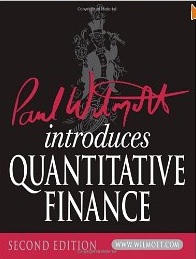

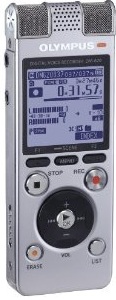



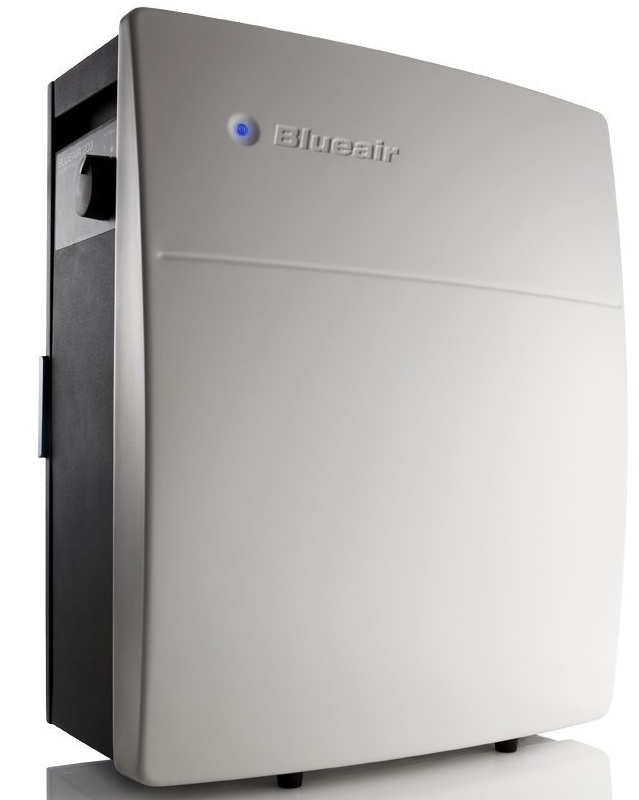







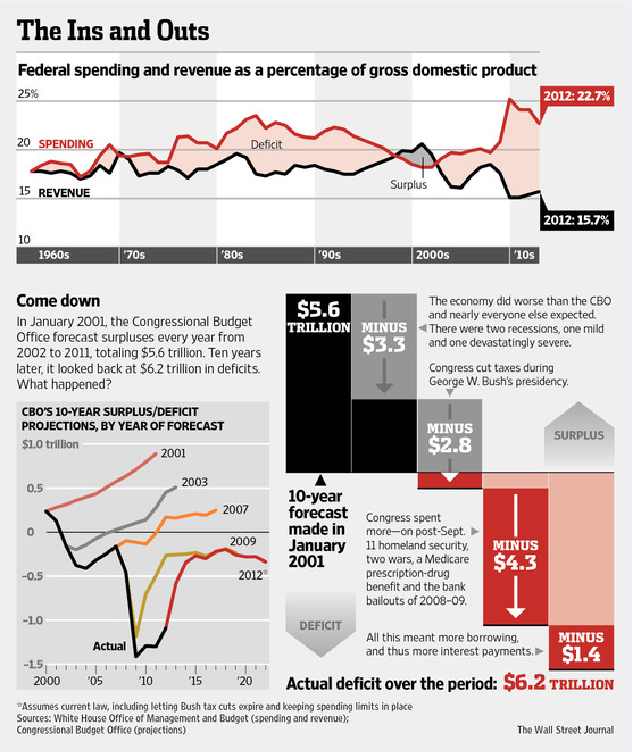



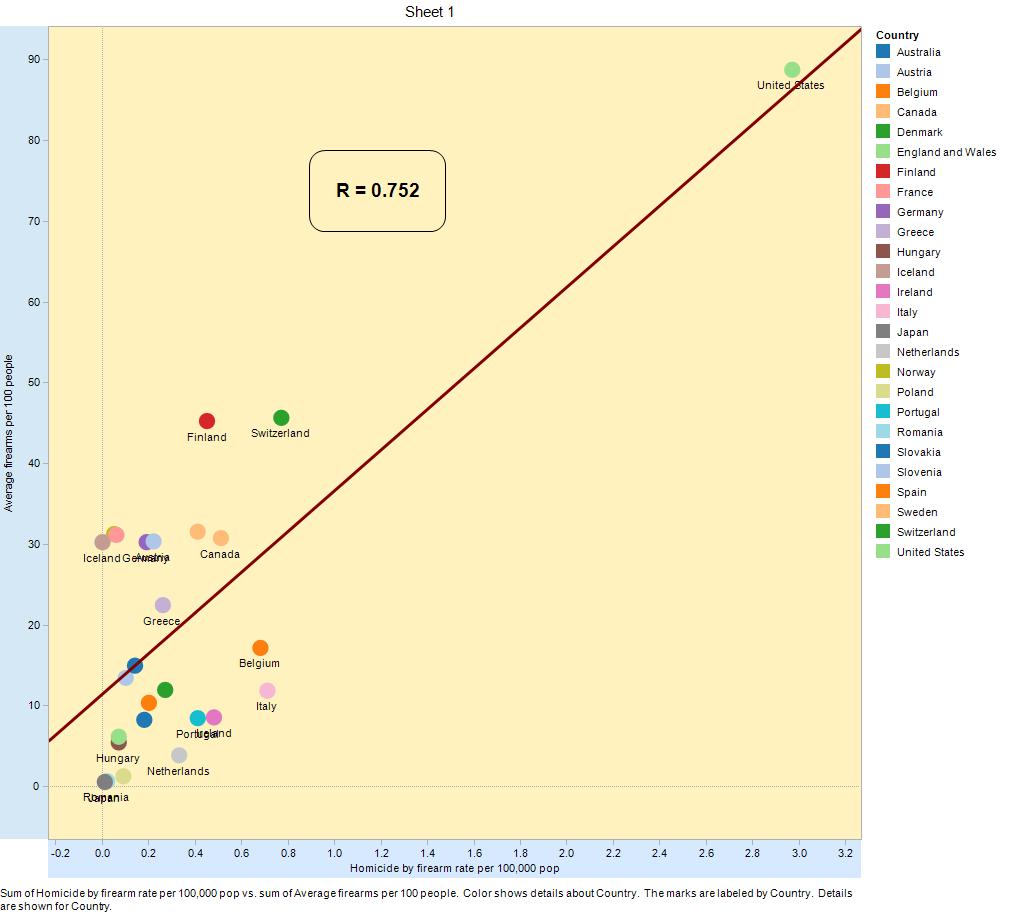



| You are subscribed to email updates from The Big Picture To stop receiving these emails, you may unsubscribe now. | Email delivery powered by Google |
| Google Inc., 20 West Kinzie, Chicago IL USA 60610 | |



0 comments:
Post a Comment