


The Big Picture |

- It’s Not a Tax or Spending Problem … It’s a Devolution Into Lawlessness
- What Is The Purpose of QE?
- Classical Music: A History According to YouTube
- Gun Stats, Research and Sources
- Tax the Rich (An Animated Fairy Tale)
- Fact Check: Guns in America
- Looking on the Bright Side
- Astronaut Self Portrait
- The Federal Reserve’s Balance Sheet and Overnight Interest Rates
- 10 Christmas Day Reads
- MacroNotes is on vacation until Jan 2
| It’s Not a Tax or Spending Problem … It’s a Devolution Into Lawlessness Posted: 25 Dec 2012 10:30 PM PST It's Not a "Fiscal Cliff" … It's the Descent Into LawlessnessThe "fiscal cliff" is a myth. Instead, what we are facing is a descent into lawlessness. Wikipedia notes:
Indeed, the IMF has already performed a complete audit of the whole US financial system, something which they have only previously done to broke third world nations. Economist Marc Faber calls the U.S. a "failed state". Indeed, we no longer have a free market economy … we have fascism, communist style socialism, kleptocracy, oligarchy or banana republic style corruption. Let's look at some specific examples of our descent into lawlessness. Lawless Looting and Redistribution of WealthThe central banks' central bank – the Bank for International Settlements- warned in 2008 that bailouts of the big banks would create sovereign debt crises … which could bankrupt nations. That is exactly what has happened. The big banks went bust, and so did the debtors. But the government chose to save the big banks instead of the little guy, thus allowing the banks to continue to try to wring every penny of debt out of debtors. Treasury Secretary Paulson shoved bailouts down Congress' throat by threatening martial law if the bailouts weren't passed. And the bailouts are now perpetual.
Moreover, a large percentage of the bailouts went to foreign banks (and see this). And so did a huge portion of the money from quantitative easing. Indeed, the Fed bailed out Gaddafi's Bank of Libya), hedge fund billionaires, and big companies, but turned its back on the little guy. A study of 124 banking crises by the International Monetary Fund found that propping up banks which are only pretending to be solvent often leads to austerity:
In other words, the "stimulus" to the banks blows up the budget, "squeezing" public services through austerity. Numerous top economists say that the bank bailouts are the largest robbery and redistribution of wealth in history. Why was this illegal? Well, the top white collar fraud expert in the country says that the Bush and Obama administrations broke the law by failing to break up insolvent banks … instead of propping them up by bailing them out. And the Special Inspector General of the Tarp bailout program said that the Treasury Secretary lied to Congress regarding some fundamental aspects of Tarp – like pretending that the banks were healthy, when they were totally insolvent. The Secretary also falsely told Congress that the bailouts would be used to dispose of toxic assets … but then used the money for something else entirely. Making false statements to a federal official is illegal, pursuant to 18 United States Code Section 1001. So breaking the rules to bail out the big, insolvent banks, is destroying our prosperity. Lawless Justice SystemA strong rule of law is essential for a prosperous and stable economy, yet the government made it official policy not to prosecute fraud, even though criminal fraud is the main business model adopted by the giant banks. The perpetrators of the biggest financial crime in world history, the largest insider trading scandal of all time, illegal raiding of customer accounts and blatant financing of drug cartels and terrorists have all gotten away scot-free without any jail time. There are two systems of justice in America … one for the big banks and other fatcats, and one for everyone else. While Iceland prosecuted its top criminal bankers, and thus quickly got through its financial problems and now has a vibrant economy, the American government has done everything it can to cover up fraud, and has been actively encouraging criminal fraud and attacking those trying to blow the whistle. The rule of law is now as weak in the U.S. and UK as many countries which we would consider "rogue nations". See this, this, this, this, this, this, this, this, this, this and this. This is a sudden change. As famed Peruvian economist Hernando de Soto notes:
Moreover, U.S. government personnel are on the take. They have become so corrupt that regulators are literally sleeping with industry prostitutes … while they pimp out the American people. The corruption of government officials is staggering, and the system of government-sponsored rating agencies had at its core a model of bribery. We've gone from a nation of laws to a nation of powerful men making one-sided laws to protect their own interests … in secret. Government folks are using laws to crush dissent. It's gotten so bad that even U.S. Supreme Court justices are saying that we are descending into tyranny. It's not a "fiscal cliff" … it's an attempt to rape America … just like Greece and Ireland have been plundered. Economics professor Randall Wray writes:
Economics professor Michael Hudson agrees … saying that the banks are trying to roll back all modern laws and make us all serfs. Professor Hudson explained in 2008:
A lawless justice system is ruining the economy. Lawless Central BankThe non-partisan Government Accountability Office calls the Fed corrupt and riddled with conflicts of interest. Nobel prize winning economist Joseph Stiglitz agrees, saying that the World Bank would view any country which had a banking structure like the Fed as being corrupt and untrustworthy. The former vice president at the Federal Reserve Bank of Dallas said said he worried that the failure of the government to provide more information about its rescue spending could signal corruption. "Nontransparency in government programs is always associated with corruption in other countries, so I don't see why it wouldn't be here," he said. Moreover, the Fed has broken the law by withholding information from Congress, letting unemployment rise in order to keep inflation low, and otherwise exceeding its authority under the Federal Reserve Act. Acting in a lawless and unaccountable fashion is hurting the economy. Lawless Attack on DemocracyThe ability of the people to participate in their government's decision-making is vital for a nation's prosperity. But we no longer have democracy or a republican form of government in America. The big banks own Washington D.C. politicians, lock stock and barrel. See this, this, this and this. Two leading IMF officials, the former Vice President of the Dallas Federal Reserve, and the the head of the Federal Reserve Bank of Kansas City, Moody's chief economist and many others have all said that the United States is controlled by an "oligarchy" or "oligopoly", and the big banks and giant financial institutions are key players in that oligarchy. Laws are being passed in secret, and not even Congress knows what's going on. In other words, not only the justice system, but the entire system of American representation has been corrupted, thus harming the economy. Lawless Infringement of FreedomPersonal freedom and liberty – and freedom from the arbitrary exercise of government power – are strongly correlated with a healthy economy, but America is descending into tyranny. Authoritarian actions by the government interfere with the free market, and thus harm prosperity. U.S. News and World Report notes:
The Cato institute notes:
But the American government has shredded the constitution, by subjecting us to indefinite detention, taking away our due process rights, deploying drones above our heads, spying on all Americans, and otherwise acting in attacking our freedoms. Indeed, rights won in 1215 – in the Magna Carta – are being repealed. Economic historian Niall Ferguson notes, draconian national security laws are one of the main things undermining the rule of law:
Of course, many of this decades' national security measures have not been taken to keep us safe in the "post-9/11 world" … indeed, many of them started before 9/11. And America has been in a continuous declared state of national emergency since 9/11, and we are in a literally never-ending state of perpetual war. See this, this, this and this. In fact, government has blown terrorism fears way out of proportion for political purposes, and "national security" powers have been used in many ways to exempt big Wall Street players from the rule of law rather than to do anything to protect us. So lawlessness infringement of our liberty is destroying our prosperity. Lawless Initiation and Prosecution of WarIt is well-documented that war destroys the economy. Top U.S. government employees lied us into war, and used illegal torture, assassinations and other crimes of war in prosecuting the wars they unnecessarily started. They were – at a minimum – criminally negligent for failing to stop 9/11 (and see this). In the name of fighting our enemies – the U.S. has directly been supporting Al Qaeda and other terrorist groups for the last decade. See this, this, this, this and this. Our use of torture has also created many more terrorists than it has prevented. Security experts – including both conservatives and liberals – agree that waging war in the Middle East weakens national security and increases terrorism. See this, this, this, this, this, this, this and this. Indefinite detention, drone-strikes on innocent civilians, occupation of foreign countries, and most of America's other tactics in the "war on terror" increase terrorism. Terrorism feeds the cycle of war … and is thus harming our economy. (and because terrorism spooks people, they spend less, which further harms the economy). So lawlessness in starting and prosecuting war is destroying our prosperity. Postscript: We're not facing a "fiscal cliff". We're facing a descent into lawlessness. Stopping the fraudulent schemes, endless bailouts and imperial adventures is the place to start. |
| Posted: 25 Dec 2012 02:00 PM PST As detailed earlier in the month, the Federal Reserve announced more stimulus, otherwise known as QE4, at its recent meeting. Lots of the discussion thus far has focused on whether or not QE will happen and not on the purpose of QE. What we discuss below is a good example of economists discussing the probability of QE rather than why QE is necessary or what it will accomplish. So, what is QE supposed to do? Bernanke told us in his speech over the summer in Jackson Hole: “After nearly four years of experience with large-scale asset purchases, a substantial body of empirical work on their effects has emerged. Generally, this research finds that the Federal Reserve's large-scale purchases have significantly lowered long-term Treasury yields. For example, studies have found that the $1.7 trillion in purchases of Treasury and agency securities under the first LSAP program reduced the yield on 10-year Treasury securities by between 40 and 110 basis points. The $600 billion in Treasury purchases under the second LSAP program has been credited with lowering 10-year yields by an additional 15 to 45 basis points.12 Three studies considering the cumulative influence of all the Federal Reserve's asset purchases, including those made under the MEP, found total effects between 80 and 120 basis points on the 10-year Treasury yield.13 These effects are economically meaningful. LSAPs also appear to have boosted stock prices, presumably both by lowering discount rates and by improving the economic outlook; it is probably not a coincidence that the sustained recovery in U.S. equity prices began in March 2009, shortly after the FOMC's decision to greatly expand securities purchases. This effect is potentially important because stock values affect both consumption and investment decisions. While there is substantial evidence that the Federal Reserve's asset purchases have lowered longer-term yields and eased broader financial conditions, obtaining precise estimates of the effects of these operations on the broader economy is inherently difficult, as the counterfactual–how the economy would have performed in the absence of the Federal Reserve's actions–cannot be directly observed. If we are willing to take as a working assumption that the effects of easier financial conditions on the economy are similar to those observed historically, then econometric models can be used to estimate the effects of LSAPs on the economy. Model simulations conducted at the Federal Reserve generally find that the securities purchase programs have provided significant help for the economy. For example, a study using the Board's FRB/US model of the economy found that, as of 2012, the first two rounds of LSAPs may have raised the level of output by almost 3 percent and increased private payroll employment by more than 2 million jobs, relative to what otherwise would have occurred.15 This is not the first time the Federal Reserve has laid out this argument. In a November 4, 2010 Washington Post op-ed, the day after QE2 was approved, Ben Bernanke defended their actions with the following passage: Easier financial conditions will promote economic growth. For example, lower mortgage rates will make housing more affordable and allow more homeowners to refinance. Lower corporate bond rates will encourage investment. And higher stock prices will boost consumer wealth and help increase confidence, which can also spur spending. Increased spending will lead to higher incomes and profits that, in a virtuous circle, will further support economic expansion. And in January 2011 Bernanke said: Federal Reserve Board Chairman Ben Bernanke said Thursday that a controversial $600 billion bond buying plan has contributed to a stronger stock market. "Our policies have contributed to a stronger stock market just as they did in March 2009 when we did the first iteration of this program," Bernanke said at a Federal Deposit Insurance Corp. forum on small businesses. "A stronger economy helps small businesses more than larger businesses. Interest rates are higher but that's mostly because the news is better. It has responded to a stronger economy and better expectations." To sum it all up:
We agree with half of what is written above.
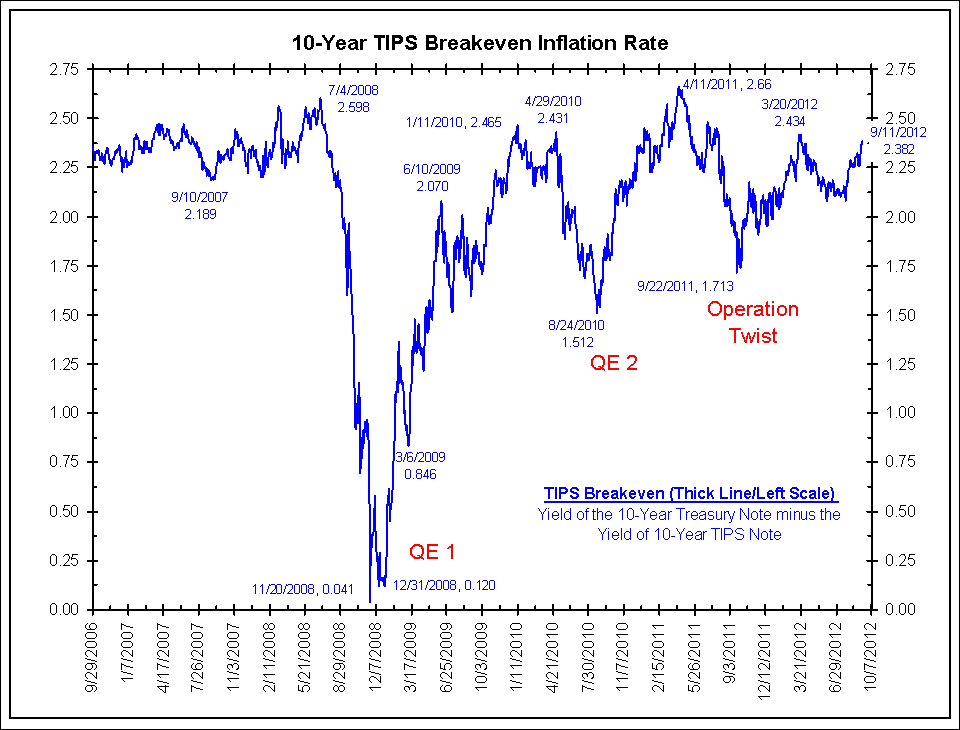
QE is great for Wall Street as it produces more volatility (brokers like this), higher stocks prices (fund managers like this) and draws lots of attention (analysts like this). It is not good for Main Street because it does not create wealth. QE's effects are not perceived to be permanent, so it does not lead to higher GDP or job growth. What Will The Federal Reserve Do? In Septmber we noted that the median expectation in a survey of primary dealers calls for $500 billion of additional purchases heavily tilted toward mortgage-backed securities. If the purpose of QE is to push stock prices higher, then the Federal Reserve has to deliver at least $500 billion in purchases. Otherwise it will disappoint risk markets. Right now, if we have to guess, we believe the Federal Reserve will announce purchases of less than $500 billion. In January the Federal Reserve adopted an inflation target of 2.0%. As we detailed in a conference call last month, inflation expectations are running well above this target. One measure of inflation expectations, the 10-year TIPS inflation breakeven rate, is shown below. Further, in April, when Bernanke was asked if he would adopt a suggestion from Paul Krugman to expand the target to 3%, he flatly rejected the idea. The hawks will argue expected inflation is too high to add more stimulus, an argument which will carry some weight. The compromise will be a program of less than $500 billion in purchases which will disappoint the markets. Click to enlarge:
Source: Arbor Research
For more information on this institutional research, please contact: Max Konzelman |
| Classical Music: A History According to YouTube Posted: 25 Dec 2012 11:00 AM PST Source: Limelight Magazine |
| Gun Stats, Research and Sources Posted: 25 Dec 2012 09:00 AM PST Since this is a day dedicated to peace, here are some sources for those of you interested in facts and data and stuff:
The factual data is pretty sobering . . . |
| Tax the Rich (An Animated Fairy Tale) Posted: 25 Dec 2012 07:00 AM PST Tax the rich: An animated fairy tale, is narrated by Ed Asner, with animation by Mike Konopacki. Written and directed by Fred Glass for the California Federation of Teachers. An 8 minute video about how we arrived at this moment of poorly funded public services and widening economic inequality. Things go downhill in a happy and prosperous land after the rich decide they don’t want to pay taxes anymore. They tell the people that there is no alternative, but the people aren’t so sure. This land bears a startling resemblance to our land. For more info, www.cft.org. |
| Posted: 25 Dec 2012 06:00 AM PST
Merry Christmas.
Sources Kenneth D. Kochanek, Jiaquan Xu, Sherry L. Murphy, Arialdi M. Minino, and Hsiang-Ching Kung. “Deaths: Final Data for 2009.” National Vital Statistics Reports. Dec. 19, 2011. Christpher S. Koper. “Crime Gun Risk Factors: Buyer, Seller, Firearm, and Transaction Characteristics Associated with Gun Trafficking and Criminal Gun Use.” Jerry Lee Center of Criminology, University of Pennsylvania. 2007. “Point, Click, Fire: An Investigation Of Illegal Online Gun Sales.” City of New York. December 2011. Caroline Wolf Harlow. “Firearm Use by Offenders.” U.S. Bureau of Justice Statistics. November 2001. Sam Stein. “Gun Owners Surveyed By Frank Luntz Express Broad Support For Gun Control Policies.” The Huffington Post. Jul. 24, 2012. U.S. Code, Title 18, Section 924(c) U.S. Code, Title 18, Section 2316 Ezra Klein. “Twelve Facts About Guns and Mass Shootings in the United States.” The Washington Post. Dec. 14, 2012. Erin G. Richardson and David Hemenway. “Homicide, Suicide, and Unintentional Firearm Fatality: Comparing the United States With Other High Income Countries, 2003.” The Journal of Trauma, Injury, Infection and Critical Care. January 2011. |
| Posted: 25 Dec 2012 05:30 AM PST Looking on the Bright Side By John Mauldin December 24, 2012
Go See Lincoln |
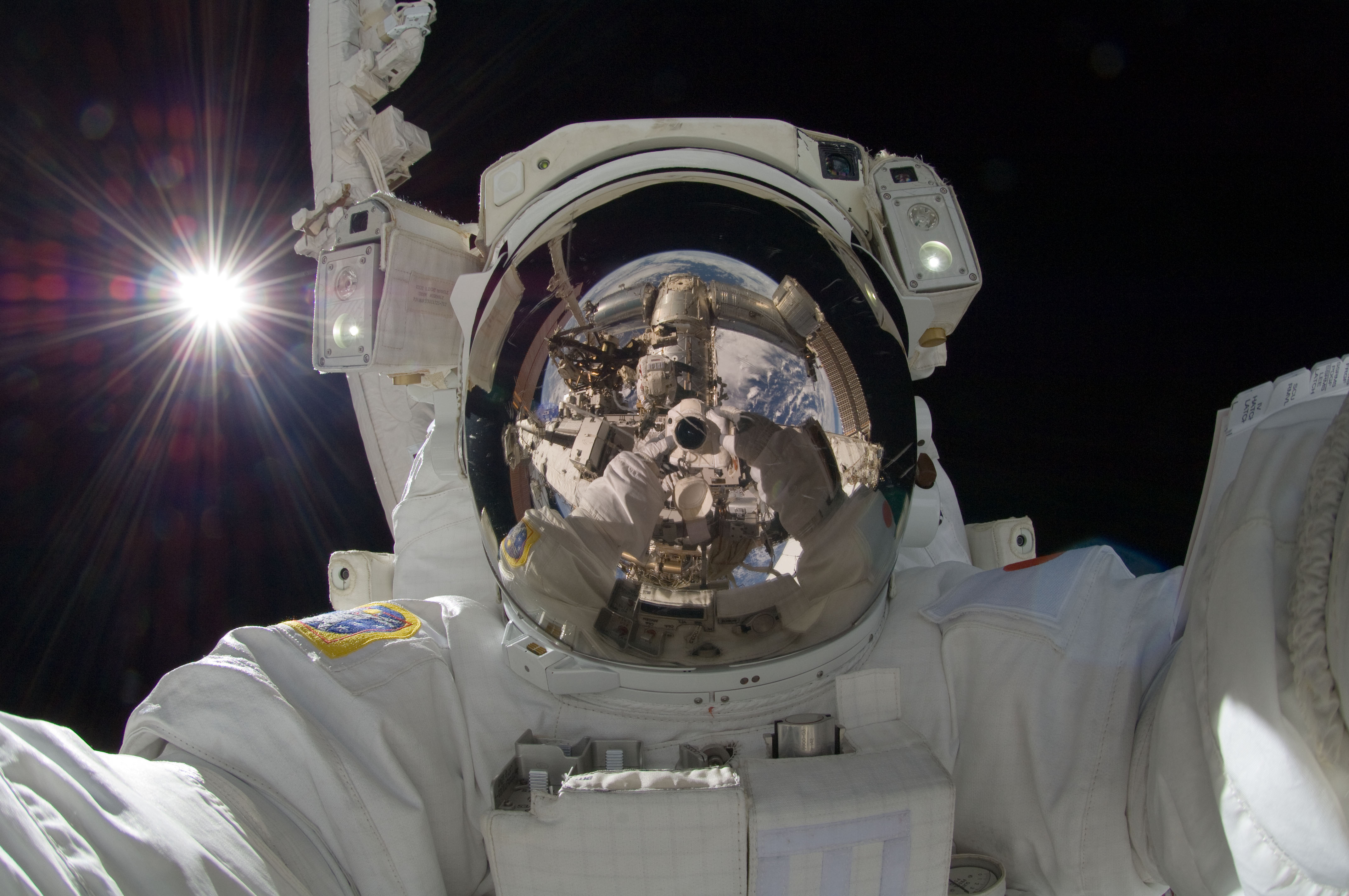
| Posted: 25 Dec 2012 05:00 AM PST click for ginormous photo |
| The Federal Reserve’s Balance Sheet and Overnight Interest Rates Posted: 25 Dec 2012 03:00 AM PST |
| Posted: 25 Dec 2012 03:00 AM PST While you wait for the family to wake up, here are some reads to keep you busy:
What do you want for Shopmas?
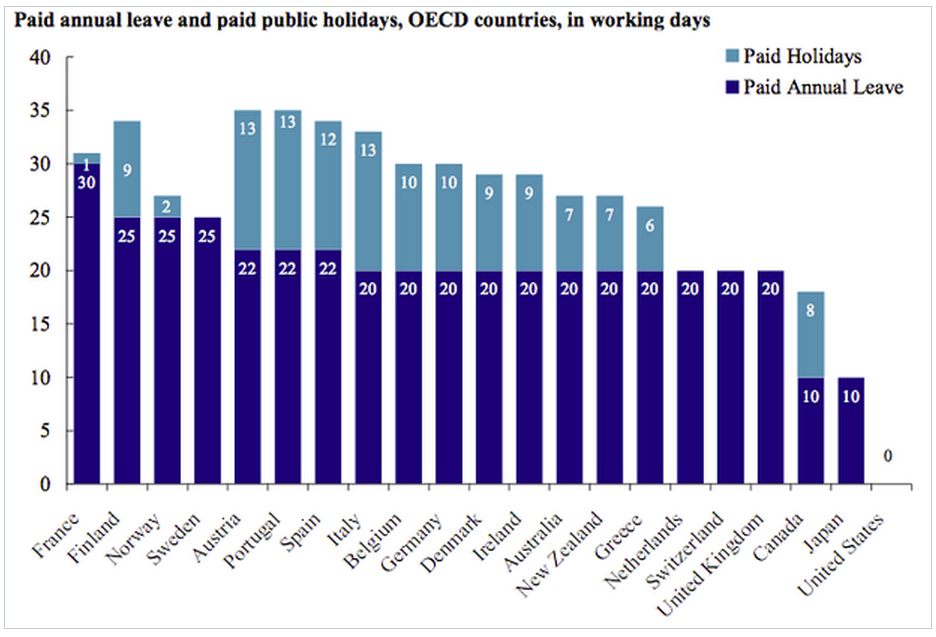
Why Do Americans Have Less Vacation Time than Anyone Else? |
| MacroNotes is on vacation until Jan 2 Posted: 24 Dec 2012 10:00 AM PST Have a happy & healthy holiday! -Peter Boockvar |

| You are subscribed to email updates from The Big Picture To stop receiving these emails, you may unsubscribe now. | Email delivery powered by Google |
| Google Inc., 20 West Kinzie, Chicago IL USA 60610 | |



0 comments:
Post a Comment