.

{2} GoogleTranslate (H)

English French German Spanish Italian Dutch Russian Portuguese Japanese Korean Arabic Chinese Simplified

Our New Stuff

{3} up AdBrite + eToro

Your Ad Here

Wednesday, December 26, 2012

The Big Picture

The Big Picture


It’s Not a Tax or Spending Problem … It’s a Devolution Into Lawlessness

Posted: 25 Dec 2012 10:30 PM PST

It's Not a "Fiscal Cliff" … It's the Descent Into Lawlessness

The "fiscal cliff" is a myth.

Instead, what we are facing is a descent into lawlessness.

Wikipedia notes:

In many situations, austerity programs are imposed on countries that were previously under dictatorial regimes, leading to criticism that populations are forced to repay the debts of their oppressors.

Indeed, the IMF has already performed a complete audit of the whole US financial system, something which they have only previously done to broke third world nations.

Economist Marc Faber calls the U.S. a "failed state".   Indeed, we no longer have a free market economy … we have fascism, communist style socialism, kleptocracy, oligarchy or banana republic style corruption.

Let's look at some specific examples of our descent into lawlessness.

Lawless Looting and Redistribution of Wealth

The central banks' central bank – the Bank for International Settlements- warned in 2008 that bailouts of the big banks would create sovereign debt crises … which could bankrupt nations.

That is exactly what has happened.

The big banks went bust, and so did the debtors.  But the government chose to save the big banks instead of the little guy, thus allowing the banks to continue to try to wring every penny of debt out of debtors.

Treasury Secretary Paulson shoved bailouts down Congress' throat by threatening martial law if the bailouts weren't passed. And the bailouts are now perpetual.

Moreover:

The bailout money is just going to line the pockets of the wealthy, instead of helping to stabilize the economy or even the companies receiving the bailouts:

  • A lot of the bailout money is going to the failing companies' shareholders
  • Indeed, a leading progressive economist says that the true purpose of the bank rescue plans is "a massive redistribution of wealth to the bank shareholders and their top executives"
  • The Treasury Department encouraged banks to use the bailout money to buy their competitors, and pushed through an amendment to the tax laws which rewards mergers in the banking industry (this has caused a lot of companies to bite off more than they can chew, destabilizing the acquiring companies)

And as the New York Times notes, "Tens of billions of [bailout] dollars have merely passed through A.I.G. to its derivatives trading partners".

***

In other words, through a little game-playing by the Fed, taxpayer money is going straight into the pockets of investors in AIG's credit default swaps and is not even really stabilizing AIG.

Moreover, a large percentage of the bailouts went to foreign banks (and see this). And so did a huge portion of the money from quantitative easing.  Indeed, the Fed bailed out Gaddafi's Bank of Libya), hedge fund billionaires, and big companies, but turned its back on the little guy.

A study of 124 banking crises by the International Monetary Fund found that propping up banks which are only pretending to be solvent often leads to austerity:

Existing empirical research has shown that providing assistance to banks and their borrowers can be counterproductive, resulting in increased losses to banks, which often abuse forbearance to take unproductive risks at government expense. The typical result of forbearance is a deeper hole in the net worth of banks, crippling tax burdens to finance bank bailouts, and even more severe credit supply contraction and economic decline than would have occurred in the absence of forbearance.

Cross-country analysis to date also shows that accommodative policy measures (such as substantial liquidity support, explicit government guarantee on financial institutions' liabilities and forbearance from prudential regulations) tend to be fiscally costly and that these particular policies do not necessarily accelerate the speed of economic recovery.

***

All too often, central banks privilege stability over cost in the heat of the containment phase: if so, they may too liberally extend loans to an illiquid bank which is almost certain to prove insolvent anyway. Also, closure of a nonviable bank is often delayed for too long, even when there are clear signs of insolvency (Lindgren, 2003). Since bank closures face many obstacles, there is a tendency to rely instead on blanket government guarantees which, if the government's fiscal and political position makes them credible, can work albeit at the cost of placing the burden on the budget, typically squeezing future provision of needed public services.

In other words, the "stimulus" to the banks blows up the budget, "squeezing" public services through austerity.

Numerous top economists say that the bank bailouts are the largest robbery and redistribution of wealth in history.

Why was this illegal?   Well, the top white collar fraud expert in the country says that the Bush and Obama administrations broke the law by failing to break up insolvent banks … instead of propping them up by bailing them out.

And the Special Inspector General of the Tarp bailout program said that the Treasury Secretary lied to Congress regarding some fundamental aspects of Tarp – like pretending that the banks were healthy, when they were totally insolvent.  The Secretary also falsely told Congress that the bailouts would be used to dispose of toxic assets … but then used the money for something else entirely.  Making false statements to a federal official is illegal, pursuant to 18 United States Code Section 1001.

So breaking the rules to bail out the big, insolvent banks, is destroying our prosperity.

Lawless Justice System

A strong rule of law is essential for a prosperous and stable economy, yet the government made it official policy not to prosecute fraud, even though criminal fraud is the main business model adopted by the giant banks.

The perpetrators of the biggest financial crime in world history, the largest insider trading scandal of all time, illegal raiding of customer accounts and blatant financing of drug cartels and terrorists have all gotten away scot-free without any jail time.

There are two systems of justice in America … one for the big banks and other fatcats, and one for everyone else.

While Iceland prosecuted its top criminal bankers, and thus quickly got through its financial problems and now has a vibrant economy, the American government has done everything it can to cover up fraud, and has been actively encouraging criminal fraud and attacking those trying to blow the whistle.

The rule of law is now as weak in the U.S. and UK as many countries which we would consider "rogue nations".    See this, this, this, this, this, this, this, this, this, this and this.

This is a sudden change.  As famed Peruvian economist Hernando de Soto notes:

In a few short decades the West undercut 150 years of legal reforms that made the global economy possible.

Moreover, U.S. government personnel are on the take.  They have become so corrupt that regulators are literally sleeping with industry prostitutes … while they pimp out the American people.

The corruption of government officials is staggering, and the system of government-sponsored rating agencies had at its core a model of bribery.

We've gone from a nation of laws to a nation of powerful men making one-sided laws to protect their own interestsin secret. Government folks are using laws to crush dissent. It's gotten so bad that even U.S. Supreme Court justices are saying that we are descending into tyranny.

It's not a "fiscal cliff" … it's an attempt to rape America … just like Greece and Ireland have been plundered.

Economics professor Randall Wray writes:

Thieves … took over the whole economy and the political system lock, stock, and barrel. They didn't just blow up finance, they oversaw the swiftest transfer of wealth to the very top the world has ever seen. They screwed workers out of their jobs, they screwed homeowners out of their houses, they screwed retirees out of their pensions, and they screwed municipalities out of their revenues and assets.

Financiers are forcing schools, parks, pools, fire departments, senior citizen centers, and libraries to shut down. They are forcing national governments to auction off their cultural heritage to the highest bidder. Everything must go in firesales at prices rigged by twenty-something traders at the biggest and most corrupt institutions the world has ever known.

Economics professor Michael Hudson agrees … saying that the banks are trying to roll back all modern laws and make us all serfs.

Professor Hudson explained in 2008:

You have to realize that what they're trying to do is to roll back the Enlightenment, roll back the moral philosophy and social values of classical political economy and its culmination in Progressive Era legislation, as well as the New Deal institutions. They're not trying to make the economy more equal, and they're not trying to share power. Their greed is (as Aristotle noted) infinite. So what you find to be a violation of traditional values is a re-assertion of pre-industrial, feudal values. The economy is being set back on the road to debt peonage. The Road to Serfdom is not government sponsorship of economic progress and rising living standards, it's the dismantling of government, the dissolution of regulatory agencies, to create a new feudal-type elite.

Indeed:

Foreign Policy magazine ran an article entitled "The Next Big Thing: Neomedievalism", arguing that the power of nations is declining, and being replaced by corporations, wealthy individuals, the sovereign wealth funds of monarchs, and city-regions.

Indeed, this isn't the "Great Recession", it's the Great Bank Robbery. The big banks have pillaged and lootedthe rest of the world.

A lawless justice system is ruining the economy.

Lawless Central Bank

The non-partisan Government Accountability Office calls the Fed corrupt and riddled with conflicts of interest.   Nobel prize winning economist Joseph Stiglitz agrees, saying that the World Bank would view any country which had a banking structure like the Fed as being corrupt and untrustworthy. The former vice president at the Federal Reserve Bank of Dallas said said he worried that the failure of the government to provide more information about its rescue spending could signal corruption. "Nontransparency in government programs is always associated with corruption in other countries, so I don't see why it wouldn't be here," he said.

Moreover, the Fed has broken the law by withholding information from Congress, letting unemployment rise in order to keep inflation low, and otherwise exceeding its authority under the Federal Reserve Act.

Acting in a lawless and unaccountable fashion is hurting the economy.

Lawless Attack on Democracy

The ability of the people to participate in their government's decision-making is vital for a nation's prosperity. But we no longer have democracy or a republican form of government in America.

The big banks own Washington D.C. politicians, lock stock and barrel.  See this, this, this and thisTwo leading IMF officials, the former Vice President of the Dallas Federal Reserve, and the the head of the Federal Reserve Bank of Kansas City, Moody's chief economist and many others have all said that the United States is controlled by an "oligarchy" or "oligopoly", and the big banks and giant financial institutions are key players in that oligarchy.

Laws are being passed in secret, and not even Congress knows what's going on.

In other words, not only the justice system, but the entire system of American representation has been corrupted, thus harming the economy.

Lawless Infringement of Freedom

Personal freedom and liberty – and freedom from the arbitrary exercise of government power – are strongly correlated with a healthy economy, but America is descending into tyranny.

Authoritarian actions by the government interfere with the free market, and thus harm prosperity.

U.S. News and World Report notes:

The Fraser Institute's latest Economic Freedom of the World Annual Report is out, and the news is not good for the United States. Ranked among the five freest countries in the world from 1975 through 2002, the United States has since dropped to 18th place.

The Cato institute notes:

The United States has plummeted to 18th place in the ranked list, trailing such countries as Estonia, Taiwan, and Qatar.

***

Actually, the decline began under President George W. Bush. For 20 years the U.S. had consistently ranked as one of the world's three freest economies, along with Hong Kong and Singapore. By the end of the Bush presidency, we were barely in the top ten.

And, as with so many disastrous legacies of the Bush era, Barack Obama took a bad thing and made it worse.

But the American government has shredded the constitution, by subjecting us to indefinite detention, taking away our due process rights, deploying drones above our heads, spying on all Americans, and otherwise acting in attacking our freedoms.

Indeed, rights won in 1215 – in the Magna Carta – are being repealed.

Economic historian Niall Ferguson notes, draconian national security laws are one of the main things undermining the rule of law:

We must pose the familiar question about how far our civil liberties have been eroded by the national security state – a process that in fact dates back almost a hundred years to the outbreak of the First World War and the passage of the 1914 Defence of the Realm Act. Recent debates about the protracted detention of terrorist suspects are in no way new. Somehow it's always a choice between habeas corpus and hundreds of corpses.

Of course, many of this decades' national security measures have not been taken to keep us safe in the "post-9/11 world" … indeed, many of them started before 9/11.

And America has been in a continuous declared state of national emergency since 9/11, and we are in a literally never-ending state of perpetual war. See this, this, this and this.

In fact, government has blown terrorism fears way out of proportion for political purposes, and "national security" powers have been used in many ways to exempt big Wall Street players from the rule of law rather than to do anything to protect us.

So lawlessness infringement of our liberty is destroying our prosperity.

Lawless Initiation and Prosecution of War

It is well-documented that war destroys the economy.

Top U.S. government employees lied us into war, and used illegal torture, assassinations and other crimes of war in prosecuting the wars they unnecessarily started. They were – at a minimum – criminally negligent for failing to stop 9/11 (and see this).

In the name of fighting our enemies – the U.S. has directly been supporting Al Qaeda and other terrorist groups for the last decade. See this, this, this, this and this.

Our use of torture has also created many more terrorists than it has prevented.

Security experts – including both conservatives and liberals – agree that waging war in the Middle East weakens national security and increases terrorism. See this, this, this, this, this, this, this and this.

Indefinite detention, drone-strikes on innocent civilians, occupation of foreign countries, and most of America's other tactics in the "war on terror" increase terrorism.

Terrorism feeds the cycle of war … and is thus harming our economy. (and because terrorism spooks people, they spend less, which further harms the economy).

So lawlessness in starting and prosecuting war is destroying our prosperity.

Postscript:  We're not facing a "fiscal cliff".  We're facing a descent into lawlessness.  Stopping the fraudulent schemes, endless bailouts and imperial adventures is the place to start.

What Is The Purpose of QE?

Posted: 25 Dec 2012 02:00 PM PST

As detailed earlier in the month, the Federal Reserve announced more stimulus, otherwise known as QE4, at its recent meeting.

Lots of the discussion thus far has focused on whether or not QE will happen and not on the purpose of QE.

What we discuss below is a good example of economists discussing the probability of QE rather than why QE is necessary or what it will accomplish.

So, what is QE supposed to do?  Bernanke told us in his speech over the summer in Jackson Hole:

“After nearly four years of experience with large-scale asset purchases, a substantial body of empirical work on their effects has emerged. Generally, this research finds that the Federal Reserve's large-scale purchases have significantly lowered long-term Treasury yields. For example, studies have found that the $1.7 trillion in purchases of Treasury and agency securities under the first LSAP program reduced the yield on 10-year Treasury securities by between 40 and 110 basis points. The $600 billion in Treasury purchases under the second LSAP program has been credited with lowering 10-year yields by an additional 15 to 45 basis points.12 Three studies considering the cumulative influence of all the Federal Reserve's asset purchases, including those made under the MEP, found total effects between 80 and 120 basis points on the 10-year Treasury yield.13 These effects are economically meaningful.

LSAPs also appear to have boosted stock prices, presumably both by lowering discount rates and by improving the economic outlook; it is probably not a coincidence that the sustained recovery in U.S. equity prices began in March 2009, shortly after the FOMC's decision to greatly expand securities purchases. This effect is potentially important because stock values affect both consumption and investment decisions.

While there is substantial evidence that the Federal Reserve's asset purchases have lowered longer-term yields and eased broader financial conditions, obtaining precise estimates of the effects of these operations on the broader economy is inherently difficult, as the counterfactual–how the economy would have performed in the absence of the Federal Reserve's actions–cannot be directly observed. If we are willing to take as a working assumption that the effects of easier financial conditions on the economy are similar to those observed historically, then econometric models can be used to estimate the effects of LSAPs on the economy. Model simulations conducted at the Federal Reserve generally find that the securities purchase programs have provided significant help for the economy. For example, a study using the Board's FRB/US model of the economy found that, as of 2012, the first two rounds of LSAPs may have raised the level of output by almost 3 percent and increased private payroll employment by more than 2 million jobs, relative to what otherwise would have occurred.15

This is not the first time the Federal Reserve has laid out this argument.  In a November 4, 2010 Washington Post op-ed, the day after QE2 was approved, Ben Bernanke defended their actions with the following passage:

Easier financial conditions will promote economic growth. For example, lower mortgage rates will make housing more affordable and allow more homeowners to refinance. Lower corporate bond rates will encourage investment. And higher stock prices will boost consumer wealth and help increase confidence, which can also spur spending. Increased spending will lead to higher incomes and profits that, in a virtuous circle, will further support economic expansion.

Federal Reserve Board Chairman Ben Bernanke said Thursday that a controversial $600 billion bond buying plan has contributed to a stronger stock market. "Our policies have contributed to a stronger stock market just as they did in March 2009 when we did the first iteration of this program," Bernanke said at a Federal Deposit Insurance Corp. forum on small businesses. "A stronger economy helps small businesses more than larger businesses. Interest rates are higher but that's mostly because the news is better. It has responded to a stronger economy and better expectations."

To sum it all up:

• The Federal Reserve buys Treasury bonds in order to push down interest rates, making them an unattractive investment (last shown here, page 6) .

• Investors respond by moving out the risk curve and buying assets like corporate bonds and stocks, pushing them higher.  The Federal Reserve believes this happens via the portfolio balance theory.

• But according to the Federal Reserve, moving out the risk curve does not include buying agricultural or crude oil futures, so do not blame them for higher food or gasoline prices.

• Higher asset prices create a wealth effect, which increases spending and confidence and improves the economy. The Federal Reserve believes this has helped create 2 million jobs.

We agree with half of what is written above.

• QE does produce lower interest rates, or at least the belief that rates are too low.  This then pushes investors out the risk curve which is why stocks have such an immediate and positive reaction whenever QE is speculated.

• The Federal Reserve is playing politics in regards to the effect of QE on commodity prices.  There is no reason to believe the risk curve ends at low-rated stocks.  How much QE affects food and gasoline prices can be debated, but to argue there is no effect at all, and will never be an effect under any scenario, merely because the Federal Reserve does not want to answer for these higher prices, is just wrong.

• The argument that higher asset prices produce a wealth effect is only partially correct.  Two conditions must be met for a wealth effect to ensue.  Net worth must reach a new high and it must be perceived to be permanent.  This is why housing produced such a powerful wealth effect before 2006.  Home prices always went up and their gains were perceived to be permanent.  Currently we have a retracement of losses and a widespread distrust of financial markets.  These conditions will not produce any wealth effect and we believe they have not.

QE is great for Wall Street as it produces more volatility (brokers like this), higher stocks prices (fund managers like this) and draws lots of attention (analysts like this).  It is not good for Main Street because it does not create wealth.  QE's effects are not perceived to be permanent, so it does not lead to higher GDP or job growth.

What Will The Federal Reserve Do?

In Septmber we noted that the median expectation in a survey of primary dealers calls for $500 billion of additional purchases heavily tilted toward mortgage-backed securities.   If the purpose of QE is to push stock prices higher, then the Federal Reserve has to deliver at least $500 billion in purchases.  Otherwise it will disappoint risk markets.

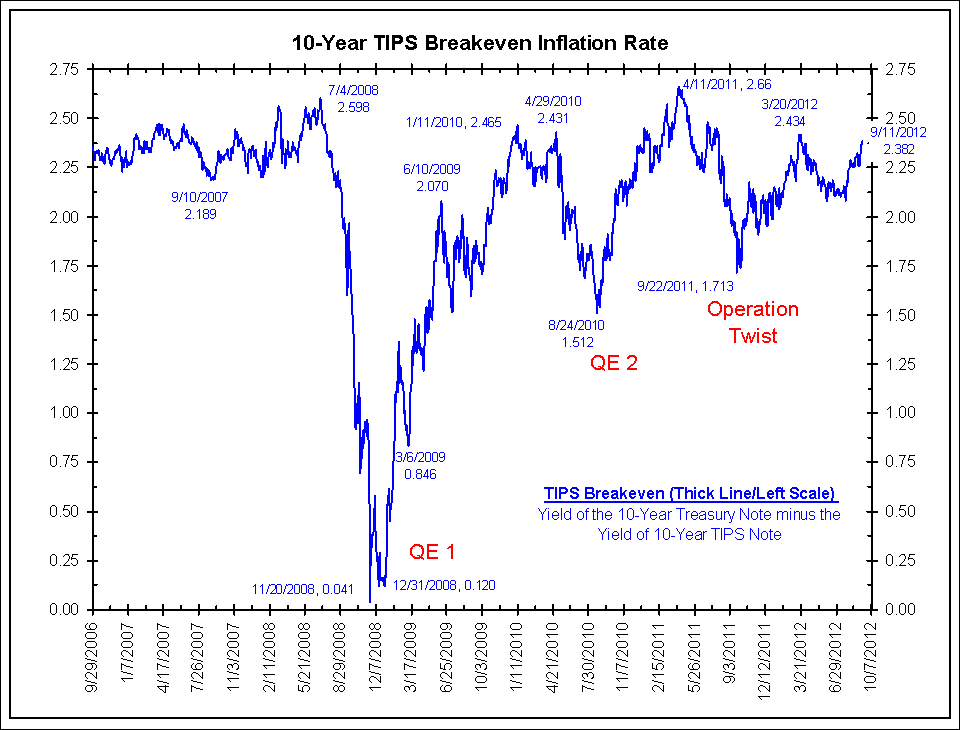
Right now, if we have to guess, we believe the Federal Reserve will announce purchases of less than $500 billion. In January the Federal Reserve adopted an inflation target of 2.0%.  As we detailed in a conference call last month, inflation expectations are running well above this target.  One measure of inflation expectations, the 10-year TIPS inflation breakeven rate, is shown below.  Further, in April, when Bernanke was asked if he would adopt a suggestion from Paul Krugman to expand the target to 3%, he flatly rejected the idea.

The hawks will argue expected inflation is too high to add more stimulus, an argument which will carry some weight.  The compromise will be a program of less than $500 billion in purchases which will disappoint the markets.

Click to enlarge:

Source: Arbor Research

For more information on this institutional research, please contact:

Max Konzelman
max.konzelman@arborresearch.com
800-606-1872

Classical Music: A History According to YouTube

Posted: 25 Dec 2012 11:00 AM PST

Gun Stats, Research and Sources

Posted: 25 Dec 2012 09:00 AM PST

Since this is a day dedicated to peace, here are some sources for those of you interested in facts and data and stuff:

Gun homicides and gun ownership listed by country (Guardian)
Harvard Injury Control Research Center says results are clear: more guns = more homicide.
12 Facts About Guns in the U.S. (Washington Post)
The gun control that works (Economist)
A Land Without Guns: How Japan Has Virtually Eliminated Shooting Deaths (The Atlantic)
Battleground America: The United States of Guns (New Yorker)
Six facts about guns, violence, and gun control (Washington Post)
The money behind the Newtown massacre (Fortune)
The Geography of U.S. Gun Violence: Gun deaths correlate to per capita gun ownership (The Atlantic)
Fifteen things to know about Australia's incredibly effective gun clampdown (Quartz)
• Pro Publica also reviews The Best Reporting on Guns in America

The factual data is pretty sobering . . .

Tax the Rich (An Animated Fairy Tale)

Posted: 25 Dec 2012 07:00 AM PST

Tax the rich: An animated fairy tale, is narrated by Ed Asner, with animation by Mike Konopacki. Written and directed by Fred Glass for the California Federation of Teachers. An 8 minute video about how we arrived at this moment of poorly funded public services and widening economic inequality. Things go downhill in a happy and prosperous land after the rich decide they don’t want to pay taxes anymore. They tell the people that there is no alternative, but the people aren’t so sure. This land bears a startling resemblance to our land.

For more info, www.cft.org.

Fact Check: Guns in America

Posted: 25 Dec 2012 06:00 AM PST


Merry Christmas.


Sources

Kenneth D. Kochanek, Jiaquan Xu, Sherry L. Murphy, Arialdi M. Minino, and Hsiang-Ching Kung. “Deaths: Final Data for 2009.” National Vital Statistics Reports. Dec. 19, 2011.

Christpher S. Koper. “Crime Gun Risk Factors: Buyer, Seller, Firearm, and Transaction Characteristics Associated with Gun Trafficking and Criminal Gun Use.” Jerry Lee Center of Criminology, University of Pennsylvania. 2007.

Looking on the Bright Side

Posted: 25 Dec 2012 05:30 AM PST

Looking on the Bright Side

By John Mauldin

December 24, 2012


Go See Lincoln
It Was Ever Thus
The Fiscal Cliff Is Not the Problem
Looking on the Bright Side
Shipping Hope This Year
Santa Barbara, Europe, and Toronto, etc.


It is Christmas Eve and not the time for long letters – just a brief note on why the fiscal cliff is not the End of All Things, and to point out a worthy cause led by some good friends of mine who are helping people who truly have no options in life. And we'll start things off with a movie review of sorts to launch us into a positive take on the year behind and the year ahead.

Go See Lincoln

Last night I watched Lincoln on the big screen with son Chad. I cannot recommend the movie enough. It should be required viewing, if a free society could require such things. Besides Daniel Day-Lewis being a lock for Best Actor (in what will be truly a line-up of high-powered actors this year), Tommie Lee Jones may also get one for Best Supporting Actor. Spielberg continues to produce wonderful movies that impact our thinking, and he deserves yet another Oscar, too.

This was Jones at his finest (I am admittedly a huge Tommie Lee Jones fanboy), and this performance decidedly evens up the balance sheet of my fellow Texan for nominating Al Gore at the Democratic Convention in 2000 (they were college roommates). Lincoln might get Best Picture, and it would if I were voting. By the middle of the movie I had completely forgotten that I was watching an actor playing Lincoln and felt as if I were watching Lincoln himself. I knew how the movie must end, yet was caught up in the drama of it all. This is storytelling at its finest.

When you watch the movie, note the continual character assassination among members of Congress, carried off with such acerbic brilliance by Jones. These people did not like each other – far more than our own current bland representatives do not like each other. It was a time of war and the Republicans had trounced the pro-slavery Democrats, yet Lincoln felt he could not wait for the end of the Civil War to push for the 13th Amendment, outlawing slavery. Passage required a two-thirds majority in the House, and those crucial votes against slavery would have disappeared in the haze of political deals. Even with the tide of history on its side, an amendment abolishing slavery would not pass the new, heavily Republican Congress without heroic efforts behind the scenes.

In a move that has been called quite historically accurate, Lincoln had to buy votes with appointments for Democratic representatives who had lost in the recent election. Getting those final 20 votes was a rather seamy undertaking in what all can now say was a supremely righteous cause. It has always been thus, sadly. Lincoln darkly mentioned the word "impeachment" as he described the slippery legal slope of his own Emancipation Proclamation, which he felt would no longer be valid if the war were to come to a too-early end.

It Was Ever Thus

The real point of the film is to get us thinking about our own times. And if there were similar movies about Adams and Jackson in the 1820s or about several other such tumultuous episodes in Washington, we would see that the current dysfunctionality in Washington DC is not that far from the norm. Whether we like it or not, this sort of tumult is part and parcel of the process of a two-party democracy. While we all think that our own times are different and worse than in some glorious past when cooperation reigned, they are not all that different.

I regularly hear from and read about Republicans denouncing Boehner as betraying the cause and Obama for being obstinate in refusing to negotiate honestly. But neither has Obama escaped excoriation by his own partisans. From Bruce Bartlett, writing in the Fiscal Times:

Yesterday, left-leaning law professor Neil Buchanan penned a scathing attack on Obama for abandoning the Democratic Party's long-held policies toward the poor, and for astonishing naiveté in negotiating with Republicans. Said Buchanan:

"The bottom line is that President Obama has already revealed himself to be unchanged by the election and by the last two years of stonewalling by the Republicans. He still appears to believe, at best, in a milder version of orthodox Republican fiscal conservatism – an approach that would be a fitting starting position for a right-wing politician in negotiations with an actual Democrat. Moreover, he still seems to believe that the Republicans are willing to negotiate in good faith."

Others on the left, such as New York Times columnist Paul Krugman, former Secretary of Labor Robert Reich and others raise similar concerns. They cannot understand why Obama, having won two elections in a row with better than 50 percent of the vote – something accomplished only by presidents Dwight Eisenhower and Ronald Reagan in the postwar era – and holding a powerful advantage due to the fiscal cliff, would seemingly appear willing to gut social spending while asking for only a very modest contribution in terms of taxes from the wealthy.

Ben Bernanke gave us the term "fiscal cliff" this past summer, and it has captured the public imagination. For someone who thinks he can control the economy, the ultimate disaster is to have a recession occur on his watch. Given that the toolbox that the Federal Reserve can bring to the next recession is essentially empty, it is a cliff indeed from Bernanke's perspective. And let's make no mistake: if nothing is done either before or shortly after the first of the year, our already weak economy will wander off into recession.

The Fiscal Cliff Is Not the Problem

Why would either side risk going over the cliff? Because there are greater issues than simply avoiding a recession in 2013. The real issue is the deficit. The leaders of both parties recognize that the current path spelled out on our fiscal balance sheet is unsustainable. The deficit must be brought under control (which is not the same as the budget being balanced), or we will find ourselves all too soon in the situation now facing much of Europe and Japan. The options at that point become far more dire. I take Senate Majority Leader Harry Reid at his word that he does not want to kick the can any further down the road. I might not like his solution of even higher taxes than are currently on the table, but I believe he is sincere in wanting to establish the means to pay for the full range of healthcare entitlements our citizens have been promised.

And that is the larger question before the nation: how much health care do we want, and how do we want to pay for it? If we look at the polls and the recent election results, it seems we want a great deal of health care – and we want someone else to pay for it. The economic consequences of not reforming the entire entitlement structure are lost on the average person and indeed on the average Congressman.

I'm the father of seven adult children. I watch them as they struggle to establish themselves in an economy that is not offering a lot of opportunities for higher-paying jobs. No doctors or lawyers among my children, just hard-working and ever-hopeful average citizens. Health care is a huge issue for them, as it is for their friends. In a world where the family safety net is getting smaller, young people are looking to the government for help.

Given that 40% of the voters in the last election were single and that singles are now the fastest-growing portion of the voting population, it is going be almost politically impossible to craft a Congressional majority that will favor going back to the level of government spending on health care that we saw even 10 years ago. Like it or not, the question is not whether we will have health care, but rather what form it will take and how much it will cost us.

My personal fear is that we will dramatically increase taxes but reform entitlement spending by only a small amount, and that will not get us even halfway to a manageable deficit. In the political reality that is Washington, that means that it would take the imposition of even higher taxes to finally achieve the reform that is necessary. And don't look now, but that means higher taxes on the middle class, in one form or another. If the 98% think they can avoid higher taxes, they are not paying attention. It is either that or we hit the true fiscal wall. Think Spain today or France in the near future.

The reality is that the bureaucratic nightmare that is Obamacare may force structural reforms, as the outcry in response to a healthcare system that is even more dysfunctional than today's will be deafening; but those reforms will not be accompanied by lower taxes. There may be structural tax reform, but it won't result in a lower tax burden on the economy.

Looking on the Bright Side

How then, you ask, can I see this historical moment in a positive light? Because our current challenges are just what we should expect from our democratic process. Do we face serious economic difficulties? Most assuredly. Less after-tax income? You can count on it. A Muddle-Through Economy for the rest of the decade? Highly likely. But we're not talking here about a battlefield through which the President must ride, surveying thousands of dead bodies of young men.

As I look back over the sweep of American history, I have to conclude that things are not all that bad today. We are still free to order our affairs as we see fit. The choices we have as investors are greater than ever before. The unbelievable pace of accelerating change will transform our society and economy over the next 20 years in ways that are difficult to imagine. That Transformational Society will create far more winners and losers than the current healthcare/entitlement crisis. Far better to think about how to take advantage of the changes ahead, rather than getting caught up in simply avoiding the rising tide of government.

You and I don't have to sit, passively clipping our ever-smaller coupons in a world of monetary repression. We can actively organize our affairs to take advantage of the opportunities that are laid in front of us, while avoiding as far as possible the consequences of poor government decisions that are being made without our personal consent.

Yes, it would be easier if we could go back to a world where the economy compounded at 3.5%, where the stock market gave you 7-10% on average every year, where you could get 6% on your bond portfolio and rely on your pension to be there. But that is not the world in which we find ourselves. And frankly, as I watched the dramatic scene of Lincoln riding through the battlefield prior to the surrender of the South at Appomattox, looking upon the thousands of dead young men, I thought to myself, "I don't live in bad times at all."

We live in a world where we can still make our own opportunities if we choose. And if we open our eyes, there is opportunity all around. Our country and much of the developed world may indeed fall into recession again, and we may continue to be saddled with a Muddle-Through Economy; but we can steer our own course rather than just drifting with the current, and we can find positive investments amidst the fragility of the markets.

I worry for my country and indeed for the people of the many countries whose governments have overextended their ability to pay for promised benefits. I will continue to work to try to reform our society. Yet, as I travel to countries that have gone through very difficult times and have large government burdens, I find entrepreneurs seeking to improve their own lives and those of their families and employees. I choose to be on that side of history.

Shipping Hope This Year

Almost 35 years ago, I found myself in a bunk bed in a camp in Omaha, Nebraska, sharing that little venue with a young and passionate man from New Zealand named John Dawson. We talked literally all night, and to this day I count him as one of my best friends. We have walked with each other through many interesting times.

He was with a group called Youth With a Mission (YWAM). I ended up joining YWAM for a few years as a volunteer before going back to the business world. John went on with the work, and he is now the head of YWAM, which has become the largest missionary organization in the world, working in 200 countries with 40,000 active volunteers and millions of former YWAMers all over the world. He regularly meets with the leaders of nations and has become a true global statesman. His insight into what motivates the people of a country, his sharing of their stories, and his deep understanding of how their youth are doing have made for some of the finest conversations of my life. John simply sees the countries of the world on a different level than most of us, and a far different one than the mainstream media brings us. If I want to know what is really happening on the streets of the world, I ask John. I simply don't get enough John time.

There is an interesting business case study that could be done on YWAM, as it has a true bottom-up, decentralized organization. Every volunteer is responsible for his or her own support, and the leaders of any one project have to figure out how to finance it. Through a ton of networking and moral support, YWAM has grown into the largest multinational organization of its type, with a wide variety of enterprises. YWAM trains its leaders and workers well, and dollar for dollar it may be one of the most effective forces for change in the world. In addition to working with young people all over the world, YWAM has a very large hands-on relief program. The organization's volunteers now come from all over the world, with US citizens being a decided minority. And this all happens without any command and control, but through principled persuasion and the force of ideas and ideals.

One of the things John and I talked about that night long ago was a vision of having a ship that would bring health care and emergency aid to those in need. Today that vision is a reality, with dozens of YWAM ships scattered around the world. The demand is so large that they have actually established a school to train seamen (and women), so they can staff their ships with volunteers.

They often take these ships into quite remote places where health care is simply nonexistent. There are few things more powerful than the efforts of a dedicated volunteer. These are people who pay their own way, who are willing to sail into remote areas, work hard each day, and return to their bunks on board each night knowing they helped others discover more in life. You can see the gratitude in the eyes of those they help. Whether they receive immunizations, healthcare education, clean-water technology, or a simple pair of glasses that enable them to go to school or back to work, people are grateful for all that a YWAM ship brings them.

I got this letter from Brett Curtis, who runs one of their operations:

In all we do, a major emphasis is – train the trainer! When what we offer is done with locals alongside to help and learn, and multiplication continues long after we are gone. Instruction from a midwife, in a place where 1 in 7 die during childbirth, brings life. Basic instruction in cleanliness and the benefits of using soap can make a huge difference and lift the reality that 1 in 13 die before the age of 5 due to the lack of basic sanitation. Bringing mosquito nets to villages where almost everyone (94%) is affected with malaria can turn their health around.

On December 24 we plan to be in Christmas Island and Fanning Island. Imagine living in a place where there is no fresh water, yet over 8,000 people live there. The well water available to them is contaminated with salt, so they have learned to mask the taste with sugar, which in turn creates all kinds of health issues. There is significant rainfall in the area, so our teams are helping with rainwater catchment techniques. Simple enough to do with knowledge and hands to work, yet the results from this simple solution can improve the lives and health of everyone. There are 1,000 inhabited islands in this part of the world, but 700 do not have airports, so the only way to assist them is to get there by boat. Many live isolated from simple solutions readily available to us. Deploying vessels with crew and cargo to meet need is something we can all be part of.

They are working in Papua New Guinea, which John tells me is as poor as Haiti. There are only 23 dentists in the entire nation. This is basic health care, far removed from what we are debating over this weekend. Entitlements, indeed.

You can learn more and join me in giving generously to YWAM by going to www.ywamships.net. We need more vessels sailing the liquid continents, making them pathways of connection instead of oceans of isolation! And you can be a part of that.

Santa Barbara, Europe, and Toronto, etc.

I am home for the holidays. Lots of the kids are downstairs wrapping presents and waiting for me to join them. I am going to take a few days and enjoy them. All of my seven and their significant others and five grandkids will be here on the 26th, when we will "officially" celebrate Christmas. Quite the houseful, noisy and fun! I will bake banana nut cake from my mother's recipe on Christmas, as well as do up prime rib and turkey and all the fixings the next day. We are already planning on going to see a few movies, too. There are really quite a few I want to see, and starting in January there won't be much time to see them.

I think I am going to go to Santa Barbara to spend a few days with partner Jon Sundt after the first of the year. He has a ranch home at the Hollister Ranch at the top of the mountains overlooking the ocean. He will be alone, and I too could use some time alone to think and write and plan for the new year, as well as write my 2013 forecast issue. I spend more time writing that letter than any other, and I think next year will be a very interesting one to write about!

Then I leave for Oslo, Norway, to start a speaking tour for Skagen Funds, with other stops in Copenhagen and Stockholm. I know I have to be in London on January 15 and in Geneva January 21, but I am still making plans for the in-between times. I intend to go to Athens to see the Greek situation firsthand. I may stop in Albania if things work out. Ireland or Portugal? There are a few details to be filled in. It will make for an interesting letter on the 20th as I report what I have seen! And the dinner in London will include some all-star analysts (and my good friends!), so I should learn a few things.

I will be in Toronto on the 28th of January, then probably head to NYC and maybe Washington DC before coming back to Dallas. Right now, after that crazy January schedule, February looks sedate, with only speaking trips to Las Vegas and Palm Springs. And I plan on spending a few weeks in Cafayate, Argentina, in March, where, besides enjoying life and conversations, I hope to put the final touches on my book on the future of employment (coauthored with Bill Dunkelberg). It is coming along and starting to fill out. It is not the simple project I thought it would be when I started.

It really is time to hit the send button. Next week I will write a research piece with Ed Easterling. We are looking at some recent long-term GDP forecasts and exploring what they mean for the markets and for pension funds, etc. You do not want to miss this one.

Let me wish you the very best of the season and my hopes for a fabulous New Year for all of us. I am grateful to you for being part of my family of close friends – you are the reason I write this letter each week.

Your more optimistic about life than ever analyst,

John Mauldin

subscribers@mauldineconomics.com

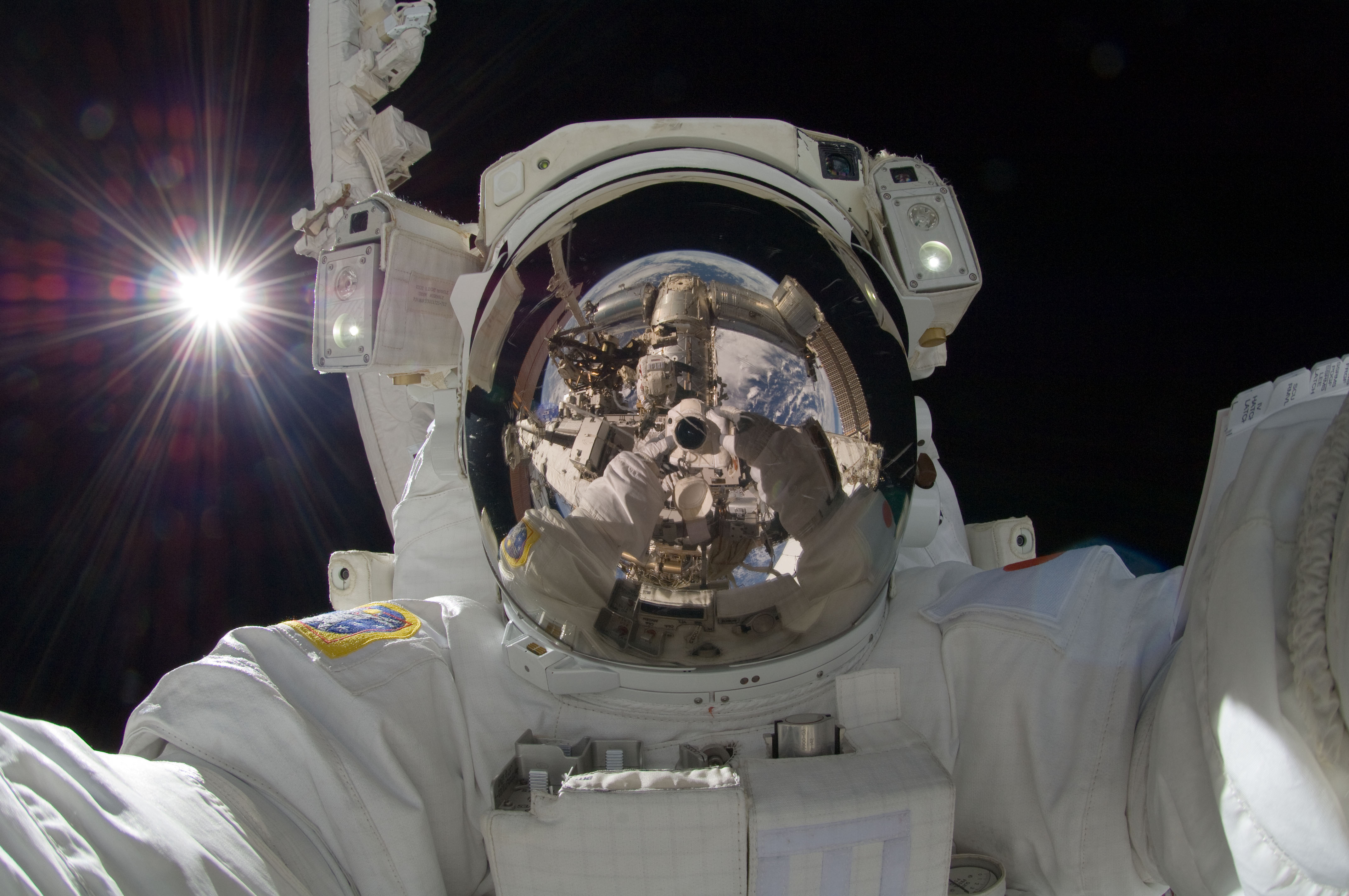
Astronaut Self Portrait

Posted: 25 Dec 2012 05:00 AM PST

click for ginormous photo

Source: Open Culture

The Federal Reserve’s Balance Sheet and Overnight Interest Rates

Posted: 25 Dec 2012 03:00 AM PST

10 Christmas Day Reads

Posted: 25 Dec 2012 03:00 AM PST

While you wait for the family to wake up, here are some reads to keep you busy:

• Websites Vary Prices, Deals Based on Users’ Information (WSJ)
• Why Malls Are Getting Mauled (Jeff Jordan)
• American Dream Fades for Generation Y Professionals (Bloomberg) see also Another look at US household formation, and why it matters (FT Alphaville)
• The Era Of ‘Macro’ May Finally Be Coming To An End (Business Insider)
• Norway Looks to Spread Wealth to U.S. (WSJ)
• Swaps 'Armageddon' Lingers as New Rules Concentrate Risk (Bloomberg)
• No Sales Pop for a New Version of Windows (NYT)
• Restless Genes (National Geographic) see also The End of the Map (WSJ)
• How can Republicans change their minds? (The Economist)
• The real Brothers Grimm were stranger than fiction (The Christian Science Monitor)

What do you want for Shopmas?


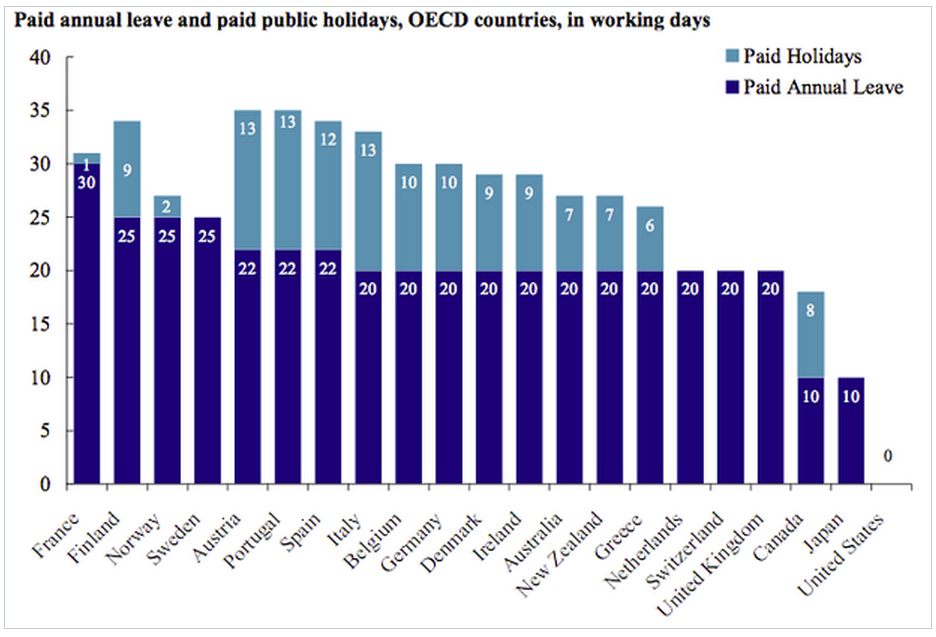
Why Do Americans Have Less Vacation Time than Anyone Else?

Source: Big Think

MacroNotes is on vacation until Jan 2

Posted: 24 Dec 2012 10:00 AM PST

Have a happy & healthy holiday!

-Peter Boockvar

.

0 comments:

Post a Comment

previous home Next

{8} chatroll


{9} AdBrite FOOTER

{8} Nice Blogs (Adgetize)