| Halloween Skeleton Horse Posted: 29 Oct 2013 03:00 AM PDT |
| The Effect of Unemployment Duration on Future Earnings and Other Outcomes Posted: 29 Oct 2013 02:00 AM PDT |
| Memorable Big Picture Posts? Posted: 28 Oct 2013 04:30 PM PDT Last week, I posted a teaser about a Big Announcement Next Week. As part of that, I need to gather a short list of favorite posts. Here are a few I really like: • Q&A: The Price of Paying Attention (November 3rd, 2012) • Where Sea Monsters Live (May 1st, 2012) • Five Books: on Causes of the Financial Crisis (September 17th, 2013) • Advice to a Young Market Participant (March 5th, 2010) • Foreclosure Fraud Reveals Structural & Legal Crisis (October 5th, 2010) • 10 Things You Don't Know (or were misinformed) About the GS Case (April 23rd, 2010) also Its the Law, Bitches! (July 19th, 2010) • NAR Housing Affordability Index is Worthless (August 13th, 2008) • Greatest American Rock and Roll Band? (December 21, 2003) • The Collossal Gall of Bad Apple Investors (February 8th, 2013) • A funny thing happened to me on the way to the studio tonight . . . (November 1st, 2003)
I am completely biased and lack any pretense of objectivity, so I need some help. If any of you ever read a post here that struck a nerve, or that you emailed, or forwarded, or otherwise was memorable, please let me know in comments or at Thebigpicture -at- optonline -dot- net. Your feedback is greatly appreciated. ~~~ UPDATED: To include your suggestions . . .  |
| 10 Monday PM Reads Posted: 28 Oct 2013 01:30 PM PDT My afternoon train reading: • Nearly 50% Of All Home Sales Now Cash, As Institutional Investor Activity Hits New High (Forbes) see also Families Blocked by Investors From Buying U.S. Homes (Bloomberg)
• 5 signs the market bulls are wrong (MarketWatch)
• Treasuries Risk Shown as Fed Distorts Stocks Correlation (Bloomberg) see also In Fed and Out, Many Now Think Inflation Helps (NY Times)
• Krugman's Theory of Interstellar Trade (Scientific American)
• Happy Centennial, Federal Income Tax (Economix) see also Reagan Revolution Misses Tax Fiefdoms Flourishing in U.S. (Bloomberg)
• Greenspan Has Left the Building by J. Bradford DeLong (Project Syndicate)
• A meeting at a posh Caribbean resort led to a friendship that would later form the foundation of a 15.6% stake in Twitter (WSJ) see also Kass: I'd Pay $32.50 a Share for Twitter (WSJ) Takeaway: Kass should spend more time in Caribbean
• Everybody Knows You're a Dog (Boing Boing)
• Apple Sales Set to Show Mobile Shift Lifting Tech (Bloomberg) see also Why Apple should tell Carl Ikahn to go jump (WSJ)
• Kareem: How Boys Become Men (Esquire)
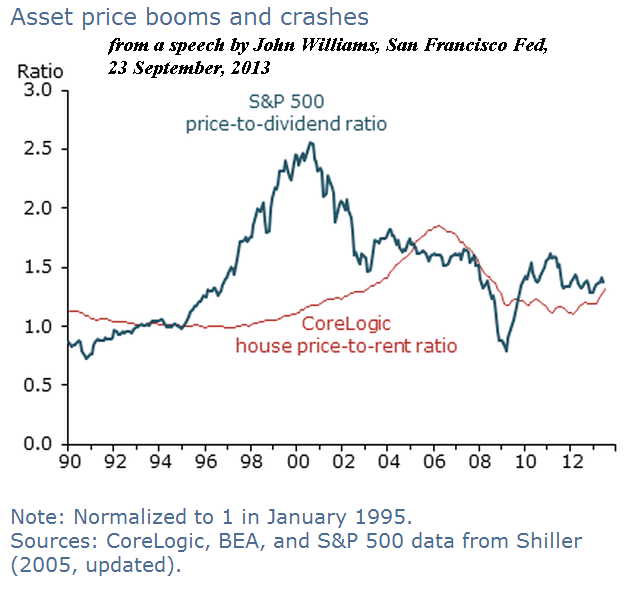
Whats are you reading? Booms & Busts
Source: FT  |
| NYSE Margin Debt at Record High Posted: 28 Oct 2013 09:30 AM PDT S&P 500 (top), NYSE margin debt 12-month ROC (center), & NYSE margin debt (bottom)
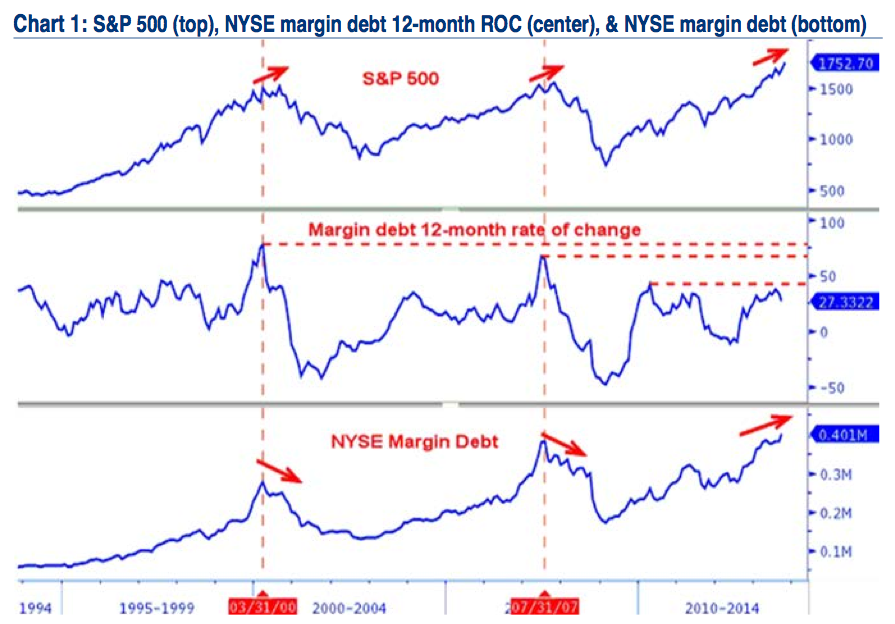
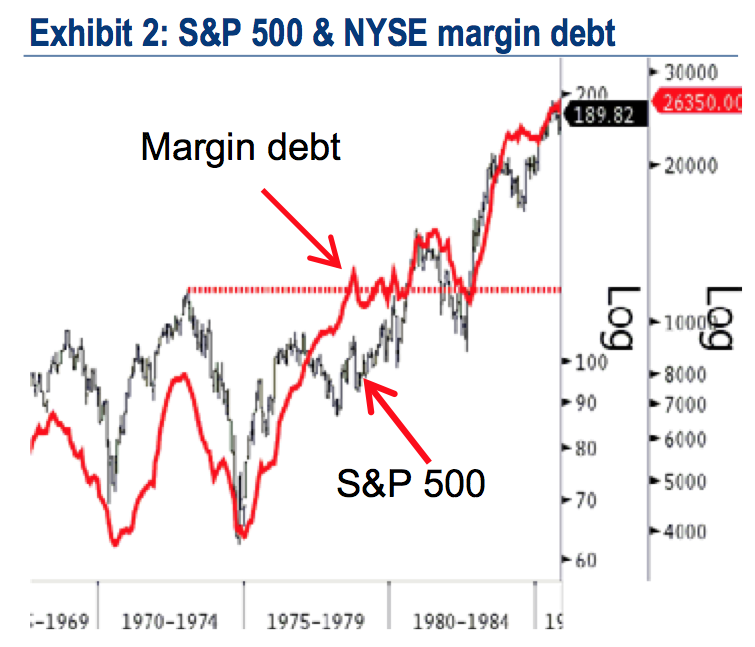
Source: BofA Merrill Lynch I keep seeing NYSE margin debt showing at record high as somehow a bearish indicator. This may not be supported by the historical data. Merrill’s Stephen Suttmeier points out that, to the contrary, Margin Debt and S&P500, have often moved together. Indeed, when we look at the rate of change, this has in the past corresponded to a secular breakout in markets. Here is Suttmeier: “NYSE margin debt stood at a new record high of $401.2b and exceeded the prior high from April of $384.4b. This confirms the new S&P 500 highs and negates the bearish 2013 set-up that was similar to the bearish patterns seen at the prior highs from 2000 and 2007, where a peak in margin debt preceded important S&P 500 peaks (see Chart 1 on page 2). In addition, a breakout for NYSE margin debt preceded/confirmed the breakout for the S&P 500 in 1980 (Exhibit 2). In other words, a secular breakout for the US equity market in the early 1980s coincided with a big breakout in the absolute level of NYSE margin debt.
That last sentence is key: If the rate of change data somehow corresponds to past shifts in secular markets from bears to bulls, this is potentially a very significant factor. S&P 500 & NYSE margin debt
Source: BofA Merrill Lynch Source:
NYSE margin debt, Net Tabs, & weekly relative ranks
Stephen Suttmeier, CFA, CMT
Chart Talk, Market Analysis
BofA Merrill Lynch  |
| 10 Monday AM Reads Posted: 28 Oct 2013 06:00 AM PDT My early morning reads: • Regrets? The Maestro Has None (Barron’s) see also Wall Street’s Fed fixation (LA Times)
• What to Do with Small Caps? (Mebane Faber)
• I know that we the New Slaves (Reformed Broker) see also Slaves of the Internet, Unite! (NY Times)
• Munis Make the Shopping List (Barron’s)
• Wal-Mart Now Draws More Solar Power Than 38 U.S. States (Bloomberg) see also Mystery of the ‘Missing’ Global Warming (Bloomberg)
• Pros and Conflicts: Whose Side Is Your Broker On? (WSJ)
• Disruptions: Are Eager Investors Overvaluing Tech Start-Ups? (NY Times) see also Twitter's white lie to investors: We're profitable (Quartz)
• Marty Sullivan figured out how the world's biggest companies avoided billions in taxes. Here's how he wants to stop them. (Washington Post)
• Outsider Whose Dark, Lyrical Vision Helped Shape Rock 'n' Roll (NY Times) see also Lou Reed, Velvet Underground Leader and Rock Pioneer, Dead at 71 (Rolling Stone)
• 18 Striking Images from Space Show Earth’s Rich Tapestry (Twisted Sifter)
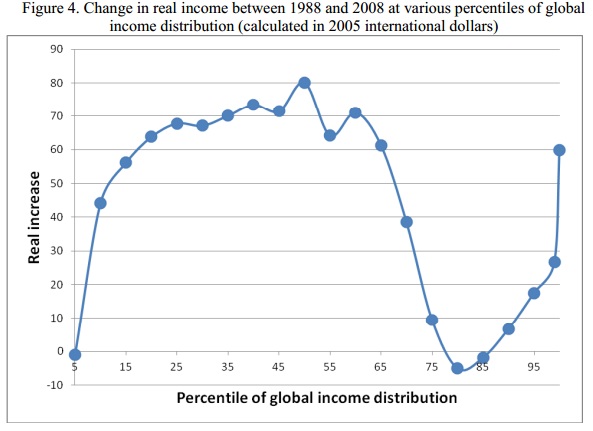
What are you reading? Change in Income Distribution, 1988 – 2008
Source: FT Alphaville  |
| What Do Hedge Funds Spend On Regulatory Compliance? Posted: 28 Oct 2013 04:27 AM PDT Every now and then, I read an article that is factually accurate, technically correct — and utterly misleading. Items like this are “accurate but false” as they leave the reader with an impression of something that is incorrect. Because the world is nuanced and not black and white, the sum of many facts, statistics and data can (when skillfully blended) create a completely inaccurate impression. The latest example of such is a perfectly accurate but utterly misleading article in All About Alpha titled AIMA Survey, Interviews: On Regulatory Costs. “Hedge fund managers have sustained significant costs in the course of compliance with new regulatory requirements. According to a new report by the Alternate Investment Management Association, the Managed Funds Association, and KPMG International, small fund managers have invested on average $700,000 in compliance, medium-sized fund managers $6 million, and large fund managers $14 million. The industry as a whole has spent $3 billion on compliance costs. This is more than 7% of its total operating costs.”
Most people’s immediate emotional response is that $3 billion is a lot of money, and that 7% of its total operating costs is a very significant percentage. A few obvious problems with the report: 1) That $3 billion in Regulatory Costs is out of more than $2 trillion dollars in assets under management. In other words, their compliance costs are about 1/10th of 1% of AUM. Given that managers get paid 2% plus 20% of profits, this is a teeny percentage. 2) The article fails to inform us if this total operating costs is going up or down relative to recent easing of regulatory requirementsm such as the JOBS act. 3) Finally, the report is based on a survey of 200 hedge fund managers from around the world — out of more than 10,000. Such a small statistical sample has a very large potential error rate.
To be fair, the regulatory burdens will most likely fall disproportionately upon smaller funds. There are fixed costs inherent in all asset management / trading ventures, and they fall in proportion relative to increase in size. Indeed, the chart below showing the response to the survey — notwithstanding the self-selecting bias inherent thereto — shows the greatest response from smaller funds. 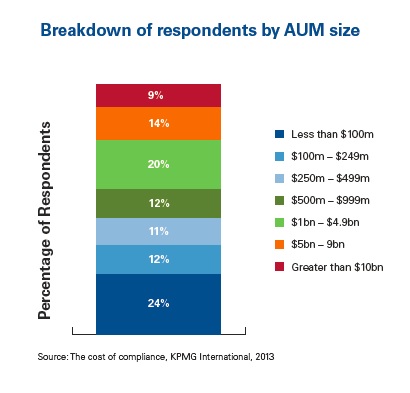
With this post, we introduce the category “Bad Math”. Source:
AIMA Survey, Interviews: On Regulatory Costs
By cfaille
All About Alpha, Oct 27th, 2013
http://allaboutalpha.com/blog/2013/10/27/29819/  |






0 comments:
Post a Comment