


The Big Picture |
- What Are the Risks for Pacific Coast Residents from Fukushima Radiation?
- 10 Monday PM Reads
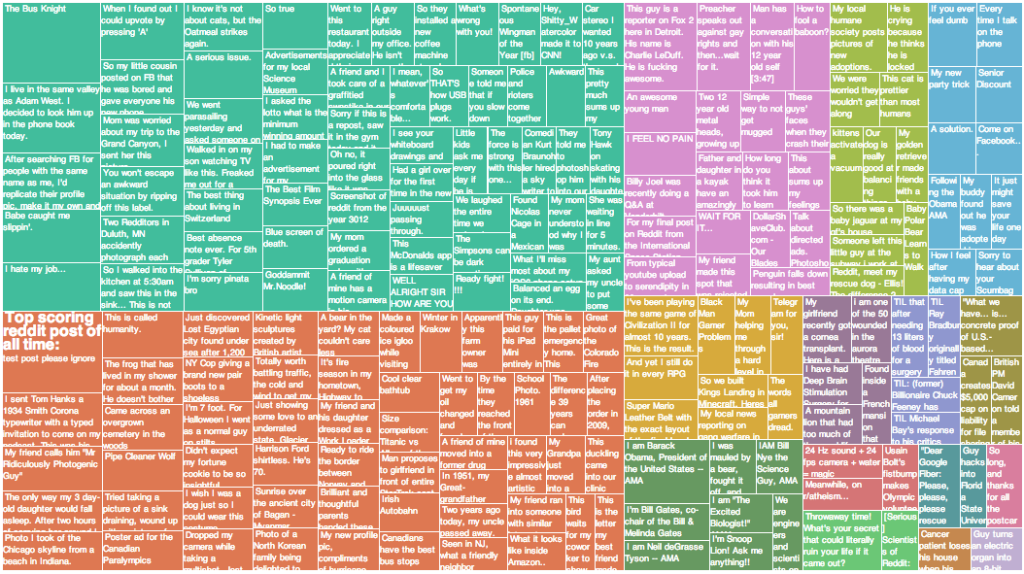
- Top Reddit Posts
- Debunking the Bear Case
- 10 Monday AM Reads
- The Innumeracy of the Media Has Not Been Greatly Exaggerated
- Media Hall of Shame: Black Friday Reporting
- 60 Minutes: The Future of Amazon
- Sarkar: Monthly report – November
| What Are the Risks for Pacific Coast Residents from Fukushima Radiation? Posted: 02 Dec 2013 10:30 PM PST "[The Odds of] Longer Term Chronic Effects, Cancer Or Genetic Effects … Cannot Be Said To Be Zero"It is very difficult to obtain accurate information on the dangers from Fukushima radiation to residents of the West Coast of North America and Hawaii. On the one hand, there is fear-mongering and "we're all going to die" type hysteria. On the one hand, there is a tendency for governments to cover up the truth to avoid panic and deflect blame for bad policy. Japan is poised to pass a bill which would outlaw most reporting on Fukushima. And the U.S. government is not even monitoring radiation levels in the waters off the U.S. coast. As the Cape Cod Times reports:
Indeed, Dr. Buesseler points out the circular reasoning which the government is using (at 10:00):
People are certainly concerned. As the Wall Street Journal notes:
But people don't know where to get accurate information on the risks involved. This essay provides reliable information on what is really going on … based upon the known science. It's divided into 3 sections: I. Is Low-Level Radiation Dangerous … Or Harmless? II. How Much Radiation Will We Be Exposed To? III. How Can We Protect Ourselves from Radiation? I. Is Low-Level Radiation Dangerous … Or Harmless?You may have heard different claims about whether low-level radiation is dangerous … or harmless. Fox News reports:
What is Dasher saying? That even low levels of radiation from Fukushima can increase the risk of cancer and other diseases. A major 2012 scientific study proves that low-level radiation can cause huge health problems. Science Daily reports:
Physicians for Social Responsibility notes:
John LaForge writes:
Japan Times reports:
Indeed, the overwhelming consensus among radiation experts is that repeated exposure to low doses of radiation can cause cancer, genetic mutations, heart disease, stroke and other serious illness (and see this.) If a government agency says anything else, it's likely for political reasons. The top U.S. government radiation experts – like Karl Morgan, John Goffman and Arthur Tamplin – and scientific luminaries such as Ernest Sternglass and Alice Stewart, concluded that low level radiation can cause serious health effects. A military briefing written by the U.S. Army for commanders in Iraq states:
(Military briefings for commanders often contain less propaganda than literature aimed at civilians, as the commanders have to know the basic facts to be able to assess risk to their soldiers.) The briefing states that doses are cumulative, citing the following military studies and reports:
Many studies have shown that repeated exposures to low levels of ionizing radiation from CT scans and x-rays can cause cancer. See this, this, this. this, this, this, this, this, this and this. Research from the University of Iowa concluded:
And see these studies on the health effects cumulative doses of radioactive cesium. As the European Committee on Radiation Risk notes:
And see this. The New York Times' Matthew Wald reported in May:
Dr. Beyea writes:
A major 2012 study of atomic bomb data by the official joint U.S.-Japanese government study of the Hiroshima and Nagasaki survivors found that low dose radiation causes cancer and genetic damage:
Children are much more vulnerable to radiation than adults. American physician Brian Moench writes:
It's not just humans: scientists have found that animals receiving low doses of radiation from Chernobyl are sick as well. Most "Background Radiation" Didn't Exist Before Nuclear Weapons Testing and Nuclear ReactorsUninformed commenters (and some industry flacks) claim that we get a higher exposure from background radiation (when we fly, for example) or x-rays then we get from nuclear accidents. In fact, there was exactly zero background radioactive cesium or iodine before above-ground nuclear testing and nuclear accidents started. Wikipedia provides some details on the distribution of cesium-137 due to human activities:
As the EPA notes:
Similarly, iodine-131 is not a naturally occurring isotope. As the Encyclopedia Britannica notes:
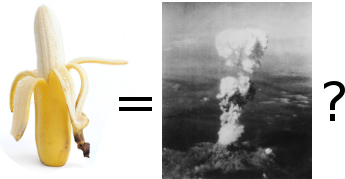
(Fukushima has spewed much more radioactive cesium and iodine than Chernobyl. The amount of radioactive cesium released by Fukushima was some 20-30 times higher than initially admitted. Japanese experts say that Fukushima is currently releasing up to 93 billion becquerels of radioactive cesium into the ocean each day. And – as we will see below- the cesium levels hitting the west coast of North America will keep increasing for several years. Fukushima is spewing more and more radiation into the environment, and the amount of radioactive fuel at Fukushima dwarfs Chernobyl.) As such, the concept of "background radiation" is largely a misnomer. Most of the radiation we encounter today – especially the most dangerous types – did not even exist in nature before we built nuclear weapons and reactors. Nuclear Apologists Are Going Bananas
But unlike low-levels of radioactive potassium found in bananas – which our bodies have adapted to over many years – cesium-137 and iodine 131 are brand new, extremely dangerous substances. The EPA explains:
Wikipedia notes:
BoingBoing reports:
Mixing Apples (External) and Oranges (Internal)Moreover, radioactive particles which end up inside of our lungs or gastrointestinal track, as opposed to radiation which comes to us from outside of our skin are much more dangerous than general exposures to radiation. The National Research Council's Committee to Assess the Scientific Information for the Radiation Exposure Screening and Education Program explains:
Internal emitters are much more dangerous than external emitters. Specifically, one is only exposed to radiation as long as he or she is near the external emitter. For example, when you get an x-ray, an external emitter is turned on for an instant, and then switched back off. But internal emitters steadily and continuously emit radiation for as long as the particle remains radioactive, or until the person dies – whichever occurs first. As such, they are much more dangerous. As the head of a Tokyo-area medical clinic – Dr. Junro Fuse, Internist and head of Kosugi Medical Clinic – said:
See this, this, this and this. By way of analogy, external emitters are like dodgeballs being thrown at you. If you get hit, it might hurt. But it's unlikely you'll get hit again in the same spot. Internal emitters – on the other hand – are like a black belt martial artist moving in really close and hammering you again and again and again in the exact same spot. That can do real damage. There are few natural high-dose internal emitters. Bananas, brazil nuts and some other foods contain radioactive potassium-40, but in extremely low doses. But – as explained above – our bodies have adapted to handle this type of radiation. True, some parts of the country are at higher risk of exposure to naturally-occurring radium than others. But the cesium which was scattered all over the place by above-ground nuclear tests and the Chernobyl and Fukushima accidents has a much longer half life, and can easily contaminate food and water supplies. As the New York Times notes:
As the EPA notes in a discussion entitled " What can I do to protect myself and my family from cesium-137?":
Radioactive iodine can also become a potent internal emitter. As the Times notes:
(In addition to spewing massive amounts of radioactive iodine 131, Fukushima also pumped out huge amounts of radioactive iodine 129 – which has a half-life of 15.7 million years. Fukushima has also dumped up to 900 trillion becquerels of radioactive strontium-90 – which is a powerful internal emitter which mimics calcium and collects in our bones – into the ocean.). The bottom line is that there is some naturally-occurring background radiation, which can – at times – pose a health hazard (especially in parts of the country with high levels of radioactive radon or radium). But cesium-137 and radioactive iodine – the two main radioactive substances being spewed by the leaking Japanese nuclear plants – are not naturally-occurring substances, and can become powerful internal emitters which can cause tremendous damage to the health of people who are unfortunate enough to breathe in even a particle of the substances, or ingest them in food or water. Unlike low-levels of radioactive potassium found in bananas – which our bodies have adapted to over many years – cesium-137 and iodine 131 are brand new, extremely dangerous substances. And unlike naturally-occurring internal emitters like radon and radium – whose distribution is largely concentrated in certain areas of the country – radioactive cesium and iodine, as well as strontium and other dangerous radionuclides, are being distributed globally through weapons testing and nuclear accidents. Cumulative and Synergistic DamageAs noted above, a military briefing written by the U.S. Army for commanders in Iraq points out:
In other words, doses are cumulative: the more times someone is exposed, the greater the potential damage. In addition, exposure to different radioactive particles may increase the damage. Specifically, the International Commission on Radiological Protection notes:
("Synergistic" means that the whole is greater than the sum of the parts.) Because different radionuclides accumulate in different parts of the body – e.g. cesium in the muscles, kidneys, heart and liver, iodine in the thyroid, and strontium in the bones – the exposure to many types of radiation may be more dangerous than exposure just to one or two types. As such, adding new radioactive compounds like cesium and iodine into the environment may cause synergistic damage to our health. II. How Much Radiation Will We Be Exposed To?There are 2 ways that Fukushima radiation has traveled from Fukushima to Hawaii, Alaska, Canada, Washington, Oregon and California: (1) by air; and (2) by water. By AirWe noted 2 days after the 2011 Japanese earthquake and tsunami:
This has happened, to some extent. For example, radiation from Fukushima was directly deposited into the kelp off the Western coast of North America … especially in Southern California. Fish that eat the kelp have also gotten exposed to the radiation … as have the animals that eat those fish. Moreover, Seattle residents may have been exposed to some Fukushima radiation soon after the accident. Plutonium was also released into the air. For example, the Environmental Research Department, SRI Center for Physical Sciences and Technology in Vilnius, Lithuania reported in the Journal of Environmental Radioactivity:
("Pu" is short for plutonium.) Fukushima is 4,988 miles from Vilnius, Lithuania. So the plutonium traveled quite a distance. Tepco – the operator of the Fukushima plants – has been pouring tons of water on the reactors every day. So this is helping to keep the aerial releases down. However, the Japanese government has embarked on a massive program of burning radioactive waste throughout Japan. This is idiotic … and is releasing some radiation into the air. In any event, unless the Fukushima fuel pools collapse – or the government increases the amount of radioactive materials which it burns – the air will not be the main route for the spread of radiation to Hawaii or the West Coast. By WaterThe jet stream can carry radiation through the air from Japan to the West Coast, as noted above. A similar dynamic is present in the water, as well. An ocean current called the North Pacific Gyre is bringing Japanese radiation to the West Coast of North America:
The leg of the Gyre closest to Japan – the Kuroshio current – begins right next to Fukushima:  While many people assume that the ocean will dilute the Fukushima radiation, a previously-secret 1955 U.S. government report concluded that the ocean may not adequately dilute radiation from nuclear accidents, and there could be "pockets" and "streams" of highly-concentrated radiation. Nuclear expert Robert Alvarez – senior policy adviser to the Energy Department's secretary and deputy assistant secretary for national security and the environment from 1993 to 1999 – wrote:
The New York Times reported in 2011:
The Congressional Research Service noted last year:
Physicians for Social Responsibility notes:
Below, we will tell you that some radiation has already reached the West Coast … and we will show you some future projections for radiation. But it is important to keep in mind that – while Fukushima has been leaking massive amounts of water continuously ever since March 2011 – most of the projections being used in models of radiation do not include any releases after March 2011. As radioecologist Doug Dasher told Fox News:
As such, all of the models drastically underestimate the amount of radiation which West Coast and Hawaiian residents will be exposed to. Radiation PredictionsThe University of Hawaii's International Pacific Research Center created a graphic showing the projected dispersion of debris from Japan:
A joint research project between the Chinese and South Korean governments shows the West Coast receiving Fukushima radiation:
Last year, scientists from the National Oceanic and Atmospheric Administration's (NOAA) Pacific Marine Environmental Laboratory and 3 scientists from the GEOMAR Research Center for Marine Geosciences showed that radiation on the West Coast of North America could end up being 10 times higher than in Japan:
("Order-of-magnitude" is a scientific term which means 10 times higher. The "Western Pacific" means Japan's East Coast.) In May, a team of scientists from Spain, Australia and France concluded that the radioactive cesium would look more like this:
Some Radiation Has Already Reached the West CoastSome radiation has already arrived on the West Coast by ocean. For example, CBC reported earlier this month:
An associate professor and marine chemist at University of Victoria's School of Earth and Ocean Sciences told CBC on November 20th (8:15):
(Incidentally – because rain is one of the main ways that radiation can spread – seawater which evaporates and then rains on the coast can dump radiation inland for some distance). SeafoodA former high-level U.S. government nuclear expert – and now one of the main advisors to Tepco regarding Fukushima – says that Fukushima radiation will hit Alaska fish. Lake Barrett – the former head of the US Department of Energy's Office of Civilian Nuclear Waste Management, which is responsible for implementing the United States' programs for spent nuclear fuel and high-level radioactive waste, and a high-level official with the U.S. Nuclear Regulatory Commission before that – told an MIT audience (36:00):
Bluefin tuna on the California shore have already tested positive for radiation from Fukushima, and there are reports of highly radioactive fish in Canada. III. How Can We Protect Ourselves from Radiation?The government isn't adequately testing radiation levels in the ocean, seafood or air. So it is vital that we contact our government representatives and demand that they thoroughly test for radiation … and publicly release the information. In addition, there are easy, inexpensive and healthy steps we can take right now to help protect ourselves against radiation. |
| Posted: 02 Dec 2013 01:30 PM PST My Afternoon plane reading:
What are you reading? |
| Posted: 02 Dec 2013 11:30 AM PST Click for interactive graphic |
| Posted: 02 Dec 2013 09:00 AM PST These bullet points were from a (much longer) Merrill Lynch research piece last week.
They then proceed to make a good effort taking each of these items apart. I cannot post the PDF as its copyrighted work product — but you should dig up a copy . . .
Source: |
| Posted: 02 Dec 2013 07:00 AM PST Welcome back after the long holiday weekend, Some reading material to start off your post-turkey week:
Continues here |
| The Innumeracy of the Media Has Not Been Greatly Exaggerated Posted: 02 Dec 2013 06:30 AM PST One would hope that after a decade of people lamenting the poor reporting of Thanksgiving weekend retail data, the news media might learn to do better. Yet we see few if any signs that reporters understand the misleading press releases put out by the retail industry and its flacks. The innumeracy of the media has not been greatly exaggerated. The Wall Street Journal, the New York Times and others reported industry estimates of sales as if they were grounded in fact. As we discussed last week (“Ignore the Black Friday Hype“), these shopper surveys and measures of foot traffic have in the past had no predictive value relative to retail sales. Their track records are fairly awful. The National Retail Federation has been especially terrible in its forecasts. A coin flip– 50/50 chance of getting it right — has much greater accuracy than these surveys.
Continues here |
| Media Hall of Shame: Black Friday Reporting Posted: 02 Dec 2013 03:51 AM PST I am writing up my BBRG coverage of the innumerate business reporting of Black Friday and the holiday shopping weekend. The press as per usual got it wrong again this year. Here is the press release from the NRF, pushing their usual survey silliness as if it were actual retail sales data:
Here is the NYT, dutifully acting as stenographer for the trade group:
The WSJ was no better, literally wrong from the very first sentence:
Even Bloomberg got this wrong:
There are lots of others but I expect more from these 3. My morning commentary at Bloomberg View goes into greater detail. It should be posted later this morning.
Recently: Retail theater: Beware of bad Shopmas data! Washington Post, November 29, 2013
Previously: Retail Sales Disappoint on False Black Friday Reports (Dec. 13th, 2011) No, Black Friday Sales Were Not Up 16% (not even 6%) (Nov. 28th, 2011) Entering the Holiday Shopping Season (Beware Surveys!) (Oct. 28th, 2009) Spinning Black Friday Retail Sales (Dec. 1, 2008) Repeat After Me: Spending Surveys Are Meaningless (Oct. 2007) More Bad Data from the NRF? (Nov. 2006) Holiday Sales Numbers Don't Add Up (Dec. 1, 2005)
|
| 60 Minutes: The Future of Amazon Posted: 02 Dec 2013 03:15 AM PST Amazon is the world’s largest online retailer, serving 225M customers. What’s next for the company that prides itself on disrupting tradition? |
| Sarkar: Monthly report – November Posted: 02 Dec 2013 02:45 AM PST The US October non farm payroll (NFP) report came in much stronger than expected at +204k jobs, rather than the +120k expected, with August and September revised higher. Furthermore, subsequent weekly unemployment data confirms that the US employment situation is improving. US Q3 GDP was better than expected, at +2.8% on an annualised basis, higher than the +2.0% expected and may well be revised higher. However, Q4 GDP is likely to be lower, reflecting a reduction in inventories, combined with the impact of the partial government shutdown. The data has lead the market to focus on the timing of the FED tapering programme. This weeks November NFP data will be an important data point. Mr Bernanke has suggested that the FED will remain accommodative, even after it starts tapering. Indeed, the FED's unemployment threshold (before it considers raising interest rates) could be reduced from the current 6.5%. Low inflation enables the FED to justify such a move. Mrs Yellen is set to become the next FED Chairperson. During the course of her testimony as part of the appointment process, she confirmed her dovish bias. She stressed that "labour markets and the economy (are) performing short of their potential", adding that unemployment "was still too high". Furthermore, she added that "It's important not to remove support when the recovery is fragile". In the Q&A's she stated that the true level of unemployment in the US was likely over 10%, as opposed to the 7.3% rate reported in the Octobers NFP report. She added that inflation was below the FED's threshold of 2.0% and implied that she did not see inflation as a threat at present – core PCE was +1.2% Y/Y in September. In addition, she stated that she did not see any bubbles forming. Essentially, she stuck to the Bernanke script. Her general tone was dovish, especially in the Q&A's, which suggests that she will be in no hurry to start the tapering process. As long as she can persuade her colleagues, I continue to believe that tapering will not start before March of next year. It is clear that the FED is agonising over its asset purchase programme and would like to start tapering, "in coming months". However, they will want to avoid the experience earlier this year when rates rose sharply following the mere suggestion that the FED could start its tapering programme. As a result, the FED has stressed that tapering will still mean that the FED will be buying treasuries and mortgage backed securities, albeit at a reduced rate. In addition, Mr Bernanke and Ms Yellen have emphasised that the FED accommodative policy would be maintained for an extended period. Whilst there was some mixed US industrial/manufacturing data, October retail sales came in higher than expected. The disinflationary trend in developed markets has spread to the US, with CPI declining by -0.1% in October, as compared with +0.2% in September. However, the lower inflationary trends allow the FED to maintain a more dovish position. Analysts have increased their 2014 forecasts and are now predicting GDP of around +2.75%. Analysts were shocked that the ECB President Draghi cut the main refi rate by 25 bps to 0.25% last month. However, with EZ inflation at just 0.7% pa in October (0.9% pa in November), the ECB had to act. Draghi referred to "a prolonged period of low inflation". Some countries such as Greece are facing outright deflation. I expect the ECB will cut rates by a further 10/15 bps next year. However, such reductions in interest rates are not going to make a difference. Another LTRO (possibly for 5 rather than 3 years) is likely. The idea of negative deposit rates has been raised, though I believe that such a policy is unlikely. The problem for the ECB is that QE, as employed by the FED, BoE, BoJ etc, is far more difficult for it to introduce as a policy, though may be forced into it. With money supply and bank lending declining (which will get worse as EZ banks deleverage ahead of the stress tests), the EZ faces continued problems. The ECB is considering measures to increase credit, in particular to SME's. The EuroZone's Q3 GDP came in at just +0.1%, lower than the +0.3% in Q2. French Q3 GDP declined by -0.1%, whilst Italy remains in recession. German Q3 GDP came in at +0.3%, in line with expectations, though below the +0.7% in Q2. The EU has warned a number of countries may well fail the debt and deficit rules, including France and Spain. However, politically further austerity is going to be a very hard sell. The market has largely ignored the poor French data, though I continue to be highly concerned about the country. President Hollande does not seem to have taken the action necessary and I have no confidence that he will. S&P downgraded France by 1 notch to AA and recent PMI data suggests that Q4 GDP could be negative. If so, France will technically be in a recession. In Italy, political risk is rising as Mr Berlusconi was ejected from the Senate. Germany, Luxembourg and Finland are the only countries in the EZ with a AAA rating, following Hollands downgrade by S&P. On a more positive note, Ireland and Spain announced that they would exit the bailout programme and Spain was upgraded by Fitch and S&P. EZ unemployment declined to 12.1%, from 12.2% in September. Recent German data suggests that the economy has bounced back from a slight downturn in summer, with business, consumer and investor confidence rising. However retail sales were lower and unemployment edged up for the 4th consecutive month. Mrs Merkel's CDU has reached a deal with the SPD to form a grand coalition, though the deal needs to be ratified by the SPD membership – the results are expected in mid December. The EZ is bumbling along with very low growth and the the risks are to the downside. Negotiations over the establishment of the Single Resolution Mechanism in the EU to deal with undercapitalised banks failed to reach a clear cut conclusion. The Germans rejected the idea of using the ESM (in effect they have a veto), as proposed by the a number of countries, including France and Spain. They suggest that rules relating to bail ins by creditors be brought forward. In addition, the Germans do not want the European Commision to be the arbiter of the rules governing the Single Resolution Mechanism – they suggest it should be Council of the European Union, which is made up of representatives of EU countries. The ECB, which takes over EZ financial supervision has stressed that there is a need for a "strong and independent" European Resolution Mechanism, which clearly must be right. However, will that be the case?. Some 5 years into the financial crisis, the EZ has failed to resolve the problems of a number of its banks. This issue will become much more important in the coming year, especially as the ECB is to conclude the assessment/stress tests of the largest banks by next November. It is expected that some banks will fail the stress tests. The big question remains – who will provide the backstop in case the private sector does not come up with the necessary capital to recapitalise those banks which fail the stress tests. You could argue that the ECB's actions will force the politicians to act, though the relevant banks will have to accept a pretty tough deal. As a result, EZ banks are reducing their balance sheets to try and meet the more stringent ECB capital rules, which will hurt their economies. The UK economy continues to improve. Q3 GDP rose by +0.8% Q/Q, better than the +0.7% in Q2 and +0.4% in Q1. The main growth drivers were investment and housing, though exports declined. Unemployment has fallen to 7.6% in October, the lowest since May 2009. October services PMI rose materially, which suggests that the UK economy will continue to strengthen. The rise in house prices, in particular in London and the South East has raised concerns, with the BoE announcing curbs on mortgage support programmes. In addition, the BoE has warned that it may introduce further measures to limit home prices next year. The Governor has stressed that the BoE will remain accommodative, even if unemployment declines to its target of 7.0%. The improving economy has increased tax receipts, which will reduce the UK's budget deficit. In general, the UK economy is strengthening and 2014 GDP forecasts have been raised to around +2.75%. Japanese Q3 GDP declined to +1.9% on an annualised basis, down from +3.8% in Q2, mainly due to a record trade deficit, together with lower capital expenditure. Consumption was also relatively weak – Japanese companies have not increased salaries and wages. Retail sales, seasonally adjusted, declined in October. Inflation is rising, with the BoJ's favoured rate rising to +0.9% Y/Y in October. If inflation rises to 2.0% (the BoJ's target), how can 10 year Japanese bonds yield just 0.60%, as they do at present. Yes, the majority of Japanese bonds are owned by the Japanese, but will they continue to buy bonds which yield well below prevailing inflation – I doubt it. Recent data suggests that the Japanese are increasing their purchases of foreign bonds.That suggests that the BoJ will be the only major buyer of government bonds. It is clear that the BoJ is pressing for a weaker Yen, combined with much higher inflation, to reduce the level of accumulated debt. However, the Japanese government has not pursued the structural changes that are necessary to revitalise its economy. As we all know, Japan’s fiscal position is dire. The only conclusion that I can draw is that the BoJ is set to monetise Japanese debt. However, will other countries sit back and watch the Yen depreciate materially. I very much doubt it. The Nikkei is responding positively to the weaker Yen and is at a 6 year high. I have been a sceptic of "Abenomics" and remain so. The Chinese official news agency released details of the policy objectives agreed by the Party at their recent meeting. Generally, they included a number of reforms that are welcome and, indeed, necessary to rebalance the Chinese economy by encouraging domestic consumption, whilst relying less on fixed asset expenditure. The 1 child policy is to be loosed somewhat. There was some relaxation of the Hukou system which limits internal migration. SOE's are to give up more of their profits to build social infrastructure. There was also a reference to property taxes and the ability of the rural community to have more property rights. In addition, the PBoC is to deepen the reforms and open up the financial sector. Currency convertibility was mentioned. The key message was that China would allow markets a more "decisive" role in allocating resources. The main issue, however, is whether these broad principles will be translated into actual policy, accompanied by the necessary legislation. A number of the proposals will not benefit a number of powerful vested interests and I would expect a tendency to water down such reforms. In addition, the actual policies/legislation will take quite a long time to finalise – it looks as if a 2020 deadline has been set. The Bank of China has allowed interest rates to rise, which will impact the financial sector and businesses. Bad debts are certain to rise. The authorities have not yet announced the "true" level of provincial debt, assuming they can actually quantify the number. However, reported debt to GDP is likely to be grossly understated. Recent data suggests that capital is being withdrawn from China. Of concern is the announcement by the Chinese authorities of an air defence zone, which covers certain islands whose ownership is claimed by Japan. The US, Japan and South Korea have ignored these measures. Mr Abe, the Japanese PM, has tended to play the nationalistic card and is highly unlikely to back down from its territorial claims. Whilst direct confrontation is highly unlikely, the threat of an accident between the Chinese and other countries is real. China has a number of territorial disputes with countries in the region. Overview US bond funds continue to witness outflows, with money being redirected into equities, rather than into money markets and the housing sector, as was the case previously. In addition, margin debt has risen materially. Generally, these kind of indicators are good contrarian indicators. However, equities traditionally perform better at this time of the year and market momentum is positive, which suggests that markets have further to rise. US markets are trading at record highs, as is the DAX in Europe and the Nikkei is at a 6 year high. Commodity prices, with the exception of Brent, declined in the month, though in the US, oil prices continue to fall as production increases. I remain cautious, though it is difficult to short the markets given the current momentum. Markets, however, are no longer cheap and 2014 global growth forecasts (mainly due to emerging markets) continue to be reduced. I believe it sensible to buy protection, especially in respect of Q1 and later next year. In addition, I believe that the risk profile of equity portfolios, should be reduced. One of my major concerns is that the markets are overly complacent over the EZ – France for example. In addition, I simply do not believe in Abenomics, especially in the medium to longer term. The Japanese policy is limited to devaluing the Yen and increasing inflation – much needed structural reforms have not been introduced. In general, I believe that stock picking will become much more important into 2014. I would avoid emerging markets, especially those countries with current account deficits. These countries will be the first to be impacted as the FED starts tapering, especially as a number have not introduced the economic and structural reforms necessary. Their currencies continue to look vulnerable. The markets have delivered outstanding returns this year which, even if you are bullish, are highly unlikely to be replicated next year. My preferred theme continues to be to increase US$ exposure – it certainly has worked against the Yen and the A$ and I expect both these currencies to weaken further. The Euro has weakened, but has bounced back from its lows, though not quite to its recent highs. The much better UK data has supported Sterling, though Sterling is susceptible to problems in the EZ. A number of forex analysts talk about the Euro rising to US$1.40. I remain amazed at the Euro's resilience, given the real problems of a number of the major countries in the EZ and I continue to believe that the Euro will weaken materially in 2014. Kiron Sarkar |
 Nuclear apologists pretend that people are exposed to more radiation from bananas than from Fukushima.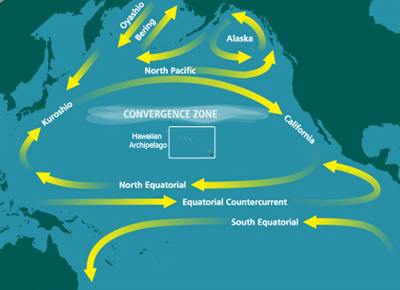


| You are subscribed to email updates from The Big Picture To stop receiving these emails, you may unsubscribe now. | Email delivery powered by Google |
| Google Inc., 20 West Kinzie, Chicago IL USA 60610 | |



0 comments:
Post a Comment