


The Big Picture |
- Wealth Levels, Wealth Inequality, and the Great Recession
- AG Holder Paid No Attention to Bank Fraud
- 10 Monday PM Reads
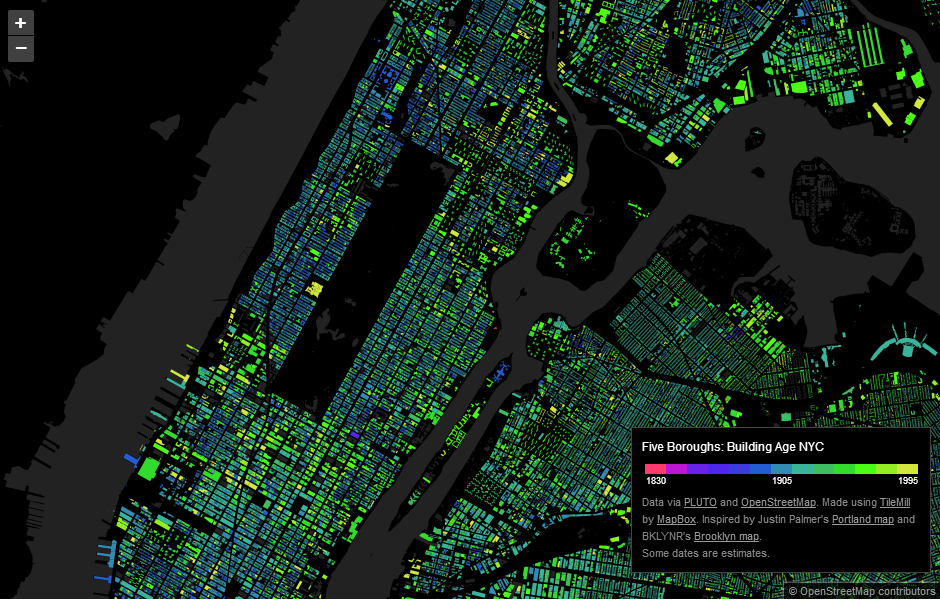
- Five Boroughs: Building Age NYC
- Volatility Over the Past Century
- 10 Monday AM Reads
- Why I am Crossing Off the Red Cross From My Charity List
- Where’s the Love? Investors Shun Bull Market Rally
| Wealth Levels, Wealth Inequality, and the Great Recession Posted: 01 Jul 2014 02:00 AM PDT |
| AG Holder Paid No Attention to Bank Fraud Posted: 30 Jun 2014 06:30 PM PDT "Wall Street Wasn't Even On His Radar"Holder: A Stooge for Wall StreetAttorney General Eric Holder's statements that prosecuting Wall Street fraud would hurt the economy is exactly backwards: the experts say that failing to prosecute fraud is dooming our economy. But prosecuting fraud was never on Holder's radar. Politico notes:
This is too charitable … In reality, Holder laid the groundwork for the "too big to jail" approach in 1999. And Holder and his head of the Department of Justice's Criminal Division were partners at a law firm which used to represent the big banks, Fannie and Freddie, and which wrote the legal opinion which allowed the creation of the cancerous MERS scam … which was at the heart of the foreclosure crisis. Indeed, Wall Street was Holder's priority … specifically, protecting Wall Street criminals and prosecuting whistleblowers. |
| Posted: 30 Jun 2014 02:30 PM PDT My afternoon train reading:
What are you reading?
Stock Pickers Have Tough Time in 2014
|
| Five Boroughs: Building Age NYC Posted: 30 Jun 2014 12:30 PM PDT Click for an awesome map. |
| Volatility Over the Past Century Posted: 30 Jun 2014 10:00 AM PDT
Despite what you might have heard recently, as it turns out, periods of low volatility are not particularly unusual. Have a look at the chart nearby. It comes to us from Goldman Sachs via FT Alphaville, and it shows that spikes in volatility are quite unusual. Periods of low or falling vol is what seems to fill the time between volatility spikes. Its like plains of tall grass between the occasional redwood tree. I have no idea what this means for the markets for the next week or month. However, it does suggest that an overemphasis on either the so-called fear index or complacency could be wildly overdone. |
| Posted: 30 Jun 2014 06:30 AM PDT My start your week off right morning reads (continue here):
|
| Why I am Crossing Off the Red Cross From My Charity List Posted: 30 Jun 2014 05:44 AM PDT Whenever there is some global catastrophe, we break out the checkbook, sending a donation to the Red Cross. Whether it's an earthquake in Haiti or a tsunami in Japan, many people's natural inclination is to send money to one of world's best-known charities. Superstorm Sandy hit the Northeast U.S. in October 2012, devastating parts of New Jersey and New York. It did damage up and down the eastern seaboard. According to the National Oceanic and Atmospheric Administration (NOAA), the total property damage amounted to $65 billion. Americans are especially generous following natural disasters. They sent $312 million in donations to the American Red Cross after the storm. Unfortunately, the charity hasn’t been very forthcoming in how it spent that money. It seems to be stonewalling ProPublica, which has been writing about how post-Sandy money has been spent. Continues here |
| Where’s the Love? Investors Shun Bull Market Rally Posted: 30 Jun 2014 04:00 AM PDT Bloomberg's Barry Ritholtz examines investor sentiment about the current bull market, comparing it to past runs and whether or not it can continue to climb. He speaks on "Market Makers Where's the Love? Investors Shun Bull Market Rally ~~~ Barry Ritholtz and Alix Steel discuss the new, aggressive approach taken by the U.S. government against banks. They speak on "Market Makers." What Prompted a Tougher U.S. Stance on Banks? |


| You are subscribed to email updates from The Big Picture To stop receiving these emails, you may unsubscribe now. | Email delivery powered by Google |
| Google Inc., 20 West Kinzie, Chicago IL USA 60610 | |



0 comments:
Post a Comment