


The Big Picture |

- Monetary Policy and ‘Too Big to Fail’ (With a Tribute to Irving Kristol)
- The 9/11 Commission: A Victim of Cheney’s Torture Program
- A Little Background About the Site Redesign
- Fisher: Ending ‘Too Big to Fail’
- Investors Should Ignore Economics & Politics
- Would the Real Peter and Paul Please Stand Up?
- Ferrari 166 Inter Coupé by Vignale
- 10 Weekend Reads
- Weekly Eurozone Watch
| Monetary Policy and ‘Too Big to Fail’ (With a Tribute to Irving Kristol) Posted: 17 Mar 2013 03:00 AM PDT Speeches by Richard W. Fisher
Thank you, Professor [Merit] Janow. The title of this lectureship far overstates my standing and capacity—I am unworthy of being considered "distinguished" at anything other than having helped raise four children whose talents far surpass my own. But I thank you for this momentarily hyperbolic honor.[1] As Merit mentioned, we go back a long way. Yet my involvement with Columbia University and Morningside Heights goes back much further. After I graduated from Harvard in 1971, I needed money to pay for Oxford, so I spent most of a year working as a busboy and bartender and doing a number of odd jobs in Washington, D.C.—testimony to the immediate benefits of a Harvard degree in economics! Starved for intellectual sustenance as I waited to return to academia, I found comfort in reading about public policy, especially in the essays of what was then a new journal, The Public Interest. The Public Interest was the brainchild of Irving Kristol and Daniel Bell (subsequently joined by Nathan Glazer)—originally young Trotskyites who had spent their days as students at the City College of New York (CCNY), the "Harvard of the Proletariat"—"trying to understand how the socialist ideal of political and economic justice had ended in Joseph Stalin's murderous tyranny."[2] They later migrated to what we would now consider prototypical Roosevelt-cum-Lyndon Johnson liberalism, and then evolved into "neoconservatives." These three men were becoming iconic public intellectuals, and The Public Interest was something of a personal journal of lessons they learned during their ideological transformation. Kristol and Bell ran a series of evening seminar/workshops here on this campus and at CCNY. At every opportunity, I would take an afternoon off, jump on a bus to New York, attend their evening talks, find some kindly student to let me sleep in a dorm room and return by bus to Washington the next morning. All this is by way of saying that I have been coming to Columbia for over 40 years, almost as many years as the number of consecutive games lost in the historical losing streak of your illustrious football team. I was especially captivated by Irving Kristol. His book, Two Cheers for Capitalism, praised capitalism because, one, "it works, in a quite simple, material sense;" and two, it is "congenial to a large measure of personal liberty."[3] Kristol famously described himself as "a liberal who had been mugged by reality." In writing a loving homage to Kristol when he died, David Brooks of the New York Times summarized the basis for Kristol's epiphany in more colorful language. "The elemental Jewish commandment" in the working-class neighborhood where Kristol grew up was: "Don't be a schmuck. Don't fall for fantastical notions that have nothing to do with the way people really are."[4] As a member of the team of earnest men and women who form the Federal Open Market Committee (FOMC), I consider myself a central banker who has been mugged by the reality of having been an investor and market operator. I am constantly wary of fantastical notions that seem cogent in economic or monetary theory but run counter to what I learned in the marketplace or run the risk of departing from practice in the real economy—of possibly having nothing to do with the way people and businesses, those who actually operate our economy, really are. Today, I am going to discuss two such risks as I see them: the current program of quantitative easing and the effect of the Dodd–Frank legislation aimed at preventing "too big to fail." I'll do this in short order and as provocatively as possible so as to give professors Calomiris and Svejnar plenty of ammo to use during the inquisition that will follow my remarks. Monetary Policy and Quantitative EasingI have argued against what I have called "Buzz Lightyear" monetary policy—pledging to hold the federal funds rate at zero seemingly to infinity and beyond, while purchasing longer-term Treasury securities at a pace of $45 billion per month, reinvesting principal payments on all agency debt and agency mortgage-backed securities (MBS) and purchasing MBS at a pace of $40 billion per month.[5] Indeed, other than our initial program to underpin a recovery in the housing market with our initial tranche of purchases of MBS, I have opposed all other large-scale asset purchases or quantitative easing (QE) programs. Why have I been so obstinate in my opposition to this well-intended program? I fully understand its theoretical underpinnings. But I question its efficacy. Confined as the Fed is at the "zero bound," the only means of adding monetary fuel to the economy has been to purchase Treasury and MBS securities. When we buy something, we pay for it, putting money into the economy. That money—backed by an assurance that the FOMC will hold interest rates at zero and continue large-scale asset purchases for a prolonged period—should, theoretically, be put to use: a) by banks' lending to consumers and to businesses that will expand employment, or b) by investors who, rediscounting valuations in the fixed-income and equity markets, will drive those markets higher in price, creating a "wealth effect." This wealth effect should lead to further consumption as well as greater employment by businesses whose balance sheets have been reconfigured and enriched both by the cheapest leverage in American history and by booming prices for their stock. All these actions are in keeping with the dual mandate that the Federal Reserve was given by the Congress of the United States. It calls for us to operate independently both to maintain price stability and conduct policy in a way that engenders full employment. Given that inflation and, importantly, inflationary expectations are presently "contained," it would seem theoretically compelling to pursue the policy that we have undertaken. But a not-so-funny thing has happened on the way to the reality forum. While bankers and other sources of credit have slowly but consistently liberalized their lending practices, borrowers have not been especially keen to put cheap and super-abundant credit to use in expanding payrolls to the degree the FOMC desires. To be sure, we have, as hoped, seen a reinvigorated housing market. Indeed, FOMC records will show that based on the superb work done by two housing-market experts at the Dallas Fed—John Duca and Anthony Murphy, working with John Muellbauer at Oxford—and thanks to our field soundings with housing and housing-related business leaders, the Dallas Fed was way ahead of others at the FOMC table both in warning of the housing market debacle and then recognizing the housing recovery.[6] The fact that the housing-market gears have now begun to mesh is why I believe we are running the risk of overkill by continuing our mortgage-backed securities purchase program at the current pace and would suggest tapering off those purchases.
As to the more broadly impactful Treasury purchases, occurring as they have simultaneously with a loss of confidence in the euro bond markets—I like to say that, relatively speaking, the U.S. economy has been the "best-looking horse in the glue factory"—they have indeed led to a massive bond and stock market rally. For the ninth time in U.S. history, we have experienced a doubling of the market indexes; corporate borrowing rates are at the lowest levels on record, including those for CCC-rated credits that are just north of default. That's the good news. Some sharp market operators have done very well. For private-equity firms, for example, hyper-accommodative monetary policy has offered a chance to go back to the glories of payment-in-kind and other financial techniques that enrich financiers but may not create employment. For the largest banks and financial institutions, policy has helped dig them out of the holes in which they found themselves (including the hole of executive compensation). And for the wealthiest investors, even unto the revered Oracle of Omaha, there has been the windfall of super-abundant credit that, after adjusting for tax deductions on interest and a modicum of inflation, is practically free. Ordinary savers and retirees have benefited from the turnaround in the all-important housing sector, but with the remainder of their savings, they have been waylaid on the sidelines of the zero bound. In addition, the 5,500 or so smaller banks that are the backbone of our communities have seen their interest margins squeezed severely. The wealth effect, in other words, has been unbalanced. Main Street does not seem to have been impacted to the same degree as Wall Street. To be sure, as mentioned, businesses have been able to improve their balance sheets and are enjoying higher stock market valuations of their businesses. However, thus far, businesses have pursued payroll-expanding job creation with less enthusiasm than had been hoped for. Unemployment remains annoyingly high. There are some pockets of exception like Texas, which now operates at employment levels 3.1 percent above its prerecession peak and, over the last decade, has created jobs across the entire income spectrum. Nationwide, meanwhile, job creation has been weak and in the important middle-income quartiles has been shrinking. Employers large and small, privately owned or publicly traded, will tell you that despite access to cheap and abundant capital, they are hesitant to make long-term commitments, including hiring significant numbers of permanent workers. They cite uncertain growth prospects for the goods and services they sell at home, where consumption is retarded by slow growth in employment and, lately, by the increase in payroll taxes. And abroad, these employers point to the dampened consumption stemming from the economic debacle in Europe and its knock-on effects on China and the export-led emerging economies. They are uncertain about fiscal policy, not knowing what their taxes will be and what will happen to all-important federal spending that directly impacts them or their customers. They are uncertain as to the ultimate effect on their cost structures of the seemingly endless expansion of health care and other mandates and regulations, however meritorious their intention. And, for some, there is a deeply imbedded worry that the Fed's contortion of the yield curve and cost of money cannot last forever, or, if it lasts too long, will eventually result in financial bubbles and/or uncontrollable inflation, adding another uncertainty to the plethora of uncertain factors that already plague them. As I walked down memory lane in preparation for this lecture today, I thought of my days at business school in the mid-1970s. Everything we learned in business school was oriented toward operating and growing companies under the assumption of constrained, conservative debt markets and a fundamentals-driven equity market. Today, the opposite obtains: Credit is super-abundant and stock market behavior is conditioned not so much by the fundamental performance of its underlying companies but by increasing doses of monetary Ritalin.[7] Against this backdrop, I am not surprised by the reaction of businesses. Operating in a highly uncertain environment, it is eminently sensible for them to defensively use their newly strengthened balance sheets to buy back shares and pay out dividends or employ them offensively in ways—say, in making acquisitions—that often lead to employee rationalization, not payroll expansion for U.S. workers. This is how businesses really think; this is the way people really are. The bottom line is that rather than achieve the intended theoretical effect, I believe the policy of super-abundant money at costs deviating substantially from normal equilibrium levels may ultimately prove to be counterproductive. Or it may restrain the benefits that theory might suggest. If this is so, should we continue with the current program of QE? I have argued we should not, that we are pushing on a string. But let me qualify this. I was, indeed, against the escalating rounds of QE, questioning their efficacy. But now that we have them in place, and the fixed-income and stock markets are hooked on the monetary Ritalin that we have dispensed in ever-larger doses, it would, in my opinion, do great harm to force a sudden withdrawal. So, I have argued that it would be best to taper the dose of QE so that markets can adjust gradually to the eventual removal of this treatment and return to pricing securities on the basis of fundamentals. Am I right or wrong? I pose this question to professors Calomiris and Svejnar for the discussion that will follow. Let me add one more thought for the good professors to contemplate before moving on to the topic of too big to fail (TBTF). This is, admittedly, out of left (or perhaps in the spirit of Irving Kristol, right) field: Having posited that, thus far, the wealth-effect phenomenon has been concentrated in both the housing sector—a Main Street benefit, and a powerful one—and the hands of the savviest operators—those most able to exploit free and abundant money, primarily a smaller base consisting of the big banks and the investment community on Wall Street—and given that private sector job creators are in a defensive crouch and the federal government is likely to remain in cost-containment mode, might there be a way for others charged with fiduciary responsibility to the broader public to capitalize on the current moment? For example, Texas, with its highly rated government credit, has navigated its 26 million people through the Great Recession with strong fiscal fundamentals and a dynamic economy that has persistently outperformed the United States and, indeed, all other large states for at least the past two decades.[8] Might it make sense for Texas to issue ultra-long bonds at currently prevailing ultra-low rates to finance the state's longer-term infrastructure needs? I have in mind a Texas Century Bond. The public benefit would come from saving on interest payments that will inevitably rise over time from their unprecedented low levels—certainly sometime in the next 100 years—meanwhile financing highways, water projects, universities and the like that will be needed to continue serving the state's growing population and expanding economy. If ever there were a window for such an issuance, it surely would be now. Domestic entities seeking to match longer-term liabilities and commitments as well as sovereign investors like the Norwegians are keen on finding "risk free" dollar-denominated assets of long duration. Mexico and private universities such as the Massachusetts Institute of Technology have placed century bonds. Because the U.S. government cannot capitalize on such demand and is stuck in a rut of issuing short-dated debt so as not to add to its deficits, could or should other dollar-based "sovereign" issuers like the best credit-rated states, especially a large one like Texas, do so? I'll just throw that out for your contemplation. Too Big to FailNow, on to TBTF. Everyone and their sister knows that financial institutions deemed TBTF were at the epicenter of the 2007–09 financial crisis. Previously thought of as islands of safety in a sea of risk, they became the enablers of a financial tsunami. Now that the storm has subsided, my colleagues at the Dallas Fed and I submit that they are another key reason accommodative monetary policy and government policies have failed to adequately spur the economic recovery. Our research director, Harvey Rosenblum, and I first wrote about this in an article published in the Wall Street Journal in September 2009, titled "The Blob That Ate Monetary Policy."[9] Put simply, sick banks don't lend. Sick—seriously undercapitalized—megabanks severely constricted their usual lending and capital-market activities during the crisis and economic recovery. They brought economic growth to a standstill and spread their sickness to the rest of the banking system. Congress thought it would address the issue of TBTF through the Dodd–Frank Wall Street Reform and Consumer Protection Act. Preventing TBTF from ever occurring again is in the very preamble of the act. We contend that Dodd–Frank has not done enough to corral TBTF banks and that, on balance, the act has made things worse, not better. We submit that, in the short run, parts of Dodd–Frank have exacerbated the weakness in economic growth by increasing regulatory uncertainty in key sectors of the U.S. economy. Despite its good intention, it has been counterproductive, working against solving the core problems it seeks to address. Let me define what we mean when we speak of TBTF. The Dallas Fed's definition is financial firms whose owners, managers, creditors, shareholders and customers believe them to be exempt from the processes of bankruptcy and creative destruction. Such firms capture the financial upside of their actions but largely avoid payment—bankruptcy and closure—for actions gone wrong, in violation of one of the basic tenets of market capitalism (at least as it is supposed to be practiced in the United States). Such firms enjoy implicit subsidies relative to their non-TBTF competitors. They are thus more likely to take greater risks in search of profits, protected by the presumption that bankruptcy is a highly unlikely outcome. The phenomenon of TBTF is the result of an implicit but widely taken-for-granted government-sanctioned policy of coming to the aid of a financial institution deemed to be so large, interconnected and/or complex that its failure could substantially damage the financial system. By reducing a TBTF firm's exposure to losses from excessive risk taking, such policies undermine the discipline that market forces normally assert on management decisionmaking. The reduction of market discipline has been further eroded by implicit extensions of the federal safety net beyond commercial banks to their nonbank affiliates. Moreover, industry consolidation, fostered by subsidized growth (and during the crisis, encouraged by the federal government in the acquisitions of Merrill Lynch, Bear Stearns, Washington Mutual and Wachovia), has perpetuated and enlarged the weight of financial firms deemed TBTF. This reduces competition. Dodd–Frank does not do enough to constrain the behemoth banks' advantages. Indeed, given the economies of scale in handling regulation, Dodd–Frank's excessive complexity works to undermine the competitiveness of smaller banks, thereby offsetting some of the act's other aspects that curtail TBTF banks' dominance. It unwittingly exacerbates the problem it set out to solve. Andrew Haldane, the highly respected member of the Financial Policy Committee of the Bank of England, addressed this at last summer's Jackson Hole, Wyo., policymakers' meeting in witty remarks titled, "The Dog and the Frisbee."[10] I highly recommend this speech to you. Haldane noted that Dodd–Frank comes against a backdrop of ever-greater escalation of financial regulation. He pointed out that nationally chartered banks began to file the antecedents of "call reports" after the formation of the Office of the Comptroller of the Currency in 1863. The Federal Reserve Act of 1913 required state-chartered member banks to do the same, having them submitted to the Federal Reserve starting in 1917. They were short forms; in 1930, Haldane noted, these reports numbered 80 entries. "In 1986, [the 'call reports' submitted by bank holding companies] covered 547 columns in Excel; by 1999, 1,208 columns. By 2011 … 2,271 columns." "Fortunately," he added wryly, "Excel had expanded sufficiently to capture the increase." Though this increasingly complex reporting failed to prevent detection of the seeds of the debacle of 2007–09, Dodd–Frank has layered on copious amounts of new complexity. The legislation has 16 titles and runs 848 pages. It spawns litter upon litter of regulations: More than 8,800 pages of regulations have already been proposed, and the process is not yet done. In his speech, Haldane noted—conservatively, in my view—that a survey of the Federal Register showed that complying with these new rules would require 2,260,631 labor hours each year. He added: "Of course, the costs of this regulatory edifice would be considered small if they delivered even modest improvements to regulators' ability to avert future crises." He went on to argue the wick is not worth the candle, before concluding: "Modern finance is complex, perhaps too complex. Regulation of modern finance is complex, almost certainly too complex. That configuration spells trouble. As you do not fight fire with fire, you do not fight complexity with complexity. [The situation] requires a regulatory response grounded in simplicity, not complexity." This case for more effectively treating TBTF is especially compelling given the subsidy these institutions now enjoy by virtue of their protected status. This TBTF subsidy is quite large and has risen after the financial crisis. Recent estimates by the Bank for International Settlements, for example, suggest that the implicit government guarantee provides the largest U.S. bank holding companies with an average credit rating uplift of more than two notches, thereby lowering average funding costs a full percentage point relative to smaller competitors.[11] Our aforementioned friend, Andy Haldane, estimates the implicit TBTF global subsidy to be roughly $300 billion per year for the 29 global institutions identified by the Financial Stability Board (2011) as "systemically important."[12] To put that $300 billion estimated annual subsidy in perspective, all the U.S. bank holding companies summed together reported 2011 earnings of $108 billion. Harvey Rosenblum and I, and our team at the Dallas Fed, have proposed a simple amendment to Dodd–Frank to remedy the TBTF pathology. We would eliminate the mumbo-jumbo, ineffective and costly complexity of the law; relieve the regulatory imposition it imposes on non-TBTF banks that do not pose systemic or broad risk to the economy or financial system; and eliminate the unfair subsidy the TBTF holding companies enjoy at the expense of their smaller competitors. Our proposal would effectively level the playing field for all banking organizations and provide better protection for taxpaying citizens. I laid our proposal out in a speech in Washington, D.C., on Jan. 16. You might access it and study its details.[13] In a nutshell, we recommend that within a complex bank holding company, only the commercial banking operations that intermediate short-term deposits into longer-term loans would benefit from federal deposit insurance and access to the Federal Reserve's discount window. All other operations of a complex bank holding company and all "shadow banking" affiliates of that company would not have this protection or access to the Fed's window. To reinforce the understanding that taxpayers will not come to the aid of the risks taken by those entities, every customer, creditor and counterparty of every shadow-banking affiliate and of the senior holding company would be required to sign a new covenant, a simple disclosure that need be no more complex than this: "Conducting business with this affiliate of XYZ bank holding company carries NO federal deposit insurance or other government protection or guarantees. The counterparty herein fully understands that in conducting business with XYZ's banking affiliate, it has NO federal government protection or guarantees, and its investment is totally at risk." Unfortunately, established customer relationships are slow to change. To accelerate the transition to a more competitive financial system, our proposal has a third element to help level the playing field. Specifically, we recommend that the largest financial institutions be restructured so that every one of their corporate entities is subject to a speedy bankruptcy process, and in the case of banking entities, that each be of a size that is "too small to save." This would underscore to customers and creditors that a credible regime shift has taken place, and the reign of TBTF policies is over. To circle back to Irving Kristol, I believe this suggested remedy to the pathology of TBTF "works, in a quite simple, material sense" and is "congenial to a large measure of personal liberty." It most certainly dispenses with fantastical notions of the way people really are. I have thrown a lot at you in this long speech. Thank you for tolerating me. Now, in the best tradition of central bankers, I will do my utmost to avoid answering any questions you and the good professors present may ask. NotesThe views expressed by the author do not necessarily reflect official positions of the Federal Reserve System.
 |
| The 9/11 Commission: A Victim of Cheney’s Torture Program Posted: 16 Mar 2013 10:30 PM PDT 9/11 Commission Deceived: An Unintentional Work of Fiction Based on Cheney's (Communist) Torture ProgramPreface: This is not a partisan post. We have repeatedly documented that Obama is as bad or worse than the Bush administration. In the run up to the Iraq war – and for several years thereafter – the program of torture carried out by the Bush administration was specifically specifically aimed at establishing a false justification for war. Dick Cheney is the guy who pushed for torture, pressured the Justice Department lawyers to write memos saying torture was legal, and made the pitch to Congress justifying torture. (The former director of the CIA said Cheney oversaw American torture policies). The type of torture used by the U.S. on the Guantanamo suspects is of a special type. Senator Levin revealed that the the U.S. used Communist torture techniques specifically aimed at creating false confessions (see this, this, this and this). According to NBC News:
In fact, the 9/11 Commission Report was largely based on third-hand accounts of what tortured detainees said, with two of the three parties in the communication being government employees. As the 9/11 Commission Report itself states:
In other words, the 9/11 Commissioners were not allowed to speak with the detainees, or even their interrogators. Instead, they got their information third-hand. The Commission didn't really trust the interrogation testimony. For example, one of the primary architects of the 9/11 Commission Report – Ernest May – said in May 2005:
New York Times investigative reporter Philip Shenon Newsweek noted in a 2009 essay in Newsweek that the 9/11 Commission Report was unreliable because most of the information was based on the statements of tortured detainees:
The Washington Post documents that Abu Zubaydah was literally crazy – as he head suffered a serious head injury years before 9/11 – and that the FBI agent involved in interrogating Abu Zubaydah and reviewing documents at his house (Daniel Coleman) said that everyone knew that Abu Zubaydah was an unreliable source for information. This is confirmed by the the New Yorker. Pulitzer Prize winning journalist Ron Suskind writes that interrogator Coleman advised a top FBI official at the time:
Indeed, the government has since backed away from all claims that Abu Zubaydah had any role in Al Qaeda or 9/11. For example – in September 2009 – the U.S. government admitted in writing in a court proceeding that Abu Zubaydah had never been a member or associate or supporter of al-Qaeda, was not involved in 9/11, and had no prior knowledge of 9/11:
Kevin Ryan – who has interviewed 9/11 Commissioner Lee Hamilton, Abu Zubaydah's attorney and other knowledgeable people – documents how central Abu Zubaydah is to the 9/11 Commission Report (footnotes omitted; see original for documentation)
How can the 9/11 Commission Report stand when one of the main sources for information was crazy, was tortured with a specific technique aimed at extracting false confessions, was never allowed to speak (first or second-hand) to the Commissioners, and was not even affiliated with Al Qaeda or 9/11? The Other Main Source of Information Was Also UnreliableThe other main source for the Commission – KSM – the self-confessed "mastermind" of 9/11, also confessed to crimes which he could not have committed. He later said that he gave the interrogators a lot of false information – telling them what he thought they wanted to hear – in an attempt to stop the torture. We also know that he was heavily tortured specifically for the purpose of trying to obtain false information about 9/11 – specifically, that Iraq had something to do with it. So the two main sources for the 9/11 Commission investigation were wholly unreliable. Government Cover-Up of Unreliability of WitnessesMoreover, certain government personnel went to great lengths to cover up how unreliable the information was. 9/11 Commission co-chairs Thomas Keane and Lee Hamilton wrote:
The chief lawyer for Guantanamo litigation – Vijay Padmanabhan – said that torture of 9/11 suspects was widespread. And Susan J. Crawford – the senior Pentagon official overseeing the military commissions at Guantánamo – told Bob Woodward:
Indeed, 90 of the 92 videotapes that the CIA destroyed related to Abu Zubaydah. Postscript: The 9/11 Commissioners publicly expressed anger at cover ups and obstructions of justice by the government into a real 9/11 investigation:
And the Co-Chair of the official Congressional Inquiry Into 9/11 – and former head of the Senate Intelligence Committee – has called for a new 9/11 investigation. Very high-level intelligence officials have also called the Commission's findings into doubt:
Some other examples of obstruction of justice into the 9/11 investigation include:
 |
| A Little Background About the Site Redesign Posted: 16 Mar 2013 03:00 PM PDT I have been wanting to refresh the site for sometime now. Last major overhaul was in October 2008 – some timing, uh? – when I migrated the site from Typepad to WordPress and my own domain. It has been over 4 years, and the dark tabbed design was tired. That, plus lots of site bugs led me to a full redesign. I hired Tim Grahl of Outthink Group to do the revamp of the site. To give you an idea of what how some of his other work, see the blogs of Dan Ariely or Daniel Pink. Outthink did the programming for all of the content in the main panel and sidebar. Format: We shifted to a new format — 10 posts per page, with only the 1st post already opened. There is a lot of functionality going on that might not be visible, but the site does lots more good things now. It should also be way more stable. We also eliminated hiding anything behind the front page in that old web 2.0 tab layout. Now everything is on the main page — but I wanted to keep the concept of the Tabs, without having them imprisoned in the header. So now every post has next to it one of 5 tabs that correspond to the old structure. Illustration: Since the site covers economics, behavioral finance, investing and technology, I wanted to somehow convey the concept of simplifying complex ideas – making them easily understandable. I wanted to find an illustration that communicates this concept of creating order out of chaos – but is also a little light and fun. One of the graphic designers I really like is Jim Flora, who did lots of Jazz album covers in the 1950s as well as commercial illustrations in the 1960s. I own an original Flora work called "Money Flow" that he did for the December 1964 issue of Fortune. I liked that work as a concept for the blog. If I could ask Jim Flora (who died in 1998), to design something, I would ask him to put some of the people, machinery and gears of finance from that Money Flow illustration as my header, then put that "flow" of economic activity (goods and services and money) running down the sides of the blog content (which runs about 3-4 screens long). A designer friend of mine suggested I contact Tjasa, an illustrator to do the background. I asked her if she could update Flora's Money Flow for the blog. What you will be seeing around you shortly is that work. Click here to see some early design concepts . . .  |
| Fisher: Ending ‘Too Big to Fail’ Posted: 16 Mar 2013 01:00 PM PDT Ending ‘Too Big to Fail’
Thank you, Chad [Barth]. I gather you all held a big dinner last night in honor of Ronald Reagan. My father-in-law, the late Congressman Jim Collins, was a good friend of the president. During the Convention of 1984, which was held in Dallas, Congressman Collins invited me to join a handful of family and friends to visit with Mr. Reagan. The president was in remarkable form and, great raconteur that he was, told this story: Paddy McCoy, a hardworking Irish farmer, received a visit from an inspector of the Department for Works and Pensions. "Tell me about your staff," he asked of Paddy. "Well," said Paddy, "there are the farmhands. I pay them 240 a week and they have use of a free cottage." "That's good," said the inspector. "Then there's the housekeeper. She gets 190 a week, along with free board and lodging." "That sounds fine," said the inspector. Paddy went on to tell of the rest of his staff, all to the pleasant reception of the inspector. And then he said, "Now, there's also the half-wit. He bears all the risk of this business, works a 16-hour day, nets about 25 a week when all is said and done, but takes down a bottle of whiskey and, as a special treat, occasionally gets to sleep with my wife." "That's disgraceful, Paddy," said the inspector. "I need to interview the half-wit." "Well," said Paddy, "you're lookin' at him." Paddy McCoy was no half-wit: He simply represented the plight of the hardworking souls who want to be left alone to labor day and night to put food on the table for their employees and family. They ask for no advantage, just a level playing field and fair treatment. I am here today to speak of the plight of hardworking Main Street bankers who simply want to be given a level playing field and fair treatment in competing with megabanks. Chad, the last time I spoke to an audience here in the nation's capital, I was introduced by a descendant of the iconic patriot Patrick Henry. In one of Patrick Henry's greatest speeches, he noted that, "Different men often see the same subject in different lights." And then he went on to appeal to all perspectives to do right: "This is no time for ceremony," he said, for it "… is one of awful moment to this country." The great patriot was, of course, addressing the injustice of operating under the thumb of the British Crown. This morning, I am going to address what I consider the injustice of operating our economy under the thumb of financial institutions that are so large they are considered "too big to fail" (TBTF). I will argue that these institutions operate under a privileged status that exacts an unfair tax upon the American people. I will argue that they represent not only a threat to financial stability but to fair and open competition, that they are the practitioners of crony capitalism and not the agents of democratic capitalism that makes our country great. I will argue that by the attorney general's own admission, their privileged status places them above the rule of law. I will argue that the effort crafted by Congress to correct the problems of TBTF—known as the Dodd–Frank Act—is, despite its best intentions, counterproductive and needs to be changed, that it is an example of the triumph of hope over experience. And, last, I will argue that dealing with TBTF is a cause that should be embraced by conservatives, liberals and moderates alike. For regardless of your ideological bent, there is no escaping the reality that TBTF banks' bad decisions inflicted harm upon the American people during the "awful moment" of the 2008–09 crisis. The American people will be grateful to whoever liberates them from a recurrence of taxpayer bailouts.
Now, Federal Reserve convention requires that I issue a disclaimer here: As always, I speak only for myself, not for others associated with our nation's central bank. That usually is abundantly clear. It will be especially so today. There are different views on this issue within the Fed; like Patrick Henry's co-patriots, we "see the same subject in different lights." The chairman of the Fed, Ben Bernanke, and at least two other governors, Daniel Tarullo and Jerome Powell, all good friends and men I greatly admire, have different views than ours in Dallas about how to address the problem of TBTF. You should consider their views.[1] Today, I'll simply give you mine. Here are the facts: A dozen megabanks today control almost 70 percent of the assets in the U.S. banking industry. The concentration of assets has been ongoing, but it intensified during the 2008–09 financial crisis, when several failing giants were absorbed by larger, presumably healthier ones. The result is a lopsided financial system. Today, these megabanks—a mere 0.2 percent of banks, deemed candidates to be considered "too big to fail"—are treated differently from the other 99.8 percent and differently from other businesses. Implicit government policy has made the megabank institutions exempt from the normal processes of bankruptcy and creative destruction. Without fear of failure, these banks and their counterparties can take excessive risks. Their exalted status also emboldens a sense of immunity from the law. As Attorney General Eric Holder frankly admitted to the Senate Judiciary Committee on March 6, when banks are considered too big to fail, it is "difficult for us to prosecute them … if you do bring a criminal charge, it will have a negative impact on the national economy."[2] The megabanks can raise capital more cheaply than can smaller banks. Studies, including those published by the International Monetary Fund and the Bank for International Settlements, estimate this advantage to be as much as 1 percentage point, or some $50 billion to $100 billion annually for U.S. TBTF banks, during the period surrounding the financial crisis.[3] In a popular post by editors at Bloomberg, the 10 largest U.S. banks are estimated to enjoy an aggregate longer-term subsidy of $83 billion per year.[4] Andy Haldane, executive director for financial stability at the Bank of England, estimates the current implicit TBTF subsidy to be roughly $300 billion per year for the 29 global institutions identified as "systemically important."[5] Given this range of estimates, Senators [Sherrod] Brown of Ohio and [David] Vitter of Louisiana have asked the Government Accountability Office (GAO) to calculate just how much of a cost-of-funds advantage the big banks have over the 5,570 banking organizations that make up the 99.8 percent that are not too big to fail. As pointed out in Thursday's New York Times blog by Simon Johnson, the noted MIT economist, all one has to do is ask people in the credit markets if they think lenders to the biggest banks have some degree of protection offered by the government, and you will hear a resounding yes![6] At the Dallas Fed, we believe that whatever the precise subsidy number is, it exists, it is significant, and it allows the biggest banking organizations, along with their many nonbank subsidiaries (investment firms, securities lenders, finance companies), to grow larger and riskier. This is patently unfair. It makes for an uneven playing field, tilted to the advantage of Wall Street against Main Street, placing the financial system and the economy in constant jeopardy. It also undermines citizens' faith in the rule of law and representative democracy. The 2010 Dodd–Frank Wall Street Reform and Consumer Protection Act was a well-intentioned response to the problem. However, its stated promise—to end too big to fail—rings hollow. Running 849 pages and with more than 9,000 pages of regulations written so far to implement it, Dodd–Frank is long on process and complexity but short on results. Regulators cannot enforce rules that are not easily understood. Nor can they enforce these rules without creating armies of new bureaucrats. Congress's Financial Services Committee aggregates information from the Federal Register that estimates the cumulative hours needed for the affected agencies, like the Fed, to fulfill new requirements called for by Dodd–Frank. The committee presently estimates that it will take 24,180,856 hours each year to comply with new rules already finalized for implementation of the act.[7] And we have yet to complete the rulemaking process! I work every day with my colleagues at the Fed to craft the monetary conditions to help the economy create jobs. This is not the kind of job creation I would hope for. Further, despite the plethora of new rules and regulations created by Dodd–Frank, market discipline is still lacking for the largest dozen or so institutions, as it was during the last financial crisis. Why should a prospective purchaser of bank debt practice due diligence if, in the end, regardless of new layers of regulation and oversight, it is widely perceived that the issuing institution will not be allowed to fail? The return of marketplace discipline and effective due diligence of banking behemoths is long overdue. My colleagues and I at the Dallas Fed offer a modest proposal to that end, with a goal of leveling the playing field for all. First, we would roll back the federal safety net—deposit insurance and the Federal Reserve's discount window—to apply only to traditional commercial banks and not to the nonbank affiliates of bank holding companies or the parent companies themselves (for which the safety net was never intended). Second, customers, creditors and counterparties of all nonbank affiliates and the parent holding companies would sign a simple, legally binding, unambiguous disclosure acknowledging and accepting that there is no government guarantee—ever—backstopping their investment. A similar disclaimer would apply to banks' deposits outside the Federal Deposit Insurance Corp. (FDIC) protection limit and other unsecured debts. Third, we recommend that the largest financial holding companies be restructured so that every one of their corporate entities is subject to a speedy bankruptcy process, and in the case of the banking entities themselves, that they be of a size that is "too small to save." Addressing institutional size is vital to maintaining a credible threat of failure, thereby providing a convincing case that policy has truly changed. This step gets both bank incentives and structure right, neither of which is accomplished by Dodd–Frank. The downsized, formerly too-big-to-fail banks would then be just like the other 99.8 percent, failing with finality when necessary—closed on Friday and reopened on Monday under new ownership and management in the customary process administered by the FDIC. The aim of our three-step proposal is simple: All banks would be subject to the same regulatory oversight—and most important, they all would be subject to the market discipline exercised by owners and creditors. Had this plan been in place a decade ago, it would have altered the insidious behaviors that contributed to the crisis, avoiding the bailouts and their aftermath, the cost of which our nation's citizens will bear for years to come. The GAO and others estimate that the cost of the financial crisis, measured in lost production and jobs, could exceed roughly one whole year of U.S. output.[8] Most of all, adoption of a proposal such as ours would have avoided a crisis that undermined Americans' belief in the fairness and justice of the economic system. The United States was founded on the principle of economic freedom, underpinned by secure property rights and by a strong aversion to special favors and subsidies to the few. Those fundamental virtues were undermined by the recent financial crisis and government's response to it. Rescuing too-big-to-fail banks from their bad investment decisions imposed an enormous economic burden on the American people. It also perpetuated a sense that powerful banking mandarins operate above the law and prosper at the expense of the thrifty and hardworking citizenry. Without delay, Congress should rewrite Dodd–Frank so that it actually ends the problem of banks that are too big to fail. Our proposal provides a road map for doing so. It will not lead to bigger government. It will, instead, lead to less but more effective regulation, banks that are governed by the market discipline of creditors who are at real risk of loss, and laws that apply equally to all. In my introduction, I referred to Patrick Henry. In the speech I quoted, he went on to say, "It is natural to man to indulge in the illusions of hope. We are apt to shut our eyes against a painful truth, and listen to the song of that siren till she transforms us." I implore you to be practical and not succumb merely to the illusion of hope. Don't listen to the siren song of the megabanks and their lobbyists. Take action to deal with the unfair advantages that these institutions enjoy. They will spend millions of dollars to try to perpetuate their brand of crony capitalism. Resisting their entreaties is the right thing to do. Leveling the playing field is a just cause for all Americans. It demands redress from those who represent us in the halls of Congress, whatever side of the aisle they sit on. By Tuesday, the Dallas Fed will release an additional essay on this very subject, together with responses to the questions and criticisms we have received about our proposal, including those raised by proponents for the megabanks. I ask you to go on the net and read that report.[9] But for now, I simply thank you for having me here today, and I wish you Godspeed. NotesThe views expressed by the author do not necessarily reflect official positions of the Federal Reserve System.
 |
| Investors Should Ignore Economics & Politics Posted: 16 Mar 2013 07:30 AM PDT Voters should pay attention to politics. Investors should ignore it.
On March 1, the $85 billion sequester went into effect. It will potentially shave half a percentage point from GDP. With estimates for this year's economic growth at 1.5 to 2.0 percent, the sequester by itself is unlikely to cause an actual contraction, but it will reduce the level of U.S. growth. How will this affect investors' portfolios? Most folks seem surprised when I tell them the sequester will have "little or no" impact on markets. The correlation between how markets perform relative to economic events is actually quite weak. Let's take a closer look: Economic data: Most of the time, economic data is fairly benign. I don't wish to imply it is meaningless, but it is not a driver of stock markets. Indeed, the correlation between economic noise and how equity markets perform has been wildly overemphasized. To quote Warren Buffett: "If you knew what was going to happen in the economy, you still wouldn't necessarily know what was going to happen in the stock market." The economic cycle sees a constant stream of news. Various data are released on a recurring weekly, monthly and quarterly cycle. Sometimes they improve; sometimes they degrade. These are minor and noisy fluctuations, often reflecting flaws in how the data are collected or seasonally adjusted. There are many reasons why economic data are so noisy, none of which matter to the primary driver of your investments, namely corporate profits and equity valuations. Let's look at Friday's employment situation as an example: Most traders consider the nonfarm payroll release to be the single most important economic data of the month. But consider what it is that is actually being modeled. There are about 150 million Americans working full time. Each month, between 3 million and 4 million leave those jobs; another 3 million to 4 million start new ones. What the monthly employment situation report measures, in very close to real time, is the change in that number. You take the total number of new hires, subtract the total number of job losses, and that leaves the marginal net change in employment. Given that the starting number is so big and the monthly net changes are so small, the overall change is almost statistically irrelevant — most of the time, less than 0.1 percent. But wait, there's more. That number gets revised as data are updated later in the year. It is revised a second time when a benchmarking is done sometime after that. Suffice it to say that the final revised, benchmarked employment number often looks nothing like the original release. (They don't call them estimates for nothing.) Thus, any single 0.1 percent data point needs to be recognized for what it is: one data point in a much longer series. What I actually watch the data for are signs that the primary trend may be undergoing a significant change, such as an expansion reversing, suggesting a possible contraction. Since World War II, there have been 12 economic recessions — one about every five and a half years on average. Minor recessions (i.e., 1990) tend to drive stock prices down 20 to 30 percent, albeit temporarily. These downturns create good buying opportunities, as they allow long-term investors to make equity purchases at attractive valuations. Consider: Even though more than half of the 41 OECD nations are currently in a recession, the present cyclical bull market dating back to March 2009 is the sixth-best rally since 1929. As the statistician George Box put it three decades ago, "All models are wrong, but some are useful." Hence, we pay attention to them only when they are warning us of a major shift in the overall trend, and ignore the weekly or even monthly fluctuations. Political issues: If I have convinced you that economic data matters less than you previously believed, imagine how little political issues matter. Washington reads like a novel designed for media coverage: The narrative follows classic lines of dramatic literature, with lots of colorful characters, conflicts that build to a major crisis, followed by some form of resolution. We then turn the page, moving onto the next crisis. Each of the chapters in this saga is depressingly similar. The media may give heavy play to the political angles, but the overall impact on your investments is de minimus. Consider some of the most tumultuous events of the past century: the attack on Pearl Harbor, which led to the United States entering World War II; and the Soviet Union's launching of Sputnik into space, which kicked the Cold War arms race into high gear. Consider these presidential events: John F. Kennedy's assassination, Richard Nixon's resignation, Bill Clinton's impeachment. Oh, and the debt-ceiling debate of 2011 and the sequester of 2013. In none of the above did the markets react unusually. At most, they wobbled a bit before resuming their prior trend. Even the horrific attacks of 9/11, which saw markets closed for almost a week, was followed by a selloff, then a rally, then a return to the prior trend, which was the ongoing deflation of the dot-com/tech bubble. The lesson for investors is that while these events may transfix us emotionally, they have almost zero impact on corporate earnings. This is the primary factor in driving valuation, and that is what ultimately drives your investment results. Bubbles: Speaking of which, I am much more concerned with the development of major asset bubbles than I am with any political developments in Washington. These are great fun on the way up, as they generate tremendous short-term gains. They are much less fun on the way down, unless you are fortuitous enough to have gotten out of the way in time. Asset managers who lacked a robust approach to risk management and capital preservation learned the penalties for ignoring absurd valuations. When these bubbles pop — for example, tech in 2000, housing in 2005-06, banks in 2007 — the damage is often 50 percent-plus market crashes. The sector-specific damage is even worse: Think tech, homebuilders and banks, which suffered collapses of about 80 percent. In each of these cases, a recession followed the popped bubbles. The key word is "followed." This is why valuation is a much more important component for investing than people believe. It is also the reason why economic data matters far less than most people think. ~~~ Ritholtz is chief executive of FusionIQ, a quantitative research firm. He is the author of "Bailout Nation" and runs a finance blog, the Big Picture. On Twitter: @Ritholtz.  |
| Would the Real Peter and Paul Please Stand Up? Posted: 16 Mar 2013 06:00 AM PDT Would the Real Peter and Paul Please Stand Up?
As I sit here in Cafayate, surrounded by sumptuous beauty and enjoying a slower pace, I find myself reflecting on the magnitude of the human economic endeavor and our search for a path to sustainable investing in a world where central bankers seem hell-bent on changing the very nature of the medium of exchange. All in the name of helping us, to be sure, with the most positive of intentions; but if you are a retired person living on your lifetime of accumulated savings, you might be wishing for a little less of what they call help and a little boost to interest rates, to help you afford a safe and pleasant retirement. In this contemplative mode, I received a brief essay from one of my favorite thinkers, Dylan Grice, who has left the labyrinthine halls of Societe Generale to work with Edelweiss Holdings. This is a move I applaud, as I expect it will enrich us all by making his writings more accessible. He is a thinker of the very highest order and someone I go out of my way to spend time with. I am being somewhat presumptive in sending to you a portion of his inaugural appearance in Edelweiss Journal, but I don't think he will mind. (I am under a deadline, and he is appropriately focused elsewhere at the moment.) Let me preview his work with this one paragraph, where he talks about that most precious of commodities, trust, and its relationship to central banks: Of the many elemental flaws in macroeconomic practice is the true observation that the economic variables in which we might be most interested happen to be those which lend themselves least to measurement. Th us, the statistics which we take for granted and band around freely with each other measuring such ostensibly simple concepts as inflation, wealth, capital and debt, in fact involve all sorts of hidden assumptions, short-cuts and qualifications. So many, indeed, as to render reliance on them without respect for their limitations a very dangerous thing to do. As an example, consider the damage caused by banks to themselves and others by mistaking price volatility (measurable) with risk (unmeasurable). Yet faith in false precision seems to us to be one of the many imperfections our species is cursed with. For those who are interested, his website is http://www.edelweissjournal.com/. I have been seriously off the grid for a few days, up in the Andes at Bill Bonner's hacienda, which is in as remote a place as I have ever visited. Using the term road in conjunction with getting there does not quite convey the reality. Animal paths, dry riverbeds (where we got stuck in the sand), rock-strewn trails, overhangs, gorges, and river crossings (where we once again had to be towed when we did not make it all the way across), flat tires, wrong turns on unmarked tracks leading to canyons of immense beauty but not exactly on our map. During the rainy season his place is completely inaccessible; but oh dear gods, when we arrived it was to a beauty and serenity seemingly out of place and time. Then it was all about wood stoves, cold showers, and power for just a few hours a day, but also much laughter and thought-fueled conversation with Bill, Doug Casey, David Galland, and a few others. It is a working cattle ranch (Doug Casey calls them sand-fed beef, but there did seem to be pastures here and there), with high-altitude vineyards producing wines that Parker has rated at 93. I rode a horse and managed to not fall off, although there were a few moments when I wasn't sure who was more scared, me or the horse. Bill lives there a few months a year, and until I got there I did not understand the attraction. If he allows me, I will return next year, but with a more appropriate vehicle for the "roads." As I sat beneath the most star-filled sky I have ever gazed upon (and I have taken in a few remote and lightless vistas), I took time to reflect on what a remarkable life I have been blessed to lead these last few years. Never in my dreams did I foresee this path. It is not just the places I go, it's the people I meet everywhere, who invest in my own limited understanding and meager insights. What a fascinating world and time in which we find ourselves. I wake up every day hoping to continue the journey a little longer, thinking about our collective economic path and writing to you of what I learn. Now, let's enjoy thinking with Dylan. (And I am off to the gym and then back to my book writing!) If you have not registered to come to my Strategic Investment Conference, May 1-3, you need to do so now. I hope we will create a time and place where you can gather your own insights and have some learning moments. This will be the best conference we have ever done. Your thinking about the future of work analyst, John Mauldin, Editor subscribers@mauldineconomics.com Would the Real Peter and Paul Please Stand Up?By Dylan Grice In a previous life as a London-based 'global strategist' (I was never sure what that was) I was known as someone who was worried by QE and more generally, about the willingness of our central bankers to play games with something which I didn't think they fully understand: money. This may be a strange, even presumptuous thing to say. Surely of all people, one thing central bankers understand is money? They certainly should understand money. They print it, lend it, borrow it, conjure it. They control the price of it… But so what? What should be true is not necessarily what is true, and in the topsy-turvy world of finance and economics, it rarely is. So file the following under "strange but true": our best and brightest economists have very little understanding of economics. Take the current malaise as prima facie evidence. Let me illustrate. Of the many elemental flaws in macroeconomic practice is the true observation that the economic variables in which we might be most interested happen to be those which lend themselves least to measurement. Thus, the statistics which we take for granted and band around freely with each other measuring such ostensibly simple concepts as inflation, wealth, capital and debt, in fact involve all sorts of hidden assumptions, short-cuts and qualifications. So many, indeed, as to render reliance on them without respect for their limitations a very dangerous thing to do. As an example, consider the damage caused by banks to themselves and others by mistaking price volatility (measurable) with risk (unmeasurable). Yet faith in false precision seems to us to be one of the many imperfections our species is cursed with.
One such 'unmeasurable' increasingly occupying us here at Edelweiss is that upon which all economic activity is based: trust. Trust between individuals, between strangers, between organizations… trust in what people read, and even people's trust in themselves. Let's spend a few moments elaborating on this. First, we must understand the profound importance of exchange. To do this, simply look around you. You might see a computer monitor, a coffee mug, a telephone, a radio, an iPad, a magazine, whatever it is. Now ask yourself how much of that stuff you'd be able to make for yourself. The answer is almost certainly none. So where did it all come from? Strangers, basically. You don't know them and they don't know you. In fact virtually none of us know each other. Nevertheless, strangers somehow pooled their skills, their experience and their expertise so as to conceive, design, manufacture and distribute whatever you are looking at right now so that it could be right there right now. And what makes it possible for you to have it? Exchange. To be able to consume the skills of these strangers, you must sell yours. Everyone enters into the same bargain on some level and in fact, the whole economy is nothing more than an anonymous labor exchange. Beholding the rich tapestry this exchange weaves and its bounty of accumulated capital, prosperity and civilization is a marvelous thing. But we must also understand that exchange is only possible to the extent that people trust each other: when eating in a restaurant we trust the chef not to put things in our food; when hiring a builder we trust him to build a wall which won't fall down; when we book a flight we entrust our lives and the lives of our families to complete strangers. Trust is social bonding and societies without it are stalked by social unrest, upheaval or even war. Distrust is a brake on prosperity, because distrust is a brake on exchange. But now let's get back to thinking about money, and let's note also that distrust isn't the only possible brake on exchange. Money is required for exchange too. Without money we'd be restricted to barter one way or another. So money and trust are intimately connected. Indeed, the English word credit derives from the Latin word credere, which means to trust. Since money facilitates exchange, it facilitates trust and cooperation. So when central banks play the games with money of which they are so fond, we wonder if they realize that they are also playing games with social bonding. Do they realize that by devaluing money they are devaluing society? To see the how, first understand how monetary policy works. Think about what happens in the very simple example of a central bank's expanding the monetary base by printing money to buy government bonds. That by this transaction the government has raised revenue for the government is obvious. The government now has a greater command over the nation's resources. But it is equally obvious that no one can raise revenue without someone else bearing the cost. To deny it would imply revenues could be raised for free, which would imply that wealth could be created by printing more money. True, some economists, it seems, would have the world believe there to be some validity to such thinking. But for those of us more concerned with correct logical practice, it begs a serious question. Who pays? We know that this monetary policy has redistributed money into the government's coffers. But from whom has the redistribution been? The simple answer is that we don't and can't know, at least not on an amount per person basis. This is unfortunate and unsatisfactory, but it also happens to be true. Had the extra money come from taxation, everyone would at least know where the burden had fallen and who had decreed it to fall there. True, the upper-rate tax payers might not like having a portion of their wealth redirected towards poorer members of society and they might not agree with it. Some might even feel robbed. But at least they know who the robber is. When the government raises revenue by selling bonds to the central bank, which has financed its purchases with printed money, no one knows who ultimately pays. In the abstract, we know that current holders of money pay since their cash holdings have been diluted. But the effects are more subtle. To see just how subtle, consider Cantillon's 18th century analysis of the effects of a sudden increase in gold production: If the increase of actual money comes from mines of gold or silver… the owner of these mines, the adventurers, the smelters, refiners, and all the other workers will increase their expenditures in proportion to their gains. … All this increase of expenditures in meat, wine, wool, etc. diminishes of necessity the share of the other inhabitants of the state who do not participate at first in the wealth of the mines in question. The altercations of the market, or the demand for meat, wine, wool, etc. being more intense than usual, will not fail to raise their prices. … Those then who will suffer from this dearness… will be first of all the landowners, during the term of their leases, then their domestic servants and all the workmen or fixed wage-earners … All these must diminish their expenditure in proportion to the new consumption. In Cantillon's example, the gold mine owners, mine employees, manufacturers of the stuff miners buy and the merchants who trade in it all benefit handsomely. They are closest to the new money and they get to see their real purchasing powers rise. But as they go out and spend, they bid up the prices of the stuff they purchase to a level which is higher than it would otherwise have been, making that stuff more expensive. For anyone not connected to the mining business (and especially those on fixed incomes: "the landowners, during the term of their leases"), real incomes haven't risen to keep up with the higher prices. So the increase in the gold supply redistributes money towards those closest to the new money, and away from those furthest away. Another way to think about this might be to think about Milton Friedman's idea of dropping new money from a helicopter. He used this example to demonstrate how easy it would theoretically be for a government to create inflation. What he didn't say was that such a drop would redistribute income in the same way more gold from Cantillon's mines did, towards those standing underneath the helicopter and away from everyone else. So now we know we have a slightly better understanding of who pays: whoever is furthest away from the newly created money. And we have a better understanding of how they pay: through a reduction in their own spending power. The problem is that while they will be acutely aware of the reduction in their own spending power, they will be less aware of why their spending power has declined. So if they find groceries becoming more expensive they blame the retailers for raising prices; if they find petrol unaffordable, they blame the oil companies; if they find rents too expensive they blame landlords, and so on. So now we see the mechanism by which debasing money debases trust. The unaware victims of this accidental redistribution don't know who the enemy is, so they create an enemy. Keynes was well aware of this insidious dynamic and articulated it beautifully in a 1919 essay: By a continuing process of inflation, governments can confiscate, secretly and unobserved, an important part of the wealth of their citizens. By this method they not only confiscate, but they confiscate arbitrarily; and, while the process impoverishes many, it actually enriches some…. Those to whom the system brings windfalls… become "profiteers" who are the object of the hatred…. the process of wealth-getting degenerates into a gamble and a lottery. Lenin was certainly right. There is no subtler, no surer means of overturning the existing basis of society than to debauch the currency. The process engages all the hidden forces of economic law on the side of destruction, and does it in a manner which not one man in a million is able to diagnose. Deliberately impoverishing one group in society is a bad thing to do. But impoverishing a group in such an opaque, clandestine and underhanded way is worse. It is not only unjust but dangerous and potentially destructive. A clear and transparent fiscal policy which openly redistributes from the rich to the poor can at least be argued on some level to be consistent with 'social justice.' Governments can at least claim to be playing Robin Hood. There is no such defense for a monetary driven redistribution towards recipients of the new money and away from everyone else because if the well-off are closest to the money, well, it will have the perverse effect of benefitting them at the expense of the poor. Take the past few decades. Prior to the 2008 crash, central banks set interest rates according to what their crystal ball told them the future would be like. They were supposed to raise them when they thought the economy was growing too fast and cut them when they thought it was growing too slow. They were supposed to be clever enough to banish the boom-bust cycle, and this was a nice idea. The problem was that it didn't work. One reason was because central bankers weren't as clever as they thought. Another was because they had a bias to lower rates during the bad times but not raise them adequately during the good times. On average therefore, credit tended to be too cheap and so the demand for debt was artificially high. Since that new debt was used to buy assets, the prices of assets rose in a series of asset bubbles around the world. And this unprecedented, secular and largely global credit inflation created an illusion of prosperity which was fun for most people while it lasted. But beneath the surface, the redistributive mechanism upon which monetary policy relies was at work. Like Cantillon's gold miners, those closest to the new credit (financial institutions and anyone working in finance industry) were the prime beneficiaries. In 2012 the top 50 names on the Forbes list of richest Americans included the fortunes of eleven investors, financiers or hedge fund managers. In 1982 the list had none. Besides this redistribution of wealth towards the financial sector was a redistribution to those who were already asset-rich. Asset prices were inflated by cheap credit and the assets themselves could be used as collateral for it. The following chart suggests the size of this transfer from poor to rich might have been quite meaningful, with the top 1% of earners taking the biggest a share of the pie since the last great credit inflation, that of the 1920s. Who paid? Those with no access to credit, those with no assets, or those who bought assets late in the asset inflations and which now nurse the problem balance sheets. They all paid. Worse still, future generations were victims too, since one way or another they're on the hook for it. So with their crackpot monetary ideas, central banks have been robbing Peter to pay Paul without knowing which one was which. And a problem here is this thing behavioral psychologists call self-attribution bias. It describes how when good things happen to people they think it's because of something they did, but when bad things happen to them they think it's because of something someone else did. So although Peter doesn't know why he's suddenly poor, he knows it must be someone else's fault. He also sees that Paul seems to be doing OK. So being human, he makes the obvious connection: it's all Paul and people like Paul's fault. But Paul has a different way of looking at it. Also being human, he assumes he's doing OK because he's doing something right. He doesn't know what the problem is other than Peter's bad attitude. Needless to say, he resents Peter for his bad attitude. So now Peter and Paul don't trust each other. And this what happens when you play games with society's bonding. When we look around we can't help feeling something similar is happening. The % blame the 1%; the 1% blame the 47%. In the aftermath of the Eurozone's own credit bubbles, the Germans blame the Greeks. The Greeks round on the foreigners. The Catalans blame the Castilians. And as 25% of the Italian electorate vote for a professional comedian whose party slogan "vaffa" means roughly "f**k off" (to everything it seems, including the common currency), the Germans are repatriating their gold from New York and Paris. Meanwhile in China, that centrally planned mother of all credit inflations, popular anger is being directed at Japan, and this is before its own credit bubble chapter has fully played out. (The rising risk of war is something we are increasingly worried about…) Of course, everyone blames the bankers ("those to whom the system brings windfalls… become 'profiteers' who are the object of the hatred"). But what does it mean for the owner of capital? If our thinking is correct, the solution would be less monetary experimentation. Yet we are likely to see more. Bernanke has monetized about a half of the federally guaranteed debt issued since 2009 (see chart below). The incoming Bank of England governor thinks the UK's problem hasn't been too much monetary experimentation but too little, and likes the idea of actively targeting nominal GDP. The PM in Tokyo thinks his country's every ill is a lack of inflation, and his new guy at the Bank of Japan is revving up its printing presses to buy government bonds, corporate bonds and ETFs. China's shadow banking credit bubble meanwhile continues to inflate…
For all we know there might be another round of illusory prosperity before our worst fears are realized. With any luck, our worst fears never will be. But if the overdose of monetary medicine made us ill, we don't understand how more of the same medicine will make us better. We do know that the financial market analogue to trust is yield. The less trustful lenders are of borrowers, the higher the yield they demand to compensate. But interest rates, or what's left of them, are at historic lows. In other words, there is a glaring disconnect between the distrust central banks are fostering in the real world and the unprecedented trust lenders are signaling to borrowers in the financial world. Of course, there is no such thing as "risk-free" in the real world. Holders of UK cash have seen a cumulative real loss of around 10% since the crash of 2008. Holders of US cash haven't done much better. If we were to hope to find safety by lending to what many consider to be an excellent credit, Microsoft, by buying its bonds, we'd have to lend to them until 2021 to earn a gross return roughly the same as the current rate of US inflation. But then we'd have to pay taxes on the coupons. And we'd have to worry about whether or not the rate of inflation was going to rise meaningfully from here, because the 2021 maturity date is eight years away and eight years is a long time. And then we'd have to worry about where our bonds were held, and whether or not they were being lent out by our custodian. And of course, this would all be before we'd worried about whether Microsoft's business was likely to remain safe over an eight year horizon. We are happy to watch others play that game. There are some outstanding businesses and individuals with whom we are happy to invest. In an ideal world we would have neither Peters nor Pauls. In the imperfect one in which we live, we have to settle for trying hard to avoid the Pauls, who we fear mistake entrepreneurial competence for proximity to the money well. But when we find the real thing, the timeless ingenuity of the honest entrepreneurs, the modest craftsmen and craftswomen who humbly seek to improve the lot of their customers through their own enterprise, we find inspiration too, for as investors we try to model our own practice on theirs. It is no secret that our quest is to find scarcity. But the scarce substance we prize above all else is trustworthiness. Aware that we worry too much in a world growing more wary and distrustful, it is here we place an increasing premium, here that we seek refuge from financial folly and here that we expect the next bull market.  |
| Ferrari 166 Inter Coupé by Vignale Posted: 16 Mar 2013 05:00 AM PDT |
| Posted: 16 Mar 2013 04:00 AM PDT To start your Saturday off, here are some of my favorite longer form reads of the week:
What’s up for the weekend?
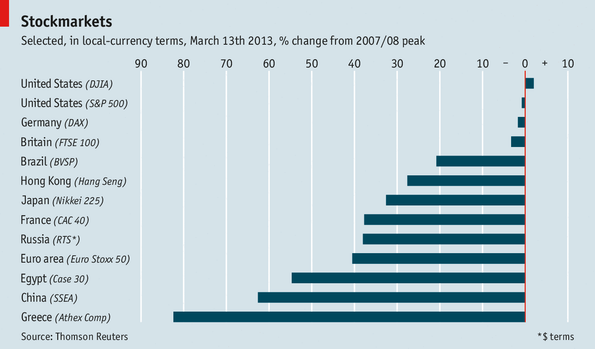
Stockmarkets are back to (or close to) their pre-crisis levels  |
| Posted: 16 Mar 2013 03:00 AM PDT
Comments
***********************************************************************************' EU leaders agree to a balance of growth and strict budgets ***********************************************************************************'
***********************************************************************************'
 |




| You are subscribed to email updates from The Big Picture To stop receiving these emails, you may unsubscribe now. | Email delivery powered by Google |
| Google Inc., 20 West Kinzie, Chicago IL USA 60610 | |



0 comments:
Post a Comment