


The Big Picture |

- Gold Crashes Most in 30 Years … What Does It Really Mean?
- 10 Monday PM Reads
- How to Invest Your Tax Return
- Tax Avoidance Schemes of the Rich & Famous
- World’s Biggest ETF/Contrarian Indicator: GLD > SPY
- 10 Monday AM Reads
- What Are Gold’s Fundamentals ?
- Konczal: Dodd-Frank Reforms Get Roughed Up in Court
| Gold Crashes Most in 30 Years … What Does It Really Mean? Posted: 15 Apr 2013 10:30 PM PDT Why Is Gold Crashing?Gold has fallen off a cliff. It has fallen faster than at any time in the last 30 years. Zero Hedge notes:
(Margin calls tend to trigger further selling.) Some Say It Is a Good Time to BuyWhile most financial advisers are screaming "sell!", there are some well-known contrarians. For example, Bill Gross still recommends buying gold. Marc Faber says:
John Hathaway of Tocqueville Funds (with $10 billion under management) says that the selloff in gold is "a contrarian's dream scenario":
And Zero Hedge notes that – from the perspective of technical analysis – gold is the most oversold it has been in 14 years. The Bearish ExplanationBut why has gold crashed? Bloomberg blames:
Citigroup opines:
CNN theorizes:
Larry Edelson writes:
Business Insider argues:
Barry Ritholtz writes:
Gold Bug ViewGold bugs, on the other hand, see things quite differently. Andrew Maguire says that the crash is solely in the paper gold market … and that there is actually a shortage of physical gold. Many other sources make the same claim. Egon von Greyerz – founder and managing partner at Matterhorn Asset Management – argues:
London bullion dealer Sharps Pixley thinks that the crash was largely initiated by a single entity:
Gold Core's Mark O'Byrne agrees. James Rickards thinks the Fed is manipulating the gold market (and every other market). Former assistant Treasury Secretary Paul Craig Roberts says:
Roberts also says:
Indeed, this may tie into the Federal Reserve leak of insider information. Specifically, Roberts writes:
As Congressman Grayson pointed out in a recent letter, right after the Federal Reserve's Open Market Committee leaked valuable inside information to big banks, Goldman told its clients:
Background on gold manipulation.  |
| Posted: 15 Apr 2013 01:30 PM PDT My afternoon train reads:
What are you reading?
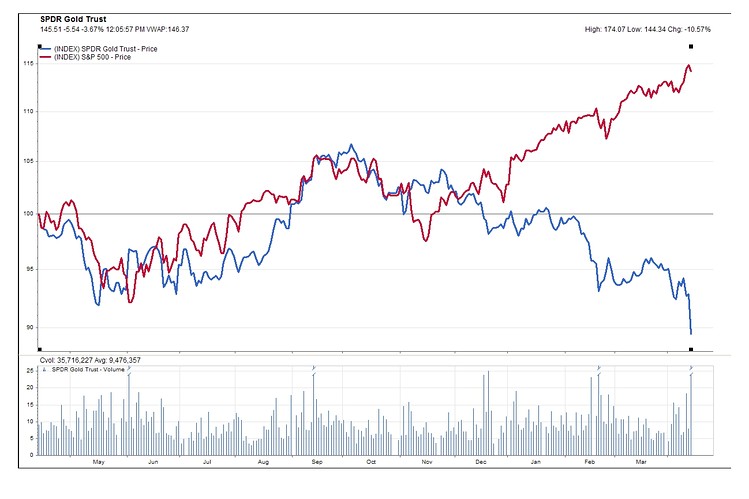
Gold, Stocks No Longer Dancing Together  |
| Posted: 15 Apr 2013 01:00 PM PDT
 |
| Tax Avoidance Schemes of the Rich & Famous Posted: 15 Apr 2013 11:30 AM PDT click for ginormous graphic  |
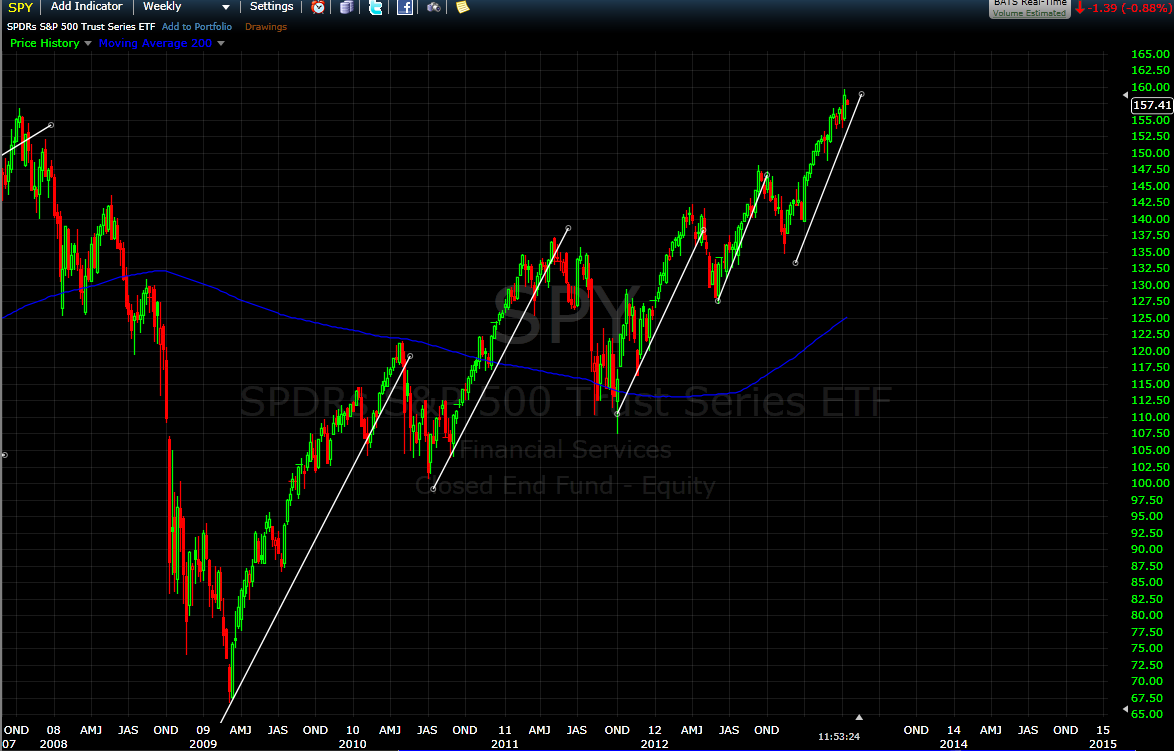
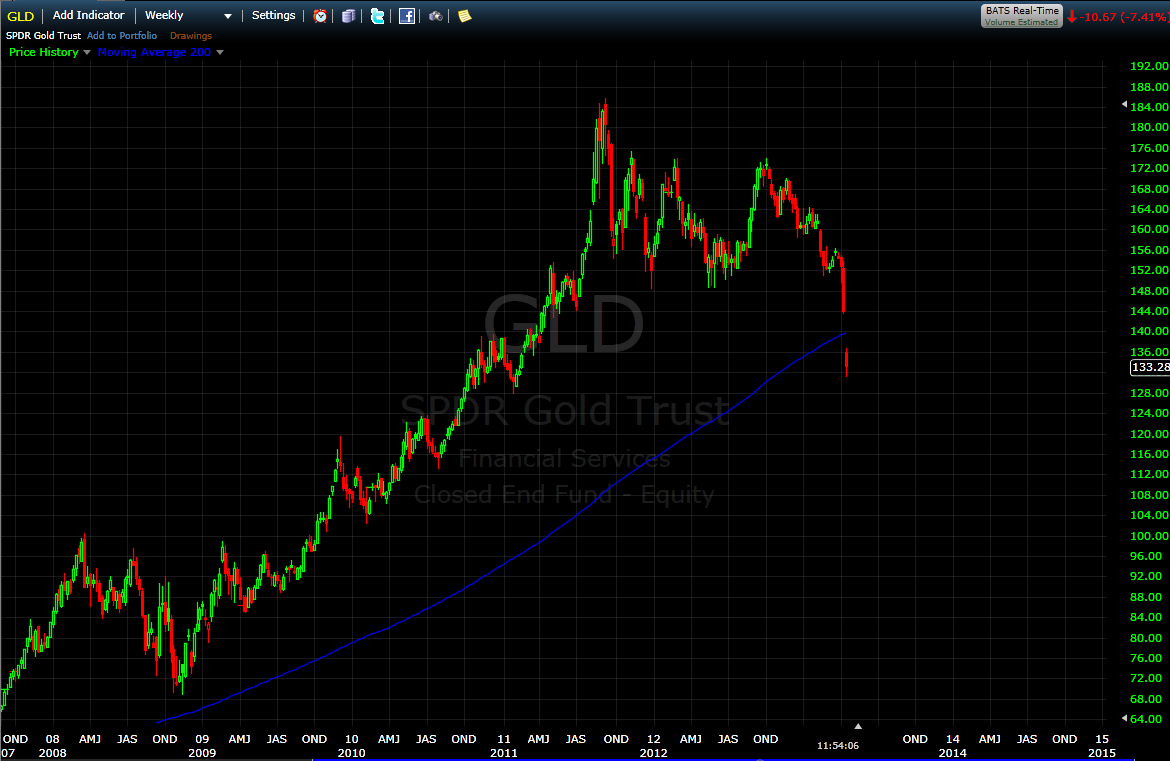
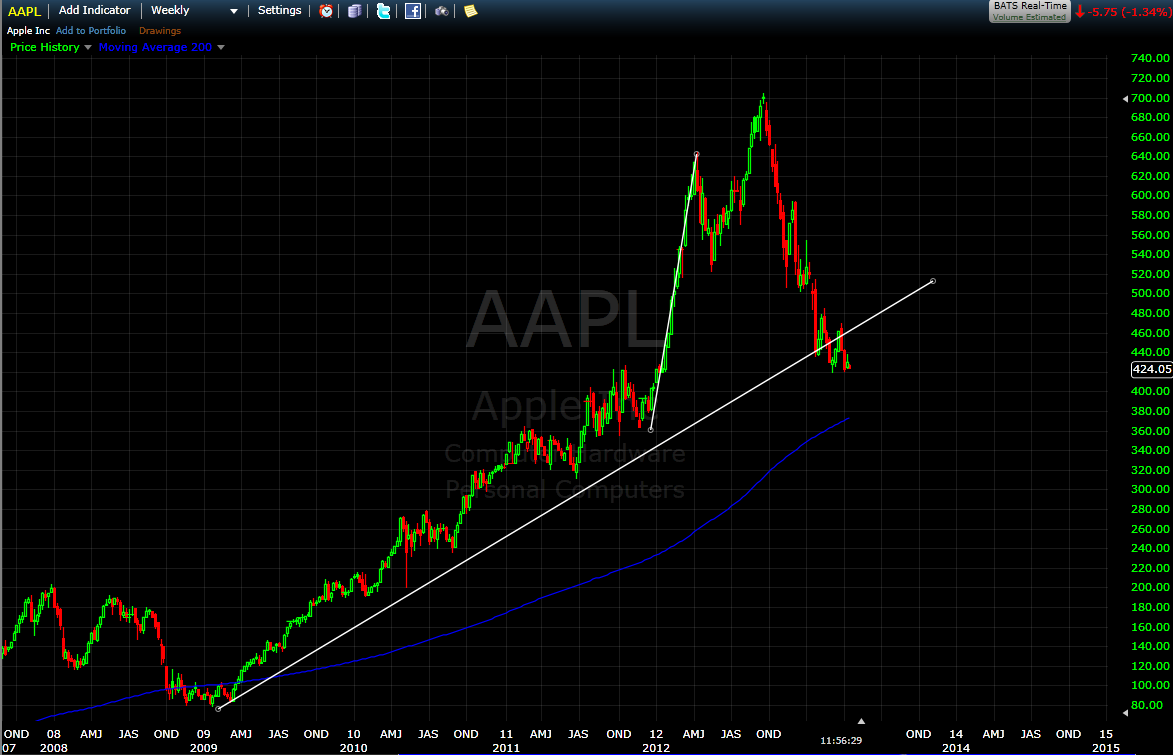
| World’s Biggest ETF/Contrarian Indicator: GLD > SPY Posted: 15 Apr 2013 09:08 AM PDT GLD was briefly the world’s biggest exchange-traded fund. In August 2011, GLD had assets of more than $77 billion, surpassing SPY (SPDR S&P 500 ETF) for a short time. The SPDR Gold Trust's market capitalization rose to $76.7 billion — gold briefly topped $1,880/ounce. At the same time, SPY's "capitalization" was ~$74.4 billion. I missed this detail in real time (I caught the Bond version in 2003). With the benefit of hindsight, its easy to say this was a contrarian signal. Not that you should short GLD, although that surely was a wonderful trade. But rather, that SPY was attractive, as this was a sign of extreme dislike for equities. Have a look at the SPY chart and GLD (and Apple as well). click charts to enlarge them
SPY Weekly Chart 2008-2013
GLD Weekly Chart 2008-2013
And for a little comparison, here is Apple — GLD looks somewhat similar . . .
AAPL Weekly Chart 2008-2013  |
| Posted: 15 Apr 2013 07:00 AM PDT My morning reads:
What are you reading?
Japan Triggers a Shift to Emerging Markets  |
| What Are Gold’s Fundamentals ? Posted: 15 Apr 2013 04:15 AM PDT In a piece published in Barrons.com’s on Friday (Is Gold Nearing Capitulation?) the selloff in gold was described as “a contrarian’s dream scenario.” John Hathaway of Tocqueville Funds wrote in Barron’s: “The evidence shows strong macro fundamentals for gold, investor sentiment at a negative extreme and compelling valuations in the mining shares. It seems like a contrarian’s dream scenario to us.” I am less sure than Mr. Hathaway is. He cites a variety of factors as “positive fundamentals” for gold: negative real interest rates, worldwide quantitative easing, and governments’ new confiscatory inclinations, as demonstrated in Cyprus. To which I am compelled to point out three things:
We looked at Gold as a trading vehicle in the past, and identified the many ways it is different than assets like equities or bonds. Back in 2011, we noted that Gold is a trade, not a religion. During that presentation at the Agora conference in Vancouver, we discussed how commodities spike and collapse versus how equities roll over and break trend lines. History shows Gold trades differently than equities. Why? It comes back to those fundamentals. It has none. This is not to say gold is not affected by Macro issues. But that is very different than saying Gld has a fundamental value, an intrinsic worth. It does not. That led to this heretical advice: Gold is not, and can never be, an investment. It has no true intrinsic value, no cash flow, no earnings, no coupon. no yield. What people call fundamentals are nothing more than broad macro analysis (and how have your macro funds done lately?). Gold is the ultimate greater fool trade, with many of its owners part of a collective belief theory rife with cognitive errors and bias. I do not want to engage in Goldenfreude — the delight in gold bugs’ collective pain — but I am compelled to point out how basic flaws in their belief system has led them to this place where they are today. Gold does trade technically, and is especially driven by the collective belief system of the crowd. When that falter, well, you know what happens . . .
Gold falls 10% this
Related: Tax Time Takes A (Big) Bite Out Of $GLD $GC_F (Stock Traders Almanac) God is Making Gold Crash to Test Your Faith (The Reformed Broker) GARTMAN: In Four Decades Of Trading Gold, I Have Never Seen Anything Like This Crash (Business Insider) Charts du jour (silver and gold) (FT Alphaville)
Source:  |
| Konczal: Dodd-Frank Reforms Get Roughed Up in Court Posted: 15 Apr 2013 03:00 AM PDT Mike Konczal, fellow at the Roosevelt Institute and contributor to Bloomberg View, talks with Bloomberg Law’s Lee Pacchia about how the implementation of the financial reform laws in Dodd-Frank have been hampered by a series of adverse court decisions. Konczal contends that these decisions are not only a setback for proponents of reforming the financial industry, but also have a chilling effect on future efforts by regulators and lawmakers. At the same time, however, Konczal feels that these courthouse victories could end up harming the finance industry. “If it looks like the law is unable to do what it needs to you will see reformers come back with much harsher provisions…that the banks successful avoided the first time around,” he says.
 |




| You are subscribed to email updates from The Big Picture To stop receiving these emails, you may unsubscribe now. | Email delivery powered by Google |
| Google Inc., 20 West Kinzie, Chicago IL USA 60610 | |



0 comments:
Post a Comment