


The Big Picture |

- Is Modern Life Making Us Dumber?
- Wealth On A Plane
- 10 Thursday PM Reads
- FRBNY Prez William Dudley on QE, Mandates
- Percentage of SPX Stocks Over 200 Day Moving Average
- 10 Thursday AM Reads
- Opteka Ultra Thin Solar Powered High Capacity = $25
- Look Out Below, Japanese Black Thursday Edition
- Bullard: Monetary Policy Options in a Low Policy Rate Environment
| Is Modern Life Making Us Dumber? Posted: 23 May 2013 10:30 PM PDT Forget "Peak Oil" and "Peak Credit" … Are We On the Downslope of "Peak Intelligence"?
Scientists say that we have much smaller brains than our ancestors had 20,000 years ago … and we might have gotten stupider since agriculture became widespread. Indeed, Huffington Post reports that we've probably gotten dumber than even our Victorian ancestors:
There are several theories for why we are getting dumber, including the following (the first 2 come from the HuffPost article): (1) Dr. Jan te Nijenhuis points to the fact that women of high intelligence tend to have fewer children than do women of lower intelligence. This negative association between I.Q. and fertility has been demonstrated time and again in research over the last century. (2) "The reduction in human intelligence … would have begun at the time that genetic selection became more relaxed," Dr. Gerald Crabtree, professor of pathology and developmental biology at Stanford University, told The Huffington Post in an email. "I projected this occurred as our ancestors began to live in more supportive high density societies (cities) and had access to a steady supply of food. Both of these might have resulted from the invention of agriculture, which occurred about 5,000 to 12,000 years ago." (3) Humans evolved to eat a lot of Omega 3s:
Omega 3s – in turn – boosts intelligence and help prevent cognitive decline. (4) Exercise boosts intelligence … and our ancestors got a lot more exercise than we do! In addition, high levels of cortisol – the chemical released by the body when one is under continuous, unrelenting stress – and poverty can physically impair the brain and people's ability to learn. On the other hand, relaxing activities like meditation and prayer have been shown to increase brain mass and connectivity in certain areas of the brain. Hunter-gatherers had more leisure time – and a more playful attitude – than we do today. (5) Toxic chemicals in the environment can reduce intelligence. Examples include flame retardant, lead (found in many lipsticks), certain pesticides (and see this and this), and fluoride.  |
| Posted: 23 May 2013 05:30 PM PDT Jess Bachman Did you know that the 400 richest people in America are wealthier than the bottom 60%? The 1%, you say? More like the 1% of the 1% of the 1% — and you can fit them all on one 747 commercial jet. This video has the details  |
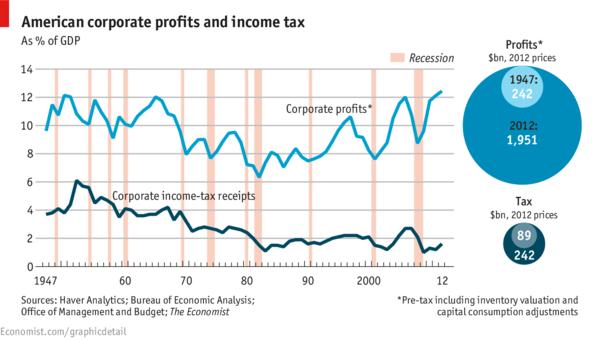
| Posted: 23 May 2013 01:30 PM PDT My thunderstorm afternoon train reading:
Whatcha reading?
America’s Corporation-Tax Receipts Falter Even as Company Profits Soar  |
| FRBNY Prez William Dudley on QE, Mandates Posted: 23 May 2013 11:00 AM PDT Your lunchtime viewing: Dudley Discusses Taper Decision, Mandates, Yellen  |
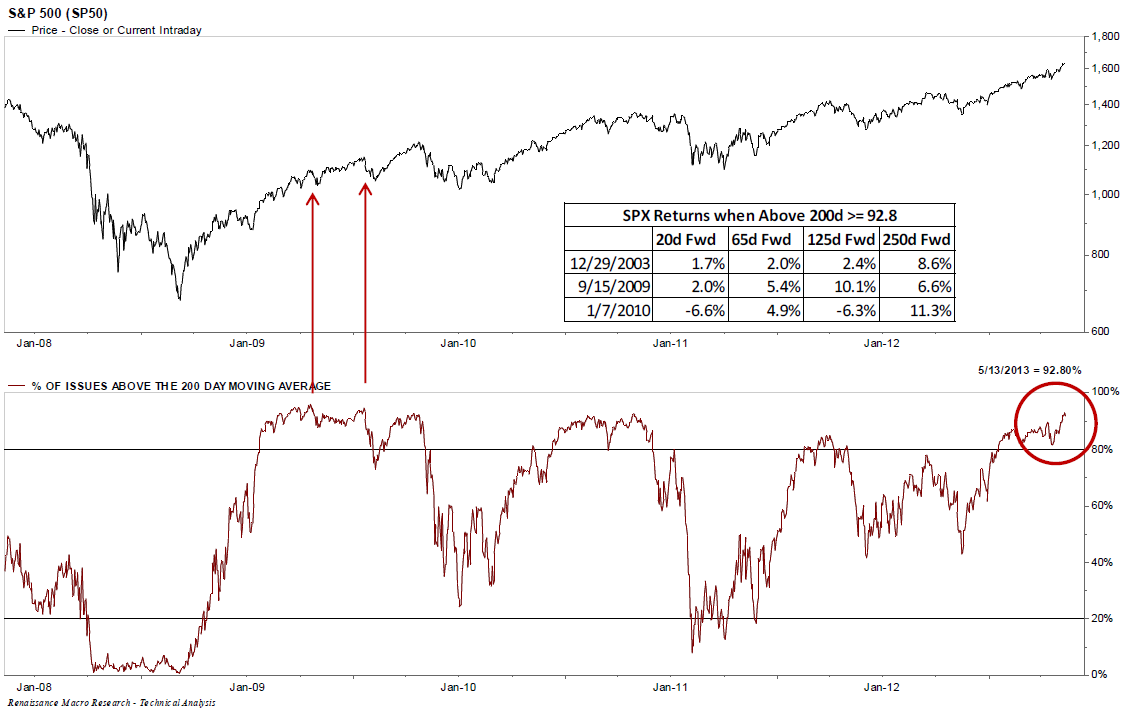
| Percentage of SPX Stocks Over 200 Day Moving Average Posted: 23 May 2013 08:30 AM PDT
Jeff deGraaf, technician extraordinaire (formerly of Lehman now at Renaissance Macro Research) makes an interesting observation about the heavily overbought markets. Last week, the S&P500 had ~93% of all stocks trading over their 200 day moving average. Normally, this degree of overbought should lead to a correction. As you can see in the inset box, it sometimes does. However, if you are looking out a year, we see that over the past 3 instances, markets have been higher. The takeaway is that you should determine if you are a trader or an investor before thinking about whether to lighten up or add on dips. Different timelines and holding periods should consider different responses to the volatility. Note you can get see the updated version of this measure at various places online (Index Indicators, StockCharts, Decision Point. You can read more about this measure here.  |
| Posted: 23 May 2013 06:49 AM PDT My morning reads:
What are you reading?
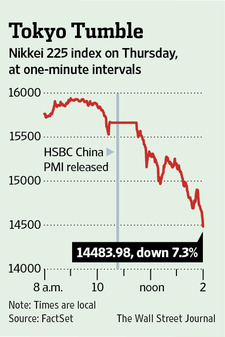
Japanese Stocks Fall 7.3% Overnight  |
| Opteka Ultra Thin Solar Powered High Capacity = $25 Posted: 23 May 2013 05:30 AM PDT |
| Look Out Below, Japanese Black Thursday Edition Posted: 23 May 2013 04:00 AM PDT click for updated futures
US futures are down following yesterday’s intra-day reversal after the FOMC minutes were released. Nikkei is down 7.3%. Japan's Topix index tumbled the most since the aftermath of the March 2011 tsunami and nuclear disaster. This follows a 50% rally in the Japanese market on Abenomics. Hong Kong Hang Seng Index is down 2.54%. Major European indices are off 2-3%. EuroStoxx down 2.3%; FTSE100 off 1.9%. Deutsche Borse got whacked for 2.7%, wqhile the CAC40 is hit for 2.3%. Josh has more details here; World market updates here.
 |
| Bullard: Monetary Policy Options in a Low Policy Rate Environment Posted: 23 May 2013 03:00 AM PDT  |


| You are subscribed to email updates from The Big Picture To stop receiving these emails, you may unsubscribe now. | Email delivery powered by Google |
| Google Inc., 20 West Kinzie, Chicago IL USA 60610 | |



0 comments:
Post a Comment