


The Big Picture |
- Inside Pixar
- My BBRG Page!
- Young Households Falling Behind in Net Worth
- Media Rules
- 10 Weekend Reads
- Mark Blyth: Austerity – The History of a Dangerous Idea
| Posted: 15 Jun 2013 04:00 PM PDT Terrific interview with Ed Catmull, the president of Pixar. Best quotes from the 38 minute talk can be found at Scott Berkun’s blog.
 |
| Posted: 15 Jun 2013 01:30 PM PDT |
| Young Households Falling Behind in Net Worth Posted: 15 Jun 2013 12:00 PM PDT The Old Get Richer, but Not the Young
I have some good news and some bad news: The good news is that the total wealth of US households are slowly recovering from the credit crisis and Great Recession. The bad news is it has not been sufficient to keep up with inflation; lots of people — especially those who loaded up on debt before the collapse — are lagging. Household wealth rose by $3 trillion in Q1, to $70.3 trillion — greater than the $68.1 trillion in Q3 2007, before the recession began. About a third of the gains were courtesy of rising stock prices, another third was rising real estate values. All is not rosy, as Floyd Norris reminds us:
The bifurcated economy continues to get ever more stratified . . .
Source:  |
| Posted: 15 Jun 2013 07:30 AM PDT If it’s not in the newspaper, that doesn’t mean it didn’t happen. Just because the newspaper says it’s important, that doesn’t mean it is. Don’t confuse ink with traction. You can hire a PR person, be all over the media, and no one can care. Just because you’re on TV, don’t assume everyone’s seen you. Don’t assume anyone’s seen anything in the media today, we’re all so drilled down into our own little holes that everybody misses much, and doesn’t care when they’re called out on it. The concept of feeling better about yourself because you know about something somebody else does not, or you know it sooner, is passe. Don’t trust the newspaper. Those are reporters. We want someone who lives that beat all day long, not someone who does a bit of research and tries to put the story together. Old school journalists are concerned with the w’s, the where, when, why and…how. You can only get so far asking questions. But if you live it all day long, you know the history and you know the context. Chances are, on everything other than front page news, there’s a maven online with a website who knows more about it than the traditional reporters. Reporters get it wrong. Not only do they misquote, they make stuff up. And oftentimes, editors change things so they’re not accurate, sometimes to justify their jobs, other times for space. If someone’s in the media, being interviewed and quoted everywhere, they’re a whore, they’re into the publicity. Anybody with a profile knows that the media gets it wrong, so they do their best to stay out. So if you see someone incessantly, whether it be Kim Kardashian or John McCain, know they’re working it. You can tell your own story online. If you’re concerned about the truth, do so. But the real story is you can’t inform everybody, no longer how much you protest, people will spread rumors and false information. Focus on your work, not the sales pitch. Almost everything in the newspaper other than hard news, i.e. killings and political situations, is placed there by PR people. PR people make it easy for reporters, they fill up the paper. If you think someone in the arts department sits down and decides the important stories, you’re dreaming. They’re concerned first and foremost with access. That’s what PR people do, deliver stories, they write the newspaper… TV news is what you see and usually nothing more. Other than sticking a camera in someone’s face, shooting a tragedy, there’s almost no one in the field scouring for news and developing stories. If you think you’re getting the real story on TV, you haven’t read the newspaper, which is where TV gets all its leads. Rupert Murdoch has a viewpoint. He tries to change public opinion via Fox News and his newspapers. If you see a left wing position in his outlets, it’s a straw man ready to be struck down. Don’t try to convince someone their political position is wrong. They’ll just dig down deeper and e-mail you a contrary opinion by their favorite blogger. People change their opinions over time, by themselves, via a plethora of information. This is the essence of gay marriage. Once everybody saw everybody else was for it, they were too. Politicians are last. They stay far from the leading edge and are beholden to corporations. If you’re looking for leadership, you should look to artists. Unfortunately, in today’s challenging financial times, artists have been derelict in their duty, they too want to be beholden to corporations. Just because someone analyzes deeply, that does not mean they’re right. Today, you must do your own analysis. In other words, you must be educated. Which most people are not. The mark of an educated person? Someone who can hold two opposing thoughts in their brain at one time. If you’re just a knee-jerker…you’re gonna get jerked around. “The New Yorker” is the best-written mainstream publication. But that does not mean it’s always right or on the cutting edge or can influence policy. It just means it’s the most rewarding reading experience. Too many magazines focus on the glitz and not the substance…then again, the average person can’t understand substance. You see Kim Kardashian in the news because you want to. Want to banish her? Stop reading the stories. The press stopped hounding Owen Wilson after his suicide attempt, demonstrating it can exercise restraint. But somehow, it never does. If the press didn’t report every move, would Amanda Bynes fly straight? Lindsay Lohan? See who is paying the bills… Trust trade magazines and sites for raw data, discard the analysis, they say positive things about those who pay them. Beware the professional prognosticators… Who said the iPod was too expensive and no one would want the iPad. Now digital music rules and tablets are killing the desktop. Furthermore, reporters on this beat go to the same damn pundits every time, skewing the story. But the iPod and iPad show that the pundits are powerless. The people will do what they want to do. “Huffington Post” has a better layout than the “New York Times,” but is purely link-bait. The “New York Times” site needs a makeover, but no one working there understands design or the web, they’re too busy pounding their chests and claiming they’re reporters. What did Steve Jobs teach us? Number one comes usability! “USA Today” is irrelevant. Because its bland stories are done better online, and no one’s got a captive audience anymore, you can get the news on your phone, you don’t need a physical paper. There’s a need for local news, but local newspapers can’t make it financially. The “New York Times” and “Wall Street Journal” survive, everything else is up for grabs. People need news. They don’t need to get it from traditional sources. There’s new news every day, want your story to survive? Keep it alive, keep making news every day. Kids today know more news than their parents, they’re exposed to it all day long. –  |
| Posted: 15 Jun 2013 04:00 AM PDT Good Saturday morning. Its a glorious day in the NorthEast, but before you head out, check out the longer form writings I’ve saved for the weekend. Draw a cup of Joe, find your favorite reading chair, and have at these deep dives:
What are you doing this weekend?
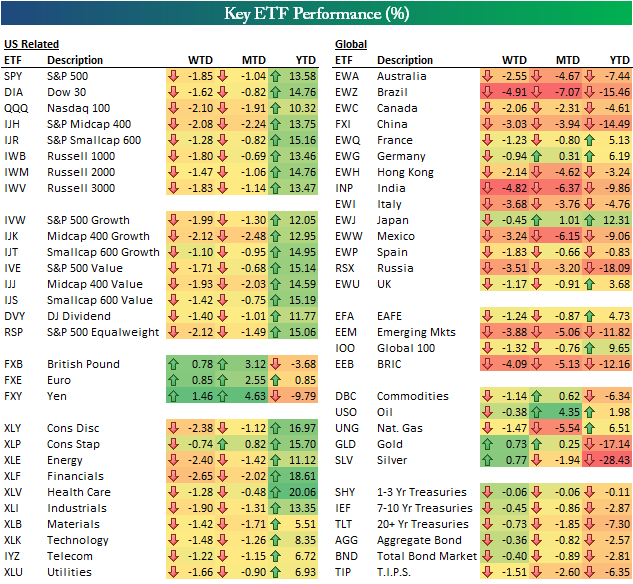
Key ETF Performance (%)  |
| Mark Blyth: Austerity – The History of a Dangerous Idea Posted: 15 Jun 2013 03:00 AM PDT |



| You are subscribed to email updates from The Big Picture To stop receiving these emails, you may unsubscribe now. | Email delivery powered by Google |
| Google Inc., 20 West Kinzie, Chicago IL USA 60610 | |



0 comments:
Post a Comment