


The Big Picture |
- What Constitutes Substantial Employment Gains in Today’s Labor Market?
- Mr. First-Nighter: Tony Previews
- Succinct Summations of Week’s Events (June 7, 2013)
- HFT Robot Art
- Temporary Help Services Reach Record High
- Marines Push for Solar Energy
- 10 Friday AM Reads
- THE MOST IMPORTANT EVER NFP blah blah blah
- The End of Extreme Poverty?
- Six Appeal – 1960s Newport Pagnell Aston Martins
- Will Labor Force Participation Bounce Back?
| What Constitutes Substantial Employment Gains in Today’s Labor Market? Posted: 08 Jun 2013 02:00 AM PDT What Constitutes Substantial Employment Gains in Today's Labor Market?
The Federal Open Market Committee (FOMC) has tied its asset purchases to a "substantial improvement" in labor market conditions. While we don't speculate on what the FOMC means by substantial improvement, we do explore the level of monthly job gains that would gradually deliver the underlying trend unemployment rate within a reasonable timeframe, under several plausible scenarios. We find that the path of monthly job gains, which is highly dependent on a few key parameters, is likely to be smaller than the path associated with previous recoveries. The Federal Open Market Committee (FOMC) announced in its December 2012 statement that asset purchases will continue as long as the outlook for labor markets does not improve substantially.1 This made the overall size of the purchase program a function of the labor market outlook, along with the program's "likely efficacy and costs." There are many measures of labor market conditions, and the FOMC is likely to consider a broad range of indicators when it determines whether improvement qualifies as substantial.2 Nonetheless, employment growth and the unemployment rate are the most closely followed labor market measures and the best contemporaneous indicators of labor market conditions.3 Looking at those two measures, we explore the level of employment growth that might best represent a substantial employment gain. One way to approach the question is to look back at periods of strong growth in past recoveries. We have data going back to 1939, and looking at the best six-month period of employment growth in the U.S. economy (February 1946 to August 1946), we observe job gains of over a half million per month. With the size of today's labor market, that rate of growth would represent almost 2 million new jobs per month! Even the 75th percentile for growth in any six-month period since then suggests a monthly rate of job gains now of around 450,000. Obviously, these numbers would be great going forward, but any current benchmark should fall within the realm of possibility given today's labor markets. Moreover, simple comparisons across previous recoveries don't account for potential changes over time in the underlying determinants of employment growth. So instead of a historical comparison, we use an economic model to evaluate the employment gains associated with progress on the unemployment rate. The model allows us to explore the impact of three critical factors influencing employment growth trends. These factors are the projected level of aggregate output growth, slowing growth of the U.S. labor force, and less dynamism in the U.S. labor market relative to the 1980s. We show that each of these channels has important effects on the expected path of improvements in the labor market. For us, an improvement in the labor market corresponds to a reduction in labor market slack—that is, a decline in the unemployment rate toward its long-run trend (or natural rate), which is estimated to be 5.8 percent. Our figure is on high side of the central tendencies of the FOMC's projections for long-run unemployment, which go from 5.2 to 6 percent.4 Ultimately, the level of improvement that is deemed "substantial" will be in the eye of the beholder, but we will consider outlooks which make steady and meaningful progress in lowering unemployment toward this natural rate. Overall, we find that the current economic environment is associated with smaller employment gains than have been typically seen in the past. Indeed, the scenarios that we view as relevant in today's economic environment would produce average employment gains of 150,000 per month or less for the current year. A Simple Model of Output and Labor MarketsIn order to quantify the extent of the employment gains that would be consistent with an improvement in the labor market, given current conditions, our model of labor markets explicitly incorporates the level of economic growth, the labor force participation rate, and the level of dynamism in the labor market as defined by job finding and separation rates. The model is based on Tasci (2012), which accounts for the effects of job finding and job separation rates on the unemployment trend, modified to incorporate changes in the labor force participation rate.5 Our model treats each of the four variables as a combination of a trend component, which moves relatively slowly over time, and a cyclical component, which fluctuates with the business cycle. Cyclical changes in the job separation, job finding, and labor force participation rates are related directly to the movements in the cyclical component of real output. For instance, a deep recession will generate a sharp decline in the job finding rate and a large rise in the separation rate, as well as a decline in the participation rate. As the cyclical component of output gradually disappears, output growth will gradually return to its long-run trend, and the unemployment flow and labor force participation rates will return to their trend levels at a rate based on their past adjustment history. Using data on unemployment flow rates, labor force participation rates, and real GDP between 1948:Q1 through 2013:Q1, we estimate the model and calculate the trend components for all the variables.6 We call this our model scenario. These trend estimates are based on the historical behavior of all the variables in the model. The model indicates a current unemployment rate trend of 5.8 percent (which can be interpreted as a natural rate), along with a significant output gap (−2 percentage points as of last quarter). The model indicates that today's labor force participation rate of 63.3 percent is essentially very close to its trend, 63.6 percent—no doubt a reflection of the length of time that the participation rate has declined since the end of the recession and its history of being only slightly cyclical. Finally, our estimates confirm that the flows of people into and out of unemployment continue to be low, primarily reflecting a long-run decline in turnover trends that has been previously identified in related work (Tasci, 2012; Tasci and Zaman, 2010). Based on the typical cyclical response to an output gap, the model projects a relatively strong recovery in economic growth for the current year (3.1 percent), which reduces the output gap to below 1 percent by the end of the year. In this model, that recovery path reduces the projected unemployment rate gradually to below 6.5 percent by 2014:Q3. Given this path of the unemployment rate and the modeled labor force participation rate, we can calculate an expected number of monthly employment gains that is consistent with a relatively strong labor market recovery.7 This employment gain is defined in terms of the household survey (which is used in the unemployment rate calculation), but, on average, over time, the payroll employment gains should be similar. Two results stand out in this projection under the model scenario. First, once the unemployment rate reaches 5.8 percent in the long run, employment gains of only 46,000 a month would be sufficient to keep it there. This is a direct consequence of the slow labor force growth projected by the declining trend in the participation rate in our model scenario. Second, monthly gains of 149,000 are sufficient to bring the unemployment rate down gradually to 7 percent by the end of the year and to lower the unemployment rate below 6.5 percent by the third quarter of 2014. Labor market slack is completely eliminated by the end of 2015. While the model estimates are interesting, they build in statistical estimates, and therefore modeling assumptions, for the three critical factors cited above when determining the employment gains per month. Each of these factors is subject to some debate, and alternative estimates are worth considering. For example, the economic forecasts of most economists suggest that the baseline projection for GDP growth in our model is overly optimistic in the near term. Similarly, other researchers have suggested that the labor force participation rate might have more of a cyclical component than our model projection implies. Finally, since labor market turnover declined significantly over time, exploring its potential impact would be useful. To investigate the quantitative importance of these factors, we construct three additional scenarios using alternative assumptions for each. Near-Term Output GrowthThe model generates projections without considering any data other than the four variables described previously. Other data, such as personal consumption, investment, and trade, which are typically used by economic forecasters to improve the precision of near-term growth estimates, are not included. In the model scenario, we project an average growth rate of 3.1 percent for output this year, which gradually slows until it reaches its trend growth rate of 2.2 percent in 2016. We think this is an overly optimistic forecast for the current year, given the concerns about the fiscal drag and weak global demand. To highlight the importance of a slower recovery of output, we construct another scenario from our model, in which the near-term GDP path follows the projections of the Survey of Professional Forecasters (SPF).8 We call this the SPF GDP scenario. The SPF expectation for growth this year is much lower, around 2.3 percent.9 When it is incorporated into the model, the picture for employment growth is considerably weaker, and improvement in the unemployment rate is relatively slow (table 1). In particular, unemployment dips only to 7.3 percent by year-end and then takes until 2015:Q3 to decline below 6.5 percent. The implied gradual improvement is consistent with employment growth, barely 108,000 jobs per month in 2013, and 92,000 in 2014. Comparing the model and SPF GDP scenarios highlights the significant role that near-term output growth plays in the employment growth picture.
Table 1. Employment Growth under Different Scenarios
Note: Monthly employment gains for 2013 include the Q1 average of only 21,000 per month from the household survey. Cyclical ParticipationIn our model scenario projection, we estimate the trend and cyclical components of the labor force participation rate over time by projecting the historical behavior of the variables in the model forward. Since historical participation rate movements have been only mildly cyclical, the model predicts a very small cyclical component for the participation rate in the future. But this prediction might not be very reliable if the current episode represents a breakdown in this historical pattern—which seems a possibility, given that the response of the labor force participation rate in this recession has been exceptionally drastic relative to past recessions. Ultimately, the degree to which the labor force participation rate recovers will depend on how much of the recent decline in the rate is cyclical and how much is trend. This is hard to forecast, and there is evidence on both sides. It is very clear, for example, that demographic trends that are not related to cyclical factors have driven the participation rate up and down substantially over time. Since the 1950s, two key demographic trends have significantly altered the participation trend. First, from 1950 until around 2000, more women continuously joined the labor force, driving a strong secular increase in the overall participation rate (figure 1). Second, from the 1970s until the late 1990s, a large baby boom generation drove up the share of the population that was in its prime working years, which also served to boost the participation rate. Neither of these factors has boosted participation recently, and models which account for the demographic structure of the population have been projecting declines in participation for some time, for example, Fallick and Pingle 2007.
Over the same period, movements in the participation rate and the business cycle were weakly correlated. During recessions, the overall participation rate declined somewhat and later reversed course as the recovery picked up. One can expect some recently unemployed workers to get discouraged and temporarily drop out of the labor force during a recession. Similarly, potential new entrants to the labor force and the recently unemployed might choose to go to school instead of looking for work, thereby reducing the participation rate during a recession. These patterns might be reversed as the economy recovers and participation increases. Recent research on the participation rate has argued that cyclical factors such as these might have played a bigger role in the current episode than otherwise thought, and some of the recent decline might be temporary.10 But in the most recent recoveries, there has been little indication of a post-recession bounce back in labor force participation. Therefore, the trend reversal around 2000, partly due to retirement of the baby boomers and the aging workforce, seems to have dominated the overall labor force participation picture in the last 15 years. In the model scenario, the trend participation rate stands at 63.6 percent and is projected to decline by 0.33 percentage points per year. This view may be somewhat pessimistic, but recent work by Aaronson and Brave (2013) carefully explores the implication of the labor force participation trend and argues that trend employment growth per month will fall to around 35,000 by the end of the decade. Their results are consistent with our long-run estimates in the model scenario. To illustrate the impact that a more significant cyclical component would have on the near-term labor force participation rate, we construct the cyclical LFPR scenario. It assumes that the actual trend of the participation rate is higher than our baseline estimate, at 64 percent, and the annual decline in the underlying trend is similar to the level estimated prior to the recession, 0.2 percentage points per year. Under this projected path, the labor force participation rate stays at its current level until it reaches the trend, implying a gradual cyclical recovery in the participation rate relative to trend, similar to the path projected by Van Zandweghe (2012). We believe the two different paths for the labor force participation rate from the model and cyclical LFPR scenarios provide an interesting contrast in outcomes within the plausible set of alternatives. Figure 2 shows a comparison of these two paths with the most recently available participation rate projections from two public sources: the Bureau of Labor Statistics (BLS) and the Congressional Budget Office (CBO),11 although both sources have substantially underestimated the extent of the decline within the past two years by as much as one full percentage point. Neither of these published alternatives have been updated for the recent data, but the more optimistic path (cyclical LFPR scenario) gradually converges toward the BLS projections and runs nearly parallel to the CBO projections, once the cyclical nonparticipation is absorbed.
To understand the impact on employment growth of a more cyclical response in the participation rate relative to the baseline, we compare the model scenario and the cyclical LFPR cases, since the assumptions about output and flow rates are the same. The comparison highlights the long-term differences, as well as the medium-term adjustment in terms of employment gains. While both outcomes converge to similar unemployment rates over a similar period of time, the higher labor force participation rate in the cyclical LFPR scenario leads to more employment growth throughout the projection period, including almost twice as much employment growth in the long run when unemployment reaches its trend value. Slowdown in Labor Market TurnoverAnother crucial factor that will affect progress in the labor market is the role of labor market turnover, more specifically, the average rates at which workers find and lose jobs. Turnover is important, because it determines the speed with which labor markets reshuffle workers in response to the shock of a recession. Labor market adjustment, the process through which people find jobs and jobs find people, takes time and resources. Even in the best of times, unemployment and job openings might coexist. In a dynamic labor market, where both of the underlying flow rates are high, the reshuffling happens much more quickly and as a result, unemployment adjusts quickly to its long-run level. If the flow rates are low, adjustment to the long-run trend takes place more slowly. Note that it is only the adjustment time that is a function of the churning process, not necessarily the unemployment rate trend. One defining feature of the U.S. labor market over the last decade has been the marked decrease in both of these flow rates, hence a slowdown in overall turnover (figures 3 and 4). This trend, which started in the 1980s, has been well documented for the separation rate. More recently, our research has found that even the average job finding rate has suffered a notable decline, and it has become more pronounced in the last decade and a half.12
This slower rate of turnover has hampered progress on the unemployment rate. The same mechanism also implies that average payroll gains per month will be substantially smaller in the short run, as unemployment approaches its natural rate, than in more dynamic labor markets. To highlight the importance of labor turnover, we contrast the results from the model scenario with those of a counterfactual scenario in which we assume levels of turnover that were observed in the 1980s. This scenario, labeled 1980s labor market in table 1, has both job finding and separation trend rates higher than current rates by almost 70 percent, such that the implied long-run unemployment rate is just below 6 percent, identical to the other cases.13 This specific, and unfortunately highly unlikely, combination of high turnover and strong output recovery implies an exceptionally quick adjustment in the unemployment rate, ending in 2013 at 6.5 percent. This path of improvement in the labor market implies almost 50 percent higher employment gains per month in 2013, relative to the model scenario. The dynamism and the stronger output growth of this scenario were characteristic of the early 1980s. Not surprisingly, the early 1980s recovery had a sharp rebound in employment accompanied with a sharp decline in unemployment, similar to the 1980s labor market scenario. ConclusionHaving walked through a range of different assumptions and scenarios in table 1, it should be clear that unless labor markets swiftly returnto the dynamism of the 1980s, we are unlikely to see sustained employment gains above 200,000 per month this year. Indeed, several of the scenarios we considered pointed to significantly smaller expected employment gains. To clarify this expectation, we also produced a scenario in which we combine some plausible alternatives. This scenario is not a forecast, but instead represents a particularly interesting combination of factors that influence expected employment growth. It includes a continuation of current labor market turnover rates, the GDP growth path currently forecasted by professional forecasters, and, perhaps most optimistically, a cyclical bounce-back in the participation rate. It's labeled SPF GDP with cyclical LFPR in table 1. This combination of factors produces employment growth this year of 106,000. This growth rate picks up (165,000 workers per month next year and then 224,000 in 2015) as output growth accelerates, ultimately driving the unemployment rate below 6.5 percent by the third quarter of 2015. Importantly, given the economic conditions built into this projection, these are outcomes that could be characterized as consistent with the economy making steady progress to full employment. What is very clear about this scenario, and most of the other scenarios that we considered, is that the buoyant monthly employment gains that accompanied prior recoveries are not likely to be repeated. Indeed, even if GDP growth were to surprise on the high side (3.1 percent for 2013 as illustrated in the cyclical LFPR scenario), employment growth generated by our model would still be just 147,000 per month in the current year, even though the economy would be on a path to a 6.5 percent unemployment rate by the third quarter of 2014. Ultimately, the degree of change in employment growth or the unemployment rate required to represent a "substantial" amount of progress in the labor market outlook is a subjective judgment. However, the pattern of employment growth that the economy will generate over a multiyear span depends importantly on output growth, the trend paths of labor market dynamism, and labor force participation. In this Commentary we used a simple model of labor markets to demonstrate why it is reasonable to think that the monthly pace of employment gains is likely to be smaller than the U.S. has seen in past recoveries. ReferencesAaronson, Daniel, and Scott Brave, 2013. "Estimating the Trend in Employment Growth," Federal Reserve Bank of Chicago, Chicago Fed Letter, 2013-312. Aaronson, Daniel, Jonathan Davis, and Luojia Hu, 2012. "Explaining the Decline in the U.S. Labor Force Participation Rate," Federal Reserve Bank of Chicago, Chicago Fed Letter, 2012-296. Erceg, Christopher J., and Andrew T. Levin, 2013. "Labor Force Participation and Monetary Policy in the Wake of the Great Recession," Federal Reserve Bank of Boston, paper. Fallick, Bruce, and Jonathan Pingle, 2007. "A Cohort-Based Model of Labor Force Participation," Finance and Economics Discussion Series 2007-09. Federal Reserve Board. Hotchkiss, Julie L., and Fernando Rios-Avila, 2013. "Identifying Factors behind the Decline in the U.S. Labor Force Participation Rate," Business and Economic Research, 3(1). Macrothink Institute. Pissarides, Christopher A., 2000. Equilibrium Unemployment Theory. Cambridge, MA: MIT Press. Schweitzer, Mark, and Jennifer Ransom, 1999. "Measuring Total Employment: Are a Few Million Workers Important?" Federal Reserve Bank of Cleveland, Economic Commentary. Tasci, Murat, and Saeed Zaman, 2010. "Unemployment after the Recession: A New Natural Rate?" Federal Reserve Bank of Cleveland, Economic Commentary, 2010-11. Tasci, Murat, 2010. "The Ins and Outs of Unemployment in the Long Run: Unemployment Flows and the Natural Rate," Federal Reserve Bank of Cleveland, working paper no. 2010-17R (revised in November 2012). Van Zandweghe, William, 2012. "Interpreting the Recent Decline in Labor Force Participation," Federal Reserve Bank of Kansas City, Economic Review. Footnotes
 | ||||||||||||||||||||||||||||||||||||||||||||||||
| Mr. First-Nighter: Tony Previews Posted: 07 Jun 2013 03:00 PM PDT It's that time of year again, and the Tonys are on Sunday. Mr. First-Nighter is an industry professional and Tony voter who (for obvious reasons) is precluded from puyblishing these reviews under his own name. Below are the thumbnail reviews of all the shows he’s seen (alphabetically) -Mr. First-Nighter ~~~ A CHRISTMAS STORY – This musical adaptation of the cultish comedy Christmas movie (itself an adaptation of short stories and radio program anecdotes by storyteller Jean Shepherd) is just a beat-by-beat retelling of the movie with unnecessary songs that are forgotten in the same moment they are heard. The physical production is cheesy and uninspired. The story is supposed to take place in the 1940s, but nothing in the direction, sets, costumes or music (other than for a moment here or there) evokes the era. There are a couple of good production numbers (“Ralphie to the Rescue” [a cowboy dream sequence], “A Major Award” [the father's Busby Berkeley number upon winning the leg lamp], and the teacher’s 40s/Ann Miller style tap number in Act II), as well as a decent musical comedy performance by the dad. Dan Luria, as the narrator (Shepherd), is also fine, a warm and ubiquitous presence throughout, but he adds nothing but commentary and punch-lines. In the end, the show tries to pay off the narrator character (and the show) with cheap 2nd act sentimentality, but it’s all unearned, and so feels forced and manipulative. You realize that the story is really about the narrator, but the narrative is too clunky to pull it off. I’ve long believed that ANY kind of material can be musicalized (e.g., see SWEENEY TODD for an excellent musical about cannibalism), but the themes of the story and the “wants” of the characters have to be of sufficient emotionality and scale to sing about. Here, while they try to elevate Ralphie’s quest for a BB gun to Arthurian quest-like proportions, the material simply doesn’t support it and just feels pointless, because the larger themes (like the perfect imperfection of familial love; or the glow of memory; or the magnetic pull of home; or the evocative power of storytelling to keep our pasts present) are entirely undeveloped, some only hinted at or vestigial. While Act II is much better than Act I, with more heart and character, it's not enough to save this otherwise empty show. [D] ~~~ AN ENEMY OF THE PEOPLE – This new adaptation stars Boyd Gaines and Richard Thomas as Norwegian brothers in a power struggle. Gaines is the idealistic doctor, determined to tell the world that the local spa (from which the town derives most of its income) is polluted, and Thomas is the mayor, and board-member of the spa, determined to discredit him. The play isn’t about people; it’s about ideas and arguments, a dialectic devoid of any real humanity. And if you like that sort of thing, then you might like this production. I don’t and I didn’t. Gaines plays the doctor as a vainglorious madman; Thomas’s mayor all but twirls a Simon Legree mustache in his quiet villainy. The rest of the cast and production is fine, as far as that goes, which isn’t very. There’s a lot of yelling and stomping around and slamming of doors and breaking of glass, so you think there’s action, but there’s not really. It is sound and fury signifying very little. The play builds to the doctor’s screed against the tyranny of the majority and the importance of exceptional men, but it just feels like an Ayn Randian diatribe too painful to endure. At least Vonnegut’s short story, HARRISON BERGERON, was funny and humane in making similar points. I don’t know… it seems that once a play has entered the canon of western civilization (i.e., any successful old play by dead white males), even dynamite can’t get it out. And so we are stuck with their endless revivals. And to wonder out loud as to “why” is to blaspheme. Sigh. [D] ~~~ ANN - Actress Holland Taylor has written a 1-woman show for herself as the former Texas governor Ann Richards. The performance is a triumph, but the play less so. Structured as a commencement speech, with an extended digression to allow us to witness her time as governor before returning, post-mortem, to conclude her speech. The structure is forced, phony and arch and the play is dramatically inert… a series of amusing anecdotes that play like an old rock band’s “behind the music” special, in which they tell us “and then I wrote…” We like their greatest hits, of course, but it doesn’t tell us anything except chronology. ANN doesn’t actually dramatize a life; Taylor just recites it with her amusing, dry, slightly bawdy wit. There is no arc, no perceptible journey for the character, just an ongoing sequence of “and then I…”, but that doesn’t make it a play. And while there is mention of Richards' alcoholism and divorce, the details are all left "off-stage", so what remains onstage is pure hagiography. Still, Taylor the actress makes up for a lot of Taylor the writer’s shortcomings, and so the production is not without its entertainment value. [C+] [Add 2 grades if you're a middle-aged southern woman and Richards was your secular saint]. ~~~ ANNIE – This holiday season revival of the perennial family show is a perfectly adequate production of a perfectly mediocre entertainment. Lilla Crawford's Annie is feisty and fine, even if vocally a bit nasal (a common technical flaw among child performers), and Anthony Warlow's Daddy Warbucks is blustery and moving, with a terrific voice. Their scenes together are what shine in this production. The orphans, too, give good show. But Miss Hannigan is rendered by Katie Fineran as more of a cartoon than the cartoon ever was, and her cohorts, Rooster and Lily, are notably dreadful, while Bryn O'Malley is just invisible as Grace. The physical production and direction overall seems fine, if unremarkable. The only misstep was the replacement of the Act II Christmas tree (which was always a crowd-pleasing bit of scenic design) with an abstract version using lighting effects which has no impact at all. The songs are the songs, the story is the story, the kids are the kids. You either like this kind of stuff or you don't. I don't, but that's not the show's fault. [C+] ~~~ ASSEMBLED PARTIES - Richard Greenberg’s comedy about family secrets is warm, funny and tragic. An extended Jewish family (over-educated, well-to-do Upper-Westsiders all) gather for 2 Xmas dinners 20 years apart. So much of their lives are built on lies, or truths untold, and mothers and their children are in a perpetual state of war. It’s like a Woody Allen movie with emotional depth. The cast is terrific, particularly Jessica Hecht, ethereal as the virtually sainted mother, and Judith Light, caustic but caring, as her sister-in-law. The men, though fine, make distinctly less of an impact. The set is spectacular; the 14-room apartment on Central Park West is explored as it rotates, allowing scenes to play in different rooms on all 4 sides. There’s a kind of smug satisfaction and too pat quality to much of the action, and the dialogue, while hilarious, is also occasionally showy and not, generally speaking, the musings of human beings. That being said, there are some Act II monologues that play like arias, and the play has an emotional impact in the end. It’s entertaining and substantial, which is about as good a 1-2 punch as an audience can hope for. [A-] ~~~ THE BIG KNIFE - The second Odets play to be revived this season, and its first Broadway production in 65 years, KNIFE is Odets' very personal condemnation of Hollywood values, and his penitence for selling out to them. Like the earlier and much better GOLDEN BOY, a man has a choice between filthy lucre and a life of artistic/spiritual fulfillment, and makes the wrong choice. Unlike BOY, this one is dull, attenuated over 3 acts, and lacks the poetic Odets sparkle. It seems more lethargic, and the characters, particularly the hero, much less sympathetic. Bobby Cannivale as the movie star, Charlie Castle, gives as always a terrific performance but he can't rise about the limitations of the part. Richard Kind as the Sam Cohn-style studio boss nails that particular blend of classless nebbish and monster. Castle's wife, Marian (Marin Ireland), pushing him to give up Hollywood and leave with her and their son, lacks the spark or passion needed to make their love a plausible reason for him to give up everything and a valid alternative to selling his soul. Design and direction are solid, but the play, filled with speeches of self-flagellation allowing Odets to expiate his own guilt and complicity, doesn't really hold up much anymore. [C+] ~~~ BRING IT ON - A surprisingly entertaining if overly earnest adaptation of the Hollywood film series about HS cheerleading competitions. A talented cast of young unknowns sing, dance, flip, fly and emote with energy and sincerity, never condescending or camping it up (except for the villainous cheerleader, channeling Anne Baxter from ALL ABOUT EVE), and pounding out songs about self -confidence and friendship that are so on the nose that they leave the audience in need of a rhinoplasty. Dancer Andy Blankenbuehler directed and choreographed with clarity and conviction. His collaborator on IN THE HEIGHTS, Lin-Manuel Miranda, pitched in with some rap-influenced musical sequences to hip-hop up Tom Kitt and Amanda Green's tuneful score, but it's all still as corny as Kansas in August or an ABC afterschool special. Still, the audience of teenage girls I saw it with loved it, including my daughter, so it works for its target audience. [B] ~~~ CAT ON A HOT TIN ROOF – Another revival of Williams’ 1955 Pulitzer winner, this time with Scarlett Johansson in the title role. She was brilliant a few seasons ago in Miller's VIEW FROM THE BRIDGE, and while not brilliant here, she is still very, very, very good, and the only reason to see this production. Her accent is inconsistent and a little distracting, but she is every bit the carnal kitty scheming for survival that the play requires. Unfortunately, Benjamin Walker’s “Brick” is too well named, because he sinks every scene he’s in like a loaf of concrete. The normally reliable Debra Monk as Big Momma is one-note and wasted and the rest of the supporting cast is weak. Only Ciaran Hinds keep ups with Ms. Johansson, offering a “Big Daddy” of depth and complexity. Rob Ashford’s direction is long on entertainment value but woefully short on poetry, subtlety and subtext. He keeps things flying, but when the play has to sit down for a moment, the seams show. The set is gorgeous, but the sound and lighting cues (with the fireworks outside, and the coming storm, and the cacophony of the servants) are ludicrous in underlining every phrase with ponderous meaning. All in all, it's an entertaining enough revival of a dated but still poignant play with a movie star giving a movie star performance. [B-] ~~~ CHAPLIN - When you're making a musical about one of the greatest film comics of all time and it's not funny, I think you've got a problem. And composer-lyricist-librettist Christopher Curtis has definitely missed the funny bone (sole authorship of a musical is rarely a good sign either, nor is bringing in Tom Meehan to doctor the book). Not that this monochromatic, paint-by-numbers, bore of a show is without its moments. Those are primarily provided by star Rob McClure, whose lithe physicality ably recreates some of the little tramp's greatest shtick. But the rest of the cast is forgettable, as is the music (I left the theater humming songs from MACK & MABEL), while the lyrics are trite, and the book confused (with vestigial structural elements either abandoned or undeveloped) when it isn't just plain pedestrian. In the end, a story of Chaplin that reduces his life to a Freudian mother complex has really missed the point. [D] ~~~ Rogers & Hammerstein’s CINDERELLA – The Rogers & Hammerstein classic TV musical has been undermined by a stupid book update by the relentlessly irritating Doug Carter Beane, as well as touring production quality sets and costumes, cheesy outdated stage effects and a strikingly diminutive prince. That being said, Laura Osnes is a wonderful Cinderella, Victoria Clark a terrific fairy godmother and Harriet Harrison offers her usual solid support as the stepmother. And Josh Rhodes’ choreography is athletic, if not particularly innovative or even necessary. The songs are, as ever, a delight, except for the few additional numbers they dug out of the R&H trunk to flesh out the ridiculous new plot elements imposed on the fairy tale by Mr. Beane. Reeking of political correctness, Beane has made Cindy more “proactive” and given the book a proto-feminist/sociological slant, introducing an overtly political subplot wherein Cindy introduces the concept of parliamentary government and free elections to the Prince’s domain, as well as creating a “bonding” moment between Cindy and one of her stepsisters [a WICKED-like attempt at "Girl Power"]. And the glass slipper? First she takes it with her, then later she intentionally hands it to the prince so he can find her. I kid you not. Bending over backwards to make the tale something it’s not, Beane has succeeded only in breaking its back. Better to have perhaps just pruned and trimmed the original TV version and stage it as well as it could be staged, with first rate effects and design. Cuz if it ain’t broke, don’t fix it. I was bored and disappointed; my daughter was angry. [C-] ~~~ CYRANO DE BERGERAC – Rostand’s 19th century French verse play is a classic that I’ve seen in many variations, from Jose Ferrer’s film to Derek Jacobi’s RSC Broadway revival, to Kevin Kline’s recent attempt; I've even seen it in regional and school productions. It’s a beautiful tragicomic contemplation on the nature of love – love of others, and of oneself, and it has always moved me…Until now. This Roundabout revival uses a vulgar new adaptation filled with colloquialisms, and director Jamie Lloyd has hurried his mostly mediocre cast through the text in an arrhythmic fashion so as to play AGAINST the poetry of the work, thus undermining its rhyming verse. This naturalistic interpretation is echoed by the sets and costumes, all of which work against the very nature of the play, which is both romantic and Romantic and highly musical in its verse. John Hodge (who won a Tony last season for LA CAGE AUX FOLLES) transforms himself and gives a great performance as Cyrano, to the extent the director permits it, but no one else measures up. And even Hodge seems too short to fully project the physical stature of this great warrior / poet. And when the inarticulate realism swallows up Cyrano’s final dying line about his “panache” (as the 2 girls sitting behind me said: “what he say?”), then one has to wonder what the point is of this exercise. If the director didn’t like the play, he should have just chosen another instead of sabotaging this one. Perhaps those less enthusiastic about the work will enjoy this production; it’s not terrible, it’s just entirely wrongheaded. [C-] ~~~ GLENGARRY GLEN ROSS - Mamet’s steel cage death match about men, out there with a “smile and shoeshine” like foul-mouthed Willy Lomans, devouring each other for survival. It still works. This time, Pacino plays Shelley "the Machine" Levene, offering a typically strange and idiosyncratic performance of the aging salesman at the end of his tether looking for one more good lead, and Bobby Cannivale is brilliant in Pacino’s old role as Ricky Roma, young shark, existential poet and current king of the hill. All the supporting players are excellent too, but if you enjoy Pacino’s self-indulgent narcissism, you’re a better person than I. Beyond that, he’s miscast. The role requires an innate core of decency and integrity, in order to dramatize the character's fall to corruption. Robert Prosky had that in the original, Alan Alda had it in the last revival, and Jack Lemmon in the film oozes it out of every pore. But Pacino just seems like a corrupted, desiccated figure from the outset, with nowhere for the character to go. Also, after the excellent movie adaptation, one misses the opening Alec Baldwin monologue. I do wish Mamet would just incorporate it into the play at this point. It sets the scene and raises the stakes so well for all that follows. [B+] ~~~ GOLDEN BOY – This 75th anniversary revival production of Clifford Odets' classic play gets a big, opulent production from Lincoln Center. Directed with power and style by Bartlett Sher, the huge cast gives mostly over-the-top performances delivering Odets' stylized and juicy dialogue with snap and crackle, and the story, despite its old-fashioned 3-act structure, still has pop. The kid from WAR HORSE gives an intense performance in the lead and he works beautifully off of the understated grace of Tony Shaloub as his father. Shaloub gives a performance to remember. But what is most memorable is the power of Odets' voice, which offered a note of humanism in a difficult time, and suggested that all that glittered was not gold. And what, he asks us, does it profit a man to gain the world if he loses his soul? [A-] ~~~ GRACE – Playwright Craig Wright’s fascinating play about the nature of faith has been bouncing around in regional theaters since 2004 and now both the play and Wright make their Broadway debuts. A born-again Christian couple (Paul Rudd and Kate Arrington) from Minnesota have sold everything to move to Florida and pursue a doomed real estate venture (gospel-themed hotels). In the condo next door resides a withdrawn scientist (Michael Shannon) horribly scarred (inside and out) by a car crash that killed his girlfriend and left him alive. The fourth character is the condo’s exterminator (Ed Asner) an old German fellow with little patience for “Jesus freaks” but a twinkly humor and warmth hiding a deep guilt of his own. This great cast brings the text and characters to life in funny, tragic, thoughtful and moving ways, but the standout is Shannon, who projects the pain of life just by standing there. His growing relationship with the neglected wife next door gives both a moment of grace; the old man, too, finds a moment of forgiveness in the end, even as Rudd’s Christian faith, tied to his capitalist schemes, comes crashing down around him. The play, basically a romantic triangle that ends tragically, actually starts with the violent ending and then literally rewinds to the beginning of the story, so we are left seeing how the tragedy unfolds, rather than just being confronted with the violent end as an unsatisfyingly melodramatic resolution. It’s not about how it ends, Wright seems to say, it's about what we learn along the way. Grace is attainable, even under horrible circumstances, and sometimes because of horrible circumstances. And we need not look to a god for it. As Arrington says, “we are all here… even if it's not for a reason, we can’t just be here BESIDE each other; we have to be here FOR each other, just a little bit… right?” (I’m paraphrasing, but I'm close). The play's theme of human disconnectedness is supported by the direction and design, employing a theatrical device in which the 2 condos are represented onstage by the same single set at the same time, with the characters moving through the space simultaneously but disconnected and oblivious to each other. While it’s not a perfect play (it’s too pat, too dogmatic, it’s comic moments sometimes feel forced, and the characters seem more symbolic than real), it still offers an airtight 90-minute consideration that’s thoughtful and worthy of its subject, mounted with expertise, and evincing a profound sense of humanity. [A-] ~~~ HANDS ON A HARDBODY – In a particularly bad year for musicals, I was so rooting for this new one (from Doug Wright, Amanda Green and Trey "Phish" Anastasio) to work. It had a quirky original concept and some really talented folks executing it, and with GREY GARDENS, Wright showed how rich a documentary can be for musicalization. But watching these rednecks stand up for 5 days, having to keep their hand on a truck to win it, made me feel like I was right there with them… and not in a good way. The cast is not nearly as strong as this sort of thing requires to make us care about the clichéd character types on display. Keith Carradine, especially, has to make an unlikeable fella likeable, and he does (to some degree), but he just doesn't sing very well anymore. The lyrics are tedious and don't sit well on the music, and the music runs the emotional gamut from A to ..,. B. When you pull out not 1 but 2 gospel numbers, a cheaply manipulative ploy, you're pandering in a desperate way. The story lacks both the visceral social critique of THEY SHOOT HORSES, DON'T THEY (itself poorly musicalized [sort of] by Kander & Ebb as STEEL PIER) or the intimate, personal, moving stories against an exciting theatrical background of CHORUS LINE, though it's trying hard to do both. Ultimately, I just didn't care who won the damn truck. The direction and design add almost nothing to the text, with the stage practically bare except for the truck (which rotates, spins, and goes back and forth, and so moves more than the play does). The choreography is somewhat inhibited by the needs of the actors to keep their hands on the car, except sometimes they don't, and we don't know if it's a fantasy moment or the character has lost the contest. Still, HARDBODY is an original musical, with strong social themes, and some good songs – not a complete waste of time, though it is a wasted opportunity. [C+] ~~~ HARVEY – This Roundabout Theater revival of the `40s Pulitzer winner stars THE BIG BANG THEORY’s Jim Parsons as the kind-hearted loon Elwood P. Dowd, who, much to his family’s consternation, insists on spending his time with a 6-foot invisible rabbit named Harvey. Parsons is a delight… sincere, daft and sweet. His conflicted sister is given a quirky but fascinating portrayal by Jessica Hecht; other supporting roles are somewhat less successful, though Carol Kane is always fun, even in a small role. The play holds up well enough but I’ve got the same problem with it as I did with the movie adaptation, starring Jimmy Stewart. The play indicates that "Harvey" is a real entity of some sort (pages turn and doors open by an invisible hand, etc.), which settles the issue of Elwood’s sanity early on. So instead of seeing how a person, who may or may not be insane, has chosen to live his life (“I’ve been smart and I’ve been kind. Kind is better”), and how that choice affects those he loves and those around them, the play is instead a fantasy about a 6-ft invisible rabbit, and who sees him and who doesn’t. That story is infinitely less interesting… entertaining, certainly, but less interesting. [B] ~~~ THE HEIRESS – Film star Jessica Chastain leads a cast featuring the always excellent stage vets David Straitharn and Judith Ivey, and the callow heartthrob Daniel Stevens, in Moises Kaufman’s beautifully adorned revival of this Henry James chestnut, adapted by Ruth & Augustus Goetz back in 1947. The role gave Olivia De Havilland an Oscar in the `40s and Cherry Jones a Tony for a revival in the `90s, and Chastain is surprisingly good with a decidedly different take on the part. The character is supposed to be neither clever nor beautiful nor charming; she is unloved by her father and sought after by a penniless fortune-seeker, likely after her money. Usually, she is played by a believably dowdy actress, or one made to look so. But Chastain repels dowdiness like water on Scotch Guard, so what is she to do? Well, she renders the girl nearly autistic, suffering from a form of social anxiety that makes her fine features and bone structure irrelevant, and makes her lack of appeal and confidence entirely believable. What is interesting about the role is that as long as she holds out hope that she can earn her father’s love, she is an emotional cripple. But when she finally accepts the fact that he actually hates her, and his love will be forever withheld, she is “healed”, becoming serene and self-confident but (like her father) unloving. Her heart has died. And when she climbs that ominous staircase at the end, her ascent is ironic, as we are witnessing her tragic fall, not her triumphant rise. As for the others, Straitharn's "father" is more sympathetic in this production, and thus his daughter is less so. Judith Ivey's "aunt" is not only amusing and sweetly silly, she is also a cynical pragmatist. Even Dan Stevens' "suitor" suggests some ambiguity… he might well have loved her, or at least treated her kindly as he spent her money. And would that have been so bad? The production is more ambivalent, less black & white in its characterizations and themes, than I recall and so is therefore more nuanced, complex and interesting. I don’t generally go in for this “masterpiece theater” drama, but the play has always been special to me, and this is a worthy production of it. Certainly a more gorgeous physical production of this work you are unlikely to see. [A] ~~~ JEKYLL & HYDE - Frank Wildhorne's gothic horror romance is a tale of scientific hubris and Victorian-era hypocrisy crashing together to the tune of power pop ballads. The show has its adherents, and it's the closest thing Wildhorne's ever had to a success. But while its music is lush and melodic, its clichéd key changes, and similarity of musical vocabulary from one song to the next, give it all a sameness that gets tedious after a while. However, the lyrics and dialogue are clearly tedious from the outset. As for this particular revival production, the performances are inconsistent. Constantine Maroulis gives it his AMERICAN IDOL best, giving some of the songs a pseudo-heavy metal style regardless of the appropriateness of the interpretation. The Act II number where he argues with himself is staged as a bad rock video, with projections and effects and bursts of virtual flames. It's quite hilarious, but not in a good way. Deborah Cox, however, is excellent as Lucy the prostitute, giving her scenes a greater depth of feeling than anyone else in the show. Plus, as a former R&B recording star of the 90s, she has the pipes. Unfortunately, the sweet Lisa Carew, the 3rd part of the triangle (quadrangle?), is played by Teal Wicks, a cute little west-coast ingénue with a pretty voice and absolutely no presence whatsoever. Cox overpowers her, throwing off the balance in the show. That being said, while I actually preferred this revival to the original Broadway production, at least with regard to its design and direction (the music video moment aside), the voices of Linda Eder and Christianne Noll (and Carolee Carmello on the original pre-Broadway concert album) are transcendent things unmatched by anything here. But if you like this show, then I don't see why you wouldn't appreciate this version of it. [C] ~~~ KINKY BOOTS – If you’re stumbling thirstily through a desert, a mud hole will look like an oasis. And so, in this dry white season on the great white way, an otherwise middling musical like KINKY BOOTS feels like SHOWBOAT. Thoroughly enjoyable and entertaining, BOOTS is a cross between THE FULL MONTY and LA CAGE AUX FOLLES. A young Englishman’s family shoe factory is going down the tubes, taking the factory town-folk with it, when a bunch of London drag queens save the day, inspiring a new line of erotic footwear. But Harvey Fierstein’s book (adapting the British film on which it's based) is obvious, predictable and heavy-handed. The story is about the bond that grows between Charlie, the “young prince” who feels obligated to take over his late dad’s factory and his dream, and the “queen”, Lola/Simon, whose natural proclivities disappointed his own father. Despite Charlie’s love-interest subplots, BOOTS is a story of fathers and sons, and of acceptance…ladled on with a trowel. But director / choreographer Jerry Mitchell does a marvelous job of keeping things fast and funny, and the choreography is ingenious, particularly a conveyor-belt number that ends Act I, with enough flips and splits (pulled off by a Greek Chorus of drag queens) to impress a Russian gymnastics coach. Cindy Lauper’s music is fine and wide-ranging in its stylings, even if not especially memorable. Her lyrics are less successful, demonstrating a lack of technique common to pop song writers attempting theater music, where songs are required to take a listener from point A to point B. Still, the score overall is a strength of the show, and is probably the strongest new score of the season. And the performances, particularly Billy Porter as Lola/Simon, are terrific, with a cast well able to pull off the singing, dancing, comedy and sentiment the show requires. Brava, ladies. [B+] ~~~ LUCKY GUY – This last play from the late Nora Ephron is ostensibly about newspaper columnist Mike McAlary and the world of tabloid journalism in New York in the 1980s-90s. As such, it's not a subject of such import as to be worth watching, or even writing about. And that was my impression after Act I – highly entertaining, but so what? Except that Ephron wrote this play as she was dying, and the play ends up (in Act II) being about a woman dying of cancer writing a play about a guy dying of cancer, and she takes the opportunity to say a posthumous Lou Gehrig-style goodbye. As a result, and to my surprise, the play ends up being a profoundly moving piece of theater. And "theater" it most definitely is. The play is structured in a highly stylized and theatrical way, as a story being told by a bunch of drunken reporters in a bar recalling their friend. It uses shifting narrators to comment on the action, acting it out and moving it along, which establishes a terrific ensemble of actors in support of Tom Hanks. Courtney B. Vance and Maura Tierney are particularly worth mentioning. As for Hanks, the movie-star more than holds his own and ends up carrying the show. His innate core of decency and likability allows us to care about McAlary, who might otherwise come off as an unsympathetic jerk. In fact, without him the play would end up being about an asshole that gets cancer and dies, and we'd be ok with that, while wondering on the way home why we bothered. Director George Wolfe keeps things moving swiftly and his design concept suggests a black-box approach, with props and scenic elements (desks, a bar, a kitchen sink, a bed) quickly brought in to suggest locations rather than trying to realistically replicate them. There are a few unnecessarily emphatic lighting effects, but they don't mar an otherwise spot on production. I've never been an Ephron fan, with her "sophisticated smart-ass women quipping their way through life, as they complain about men"-type movie scripts. But this work luckily sounds nothing like her; instead she wrote her own eulogy in the guise of a tale about a bunch of tough, drunken Irishmen. What that says about her, I do not know. But it was surely worth the ink. [A-] ~~~ MACBETH – Alan Cumming’s (nearly) 1-man adaptation of the “Scottish play” put me out like a shot of Nyquil. Now don’t get me wrong. I really like Alan Cumming. And I’m not a Shakespeare purist; I like seeing new interpretations and approaches to the canon as long as they are clear and don’t screw with the text. But this version truncates the text to 90 minutes, with all roles performed by Cumming, in his distinctive Scottish brogue. He tries gamely to differentiate the characters, but fails (rendering many scenes almost incomprehensible, unless you’re a Shakespeare academic). Also, we are presented with a new narrative framing story that has Cumming reciting the story from a mental ward, interacting with a doctor and a nurse. It’s all a metaphor for something, I guess, but remains vague and opaque. So this version breaks my two rules of Shakespearean adaptation by cutting the text to pieces and drowning its clarity in a bathtub… presumably the same bathtub Macbeth drowns himself in on stage. I don’t know which of the 2 directors on this show was in charge of the evisceration of the text or the grad-school level conceptualization, but I wish he’d join Macbeth in the tub. There is also something wrong at the very heart of the concept of adapting this play as a 1-man performance. A play is about conflict. When the characters are in conflict, you can see it. But when one person is playing all the parts, conflict is replaced by confusion. It ceases to be a drama and becomes a recitation instead. Now Shakespeare's language is so profound that a recitation has its charms, but Macbeth was not written as a sonnet. He intended for characters to be sparked into conflict and a 1-man version (even as good as Cumming is) simply fails to deliver the drama inherent in the tensions between people. All that being said, Cumming’s accomplishment is impressive, and there are some truly intense emotional moments, albeit they are based on the newly created aspects of the show and not on the play itself, which appears to have been turned into a platform for the artistic aspirations (and ego) of others. Maybe it's intended for people who don’t like the play. But I do, so I didn't. [D] ~~~ MATILDA – The reviews here and in London for this stage adaptation of the Roald Dahl story were ecstatic. And while the design is indeed impressive, and some of the dance scenes inventive, and the performances (by and large) were quite good, a musical with bad music is a bad musical. And this show has some of the worst music in recent memory. Tim Minchin’s score is actively and painfully ugly, with music that couldn’t find a melody with an FBI dragnet. Act II is somewhat better in this regard, when the cast can tackle a passing melody to the ground and hold it hostage for a bit. But Act I made my ears bleed. The badness of the music is exacerbated by lyrics that are virtually incomprehensible. This may be the result of kids singing in a muddy chorale with faux-English accents, or poor musical direction or miking, but most likely is due to lyrics that lack the kind of rhythm and rhyme that allow them to sit comfortably on the notes, which would have allowed them to be sung clearly by the actors and heard and understood easily by the audience. While bored and irritated by the music, the book changes to the story are similarly off-putting. For instance, much is made of Matilda’s genius, and in Dahl's book she employs her genius to solve the central conflict. Here, instead, our child genius uses a newly invented mind-reading ability, introduced at the 11th hour. Other incomprehensibilities abound. There is a “gym” scene put in, which seems a natural school setting for abuse and humiliation, but it becomes about joyously leaping, tumbling and dancing in a very entertaining scene that contradicts the harsh point it intended to be made. And there is a green laser light show near the end that has nothing to do with anything, except that it gave the villain the chance to push a button and watch bad things happen. The girl playing Matilda is 1 of 4 youngsters playing the role, and I wouldn’t be surprised if she was one of the weaker ones. Still, she has a strange, bright quality and was perfectly adequate. In any case, I don’t think even Sarah Bernhardt would’ve made the music more listenable. As for the rest of the cast, they include cartoon villains — garish, vulgar, physically distorted and inhuman characters – and the other school children are written, directed and performed almost entirely without individuating characteristics so they remain generic (although I do recall that one was a fat boy and another a spunky Asian girl). The sympathetic characters (Matilda, the librarian and the teacher) are of human dimension and are fine, but even with some good performances, and great design elements and choreography, expecting an audience to listen to mush-mouthed munchkins swallowing unintelligible lyrics while belting out atonal notes, just to tell a story about caricatures doing inexplicable things, doesn’t seem to me to be a recipe for a great musical. But the NY Times says it is, so what do I know? [C-] ~~~ MOTOWN – Berry Gordy has written a love letter to himself using a Crayola, perpetrating an amateurish, cringe-inducing libretto that undermines the history of the “Motown sound”. The Motown catalogue has great songs, of course. And some are well performed, others less so, but some are truncated to serve the needs of the absurd book. You wish they would all just shut up and sing, and that it could’ve been a book-less jukebox show. But even so, none of the songs function as musical theater songs, to advance plot or develop character… which is not the fault of the songs but of the mind behind this vanity project. Producer/writer Gordy's exploitation of the Motown catalogue in this show demonstrates the same casual disregard for talent he showed in his exploitation of the Motown artists themselves (nearly all of whom left his label eventually – gee, I wonder why?). As for the rest, the cast was good enough not to burst out laughing at their own dialogue, but not much better than that. The director, choreographer and designers all do the best they can, considering what they are working with. But there is more truth in the fictional account of these events presented in DREAMGIRLS than there is in any single moment of MOTOWN. [F] ~~~ THE MYSTERY OF EDWIN DROOD – Rupert Holmes’ mediocre `80s musical adaptation of the unfinished Dickens story is revived by Roundabout for no good reason. When I saw it back then, I thought it was twee, arch and virtually unendurable. 25 years later, it is even more so. This time I left at intermission but, from what I saw in Act I, the production elements are first rate and the actors do the best they can. But who cares? The music is unrelentingly bland and forgettable, eventually becoming a painful "white noise." As for the book, the “mystery” is dull, the characters cardboard cutouts, the humor cornball-ish, and the 19th century music hall story-within-a-story is too self-conscious by half. And requiring the audience to vote on the conclusion is just an empty gimmick. Some people like this sort of unfunny, tuneless, farcical camp, but I'm not among them. [D] ~~~ THE NANCE – Doug Carter Beane's new play stars Nathan Lane as Chauncey, a gay Burlesque performer in New York in the late 1930s. He is a "Nance"… a burlesque character who is a comically swishy "fairy", acting in bits filled with double entendres. When burlesque theaters start getting shut down for portraying such immorality, Chauncey believes it's just a fad, but it's really the end of an era. The play alternates burlesque scenes with moments from Chauncey's life with his fellow performers and his boyfriend. Chauncey, a self-loathing Republican defending the very politics that is destroying his way of life and labeling him a deviant, also ends up destroying his domestic happiness, likely out of a sense that he doesn't deserve to be loved. The play echoes moments from CABARET, and calls to mind the German Jews who stayed too long in Germany because they thought they were Germans, but discovered too late that they were only Jews. It's also evocative of Olivier's THE ENTERTAINER, clinging desperately to a music hall tradition that was vanishing. There is a hint of LENNY, too, as the embattled performer goes off-book to launch into on-stage rants against his persecution. But it's the burlesque scenes that work best here… Lane is at the top of his form with Lewis Stadlen in classic, corny comedy sketches ("Slowwwly I turned…"), with amusingly cheesy stripper numbers in between. Unfortunately, the backstage and domestic scenes are soapy, obvious, unsurprising and more than a little dull. Overall, a well-executed, well-acted production of an overlong and only intermittently interesting play that should have been better, given the subject matter and the talent involved. [C+] ~~~ ORPHANS – Alec Baldwin stars in this terrific Broadway revival of the off-Broadway show written by Lyle Kessler, originally done at Chicago’s Steppenwolf in the mid-80s, followed by a West End production and a film (starring Albert Finney). The play sits somewhere between comedy and tragedy, between the real and the surreal, and is compelling throughout. Baldwin is “Harold”, a mysterious businessman who may be on the lamb. He’s kidnapped and taken to the North Philly ramshackle home of 2 brothers, feral and dangerous Treat and his mentally deficient younger brother Phillip, whom Treat has taken care of since their mother died. After Harold turns the tables on them, they become a surrogate family and the brothers begin to grow and learn about a world beyond their street. Its humor doesn’t rely on punch-lines but on revelations of character. Its tragedy does likewise. Baldwin is terrific, with an avuncular charm that belies whatever evil the character must be up to. Ben Foster (cast at the last minute for the fired Shia LaBoeuf) carries Treat's wounded, vulnerable anger quite well. But the real find here is Tom Sturridge as Phillip, who leaps about the stage like a cat, but is Earth-bound and damaged all the same, imprisoned in his house and in his adolescence by his brother. The design and direction contribute little, but it’s an excellent play. [A-] ~~~ THE OTHER PLACE - It’s easy to dismiss Sharr White’s play as a standard “smart woman facing illness” play, like WIT, PROOF or even WHOSE LIFE IS IT ANYWAY (when Mary Tyler Moore did it), or a couple dealing with the loss of a child as in David Lindsay-Abaire’s RABBIT HOLE, in any case better suited as a Lifetime TV special. And it IS those things, of course, except it has better theatrical chops then those comparisons suggest, and is, instead, one of the best plays of the season. Laurie Metcalf offers a towering performance as a scientist coming apart at the seams without understanding quite why. As our unreliable narrator, she takes us through the looking glass, and we’re never quite sure about the footing beneath us. But the revelation here is Zoe Perry, Metcalf’s real-life daughter, playing multiple parts. In a scene toward the end, she pretends to be the daughter Metcalf is looking for, to quiet and soothe the unstable woman, and it's as heartbreaking as anything your likely to see on a stage. Clearly, their relationship works to deepen the subtext of the characters. Bill Pullman is solid as the put upon husband. The direction by Joe Mantello is a mixed bag, with a physical production that is annoyingly cluttered, but with great performances and brisk pacing that are worth appreciating. It’s a difficult play, but at 75 intermission-less minutes, it doesn’t feel too long or too hard a slog, and its final image, of the “girl in the yellow bikini”, will take your breath away. [B+] ~~~ PICNIC – This Roundabout revival of William Inge’s Pulitzer-winning classic is surprisingly vital after all these years. Not because this dated play is particularly worth reviving (the fact that it won the 1953 Pulitzer over GODOT and THE CRUCIBLE is a cruel joke of history), but because a great cast given its head can be a thing of beauty. And so it is here, starting with Broadway veterans Ellen Burstyn (as the nice old lady next door, who gets off on hiring good-looking bums to do chores), Elizabeth Marvel (the spinster school teacher, sexually repressed and desperate for marriage) and Reed Birney (as the teacher’s reluctant boyfriend, a store owner set in his ways), joined by Broadway “newcomer” and Film/TV veteran Mare Winningham (as the stolid mother of 2 girls, trying to push them toward better lives) who seems like she was born to these kind of roles. She moves you just by standing still. And as the 2 young lovers, Hal (Sebastian Stan) the hunky ne’er-do-well, and Madge (Maggie Grace) the beautiful older daughter who wants to be something more than beautiful, make their instant lust, if not particularly combustible, still totally plausible and more than a little tragic. It is appropriate that a play all about what is unspoken, hidden and repressed in a small mid-western mid-century town is played on a single unit set of a courtyard between the home of the family and that of their neighbor, where the action sometimes takes place inside the house, with characters that can only be seen through open windows and behind curtains. In a play with little razzle, and even less dazzle, it is a thoughtful directorial choice that give the play some added life. While the play is a hoary chestnut loaded with clichés, and while Inge lacked the poetry of Tennessee Williams, O’Neill and Odets, or the brilliant absurdism of Albee, Beckett and Shepard, or the modern sense of plebian tragedy of Miller and Mamet, he had as good an ear for the intense emotional pain bubbling beneath our conventional lives as anybody. And that ain’t nothing. [B] ~~~ PIPPIN – A thrilling, high-flying new interpretation of this classic Stephen Schwartz musical by director Diane Paulus. A young man’s journey to maturity, and to an understanding of what is truly fulfilling in life, had always been told by a traveling troupe of players, but now the troupe is literally a circus act of tumblers, gymnasts and aerialists that are actually doing the “magic to do,” all played out under a circus tent. It’s a great concept, though sometimes it's too much and gets in the way of the smaller more intimate numbers, and sometimes obscures and distracts from the Fosse choreography lovingly reconstructed by Chet Walker.
Schwartz and bookwriter Roger Hirson seem to have made some relatively inconsequential revisions (some new lyrics, some new dialogue), but have created a new ending that is light-years better than the original. Instead of ending on a bare stage, it allows for the return of the troupe, and shows that the journey to fulfillment continues for each of us. Pippin is well played by Matthew James Thomas (the British kid who played Spider-man), and Patina Miller is terrific as the mephistophelian Lead Player. Terrance Man is a suitably rough and regal and paternal king, but Charlotte D’Amboise (his wife on stage and off) doesn’t have quite the oomph that the sexpot Queen should have. Andrea Martin, however, is an absolute scene-stealer as Pippin’s grandma, delivering the moral of the tale from a trapeze, eliciting laughs, tears, and excitement all in a single breath. And when you combine all that with one of the best scores in the history of Broadway, you end up with the best musical of the year. [A-]
TESTAMENT OF MARY - Fiona Shaw is a force of nature in Irish writer Colm Toibin’s mesmerizing monologue about the mother of Christ. Shaw, one of the greatest actresses currently living on planet Earth (there may be better thespians on other planets, but I doubt it), carries us along as she literally strips herself naked to enact and articulate the story of her son’s rise and fall, and her role in it. She is a virtual prisoner of her son’s acolytes who are only interested in her attesting to their dreams about him, but she will only bear witness to the truth. And her truth is, essentially, that of a heartbroken mother who had to watch her son, a good boy with a bright future, get involved with a gang of misfits, then stop calling or coming home, and ends up getting arrested and killed. Though she feels guilty about it, she doesn’t want her son’s followers spinning his life into some myth to suck other poor mother’s sons into their "gang"… metaphorically speaking. It’s a fascinatingly Earth-bound take on an ancient tale.
Play and performance aside, the stage is littered with a sparse collection of items (jugs, barbed wire, a ladder, a table, some chairs, a tree, a pool), and a set of moving panels behind the action. There’s even a live bird on stage, of a vaguely predatory breed. What is he doing there? No idea. No idea, either, as to why the panels move when they do, nor do I get what the director is doing as she has Shaw moving constantly through the space, performing little domestic tasks seemingly unrelated to anything. But the effect of all this, in conjunction with Shaw’s masterful voice caressing beautiful words, along with the subtle underscoring and a delicate lighting palette, is quite literally hypnotic and the play casts its spell to the final moment. When told by an apostle that her son's death redeemed the world, she says "it wasn't worth it." What mother would think otherwise? Maybe the best play of this season. [A]
TRIP TO BOUNTIFUL – This excellent revival of the Horton Foote play uses a black cast to tell the story of an old woman who is compelled to return to a home that no longer exists. And when the old woman is Cecily Tyson, you’re in for a great night. If only the rest of the cast could keep up with her. Alas, while Cuba Gooding and Vanessa Williams are perfectly fine as Mama’s weak son and spoiled daughter-in-law, they can only pale in comparison. Condola Rashad, brilliant last season in STICKFLY, is excellent here, too, in a one-dimensional role of a nice girl that Mama meets on the bus. Same for Tom Wopat, as the nice sheriff. In fact, everybody is just so dern nice, even the ensemble characters, and even Williams, as the "villain", is merely selfish and spoiled, not actually evil, so there is no real tension in the story. And the resolution leaves everybody where they started, with Mama finally getting to see her old home apparently sufficient recompense for her putting up with her daughter-in-law until the day she dies. I would wish better for her.
But it's a lovely production, well directed and designed, and performed to a fare-thee-well. And the reverse race casting works wonderfully, allowing you to reconsider the piece from a new perspective without ever feeling forced or gimmicky. Considering Foote’s plays generally put me to sleep, and this one has a first scene in a semi-darkened room with people speaking lowly during which I did start to nod off, this one is actually more engaging than most of his down-home elegiac remembrances of small-town Texas life that I experience as an activity uncannily similar to watching paint dry. [B+]
VANYA AND SONIA AND MASHA AND SPIKE – Chris Durang’s new comedy stars Sigourney Weaver and David Hyde-Pierce in a supposedly witty tale of an absurdly tortured family and their ancestral home. With its many references to pop culture detritus, including various other plays (particularly the works of Chekhov), and with its daftly absurdist dialogue archly delivered, it's a play for aesthetes and academics rather than audiences.
The performances are terrific, however. Particularly Kristine Nielsen, as the much put upon and complaining sister Sonia, whose Act II monologue on the phone to a potential gentleman caller is beautiful and heartbreaking and sweet and the only genuinely human moment in the entire play. Hyde-Pierce as her brother Vanya is, as always, a marvelous part of any cast but here he’s primarily a reactive, laconic presence, keeping his two sisters from killing each other, until he too has a sparkling Act II monologue that steals the show. Unfortunately, his rant (about cell phones, and postage stamps, and 50s TV — about his preference for the past over the present and his fear of change) has virtually nothing to do with the rest of the play. Sigourney Weaver is their sister Masha, a movie star who pays for the family estate that her siblings have continued to live on since their parents’ deaths. Weaver is a cartoon villainess, whose overt theatricality washes away any trace of human behavior, but she is clearly written that way. There is some funny physical comedy between her and her young lover, Spike (Billy Magnussen), who represents the crass, tasteless, selfish, oversexed boorishness of contemporary society (I guess). And there is a Caribbean housekeeper, Cassandra, whose warnings go unheeded (nudge nudge wink wink), but she is used as a Deux ex Machina to move things along.
All in all, VANYA is occasionally funny and sweet (particularly in Act II), with top-notch acting, direction and design, but I prefer plays about people, not satires about theatrical constructs. Maybe that’s just me. [B-]
WHO’S AFRAID OF VIRGINIA WOOLF – This Steppenwolf revival of Mr. Albee’s classic features Amy Morton and Tracy Letts in the Liz & Dick leads of “George” and “Martha”, and both their performances and the production as a whole is spot on in its fidelity to the play. But unlike this season’s CYRANO, director Pam McKinnon’s fidelity is somewhat problematic, leaving the audience in the presence of awful people doing terrible things to each other for 3 hours.
In the movie adaptation (which certainly has its own problems), Taylor & Burton were drunken grotesques, but their own personal reality (2 people who really loved each other but couldn’t help but hurt one another) became the necessary subtext for George & Martha, investing it with a humanity that isn’t really present in the text until the last 10 minutes of the play… which was too little, too late to allow me to care. Letts and Morton, both solid actors, are unable to project that essential underlying love needed to allow the audience to invest themselves in those characters. Instead, they remain monsters. And the younger couple, “Nick and Honey”, is no less awful. They were played by George Segal and Sandy Dennis in the film version with a funny quirkiness that softened their considerable edges. Here, Honey is just a pathetic, neurotic, vomiting drunk and Nick a venally ambitious, cheating biologist, with no hint of that softening humor.
This is not to say the play doesn’t have tremendous power, and poetic dialogue, and deal with essential human truths. It is Albee, for heaven’s sake, and bad Albee is better than good just-about-any-other-playwright-of-his-generation- you-can-think-of. But Albee also must be compared to Albee, and I prefer DELICATE BALANCE and SEASCAPE, for example, because of their underlying humanity. Big bad WOOLF, on the other hand, is just plain mean. [B]  | ||||||||||||||||||||||||||||||||||||||||||||||||
| Succinct Summations of Week’s Events (June 7, 2013) Posted: 07 Jun 2013 12:30 PM PDT Succinct Summations for the week ending June 7, 2013.
Positives:
Negatives:
 | ||||||||||||||||||||||||||||||||||||||||||||||||
| Posted: 07 Jun 2013 11:00 AM PDT Click to enlarge  | ||||||||||||||||||||||||||||||||||||||||||||||||
| Temporary Help Services Reach Record High Posted: 07 Jun 2013 09:00 AM PDT
Standard economist orthodoxy is that Non Farm Payroll is a “lagging indicator. What that means precisely is that the change in payroll in terms of both direction and magnitude will lag the overall business cycle. Meaning, the employment will turn up after he business cycle has already circled up, with the same pattern to the downside. There is a caveat to this, in that hours worked, wages and temp help typically lead employment, and often is coincident or even leading to the business cycle. Which brings us to the chart above, via Bruce Steinberg, who is the man when it comes to all things temp help. It shows Temporary Help Services surpassing prior highs set 13 years ago in April 2000. Why is this significant? Very often, when companies engage in temp services for hiring, it can be a prelude to further permanent hiring. Some firms need immediate bodies faster than they can find ‘em themselves; others are worried about future demand and are being (excessively) cautious. In each case, we often see the temp hiring lead more permanent hiring. Here is Bruce:
If you have any interest in the arcana of NFP, I suggest you sign up for Bruce’s free email — those of you who have a research budget can also buy The Liscio Report put out by Philippa Dunne. It is also outstanding.
Source  | ||||||||||||||||||||||||||||||||||||||||||||||||
| Posted: 07 Jun 2013 08:30 AM PDT  | ||||||||||||||||||||||||||||||||||||||||||||||||
| Posted: 07 Jun 2013 07:00 AM PDT My morning reads:
What are you reading?
Financial Sector: Bigger and More Profitable Than Ever  | ||||||||||||||||||||||||||||||||||||||||||||||||
| THE MOST IMPORTANT EVER NFP blah blah blah Posted: 07 Jun 2013 04:26 AM PDT
OK kids, gather round for a quick debunking of the usual monthly idiocy. The May Employment Situation report seems to have taken on a special urgency from the carnival barkets, testosterone-poisoned traders, and other ne’er-do-wells working their hardest to separate you from your hard earned Do-Re-Mi. As we have discussed so very frequently, the monthly change in net jobs is the most over-emphasized, least important highly questionable data point you will find. NFP is a minor monthly rounding error a series subject to the oscillations of both the economy and the data assembly work performed by legions of BLS economists and statistical wonks. It is subject to corrections, revisions and re-benchmarking. It is produced by a model, as so astutely observed by Professor Box, that is wrong. However, it would be foolish not to recognize that the BLS model can be to the intelligent observer who understand context, quite useful. To achieve that insight, you must acknowledge your inner cognitive idiot, which often creates huge over-emphasis on the most recent data point (“Recency effect”), despite the simple reality that this is one in an ever growing series. Your inner idiot tends to de-emphasize the longer term trend, ignore internal specifics that have often contradictory implications, while failing to understand the difference between a variation above and below trend versus actual signs of a reversal of that trend. Many (if not most) traders may be wholly unaware of the statistical wisdom the lovely prose above contains, but rest assured that one Ben Bernanke and his deep bench of statistical wizards are not unaware. They know that anyone monthly data point does not a series make. Those of you who are expecting a wholesale policy shift based on this (or any other) month’s NFP are deeply, disturbingly delusional. You need to put the crack pipe down, stop drinking so early in the morning, and check yourself into rehab if you harbor even the slightest illusion that QE hangs in the balance of the data released at 8:30am today. Instead, you should be looking at the context in which this report arrives:
With that context, we can look at the soft ADP numbers or some of the other inputs which suggest this may be a so-so report. Will it be 'The Most Important Payroll Release in Years'? If you have been paying attention, you may have guessed not. But then again, I don’t have 24 hours of broadcast air to fill or a quota of blog pages to publish or a daily dead tree to spill ink on and sell to a gullible public. This joint is called the Big Picture for a reason — my goal is to get you to focus on the 30,000 foot view, think in terms of long arcs of time, preferably years and decades (the astrophysicists and geologists and evolutionary biologists in the audience should feel free to chuckle to amongst yourselves at this). Please pull your foolish primate perspective out of your puny second-to-second existence that unfortunately blinds you to the world passing you by. ~~~
Previously:
______ * George Edward Pelham Box FRS (18 October 1919 – 28 March 2013) was a statistician, who worked in the areas of quality control, time-series analysis, design of experiments, and Bayesian inference.
 | ||||||||||||||||||||||||||||||||||||||||||||||||
| Posted: 07 Jun 2013 04:00 AM PDT Extreme poverty could be largely eradicated in 20 years
 | ||||||||||||||||||||||||||||||||||||||||||||||||
| Six Appeal – 1960s Newport Pagnell Aston Martins Posted: 07 Jun 2013 03:00 AM PDT Some spectacular Aston Martin flavored eye candy to start your rainy Friday:
Click to enlarge Source: Classic Driver Some specifics:
Source: Classic Driver  | ||||||||||||||||||||||||||||||||||||||||||||||||
| Will Labor Force Participation Bounce Back? Posted: 07 Jun 2013 02:00 AM PDT Will Labor Force Participation Bounce Back?
The most recent U.S. recession and recovery have been accompanied by a sharp decline in the labor force participation rate. The largest declines have occurred in states with the largest job losses. This suggests that some of the recent drop in the national labor force participation rate could be cyclical. Past recoveries show evidence of a similar cyclical relationship between changes in employment and participation, which could portend a moderation or reversal of the participation decline as the current recovery continues. Since the beginning of the recession in 2007, the U.S. labor force participation rate has dropped sharply. Some of this decline reflects long-term demographic trends and other factors that helped push down the participation rate before 2007. But the recent withdrawal of prime-age workers from the labor market is unprecedented and may reflect a cyclical component that could reverse as the labor market recovery solidifies. The return of these workers to the labor force would partially offset the longer-term demographic influences and potentially cause the participation rate to bounce back (Daly et al. 2012, Van Zandweghe 2012). Moreover, the increase in the number of active jobseekers in the labor force associated with higher participation could slow the decline in the unemployment rate. Assessing the contribution of cyclical factors and the likelihood of a reversal or slower decline in labor force participation is difficult based on aggregate labor market data alone. Such data cannot perfectly distinguish between long-term trends and shorter-term cyclical factors, particularly given the severity of the labor market dislocation during the past recession. To assess the role of cyclical factors in the current recovery, we examine state-level variation in the relationship between changes in the labor force participation rate and changes in employment over several business cycles. Aggregate labor force participation rate trends The labor force participation rate is defined as the percentage of the civilian noninstitutional population 16 and over working or looking for work. It is largely determined by demography, most notably the share of the adult population of prime working age, typically 25 to 54. Younger people often are in school and older people often are retired, reducing their respective participation rates. The rate is also determined by long-term socioeconomic trends, such as wider entry of women into the labor force starting in the 1960s; changes in income and wealth; and the availability and generosity of government benefit programs (Daly and Regev 2007; Daly, Hobijn, and Kwok 2009). In addition, the labor force participation rate may reflect short-term cyclical influences. Research suggests a weakly pro-cyclical relationship between the aggregate participation rate and broad economic conditions. Participation tends to rise a bit during expansions when jobs are plentiful and edge down in recessions when jobs are scarce (Van Zandweghe 2012). Figure 1
Figure 1 shows the aggregate U.S. labor force participation rate since 1948. An upward trend during most of the post–World War II period appears to have reversed around 2000 when a downward trend emerged. That trend intensified during the 2007–09 recession. Researchers have identified a number of factors that may account for the shift. They include the baby boom cohort moving past their prime working-age years; the stabilization of women's labor force participation rates; more younger working-age people enrolling in school; and increased use of some social benefit programs, notably disability insurance (Daly and Regev 2007; Daly et al. 2009; Aaronson, Davis, and Hu 2012). Because the downward trend in participation started around 2000, it is difficult to identify the portion of the decline since 2007 that is cyclical and likely to be reversed as the labor market recovery continues. Researchers have used several approaches to tease out the cyclical component. These include comparisons across demographic groups; across different categories of unemployed workers and people out of the labor force who want work; and of actual outcomes versus hypothetical outcomes based on adjusting demographic information (Aaronson et al. 2012; Daly et al. 2012; Van Zandweghe 2012; Hotchkiss and Rios-Avila 2013). These studies have found a potentially large cyclical component in the recent participation decline. State-level evidence We assess cyclical fluctuations in the national labor force participation rate by examining differences in cyclical labor market conditions and labor force participation rates across states (see also Erceg and Levin 2013). Any correlations between changes in labor market conditions and participation rates at the state level are likely to be mirrored at the national level as well. This assumption is not directly testable, but the approach is potentially useful as an alternative to other methods. We use state-level payroll employment growth to measure cross-state differences in labor market conditions. Payroll growth is preferable to state unemployment rates because it is measured separately from the state's labor force participation rate. Since the unemployment rate varies with the participation rate, cross-state analysis of the relationship between unemployment and participation could be contaminated. The payroll data are from the U.S. Bureau of Labor Statistics (BLS) monthly survey of employers, while participation rates are from the BLS monthly household survey. Our analysis is based on state-level changes in payroll employment and labor force participation during the downturn and recovery periods of the recessions of 1981–82, 1990–91, 2001, and 2007–09. We define a downturn as the period between the peak and trough in national payroll employment. These periods are similar to official recession dates identified by the National Bureau of Economic Research (NBER), but they can differ. For example, we identify the most recent downturn as occurring from January 2008 to February 2010, while NBER dates the overall recession from December 2007 to June 2009. The recovery is defined as dating from the end of the national recession. The data for the 1990–91 and 2007–09 recession and recovery periods were adjusted to minimize the effects of population estimate revisions and the 2010 surge in hiring of census workers. All calculations are weighted by the relative size of each state's labor force. This places greater weight on more populous states, capturing the greater precision of their employment and labor force estimates, and more accurately measuring the estimated relationship between payroll growth and participation. When we weight all states equally, correlations are weaker. Figure 2 Changes from January 2008 to February 2010
Table 1 Figure 2 displays the relationship between the percentage changes in state-level labor force participation rates and payroll employment in the most recent downturn. The figure shows wide cross-state variation in the extent of job loss and changes in participation. The upward-sloping blue line shows that changes in employment and participation are positively related across states. Larger declines in employment are associated with larger declines in labor force participation rates. This systematic relationship at the state level between the severity of employment losses and the decline in participation suggests that the drop in the national participation rate may also have an important cyclical component. Our results reinforce the findings of other researchers who have found evidence of cyclicality in the labor force participation rate. Table 1 shows the results of an analysis of the correlation between changes in payroll employment and labor force participation in the past four recessions and recoveries. The degrees of correlation measured by this statistical analysis broadly confirm the results illustrated by the upward sloping line in Figure 2. The positive relationship in the most recent downturn shown in Figure 2 is generally, but not invariably, evident in past downturns and recoveries. The main exception is the 2001 recession. Our analysis finds little or no systematic cross-state relationship between changes in employment and participation in that episode. The 2001 recession may have been different from the other recessions in that it was brief and mild, and its impact was concentrated in a few sectors and states. Although the 2007–09 downturn exhibits a strong positive relationship between state-level changes in employment and participation, the recovery so far does not. This calls into question our interpretation that much of the recent participation decline is cyclical and likely to reverse. However, the current weak correlation between changes in employment and labor force participation could reflect employment's relatively modest recovery to date. The economy has been expanding for a sustained period. But, as of March 2013, we have recovered only 67% of total jobs lost during the downturn. Thirty-seven months after the employment trough in past recoveries, employment greatly exceeded the pre-recession peak. To put the current and past recoveries on more equal footing, we calculated correlations between changes in payroll employment and participation rates for the past four recoveries over the periods it took for 67% of jobs to be regained. The last column in Table 1, labeled partial recovery, shows the results. For the 1981–82 and 1990–91 recessions, the partial recovery correlations are much smaller than those for the full recovery and are not statistically significant. Thus, we may not be deep enough into the current recovery for the typical positive relationship between participation and employment growth to emerge. In the recoveries from the 1981–82 and 1990–91 recessions, the positive relationship did not emerge until the economy had passed the previous employment peak by a substantial margin. These results are not definitive, but they reinforce other research that finds labor force participation at the state and national levels may bounce back or decline less rapidly as the current recovery gains strength. If exceeding the pre-recession employment peak is a prerequisite for the correlation to become significant, it may take several years before the relationship is evident. Conclusion The U.S. labor force participation rate has declined sharply since 2007, intensifying a downward trend that has been evident since about 2000. Distinguishing between long-term influences on the participation rate, such as demographics, and short-term cyclical effects is important because it helps us understand and predict the future path of macroeconomic variables such as the unemployment rate. Using state-level evidence on the relationship between changes in employment and labor force participation across recessions and recoveries, we find evidence, reinforcing other research, that the recent decline in participation likely has a substantial cyclical component. States that saw larger declines in employment generally saw larger declines in participation. A similar positive relationship was evident in past recessions and recoveries. In the current recovery, it will probably take a few years before cyclical components put significant upward pressure on the participation rate because payroll employment is still well below its pre-recession peak. Leila Bengali is a research associate in the Economic Research Department of the Federal Reserve Bank of San Francisco. Mary Daly is a group vice president and associate director of research in the Economic Research Department of the Federal Reserve Bank of San Francisco. Rob Valletta is a research advisor in the Economic Research Department of the Federal Reserve Bank of San Francisco. References Aaronson, Daniel, Jonathan Davis, and Luojia Hu. 2012. "Explaining the Decline in the U.S. Labor Force Participation Rate." FRB Chicago, Chicago Fed Letter 296 (March). Daly, Mary, Early Elias, Bart Hobijn, and Òscar Jordà. 2012. "Will the Jobless Rate Drop Take a Break?" FRBSF Economic Letter 2012-37 (December 17). Daly, Mary, and Tali Regev. 2007. "Labor Force Participation and the Prospects for U.S. Growth." FRBSF Economic Letter 2007-33 (November 2). Daly, Mary, Bart Hobijn, and Joyce Kwok. 2009. "Labor Supply Responses to Changes in Wealth and Credit." FRBSF Economic Letter 2009-05 (January 30). Erceg, Christopher J., and Andrew T. Levin. 2013. "Labor Force Participation and Monetary Policy in the Wake of the Great Recession." Manuscript, International Monetary Fund, April 9. Hotchkiss, Julie, and Fernando Rios-Avila. 2013. "Identifying Factors behind the Decline in the U.S. Labor Force Participation Rate." Business and Economic Research 3(1, March), Macrothink Institute, pp. 257–275. Van Zandweghe, Willem. 2012. "Interpreting the Recent Decline in Labor Force Participation." FRB Kansas City Economic Review, first quarter  | ||||||||||||||||||||||||||||||||||||||||||||||||


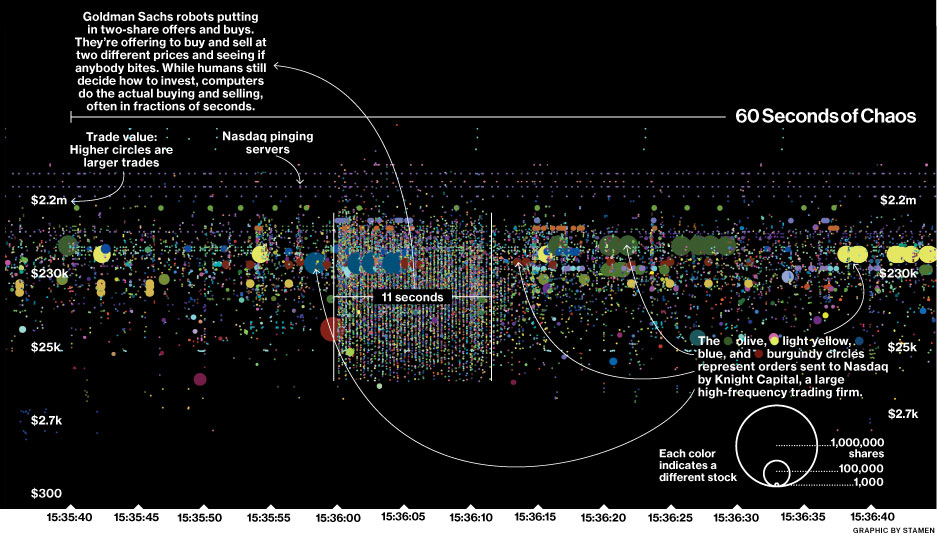
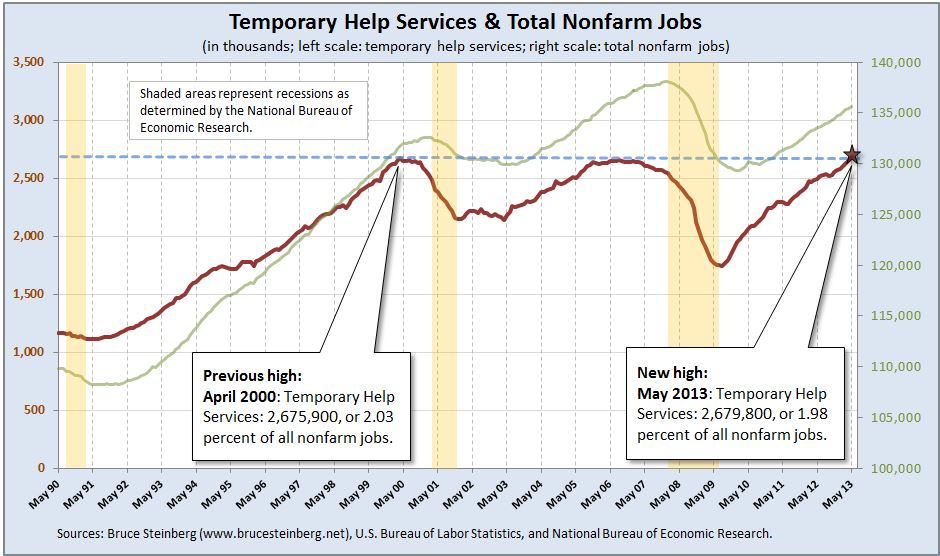
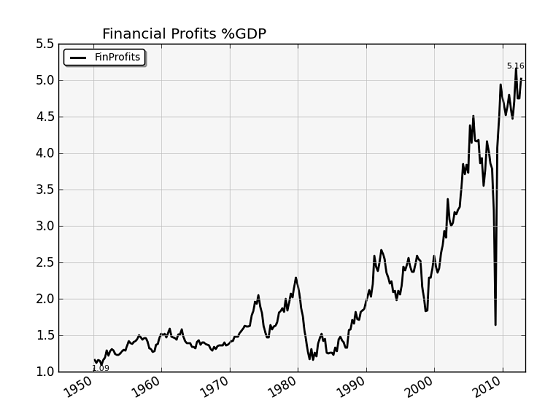


 Sources: BLS/Haver Analytics.
 Sources: BLS/Haver Analytics and authors' calculations.
| You are subscribed to email updates from The Big Picture To stop receiving these emails, you may unsubscribe now. | Email delivery powered by Google |
| Google Inc., 20 West Kinzie, Chicago IL USA 60610 | |



0 comments:
Post a Comment