


The Big Picture |
- Just When You Think It Can’t Get Any Worse…
- Books Bought By Big Picture Readers (June 2013)
- 10 Monday PM Reads
- The 1% More Savings Calculator
- 10 Monday AM Reads
- Is Gold Overdue for a Bounce?
- June Macro Strategy Review
| Just When You Think It Can’t Get Any Worse… Posted: 02 Jul 2013 02:00 AM PDT Just When You Think It Can't Get Any Worse…
Since the FOMC's June 22nd meeting, markets have been in turmoil. Commentators and Fed watchers have been speculating about exactly what Chairman Bernanke was trying to say on behalf of the Committee. When I commented shortly after the meeting, an astute reader pointed out that I had incorrectly reported that Chairman Bernanke had indicated the asset purchase program might begin to be phased out when unemployment reached 7%. In fact, he indicated that by the time the program had ceased, unemployment would be at 7% sometime in the middle of next year. The import of this remark is critical, especially given that the publicly available FOMC central tendency forecast for unemployment by the end 2013 is 7.2-7.3% and by the end of 2014 the central tendency is an optimistic 6.5-6.8%. If the Chairman meant what he said on behalf of the Committee and its forecasts are realized, then the entire phase out of the asset purchase program would be completed by mid-2014. Hence, the inference markets drew was that the FOMC is poised to begin very soon. This possibility is what riled markets. But not so quickly! It seems that not all FOMC participants see things the way the Chairman reported. We know St. Louis Federal Reserve Bank President James Bullard went on record saying that he thought the discussion of the phase out was "ill-timed." Because of his concerns about deflation, he would prefer to retain monetary ease for some time, and this includes the asset purchase program. But now other voices have been added to the chorus. President Narayana Kocherlakota of Federal Reserve Bank of Minneapolis stated in in a press interview and in a document on the Bank's website that he would prefer to consider starting the phase out of the program using 7% unemployment as a trigger not the end point. He attempted to redirect the public's focus away from the asset purchase program, which he and the Committee apparently view as a relatively small and quantitatively insignificant component of its accommodative policy. While this view of the policy may be the Committee's perception, it clearly doesn't reflect the view of market participants. So what is the Committee's decision as to when the phase out will begin, and how long will the phase out process last? What is the trigger? Is there even a trigger? Whom should one listen to? Following Bullard’s and Kocherlakota's statements, numerous FOMC participants have offered their own clarifications, all of which look remarkably coordinated, with a Roseanne Roseannadanna-like message: "Never mind." Meaning, "We aren't going to change the Funds rate anytime soon." What we have witnessed is a remarkable miscalculation on the part of the FOMC in terms of their communications strategy and forward rate guidance. Their messaging reflects an under-appreciation of what constitutes information meaningful to markets. Telling markets that a policy move depends upon incoming data is neither informative nor is it forward guidance. What markets want to know are the answers to two questions:1) what incoming data will be used to make decisions and 2) how will policy depend upon those incoming data? For example, does the decision rest on reaching a critical value in the unemployment rate, the participation rate, or some other trigger? If it rests on the unemployment rate, then what does the Committee view as the most likely path for the unemployment rate to hit the critical trigger? Annual forecasts such as those released after the last meeting are largely meaningless, especially since there is an apparent disconnect, at least to this writer, between the projected path for GDP growth on the one hand and estimates for job creation and unemployment on the other. Growth would have to be accelerating greatly by the end of 2013 to come close to hitting the FOMC's optimistic unemployment forecasts for 2014. Yet there is a dearth of evidence supporting that view. Markets are like math teachers, they don’t just care about answers. They also want to see the work that led to the answers to ensure that the reasoning makes sense and everything adds up. Ultimately, they need actionable information. Anchoring the Committee's communications efforts in more detailed forecasts would greatly improve things. Markets fret for data-driven answers to the kinds of questions that drive investment decisions and their timing, and they will not be satisfied with fuzzy answers, especially fuzzy answers that don’t add up. For instance, how does the Committee expect to respond to changes in an indicator variable like the unemployment rate? Does it expect to cut back Treasury purchases by $5 billion for every 0.1 percentage point improvement in the unemployment rate? Or perhaps the Committee has some other calibration in mind? If it doesn't have such a plan in place, then it shouldn't say "it depends on incoming data." Bob Eisenbeis, Vice Chairman & Chief Monetary Economist ~~~ Bob Eisenbeis is Cumberland's Vice Chairman & Chief Monetary Economist. Prior to joining Cumberland Advisors he was the Executive Vice President and Director of Research at the Federal Reserve Bank of Atlanta. Bob is presently a member of the U.S. Shadow Financial Regulatory Committee and the Financial Economist Roundtable. His bio is found at www.cumber.com. He may be reached at Bob.Eisenbeis-at-cumber-dot-com.  |
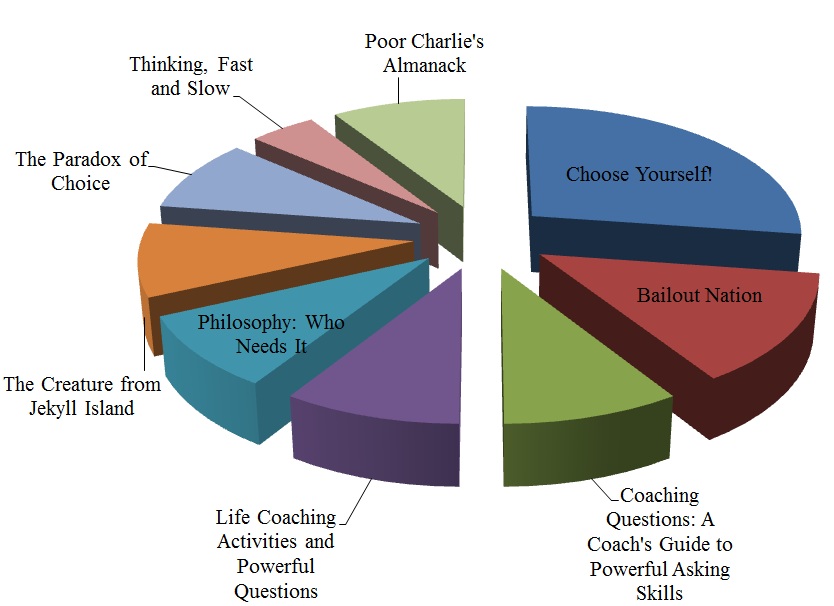
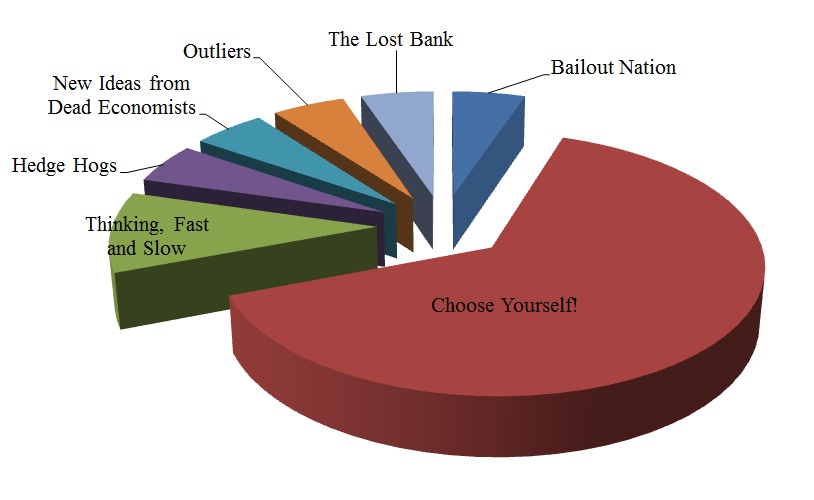
| Books Bought By Big Picture Readers (June 2013) Posted: 01 Jul 2013 04:00 PM PDT Click to enlarge
Once again, its time to peruse the data to see which books TBP readers bought last month. Amazon's embed code lets me track every click from these links — how many people look at the page, how many books get seen, and/or collectively purchased. Its anonymous — I don't know who bought what — but there's lots of data on the various books generated. These were the most popular TBP books for June:
Kindle and eBooks after the jump
Click to enlarge
 |
| Posted: 01 Jul 2013 01:45 PM PDT My afternoon train reading:
What are you reading?  |
| The 1% More Savings Calculator Posted: 01 Jul 2013 09:30 AM PDT Interesting example of what a small bump up does to your long term savings:
Click for interactive calculator:  |
| Posted: 01 Jul 2013 07:00 AM PDT My morning reads:
What are you reading?
Low Inflation Highlights Fed Dilemma  |
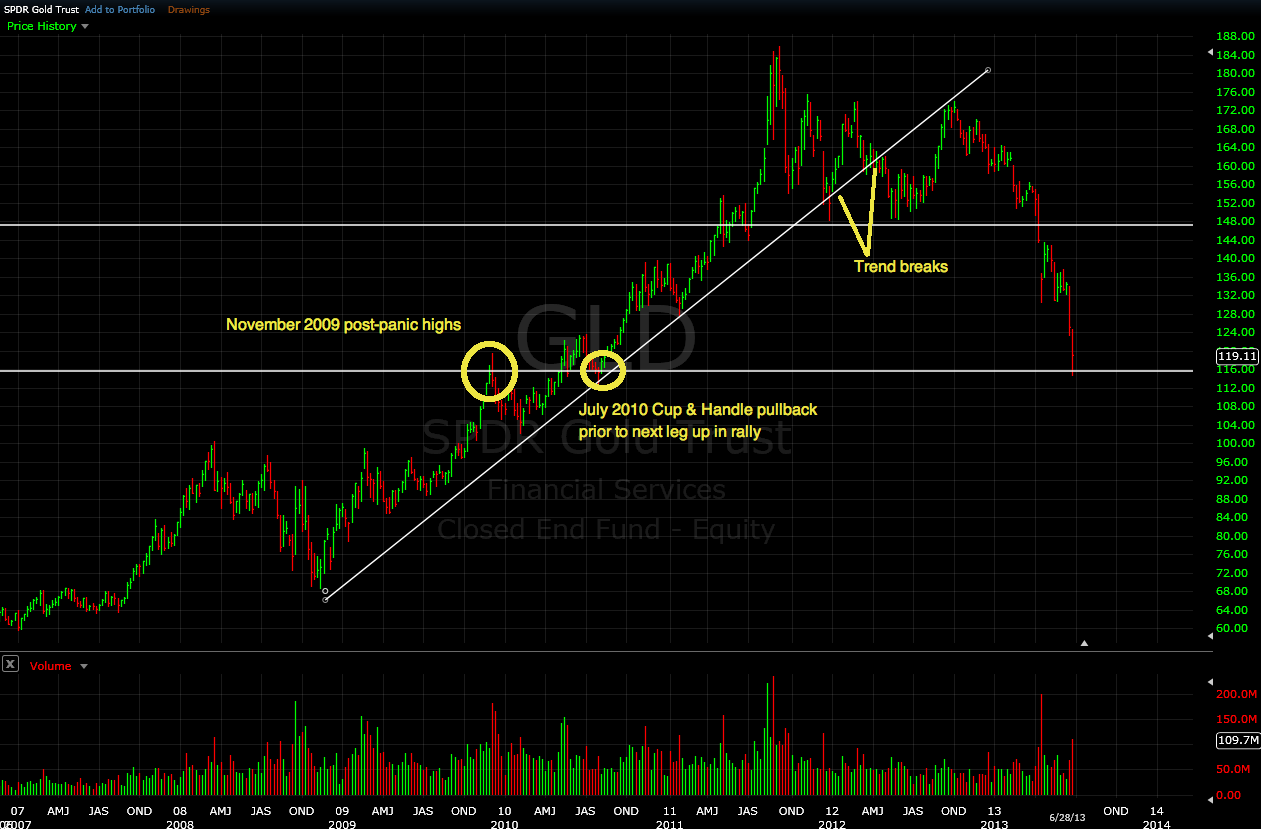
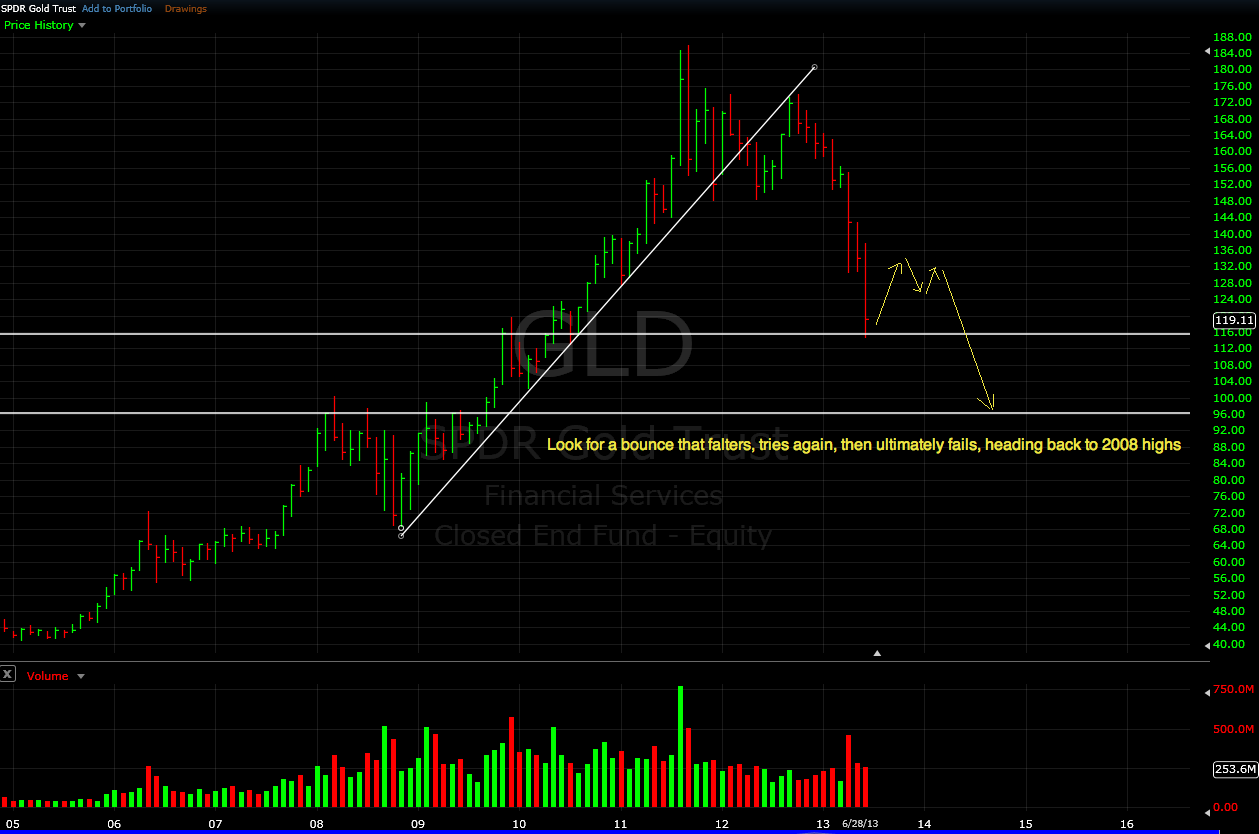
| Posted: 01 Jul 2013 04:15 AM PDT Back in my days as a trader, I would peruse the lists of 52 week lows looking for reversal candidates. The key was finding an intelligent entry that had a very tight stop, so it presented a good risk reward. I am happy to risk one dollar to make three. Slowly build the position over that line in the sand, so any losses were manageable. If you are a trader — and I no longer consider myself one — then you have to be wondering when Gold is going to bounce. It has plummeted on little inflation, a strong dollar and an improving economy. When the breathless narrative of hyper-inflation, collapsing fiat currency and end of the world failed to come about, Gold’s spectacular rise ended. Now, it has free-fallen so far that a counter-trend rally is over due. How do the typical counter-trend rallies work? Well, the forced selling by margin clerks and futures traders becomes exhausted. A distraction may capture the investing community’s collective attention, allowing some stabilization to occur. As prices stop falling, the fear falling asset holders have been living with dissipates. A little bit of good news, a small reversal in price, and the prior (now discredited) narrative reasserts itself. Note this scenario is non specific — we see it in stocks, bonds, commodities, real estate and yes, Gold. Apple will run this one day, AIG is already enjoying its turnaround, as all former high flyers do. And if the underlying business model improves, the turnaround could be for real, and the bounce morphs into a new sustainable uptrend. Here comes the bad news: The bounce in a commodity like Gold — or its primary trading vehicle, GLD — is less likely to achieve that sort of happy ending. The bull market is broken, the prior narrative has utterly failed, and is no longer taken seriously, except by yellow metal jihadists and other assorted suckers. I was constructive on Gold last decade, but this decade (2011 – ) has not seen the circumstances that are supportive of Gold’s ongoing rise. Despite what some goldbugs have laughably said about me, I am agnostic about the metal, except when it is losing people lots of money. I do detest the narrative driven sales pitch that has caught so many suckers at prices appreciably higher than this. So what about that bounce? The charts below show two different ranges where gold can find a footing and rally. That is likely to present your next and perhaps last best exit. Barring some new developments — like all the gold in Fort Knox becoming irradiated — I do not expect to see a resumption of the 2001-11 uptrend. I don’t have a crystal ball, so I do not make predictions as to where Gold will or will not go. But the weekly and monthly charts lay out two possibly scenarios below. YMMV.
Gold Chart Weekly Gold Chart Monthly
Previously: 12 Rules of Goldbuggery (April 16th, 2013) Sell Out: “The Other Side” (April 22nd, 2013) Are You an Investor or a Story Teller? (April 25th, 2013)  |
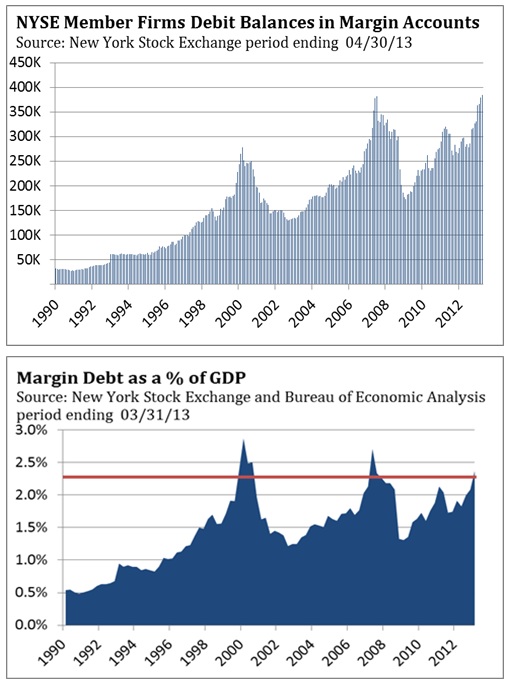
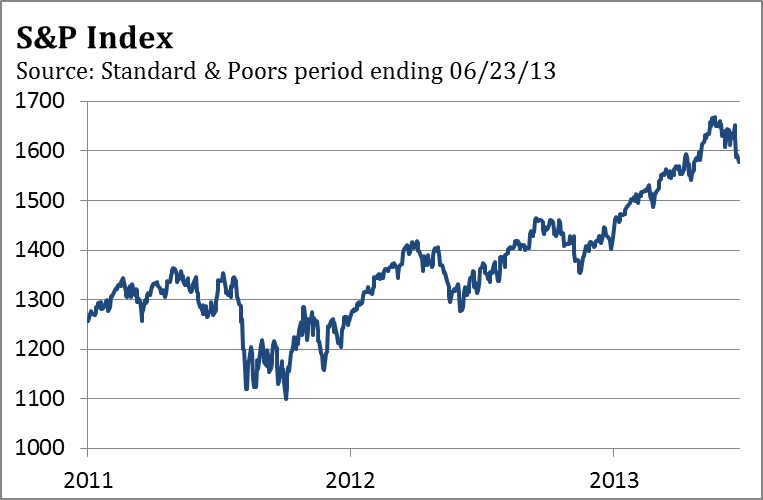
| Posted: 01 Jul 2013 03:00 AM PDT Forward Markets: Macro Strategy Review Macro Factors and Their Impact on Monetary Policy, The Economy and Financial Markets U.S. Economy Although corporate earnings were decent in the first quarter, they could be vulnerable if revenue doesn't pick up in coming quarters. According to Global Equity Analytics & Research Service, sales growth fell for two-thirds of the companies in the Dow Jones U.S. Total Stock Market Index in the first quarter. The index includes every U.S. stock traded in the U.S., excluding bulletin board stocks. As such it includes more companies than any other index. Capital weighted average sales growth for the companies in the index fell for a fifth straight quarter to 3.1%. The last time sales growth was this weak was during 2001-2002, which was not a good time for equities. Average net profit margins fell to 24.3%, their steepest decline in 20 years. Profit margins are falling due to rising inventories and receivables, while selling, general and administration costs have begun to rise after companies had cut them to the bare minimum during the recovery. This suggests any further slowing in sales growth will immediately hit a company's bottom line. Earnings in the first quarter were aided by a special factor: corporate stock buybacks. Corporations purchased $345 billion of their own company stock, which reduced shares outstanding at an annual rate of 8% through May, and contributed more than 30% to first quarter earnings. Boosting earnings through stock buybacks may look good in the short run (and increase the value of executives' stock options), but the strategy seems to be lacking in the longer-term vision and commitment most companies need to innovate and prosper in the future. In April and May, good and bad news alike were treated as good news by investors since the Federal Reserve was likely to maintain the third round of quantitative easing, or QE3. This one-way psychology was reflected in surveys of investor sentiment. We cited the Barron's Big Money Poll in our April commentary, which found that 74% of responding money managers described themselves as bullish or very bullish for the balance of 2013. This was the highest level of bullishness in the 20-year history of the Big Money Poll. Incredibly, 86% were optimistic for the next 12 months, and 94% thought the next five years would be good. In our April commentary we thought the bullish psychology surrounding QE3 could lead to a blow off in the stock market that might carry the S&P 500 Index to between 1680 and 1700. The high on May 22 was 1687. The bullish psychology generated by QE3 was also manifested in other markets. Leveraged loans are used by heavily indebted companies to finance growth, acquisitions and capital investments. Banks underwrite the loans, but distribute most of the debt to investors, including high yield bond funds. As demand increased in 2012 from investors looking for higher yielding alternatives to government bonds or certificates of deposit, Wall Street distributed $465 billion in leveraged loans, not much below the all-time record of $535 billion in 2007. According to data provider S&P Capital IQ, Wall Street sold $78 billion in leveraged loans in February 2013, eclipsing the prior record of $71 billion in February 2007. In addition, the quality of the loans deteriorated. The average borrower of leveraged loans carried a debt load of 4.8 times earnings, near the average ratio in 2007, and up from 4.3 last year. More than half of the loans sold in the first quarter didn't include basic investor protections, compared to a peak of 25% in 2007. Who says history doesn't repeat itself?
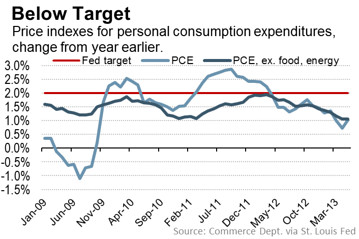
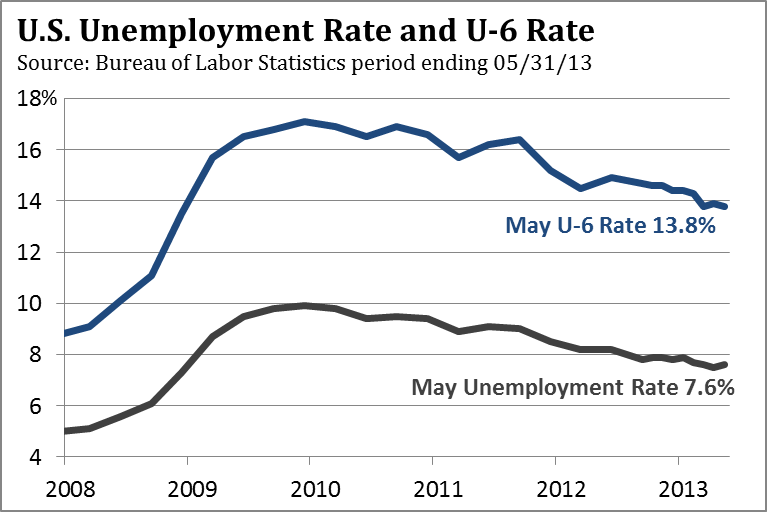
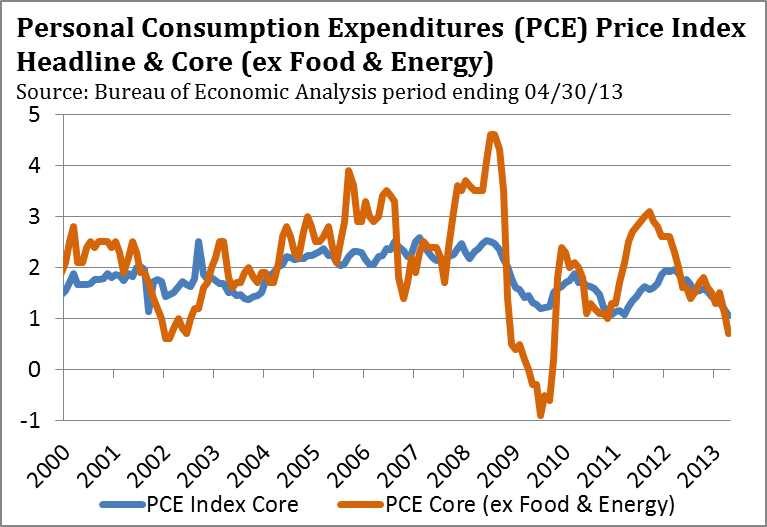
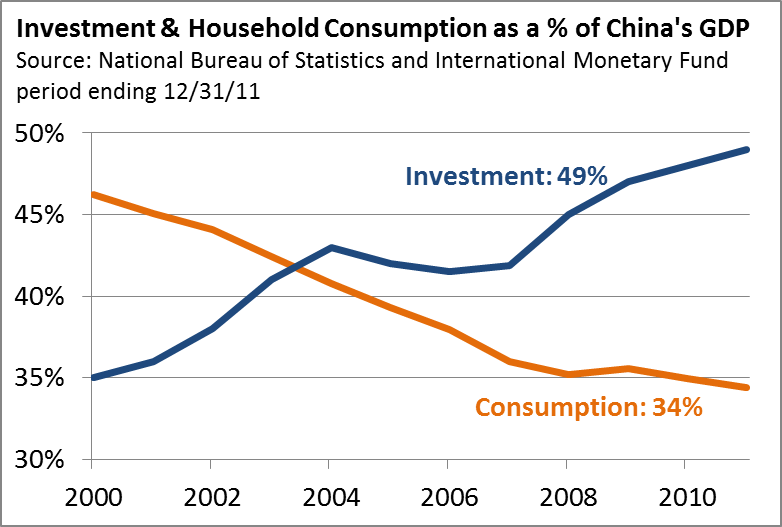
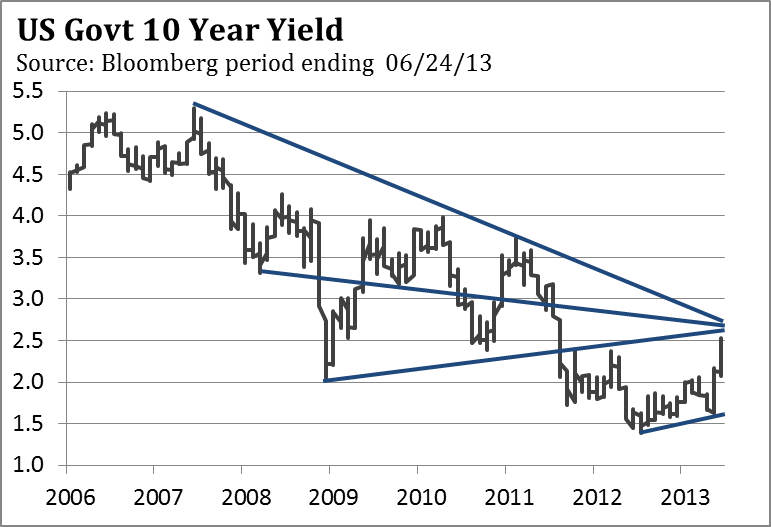
Since the beginning of 2013, the debate within the Federal Reserve about the benefits of QE3 and its negative unintended consequences intensified. Members of the Federal Open Market Committee (FOMC) have expressed concerns about its potential to spark inflation, create distortions in the credit market and increase risk-taking by investors reaching for yield. In recent months, a number of FOMC members have publically discussed the activity in the leveraged loan market, real estate investment trusts (REITs) and the overall reach for yield by investors into more risky investments. More evidence of this activity was seen in the issuance of leveraged closed-end fund structures and the increasing appetite of Japanese investors for levered U.S. REIT portfolios. We think the Federal Reserve concluded it was time for the markets to receive a sobriety checkup, which is why Chairman Ben Bernanke discussed the conditions under which the Federal Reserve would begin scaling back the amount of its QE3 purchases in his congressional testimony on May 22. Within minutes of Bernanke's comments, the stock market reversed from all-time highs and the yield on the 10-year Treasury bond jumped above 2%. Investors were shocked that the free lunch quantitative easing has provided investors since 2009 might actually come to an end some day. When Chairman Bernanke reaffirmed the Fed's commitment to "tapering" QE3 after the FOMC meeting on June 19, financial markets convulsed, sending stocks plunging and bond yields soaring. Here's our take on the situation. Given the current level of economic growth, unemployment rate and inflation, the Federal Reserve will not scale back their QE3 purchases next month. Any action will be dependent on incoming data and whether GDP growth, the unemployment rate and rate of inflation trend toward the Federal Reserve's forecasts. The Fed expects GDP growth of 3-3.5% in 2014, the unemployment rate to fall from 7.5% to 6.5-6.7% and inflation to rise toward 2%. Our expectation is that QE3 may continue at its current level through 2013 since growth is unlikely to accelerate as forecast, muting the expected improvement in the unemployment rate. And weak global aggregate demand and excess capacity will keep inflation from rising as forecast. The sharp increase in mortgage rates only reinforces our view. Since the recovery began in June 2009, the number of jobs has increased just 3.9%, versus the 9.7% average for all post-World War II recoveries. This is why 11.8 million people remain unemployed after four years of recovery. The Federal Reserve's preferred measure of inflation is the core index of personal consumption expenditures (PCE), which excludes food and energy. The Fed would like to see the core PCE near 2%, but not above 2.5%. China – An Echo Credit Bubble In the United States between 1982 and 2007, total market credit as a percent of GDP grew from 165% to 350%. This means that for each $1.00 of GDP there was $3.50 of debt. The surge in debt during this 25-year period assisted economic growth and enabled GDP to grow faster than it would have without the extra boost from debt-fueled demand. The prime beneficiary of the increase in debt was home prices, which jumped from 3.2 times median income in 2000 to 4.7 times median income in 2007. The deflation of home values was the primary cause of the 2008 financial crisis, as leveraged bets on home prices blew up. More than 11 million homeowners were forced into foreclosure, as more than 8 million workers lost their job and others, still employed, were undone by ballooning mortgage payments. Investment banks were forced to seek a taxpayer bailout after the use of 30 to 1 leveraged dispelled any misguided notion they were "masters of the universe." European bankers proved they were no smarter than their U.S. counterparts, and European consumers were just as gullible in their willingness to buy overpriced homes. In response to the financial crisis, the U.S. government and governments throughout Europe significantly increased government spending. The resulting large budget deficits were used to replace the loss of consumer demand as unemployment soared in every developed nation and to prevent a far deeper recession from developing. In 2009 China instituted a two-year, $586 billion stimulus program (equal to 16% of GDP). However, the Chinese government has in recent years relied more on forced lending through state-run banks to maintain growth to offset the impact of Europe's recession and slow U.S. growth. According to McKinsey Global Institute, a global management consulting firm, China's debt-to-GDP ratio rose to 183% in mid-2012 from 153% in 2008. However, if lending by trust companies and other sources in China's "shadow banking" system is included, the debt-to-GDP ratio is above 200%, according to estimates by Nomura Holdings, a Japanese financial holding company. Total social financing, China's broadest measure of credit since it includes bank lending and credit created outside formal banking channels (i.e. trust companies), increased an extraordinary 52% in the first five months of 2013 as compared to 2012. This suggests Nomura's estimate is likely more accurate. Compared to the United States' total market credit ratio of 350%, and many European nations whose ratio of total debt-to-GDP exceed 400%, China appears a paragon of credit prudence. However, under the surface there are a number of cracks in China's growth foundation that are concerning. According to the International Monetary Fund (IMF), rapid increases in a country's total credit to GDP ratio can prove problematic. An IMF analysis of quick increases in credit growth over the last 40 years found that about one-third of the occurrences ended in a crisis, and subpar growth in subsequent years in another one-third of instances. China tried to slow credit growth in early 2010 and quarterly GDP growth weakened in 10 consecutive quarters through the third quarter of 2012. Credit growth resumed in April 2012 and continued through the first five months of 2013. Since economic activity lags changes in monetary policy by about six months, the recent surge in credit should continue to stabilize China's GDP growth between 7 and 8% through the third quarter. The risks are to the downside since electricity output rose 4.1% in May versus 6.2% in April. Electricity output is a proxy for industrial activity and suggests recent GDP data may be overstating China's actual growth. In April and May, the People's Bank of China (PBOC) moved to curb the explosion of credit growth that began in April 2012. In May, total social financing fell by one-third to $194 billion, after also declining in April. New bank lending, which is a subset of total social financing, also registered a significant decline. Despite the pullback in credit growth during the last two months, total social financing is still up 52% from May 2012. If the PBOC maintains its less accommodative stance in coming months, China's economy will likely show signs of slowing sometime in the fourth quarter. Since the 2008 financial crisis, the People's Bank of China has alternated between stepping on the gas in 2009, hitting the brakes in early 2010, putting the pedal to the metal in April 2012 and in the last two months, at least tapping on the brakes. Despite this on and off approach, total debt as a percent of GDP continues to climb at a fairly rapid pace. It is not a good sign that the increase in lending since April 2012 is merely stabilizing growth, rather than generating a gain in the rate of GDP growth. In our view, this is a warning sign that China is progressively creating its own credit bubble. This was certainly the case in the U.S. when credit growth rose significantly during the 2004-2007 period without a commensurate jump in GDP. In the IMF analysis of prior rapid increases in a country's total debt-to-GDP ratio, a growth slowdown occurred one-third of the time. China experienced this after they slowed credit growth in 2010. The risk that China could experience a more significant slowing or a credit crisis within the next three years is rising, especially since the imbalance between fixed investment and domestic consumption remains large. As we discussed in our November 2012 commentary, the surge in China's growth from 2000 until 2008 was the result of a significant increase in fixed investment that expanded China's infrastructure and export capacity. Cities for millions of inhabitants were built along with the power grid and power generation to keep these new cities humming. The expansion in export capacity allowed China to capitalize on its low cost of production, so it could increase its exports to Europe and the United States. As a result, fixed investment as a share of GDP rose from 34% in 2000 to 49% by the end of 2011, while domestic consumption contracted from 46% to 34%. By comparison, consumption in the U.S. is 70% of GDP, while fixed investment is 16.2%, according to the IMF. We noted last November that it was likely to take China many years to correct its overreliance on fixed investment, and that the transition would be made more difficult by Europe's recession and slow growth in the U.S. Europe is China's biggest export market, with the U.S. a close second. The slowdown in export sales has created an excess capacity problem that is plaguing China's export dependent sectors, while domestic demand has not increased sufficiently to offset the slowdown in exports. This is why GDP growth has not picked up and why the surge in lending this year is, in part, a reflection of China reverting to its old ways. According to the National Bureau of Statistics of China, fixed investment has only dipped from 49% to 46.1% since the end of 2012, while household consumption only experienced a modest increase from 34% to 35.7%. According to a survey of 4,000 companies by the ManpowerGroup, a workforce solution provider, the net percentage of firms planning to hire workers in the second quarter fell to 12%, from 18% in the first quarter. This is the lowest increase since the end of 2009. Year-over-year growth in disposable income for China's urban households fell from 9.6% in 2012 to 6.7% in the first quarter. Weaker job and income growth suggest a meaningful pickup in domestic consumption is unlikely. Export growth was up only 1% in May from a year ago. We expect Europe to remain in recession for the balance of 2013, while growth in the U.S. holds near 2%. The recent decline in the value of the Japanese yen versus the Chinese yuan is also likely to further pressure China's export competitiveness. A meaningful increase in exports during the balance of 2013 is not likely, nor is a big increase in domestic demand. This suggests that China will not add appreciably to global aggregate demand in the next two quarters. In the last few years, the reliance on fixed investment to generate GDP growth has resulted in excess capacity in many industries, which is being exacerbated by slowing export growth and relatively tepid domestic demand. Before the 2008 credit crisis, steel, coal, glass, aluminum, cement and solar panels were all sectors that boomed, since these sectors provided everything needed to build out China's infrastructure and export capacity. Mae West once said that, "Too much of a good thing can be wonderful." That certainly is not the case in China as the amount of excess capacity in some industries is staggering. According to the National Bureau of Statistics of China, there are currently 3.7 billion square meters of property under construction in China, which is enough to satisfy demand for almost four years without starting a single new property. Steel production overcapacity is becoming a chronic problem. Domestic demand for steel was 684 million tons in 2012 compared to the production of 800 million tons, according to global investment banking firm Jeffries. Since there is more supply than demand, Chinese steel prices have fallen almost 15% in 2013. In a search for buyers, Chinese producers have been exporting some of their excess production to Europe, which has caused European steel prices to fall. Aluminum Corporation of China reported a $158 million loss in the first quarter and said more than 90% of the aluminum produced in China is produced at a loss. In early May, Huaxin Cement said cement makers need to shut down old plants to avoid "catastrophe" for the industry. According to the China Enterprise Confederation, a non-governmental representative of employers, the utilization rate for cement producers in 2012 was 65%.
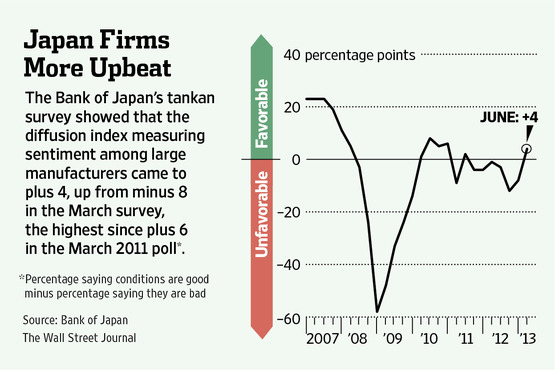
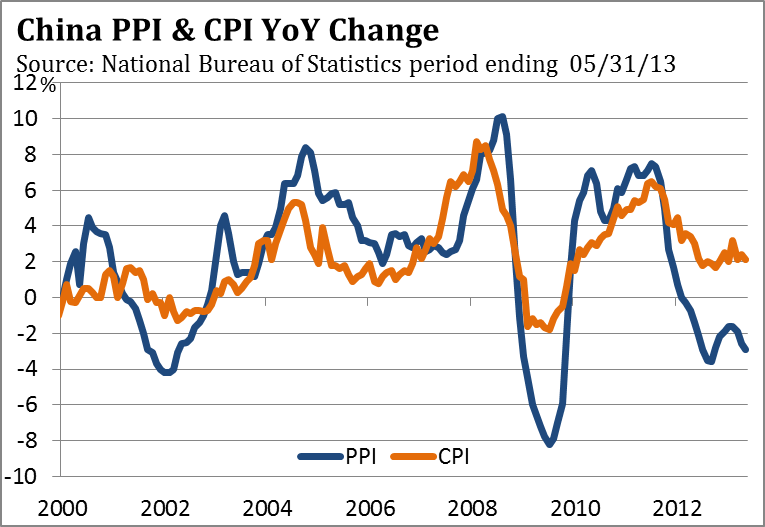
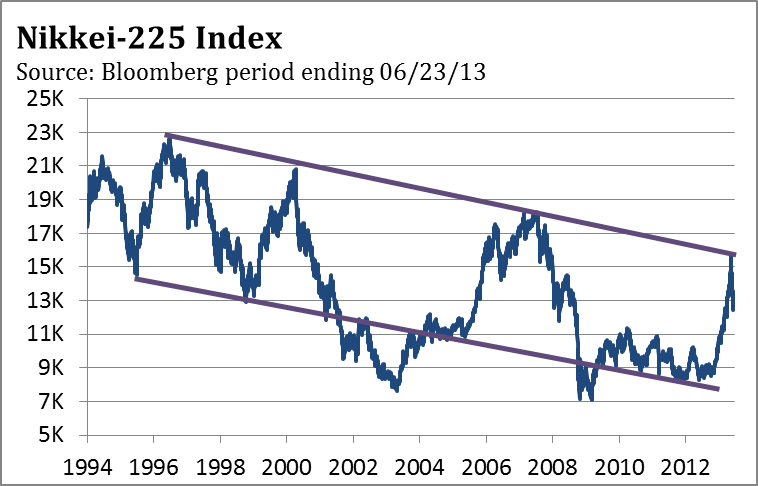
bank loans to state-run companies, even those companies running at 70-80% of capacity and barely profitable. Although China can easily continue this charade, international investors may not be so forgiving. At some point (perhaps 2014 or 2015) China could prove vulnerable to large capital outflows that will undermine its growth story and create liquidity problems for China's state-run banking system. It could also potentially deflate the credit bubble that has been expanding in China since 2008. Falling prices as a result of excess capacity are reflected in China's consumer price index, which has dropped from 6.5% in late 2011 to 2.1% in May. More importantly for Chinese companies, producer prices have declined year-over-year for 15 consecutive months and were -2.9% lower in May than in 2012. If the second largest and fastest growing economy on the planet is experiencing a whiff of deflation, what are the deflationary risks for developed countries with much slower growth and far more debt as a percent of GDP? Japan — Winning in a Zero-Sum Growth World As we wrote in our February 2013 commentary, Japan's effort to depress the yen's value was not only risky but had the look of desperation after 20 years of monetary and fiscal policies failed to rejuvenate the Japanese economy. Since last November the yen has lost more than 20% of its value versus the dollar and is down more than 25% against the euro. As we pointed out, there isn't much difference between a country that cheapens its currency by 20-25% and a country that slaps imports from competing countries with tariffs of 20-25%. This is 1930s protectionism masquerading as 21st century monetary experimentation pioneered by the Federal Reserve with quantitative easing. The Bank of Japan (BoJ) has no idea how this will eventually play out. The bank must be encouraged with the initial impact of "Abenomics," so named after Prime Minister Shinzō Abe. In the first quarter, GDP surged 4.1%, powered by a pickup in domestic consumption and exports, which grew 10.1% in May from last year. Global equity investors have learned from the Federal Reserve and European Central Bank that quantitative easing is good for stocks. From a low below 8,700 last November, the Nikkei 225, a stock market index for the Tokyo Stock Exchange, soared to 15,760 on May 22, before dropping 20% by mid-June. Interestingly, the Nikkei reversed just below a trend line going back to 1996. Amid all the hoopla surrounding the BoJ's adoption of quantitative easing, global strategists have overlooked the potential negative fallout from the weaker yen. Global economic growth is not likely to increase materially over the next year. Gains in Japan's GDP will come at the expense of other countries, which are heavily dependent on exports. Exports represent 56% of South Korea's GDP, 50% of Germany's, 37% of Portugal's, 31% of China's, 30% of Spain's, 29% of Italy's, 27% of France's and 14% of the United States' GDP. Given the concentration of export dependence in the European Union, the 25% increase in the euro versus the yen represents another hurdle for Europe as it deals with its recession. Global investors responded to the adrenaline rush from the BoJ's move to implement quantitative easing. However, the drag from the yen's depreciation is likely to take six to nine months to ripple through the global economy. In a zero-sum global growth world, Japan's gain will come at the expense of other nations. Eurozone According to Eurostat, the unemployment rate in the 17-nation eurozone rose to 12.2% in April, the highest since records began in 1995. Car sales fell again in May to the lowest level in 20 years, as reported by the European Automobile Manufacturers' Association. Bank lending continues to contract so any turnaround is still months away. Contrary to most strategists, we expected the eurozone to remain in recession during 2012, and for the recession to continue at least in the first half of 2013. The good news is that the recession is likely to bottom in the last half of 2013. The bad news is that meaningful growth is unlikely anytime soon. The eurozone may not be the drag it has been on global growth since late 2011, but it isn't going to add much to global aggregate demand in the second half of 2013. Stocks When the S&P 500 Index reversed on May 22, every major market average had just made a new all-time high, as did the advance/decline line, along with 925 stocks that established a new 52-week high during the week of May 20. Normally, market prices peak after peak momentum, so it is would be unusual for market prices to top out coincidently with such strong upside momentum. Last month we thought the S&P 500 was likely to retest the break out level of 1,600 at a minimum, which it has done. The initial decline was 89 S&P 500 points to 1,598. After rallying to 1,654, an equal decline of 89 points targeted the index at 1,565, which is just below the 2007 peak of 1,575. Since the March 2009 low, the S&P 500 has marched higher to new highs, with each intermediate low higher than the previous low. This is the classic definition of an uptrend. As long as the S&P 500 does not breach the April 18 low of 1,536, the long-term trend remains up. Markets don't top because there are too many bulls. Markets top when investors are given a reason to sell and doubts about QE3 provided a reason. If the economy fails to validate the Federal Reserve's forecasts, as we expect, investors will realize their expectations that QE3 will be ending soon are unfounded. That could provide the story that supports another rally and tests the May peak. Treasury Bonds
Source: Jim Welsh  |

| You are subscribed to email updates from The Big Picture To stop receiving these emails, you may unsubscribe now. | Email delivery powered by Google |
| Google Inc., 20 West Kinzie, Chicago IL USA 60610 | |



0 comments:
Post a Comment