


The Big Picture |

- Lamborghini LP700-4 Aventador
- Has the Fed Decided to Fight Inflation Instead of Unemployment?
- Succinct Summation of Week’s Events (4.29.11)
- Distressed RE: Residential, Commercial Have Yet to Hit Bottom
- Female Outperformers in the World of Hedge Funds
- EUROPEAN FINANCIAL STABILITY AND INTEGRATION REPORT 2010
- Are Long-Term Earnings Projections Getting Worse?
- Ten Presentation Tips for Movie Lovers
- Austan Goolsbee Interview About U.S. Economy
- Economic Data Update
| Posted: 30 Apr 2011 02:00 AM PDT Redonkulous: Production: Sehsucht GmbH Hamburg, Germany |
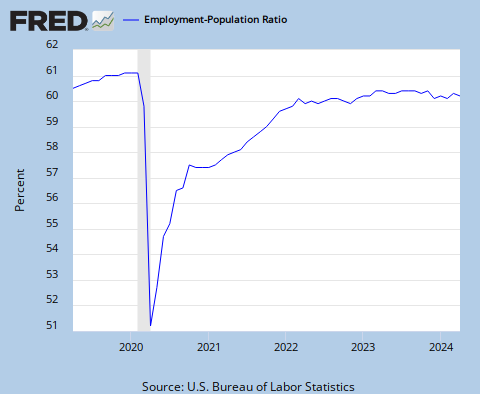
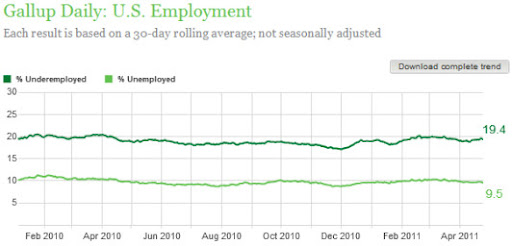
| Has the Fed Decided to Fight Inflation Instead of Unemployment? Posted: 29 Apr 2011 11:00 PM PDT Washington's Blog strives to provide real-time, well-researched and actionable information. George – the head writer at Washington's Blog – is a busy professional and a former adjunct professor. ~~~ William Alden writes in a Huffington Post liveblog entitled “Inflation Vs. Jobs”:
And I agree with Mr. Krugman when he writes today:
The Fed Has Intentionally Discouraged Banks From Lending It’s true – as I pointed out in 2009 – that the Fed has purposefully been encouraging banks to deposit their excess reserves at the Fed (for a profit), rather than loan them out to Main Street:
I explained last year:
Would More Stimulus Help? But I disagree when Krugman writes today:
We don’t need more stimulus … at least not the kind we’ve had to date, which has only stimulated bonuses for the big banksters and big defense contractors. As I wrote last year:
I noted in 2009 (footnotes in original):
As I noted in 2008:
In reality, the entire debate regarding more-versus-less stimulus misses the mark. As painful as it is to think about, the Fed’s policies – like those of the Treasury, White House and Congress – have been geared towards redistributing wealth upwards. See this, this, this, this, this and this. |
| Succinct Summation of Week’s Events (4.29.11) Posted: 29 Apr 2011 12:30 PM PDT Succinct summation of week’s events: Positives:
Negatives:
|
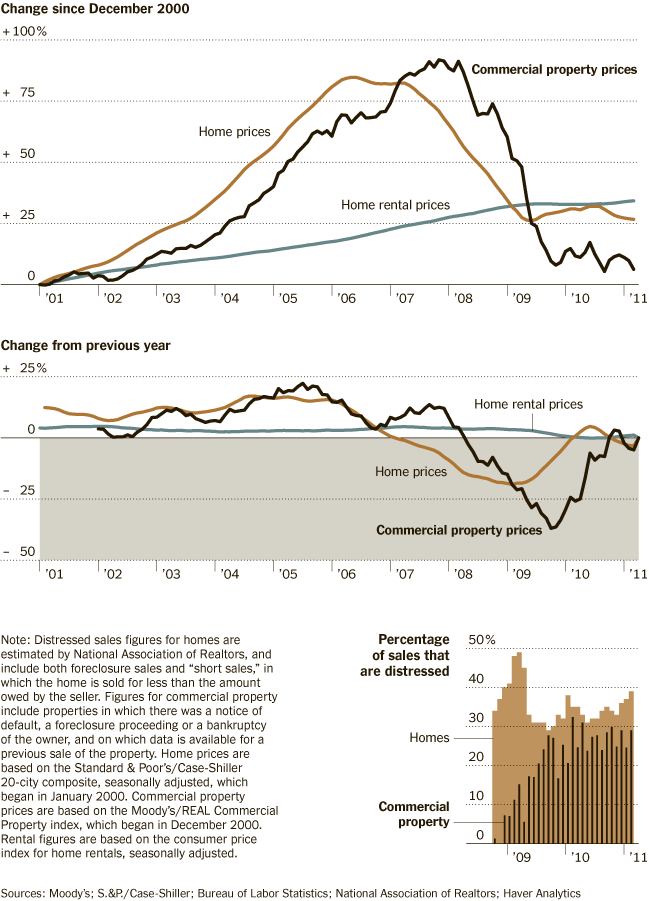
| Distressed RE: Residential, Commercial Have Yet to Hit Bottom Posted: 29 Apr 2011 11:33 AM PDT Floyd Norris Saturday NYT column is out now: After Mild Gains, Another Reversal for Real Estate; I am sucker for the charts: > |
| Female Outperformers in the World of Hedge Funds Posted: 29 Apr 2011 11:03 AM PDT |
| EUROPEAN FINANCIAL STABILITY AND INTEGRATION REPORT 2010 Posted: 29 Apr 2011 10:28 AM PDT Here are the Dow Jones headlines:
The full report is below: EUROPEAN FINANCIAL STABILITY AND INTEGRATION REPORT 2010 |
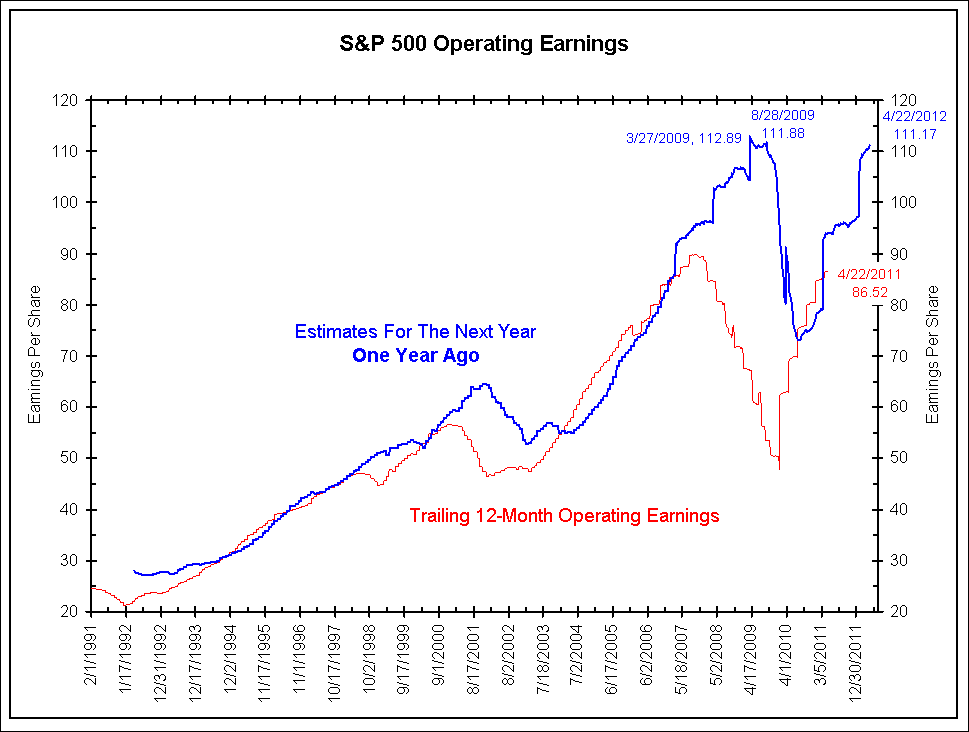
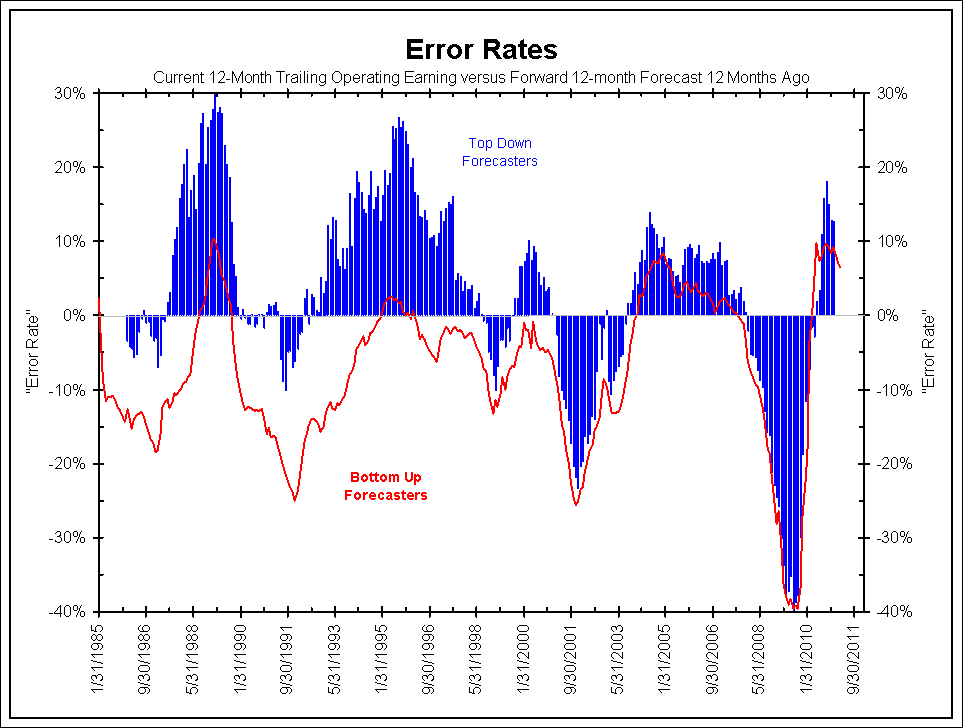
| Are Long-Term Earnings Projections Getting Worse? Posted: 29 Apr 2011 10:00 AM PDT Yesterday we noted: Now that companies have to disclose to all at the same time, we believe their investor relations departments are masters at guiding analysts just below actual earnings. This way the companies "beat" expectations and get the positive press and accolades that come with it. Further, it seems that everyone is happy with this apparent gaming of the system. And: In recent quarters, however, revenues are showing an upside bias. Is this because companies are genuinely reporting good numbers or are the investor relations departments now gaming these numbers as well? It's hard to tell. But we can say in our unscientific review of earnings releases that companies are highlighting revenue beats more now than ever. This is a red flag that these numbers are also being gamed. If expectations are being gamed on quarterly earnings, what about long-term earnings? Are they a better measure of economic health? After 25 Years, Are We Getting Better? In the chart below, the red line shows actual 12-month operating earnings for the S&P 500. The blue line shows the 12-month forward estimate lagged on year. In other words, the red line shows earnings over the previous 12 months and the blue line shows what analysts expected these earnings to look like. The blue bars in the second chart show the difference between these two measures. The source for this data is S&P and Bloomberg and it is calculated on a "bottom up" basis (more on this below).
Note the variance in earnings versus expectations above. The Great Recession caused a massive divergence between expectations and actual earnings. Historically it seems as though the variability between these measures is growing. Whenever analysts miss, their error rate seems to be larger than it was the last time they missed. Top Down Versus Bottom Up The next chart comes from IBES data. The two measures show the same error rates as explained above. The red line shows the error rate for bottom up forecasters. This is the sum of the earnings estimates for the 500 companies of the S&P 500. The blue bars show the error rate for top down forecasters, or strategists. From 1985 to 2000 the error rates of top down and bottom up estimates varied greatly. Much of that period the top down forecasters were offering earnings guesses that were below the actual results (resulting in a positive divergence). The bottom up forecasters were often too optimistic and their guesses were above actual results (resulting in a negative divergence). Since 2000, however, the top down and bottom up forecasts have been in synch with each other. And since 2000, the error rates are the largest we have seen in the last quarter century. Conclusion Earlier this month we suggested that U.S. Equities Remain Undervalued. This is completely correct if one can trust earnings estimates. The charts above suggest the estimates "work until they do not." Restated, earnings estimates often miss when the economy goes into recession. Investing off estimates will usually result in profitability as the economy expands and losses when a recession hits. |
| Ten Presentation Tips for Movie Lovers Posted: 29 Apr 2011 09:00 AM PDT Ten Presentation Tips for Movie Lovers View more presentations from Matt Gambino |
| Austan Goolsbee Interview About U.S. Economy Posted: 29 Apr 2011 09:00 AM PDT Austan Goolsbee, chairman of the White House Council of Economic Advisers, talks about today’s report showing the U.S. economy slowed more than forecast in the first quarter. Gross domestic product rose at a 1.8 percent annual rate from January through March after a 3.1 percent pace in the final three months of 2010, the Commerce Department said in Washington. Economists projected 2 percent growth, according to the median estimate in a Bloomberg News survey. Goolsbee speaks with Hans Nichols on Bloomberg Television’s “Bottom Line.” autostart video after the jump April 28 (Bloomberg) |
| Posted: 29 Apr 2011 08:45 AM PDT Chicago PMI moderates from still high levels Following a better than expected April NY mfr’g survey and weaker than forecasted Philly, Richmond and Dallas mfr’g indices, the Chicago PMI at 67.6 was a touch below estimates of 68.2, down from 70.6 in Mar and the lowest since Dec but still is at a high level. New Orders led the decline as it fell from 74.5 to 66.3 and Backlogs were down 7.2 pts to 62.4. Employment fell almost 2 pts to 63.7 and Prices Paid moderated slightly to 81.8 from 83.4. Inventories fell 7 pts to 53.5. Bottom line, mfr’g in April seems to have moderated somewhat but from very healthy levels as likely the persistent cost pressures and uncertainty related to the Japanese disaster were the catalysts. The ISM out on Monday will reconcile all the regional surveys. ~~~ Confidence/inflation expectations/what’s next Final April UoM confidence was about in line with expectations at 69.8, up from 69.6 in the preliminary reading and vs 67.5 in March but is still down from 77.5 in Feb. The gain from March was solely led by the Outlook component which rose a slight.4 pts while Current Conditions were unchanged. Importantly, one year inflation expectations remained very elevated at 4.6%, unchanged with both the preliminary report and with March but compares with the 20 year average of 2.9%. In terms of a rise in consumer prices and its impact on confidence and spending, a multitude of companies have said they will raise prices over the next few months and with respect to the argument over it being transitory or not will be put to the test to see what price hikes stick and which don’t because of consumer pushback. Either way, the cost pressures will be felt by someone. |


| You are subscribed to email updates from The Big Picture To stop receiving these emails, you may unsubscribe now. | Email delivery powered by Google |
| Google Inc., 20 West Kinzie, Chicago IL USA 60610 | |
 The Big Picture (ritholtz)


0 comments:
Post a Comment