


The Big Picture |

- Spitzer to NY AG: Prosecute Goldman or Resign
- Standard & Poors Cuts U.S. Outlook to Negative Because Both Parties Keep Throwing Money at Endless Wars, Endless Bailouts and a Ponzi Financial System
- “Officialdom” Downgrades US
- Passover Reading!
- Congrats to Pulitzer winners!
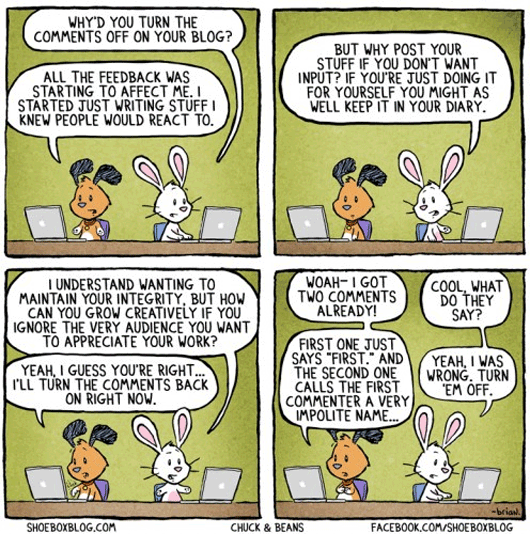
- Blog Comments
- Google Exodus: What if Moses had Facebook?
- Your Federal Tax Bill Receipt
- David Levy: Deficit Spending Is HELPING (not Hurting) the Economy
- Frame of reference with S&P, look at UK
| Spitzer to NY AG: Prosecute Goldman or Resign Posted: 19 Apr 2011 01:30 AM PDT |
| Posted: 18 Apr 2011 11:00 PM PDT Washington's Blog strives to provide real-time, well-researched and actionable information. George – the head writer at Washington's Blog – is a busy professional and a former adjunct professor. ~~~ As I’ve been warning for years, America’s irresponsible financial policy will lead to a credit downgrade. Today, S&P cut its U.S. outlook to negative, warning of a 1 in 3 chance of a credit downgrade in the next couple of years. As the Wall Street Journal notes:
While the Democratic and Republican leadership point fingers at the other side, and bicker about ideological pet peeves, this is not a question of left-versus-right. The war between liberals and conservatives is a false divide-and-conquer dog-and-pony show created by the powers that be to keep the American people divided and distracted. See this, this, this, this, this, this, this, this, this and this. The real problem is that both Democrats and Republicans want to fund endless wars, give endless bailouts to the too big to fail banks and corporations, and perpetuate the expensive Ponzi scheme of printing money out of thin air. Imperial wars reduce our national security. Indeed, our top military and intelligence officials say that debt is the main threat to our national security, and have said that the Pentagon must cut spending. See this and this. Moreover, endless bailouts harm the economy. Ponzi finance costs trillions of dollars (and leads to a decrease in loans to Main Street). And see this and this. To the extent that both the Republican and Democratic parties slavishly follow these meta-policies – which supersede the stated “conservative” and “liberal” goals – they will ensure that we lose our AAA credit, and they will destroy our economy. |
| Posted: 18 Apr 2011 07:32 PM PDT From an institutional trading desk:
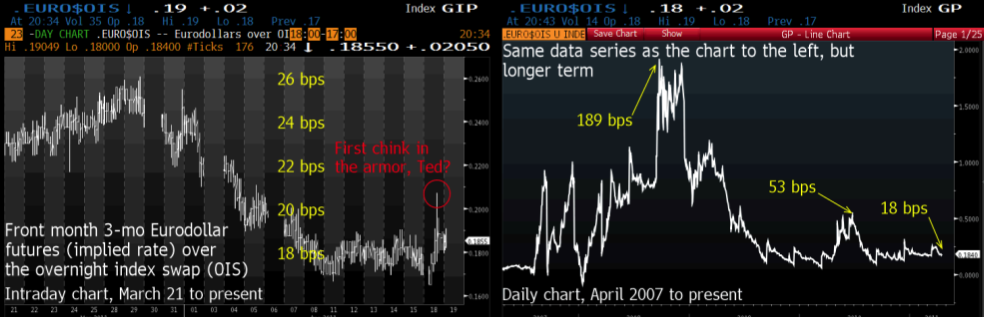
S&P's revision to the outlook on the United States' sovereign credit rating to negative from stable this morning provoked a wide range of reactions. Not terribly significant in the sense that the outlooks on issuers' credit ratings are revised up and down by the ratings agencies every day, and not terribly significant in the sense that the markets didn't move all that much, the revision has nonetheless touched a nerve. Why? For starters, it is the first admission by what I call "officialdom" that the means by which we extricated ourselves from the debt deflation of 2007-09 carry negative consequences. Who knows if the big swings in the market are caused by shifts in the dominant narrative or whether the narrative shifts in response to the swings in the market, but either way today's action by S&P introduces a new narrative into the mix. This crisis isn't over; it's just entered into a new phase. This was never a mere cyclical recession anyway and now we have a choice: tighten our belts to preserve our preeminent financial standing in the world, or roll the dice on further policy accommodation at the risk of the a debilitating, Greece-like implosion. That's a far cry from the present dominant narrative which goes something like this: Short-termism of the kind displayed during last December's "budget compromise" is irresponsible and will cost us dearly at some point, but it also symbolizes policymakers' desire to do "whatever it takes" in the short term in order to keep this recovery going. Don't fight these policymakers – at least, not until after the 2012 elections. One of these narratives is bearish for financial asset prices and one of them is bullish. No prizes for guessing which is which. Secondly, should an actual downgrade of the U.S.'s issuer rating to AA+ materialize, and should it be followed by downgrades by Moody's and Fitch, there are all sorts of question marks about what kind of friction would result from institutional rigidities. For example, many institutions around the world have mandates to invest certain percentages of their funds in AAA securities. Presumably, downgrades by two or three of the agencies would spark a good deal of selling by those institutions. What about Treasuries' hypothecation value? If they're not AAA anymore, would they be accepted as collateral in the repo market on the same terms that are offered today? Or, would extra collateral need to be posted – or would the interest rate charged need to rise? What effect would this have on liquidity, on the very "money-ness" – to borrow Doug Noland's term – of Treasury securities? Male model Derek Zoolander once said, "Water is the essence of wetness, and wetness is the essence of beauty." Likewise, 100% hypothecation value is the essence of risk-free, and risk-free is the essence of moneyness. In Minskian terms, a decline in the moneyness of Treasuries would make it more difficult for levered entities to "make position" which in turn would make the financial system more fragile, more susceptible to crises. I'll go one step further: this revision, this oh-so-minor revision, is in fact a policy tightening. Despite the fact that several additional steps would need to be taken by the ratings agencies before any of these liquidity difficulties came to pass, I believe that the shock of today's announcement amounts to a more significant policy tightening than that which will occur in June when the Fed ends QE2. The end of QE2 is part of a carefully prepared script and therefore will have no real impact on market participants' behavior (by design). Besides, quantitative easing produces diminishing returns (it puts cash assets on banks' balance sheets, enhancing their ability to make position, but relaxed FAS 167 guidance has already alleviated any difficulty in making position by absolving the really bad assets from mark-to-market accounting) which means that ending QE2 will not be significant in the context of financial sector liquidity. Check out the chart below which shows the implied yield difference between 3-month Eurodollar futures and the 3-month overnight index swap (a proxy for interbank lending risk) on an intraday basis going back about a month. It shows that the yield difference spiked about 3 basis points higher on the heels of S&P's announcement this morning. >
> It's not an insignificant move, that 3 basis point spike, but the chart above on the right puts it into context. If I'm right and S&P's announcement does in fact constitute an actual policy tightening, it either hasn't hit full bore yet or it's simply a very slight tightening. This context is important because even the cleverest theories amount to nothing if there's no follow-through in the markets. However, if, after the political and financial establishment gets done telling us all to quit our worrying and that today's action by S&P has no practical significance, traders get to thinking about the very real implications this action has for financial instability in the future (and traders are forward-looking, right?), we might be looking at a downside catalyst for risk assets including stocks. At this point, I want to soak up any and all arguments the conclusion of which is that S&P's revision is not significant before revising my own near-term bullish stance. It was definitely an unnerving day, though, wasn't it? Between that and the European difficulties (the True Finns!), it's a testament to traders' undying optimism that the market managed to pare nearly half of its losses in the afternoon. |
| Posted: 18 Apr 2011 01:00 PM PDT No, not reading about Passover — just reading the same day as Passover!
What are you reading ? |
| Posted: 18 Apr 2011 12:27 PM PDT The Pulitzer Prizes have been announced – Congrats to Jesse Eisinger, Jake Bernstein and David Leonhardt for winning Pulitzers (all of whom have been noted here previously). Its nice to see for economic reporting:
There are pockets of mainstream press that do an excellent job covering the economic world and crisis. These are just two . . . |
| Posted: 18 Apr 2011 11:30 AM PDT |
| Google Exodus: What if Moses had Facebook? Posted: 18 Apr 2011 11:22 AM PDT Hat tip Doug Kass |
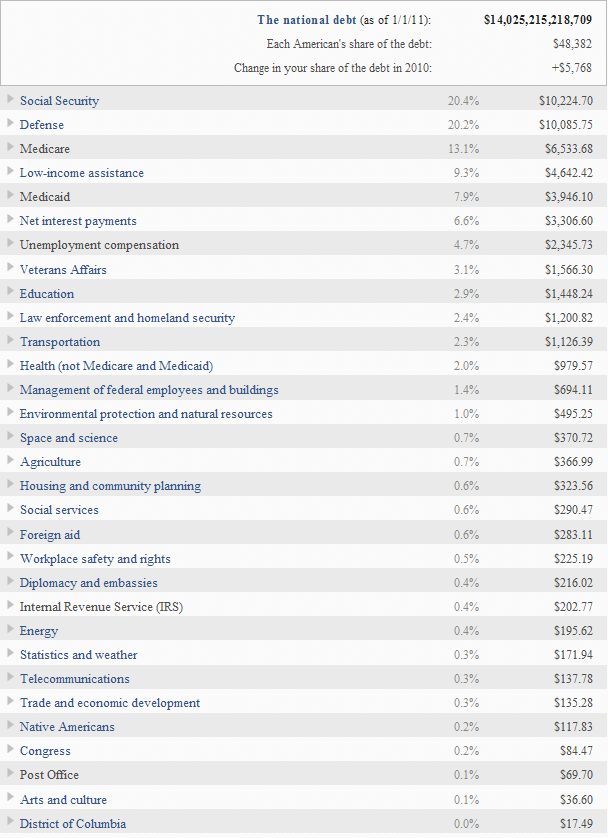
| Posted: 18 Apr 2011 09:30 AM PDT Today is the (extended) deadline to get you taxes filed — and for me to get the last of my related tax posts up for the foreseeable future. This beauty below comes to us via the Thirdway, a breakdown of where your federal tax money actually goes. Punch in the exact amount of dollars you paid in Federal taxes (including FICA, withholding, etc.) and it will tell you exactly how much you spent on various federal programs: > click for interactive table Hat tip Ezra Klein |
| David Levy: Deficit Spending Is HELPING (not Hurting) the Economy Posted: 18 Apr 2011 09:00 AM PDT |
| Frame of reference with S&P, look at UK Posted: 18 Apr 2011 08:51 AM PDT As a frame of reference for what S&P did on the outlook for the US sovereign debt, back on May 21st 2009 S&P put the UK’s sovereign AAA debt outlook to negative from stable. On the day before, the 10 yr Gilt yield closed at 3.58% and rose to 4.02% in the month to follow but was back to the 3.55-3.65% range by mid Aug ’09 (vs 3.57% today). This occurred at the same time the Bank of England was in the midst of their quantitative easing program. On the day of the S&P move on the UK, the FTSE fell 120 pts but got that back in the two weeks that followed. It took almost a year but the UK government responded with a very austere budget. The key for us of course is what bells get rung in Wash, DC, what they do about it and where US interest rates go in response. Without this being a partisan comment at all, because both parties are fully responsible for our current debt plight, the initial comment from the Austan Goolsbee, the President’s Chairman of the Council of Economic Advisers, was not encouraging as rather than saying we will get down to business and cut our debts and deficits, he instead said he disagreed with what S&P did. |
| You are subscribed to email updates from The Big Picture To stop receiving these emails, you may unsubscribe now. | Email delivery powered by Google |
| Google Inc., 20 West Kinzie, Chicago IL USA 60610 | |
 The Big Picture (ritholtz)


0 comments:
Post a Comment