


The Big Picture |

- Lawrence M. Krauss: The Beginning & End of the Universe
- Fun with Google Maps: Osama Bin Laden’s Hideout Compound
- Bullishly Cautious on Yahoo Tech Ticker
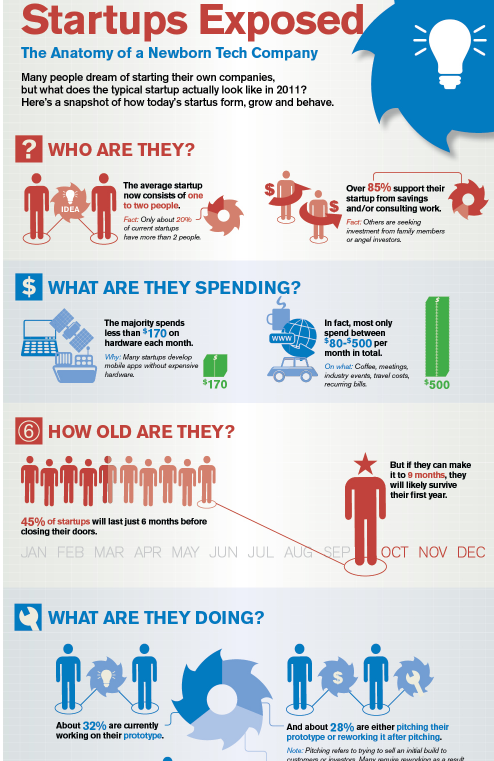
- Anatomy of a Tech Start-Up
- Despite Sell-Off, Barry Ritholtz Remains — Cautiously — Bullish
- Chart(s) of the Day: Length of Recoveries, Interest Rates
- Job gains light but gains nonetheless
- Loan Demand, Not Credit, Is the Problem
- Job gains light but gains nonetheless
- We need a lot of jobs/India, China correct again
| Lawrence M. Krauss: The Beginning & End of the Universe Posted: 04 May 2011 05:02 PM PDT Lawrence M. Krauss is an American Theoretical Physicist who is Professor of Physics, Foundation Professor of the School of Earth and Space Exploration and Director of the Origins Project at the Arizona State University. He is the author of several bestselling books, including The Physics of Star Trek. http://99faces.tv/ met him at the World Economic Forum WEF) in Davos in January 2011. It is a great honor that Eli de los Pinos, herself a great scientist (see http://99faces.tv/elisabetdelospinos/) and awarded WEF Tech Innovator, interviewed him about his research focus: the beginning and end of the Universe. More info: http://99faces.tv/lawrencemkrauss/ 99FACES is a website and video-platform introducing movers, thinkers, innovators, visionaries and changemakers in both short elevator pitch format and short interviews. |
| Fun with Google Maps: Osama Bin Laden’s Hideout Compound Posted: 04 May 2011 12:46 PM PDT Punch “Osama Bin Laden’s Hideout Compound” into Google maps. Hilarity ensues. There are over 1100 comments — they keep changing constantly — but my favorite has to be “No Street View? Lame!” >
Hat tip Scott F. |
| Bullishly Cautious on Yahoo Tech Ticker Posted: 04 May 2011 12:30 PM PDT I just shot 3 new videos at Yahoo Daily Ticker; the first one is posted in our Video section here. |
| Posted: 04 May 2011 11:30 AM PDT |
| Despite Sell-Off, Barry Ritholtz Remains — Cautiously — Bullish Posted: 04 May 2011 11:19 AM PDT ~~~ Source: |
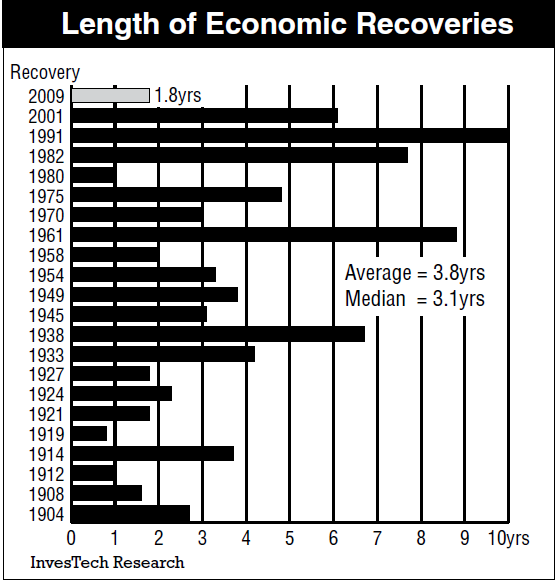
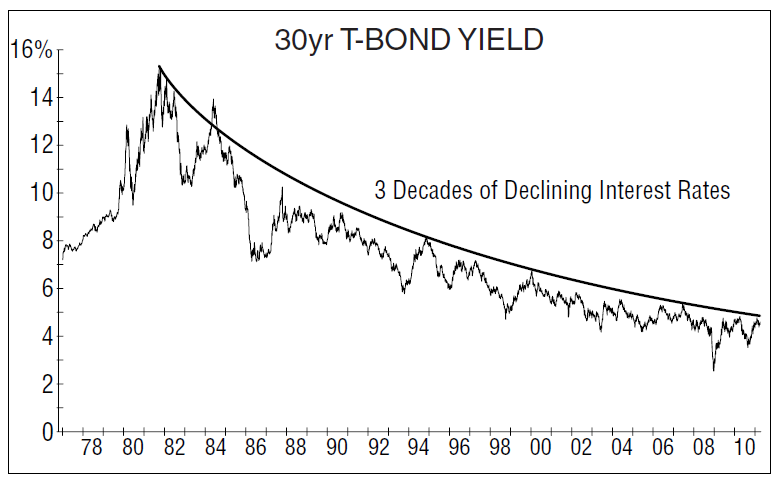
| Chart(s) of the Day: Length of Recoveries, Interest Rates Posted: 04 May 2011 08:30 AM PDT Jim Stack of Investech Research always uses these terrific, informative simple charts. They are not fancy, but they simply convey an incredible amount of information: The two below are a month old (April 8, 2011) but still instructive: > click for larger graphics > This chart tells you almost everything you need to know about the 1982-2000 bull market, the 2003-07 credit driven bear market rally, and the subsequent collapse and bounce back — as well as the demise of the Dollar. Unbelievably informative.
|
| Job gains light but gains nonetheless Posted: 04 May 2011 06:54 AM PDT ADP said the private sector added 179k jobs in April, almost 20k less than expected and compares with 207k in March, revised up by 6k. As has been seen and typically the case, most of the jobs were created by small and medium sized businesses both in the goods producing sector and services. Manufacturing in particular created 25k jobs and certainly has been a pleasant surprise for the US economy as it’s the 7th month in a row of gains. Today’s job gains bring the 6 month average to 192k favorably compared to the average of 50k in the 6 months priors. While a definite positive, the pace remains below where it should considering the amount of jobs lost in the recession and the ever growing cost of living for many. Friday’s private sector payroll gain is expected to be 200k. |
| Loan Demand, Not Credit, Is the Problem Posted: 04 May 2011 05:30 AM PDT WILLIAM DUNKELBERG has been Chief Economist for the National Federation of Independent Business (NFIB) since 1971. He is a Professor of Economics at the School of Business and Management, Temple University, where he served as Dean from 1987 through 1994 and as Director of the Center for the Advancement and Study of Entrepreneurship. A headline in the Wall Street Journal (4/24 C1) read "An Uptick in Loans Could Aid Businesses." This lead reflects the mistaken view that pervades thinking on Wall Street and in Washington D.C. that a major reason for the slow economic recovery is that banks wont lend to (small) creditworthy businesses. This argument is usually advanced by individuals who have never made a loan or had a private sector job. So the argument is that if banks would just make more loans, all would be well. This view is at the core of Treasury and SBA programs designed to provide funds to banks who will promise to lend to small businesses (although the $30 billion being made available to producers of half the private GDP is an insult given the $50 billion tossed at GM which will soon produce a loss of tens of billions to taxpayers on top of the wealth losses of shareholders and bondholders). Already we have forgotten that all the jobs we created by making bad (mortgage) loans are now gone. "An uptick in the two forms of lending could help businesses expand and reduce employment" says the report, reflecting the view that it is credit supply that is the problem. The banks mentioned in the article are all of the "biggies" who had (and still have) major loan loss problems and did pull away from small business lending. Missing are references to the thousands of community banks who didn't get caught up in the "bubble" and are the mainstay of lending to Main Street firms. Yes, credit is harder to get now than in the bubble at these banks and it should be. Underwriting standards were seriously compromised and bubble prices overstated the true value of collateral. But the real problem is loan demand (confirmed while speaking to bank organizations in half a dozen states over the past year). Loans have to be repaid, meaning that the money must be used to finance the acquisition of employees or equipment that will "pay back" the loan. Common sense. But record numbers of owners (as high as 28%) have reported that "weak sales" is their top business problem while only 4% reported "financing" as a top problem (National Federation of Independent Business monthly surveys of its 350,000 member firms). Ninety-three percent reported all their credit needs met in March, including 53 percent who said they were not even interested in a loan. No customers means no need for a loan to finance hiring, inventory purchases or expansion (only survival – not a good bank loan!). But they don't get it in Washington D.C. And not understanding the problem produces bad policy, and there has been plenty of that. If lending is picking up, it is because customers are showing up and there is a reason to invest and hire. The reverse doesn't work – you can't force feed the credit to owners and have more customers suddenly show up (even interest free loans would have to be repaid!). That's "pushing on a string". Just ask the banks. |
| Job gains light but gains nonetheless Posted: 04 May 2011 05:04 AM PDT ADP said the private sector added 179k jobs in April, almost 20k less than expected and compares with 207k in March, revised up by 6k. As has been seen and typically the case, most of the jobs were created by small and medium sized businesses both in the goods producing sector and services. Manufacturing in particular created 25k jobs and certainly has been a pleasant surprise for the US economy as it’s the 7th month in a row of gains. Today’s job gains bring the 6 month average to 192k favorably compared to the average of 50k in the 6 months priors. While a definite positive, the pace remains below where it should considering the amount of jobs lost in the recession and the ever growing cost of living for many. Friday’s private sector payroll gain is expected to be 200k. |
| We need a lot of jobs/India, China correct again Posted: 04 May 2011 04:55 AM PDT With gasoline prices up for a 43rd straight day yesterday to an average of $3.98 per gallon, just .13 from matching a record high, it is ever more important that the US economy generates jobs to the extent to offset this ever growing cost. Since Dec 31st, prices are up $.91, a cost to consumers of about $125b annualized, higher now than the $112b payroll tax cut put in place at the very end of ’10. Expectations today are for an April private sector job gain of 198k according to ADP. Following the more aggressive rate hike in India where short term growth is being sacrificed for long term price stability, as it should be, the Sensex index fell for an 8th straight day, the longest losing streak since ’02 and the Shanghai index took the cue as it fell 2.3% to a 10 week low. Copper is lower in response to near the lowest since Dec. Vietnam raised rates 100 bps to 14%. Portugal agreed to a 78b euro, 3yr bailout plan with the EU/IMF and yields there are lower and CDS tighter. Lastly, US equity bullishness remains high as II said Bulls rose to 54.9 from 54.3 while Bears fell to 16.5 from 18.5. |


| You are subscribed to email updates from The Big Picture To stop receiving these emails, you may unsubscribe now. | Email delivery powered by Google |
| Google Inc., 20 West Kinzie, Chicago IL USA 60610 | |
 The Big Picture (ritholtz)


0 comments:
Post a Comment