


The Big Picture |

- Co-Chair of the Congressional Inquiry Into 9/11 – and Former Head of the Senate Intelligence Committee – Calls for a New 9/11 Investigation
- Italy Downgraded: Credit Rating Lowered By S & P
- 10 Monday PM Reads
- Think Like A Rockstar
- Deficit Polls: Tax Increases vs Spending
- Infrastructure Plan: A Third Option
- How Rare: S&P Dividend Yields vs Treasuries
- Skylar Tibbits: Can we make things that make themselves?
- 10 Monday AM Reads
- The Greek hour glass
| Posted: 19 Sep 2011 10:00 PM PDT The Co-Chair of the Congressional Inquiry into 9/11 and former Head of the Senate Intelligence Committee, Bob Graham, previously stated that an FBI informant had hosted and rented a room to two hijackers in 2000 and that, when the Inquiry sought to interview the informant, the FBI refused outright, and then hid him in an unknown location, and that a high-level FBI official stated these blocking maneuvers were undertaken under orders from the White House (confirmed here). Today, Graham called for a new 9/11 investigation. As Raw Story notes:
Many other 9/11 Commissioners and congressmen have called for a new investigation, including: For example:
In addition,many high-level military and intelligence officials have called for a new investigation, including:
And numerous high-level judges, legal professors and trial lawyers call for a new investigation. See this and this. This posting includes an audio/video/photo media file: Download Now | ||||||||||||||||||||||||||||||||||||||||||||||||||||||||||||||||||||||||||||||||||||||||||||||||||||||||||||||||||||||||
| Italy Downgraded: Credit Rating Lowered By S & P Posted: 19 Sep 2011 08:31 PM PDT Italy Downgraded by S& PS&P just downgraded Italy's credit. I've been warning about Italy since 2008. The Problem Will Spread Because NONE of the Fundamental Problems Have Been FixedNone of the fundamental economic problems in Italy or Europe or anywhere else have been addressed … let alone fixed. So the problem will only spread. Fraud largely caused Italy's – and Europe's, and the entire world's – financial problems. And as I've noted since 2008, shifting the banks' fraudulent debts onto the nations' balance sheets only leads to national crises:
As I wrote in July:
| ||||||||||||||||||||||||||||||||||||||||||||||||||||||||||||||||||||||||||||||||||||||||||||||||||||||||||||||||||||||||
| Posted: 19 Sep 2011 03:00 PM PDT My afternoon train reading material:
What are you reading? > Source: TRB | ||||||||||||||||||||||||||||||||||||||||||||||||||||||||||||||||||||||||||||||||||||||||||||||||||||||||||||||||||||||||
| Posted: 19 Sep 2011 02:42 PM PDT Think Like A Rockstar View more presentations from Mack Collier | ||||||||||||||||||||||||||||||||||||||||||||||||||||||||||||||||||||||||||||||||||||||||||||||||||||||||||||||||||||||||
| Deficit Polls: Tax Increases vs Spending Posted: 19 Sep 2011 01:15 PM PDT More people support tax increases then the doctrinaire right-wing position favoring spending cuts during a weak economy. Here’s Bruce Bartlett: >
Bookmark/Search this post with | ||||||||||||||||||||||||||||||||||||||||||||||||||||||||||||||||||||||||||||||||||||||||||||||||||||||||||||||||||||||||
| Infrastructure Plan: A Third Option Posted: 19 Sep 2011 09:15 AM PDT Infrastructure Plan: A Third Option >
President Obama proposed $447 billion in a package designed to stimulate infrastructure spending and project-oriented job creation in the United States. House Speaker Boehner and House Republicans will offer an alternative plan. These plans then go through super-committee negotiations that are attempting to design a budget-deficit, spending, tax-management proposition in a much divided Congress. The outlook for any of the elements offered to lead to a successful compromise is considered bleak by many Washington observers. However, we want to place another option on the table, along with a concise way to pay for it without expanding the Federal deficit. Rather than a mixed package of $447 billion, we propose $535 billion in a five-year program to be allocated to infrastructure spending. The mechanics of this program are via Build America Bonds, a proven and tested method of infrastructure finance. You may be asking yourself: why the number 535? That is the exact number of Senators and Representatives that comprise our Congress. If they vote no, they will each be taking responsibility for voting against one billion dollars of infrastructure spending. We further propose that the monies be distributed among the fifty states in proportion to the number of Senators and Congressmen in each state. Therefore, a small state with one Congressman and two Senators would receive an allocation of $3 billion of Build America Bonds. A larger state with ten Congressmen and two Senators would receive an allocation of $12 billion in Build America Bonds. For what would the money be used? We propose that it must be spent on infrastructure, construction, and municipal development projects. Think of it as a way of funding schools, airports, sewer and water plants, toll roads, and bridges – all that is in the purview of government. Who would determine what projects would be undertaken? Existing local and state-level agencies would decide their needs and how to structure their own projects. If a town needed a water company, they could use a Build America Bond to finance it. If a district needed a new school, they could do the same. Fortunately, the structure would be the same as the Build America Bonds we already know. The Federal government would pay 35% of the interest in the form of a rebate to the issuer of the bonds. We already have close to $200 billion of Build America Bonds issued. The disclosures and techniques in order to finance them are established, so there is no need to form a new federal agency, allocating to other agencies. A federal presence is not required, other than to define the use for which Build America Bond proceeds may be applied. Would this create more federal deficits? Yes, if it was standalone, but we propose an alternative to pay for it. The interest subsidy on a Build America Bond at current market prices is somewhere around 1.5% per year. It works like this: a tax-free bond could be sold in conventional terms, and the buyers of such bonds would be limited to high-tax-bracket, wealthy Americans. Build America Bonds, on the other hand, are taxable instruments to the bond buyer. They are not tax-free municipal bonds, but the Federal government rebates a portion of the interest to the issuer of the bond. So, the issuer of the bond makes a decision as to which method is less costly when it issues bonds. Does it use tax-free bonds? Does it use taxable bonds? Whichever one results in the least expensive finance is the one that is preferred. So, how would the interest-rebate portion be paid out of the Federal budget? The answer here is simple: repeal the ethanol subsidy, which is approximately the same amount of money as it would take to have a half-trillion-dollar Build America Bonds program. The Congressional Budget Office (CBO) would score ethanol subsidy and Build America Bonds at about the same amount of money per year for the next, say, thirty years. What would happen if you stopped the ethanol subsidy? You would use that money instead to rebuild the infrastructure of the United States. You would stop driving up corn prices. You would free up almost half the corn crop, which is currently going into ethanol, and instead let it be applied for food. If ethanol remains economically viable because of the mandate that requires it to be part of the fuel system, so be it. If not, then there will be changes in different types of ethanol-like products. Even the most intense supporters of the ethanol subsidy admit that when the oil price is approximately $100 a barrel, the need for a subsidy for ethanol is really not justified. Why five years instead of two, like the original BABs program? It takes time to plan infrastructure projects. If the project were approved tomorrow, for example, the school board would need to hire architects, contractors, and workers. It would have to go through the process of determining what type of school to build, how it would be built, and enter the process of bidding and construction and permit applications. The same would be true for the sewer plant upgrade or the reconstruction of a bridge. Infrastructure is a long-lead-time activity. Would this create jobs right away? The answer is yes! Most projects create jobs immediately, because engineering firms, designer firms, architectural firms – those who do the preliminary work on a project – get employed quickly. The evolution of a project takes place over several years. Would it create the million jobs that the Obama administration says are needed to rebuild the infrastructure of the United States? We do not know, but we do know what we have seen with Build America Bond-financed projects. We have acted as a financial advisor on a number of them, and we have determined from our experience that many construction, project, and infrastructure-related jobs result from them. Would state and local governments have to use the Build America Bonds money? Absolutely not. This is not a wasteful program; it is an optional program. The money is available; the rerouting of ethanol subsidy money to Build America Bonds is there. The allocation goes to the states, and the states determine their level of participation. Will these bonds stand on their own credit, since the Federal government is not guaranteeing the bond principal? The answer here is yes. Market-based credit analysis and revenues have to be allocated to amortize the bonds – all that goes into the mix of each specific bond project. Each project must stand on its own merit. It must have the revenue, support, and economic research. This gets packaged into an official statement that can be presented to bond investors, who will determine on their own if they want to take the risk and buy this bond. Who will buy these bonds? Build America Bonds are taxable securities. Therefore, they become desirable for pension plans, IRAs, institutions, charitable foundations, banks, and others who are seeking investments at yields that can justify those investments and who at the moment are thirsting to find them. In addition, foreigners will buy Build America Bonds. We saw that in the last round of BABs, when foreign buyers came into the market and started to participate in this form of finance. In summary, here is our proposition. No Federal deficit impact. Repeal ethanol subsidy. Reallocate ethanol subsidy to an interest subsidy in the Build America Bonds program. Launch the Build America Bonds program with a five-year time horizon. With the size of $535 billion, we can easily convince Washington that the math is simple. In Washington, if it is not simple it does not have a chance. That would enable each Congressman to stare down a vote of a $1 billion allocation for his or her state. A concise program that creates infrastructure spending, puts the incentives to do it where they belong, and allows for independent credit analysis, could be implemented immediately and does not interfere with the super-committee's work or any other committee's work. This is our option to rebuild the infrastructure of the United States. ~~~ David R. Kotok, Chairman and Chief Investment Officer | ||||||||||||||||||||||||||||||||||||||||||||||||||||||||||||||||||||||||||||||||||||||||||||||||||||||||||||||||||||||||
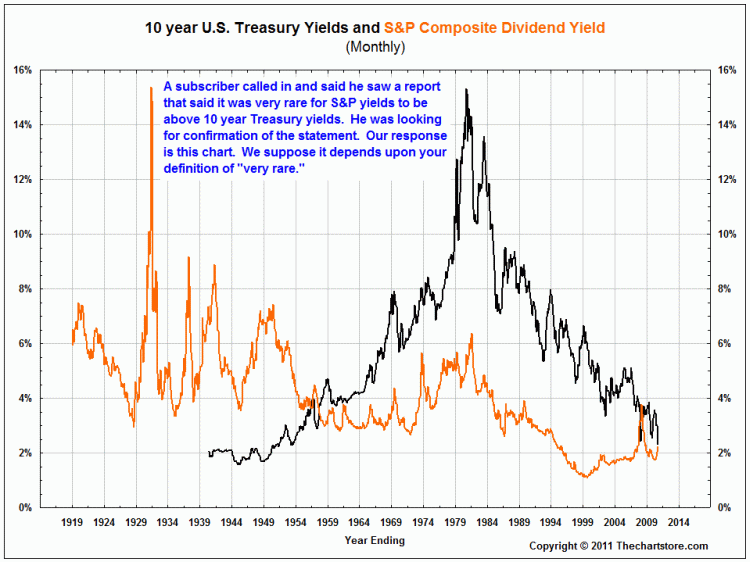
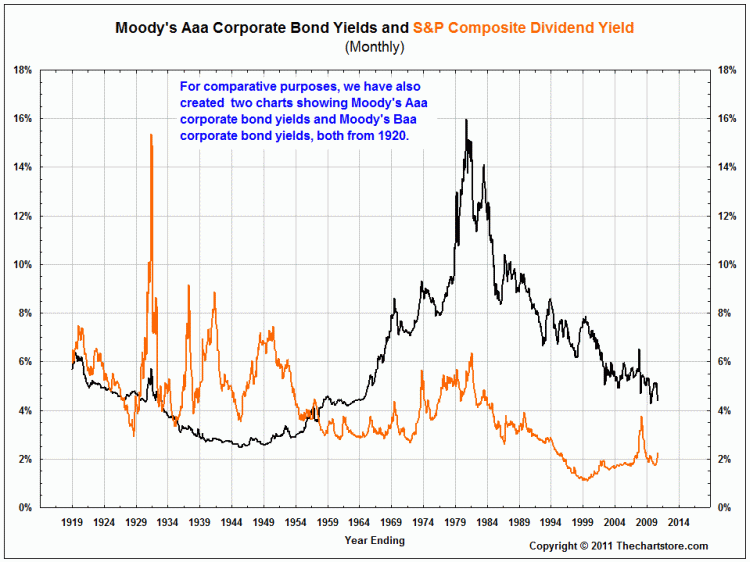
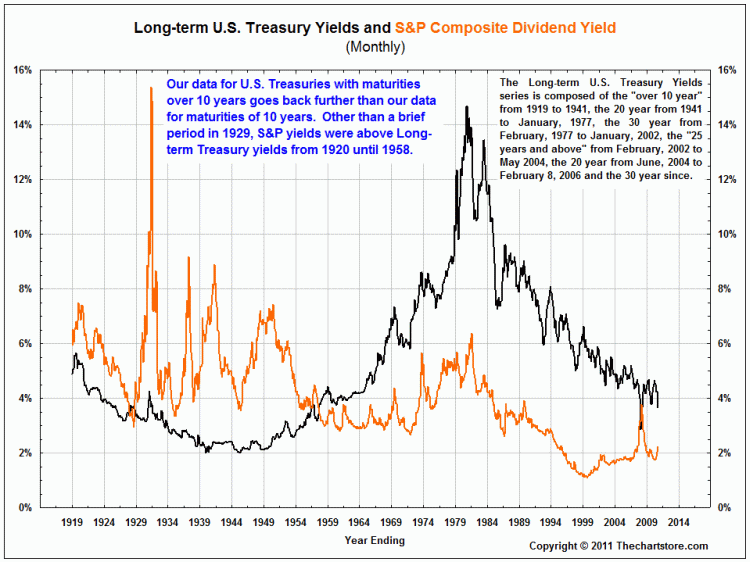
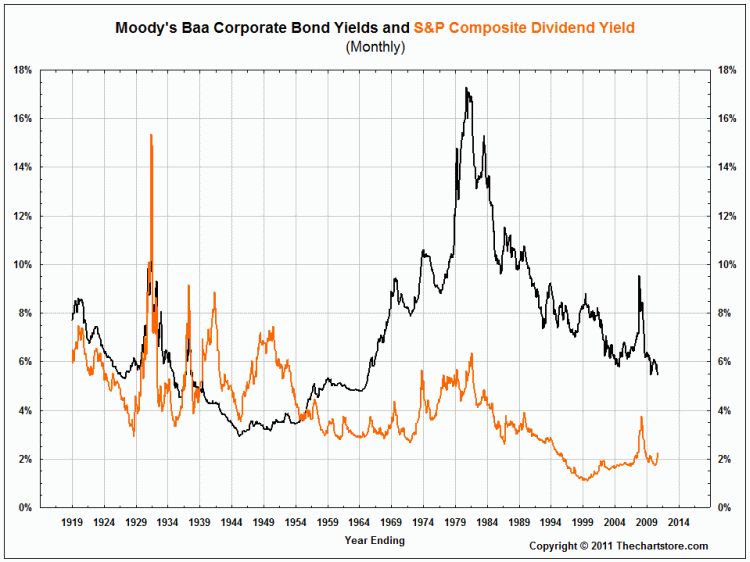
| How Rare: S&P Dividend Yields vs Treasuries Posted: 19 Sep 2011 08:30 AM PDT Last week, Ron Griess of the Chart Store brought to my attention a common misunderstanding about dividend yields. The charts below show some of the thinking behind our discussions. To begin with, the common usage of Treasuries — think 10 Year or 30 year for that matter — may not be an ideal comparison. The US sovereign debt has as little default risk as an instrument — certainly much less than any equity has in terms of risk. Towards that end, a better measure might be comparable corporates — either Moody’s Aaa or Bbb rated corporate bonds. Note that the charts, which run from 1920 to present, may belie some current assumptions about dividends and Treasuries: > 10 year U.S. Treasury Yields compared to S&P Comp Yield
~~~ Moody’s Aaa Yields vs S&P Comp Yield
More charts (30 Year Treasury and Moody’s BBB), after the jump
~~~ Long-term U.S. Treasury Yields vs S&P Comp Yield
~~~ Moody’s Baa Yields vs S&P Comp Yield
| ||||||||||||||||||||||||||||||||||||||||||||||||||||||||||||||||||||||||||||||||||||||||||||||||||||||||||||||||||||||||
| Skylar Tibbits: Can we make things that make themselves? Posted: 19 Sep 2011 07:45 AM PDT MIT researcher Skylar Tibbits works on self-assembly — the idea that instead of building something (a chair, a skyscraper), we can create materials that build themselves, much the way a strand of DNA zips itself together. It’s a big concept at early stages; Tibbits shows us three in-the-lab projects that hint at what a self-assembling future might look like. | ||||||||||||||||||||||||||||||||||||||||||||||||||||||||||||||||||||||||||||||||||||||||||||||||||||||||||||||||||||||||
| Posted: 19 Sep 2011 06:30 AM PDT Here is what I am starting off my week reading:
What are you reading?
| ||||||||||||||||||||||||||||||||||||||||||||||||||||||||||||||||||||||||||||||||||||||||||||||||||||||||||||||||||||||||
| Posted: 19 Sep 2011 04:44 AM PDT “We can’t move along without real implementation of fiscal reforms and we are late,” said Greece’s Finance Minister over the weekend, publicly acknowledging that they have not fully followed thru with the conditions demanded by the EU and IMF in order to release more money to Greece as part of Bailout 1. The Finance Minister will have a call with the EU and IMF at 12pm est time to discuss the current situation. I still assume Greece gets the next allotment of money in 2 weeks, followed by full passage of the EFSF by all 17 Parliaments and then an orderly restructuring of Greek debt where bondholders suffer at least a 50% cut in the value of their holdings off par value, more than twice the 21% reduction assumed with the current debt exchange. There are 3 ways to cut debt, pay it off, write it off or inflate out of it. Option 1 is a sign of health, option 2 is always painful but it cleanses while door #3 is the most dangerous. Greece needs to cleanse. In Asia, the Shanghai index fell to the lowest since July ’10 and the Hang Seng closed at the lowest since July ’09. | ||||||||||||||||||||||||||||||||||||||||||||||||||||||||||||||||||||||||||||||||||||||||||||||||||||||||||||||||||||||||
| You are subscribed to email updates from The Big Picture To stop receiving these emails, you may unsubscribe now. | Email delivery powered by Google |
| Google Inc., 20 West Kinzie, Chicago IL USA 60610 | |



0 comments:
Post a Comment