


The Big Picture |

- American Spring: Corruption, Unemployment and Rising Food Prices
- Open Thread: Crash or Bounce?
- 10 Monday PM Reads
- Year To Date Factor Performance
- Apple Is the Luxury Mall of Media, Amazon Its Wal-Mart
- Macro Tides
- Big Picture Conference: Event Details
- 10 Monday AM Reads
- Investors: ‘We Won’t Get Fooled Again’
- The Global Economy – Out through the In Door?
| American Spring: Corruption, Unemployment and Rising Food Prices Posted: 03 Oct 2011 10:00 PM PDT Americans Are Protesting for the Same Reasons Arabs Are Protesting: Corruption, Unemployment and Rising Food Prices ~~~Corruption, Soaring Food Prices and UnemploymentAs I documented in February, soaring food prices, corruption and youth unemployment are leading causes of the "Arab Spring" of unrest in the Middle East. And I've repeatedly pointed out that it is a global – not Arab – revolution:
In March, Council of Foreign Relations research associate Matthew Klein noted the parallels between soaring youth unemployment in corrupt Arab countries and the U.S.:
Richard Wilner noted in 2009 that less than half of 16-24 year old Americans had jobs:
And as I noted last year, some groups in America are experiencing Depression-level unemployment:
And food prices are soaring in the U.S. As CNN noted last month:
(And inequality in America is worse than Egypt, Tunisia, Yemen or most Latin American banana republics). No wonder protesters are saying that "Spring" has spread to America:  (And see this). Not Just Wall Street … Corrupt Government Is At Least Half the ProblemBecause government policy is ensuring high unemployment, it is not surprising that the American protesters are angry at the Federal Reserve and other government institutions, and not just the big Wall Street banks. Remember, Bush and Obama's economic policies are virtually indistinguishable. Indeed, Obama actually likes high unemployment. And as I noted in 2009, the government created the giant banks:
Of course, the government has also made it policy to cover up fraud and protect the fraudsters, and so the free market has no chance to punish fraud or cleanse wrongdoing from the system. Without government-created moral hazard emboldening casino-style speculation, corruption of government officials, creation of a system of government-sponsored rating agencies which had at its core a model of bribery, and other government-induced distortions of the free market, things wouldn't have gotten nearly so bad. Indeed, the government is so corrupt that the head of the economics department at George Mason University says that D.C. politicians are worse than prostitutes … they are "pimps", since they are pimping out the American people to the financial giants. And while co-option of government by the big banks is a huge problem, it is also true that corruption in government leads to corruption in the private sector. See this and this. The U.S. has truly become a banana republic, just like the worst Latin American countries. So anyone who thinks that government would solve all of our problems if it were only freed from obstructionists is only seeing half the problem, and is falling for the oldest trick in the book … the ole' divide and conquer strategy. |
| Posted: 03 Oct 2011 04:17 PM PDT Hey kids, are we having fun yet?Markets have certainly been interesting to say the least. Days like today point out how hollow the arguments the perma-bull Buy & Hold crowd make.But where are we in this cycle? Are we gonna bounce here, or just cascade lower?~~~What say ye?> |
| Posted: 03 Oct 2011 01:30 PM PDT My train reading this afternoon:
What are you reading? >
|
| Year To Date Factor Performance Posted: 03 Oct 2011 11:30 AM PDT Quantitative factor performance versus S&P 500 Equal Weight benchmark. Top decile of S&P 500 by factor. (January 2011 to August 2011) • Cash Back & Quality/Growth/GARP factors outperforming click for ginormous graphic Source: |
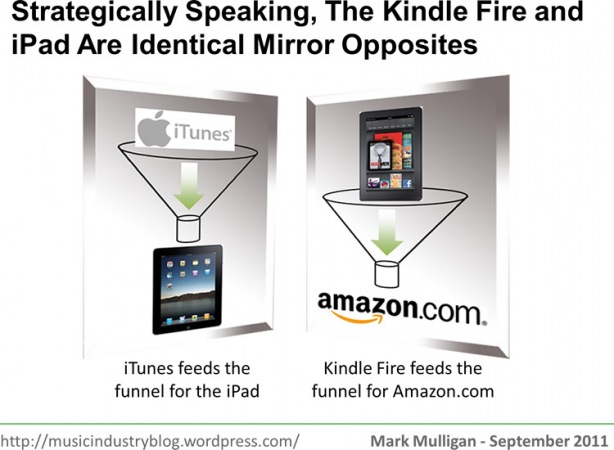
| Apple Is the Luxury Mall of Media, Amazon Its Wal-Mart Posted: 03 Oct 2011 09:30 AM PDT In the brief pause between last week’s Kindle announcement and this week’s iPhone reveal, there has been a lot of chatter about Amazon’s perceived attack on the iPad. Too many comments assume that the digital media market is a zero-sum game with Amazon gunning for some of Apple’s market share. Amazon’s new Kindle Fire opens the door, as several smart people have already pointed out, for it to compete ultimately with Google more than Apple. Even if those projections don’t come to pass, the Kindle Fire represents the opening of a whole new sector of the digital media frontier. (And it is worth noting that the digital frontier is playing the same role in 21st Century America that the Western frontier played in 18th and 19th Century America.) Apple created a viable tablet computer by leveraging its app ecosystem and premium customer base. Amazon is following up with a device that gives access to its digital media reservoir at a low cost. These two strategies complement each other more than they compete. This was a point first made last week by Mark Mulligan:
Mulligan’s insight doesn’t actually go far enough. The strategies are more than mirror opposites. Each digital delivery system appeals to a different set of consumers. Apple has followed the logical outgrowth of the iPhone market by creating a luxury product with real pricing power. iPhones are status symbols equal to any tony car or fashion brand. Amazon has focused on creating a comprehensive store that will satisfy the demand of the largest number of customers at the lowest possible price. Up until now, digital media consumers who shop on price haven’t had a platform. Kindle Fire represents the best possible candidate to be that platform. In more familiar terms, Amazon is becoming the Wal-Mart of digital media to Apple’s high-end suburban mall. Where Amazon relies on vertical control to drive down prices (let’s not forget that it continues to use its size and balance sheet to drive down ebook prices much in the way Wal-Mart pioneered,) Apple offers a luxurious, controlled environment. An app builder brings the iPad user into his universe with the same control over the atmospherics that Abercrombie has over the music, lighting, fixtures and staff. Amazon obliterates the brands that stand between the consumer and the content; Apple steps back and relies on the app makers to build an audience and drive sales of its devices. So far, the only misstep Apple has made as a “landlord” has been to try and charge too high a rent and drive some of its anchor tenants away (e.g., the Financial Times and Amazon.) Having viable platforms on both ends of the economic barbell is a huge plus for almost everyone in the digital media game. First of all, the faster we make this transition the better it will be for everyone—even those who will lose revenue and market-share as ad-based media declines. Squeezing the last juice from the ad-supported media has given us all manner of bizarre hook ups between content producers and distributors. At best, these are stop-gap measures like today’s ABC News-Yahoo! announcement. At worst, they’re serious sinkholes like content farms. Second, and more important, media outlets have already begun to find good ways of making use of both the Apple and Amazon ecosystems without impinging on either. If you’re a newspaper or magazine, selling an ebook on Amazon gives non-subscribers (or just non-users) at meaningful taste of your content. We’ve already seen Vanity Fair, Slate and The New York Times do this. You’re also opening up a new revenue stream when you start down this road and those guys need new revenue like no one’s business. This straddle between subscription-based and single-purchase content can strengthen both sides of the digital information economy and the brands that operate in between. In print, television and the movies, the power of the episodic series, whether it’s a recurring character or a multi-part story, is the one proven economic model. Creating episodic work generates marketing and revenue opportunities with each new release. It also strengthens the producer/distributor who can establish a new hit by delivering an audience then benefit from the secondary rights. The dam that’s been holding back a flood of digital content from tablet devices is the producer’s fear that they will have terms dictated to them by Apple or Netflix. They’ve also got to protect their existing relationships with their primary carriers and clients, the cable companies. Amazon’s entry into this world strengthens the digital distribution side. If Kindle Fire fails, the process of migrating content from cable to digital will take much longer as everyone digs in their heels. But Amazon’s deep pockets will present an immediate advantage to some seller who will eventually prove the case. At that point, even Netflix will regain some of its lost luster. Netflix has lost its momentum as a stock, plummeting 60%, and Hulu no longer looks like it will find a buyer. Amazon’s new Kindle puts a lot of pressure on both companies. The good news is that having Amazon as an alternative will give producers more than one bidder for their content. In the short term, that massively reduces expectations for Netflix. In the long-term, if Netflix can get beyond the strategy of being a comprehensive source for video content (or, at least, develop a business model that works for the producers) it should still do quite well. Kindle Fire has to gain traction. When it does there will be renewed interest in getting content onto the iPad. It will be an imperative, in fact, to counter-weight Amazon’s wealth with Apple’s very large customer base. The result will put more content behind an effective and enforceable paywall. And that’s good for everyone (including consumers.) Source: Amazon’s and Apple’s Mirror Opposite Content Strategies |
| Posted: 03 Oct 2011 08:30 AM PDT
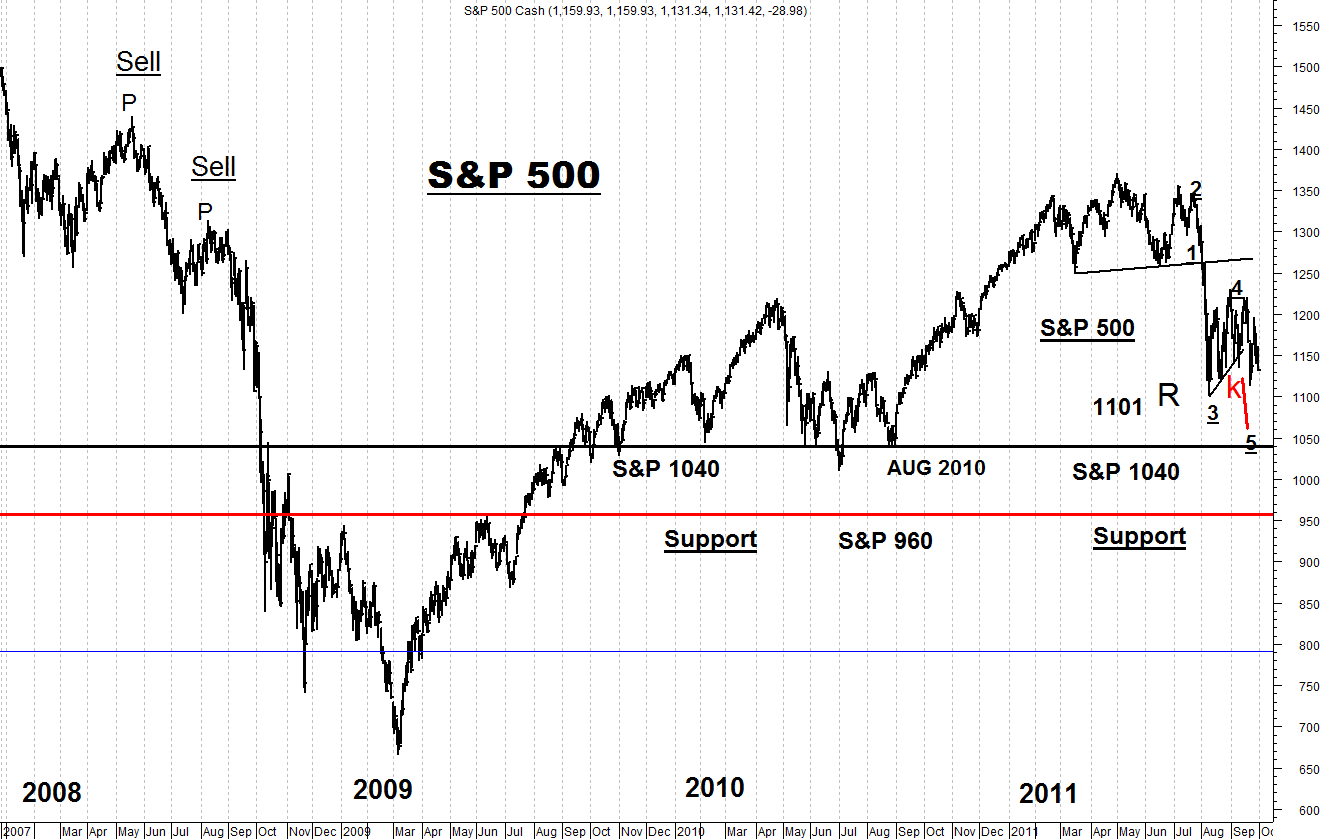
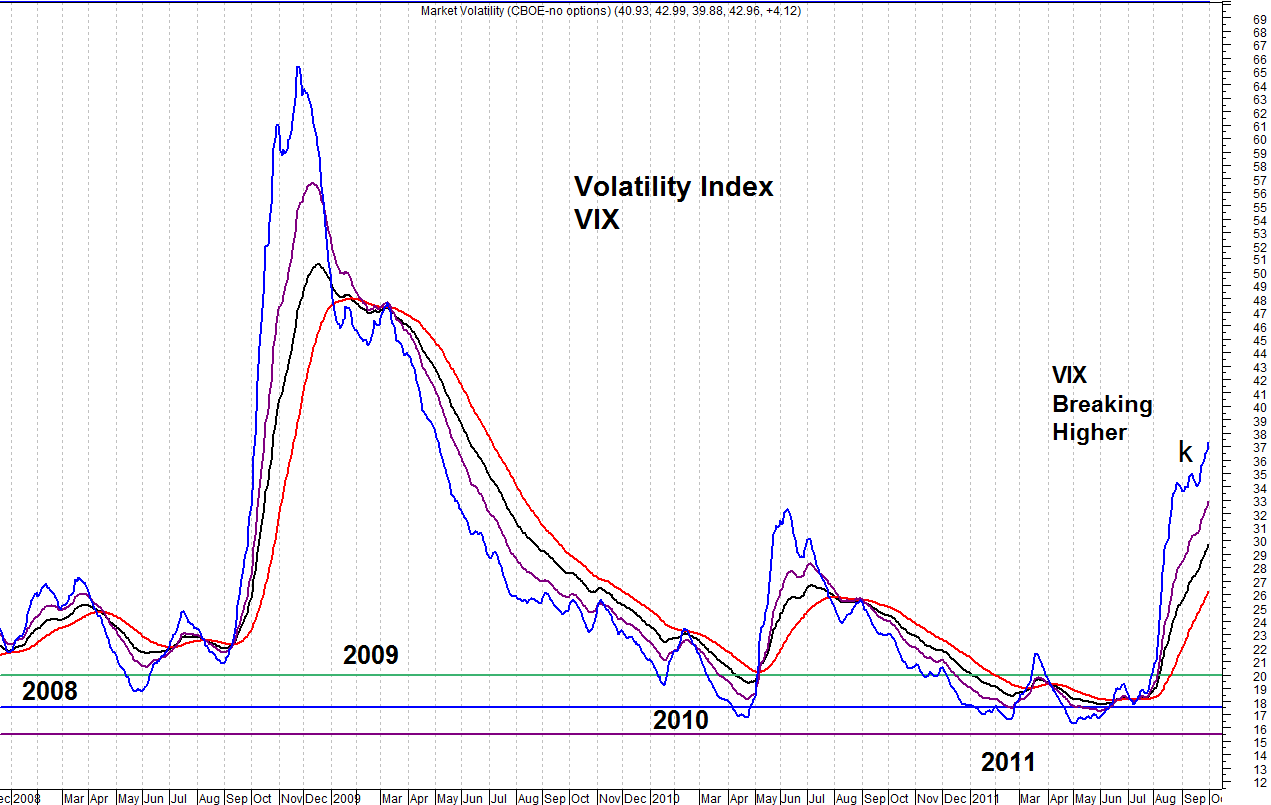
: Stocks In our September 25 Special Update we noted, "If the S&P does drop below 1101, it may hit an air pocket, especially if the European banking crisis and political situation deteriorates further. Our guess is that many will contribute to an effort to stabilize the financial system with something (many central banks cutting rates or expanding their balance sheets, and many governments increasing fiscal stimulus). However, the S&P could plunge to just above 1040, before Europe gets its act together. Buy 20% of a total position at 1085, buy another 20% at 1070, and the last 20% at 1055." We are canceling these instructions, since the probability of a decline below 1040 has increased. In the wake of the financial crisis in 2008 triggered with Lehman Brother's collapse, Treasury Secretary John Paulsen and Federal Reserve Chairman Ben Bernanke could get on the phone and hammer out a game plan to deal with the crisis within hours. That's not the case in Europe, which must get 17 disparate countries to agree on terms, even though each country has different priorities and political agendas. This process virtually guarantees any game plan will be behind the curve, as markets react to increasing evidence that the global economy is slowing more than expected. The final country to vote is Slovakia, but that vote isn't scheduled until October 17. A lot can happen between now and then. As we have repeatedly noted, the primary problem facing too many countries in the E.U. is too much debt and too little economic growth to support their debt loads. Italy has a debt to GDP ratio of 120%, and has averaged GDP growth of .6% for the last decade. No matter what is done to support Greece, if won't take long for attention to shift to Italy. Developing a game plan to recapitalize the weakest banks in Europe could take up to $1 trillion, from the $225 billion in place now. Even if this is achieved, it will do very little to spur economic growth. This means the most important underlying problem will not be addressed. Technically, every rally attempt this week was met with aggressive selling. Investor concern is shifting from pricing in a slowdown in the U.S., to weighing the prospects of another recession. On balance, economic data points are going to show more weakening, not only in the U.S., but around the globe. There is the potential that any short term good news out of Europe will be overshadowed by the bigger story – a global slowdown that is also impacting the previously high growth countries of China, Brazil, and India. Volatility rises as the stock market declines. As the chart below shows, after hesitating and trying to top between August 24 and September 20, volatility started moving decisively upward last week. This is not a good sign. The S&P 500 has tested and held the 1120 level on seven occasions since early August. We have not felt this support would hold, and the increase in volatility as the S&P approaches the 1120 level again, suggests the decline below 1120 is imminent. This indicates that the test of 1040 is likely to be more intense, which increases the odds 1040 will not hold. The rally from the March 2009 low carried the S&P from 667 to 1370, a gain of 703 points. A 50% retracement of the rally would take the S&P down to 1018, which is just above the August 2010 low of 1010. A 61.8% retracement targets 935. The distance between 1120, which is short term support and 1040, which is intermediate support, is 80 S&P points. A break of 1040 would then target 960 as the next level of support, which isn't much above 935. Sentiment has become quite negative, as the combination of weaker economic reports and extreme volatility in the stock market wears investors down. We continue to believe that after this decline, the stock market will be poised for a significant rally, probably inspired by monetary and fiscal policy moves in the U.S. and Europe. Most investors will equate any new measures launched by the E.U. as their version of the U.S.'s TARP program, or the Fed's QE1 and QE2 programs. If this rally materializes, it could be especially violent. We want to emphasize that any short term stimulus efforts in the U.S. and Europe are unlikely to lead to a sustainable economic recovery. It may buy a few months of time, but any rally inspired by policy moves will be followed by another round of disappointment, and subsequent market decline. Sooner or later, investors are going to realize, and have to accept, that the monetary and fiscal policies used to reverse every other post World War II recession have been neutered by the magnitude and scope of the problems we're facing. And this reality is not going to change even if there is a new administration in Washington in January 2013. We suggest going 12.5% long the S&P 500 ETF SPY if the S&P drops to 1025, and add 17.5% if it dips to 990, adding another 15% if it falls to 975. Conservative investors may want to sit this out, until some measure of calm is restored. Don't forget to buckle up, as the ride is likely to get even more volatile. Macro Tides
|
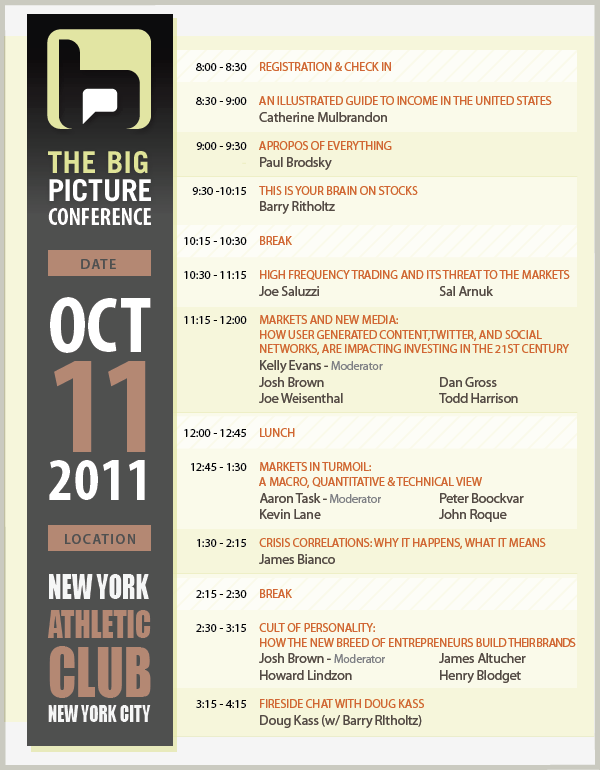
| Big Picture Conference: Event Details Posted: 03 Oct 2011 07:30 AM PDT There is a week left to get your tickets for the Big Picture Conference at the discounted rate — Register today! You can see the full line up by clicking here. Group discounts are available for parties of 6 or more. Current students and faculty with .EDU email addresses also qualify. Contact us by sending an email to TBPConf@gmail.com. Be sure to let us know how many are in your party for groups. Current students please send from your campus email.
|
| Posted: 03 Oct 2011 07:00 AM PDT Here is what I found to be interesting this morning:
What are you reading? Overhang?
|
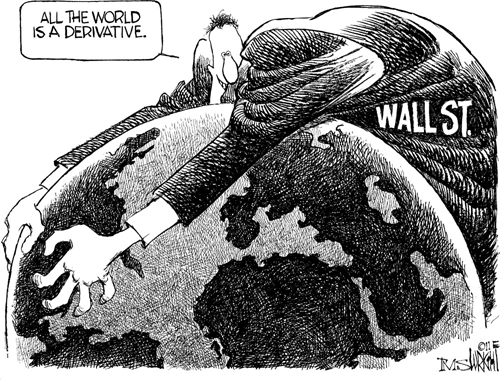
| Investors: ‘We Won’t Get Fooled Again’ Posted: 03 Oct 2011 06:53 AM PDT |
| The Global Economy – Out through the In Door? Posted: 03 Oct 2011 05:30 AM PDT The Global Economy – Out through the In Door? ~~~ The GFC Was Never Really Over… In 2008, panicked governments and central banks injected massive amounts of money into the economy, in the form of government spending, tax concessions, ultra low interest rates and “non-conventional” monetary strategies – code for printing money. The actions did stave off the Great Depression 2.0 temporarily, converting it into a deep recession –the US economy shrank by 8.9% in 2008. As individuals and companies reduced debt as banks cut off the supply of credit, governments increased their borrowing propping up demand to keep the game going for a little longer. The actions bought time. Governments gambled on a return to growth, solving all the problems. That bet has failed. Patient Zero…
Greece was always going to be Patient Zero in the global sovereign crisis, highlighting deep-seated problems in public finances of developed nations. Like individuals and companies, governments did not always use borrowed money for productive purposes, fuelling consumption and making poor investments. Within a period of about 12 months, Greece, Ireland and Portugal needed bailouts totalling just under Euro 400 billion. Many European banks, exposed to these borrowers, also lost access to commercial funding becoming reliant on European Central Bank loans. The need to guarantee the weaker countries inevitably increased the liabilities of the stronger countries, weakening them. Greece, Ireland and Portugal will need debt restructuring. Spain and Italy are now firmly in the sights of markets. The bailout strategy cannot continue without affecting the creditworthiness of France and Germany. In the absence of continuing bailout, the European banking system is vulnerable and will need capital from governments – catch 22! Going Viral…
The sovereign debt problem is global. The US. Japan and others also owe more than they can repay. The recent rating downgrade of the US should not distract from the real issue – the quantum of US government debt and the ongoing ability to finance America. US government debt currently totals over $14 trillion. America has been able to run large budget and balance of payments deficits because it had no problems in finding investors in US treasury securities because of the special status of the US dollar as a global reserve currency. In recent years, the Federal Reserve itself also purchased around 70% of issues, under its quantitative easing programs. As foreign investors, especially China, become increasingly sceptical about the ability of the US to get its economy into order, the ability of America to finance itself is not assured. At best, governments will cut spending or raise taxes to stabilise government debt as public-sector solvency becomes the priority. Reduction in government spending will slow growth, making the task of regaining control of government finances more difficult. This may require deeper cuts in governments spending and ever higher taxes, miring the developed world in low growth for a protracted period. At worst, some governments overwhelmed by their debts will default, causing a major disruption in financial markets, perhaps setting off a deep global recession. Unreal economies…
Having shrunk by over 12% in 2008 and 2009, American output has yet to reattain its 2007 peak. On a per-person basis, inflation-adjusted basis, output stands at virtually the same level as in the second quarter of 2005 – in effect America has stood still for six years. The same is true of many countries. Given consumption is 60-70% of individual developed economies, unemployment, under employment and lack on income growth will reduce growth. The real unemployment rate – people without work, people involuntarily working part time, people not looking for work because there is none to be found – is around 15-20% in the US. Even those Americans in work are generally working less and, adjusted for inflation, personal income is down 4% percent, not counting payments from the government like unemployment benefits. With home prices down 35% from the peak and predicted to fall further, the Americans do not have a wealth buffer in housing equity to fall back on. Low interest rates and indifferent returns from investments mean that the ability of retirees to consume is also low. The same is true of many developed economies. Emerging Problems….
After a sharp decline in economic activity in 2008, emerging nations – China, India, Brazil and Russia– recovered through massive domestic investment, aggressive expansion of domestic credit and, in some cases, strong commodity prices. That too is coming to an end. In China, over-investment in infrastructure produced short term growth but many of the projects are not economically viable and will drag down future growth. Many are funded by debt that is already creating bad debts within the banking system, requiring diversion of funds to bail out troubled institutions. Tepid growth in the US and Europe, its two largest trading partners, will slow Chinese exports. China's foreign exchange reserves, invested in US and European government bonds and denominated in dollars and Euros, are worthless, as they cannot be sold and, if held, will be paid back in sharply devalued currency with lower purchasing power. Printing money as the US has done, devalues the dollar creates additional pressure on China. Strong capital flows overwhelm smaller markets creating destabilising asset price bubbles. Commodities traded in dollars increase in price creating inflation. These factors all choke off growth. The policy of devaluation of the US dollar may trigger trade and currency wars, reminiscent of the trade wars of the 1930s and will retard global growth. Exit Via The Japanese Door …
Current concerns, most readily observable in wild gyrations of equity prices, are driven by the identified concerns but also the lack of credible policy options. The most likely outcome is a protracted period of low, slow growth, analogous to Japan's Ushinawareta Jūnen – the lost decade or two. The best case is a slow decline in living standards and wealth as the excesses of the past are paid for. The risk of instability is very high; a more violent correction and a breakdown in markets like 2008 or worse are possible. Frequent bouts of panic and volatility as the global economy deleverages –reduces debt- are likely. Problems created gradually over more than the last three decades can only be corrected slowly and painfully. ~~~
Satyajit Das is author of Traders, Guns and Money: Knowns and unknowns in the dazzling world of derivatives (August 2006) and Extreme Money: The Masters of the Universe and the Cult of Risk (August 2011)
|



| You are subscribed to email updates from The Big Picture To stop receiving these emails, you may unsubscribe now. | Email delivery powered by Google |
| Google Inc., 20 West Kinzie, Chicago IL USA 60610 | |



0 comments:
Post a Comment