


The Big Picture |

- Spiegel: Obama “like a doctor caught prescribing performance-enhancing drugs”
- Steve Jobs’ 2005 Stanford Commencement Address
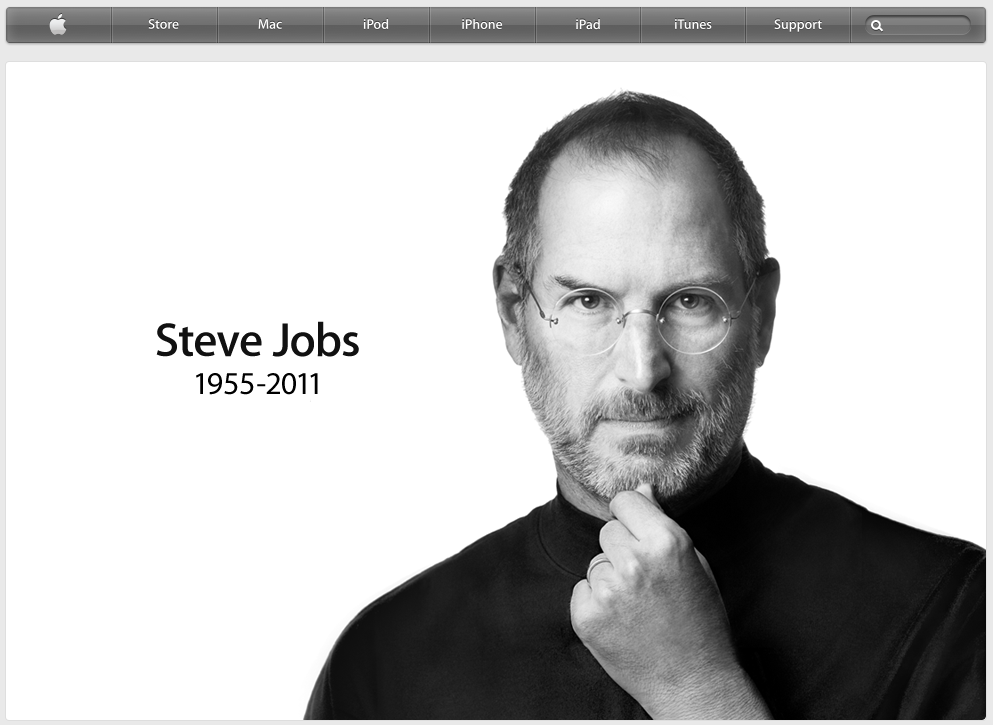
- In Memoriam: Steve Jobs
- Big Picture Conference: Join Us
- Books Bought By Big Picture Readers (September 2011)
- iPhone 4S
- Headlines: “Double-Dip” Recession
- Da Bears . . .
- Bruce Barlett on Taxes, Politics & Economy
- ISM services hang in
| Spiegel: Obama “like a doctor caught prescribing performance-enhancing drugs” Posted: 05 Oct 2011 10:00 PM PDT Go no further than the Der Spiegel piece, Why Europe Is Right and Obama Is Wrong, to understand the fundamental differences between American and German thinking on fiscal and monetary stimulus. Michael Sauga, the author, writes,
It gets better,
The "prescriptions could have wrong…and now it wants to increase the dose." Sound familiar? Here's the upshot,
|
| Steve Jobs’ 2005 Stanford Commencement Address Posted: 05 Oct 2011 09:24 PM PDT Drawing from some of the most pivotal points in his life, Steve Jobs, chief executive officer and co-founder of Apple Computer and of Pixar Animation Studios, urged graduates to pursue their dreams and see the opportunities in life’s setbacks — including death itself — at the university’s 114th Commencement on June 12, 2005.
|
| Posted: 05 Oct 2011 09:13 PM PDT
> I am up at the Basin Harbor Club in Vergennes, Vermont. I am giving the opening keynote speech after dinner at 8pm. I am about to step on stage to speak, when someone says, “Hey, didja hear Steve Jobs died?” WTF?! I am rocked back on my heels. I go to Apple’s website, and it is — of course — simple, elegant, eloquent. I am sure the 1st half of the speech sucked. Some worthwhile items to see and read if you want a round up: Here is a quick round up if coverage:
|
| Big Picture Conference: Join Us Posted: 05 Oct 2011 03:00 PM PDT
Folks are coming from across the country to attend The Big Picture Conference next week in New York. If you would like to join us, we have a handful of tickets left. Register Here! Ticket sales end this week. You can see the full line up by clicking here. > |
| Books Bought By Big Picture Readers (September 2011) Posted: 05 Oct 2011 01:00 PM PDT
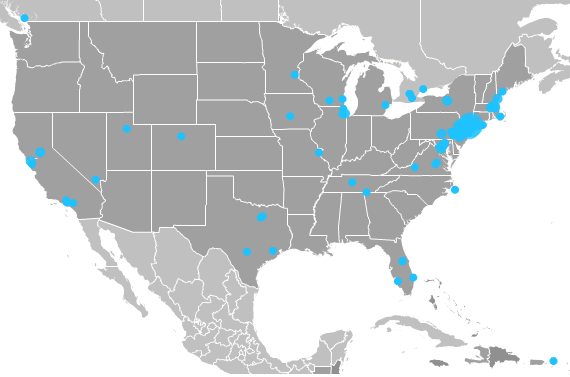
> I always find it interesting to see which books TBP readers are buying. In addition to throwing off minor referral revenue, the Amazon embed code lets me track every click from these links — how many people look at the page, how many books gt collectively purchased. Its anonymous — I don't know who bought what — but there’s lots of data on the various books generated. These were the most popular TBP books for September:
|
| Posted: 05 Oct 2011 11:30 AM PDT Huh? We waited this long for this? It’s like Toyota revealing its new Camry looks just like the old one, but is totally new under the hood, and they’re calling it the Camry S. It’s a great phone. State of the art. The chip is faster, the camera’s amazing and Siri is like nothing else, assuming it works… But the packaging sucks. Phones are fashion statements. If the form factor were different, these things would be gobbled up like M&M’s, every hipster and MacHead would need one, instantly. But now you can fake it. You can use an old phone and no one will know the difference. Hell, who doesn’t use a bumper obscuring the name anyway? Maybe Apple is breaking new ground here, just like they wrested control of the handset from the providers. Maybe from now on out, there’s no change in form factor. Kind of like the aluminum MacBooks. Only the insides change, you buy one when you need one… But most people don’t buy phones because they need them, they buy them because they want them. And everybody wanted the iPhone 5, but it’s nowhere to be found. Every year the Nano changes, for no good reason. Then again, it didn’t change this year. Is this evidence of a new Jobs-less Apple? Then again, at least they refreshed the iPods on time. New iPhones are supposed to come out in June. By missing the target and bunting instead of hitting a home run, it appears Apple’s been thrown out at first. It almost makes you want to wait until next June, when the 4G iPhone 5 finally arrives. I’ve waited this long, why not another nine months? Yes, everybody was waiting. Who on Verizon wanted an old phone. Why buy an iPhone 4 when your brethren have had it for the better part of a year over on AT&T! That’s why sales were beneath expectations, we were waiting. And we wanted to lay down our cash and parade our wisdom, let our freak flag fly, showing we had the latest and the greatest. But the joke’s on us. Everyone who bought one earlier was right, they win. As for the presentation… Tim Cook trying to be Steve Jobs doesn’t work, just like imitations don’t work in the music business. We want originals. Steve can go on hyperbole and we can handle it, when Cook employs Jobs’s lines, we wince. Either the company needs a new face or Cook has to be himself, whoever that is. We’re not anti new people. We’ve come to love Phil Schiller. He’s warm in a way Jobs is cool. He’s an insider, but he will still be our friend. Now I’m not saying the iPhone 4S will be a failure. Conventional wisdom is always wrong with Apple. At some point you need or want a new handset, and if you don’t get an iPhone, you’re a hater. Because iPhones are superior to Android handsets, and they’re the only competitor. But they make those Android handsets look so sexy, with bells and whistles and all kinds of extraneous gobbledygook. Mercedes-Benz makes it on being stately, but even they update the way their cars look, and they’ve been playing it so safe that BMW and Audi are eating their lunch. Yes, consumerism has become fashion. We first realized this when women who’d never deign to drive off road bought four wheel drive Explorers. They overpaid for capabilities they’d never use, inconvenienced themselves, driving trucks too tall with heavy handling. But they kept on buying them. Even after people got killed in them. You’ve got to look cool. Just like those people who lease Priuses. Explain that to me again? You’re leasing a hybrid? They only make economic sense if you keep them, if you continue to drive them. But no, you overpay to look cool. We overpaid to look cool with Apple for decades. But now we’re scratching our heads. Because we’ve still got to pay high prices and we look like the last one to get the memo. As to giving the 3GS away for free, that’s what it’s worth. Samsung and LG and the rest of those handset manufacturers making contract phones for providers don’t use the same form factor year in and year out, they change it. So even though you’re broke or cheap it looks like you’re state of the art. But if you’re an iPhone 4S owner, you’re one step behind the curve. Now this is not like the introduction of the 3GS. That was eons ago, two years is a lifetime in mobile. Hell, two years ago BlackBerry was king and Android was unheard of. Apple was a niche player, now they’re playing for all the marbles. Poorly. Maybe Steve could have spun this right. Maybe someone at Apple could still spin this right. But who would that be? Didn’t anybody at Apple know we were going to be disappointed? Couldn’t anybody have managed expectations? All this secrecy…for what? But it happens at a good time. We can still believe in the old Apple. The one Steve Jobs drove from the cliff to the most valuable company in America. As for the new enterprise… Leaders matter. As does personality. It comes down to people. And to lead you’ve got to be on the cutting edge. You’ve got to have instincts for what the public wants, you’ve got to be one step ahead, you’ve got to inspire belief. Steve Jobs did all that. But those days appear to be gone. – http://www.twitter.com/lefsetz – http://www.lefsetz.com/lists/?p=subscribe&id=1 |
| Headlines: “Double-Dip” Recession Posted: 05 Oct 2011 10:00 AM PDT I find the relentless double dip drumbeat to be wrong, only in that the next recession is far enough away from the prior one as to be considered its own, stand alone contraction. > click for larger graphic |
| Posted: 05 Oct 2011 08:15 AM PDT
> I have no idea where idea that “20%” somehow defines a bear market, or where it came from. In my mind, I prefer to think of this in the context of trends. Is any market moving from lower left to upper right of the chart? That is a bull market. If the move is from upper left to lower right, its a bear market. Anything in between is a trading range. Hence, from the recent highs back in April to today, the overall trend has been down. Following Fridays 90/90 day, we should expect a rally to last 4-7 days, before resuming the prior trend (lower). If we could see a 5-7% move higher, I would be looking to further lighten up my 50% exposure to equities. |
| Bruce Barlett on Taxes, Politics & Economy Posted: 05 Oct 2011 07:50 AM PDT |
| Posted: 05 Oct 2011 07:39 AM PDT Sept ISM services at 53 was about in line with expectations of 52.8 and down a touch from Aug. The 4 month average is 53.1 so it’s interesting that the Aug/Sept timeframe didn’t see any pronounced weakness in light of what went on globally. Business Activity rose 1.5 pts to the best since March. New Orders were up almost 4 pts to a 4 month high and Backlogs went back above 50, up 5 pts. The one negative though was the Employment component which fell almost 3 pts to 48.7, the weakest since April ’10. Export Orders did weaken by 4.5 pts but stayed above 50 at 52.0. Of the 18 industries surveyed, only half reported growth. While hanging in above 50, the ISM said “Respondents’ comments reflect an uncertainty about future business conditions and the direction of the economy.” Haven’t we heard that before. Bottom line, the recent data seen in the Aug/Sept time frame, capturing the change that occurred in the global economy/markets, has hung in better than feared with the natural tendency on the part of both businesses and consumers to take a step back to see how things play out. While the US economy still remains challenging, the view was of Europe and China in the last two months and a wait and see attitude seems to be the result rather than a big change in behavior. |


| You are subscribed to email updates from The Big Picture To stop receiving these emails, you may unsubscribe now. | Email delivery powered by Google |
| Google Inc., 20 West Kinzie, Chicago IL USA 60610 | |



0 comments:
Post a Comment