


The Big Picture |

- Thanksgiving, Ben Bernanke, WSJ Story (11/23/2011)
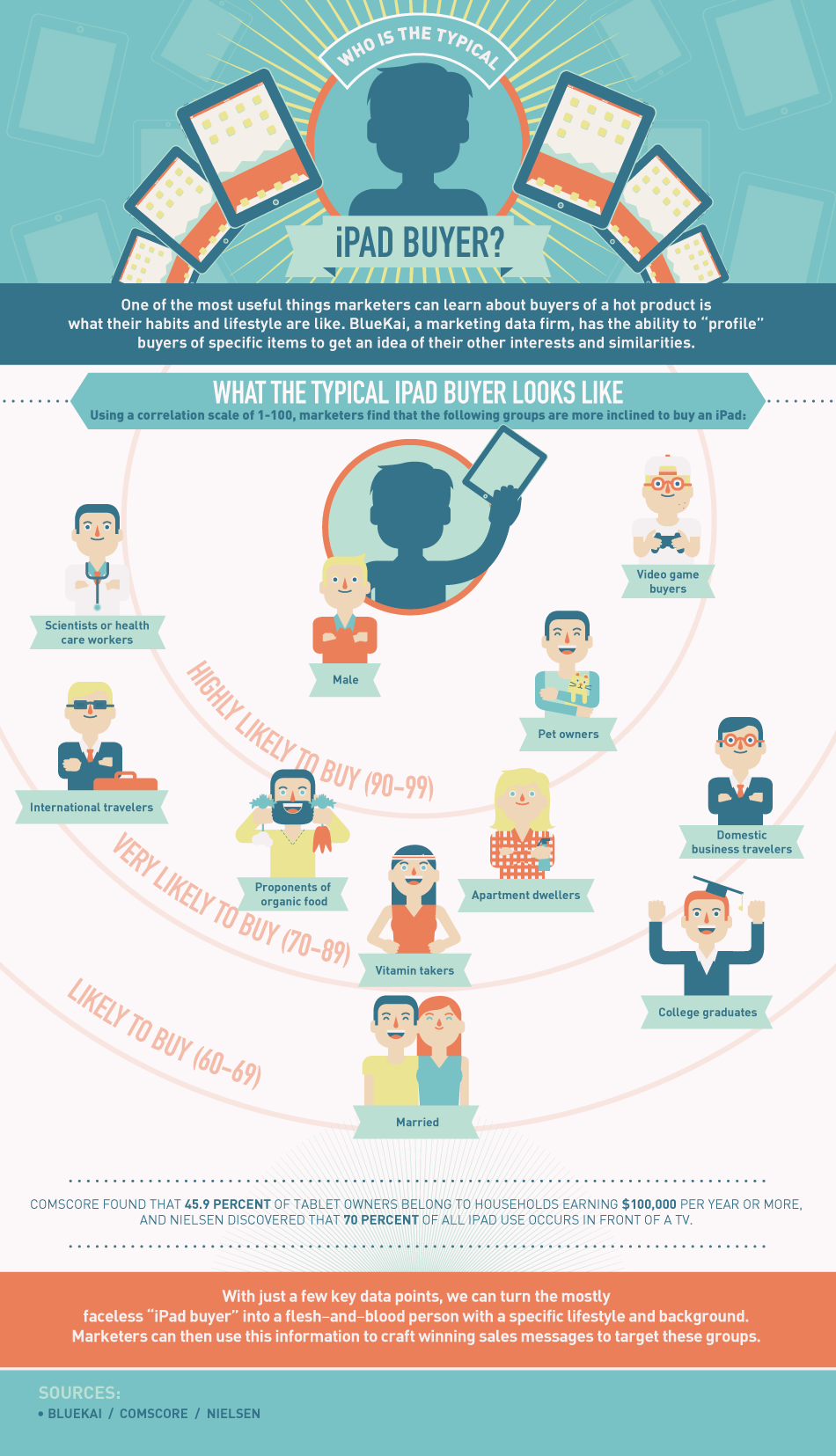
- Typical iPad Buyer Is A Male, Pet-Owning Gaming Fan
- Jimmy Kimmel Spoofs GOP Candidates In A “Charlie Brown Debate”
- How Late was S&P’s Downgrade of Belgium?
- Black Friday Reads
- Black Friday Spending
- Important News Events Are Usually Beyond Conventional Technical Analysis
- Merkel likes the market discipline being enforced
- ‘Tis The Seasonal Worker: A Glimpse At The Temporary Employee Workforce This Holiday Season
- Amazon Music Sale (Coldplay, Decembrists)
| Thanksgiving, Ben Bernanke, WSJ Story (11/23/2011) Posted: 25 Nov 2011 12:00 PM PST Thanksgiving, Ben Bernanke, WSJ Story (11/23/2011) ~~~
Wall Street Journal readers saw the front-page story entitled "Investors Bullish on Fed Tips," by Susan Pulliam. The opening discussion was alarming. The story discusses private conversations that took place between Fed Chairman Ben Bernanke and Nancy Lazar, an economist with International Strategy & Investment Group, Inc. The story reports that they met in Bernanke's office on August 15th. The story goes on to suggest that Lazar then hastily alerted her clients that a modern version of "Operation Twist" was coming. WSJ says Lazar declined to comment. The Fed's calendar entry confirms the meeting. So why is this meeting and report so alarming? Other meetings with Bernanke and NY Fed President Dudley were also reported. What's the big deal? It is standard procedure for Fed officials to meet with market participants to gain "color" from the market. Such inquiries by the Fed are a way in which they are supposed to gain insight. Some of those meetings are conducted with a small group of participants. I have been involved in such meetings over the years. From my experience, those meetings are focused on the guests. The gatherings are small and without press, so all in attendance can speak freely. The Fed official leading the meeting asks numerous questions. The Fed official usually has staff present, and they occasionally take notes. Guests offer diverse views. Sometimes the debates become fierce. The Fed official listens. Sometimes she/he even stirs the debate with questions. Often, the official summarizes and may add perspective. In all of my experience over the last 30 years never was I or another member of the group "tipped off" by a Fed official with a prediction of what the Fed was going to do. Federal law and the Fed code of ethics prohibit such behavior. I did not read the Lazar comment, so I have no firsthand knowledge of what she said to her clients with her hastily drafted advice. I have read the reports of others who participated in such meetings. In some cases my colleagues and I have publically noted conversations with Fed officials. To my best recollection, we have never published our views on future Fed policy with a representation that it was sourced to a Fed official and originated in a private conversation. These private conversations and this story have created a dilemma for the Fed. On one hand, Fed officials want as much information as they can obtain from market participants. The best information comes from those who are in the markets on a daily basis. These are the folks who follow the markets most closely. They are executing transactions. They are part of the process that is determining market-based pricing of financial instruments of all types. The Fed needs to learn all it can from them. On the other hand, a Fed official should never place him- or herself in a position to purposefully give away possible Fed policy. To give the policy initiative away to anyone is to put money in someone's pocket at the expense of everyone who was not in the meeting. Such behavior weakens Fed credibility and eventually harms the entire financial system. Without integrity and honesty, a central bank has nothing. How should Fed officials walk this fine line between obtaining information and conveying policy? The story that is reported in the Wall Street Journal is distressing on the face of it. Of course, only Nancy Lazar and Ben Bernanke know what information was exchanged between them. The rest of us have to surmise. Perhaps Bernanke inquired as to how markets would take certain transactions, without disclosing what the policy might be. He may have asked questions. Nancy Lazar may have determined, on her own and solely from the nature of the questions that the Fed was seriously considering such a policy. It is hard to imagine that Ben Bernanke actually leaned over to Nancy Lazar and said "Shh, don't tell anybody but we are going to do an Operation Twist." We doubt it. But only those in the room know the truth. What about Lazar? How did she reach her conclusions? From what we can see, she didn't break any law. There are no insider trading rules on interpretation of Fed policy or forecasts of same. I look at the WSJ article and think, "How would those meetings have been reported? How would the story have read if every detail of meetings of this type were made public? In those meetings, anyone could walk out, call their clients, and honestly say, "Here is what I think is going on." That would be an honest conveyance of information. Furthermore, the public could see if anyone in the Fed was playing favorites. Bernanke would have to explain any reports in his public press conferences. In addition, the Fed official could determine that certain guests had "stepped over the line" and misadvised clients or improperly conveyed discussions. The Fed needs to decide how it is going to walk this fine line between a private inquiry into obtaining market information and an inappropriate information transfer. One thing is clear: one-on-one calendar-listed meetings with the Chairman of the Federal Reserve or with a member of the Federal Open Market Committee are much riskier than meetings in which at least several participants are in the same place. The exclusivity of the single private interview is then eliminated. So is the risk of misinterpretation. Some Federal Reserve officials are presently working on the Fed's communication system. I am certain that they are examining new forms of transparency. They must now consider this WSJ story and its implications. We will learn from the minutes of the FOMC whether there is any discussion of this Wall Street Journal front-page story. For us, this was not a good story to read at the beginning of the Thanksgiving holiday. It came on the heels of a dire bond auction in Germany, widening credit spreads in Europe, and a very heated discussion of policy options for the European Central Bank. It came along with the ongoing debate over QE3 and Federal Reserve policy for the US economy. It came in the wake of the announcement that the Federal Reserve is advancing a new form of intense stress tests of large US banks. And it came on the heels of the failure of the super-committee. This was an inauspicious start to the Thanksgiving holiday. Add to it five extra airport travel hours and the need grew for a fine red wine to accompany our turkey. I hope, dear reader, that your Thursday meal and gathering were pleasant. Two healthy grandchildren and family warmth by a fireplace were the best enhancements of mine. Happy holiday. David R. Kotok, Chairman and Chief Investment Officer |
| Typical iPad Buyer Is A Male, Pet-Owning Gaming Fan Posted: 25 Nov 2011 11:30 AM PST Another look at who is buying what gadget. . . > infographic after the jump:
> Click to enlarge: |
| Jimmy Kimmel Spoofs GOP Candidates In A “Charlie Brown Debate” Posted: 25 Nov 2011 10:30 AM PST |
| How Late was S&P’s Downgrade of Belgium? Posted: 25 Nov 2011 10:11 AM PST Consider New Zealand: To highlight how late the S&P call was on Belgium and the catch up to the markets they are doing, even as they were a step ahead of Moody’s and Fitch, Belgium with now a AA rating has the same credit rating as New Zealand. However, Belgium 5 yr CDS is trading 410 bps and New Zealand is only at 107 bps. Also, Belgium’s 10 yr yield is at 5.86% vs 3.96% in New Zealand. |
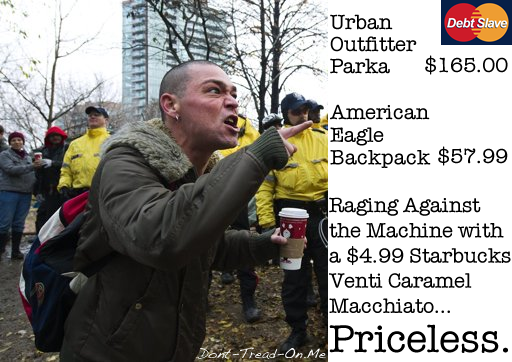
| Posted: 25 Nov 2011 10:00 AM PST Reading for your mass consumerism pleasure:
What are you reading? > Debt Slave |
| Posted: 25 Nov 2011 08:45 AM PST Via Mint, we see this City guide to Black Friday Spending: > infographic after the jump:
> click for ginormous graphic |
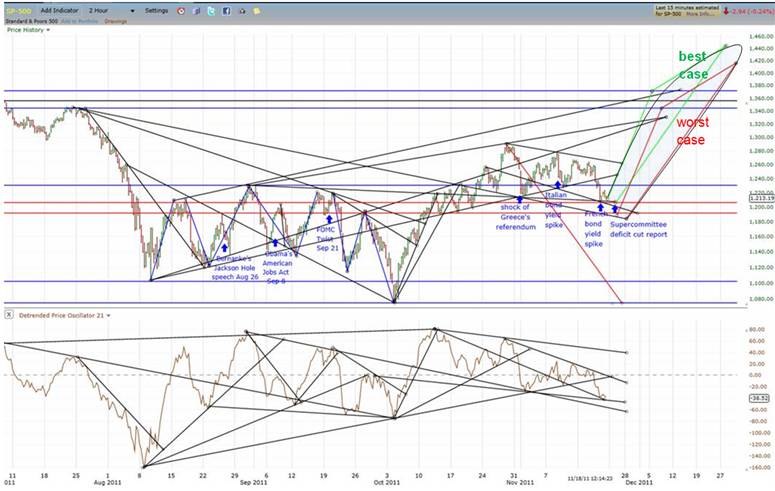
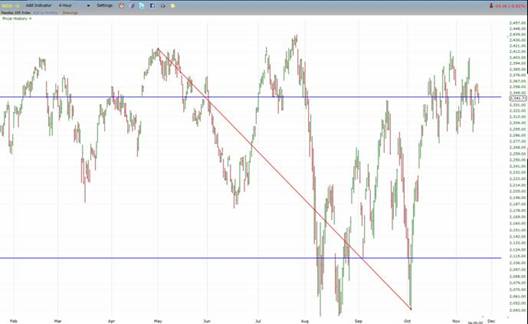
| Important News Events Are Usually Beyond Conventional Technical Analysis Posted: 25 Nov 2011 07:30 AM PST News events have a range of risk and uncertainty in their essence: a. Some news events are reasonably known in advance if you do your homework, like results in quarterly GDP reports. In these cases, conventional technical analysis can be of some, if not a lot of, benefit in discerning the outcomes and, even more so, the various capital markets' all-important reactions to the outcomes. b. Some news events are known or approximately known by the report date, but have a wide range of possibilities, like the report next Wednesday (Nov 23) by the Congressional Supercommittee on their recommendations for federal deficit cuts, and the Supreme Court's decision next June on so-called Obamacare. However, in both of these cases there could be a postponement: an extensive to Nov 23 deadline for the Supercommittee, although unlikely, and a deferred final decision by the Supreme Court until the tax/penalty becomes effective in 2015, also unlikely, but possible. And then there are the accounting gimmicks behind the headline(s), surely with attempts to cover them up. http://patriotupdate.com/14782/sessions-warns-of-budget-gimmicks-in-last-minute-super-committee-deal Not only do their deliberations have to be largely wrapped up this weekend, any debt-reduction proposal they approve need to be scored by the nonpartisan Congressional Budget Office, so that sets the actual deadline for a deal to be at least 48 hours ahead of the official deadline of midnight Wednesday. Also next Wed's deadline only applies to the dozen members of the panel; neither chamber is required to vote on any deal for weeks. http://patriotupdate.com/14746/press-hypes-phony-supercommittee-deadline In these type of news events, conventional technical analysis is usually of very little benefit, since the supposedly collective wisdom of investors usually can't narrow the possible outcomes, especially when the probabilities are asymmetrical. For example, the odds of the Supercommittee arriving at a grand bargain of $4 trillion, or even $4+ trillion in federal budget spending cuts would undoubtedly be immediately very bullish for the stock market. The various capital markets' expectations are very low fed because the gridlocked parties have incessantly repeated their ideological positions, so that they can ultimately say they won on balance, or that the opposing party lost more or caused the failure to agree. However, relative strength (ratio) analysis of the defense and healthcare sectors and industries, which would supposedly suffer the most with a lack of political agreement because a sequester or cutback in government expenditures in these areas would result, is somewhat useful in this particular case. By the way, on balance, these indicators are at least modestly bullish, which is factored into our best case and worst case outcomes discussed below. c. Some news events are unknown shocks, like Greece's surprise referendum on the then politically negotiated austerity plan. Although this was probably only known to a few Greek politicians, and possibly known only a few days before it was publicly proposed, the capital markets certainly thought it was a bearish shock. Clearly, conventional technical analysis was of no assistance in anticipating this. However, our Growth Cycle Projector Algorithm (GCPA) does assist greatly in all of these uncertain and/or risky cases, often invalidating conventional technical analysis. For example, we warned in advance to ignore the supposedly bearish breakdown to a new low, which then occurred on Oct 3, and other times like a bearish reaction before and/or after the Supercommittee report next Wednesday. The chart below shows our best case (green up-sloping wedge) and worst case (red up-sloping wedge) based on our GCPA, which most importantly conforms to our fundamental analysis of the situation (too lengthy and not relevant to our report here). These wedge patterns in combination constitute the target-path area that we expect for the U.S. stock market over the short term (weeks). We believe the consequence of the Supercommittee report, even in a worse case scenario, would be a very short term bearish reaction (days) and would complete a downtrend C in the up-down-up, zigzag ABC pattern since the Oct 3 false bearish breakdown to a lower low. Our ongoing three-month countertrend hedge recommendations are certainly relevant, and we still fully expect it to be doubly profitable in both the short term long position and the offsetting long term short position in the NDX, as explained further below, which is an expanded explanation from what we sent six days ago. If your browser is in HMTL mode, you can expand or contract the following picture by dragging your cursor when it's clicked on one of the small circles in the corners. Of course, no one shorted the stock market at its intraday high on May 2 and then closed out that position at the Oct 3 intraday low, which would have resulted in a 20.7% gain in the S&P 500 (SPX). Millions of investors with fully diversified U.S. equities portfolios suffered that drawdown, and probably most of them realized losses by selling out or trying to time the stock market unsuccessfully during that 154-day period. We offered advice that was both profitable and easy to execute, as explained and illustrated in the chart below. First, we recommended shorting the NDX (100 largest Nasdaq stocks), which could have easily been done during more than one- third of the time in the five months from February through August. This is illustrated by the high-low-close bars above the upper blue line drawn horizontally through Friday's (November 11) close in the chart. Second, just a few days before the Aug 9 mini-crash low, we then recommended a long position in the NDX fully hedging the short position, which we confirmed with an email advisory to you that very day. This exactly offsetting hedge position was also easy to execute, as illustrated by the 20 full or partial four-hour price bars below the arbitrarily drawn lower blue line in the chart. This effectively locked in a gain of most of the NDX decline and it has virtually eliminated all stock market related volatility since then, which has plagued investors and dominated the financial news on a daily, if not hourly basis. Third, several days before the SPX made a lower low – for thirty minutes – on Oct 3 compared to its Aug 9 intraday low, we sent you an email fully warning that it was a "false breakout" bullish setup, which is exactly what it turned out to be. Note that the relatively stronger NDX did not make such a new low. Fourth, the countertrend hedge also created a perfectly balanced cover for the NDX long position profitable since then. It is still unrealized because we expect a bigger gain in the days and/or weeks ahead. We expect the NDX will get a lot of media attention when it probably makes new highs over the next few weeks. Fifth, that gain will be realized when the long position is closed out, leaving the original short position in the NDX to profit from that point on – hence a double profiting hedge – as the stock market decline resumes in what we expect will be a Supercycle Bear Market. (See our description of this in earlier emails to you, or request that information if you didn't archive it or are new to our private email list.) We know of no private account manager, mutual fund or hedge fund that has achieved gains in the equity part of their portfolios during the past six to nine months and avoided a drawdown of greater than 10% (computed on a daily basis), which we find unacceptable. If you have counterevidence, please forward that information, as we are more than simply curious. But our subscribers who are private account managers who take advantage of our advanced advisory services have made money for their clients with these recommendations, with no post-hedge volatility over the past three months whatsoever. If you would like to see our recently updated short term working model for the stock market, and/or very long term working models for the stock market, bond market (i.e., long term interest rates), gold and/or U.S. dollar, don't hesitate to make those requests.
|
| Merkel likes the market discipline being enforced Posted: 25 Nov 2011 06:54 AM PST To the calls from many for the ECB to print euros to buy larger amounts of European bonds and for Germany to accept the issuance of euro bonds, both are resisting for the predominant reason that they want to hold Italian and Spanish feet to the fire and not ease any pressure on them to reform. On the story of Germany becoming more amenable to a euro bond, Merkel thought otherwise as she said it would “level the difference” in interest rates in the region and that “would be a completely wrong signal to ignore those diverging interest rates because they’re an indicator of where work still needs to be done.” Italy sold 6 month bills at a yield of 6.5% vs 3.54% paid last month. Fitch downgraded Portugal’s credit rating yesterday to junk, in line with Moody’s and Moody’s lowered its rating on Hungary to junk, 1 notch below S&P and Fitch. French consumer confidence fell to the lowest since Feb ’09. Germany’s IFO business confidence, out yesterday, unexpectedly rose. The German DAX however is down 10 days in a row as the bund yield rises to a 3 month high. The focus on too much debt in the western world can’t ignore Japan and S&P and the IMF had comments warning them of the state of their balance sheet. The 10 yr JGB yield is back above 1% to a 3 week high. |
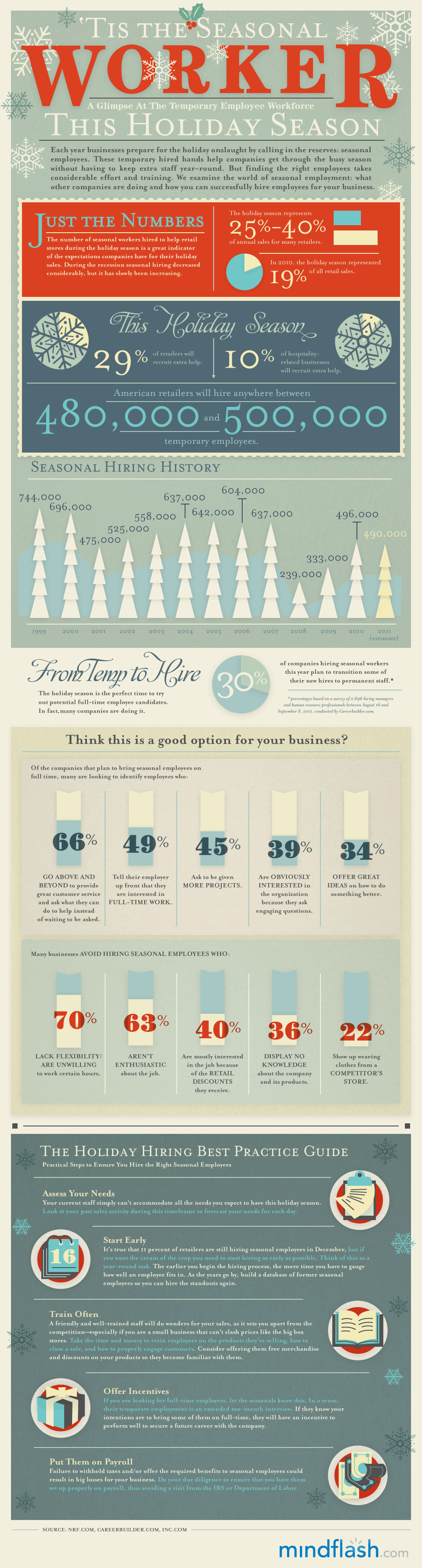
| ‘Tis The Seasonal Worker: A Glimpse At The Temporary Employee Workforce This Holiday Season Posted: 25 Nov 2011 05:30 AM PST Since its Black Friday, let’s have a look at this infographic of the Temp Seasonal Worker: > infographic after the jump:
> Click to enlarge: Source: |
| Amazon Music Sale (Coldplay, Decembrists) Posted: 25 Nov 2011 05:00 AM PST There is a Black Friday sale of CDs (remember those?) at Amazon. They also have MP3s at even further discounts, but I only purchase mediums I can listen to in a Lossless Format — MP3s ain’t that. These were the discs that stood out to me: Coldplay: Mylo Xyloto ($10)
~~~ The Decemberists: The King Is Dead ($10)
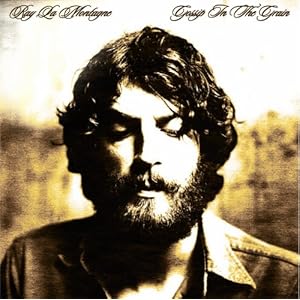
~~~ Ray LaMontagne: God Willin’ & The Creek Don’t Rise ($10)
~~~
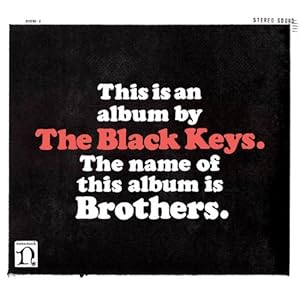
~~~ The Black Keys: Brothers ($9)
~~~ Frank Sinatra: Nothing But The Best ($9)
~~~ Amy Winehouse: Back to Black ($10)
~~~ Leonard Cohen: Live In London 2 CD Set ($11)
Adele: 19 ($8)
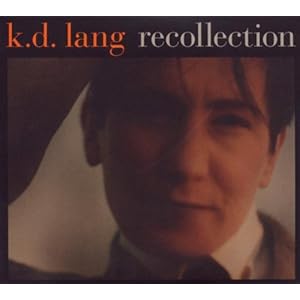
~~~ K. D. Lang: Recollection 2 CD Set ($11)
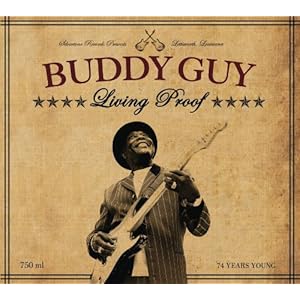
~~~ Buddy Guy: Living Proof ($9)
|









| You are subscribed to email updates from The Big Picture To stop receiving these emails, you may unsubscribe now. | Email delivery powered by Google |
| Google Inc., 20 West Kinzie, Chicago IL USA 60610 | |



0 comments:
Post a Comment