


The Big Picture |

- Risk Disclosure Statement
- Congress to Vote on EXPLICITLY Creating a Police State
- Futures Scream Higher on Italian Bailout Rumor
- Richard Seymour: How beauty feels
- Mapping Black Friday via Twitter
- Making Your Infographic Work
- Billionaires’ Top 10 List for Success
- The Thorium Dream
- WSJ: The Tax Mess Deepens
- RIP Ted Forstmann
| Posted: 28 Nov 2011 02:00 AM PST Systemic Regulatory Failure: YOU SHOULD CAREFULLY CONSIDER WHETHER YOUR FINANCIAL CONDITION PERMITS YOU TO PARTICIPATE IN THE UNITED STATES MARKETS THROUGH A REGULATED FUTURES COMMISSION MERCHANT. IN SO DOING, YOU SHOULD BE AWARE THAT A FUTURES COMMISSION MERCHANT (FCM), REGULATED BY EITHER THE NATIONAL FUTURES ASSOCIATION (NFA), THE COMMODITIES FUTURES TRADING COMMISSION (CFTC) OR THROUGH A SELF-REGULATED ORGANIZATION (SRO) SUCH AS THE CME, ALLOWS FOR THE CRIMINAL THEFT OF YOUR MONEY WITH NO RECOURSE. RESTRICTIONS ON REDEMPTIONS OF YOUR FUNDS FROM A FCM MAY AFFECT YOUR ABILITY TO WITHDRAW YOUR FUNDS, MANAGE ANY OPEN POSITIONS, INITIATE HEDGE OR SPECULATIVE POSITIONS RESPONSIVE TO CHANGING ECONOMIC CONDITIONS RESULTING IN ANY LOSS OF OPPORTUNITY, OR THE REDUCTION OF ECONOMIC EXPOSURE, IS COMPLETELY RANDOM AND AT YOUR INDEPENDENT RISK. FURTHER, CUSTOMER SEGREGATED FUNDS ARE INDEED NOT SEGREGATED DESPITE ANY OF THE MYRIAD OF RULES THAT STATE TO THE CONTRARY. PARTICIPANTS SEEKING TO RECOVER THEIR FUNDS HELD IN CUSTOMER SEGREGATED ACCOUNTS OF A U.S. FCM MAY BE SUBJECT TO SUBSTANTIAL FEES FOR BANKRUPTCY TRUSTEE'S, ATTORNEY COSTS AND OTHER CREDITORS SEEKING TO SUPERCEDE YOUR POSITION IN THE RETURN OF YOUR FUNDS DUE TO THE DISSOLUTION OF THE FCM AND THE RESULTING DISTRIBUTION OF REMAINING ASSETS, IF ANY. FCM'S ARE PERMITTED TO UTILIZE UNRESTRICTED LEVERAGE OF YOUR FUNDS TO MAKE SUBSTANTIAL PROFITS TO AVOID DEPLETION OR EXHAUSTION OF THEIR ASSETS EVEN THOUGH YOU ARE NOT ENTITLED TO PARTICIPATE ON ANY GAINS THEY MAY HAVE BY CONVERTING YOUR FUNDS. THE FCM IS ALSO NOT REQUIRED TO INFORM YOU IN ANY MANNER THAT THEY ARE STEALING YOUR FUNDS, FOR WHAT PURPOSE THEY ARE CONVERTING THESE FUNDS AND HOW MUCH LEVERAGE THEY ARE EMPLOYING WITH THE USE OF YOUR FUNDS. HOWEVER, IT IS WITH SPECIFIC PERMISSION FROM ALL UNITED STATES REGULATORS (CFTC, SEC, NFA, FINRA) THAT FUTURES EXCHANGES (CME, ETC.) AND FCM'S ALIKE CAN EMPHASIZE THE SAFETY OF YOUR FUNDS HELD IN SEGREGATED ACCOUNTS SOLELY FOR THE PURPOSE TO INDUCE YOU TO PARTICIPATE IN ANY CRIMES THEY COLLECTIVELY MAY PERMIT REGARDING THE OUTRIGHT CONVERSION, OR THEFT, OF YOUR MONEY REGARDLESS OF ANY ILLUSION YOU MAY HAVE TO THE CONTRARY. THIS BRIEF STATEMENT CANNOT DISCLOSE ALL OF THE RISKS AND OTHER CRIMINAL FACTORS NECESSARY TO EVALUATE YOUR PARTICIPATION IN THE UNITED STATES REGULATED FCM'S. THEREFORE, BEFORE YOU DECIDE TO PARTICIPATE THROUGH A UNITED STATES FCM AS THE CUSTODIAN OF YOUR MONIES, YOU SHOULD CAREFULLY CONSIDER UTILIZING A CUSTODIAN WITHIN A COUNTRY THAT DOES NOT REGULARLY, AND ARBITRARILY, ABROGATE THE RULES OF LAW SUCH AS THE UNITED STATES. |
| Congress to Vote on EXPLICITLY Creating a Police State Posted: 27 Nov 2011 10:30 PM PST If You Thought Police Brutality Was Bad … Wait Until You See What Congress Wants to Do Next WeekThe police brutality against peaceful protesters in Berkeley, Davis, Oakland and elsewhere is bad enough. But next week, Congress will vote on explicitly creating a police state. The ACLU's Washington legislative office explains:
Part of an Ongoing TrendWhile this is shocking, it is not occurring in a vacuum. Indeed, it is part of a 30 year-long process of militarization inside our borders and a destruction of the American concepts of limited government and separation of powers. As I pointed out in May:
There Is Still a Chance to Stop ItThe ACLU notes that there is some hope:
|
| Futures Scream Higher on Italian Bailout Rumor Posted: 27 Nov 2011 05:49 PM PST click for updated futures > Futures are screaming higher overnight on yet another European bailout deal for Italy. According to unverified reports from La Stampa, the IMF is preparing a 600 billion euro ($794 billion) loan for Italy. The paper has refused to state where it got the information. But that small detail is of no consequence to traders hungry for some green on the screen after November saw $4.7 trillion wiped out from global equity values. If we were to open here, markets would gap up nearly 2%, breaking a seven-day losing streak for US equities. Asian stocks have already broken their 4 day losing streak, with the MSCI Asia Pacific Index gaining 1.3%. A few caveats: The bailout rumors are just that — rumors. Note that the U.S. is a major funder of the IMF, and a bailout of Italy with US Taxpayer dollars wont go over well in an election year. Also note that the reporting on sales during Thanksgiving was filled with all manner of garbage (Sales climbed “16 percent to a record, said the National Retail Federation”) I suspect we will see flat to 2% sales gains at best, and not these ridiculous outliers. Regardless, don’t forget to bring your rally caps to work tomorrow. . . |
| Richard Seymour: How beauty feels Posted: 27 Nov 2011 12:30 PM PST A story, a work of art, a face, a designed object — how do we tell that something is beautiful? And why does it matter so much to us? Designer Richard Seymour explores our response to beauty and the surprising power of objects that exhibit it. Designer Richard Seymour works on products with soul — from a curvy, swoopy iron to a swift and sleek city motorcycle. Seymourpowell is regarded as one of the world's leading product and innovation design consultancies, with clients who include Ford, Virgin Galactic, Tefal, Casio, Nokia, Guinness, Samsung and Unilever. Seymour is also consultant global creative director of design to Unilever's Dove, Axe/Lynx and Vaseline brands. The pair have appeared extensively on British television, most notably in two series on design for Channel 4: Better by Design and Designs on your…. They have also appeared on Design Challenge and several radio productions. In the 1980s, Seymour co-wrote the book The Mirrorstone, with Michael Palin, a children’s book full of holograms. |
| Mapping Black Friday via Twitter Posted: 27 Nov 2011 12:00 PM PST
> Source: |
| Posted: 27 Nov 2011 11:00 AM PST 6 Steps to Making Your Infographic Work See also 6 Steps to Making Your Infographic Work via SEO gadget |
| Billionaires’ Top 10 List for Success Posted: 27 Nov 2011 08:30 AM PST Barbara Walters on 20/20 (via The Wealth Report) interviews four billionaires, and culls out some wisdom for managing success. You may recall that this is an area I have some interest in. Back in June, I wrote up something along similar lines: 7 life lessons from the very wealthy. Back to The Wealth Report: Here is the top 10 list culled from billionaires:
Not a bad list . . . > Source: |
| Posted: 27 Nov 2011 07:20 AM PST Full article on MotherboardTV: See also: Wired’s Uranium Is So Last Century — Enter Thorium, the New Green Nuke Jan 2010 |
| Posted: 27 Nov 2011 06:00 AM PST
> The WSJ takes a look at a variety of taxes that are about to expire year end, the expiring tax cuts of 2012, and what new taxes go into effect or expire in 2013:
Silver lining: The dysfunctional US government may end up leading to a lower deficits, as many of the expiring tax cuts are unfunded contributors to huge deficits. > Source: |
| Posted: 27 Nov 2011 05:30 AM PST
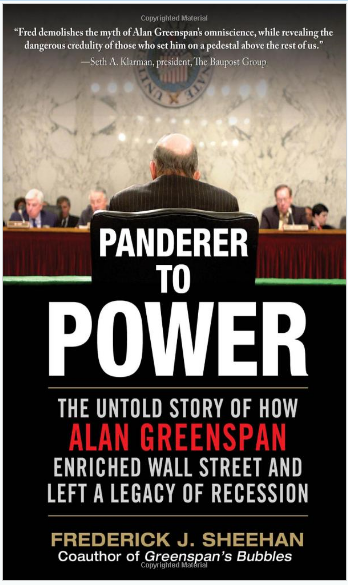
His new book, Panderer for Power: The True Story of How Alan Greenspan Enriched Wall Street and Left a Legacy of Recession, was published by McGraw-Hill in November 2009. He was Director of Asset Allocation Services at John Hancock Financial Services in Boston. In this capacity, he set investment policy and asset allocation for institutional pension plans. ˜˜˜ In a world where evidence often shows the bad do well, memories of a good, rich man may lift the spirits of the disillusioned. Ted Forstmann died of brain cancer on Sunday, November 20, 2011. He was 71. Obituaries and tributes that describe his life are accessible in newspapers and elsewhere. We met at Michael’s in New York after the publication of Panderer to Power: The Untold Story of How Alan Greenspan Enriched Wall Street and Left a Legacy of Recession. “I really enjoyed your book,” were his first words. This was gratifying, since the number who have read the book is probably in double-digits. Ted was a former friend of Alan Greenspan’s, so, it was especially nice to hear, “You were very fair to him.” I told him this was not difficult since Greenspan’s own words condemned his Federal Reserve chairmanship. Recording his life and statements before 1987 (the year he became Fed chairman) was evidence enough that he lacked personal character to a sufficient degree for the Wise Men to satisfactorily conclude Alan Greenspan would act as expected. I went out of my way to suggest higher motivations for Greenspan’s blemishes, allowing the reader to decide in which direction the evidence fell. In Ted’s opinion: “His own words showed how confused he was.” Ted thought my chapters about the 1980s were accurate. This was received with some relief. Few played a more central role than Ted, during the period I proposed (in Panderer to Power) as the sharp break in American finance. In particular, 1984 to 1986 was the time when Wall Street corruption was institutionalized. Alan Greenspan’s participation in the S&L swindle (in 1984 and 1985) was akin to a Triple-A, minor-league, first baseman batting .360: the consulting economist was major-league material. (From a letter written by New York Senator Daniel Patrick Moynihan on August 15, 1990: “Consider the Financial Institutions Reform, Recovery, and Enforcement Act (FIRREA) more commonly known as the ‘S&L bailout bill.’ Has there ever been an equivalent phantasmagoria of evasion, avoidance, incompetence, muddle, and panic, all with the nice overlay of swindle? From a Treasury Department once handled by Alexander Hamilton! The largest scandal in the history of the national government; for which no one is responsible. That being the first sign of a government whose true energies and talents are directed elsewhere.”) There were more pages in Panderer to Power about the 1980s than some wished. Yet, the times and the man were Siamese twins. A grounding in that period is a foundation to understanding the final and accelerating finish of venerated U.S. institutions today: financial, academic, media, and government. Without saying it should be so (to the best of my recollection), Ted supported my conclusion that Too-Big-To-Fail banks should be shut. He didn’t know his banker anymore: “I don’t know what a bank is. I’ve been doing this for 30 years. I went for a loan for one of my companies recently. The room was filled and I couldn’t figure out if there was a person, a banker, who decided [whether I would get] the loan. None of them knew who I was.” Ted did not think derivatives should exist “except to hedge gold, crops [or similar physical materials].” I had not known, until reading the New York Times obituary, that Ted Forstmann “coined, if inadvertently, a phrase that set the public image of the leveraged buyout industry. While he was golfing in the late 1980s with Richard L. Gelb, then the chairman of Bristol Myers, the discussion turned to a surge in takeovers by buyout firms. ‘What does it all mean?’ Mr. Gelb asked Mr. Forstmann. ‘It means the barbarians are at the gate,’ Mr. Forstmann replied. ‘And they’ll be coming for you next.’” The obituary quoted from a Wall Street Journal column that Ted wrote in 1988: “Watching these deals get done is like watching a herd of drunk drivers take to the highway on New Year’s Eve.” I graduated from business school in 1985 and played a bit part in the leveraged buyout spectacle. As a bit player though, with investment bankers grasping for every company’s business (even to the unlikely degree of wooing a very junior analyst), I knew the gossip. Ted Forstmann was in the thick of deal-making at that point (Forstmann, Little), but his name was above reproach. Ted thought younger people today combine a strange mix of materiality and immateriality. People he talked to in their 30s or 40s wanted to make money. They didn’t really care about producing or making something. Ted thought Alan Greenspan, via the Federal Reserve, was the central spigot of our current plight. In Ted’s words: “They print the money. When they print too much, it goes into activities that aren’t economic. When the interest rate is too low, people aren’t careful. Borrowers can pay back in depreciated dollars. They barely need to put any of their own money into a project. If interest rates are 7%, they need to calculate its potential profitability.” Ted recommended Nicole Gelinas’s book: After the Fall: Saving Capitalism from Washington and Wall Street. He thought she successfully made the case we did not need a slew of new financial regulations. If the Federal Reserve and other regulators had enforced the rules then in place, there would not have been a financial crisis. These are wise conclusions that could never penetrate the interests in Washington, Wall Street, academia, and the media. For each of these parties, such an acknowledgement would reveal their failure to halt the obvious beforehand. (See Moynihan, 1990, above.) I presumed Ted did not think Federal Reserve Chairman Ben Bernanke was an improvement. Whenever his name was mentioned, Ted either winced as if he had bitten into a lemon or exhaled a low moan. Ted was disappointed, but maybe not surprised, that I saw no other solution than to let prices, including assets and incomes, settle at a lower level, at which point the U.S. will be competitive again. This may have been a reason he simply could not speak at the mention of Ben Bernanke’s name. Ted Forstmann was a sterling example in a tarnished field. |


| You are subscribed to email updates from The Big Picture To stop receiving these emails, you may unsubscribe now. | Email delivery powered by Google |
| Google Inc., 20 West Kinzie, Chicago IL USA 60610 | |



0 comments:
Post a Comment