


The Big Picture |

- Why a Stimulating Job Can Improve Your IQ
- Open Thread: S&P500 = 1250 < Dec 31 ?
- Rover on the Hunt For Life On Mars
- Fitch move on USA as expected
- 10 Monday PM Reads
- Buying On The Internet: Cyber Monday
- Black Friday: Not So Good
- Fourth Quarters are Da Bomb
- Another central bank cuts rates
- Euro Fracture: It’s the Politics, Stupid!
| Why a Stimulating Job Can Improve Your IQ Posted: 28 Nov 2011 07:38 PM PST Many people think of IQ as a genetic trait like eye color, something you’re born with and stuck with for life. But as Sue Shellenbarger explains on Lunch Break, evidence is mounting that IQ can change over an individual’s lifetime. 11/28/2011 2:26:03 PM |
| Open Thread: S&P500 = 1250 < Dec 31 ? Posted: 28 Nov 2011 05:30 PM PST My head trader needs to be placed under some form of sedation. Every 3% move in the markets — and admittedly, there has been lots of them – causes him to bounce off of the walls like volatility powers his personal DJAI1 (a personal Bloomberg terminal accessory that is only available on trading desks). Last week, he was expecting Armageddon; this week, he thinks we melt up into year end. He is Mr. Coincidental Sentiment, and I have long since learned to contextualize his madness. He offered me $100 bet that the SPX would hit 1250 before December 31 2011. Would you take the bet? > _________________________ 1 Dow Jones Anal Intruder |
| Rover on the Hunt For Life On Mars Posted: 28 Nov 2011 02:30 PM PST Click to enlarge: Source: Mega-Rover Ready To Hunt For Life Signs On Mars |
| Posted: 28 Nov 2011 01:45 PM PST Fitch affirmed its AAA rating on the USA but revised its outlook to negative from stable. This change is completely as expected as Fitch last week said they would do so by month’s end in response to the lack of a deal by the not so Super Committee. |
| Posted: 28 Nov 2011 01:15 PM PST My afternoon train reading:
What are you reading?
|
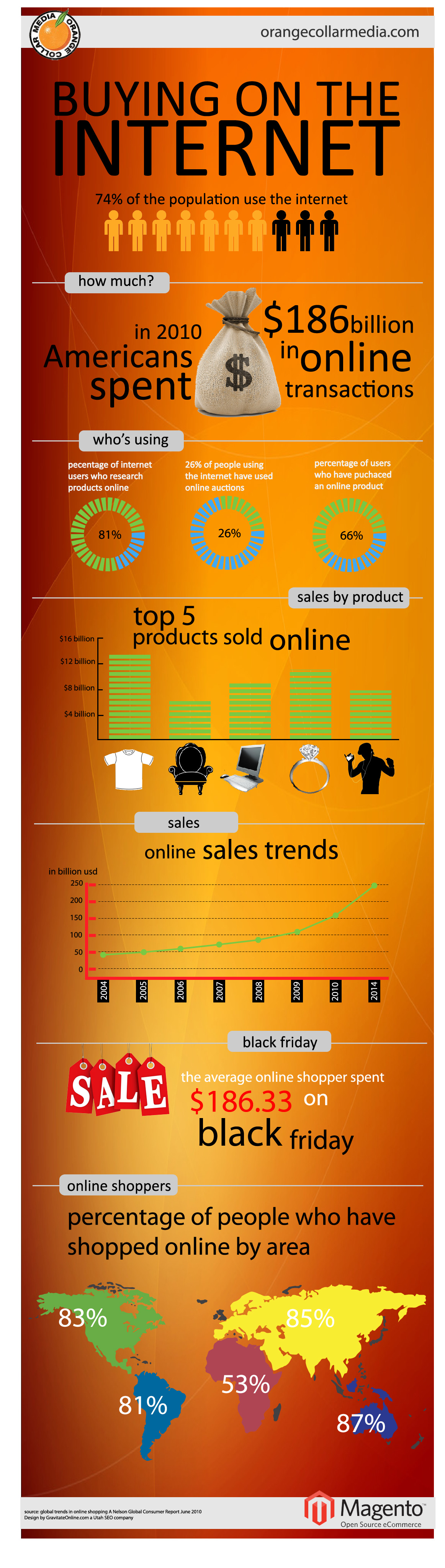
| Buying On The Internet: Cyber Monday Posted: 28 Nov 2011 11:30 AM PST |
| Posted: 28 Nov 2011 10:00 AM PST It’s probably no surprise to Financial Armageddon readers that many media outlets are trumpeting this weekend’s jump in retail sales, with some even suggesting (praying?) that it means consumers are finally emerging from their recessionary funk: “Retail Sales Break Records, Cyber Monday Up Next” (USA Today) Buyers are expected to log in for online sales on Cyber Monday.
Steep discounting“Black Friday Deals Lure ‘Extreme Couponing’ Consumers: Retail” (Bloomberg)
Earlier sale times, longer store hours“Black Friday Draws Younger Shoppers” (Bloomberg)
Easier credit terms“Retailers Try to Lure Shoppers with Layaways” (CBS News)
Free shipping“Free Shipping Erodes US Retailers' Profits” (Financial Times)
Increased advertising and marketing spending“Holiday Outlook: A Boost In Ad Spending” (Media Life Magazine) Strong retail spending will lift the ad economy
Adding extra services“Retailers Pulling Out the Stops For Holiday Season” (Gazette.Net) More midlevel department stores, which have lost customers to discount retailers, are offering personal shoppers to attract consumers who have used the service at upscale stores, Hamilton said. "Advertising these services also makes these stores, like Macy's and J.C. Penney, seem upscale," she said. "Like expanded store hours, this additional service is made possible by the high number of job seekers. Plus, personal shoppers may work mainly on commission, meaning that their cost to the stores is relatively low." Pressures on household budgets“For Black Friday First-Timers, Not a Night of Conversion” (New York Times)
The truth is, while revenues may have seen an uptick that makes for breathless headlines, odds are that profits will have suffered equally as dramatically over the past few days as retailers pulled out all stops and competed head-to-head for cherry-picking and cash-constrained customers who are still in no position to spend like they once did. I would also point out an ironic twist to this weekend’s “positive” turn-of-events. As ShopperTrak founder Bill Martin notes in “Black Friday Sales Rise 6.6% to Record: ShopperTrak,” the end-of-the-week increase was” the largest year-over-year gain in [that firm's] National Retail Sales Estimate for Black Friday since the 8.3 percent increase we saw between 2007 and 2006.” For those with short memories, that weekend arrived just before the economy and just after stocks began to careen into a dark abyss. Déjà vu all over again? |
| Posted: 28 Nov 2011 09:30 AM PST Surprising data point about Q4 market numbers: From 1990-2010, the fourth Quarter has produced gains near 5% — that nets a return higher than the cumulative return first, second and third quarters combined (3.5%). Consider it a variation of Sell in May . . . |
| Another central bank cuts rates Posted: 28 Nov 2011 08:46 AM PST For the 2nd time since Sept, the Bank of Israel cut interest rates by 25 bps to 2.75%. The cut was in response to “the debt crisis in Europe…becoming more severe” and “the risk of Europe sliding into a recession and significant slowdown in the global economy has risen. These negative developments are already affecting the Israeli economy and their effect is expected to intensify.” While their actions are never market moving outside of Israel, it is another central bank following the ECB, Indonesia, Singapore and Australia in cutting interest rates. China also let expire a one year reserve requirement hike of 50 bps on rural co-ops last week. At the same time we have the BoJ, SNB, and BOE embarking on more QE with the Fed likely to follow again in a few weeks. On QE, BOE Gov Mervyn King today said “everyone is better off because of QE.” Nominally and in central bank terms, the Brits are better off but in real terms, it’s just an illusion as a key measure of their economic health, the FTSE stock market in gold terms priced in pounds (non debased currency terms) is below its Mar ’09 lows. |
| Euro Fracture: It’s the Politics, Stupid! Posted: 28 Nov 2011 08:00 AM PST Politics has been and will be the constraint on the latest iteration of Bailout Europe 4.0. We at the Global Macro Monitor really want to see Europe make it, for markets to rally, and for all to make money. But the latest bailout announcement/rumor, which includes a Euro 600 billion loan facility from the IMF, which, by the way, exceeds the Fund's total lending capacity, currently around $400 billion, doesn't pass the political smell test. There are also rumors swirling of a Eurobond. As usual, the news has sparked a nut cracking short covering rally with S&P futures up over 25 points. We see several political reality checks on the latest deal rumor because at the end of the day any large sovereign bailout is also a bailout of the major European banks. The public doesn't want to hear about global systemic risk and we expect huge political pushback on this one. Imagine how this will play in the U.S. Presidential election as the Republican candidates are already on record, no bailout of Europe. Mitt Romney stated in a recent debate, "Europe is able to take care of their own problems." We see three major political constraints on the latest rumors: 1) 79 percent of Germans oppose a Eurobond; The financial rivets are popping and the latest rumors of new deals could buy some valuable time. But we're beginning to believe it's too late for Euro as we know it. Maybe because there is no magic solution — x/ hyperinflation — as the true end game will be debt restructuring and the allocation of losses to those who caused the crisis in the first place — i.e., the sovereign borrowers and private lenders – as it should be, no? Reality is setting in and Europe is running out of illusions, delusions, and quick fix short squeezes. We're also beginning to conclude the best solution is that the less indebted core countries leave the Euro for a new common currency of their own – a northern Euro. This would allow the old/southern Euro with the highly indebted periphery to depreciate significantly, increasing the competitiveness of each country and effectively deflating their stock of debt in real terms. If Greece were to return to the drachma, their debt ratios would probably increase at least threefold and the recovery value of the bonds would likely fall to less than 5 cents on the Euro, if that. The U.S., U.K, and Japan should also view what is happening in Europe as their Sputnik moment and motivation to get their own fiscal house in order. There is no doubt, at least in our mind, a version is coming soon to each of these countries. Sovereign risk is all about confidence and the lesson of the European crisis is that confidence is fickle and fleeting, here today, gone tomorrow. Nobody knows the tipping point. Watch to see if this rally has legs, which we doubt it will. Our sense is the Europeans will view it as a gift of the Magi and use it to exit. Stay tuned. |


| You are subscribed to email updates from The Big Picture To stop receiving these emails, you may unsubscribe now. | Email delivery powered by Google |
| Google Inc., 20 West Kinzie, Chicago IL USA 60610 | |



0 comments:
Post a Comment