


The Big Picture |

- Mid-Week PM Reads
- Markets weaker yet again
- How Content Goes Viral
- France losing its AAA? Market says long overdue
- France losing its AAA? Market says long overdue
- FBI Estimates 80% of Mortgage Fraud Involved Industry Insiders
- Gift Ideas, Part II
- Capturing video at the speed of light
- Gold’s Drop With Stocks Points to Deflation
- US Housing Prices Mirror Japan’s Experience
| Posted: 14 Dec 2011 01:30 PM PST My afternoon train reading:
What are you reading? >
|
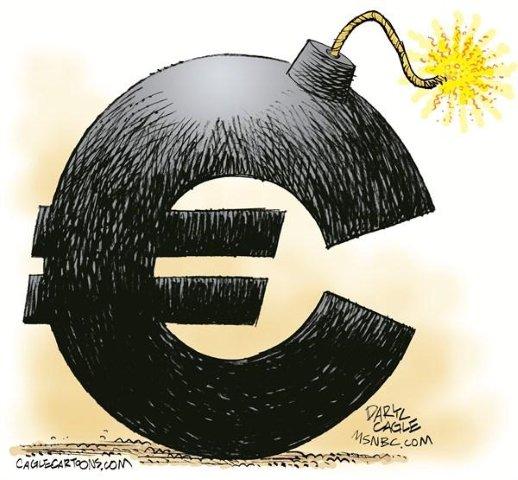
| Posted: 14 Dec 2011 01:15 PM PST The Chinese Communist party concluded their 3 day Central Economic Work Conference (for senior Communist officials). The conclusion is that growth and, equally importantly social stability, (particularly given the impending change of leadership), has replaced inflation as the main policy objective. Not going to be as easy as last time. The Economic Conference repeated that measures to curb property prices would continue. I continue to be very bearish – indeed, increasingly so, if that is possible. I just cant see what good options they have. China will impose duties (up to 21.5%) on US car imports in response to alleged damages to their car industry from US “dumping and subsidies”, according to the Chinese. Dangerous stuff as China has an trade surplus with the US. The import duties will also impact cars (SUV’s in particular) manufactured by BMW and Mercedes Benz (though only at a 2.0% rate) made in the US – another dangerous move, given that Europe is China largest trading partner. Is this the beginning of a trade war – if it is, the loser will be China; Russia’s inclusion in the WTO is imminent. They have agreed to play by the rules of international trade – presumably in the same way as the Chinese have !!!. Much talk about the UK being isolated at last weeks EU Summit. In reality this was a convenient smokescreen for the failure of the talks. The FT reports that 4 non Euro Zone countries have warned that they want to review the precise legal text of the proposed bilateral agreements, before they decide as to whether they will sign up to it. This is not surprising – the cobbled together “fiscal compact” has more holes than a Swiss cheese. Its legality and enforceability must be highly questionable. Expect further downside risk as more bad news emerges; Euro Zone October industrial output declined by -0.1% MoM, or +1.3% YoY, weaker than forecasts of flat and +2.1% respectively. Can’t see anything but lower numbers in the future; Following up from Sarkozy previous comments re France’s impending loss of its AAA status (reiterated by the French Foreign Minister, Mr Juppe who stated that such an event would “not be cataclysmic”), Mr Jens Weidmann allegedly reported that Germany losing its AAA rating “would not be the end of the world”. I say allegedly, as I got this from sources I have not worked with before and can’t find confirmation – however, given recent comments by ratings agencies, the loss by Germany of its AAA rating (and therefore most, if not all, the other AAA rated Euro Zone countries) is quite likely and therefore I have decided to report it. The loss of AAA rating for Germany and other Euro Zone countries is curtains for the EFSF and, most likely, the ESM. The Japanese, US and Canda have all stated that they are unlikely to provide additional funds for the IMF. As the Bundesbank’s commitment to provide funding to the IMF is conditional on other countries (including Japan and the US contributing) doing so, according to Mr Weidmann (soon to be nicknamed “Weirdman”), presumably the Bundesbank’s conditional commitment is no longer valid. As a result, the E200bn of alleged funds to be provided to the IMF by EU countries is TOAST; Implications for the Euro – well, my forecast is US$1.20 as you know – may well be optimistic, particularly if the current German/ECB policy remains unchanged; The IMF seems to be warning that a “voluntary” private sector participation in the proposed 50% haircut of Greek Sovereign debt may not succeed and that coercive methods may be necessary – that will trigger CDS’s, surely. Essentially, the IMF cannot lend (in accordance with its Exceptional Access Criteria) unless Greek debt levels are “sustainable” and without creditors accepting the proposed 50% haircut, they are not, according to the IMF (source FT); US import prices rose by +0.9% MoM or 9.9% YoY, mainly due to higher Oil prices. Export prices were stable; A number of US commentators allege that a crisis in the Euro Zone will not have a material impact on the US. If anyone believes that, well……Just read Bernanke’s recent comments; Gold continues to tank. As you know, I really don’t understand the attractions of Gold and/or play it. However, surely the theory that it acts as an insurance policy is a myth, given its collapse; OPEC agreed to keep Oil production at 30mn bpd for 2012 – broadly the same as at present. There were fears that they would cut production. Summary European markets closed at their lows of the day – the CAC was one of the worst performers, given rumours (denied) that it would lose its AAA rating. The Euro continues to decline – currently US$1.2982. Amazingly, Sterling is holding up. Gold continues to tank (currently US$1573 - US markets are over 1.0% lower and looking fragile, in spite of better economic news recently – they closed just off their lows. Last weeks Euro Zone “fiscal compact” is coming unstuck fast. There is now a serious threat of a disorderly decline in financial markets, though I accept that volumes are low. I had thought that the Euro Zone would get their act together last week, though this was clearly not the case. I am convinced that Merkel understands the seriousness of the situation, though she still plays to her domestic audience without due consideration to the global implications. Very, very dangerous stuff as she will find out soon enough, particularly in respect of the German banking sector. I would not be surprised if the cost of German CDS’s rise and, in addition, Germany finds it more difficult to sell bunds, once again. The ultimate cost of a solution just increases day by day. |
| Posted: 14 Dec 2011 12:30 PM PST Click to enlarge: |
| France losing its AAA? Market says long overdue Posted: 14 Dec 2011 11:45 AM PST While France faces the prospect of losing its AAA credit rating, likely from S&P first, the CDS market has already marked down its view of France’s creditworthiness. The cost of insuring French debt is more expensive than the following countries and I include their S&P FX credit rating: Brazil (BBB), Chile (A+), China (A+), Columbia (BBB-), Czech Republic (A+), Indonesia (BB+), Japan (AA-), Malaysia (A-), Mexico (BBB), New Zealand (AA), Panama (BBB-), Peru (BBB-), Philippines (BB+), South Africa (A-), South Korea (A) and Thailand (BBB+). |
| France losing its AAA? Market says long overdue Posted: 14 Dec 2011 11:36 AM PST While France faces the prospect of losing its AAA credit rating, likely from S&P first, the CDS market has already marked down its view of France’s creditworthiness. The cost of insuring French debt is more expensive than the following countries and I include their S&P FX credit rating: Brazil (BBB), Chile (A+), China (A+), Columbia (BBB-), Czech Republic (A+), Indonesia (BB+), Japan (AA-), Malaysia (A-), Mexico (BBB), New Zealand (AA), Panama (BBB-), Peru (BBB-), Philippines (BB+), South Africa (A-), South Korea (A) and Thailand (BBB+). |
| FBI Estimates 80% of Mortgage Fraud Involved Industry Insiders Posted: 14 Dec 2011 11:30 AM PST Fraud By The Big Banks – More Than Anything Done By The Little Guy – Caused The Financial CrisisThe U.S. Treasury's Office of Thrift Supervision noted last year (page 7):
This confirms what one of the country's top fraud experts has said for years: that it was fraud by the big banks – more than anything done by the little guy – which caused the financial crisis:
But instead of prosecuting fraud, the government just continues to cover it up. |
| Posted: 14 Dec 2011 11:05 AM PST The second installment of our holiday ideas was posted last night: More Holiday Shopping Ideas!. The good news is the Breville 800JEXL is back to the sale price; the bad news is the Florilegium Imperiale seems to be sold out. Everyone seems to like these; I have a few more lists in the works . . . |
| Capturing video at the speed of light Posted: 14 Dec 2011 11:00 AM PST MIT Media Lab researchers have created a new imaging system that can acquire visual data at a rate of one trillion frames per second. That’s fast enough to produce a slow-motion video of light traveling through objects. Read more: http://web.mit.edu/newsoffice/2011/trillion-fps-camera-1213.html Project website: http://www.media.mit.edu/~raskar/trillionfps/ |
| Gold’s Drop With Stocks Points to Deflation Posted: 14 Dec 2011 10:00 AM PST Gold futures have fallen 5% this month, tracking a stock selloff and losing their safe-haven allure. MarketWatch columnist Mark Hulbert talks about what the metal’s drop says about investor pessimism. Laura Mandaro reports.
|
| US Housing Prices Mirror Japan’s Experience Posted: 14 Dec 2011 09:00 AM PST Click to enlarge: > If you want to understand the entire set of US economic problems, this is the chart I would point you to. The US residential housing market is tracking the Japanese experience, but shifted 15 years. Japan had their boom peak in 1989 — equities and real estate — and suffered for decades afterwards. The US saw a peak in 1999 (income, employment), 2000 (stock market), 2006 (housing) and 2007 (not tech stocks ). We are now a mere decade into the recovery from its credit crisis. Where the US seems to have differed from Japan was in the willingness to blow a series of ever larger bubbles following the dot com and tech collapse. This chart does not bode well for the US economy — real estate, employment, retail sales, and more — over the next years . . . > Source: |


| You are subscribed to email updates from The Big Picture To stop receiving these emails, you may unsubscribe now. | Email delivery powered by Google |
| Google Inc., 20 West Kinzie, Chicago IL USA 60610 | |



0 comments:
Post a Comment