


The Big Picture |

- Media Appearance: Bloomberg Rewind 8pm
- 10 Tuesday PM Reads
- Firing Line with William F. Buckley Jr. “How Does It Look for the Dollar?”
- Preference for Capital Gains over Dividends Reveal Investor Psychology
- Fotoshop by Adobé
- 3 yr auction has best b/c since at least 1993
- The Love Trapezoid
- 401(k) Investors Pursue Greater Balance After Bear Markets
- Tuesday AM Reads
- TDS: Indecision 2012 – Extremely Loud & Incredibly Wealthy
| Media Appearance: Bloomberg Rewind 8pm Posted: 10 Jan 2012 04:00 PM PST
Tonight I will be co-hosting Bloomberg TV’s Rewind with Matt Miller. (Rewind airs at 8pm on Bloomberg TV, 10pm on Sirius/XM Channel 113, or live streaming). What I like about Rewind is the long-form conversation — its not thoughtful and in depth, not focused on the next 15 seconds. I’ve done TV with Matt Miller — he is an easy host to talk with. On the list of items for discussion tonight:
Between the later hour and the Sirius/XM rebroadcast, I expect this might be a different audience for this show than the folks who know me. Should be fun – |
| Posted: 10 Jan 2012 01:30 PM PST The afternoon train reading:
What are you reading? Source: Gaping Void |
| Firing Line with William F. Buckley Jr. “How Does It Look for the Dollar?” Posted: 10 Jan 2012 12:00 PM PST Source: |
| Preference for Capital Gains over Dividends Reveal Investor Psychology Posted: 10 Jan 2012 11:45 AM PST
> The chart comes to us from Michael Gayed of Pension Partners, who points out that investors preferences for dividend versus the broader index is revealing of investor psychology: “We all know that markets continuously go through ever-changing cycles of fear and greed, defense and offense right? Much like a pendulum, investor sentiment swings and goes through cycles as well. The above chart shows the price ratio relationship of the S&P 500 Dividend ETF (SDY) relative to the S&P 500 itself. A rising price ratio means that dividend stocks (SDY) are outperforming capital appreciation stocks (SPY). Notice outperformance means being either up more, or down less. What do you guys notice here, particularly as it relates to the 0.43ish level over the past three years? Notice early 2009 (bull market following March low), late 2010 (start of QE2 equity rally), and where we are now. Is the pendulum finally swinging away from dividends and back to favoring capital appreciation? Does this suggest the bull market may indeed be real this time despite continued concerns over Europe? Remember – price is truth. What you and I think does not matter. The only thing that matter is what the person we’re selling to thinks After all, that’s what sets price.” ~~~ Michael A. Gayed, CFA is Chief Investment Strategist at Pension Partners, where he structures portfolios. Prior to this role, Michael served as a Portfolio Manager for a large international investment group, trading long/short investment ideas in an effort to capture excess returns. In 2007, he launched his own long/short hedge fund, using various trading strategies focused on taking advantage of stock market anomalies. Michael earned his B.S. from New York University, and is a CFA Charterholder. |
| Posted: 10 Jan 2012 11:32 AM PST My wife, who teaches fashion illustration and design, will get a huge kick out of this: >
Fotoshop by Adobé from Jesse Rosten on Vimeo. |
| 3 yr auction has best b/c since at least 1993 Posted: 10 Jan 2012 10:43 AM PST An interest coupon of a pathetic .37% was no deterrent as the US Treasury sold 3 yr notes with the best bid to cover since at least 1993. The yield though was in line with the when issued and direct and indirect bidders took the least amount since April with dealers owning the rest. This follows the 6 month bill auction in Germany yesterday where creditors will PAY to lend. With this insatiable demand for punk yields and safety, it still says a lot about market fears with economic growth combined with the belief that central banks will continue to do everything they can to price fix lower the level of interest rates as a result. |
| Posted: 10 Jan 2012 10:30 AM PST The Love Trapezoid ~~~ If you can take your eyes off the primary election coverage, watch Geithner. The US is engaged in a love trapezoid. The four corners are Beijing, Teheran, Tokyo, and Washington. Treasury Secretary Geithner is the Obama Administration's front person. Track the news for the names of the other agents. This is a very serious time. The pieces are linked. Some bullets as you watch the news flow. 1. The US faces the pressure of follow-through on Iran sanctions. Iran is an exporter of oil to Asia. Japan is dependent on imported oil. China is not self-sufficient. One part of this trapezoidal geometry is about oil. 2. Iran is feeling the heat from sanctions. The US wants to tighten them. It cannot do so without help from Asian "friends." 3. China and Japan are each buyers of US Treasury securities. They each help finance the American fiscal deficit and the ongoing current-account deficits. They each want to diversify their reserves. They are not sellers, but they are reluctant additional buyers. This is truer for China than for Japan, but it is true in both cases. 4. China is glacially proceeding toward world reserve-currency status. It gradually allows its currency to strengthen against the dollar. It follows a policy that is fully rational for the Beijing oligarchs. It shrugs off political threats from Washington politicians (Schumer, Graham) who love to bash China while talking to their American constituents. China understands our political processes and our weaknesses. However, China also understands "realpolitik" and uses it. They learned US use of realpolitik from Nixon and Kissinger. Expect them to smile publicly but put some very intense private heat on Geithner. 5. Japan faces enormous economic pressure and sees the yen strength as now threatening. In order to weaken the yen, it must acquire other currency holdings in large quantity. (See the Cumberland website, www.cumber.com, for G4 central bank charts, and flip to those on the Bank of Japan. You will be able to observe how Japan expanded its balance sheet several years ago and subsequently contracted it. We expect them to expand it in 2012 as they seek to arrest yen strength.) 6. Japan is negotiating with China so that it may acquire reserve debt instruments denominated in Chinese currency. Beijing likes this because it is a step toward achieving world reserve-currency status. Geithner now worries, because the trend points toward a gradual and long-term weakening of the US position, as the world's second (China) and third (Japan) largest economies maneuver their global positions. 7. Our Asian friends know that the US election cycle creates maximum vulnerability for the United States. That also makes circumstances more dangerous and raises risk profiles. Europe is of no help to us, given its internal crises. We recall that a three-legged stool is a stable form. A four-legged stool is less stable. A four-legged stool with a trapezoidal top is least stable. Especially when one of the legs is Iran. Watch Geithner in Asia and the news flow. Read between the lines, since the public statements will all be scripted and self-serving. Risk is high. Also, stay overweight energy. We are. ~~~ David R. Kotok, Chairman and Chief Investment Officer |
| 401(k) Investors Pursue Greater Balance After Bear Markets Posted: 10 Jan 2012 08:30 AM PST Click to enlarge: Gee, why is it that 401(k) investors would pursue greater balance in their portfolios after bear markets? After a decade marked by two severe bear markets, 401(k) plan participants have adopted a more balanced approach to their portfolios, according to a report released today by the Investment Company Institute (ICI) and the Employee Benefit Research Institute (EBRI). Fears that younger participants in 401(k) plans would abandon stock investing are not borne out by the date, which suggest that greater use o target-date funds is helping workers keep their investing on track. The shares of 401(k) participants who had either no equities at all or high concentrations of equities were lower in 2010 than in 2000 for almost every age group, according to the EBRI/ICI report, 401(k) Plan Asset Allocation, Account Balances, and Loan Activity in 2010. Among all 401(k) plan participants in 2000, 12.7 percent held no equity investments (either in equity funds, the equity portion of balanced funds, or company stock), while 54.1 percent had more than 80 percent of their plan accounts allocated to equities. In the current study’s sample of more than 23 million participants, 401(k) participants had moderated their account allocations to equities: 11.8 percent of account holders had no allocation to stocks, while the share of participants with more than 80 percent of their balances invested in stocks dropped to 40.0 percent. |
| Posted: 10 Jan 2012 06:45 AM PST My morning reads:
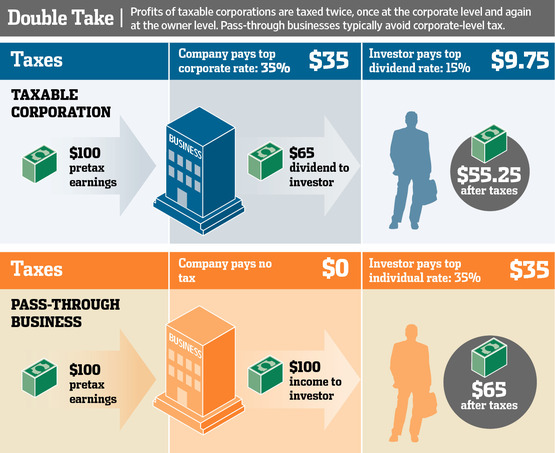
What are you reading? More Firms Enjoy Tax-Free Status
Source: WSJ |
| TDS: Indecision 2012 – Extremely Loud & Incredibly Wealthy Posted: 10 Jan 2012 06:41 AM PST There is no place for the politics of class resentment in the Republican party — except when it comes to Mitt Romney. |



| You are subscribed to email updates from The Big Picture To stop receiving these emails, you may unsubscribe now. | Email delivery powered by Google |
| Google Inc., 20 West Kinzie, Chicago IL USA 60610 | |



0 comments:
Post a Comment