


The Big Picture |

- McCain: Supreme Court ‘uniformed, arrogant, naive’ Citizens United
- The Widespread Economic Myths Destroying the Economy
- 10 Monday PM Reads
- The Top 5 RMBS Cases to Watch this Summer
- Data Never Sleeps
- Dark Money in Politics
- Are U.S. Debt Levels Now Manageable?
- Home builder survey hangs at best in 5 yrs but…
- Deconstructing the Eurozone
- AWESOME: Logitech Ultrathin iPad Keyboard
| McCain: Supreme Court ‘uniformed, arrogant, naive’ Citizens United Posted: 19 Jun 2012 01:00 AM PDT |
| The Widespread Economic Myths Destroying the Economy Posted: 18 Jun 2012 10:30 PM PDT The Biggest Myth Preventing an Economic Recovery
There are many widespread myths preventing an economic recovery, including the following myths:
Obama's belief that unemployment is good for the economy, and Greenspan's belief that too little debt is bad for the country are also ridiculous. But the most dangerous myth – because a lot of economic policy is based upon it, and because so few know that it is false – is the myth about how banks make loans. The Myth that Private Debt Doesn't MatterBefore we can address the myth about how banks make loans – and as a way to understand the deadly effect of that misconception, we need to talk about debt. As economics professor Steve Keen documents in his must-read book, Debunking Economics: The Naked Emperor Dethroned, mainstream economists – from both the left and the right – don't even take debt into consideration in their models of what makes for healthy economies. As Keen noted in September:
In other words, most economists think that debt – and our money system – don't matter. (Don't freak out … this essay does not argue for ruthless austerity for Mom and Pop on Main Street. Virtually all of the economists we quote stress that the bondholders bad debt must be written down. And this post also focuses on private – rather than public – debt.) For example, The economists who have the most influence over government policy – such as Ben Bernanke and Paul Krugman – think that the amount of private debt is totally irrelevant to the health of the economy:
Specifically, Bernanke and Krugman assume that huge levels of household debt don't hurt the economy because more debt among households just means that savers have loaned them money … i.e. that it is a net wash to the economy. To make this assumption, they rely on the myth that banks can only loan as much money out as they have in deposits. In other words, they assume that if bank customer John Doe has $100 in the bank, then the bank can loan that $100 to someone else. But as Keen notes, banks actually loan out money whether or not they have enough in deposits … and then borrow the shortfall from the Fed or other sources. Keen therefore says that it is not a wash … and that high levels of private debt are the cause of the current economic crisis. I wrote to L. Randall Wray to get his view on who is right. Wray is a professor of economics and research director of the Center for Full Employment and Price Stability at the University of Missouri–Kansas City. Wray is one of the country's top experts on money creation.
Wray is the author of Money and Credit in Capitalist Economies, 1990, and Understanding Modern Money: The Key to Full Employment and Price Stability, 1998. He is also coeditor of, and a contributor to, Money, Financial Instability, and Stabilization Policy, 2006, and Keynes for the 21st Century: The Continuing Relevance of The General Theory, 2008. I asked Wray:
Wray responded:
Indeed, economics professor and money expert Fullwiler says that Krugman should wear a flashing neon sign saying "I don't know what I'm talking about", and explains:
Economics professor Michael Hudson also slams Krugman for having a blindspot on debt:
Banks DO, In Fact, Create Money Out of Thin AirIf you're still not convinced that banks create money out of thin air, without regard to whether or not they have deposits on hand, please note that the Fed has said as much. For example, a 1960s Chicago Federal Reserve Bank booklet entitled "Modern Money Mechanics" said:
Under the current fractional reserve banking system, banks can loan out many times reserves. But even that system is being turned into a virtually infinite printing press for banks. Germany's central bank – the Deutsche Bundesbank (German for German Federal Bank) – has also admitted in writing that banks create credit out of thin air. And there's an overwhelming amount of additional proof:
I've also noted:
Moreover, although it is counter-intuitive, virtually all money is actually created as debt. For example, in a hearing held on September 30, 1941 in the House Committee on Banking and Currency, then-Chairman of the Federal Reserve (Mariner S. Eccles) said:
And Robert H. Hemphill, Credit Manager of the Federal Reserve Bank of Atlanta, said:
Indeed, even Paul Krugman admits that "banks can create inside money". Inside money is "debt that is used as money". Why Is The Myth About Banks So Dangerous?Even if banks don't really loan based on their deposits and reserves, who cares? Why is this such a dangerous myth? Because, if banks don't make loans based on available deposits or reserves, that means:
Indeed, the big banks do very little traditional banking. Most of their business is from financial speculation. For example, less than 10% of Bank of America's assets come from traditional banking deposits. Time Magazine gave some historical perspective in 1993:
So we the government has been barking up the wrong tree by propping up the big banks. Moreover, as discussed above, the fact that banks can create money means that the level of private debt does matter … and economists like Bernanke and Krugman who encourage massive levels of private debt are hurting the economy. As professor Keen explains:
In 2008, the Bank for International Settlements (BIS) – often described as the central bank for central banks – said that failing to force companies to write off bad debts "will only make things worse". Indeed, Bernanke, Krugman and other mainstream economists from the left and the right who encourage more private debt are only creating a debt trap … where people take on new debt to try to pay for the old debt, and end up in a worse situation than they started:
 |
| Posted: 18 Jun 2012 01:30 PM PDT My afternoon train reading:
What are you reading?
Unbalanced skill levels could make the world more unequal |
| The Top 5 RMBS Cases to Watch this Summer Posted: 18 Jun 2012 12:30 PM PDT All this week, we will be looking at Isaac Gradman’s Top 5 RMBS Cases to watch this Summer (author bio at bottom). Today, we start with No. 5 – Syncora v. EMC ~~~ As summer approaches and the weather turns warmer, RMBS litigation is also heating up, generating long-awaited precedent that will dictate how mortgage losses are likely to be allocated by the courts. In order to keep my readers apprised on what to watch for over the next three months in the key mortgage derivative lawsuits, I am launching a series called the Top 5 RMBS Cases to Watch this Summer. Starting today, and continuing over the next week, I will be analyzing the latest developments in one bellwether case per day in the world of RMBS litigation. I will conclude the series with an article on possible end game scenarios, so that we can begin to understand how the subprime crisis will finally shake out, and what it will mean for the future of mortgage finance. So, without further ado, I present case number 5 in the Top 5 RMBS Cases to Watch this Summer. Case No. 5 – Syncora v. EMC Though patience is ordinarily a virtue, it's a prerequisite in the world of residential mortgage backed securities (RMBS) litigation. That's because progress in complex litigation always takes longer than anyone expects. Take the lawsuit by bond insurer Syncora against mortgage lender EMC Mortgage (formerly a subsidiary of Bear Stearns that's now wholly owned by JP Morgan Chase) as a prime example. On December 19, 2011, Syncora v. EMC, Case No. 09-cv-3106 (S.D.N.Y. 2009) became the focus of significant attention when Reuters blogger Alison Frankel wrote that a partial summary judgment decision on the issue of loss causation was "imminent" and anticipated that we'd have a ruling in the case "before the end of this week." Sitting here nearly six months later, we are still awaiting that decision. Of course, this isn't Ms. Frankel's fault – she provides some of the best and most timely coverage of RMBS litigation in the business. Ms. Frankel was relying on statements made by His Honor himself, when Judge Paul Crotty announced at a hearing on October 12, 2011 that, "I think it would be in everybody's interest to get a decision [on summary judgment] before we break for the holidays. That's what I'll try to do." (October 12 Transcript at 24:22-24) Apparently, progress takes longer in complex litigation than even judges expect.
The good news is that we can finally see the light at the end of the tunnel. A hearing on the summary judgment motion has been set for this Wednesday, June 13, 2012. With the motion fully briefed and oral argument complete, Judge Crotty certainly should be able to hand down a decision by the end of the summer. In fact, given the delay we've already seen and the importance of this decision to the case and the broader litigation landscape, I would expect the decision to come down by mid-July – but don't hold me to it. Judges work on their own schedules, and the demands of their dockets may force things to the back burner for far longer than we (or they) would like. Whenever the decision comes down, there's good reason to believe that Syncora's patience will be rewarded. Judging by Crotty's previous decision on summary judgment, which I analyzed here, Hizzoner is none too pleased with EMC's interpretation of its contractual responsibilities or conduct thus far in living up to those responsibilities. Having previously declined to limit Syncora's relief to the put-back remedy (which he famously described as being designed for "onesies and twosies") and having authorized Syncora to use statistical sampling to prove its claims, I anticipate that Crotty will be similarly disinclined to limit Syncora's access to the put-back remedy by adopting a narrow definition of materiality. I've discussed at length how important the definition of materiality/loss causation will be to the ease of proof in put-back litigation. No single issue would cause a bigger swing in the pendulum of losses from investors to banks than a ruling that put-backs do not require a showing that the identified breach of reps and warranties actually caused the loan to go into default. Since Judge Eileen Bransten punted on that issue in her partial summary judgment ruling another major monoline suit – MBIA v. Countrywide – Crotty could be the first to rule definitively on whether this is a viable defense. If he goes the way I expect he will (and the way he should, given the strength of the arguments on each side) and rules that a breach must merely have a material impact on the riskiness of the loan rather than actually cause the borrower to stop making payments, it will provide clarity on the scope of repurchase liabilities and facilitate significantly larger recoveries for the monolines and RMBS investors. It would also undermine the assumptions made by Bank of New York Mellon in settling Countrywide put-back claims for pennies on the dollar (tune in later this week to see if BNYM's Article 77 proceeding makes the Top 5 list).
~~~ Isaac Gradman is one of the nation's leading experts on mortgage backed securities litigation. He is the author The Subprime Shakeout mortgage litigation blog, and the editor of the newly released book, "Way Too Big to Fail: How Government and Private Industry Can Build a Fail-Safe Mortgage System," by Bill Frey. Follow him on Twitter @isaacgradman |
| Posted: 18 Jun 2012 11:30 AM PDT
|
| Posted: 18 Jun 2012 10:00 AM PDT Full Show: Dark Money in Politics
BILL MOYERS: This week on Moyers & Company… THOMAS FRANK: We have just come through this sort of extraordinary real world demonstration of the folly of our financial system, of all the stuff that we’ve been doing, the deregulation of the last 30 years, the setup of the Federal Reserve system, however you want to put it, it has all failed us. BILL MOYERS: And… MONIKA BAUERLEIN: You no longer really have one person, one vote. You have one person, one vote, one million dollars. CLARA JEFFERY: So essentially you can create the regulatory landscape that you want if you can, essentially, buy elections. BILL MOYERS: Welcome. If you're visiting a candidate this summer and looking for a thoughtful house gift, might we suggest a nice super PAC? Thanks to the Supreme Court and Citizens United, they're all the rage among the mega-wealthy. All it takes is a little paperwork and a wad of cash and presto, you can have, as “The Washington Post” describes it, a "highly customized, highly personalized" political action committee. It's easy –super PACs come in all amounts and affiliations. You don't have to spend millions, although a gift that size certainly won't be turned aside. Cable TV tycoon Marc Nathanson got a super PAC for his friend, longtime Democratic Congressman Howard Berman from California, and all it cost was $100,000. Down in North Carolina, Republican congressional candidate George Holding received a handsome super PAC that includes $100,000 each from an aunt and uncle and a quarter of a million from a bunch of his cousins. Yes, nothing says family like a great big, homemade batch of campaign contributions. GEORGE HOLDING: 2012 is the most important election we're ever going to have. BILL MOYERS: You can start a super PAC on your own or contribute to one that already exists. Super PACs are available for every kind of race – presidential, congressional or statewide. But there are other ways you can help buy an election. Look at the Wisconsin recall campaign of Republican Governor Scott Walker. At least fourteen billionaires rushed to Walker's side. He outraised his Democratic opponent by nearly eight to one. Most of his money came from out of state. More than sixty million dollars were spent, and $45 million of it for Walker alone. Here are just a few of the satisfied buyers: Wisconsin billionaire Diane Hendricks contributed more than half a million dollars on Scott Walker's behalf. Fearful the United States might become "a socialistic ideological nation," she's an ardent foe of unions – and against, in her words, "taxing job creators." True to her aversion to taxes, she paid none in 2010, despite being worth, according to “Forbes Magazine,” about $2.8 billion dollars. Before he launched his crusade against the collective bargaining rights of working people, Governor Walker held this conversation with Diane Hendricks. DIANE HENDRICKS: Any chance we'll ever get to be a completely red state, and work on these Unions? SCOTT WALKER: Oh yeah. DIANE HENDRICKS: And become a right-to-work? What can we do to help you? SCOTT WALKER: Well, we`re going to start in a couple weeks with our budget adjustment bill. The first step is we`re going to deal with collective bargaining for all public employee unions, because you use divide and conquer. BILL MOYERS: And so he did. Walker also hauled in checks from the Texas oligarch Bob Perry for nearly half a million. Perry made his fortune in the home building business and is best known nationally for contributing four and a half million dollars to the Swift Boat campaign that smeared the Vietnam War record of Democratic presidential candidate John Kerry back in 2004. Then there's casino king Sheldon Adelson, who gave Scott Walker's cause $250,000. Of course, that's a drop in the old champagne bucket compared to the $21 million Adelson's family gave to the super PAC that kept Newt Gingrich in the race long after the formaldehyde had been ordered. Adelson did not long mourn Gingrich's passing, and is now giving as much as $10 million to the pro-Romney super PAC Restore Our Future. Next up on Scott Walker's list of beneficent plutocrats: Rich DeVos, owner of the Orlando Magic basketball team and co-founder of the home products giant Amway, which, thanks to Republican leaders in Congress, once shared in a $19 million tax break after a million-dollar DeVos contribution to the Republican Party. He's a long-time member of the secretive Council for National Policy, a who's who of right-wing luminaries. And Louis Moore Bacon, the billionaire founder of the hedge fund Moore Capital – which in 2010 was fined $25 million for attempted commodities manipulation. A big backer of Romney, he, too came to Walker's aid in Wisconsin. I could go on and name more, but you get the picture. These are the people who are helping to fund what the journalist Joe Hagan describes as a "tsunami of slime." FEMALE: Newt Gingrich: too much baggage. BILL MOYERS: Even as they are afforded respectability in the value-free world of plutocracy, they can hide the fingerprints they leave on the bleeding corpse of democracy. And that's how the wealthy one percent does its dirty business. They want to own this election. So if there are any of you left out there with millions to burn, better buy your candidate now, while supplies last. This is no time to mince words and thank goodness, Thomas Frank never does so. In a recent essay in Harper's Magazine — "It's a rich man's world" — he wrote: "Over the course of the past few decades, the power of concentrated money has subverted the professions, destroyed small investors, wrecked the regulatory state, corrupted legislators en masse, and repeatedly put the economy through the wringer. Now it has come for our democracy itself." Strong stuff, and typical of Thomas Frank, the historian and journalist. His book, What's the Matter with Kansas? was a best seller about how we so willingly allow money and ideology to subvert government, against our own self-interest. Now, we have his latest — Pity the Billionaire, in which the worst economy since the l930s has led to a revival of power for the very people who brought it about. Thomas Frank, welcome. THOMAS FRANK: It’s my pleasure to be here. BILL MOYERS: This week Jamie Dimon, CEO of JPMorgan Chase testified before the Senate Banking Committee on how his bank got it wrong on risk management. What would you think if I told you that seven members of the Senate Banking Committee have been big recipients of money from JPMorgan Chase? THOMAS FRANK: I would not be surprised, not in the least. That’s obviously where JPMorgan would be spending its lobbying dollar would be on the, you know, giving to the campaigns of the people on that committee. That’s the wisest strategic choice for them. BILL MOYERS: And get this. The bank has been the second largest contributor to Senator Tim Johnson, Democrat, the chairman of the committee. THOMAS FRANK: And I got news for you. They also, I mean, you know this already, they also were one of the biggest donors, or their, I should say their employees, to President Obama’s campaign in 2008 and also to, I believe, to John McCain’s campaign in 2008. This is the nature of what they do. They spread their spread the wealth around, you know. BILL MOYERS: And there’s more. One of Senator Johnson’s former staffers is now one of JPMorgan’s chief lobbyists. And the chairman’s present top assistant used to be a lobbyist for a law firm that worked for JPMorgan. I mean, this wasn’t a hearing. This was a reunion of the Gambino family. THOMAS FRANK: Well, look, this is what we call in Washington the revolving door, okay. And this, if your viewers haven’t heard of this they need to learn about it right away because this is how Washington D.C. works is that people go back and forth from, typically from Capitol Hill staffs to working for lobby firms or directly for these, you know, the clients of the lobby firms that have to do with the interests that they used to work on when they were on Capitol Hill. And then they go back and lobby to their former boss, right, and convince him or her to vote one way or the other. And that’s how you get ahead in lobbying is you start out working for someone on Capitol Hill, a powerful senator on a given committee. And then you go and essentially sell that expertise, sell that, you know, the fact that your friends with that guy to, you know, to a lobbying firm or to a bank or to whoever. That’s totally how it works. BILL MOYERS: It’s an interlocking cartel and it’s serious business. How can we claim to have a representative government when they really are representing the people who bought the campaigns and not the voters who voted for them? It’s a serious question. THOMAS FRANK: Well, there are people who, I’m going to get cynical on you here, Bill. There are people who believe that the more money we have in politics the closer we become to a democracy. They think it’s better for there to be more money in politics. Why do they think that? Because they think that the market is a democracy, that markets are democracy and that government is, when government interferes in the economy it’s illegitimate by definition. And so the more money we get in there the more it allows entities like JPMorgan to defend themselves against the sort of, you know, the heavy-handed meddling of some, you know, Washington bureaucrat. BILL MOYERS: But what does it say when members of the Senate Banking Committee have received $13 million over the last few years from the financial services industry? And these are the guys who are supposed to protect the common folks out there from the predatory lenders. I mean, what happened? THOMAS FRANK: They haven’t done a very good job, have they? BILL MOYERS: That's the answer. THOMAS FRANK: They’ve done exactly the opposite. I mean, you can look over their record over the last 20 years, all the amazing ways in which they deregulated the financial industry, I mean, this is the story of our time. And they deregulated this aspect, the other aspect, everything, you know, overturned the Glass-Steagall rules, you know, that’s the biggest example. But my favorite one, actually this wasn’t the Senate that did this, this was the Bush administration. A lot of states have laws against predatory lending and were enforcing those laws. And this would have stopped the housing bubble in its tracks, you know, the no-doc loans and this kind of nonsense that was going on. The Bush administration preempted those laws, the state level laws and said, “No, no, predatory lending is now only going to be enforced at the federal level and here’s how we’re going to enforce it: By doing nothing.” BILL MOYERS: There's also a report out this week from Senator Bernie Sanders, the independent Senator from Vermont. Would you believe according to his figures that 18 former and current directors from Federal Reserve Banks, including Jamie Dimon, directly benefited from the financial bailouts after the 2008 crisis? THOMAS FRANK: That’s not a surprise. It’s cronyism in this kind of extreme otherworldly dimension. When the bailouts happened and when all of this stuff was on the front pages, it was the kind of moment that really shakes the faith of an entire nation. It was so disturbing. Well, first the financial crisis was disturbing, the failure of Lehman Brothers, Merrill Lynch going down, Chrysler and GM declaring bankruptcy. One after another on the headline of the newspaper, it was the pillars of middle class life crumbling around us. And it was astonishing, okay. And then the second chapter, the bailouts, with this enormous price tag where these guys on Wall Street, the bankers just whistled up the resources of the public Treasury for their own benefit, you know. And the country could have gone in any of several different directions. Now, I was looking at this from the perspective of the 1930s. BILL MOYERS: When the collapse of the economy brought out a large social protest and– THOMAS FRANK: Exactly, there were even– BILL MOYERS: — and a demand– THOMAS FRANK: There were bailouts then in the ’30s. The Hoover administration did massive bailouts of the banks. And it was exactly the same thing. It was rampant cronyism. I’ll tell you a story. So the head of Hoover’s bailout agency, it was called the Reconstruction Finance Corporation. The guy that Hoover put in charge of it had been Calvin Coolidge’s vice president, you know, this is cronyism already, right? At one point the guy quits his job as head of the bailout agency and goes back to his bank in Chicago. Couple months later he comes to the Reconstruction Finance Corporation which he had just, a few weeks before, been the head of and says, “Oh, I need a bailout,” and they give him one. And the country is, like, outraged, right? Because ordinary people have lost their jobs, unemployment is at 30 percent, whatever it is. It’s catastrophe and this guy who, you know, politically connected is getting a bailout. And the country reacted though not with Tea Party movement, not with, you know, people demanding more deregulation. It reacted by electing Franklin Roosevelt and it reacted with an enormous labor movement and all the things that we remember from the 1930s. And when I watched this stuff happen, you know, the banks getting their bailouts I thought we’re going to see that happen again, we’re going down the tracks of, you know, very well-worn tracks. We can all see what’s coming. BILL MOYERS: And everybody was saying, “Come on Barack, give us an FDR, right? THOMAS FRANK: That’s right. I thought it was a Roosevelt moment. And he certainly had the public, the kind of public adulation that Franklin Roosevelt had in 2008. Remember those crowds when he was inaugurated, all those people out on the National Mall. He was something like a national savior. People really thought it’s Franklin Roosevelt all over again. Didn’t work out that way. BILL MOYERS: But recently Barack Obama sent his campaign manager, Jim Messina, to New York to assure the financial services industry, Wall Street, that when they heard Barack Obama talk populist rhetoric on the campaign trail he wasn’t going to demonize them. THOMAS FRANK: He wasn’t going to demonize Wall Street? Oh no. This is the amazing thing to me, that we have just come through this sort of extraordinary real world demonstration of the folly of our financial system, of all the stuff that we’ve been doing, the deregulation of the last 30 years, the setup of the Federal Reserve system, however you want to put it, it has all failed us. And we haven’t been able to rise to the challenge and do anything, you know, to fix it in a really structural way like they did in the 1930s. We haven’t done that. And Barack Obama who had that opportunity and had both houses of Congress and had, I mean, the world at his feet in 2008 could have gone in any direction he chose, instead chose to basically follow in the footsteps of the sort of tepid centrist Democrats before him, you know, to do little regulatory things here and there, to use some sort of mean-sounding rhetoric at times, but to not really change anything. And the failure is the Democrats. Democratic Party has by and large not risen to the challenge. I mean, this is not the party of Franklin Roosevelt, it’s not the party of Lyndon Johnson. This is a part that can’t, you know– BILL MOYERS: And Barack Obama for all of his virtues and intelligence is not a man of the people. THOMAS FRANK: No, he’s not. And he also, he’s a man of academia. He’s a man who believes in experts and expertise as we’ve seen in many, many, many, all the different sort of arenas of his presidency whether you’re talking about the war in Afghanistan or whether you’re talking about the financial crisis. This is a man who defers to experts, believes in expertise. He does not have much sympathy for, say the labor movement. He can’t go out there and tell you why, say the regulatory agencies failed. He can’t, it doesn’t make sense to him. He can’t talk about these things that everybody wants to know about. Now, on the other side you’ve got a movement, the conservative movement, a right wing populist movement that talks a very good game, that speaks to people’s anger and that offers them a kind of idealism, a kind of hope that perversely draws on a lot of the rhetoric of the 1930s and models itself after a lot of the movements of the 1930s. And what they offer, this is interesting. What they offer, the dream, the sort of utopia, the vision that they have for the future of our country is pure free markets. And they say this all the time. It’s not me making this up. You go to any Tea Party rally– BILL MOYERS: That’s right. We’ve covered them. You’re exactly right. THOMAS FRANK: –and they talk about this. If we can just get government out of the way and we can reach out, you know, and– BILL MOYERS: But getting government out of the way is what helped bring down the economy– THOMAS FRANK: Of course, but they say the only problem is that government, you know, yes, we deregulated all that stuff, we deregulated all through those years, but we didn’t go far enough. And so you can say to them, “Well, look at the record of George W. Bush, the champion deregulator. Look at all the amazing things that he did to set Wall Street loose to deregulate.” And they’re like, “Well, George W. Bush was not a real conservative.” They say this all the time. It’s very easy for them to, you know, because they’re such purists and such ideologues to excommunicate someone like George W. Bush from their movement and say, “Well, he wasn’t pure enough.” Ten years ago they had little statues of him on their desks, you know. But how he’s thrown out of the movement, “Not pure enough” – BILL MOYERS: That’s their idealism? THOMAS FRANK: — because of the bailouts. BILL MOYERS: Their idealism is their unblinking faith in the free market? THOMAS FRANK: Yes, and this is an idea that when I first started writing about it was something that you only saw from the Jamie Dimons of the world. I called it market populism. It was something that you saw on CNBC in the early days, in the stock market boom of the ’90s. You would see it in, like, personal investment books and I made fun of it. Today it is everywhere. It is epidemic, and it’s not just the high and the mighty that believe this stuff now, that believe that markets are both a natural phenomenon and a democratic phenomenon. This is average people all across America that believe this. BILL MOYERS: But you’re a historian. Why has this happened? THOMAS FRANK: Our anger turned from Wall Street to Washington, and it happened in a very short period of time. If you remember back to 2009 when the bailouts were going on the sort of high point of public anger came when AIG, remember these guys? This is a company that should not exist any longer. These are the people that invented, they didn’t invent the credit default swap, but they sort of took it to its logical extreme. And these guys were not only bailed out, they were handing out bonuses to the executives in the division that had invented the credit default swap and had done all these crazy things. And the public was so angry. This is in March of ’09. I remember the feeling. BILL MOYERS: Yeah, I do to. I was reporting on it. THOMAS FRANK: People were furious. And then all of a sudden the direction changed and it went away from AIG and over to Washington. And we decided that the real villains in all of this was Washington. And– BILL MOYERS: But Tom, why wouldn’t you feel that way if you saw how the banking committee is dominated by money from Wall Street, if you see the revolving door you talked about, if you know that 18 members of the Federal Reserve Board of Directors benefiting from the bailout, if you see the deregulators helping Wall Street despite all this? Why wouldn’t your anger be directed toward Washington? THOMAS FRANK: They certainly deserve a really, really big helping of public anger. And there’s a lot of terms, look, I imagine I’m going to make fun of the Tea Party movement, and that's certainly what Pity the Billionaire is about, but let’s give them some concessions right off the bat. When they talk about crony capitalism they’re right. When they talk about what you just said, all these interconnections between the banks and the legislators, they’re right. When they talk about, they use this term, "the ruling class," that term is totally right on the money. That’s a term that we should be throwing around these days. These– BILL MOYERS: But the ruling class is– THOMAS FRANK: –people are, they are in bed with each other, you know. BILL MOYERS: But the ruling class is funding their movement, the Koch brothers, the– THOMAS FRANK: Exactly, this is the– BILL MOYERS: –big corporations, Wisconsin. THOMAS FRANK: — this is the funny thing that instead of saying, instead of looking at the present situation and saying the regulatory system broke down, we need stricter oversight on these people, we need a political, you know, we need Washington to at least be strong enough and smart enough to supervise these guys and make sure this never happens again which was the response that we had in the 1930s. Their response is, “It’s impossible to regulate these guys.” What we have to strive for instead is some kind of pure free market system, so get government out of the way all together. Stop trying to regulate them. And you see the kind of people who’ve been elected, as a result of this populist anger out there in the country, get in office and immediately go to war against the Securities and Exchange Commission that’s supposed to regulate Wall Street. They want to hammer those guys into the ground. They go after the, what is the new, the only sort of substantial new regulatory agency, the Consumer Financial Protection Bureau, they go after those guys. They’ve tried to de-fund them. You know, they wanted to make sure Elizabeth Warren would not be chairman of it. They’ve gone to war against regulation, against the very idea of government oversight of the financial markets. This is fascinating. How can you react to, you know, three decades of financial deregulation leads to this collapse, this tremendous disaster and our response as a nation has been to say, “Well, we need more of that. We need to deregulate more.” BILL MOYERS: Is one of the reasons money in politics, both of us know there’s nothing new about money in politics in American history. What’s the difference now? THOMAS FRANK: Well, there’s two things. One is the sheer size of it. We’ve really turned it loose. The Citizens United decision, we’re going to see a wave of money like we’ve never seen before. The 2010 midterm elections dwarfed what they call independent expenditures which is expenditures by PACs and super PACs were two times what they were in 2008. So there’s that. The other thing is that we are so blasé about the money. It doesn’t shock us anymore. You know, and there was a time when, you know, John McCain is a Republican, was offended by money in politics. Today, you know, we’ve all sort of made our peace with it. BILL MOYERS: You raised Citizens United. When Justice Anthony Kennedy wrote the majority opinion for the other conservative judges he said flatly quote, “This court now concludes that independent expenditures, including those made by corporations, do not give rise to corruption or the appearance of corruption.” Can anyone, seriously now, can anyone in touch with reality believe that? THOMAS FRANK: I don’t see how you can. To say that that doesn’t give rise to the appearance of corruption when the billionaires are more or less directly, you know, staking these men to run for the presidency and– BILL MOYERS: And when you’ve got the banking committee taking money from JPMorgan whose CEO is testifying? THOMAS FRANK: But even worse when he wrote those words the country was in the throes of this populist outrage at Wall Street because, you know, Wall Street had been able as I said before to get itself a bailout. The connection between private wealth and the, you know, and public power and the force of government had never been more clear. And that’s the moment when he wrote that decision saying, “Well, that is by definition, we hereby decree that that is not corrupt and that it’s not even, it doesn’t even appear to be corrupt.” And yet the country’s politics are being moved by that very perception at that same moment. BILL MOYERS: Someone you know, the writer E.J. Dionne says that the Citizens United decision is part of quote, I’m quoting, “A larger initiative by moneyed conservatives to rig the electoral system against their opponents.” THOMAS FRANK: That's right. BILL MOYERS: You agree with that? THOMAS FRANK: No doubt about it. For a long time the people have been talking about the conservative movement and their effort to develop some kind of permanent lock on power. And I think that Citizens United might be the thing that actually delivers that not because it’s going to give Republicans per se a lock on power or give them a permanent majority or anything like that. You’re still going to have a two party system no matter what happens, but it will tilt our politics in a certain direction. It will draw both parties by a sort of force of gravity in a certain direction. Before you can even, when you put such a price tag on elected office, and this has been going on for years, but today it’s way up there in the hundreds and hundreds and hundreds of millions of dollars to run for the presidency. And who knows how many millions to run for the United States Senate and a couple million to run for the House of Representatives. When you put a price tag like that on political office you automatically rule out lots of people and lots of ideas from the competition. If you have to be able to reach out to the billionaire community and make your case to the billionaire community even before you begin, even before you start running for office, you know, automatically a lot of ideas and a lot of ideas that are very traditional, very American, you know, red, white and blue ideas are automatically off the table. You have to be able to please that class of donors before you even start. BILL MOYERS: So our choices are narrowed to candidates favored by the rich? THOMAS FRANK: The choices have already been made for us instead of, you know, 20 candidates out there, they’ve chosen two candidates who’ve made it through the money primary and that’s who we get to take our pick from. BILL MOYERS: Tom, here’s the dilemma. I know a lot of good citizens who are simply giving up. Two nights ago I was with some old friends out in the Midwest, your part of the country, and one of them looked at me and said, “I don’t know what to do, so I’m just bailing out.” And she was serious. THOMAS FRANK: Look, I have the same problem myself. I also have an answer. I have a solution for it. You want to hear what it is? BILL MOYERS: I do. THOMAS FRANK: We need third parties in this country. And by that I don’t mean another third party supported by billionaires, that centrist, you know, in the sort of Ross Perot manner. I mean parties that represent different opinions on the spectrum in the manner of the populist party in the 1890s which was really the last time we saw a third party movement, you know, that contested the ballot from the bottom all the way to the top, you know, and they were a real political party. Unfortunately the techniques that the populists used are against the law in most states. If we were to repeal those laws you might have a vibrant third party scene again. BILL MOYERS: But the two parties, the Republicans and the Democrats make sure that those– THOMAS FRANK: That those laws stay in place, exactly– BILL MOYERS: Yeah, that the barriers are not taken down. THOMAS FRANK: Well, I’ll tell you the other thing we need, and this is even, I mean, everything is going against me here, a labor movement. I mean, it just seems as I look back over all the books that I’ve written and we look back over our lives what’s missing from when we were young and what and where we are now, what made that world, you know, in the 1960s, different from this world that we’re in today, and the answer just leaps out at you: it was a strong labor movement. BILL MOYERS: But do you think the returns in Wisconsin suggest that is– THOMAS FRANK: No, I don’t think that’s in the cards. And the Democratic Party could have made it a possibility with something like the Employee Free Choice act in the Obama years and they declined, they decided not to do it. They didn’t really lift a finger for their friends in the labor movement and are watching them just get wiped out. BILL MOYERS: If we become as you suggest we are already becoming, a country of rich people, what’s the odds then of reversing that– THOMAS FRANK: Well, we’re not going to be a country of rich people, Bill. Some people are going to be rich. We’re going to be a country ruled by rich people. We already are to a certain degree, and there’s a word for it, plutocracy: Rule by wealth. And there’s no doubt in my mind, I mean, this is the direction we’ve been heading for a long time. We came to a turning point and we didn’t turn. We came to a point where the plutocracy had utterly discredited itself, had ruined all of our savings, you know, smashed our 401ks, defrauded us in countless ways, corrupted our government as we saw in the Bush years and the Jack Abramoff, Tom DeLay years and we came to a turning point and we didn’t turn. We decided no, we got to double down on this. We need, you know, a stronger dose of that bad medicine. That’s where we are today. BILL MOYERS: So why pity the billionaire? THOMAS FRANK: That’s sarcasm, Bill. BILL MOYERS: No, no, Tom Frank sarcastic? Tom Frank, the book is Pity the Billionaire. Very good reading. Thank you very much for being with me. THOMAS FRANK: Oh, it’s my pleasure. BILL MOYERS: It's not just the wealthy, their super PACs and the candidates they buy who profit from all this money. Dan Froomkin and Paul Blumenthal at “The Huffington Post” report that the top 150 political consultants and media buyers already have grossed nearly half a billion dollars in this election cycle, and there's still five months left to go. These vast amounts of cash, much of it from anonymous sources, have rightly been described as "dark money," and few have pursued the dark money trail more vigilantly than the people who coined that phrase, the hard working journalists at Mother Jones magazine. Clara Jeffery and Monika Bauerlein have been the co-editors of Mother Jones since 2006. Clara Jeffery was senior editor at Harper's Magazine and worked at “Washington City Paper” in Washington, DC. Monika Bauerlein was the investigative editor of Mother Jones and an editor at “City Pages” in Minneapolis-St. Paul. Their "Dark Money" project is produced with support from the Schumann Media Center, of which I'm president; their latest issue of Mother Jones is a spellbinding look at dark money's history in the forty years since the Watergate scandal brought down Richard Nixon in a tangled web of break-ins and bagmen. Welcome to both of you. CLARA JEFFERY: Thank you very much. MONIKA BAUERLEIN: Thank you Bill. BILL MOYERS: Love your cover. “Want To Buy An Election?” Dracula with has jacket open and an American flag in it. “Want To Buy An Election?” Both parties play this game. Both parties raise as much money as they can, go as close to the law as they can, will do almost anything to raise it. But is there some distinction between the money that flows through the Republican Party and the money that flows through the Democratic Party? MONIKA BAUERLEIN: It used to be more equivalent than it is today. We remember covering the Clinton era scandals and at that time, that was really a time when we saw the Democratic Party being, turning to big business and to Wall Street for funding that was no longer coming from organized labor and other Democratic constituencies. But now it’s the money coming from conservative and deregulatory interests is so much larger and so much— CLARA JEFFERY: More extreme. MONIKA BAUERLEIN: Better focused in many ways, that it puts to shame what Democrats can do. CLARA JEFFERY: I mean let’s look back at Obama’s ability to raise, you know, a pretty decent amount of money from Wall Street. And, you know, Obama managed, for better or for worse, the response to the recession. Did not come down heavily on the banks. Did not, you know, no one’s in jail. There’s been some scolding but nothing’s really happened to the hedge fund managers. To the big banks. And yet that money is not 100 percent, but close to 100 percent going to Romney this time because those interests see in Romney and see in the Republicans that their agenda is going to be pushed to where they want it. That it is a more extreme, pro-business, deregulatory climate that the Republican party is eager to usher in. MONIKA BAUERLEIN: Both sides can play this game but Republicans have an inherent advantage in that their natural constituency has a lot more money. Outside expenditures, the kind of money that we tend to refer to as dark money, is, you know, about two thirds to three fourths Republican and the rest is on the Democratic side. I’m sure Democrats and liberals in general would take more of that kind of money if it were— CLARA JEFFERY: Sure. MONIKA BAUERLEIN: —available, but it’s just not. BILL MOYERS: Mother Jones was the first I saw that used the term "dark money." What were you after there? Why that term? CLARA JEFFERY: Well, we were searching around for a metaphor and we had some celestial inspiration, as it were, because like dark matter, which is something that’s in the universe and we know is very powerful but we don’t really understand it and we can’t really see it and we’re only beginning to be able to measure it, that’s true of dark money especially since Citizens United. There’s just so much unregulated, undisclosed money flowing through super PACs and their 501(c)s that are going to candidates. And, to paraphrase John McCain, very often we don’t know where the money’s coming from, who it’s going to, what its purpose is. It’s just out there. We can see the effects of it later but we don’t really know in anything close to real time what’s being raised and spent. BILL MOYERS: I want to show you an ad that I think is a perfect example of dark money. Your reporter, marvelous reporter, Andy Kroll, as the Wisconsin recall was taking place, followed the money back to a Virginia based super PAC called The Coalition For American Values, which spent something like $300,000 on ad time in each of Wisconsin’s seven major media markets. But let me play this ad for you. KAREN, Teacher: I didn't vote for Governor Walker. LINDA, Contract Administrator: I did not vote for Scott Walker. TIM, Machinist: I didn't vote for Scott Walker, but I'm definitely against this recall. JIM, Restaurateur: Recall isn't the Wisconsin way. KAREN: There's a right way. There's a wrong way. I think this is the wrong way. JIM: I elected him to do a job. BOB, Hospitality: Let him serve it out. BOB, Purchasing Agent: Living in a democracy you have to have faith in who the people elect. CHAD, Foreman: I didn't vote for Scott Walker but I'm against the recall. JOE, Laborer: And I agree. I agree with you. WOMAN'S VOICE: End the recall madness. Vote for Scott Walker June fifth. MONIKA BAUERLEIN: That ad is really a perfect example of what we call dark money because, as you saw at the very end. It names a treasurer. And that is literally the sum total of the information really that’s available about this group. You know, when our reporter, Andy Kroll, tried to figure out who was behind this ad buy he found, you know, a P.O. Box in Milwaukee that leads to a P.O. Box in Virginia, that leads to nothing. And that is possible now, especially in the wake of Citizens United, the Supreme Court decision. And it doesn’t allow voters to make up their own mind about where this message this very sensible sounding message from, you know, Bob and Chad and so forth is coming from. BILL MOYERS: And the message is, you know, people would say it’s a legitimate message. If you may not believe that recall was the way to punish the governor or— CLARA JEFFERY: Sure. And interestingly a lot of people who declare that they didn’t really like Walker or his policies, but they did not vote to recall him because they did not think this was the right remedy. Now would they have had that opinion so firmly with if the state had not been bombarded by these ads for a week ahead of time? It’s impossible to say. But what we can say is that this group, you know, Andy was able to figure this out the day before the election. That this group was dumping all this money in and who they were as best we know. But that’s still precious little information for the voters of Wisconsin to really judge who’s trying to influence them. BILL MOYERS: What does it mean that the money can’t be traced? That the public, the voters, the other candidate, the opponents, cannot figure out who’s putting up this money. What are the implications of that? MONIKA BAUERLEIN: Well, that’s really the question that you want to know as a participant in a policy debate is who is my opponent? Who am I debating? And what is their motivation for making the argument that they’re making? That’s all part of the totality of information that in a democracy citizens should have available to them. And with dark money that’s really not possible because you get a message, a very well crafted, stage managed message, and you can’t assess for yourself whether the person telling you this has an ulterior motive. And that’s why historically we’ve had conflict of interest laws and we’ve looked at lobbying disclosure and we’ve looked at, we’ve had legislation limiting how much money you can invest in a political campaign because people fully understand that those vested interests make a difference. CLARA JEFFERY: I mean Americans have had essentially the same debates about the role and size of government and who should be helped by government and to what extent since our founding, right? That’s a fair debate. It’s a worthy debate. But if you are being influenced by things and you don’t know who is doing it and the messages are maybe not 100 percent honest, shall we say. If it’s advertising. If it’s push polling and robocalls that imply things about your candidate that are not true, that fundamentally changes the debate from one that’s a fair and honest debate that should be held vigorously to something that’s just much more insidious. And when the power stacks up on to the side of the wealthy again and again then you’re talking about the large portion of people in this country essentially being disenfranchised. BILL MOYERS: Do you think there’s a connection between Citizens United and what happened in Wisconsin? MONIKA BAUERLEIN: There’s a direct connection. There is absolutely no doubt about it. When you look at the money that flowed into that campaign. That was made possible in part by Citizens United because Citizens United wiped out the clean elections laws in states like Wisconsin and wiped out a tradition of disclosure. People were able to play the game in a way that they would never have been able to had Chief Justice Roberts and Justice Alito and the rest of the Citizens United majority not paved the way for them. BILL MOYERS: You say something in your joint editorial, “The right recognizes something that few on the left recognize. That campaign finance law underlies all other substantive law.” What does that mean? CLARA JEFFERY: It doesn’t matter whether your primary issue is Second Amendment issues or abortion rights or the environment. All of those policies are made by politicians that are now deeply and unhappily influenced by the kind of money that’s sloshing through the system. So essentially you can create the regulatory landscape that you want if you can, essentially, buy elections. BILL MOYERS: Take the role of the U.S. Chamber of Commerce, which represents these very huge corporations. And the instant that the Supreme Court ruled in Citizens United, the Chamber of Commerce said, “We’re going to be a big player.” And even when a district court— CLARA JEFFERY: That’s right. BILL MOYERS: –distinct judge required that they disclose the money they’re giving they just thumbed their nose at the court and said, “We’re not going to.” CLARA JEFFERY: Right. That ruling came down a few weeks ago and that district court was essentially saying groups like the Chamber of Commerce, "You will have to disclose your donors." And the Chamber of Commerce said, “No, we’re not going to do that. We'll wait for appeal.” And I think it’s a pretty straightforward calculus. A) They can have, by spending in this election they can guarantee the results that they want in these elections. But also they’re looking at a Supreme Court that has come down quite clearly on the side of deregulation. BILL MOYERS: So the Chamber of Commerce can contribute unlimited amount of money that it has collected from corporations and wealthy individuals and we’ll never know where that money is coming from, right? MONIKA BAUERLEIN: Well interestingly yes, they can. Exactly. And that’s what one of the things that everybody was wondering after Citizens United first came down was who will be the first. Which corporations, which individuals will expose themselves to public scrutiny by going in and taking advantage of their freedom to spend money however they like, wherever they like. And the answer it turned out is nobody. Everybody likes to hide behind an organization with an innocuous name like Americans for Prosperity and, you know, Americans for Apple Pie. And spend unlimited, unregulated money without any scrutiny and any disclosure. CLARA JEFFERY: Or they give their money to the Chamber knowing full well that the Chamber will spend their money, generally, to eliminate regulations that are onerous to businesses, whether they’re clean water and clean air act type of regulations or tax regulations or, you know, pushing for things that are would reign in the sub-prime industry. That the Chamber of Commerce is going to try and make it the least friction to business as possible. And so corporations don’t want to be known that they’ve dumped a ton of money into one particular race, but they can give money to the Chamber with the full knowledge that the Chamber will do it. And, furthermore, the Chamber then has filtered money through things like the Republican’s Governor Association, so it’s this just, you know, ever-changing, complicated set of, like three card Monty where the money’s under there and it eventually gets to where they want it to go, but you can’t really trace it. MONIKA BAUERLEIN: It’s particularly bad at the state level, actually. That’s something that even people who have followed the evolution of dark money don’t really fully understand. Is that at the federal level it created this new structure of super PACs and, you know, 501(c)s and so forth, but at the state level a national or federal organization can go into Wisconsin, register as a politically active corporation, check a box on a form, and never tell anybody anything other than, “Yes, our income comes from, you know, another P.O. Box in another state which gets its income from another P.O. Box in another state.” BILL MOYERS: Should you be and we be looking at the money going into the races for Congress and the Senate as much as we look at the money going into the presidential race? CLARA JEFFERY: Maybe more so. MONIKA BAUERLEIN: If not more so. We will be looking at it very closely. And you know what else, we will be looking at that nobody is really paying attention to yet is if you can get a lot of bang for your buck in a state-wide election like this one and you might be able to get even more bang for your buck in targeting a few seats in a state House and swinging the majority in a state legislature you can get untold bang for your buck in a judicial race. If you decide to invest in removing a judge who is in a habit of ruling in favor of consumers, for instance, or for upholding government regulations, if you can get rid of those people, as people have done. There have been fascinating John Grisham-worthy cases of corporations and corporate executives specifically investing in judicial races. CLARA JEFFERY: Like our old friend Bob “Swift Boat” Perry, who has given money to every single member of the Texas Supreme Court, which— BILL MOYERS: In their race for office? CLARA JEFFERY: Uh-huh. Which ruled in his favor regarding a lawsuit involving the sort of quality and conditions of– he makes his money by being a mass– the biggest home builder in America. And basically people who were suing him for having shoddy construction. You know, they ruled in his favor. It’s impossible to say that they wouldn’t have otherwise, but here’s the thing. The appearance of corruption is almost as bad as actual corruption because it just makes people think that they have no stake in their government. BILL MOYERS: Well, I agree with you about the appearance of corruption and that was the main argument when I was young in journalism. But the fact of the matter is it seems to me, as a journalist today, it is the actual corruption, the payback in which the donor gets favorable regulations or favorable judicial decisions. That’s corruption. It’s bribery by another name. CLARA JEFFERY: And I think what’s interesting is it also works, to some extent, the other way. When the politicians are shaking down lobbyists because they so desperately need the money in the race. I mean the lobbyists are saying, “You know, it’s not us shaking them down. They’re shaking us down.” But they are locked in this arms race where they just have to raise more and more money. I mean we broke down how much Congress people have to raise per hour. And say in the case of our own Senator Barbara Boxer, it’s if she just fundraises for 40 hours a week she has to raise $2,400 an hour. I mean that’s just a phenomenal amount of money that they have to raise. And, you know, ordinary people don’t have that money to give. MONIKA BAUERLEIN: So it’s not even so much listening to some specific person who gave you some specific contribution. And I think that’s how people used to look at it. But now it’s really much more about, "Can I have a career in politics if I routinely antagonize the interests, the only interest that can afford to underwrite a campaign?" And that’s something that everybody from a city council member all the way to the president has to contend with. BILL MOYERS: So how do we change the game? The Supreme Court has essentially said, "Money is speech, corporations are people. Therefore under the First Amendment a government cannot stop corporations from spending almost anything they want to spend." That’s pretty awesome. How do you change it? MONIKA BAUERLEIN: The start really probably is information. Because even to us, you know, when we work on these stories a lot of the time it’s not so much outrage that grips us as it is astonishment. You know, we follow this stuff for a living and we’re still flabbergasted some of the time at what we find. And transparency, fortunately, is not something the Supreme Court stops us from doing. The Supreme Court came right out and said, “Transparency is a good thing. It’s Congress’ job to make sure there is transparency. You over there, take care of that.” Knowing full well, of course, that it’s very, very difficult to get an incumbent in Congress to mandate transparency. But in theory there’s nothing to stop the Congress from passing fantastic disclosure legislation tomorrow. BILL MOYERS: Well, in fact there was a Disclose Act introduced a couple of years ago and the Republicans killed it. Mitch McConnell in the Senate killed the Disclose Act. That’s not very encouraging. CLARA JEFFERY: But it’s back. It’s back. It’s winding its way through Congress again. And this time John McCain, for example, who did not speak out for it the last time, has started to speak out on its behalf. So there is a chance that that could pass. MONIKA BAUERLEIN: And then once you have that and you no longer have dark money filling every crevasse of the political system and there’s sunshine on some of these activities, then you can start having a conversation about do we want this to happen? Who is buying and selling your politics for you? And with that comes potentially momentum for change. CLARA JEFFERY: Shame. Shame is a great motivator. And sunshine would allow, you know, us to see who is doing this and for what reason. And in real time. I mean that’s completely possible. It’s not like, you know, in the days of old where if someone gave money the FEC couldn’t possibly know for a full quarter. I mean they can know right away. We just need the laws to demand that transparency happen immediately. MONIKA BAUERLEIN: In fact we have fantastic tools. I mean now with what’s available online you could really make this kind of information available in real time to voters in every channel imaginable. You could annotate every political statement with pop up video showing who paid for it. CLARA JEFFERY: Create a Twitter stream showing exactly who gave when and what, you know, in real time. So that’s all technologically possible. It’s just a matter of pressuring Congress first to pass the Disclose Act or something like it and to have similar measures in the state houses. And just to bring some transparency back. And really what can be the argument against transparency? BILL MOYERS: Yeah, what can be the argument against transparency? CLARA JEFFERY: Not a good one that can think of. I mean, I can see all kinds of reasons why corporations and other vested interests wouldn’t want people to know that they’re doing this, but it’s really hard to make an argument, a public argument. BILL MOYERS: Clara Jeffery and Monika Bauerlein, thank you very much for being with me. CLARA JEFFERY: Thank you so much for having us, Bill. MONIKA BAUERLEIN: Thank you. BILL MOYERS: Another grandson graduated from high school this past weekend, and we were there for the festivities. From the hamburgers, hot dogs, and bratwurst, through the memories recollected with laughter and tears on the front porch long after the ceremonies ended. I never tire of these rituals. Like the pickle relish and mustard on the bratwurst, like life itself, they are bittersweet. Nostalgia and anticipation in equal portions. Where did that little kid go? Yesterday he was squealing in the sand box, chasing the cat, soaring on the old tire swing, hanging from the elm out front, stubbing his toe, smacking his lips over the last morsel of watermelon, teasing grandma from atop the backyard slide, and begging for one more round of "Charlie and the Chocolate Factory." Now, in blazer, tie, and white pants, trying to stifle a big grin, he marches past us with his classmates, so tall he has to duck and swipe away a vine dangling from the makeshift trellis that separates the past from the future. The searing Minnesota sun threatened to cook us, until the headwinds of a gathering summer storm cut the heat. No one seemed in a hurry for the afternoon to end. But it was a relief when the commencement speaker, eloquent defender of the liberal arts, proved to be both wise and mercifully brief. The crowd laughed when he asked: "Have you ever found yourself saying, 'That speech would probably have been perfect if it had been longer?'" The school chorus, as if to tell us to relax, they know the score, belted out John Mayer's "No Such Thing": “I want to run through the halls of my high school I want to scream at the Top of my lungs I just found out there's no such thing as the real world Just a lie you've got to rise above.” And that's when it hit me: how we've let these kids down. The mess we've handed them. The huge debts. An economy producing too few jobs and vast inequality. A rich man's country with a flailing middle class. The tenuous prosperity of everyday people wiped out by Wall Street insiders and Washington hucksters, still up to their old tricks. And far below the water line, like those passengers on the Titanic, the poor, traveling as always at the cheapest rate, trapped in steerage. How did we become a country of such ugly, stupid politics? One party, doddering and feckless; the other, radical, and reckless, and downright mean, driven by unblinking ideologues with kamikaze souls. How did we become the United States of Denial? On the flight out, I read the report in a recent issue of the journal "Nature" by a team of 22 scientists, warning that in the lifetime of these high school graduates, Earth could reach a tipping point. As we put more and more pressure on our life support system, our crops, fisheries, and clean water, the diversity of species that enable us to be here, the planet could be plunged into uncharted territory from which there's no return. These scientists are parents and grandparents, too, and they reject despair. The report's lead author told interviewers: "My bottom line is that I want the world in 50 to 100 years to be at least as good as it is now for my children and their children." It's not too late to change course, he says. "We are a clever species. We have the solutions to these … problems in our grasp." But, for the denial. I snap out of my reverie. I hear our grandson's name being called, see him handed his diploma, watch the whole class rise, and think: "They just might do it. Just might pull us back from the edge. Get us on the right track again." The musicians strike up the recessional, and here they come, to applause and cheers and tears, once more through the trellis and on beyond. At our website, BillMoyers.com, you'll see that with a little help from our friends at Mother Jones we've created a Money & Politics spotlight page. You'll find reporting, tools and links, all aimed at pulling dark money out of the shadows. That's all at BillMoyers.com. See you there and see you here, next time. |
| Are U.S. Debt Levels Now Manageable? Posted: 18 Jun 2012 09:15 AM PDT Marketwatch reported that U.S. debt load falling at fastest pace since 1950s. Since the recession ended in June 2009, total U.S. debt — Household, Corporate and Governmental — has risen at the slowest pace since record-keeping began in the early 1950s:
While it is true that Washington has taken on a lot of debt since the recession ended, the private sector has paid off, written off or dumped on the government almost as much. Hence, the net total debt is falling, as debt shifts from the private to the public sectors. As the chart below shows what the story above says, debt is growing slower than anytime since the 1950s (second panel).
Click to enlarge:
As the chart below shows, debt to GDP has declined. However, as the chart title says, Does Anyone See Deleveraging? Private debt share of GDP is at its lowest level since 2004. Government debt to GDP is at a new high. Overall debt to GDP is at is lowest levels since 2007. Are these the levels that one would blow the all-clear signal? Is this why we had the worst recession since the great depression? To get back to the 2007 levels?
As the chart below shows, overall levels of debt are at new highs. This has been driven by a surge in government debt. Remind us again on how we can talk about deleveraging when overall debt levels are at new world records?
Source: |
| Home builder survey hangs at best in 5 yrs but… Posted: 18 Jun 2012 07:35 AM PDT The NAHB home builder sentiment survey was 29 in June vs 28 in May (revised from 29) and compares with expectations of 28. The level is the best in 5 yrs but still remains well below the breakeven level of 50k, last seen in the bubblicious days in ’06. Present conditions rose 2 pts but the Outlook was unchanged as was Prospective Buyers Traffic. The NAHB said that still “overly tight lending conditions and inaccurate appraisals are major obstacles to completing sales at this time.” Not mentioned by the NAHB but these factors are also in addition to the competition from the still sizeable amount of existing homes for sale or in some state of foreclosure. |
| Posted: 18 Jun 2012 07:31 AM PDT Deconstructing the Eurozone
This weekend, leaders of 20 of the world's largest economies headed to Mexico for a G-20 meeting, at which the outcome of the elections in Greece and the implications for Europe and global financial markets are a central topic, along with the future course of actions by the countries of the eurozone to address the current crisis. The major central banks have indicated they are prepared to meet any liquidity pressures in the banking system, and the IMF is hoping to secure agreement for a major increase in the Funds resources, to deal with any further shocks to the global economy. The Greek election results are in. The pro-bailout New Democracy party won, but did not get an absolute majority. It will, therefore, seek to form a coalition government, most likely with the pro-bailout Pasok (Socialist) party. It is a positive result for Europe, signaling there will be no early exit of Greece from the euro. Greece and the euro system have avoided a train wreck. But difficult days lay ahead as the likely weak coalition government, in the face of strong opposition, struggles to proceed with the austerity program, perhaps obtaining some unavoidable concessions from Europe with regard to timing. In France today there was another parliamentary election, whose results will also be viewed as positive for Europe. The Socialists won an absolute majority. This means there will be no need to form a coalition with parties further to the left, which would have made it even more difficult than it still will be to make progress on controlling the government budget deficit. Global markets should react positively to the above developments. However, attention will likely move quickly away from Greece to the results of the G-20 meeting, the Federal Open Market Committee meeting on Tuesday and Wednesday (and possible coordinated liquidity boosting action by other central banks), and the meeting of Europe's leaders on the 28th. The eurozone has been in a sovereign debt crisis for several years. The size of the balance sheet of the European Central Bank has expanded greatly (see www.cumber.com) as the monetary authority of the eurozone has introduced new program after new program in order to stopgap liquidity constraints. Various funding methods have been designed and implemented to bail out countries and their banking systems. The members of the eurozone continue to be divided between the better-behaved northern countries, whose budgets are more balanced, conservatively aligned, and less debt-dependent, and the southern (peripheral) countries, whose budget deficits have become unwieldy and whose economies are now suffering. Damage in the eurozone is spreading through a slow-motion contagion. Many economies in the eurozone are contracting. Austerity policies that raise taxes and costs on shrinking economies are failed policies. They make the shrinkage worse; they accelerate the pace of shrinkage to the downside. Unless eurozone country leaders cut on the social-spending side and advise their constituencies that they cannot honor the social-payment commitments they have made, unless they balance down the spending side and also cut the tax/cost imposition side; unless they make this policy adjustment, they will continue to implement failed austerity programs. There are seventeen countries in the eurozone. Each has a national central bank. Some of those national central banks monitor their banking systems and policies rigidly and with enforced disciplines. Those banking systems are attracting euro-denominated bank deposits, which are leaving the other countries as depositors seek safety. The eurozone countries losing deposits are collaborating with their domestic national central banks in order to survive. Some national central banks are being drained for liquidity. Their collateral values that secure loans are falling. Liquidity constraints render the banks ineffective. Capital infusions are needed. Some eurozone governments now pay high yields to borrow money (www.cumber.com). That makes the governments' financial situation impossible to balance. When benchmark, high-credit countries in a single-currency zone pay interest rates on their ten-year debt of close to 1%, while other, larger economies in the same currency zone pay interest rates of 5 to 10%; when that happens, the gap between the "haves" and the "have-nots" is too wide to reconcile.
Europe's economies continue to spiral downward. Its politicians are involved in endless sequential meetings and collaborative discussions. Europe's finance ministers hold conference calls. The European Commission debates and discusses changes that are needed to its banking system. Then, everyone looks to Germany to bail out the entire system. Why should German workers pay more to subsidize the financial profligacy of people in places like Greece? Where are these countries headed? What is the outlook for each of them? In the following comments, Cumberland's Chief Global Economist, Bill Witherell, will summarize the condition of the seventeen countries in the eurozone. The eurozone countries range in size from the smallest ones, like Malta and Cyprus, to the largest, Germany. Bill has just returned from a fact-finding trip to Europe. He has written the following concise single-paragraph summaries of key points about each of the countries. The seventeen members of the eurozone, all using the euro as their currency, are the following, in order of their share of the eurozone's total economy: Germany, France, Italy, Spain, Netherlands, Belgium, Austria, Greece, Finland, Portugal, Ireland, Slovakia, Luxemburg, Slovenia, Cypress, Estonia, and Malta. In the case of Portugal and the final six countries in this list, there are presently no country-specific ETFs available on the US market. Their economies are very small. The largest of these seven, Portugal, has an economy that is less than 2% of the eurozone's; all of the other six have economies that are less than 1%. Some are doing relatively well – Luxemburg, Estonia, Slovenia, and Slovakia. Others – Portugal and Cyprus – are suffering. The equity markets of all seven are too small to be of interest to global investors. Below, we discuss the ten countries for which individual-country ETFs are currently listed on the US market. In view of the considerable divergence in the performance this year of the respective equity markets of these ten countries, investor discrimination among these markets is important. Germany has the largest and strongest economy in the eurozone, accounting for 26.7% of the eurozone total. While not completely escaping the negative effects of the recession in much of the eurozone, Germany's GDP managed to rebound in the first half of this year, continuing to outstrip the eurozone average. Germany's highly competitive export industries have been able to take advantage of the weakening euro, and the manufacturing sector's performance is strong. Germany's equity market rose sharply in the first quarter, up by some 20.5%. In the second quarter, as investor concerns about the eurozone (ex-Germany) increased, Germany joined the retreat in global markets, wiping out the first-quarter gains, so that the year-to-date performance is a 2% loss, which compares with a 7.8% loss for the eurozone as a whole. We expect the German economy and its equity market to continue to outperform the rest of the eurozone over the remainder of 2012 and into 2013. Accordingly, Germany is currently the only eurozone position in Cumberland Advisors' International and Global Multi-Asset Class ETF Portfolios. There are four Germany ETFs available (EWG, EWGS, FGM, and GERJ). However, only BlackRock's iShares Germany, EWG, has the liquidity we consider necessary. France has the second-largest economy, accounting for 21.3% of the eurozone total. Its equity market capitalization is slightly larger than that of Germany, and together these two equity markets account for some 60% of total eurozone market capitalization. The French economy is considerably behind that of Germany in enacting market-friendly reforms. While more dynamic than much of the eurozone, France's industries are hampered by an inflexible labor market and high social charges. The prospect of needed economic reforms has been greatly diminished by the recent election of the Socialist President, Hollande. The French economy avoided a decline in the final quarter of last year, unlike the German economy, which did decline. In the first quarter, the French economy was flat. Industrial production declined in March but then rose in April. President Hollande has stressed his intention to push for growth, which suggests increased government investment programs. This will be difficult to square with his pledge to reduce the excessively large budget deficit. France's equity market is down 6.1% year-to-date but has been doing better than Germany's in recent weeks. There is only one available ETF for France, BlackRock's iShares France, EWQ. Italy's economy ranks third in the eurozone, at 17% of the eurozone total. Its equity market capitalization is only 7.9% of the eurozone total. However, its bond market is the third-largest in the world. Italian sovereign bonds have come under stress, with the 10-year yield rising to 6.34% Thursday before moving back somewhat to 5.96% Friday. Investors worry about the country's ability to get its fiscal house in order and continue to finance its very heavy debt burden while its economy is in a recession that appears to be worsening. Mario Monti's technocratic government has enacted some needed economic reforms, but much more is needed. Monti, in his efforts to put Italy back on a path of sustainable growth, faces great political resistance to further needed reforms, as austerity programs are having painful effects. Italy's competitiveness has declined. Yet it must be added that Italy is in a better overall economic position than Spain; in particular, its banks have not suffered from a collapsing housing market. Italy's equity market is down 15% year-to-date. The one available ETF for Italy is BlackRock's iShares Italy, EWI. Spain has the fourth-largest economy in the eurozone, 11.7% of the eurozone total, and the third-largest equity market, with a market capitalization equal to 10.2% of that of the eurozone. Spain's economy includes a number of internationally competitive companies, and its top international banks are relatively sound. But the overall economy is hampered by many rigidities, including its labor market, and its second-tier banks are in serious trouble. The economy is reeling from the bursting of a massive bubble in the housing and construction sector. The government has undertaken a number of difficult reforms and austerity measures, but hesitated until a week ago to admit that it needed assistance to address the growing problems in the banking sector. European governments have responded impressively to help Spain in this regard. Nevertheless, the Spanish economy is in a recession, which looks likely to continue into 2013, and its 10-year bond yield is hovering near the dangerous level of 7%. Spanish equities have often performed better than would be implied by the country's macroeconomic performance. That is not currently the case, as Spanish equities are down 23.7% year-to-date. The one available ETF for Spain is BlackRock's iShares Spain, EWP.
Netherland's economy is ranked fifth in the eurozone, accounting for 6.4% of the eurozone total. Its equity market capitalization is 9.4% of the eurozone market. Netherlands, along with Germany, Finland, Austria, and France, is one of the eurozone's "good guys". It has maintained its Aaa credit rating, and its 10-year bond rate of 1.94% is lower than those of all eurozone countries except Germany and Finland. Its economy is closely linked to that of Germany, and it shares many of Germany's positive features. Unlike Germany, though, Netherlands is in recession, suffering more than Germany from the depressed state of much of the eurozone. While positive growth is likely to return in the second half, the annual growth figure for 2012 is projected at -1%. Netherland's equity market is off 6.9% for the year to date, similar to that of France. The one available ETF for the Netherlands is BlackRock's iShares Netherlands, EWN. Belgium, another one of the "good guys", is ranked 6th, accounting for 3.8% of the eurozone economy. It is closely linked to Netherlands and Germany, but it shares some of the inflexibilities of the French economy. Politically, the country is divided along language lines – French versus Walloon – making action on economic reforms difficult to achieve. Positive growth was achieved in the first quarter, following a slight decline in the final quarter of 2011. The economy is expected to advance further in the second half and in 2013. Belgium's equity market has been the top performer in the eurozone this year, up an amazing 8.4% year-to-date, during a period when the world's markets achieved only a 1.1% advance. The one available ETF for Belgium is BlackRock's iShares Belgium, EWK, which has rather limited liquidity (net assets of $25.4 million). Austria has the seventh largest economy, accounting for 3.1% of the eurozone. Austria is another "good guy" of Northern Europe, with an Aaa credit rating. It shares many of the attributes of Germany, its main trading partner, except the size of its domestic market. Austria also does considerable business with the countries of Central and Eastern Europe. Austria's small equity market accounts for only 0.9% of the market capitalization of the Eurozone. The Austrian market is down 7.9% year-to-date. The one available ETF for Austria is BlackRock's iShares Austria, EWO, which also has limited liquidity (net assets of $53 million). Greece has the eighth largest economy in the eurozone, with a rapidly declining share of the eurozone's economy of less than 2%. There is no need here to repeat the very depressed state of Greece's economy or its astronomical interest rates. Its equity market is very small, less than 0.3% of the capitalization of the eurozone equity market. There is an ETF for Greece, Global X's FTSE Greece 20, GREK, which has very limited liquidity (net assets of only $2.4 million). Finland has a small economy, ranking ninth and accounting for 1.9% of the eurozone. However, it is a very-well-run economy, one of the "good guys," with an Aaa credit rating and a 10-year bond yield only 33 basis points above that of Germany. Its debt/GDP ratio is only 48.4%, compared with 83.4% for Germany, 82.4% for France, and 119.1% for Italy. Finland's equity market is large relative to the size of its economy, accounting for 3.1% of the eurozone's market capitalization. Finland's market has not performed well in 2012, down 16.1% year-to-date, much worse than its non-eurozone Nordic neighbors, Sweden (-3.9%), Norway (-5.6%), and Denmark (+7.4%). The one available ETF for Finland is BlackRock's iShares Finland, EFNL, which has very limited liquidity (net assets of only $2.2 million). A better-performing and somewhat more liquid ETF (net assets of $15.9 million) is Global X's FTSE Nordic Region, GXF, in which the country weights are 12.7 for Finland, 46.1 for Sweden, 20.6 for Norway, and 20.5 for Denmark. Ireland has the eleventh-largest economy, accounting for just 1.8% of the eurozone total. (Portugal, ranked tenth, has no available US-listed ETF.) Ireland suffered a severe banking crisis, related to a burst housing bubble, requiring a bailout from its European partners. Ireland is rightly praised for its strong response to its crisis, and has made substantial progress in regaining competitiveness and reducing its fiscal deficits. Its economy is recovering, doing well relative to the rest of the eurozone. It is expected to grow somewhat faster than other eurozone countries in the second half of 2012 and in 2013. Ireland's small equity market (accounting for only 1% of the market capitalization of the Eurozone) is down 4.4% year-to-date. The one ETF available for Ireland is BlackRock's iShares Ireland, EIRL, also has very limited liquidity (net assets of $7.9 million).
~~~ David R. Kotok, Chairman and Chief Investment Officer, and Bill Witherell, Chief Global Economist |
| AWESOME: Logitech Ultrathin iPad Keyboard Posted: 18 Jun 2012 07:10 AM PDT Last week, I got the “Logitech Ultrathin Keyboard Cover for iPad 2 and New iPad.” (About $100 at Amazon) I have found it to be totally awesome. It turns the iPad from a robust content/media consumption device to a fully operational laptop. I haven’t given up the Macbook Pro yet, but this is potentially a low cost replacement. The keys are smaller than the full laptop, but not terribly so. It uses the magnet feature on the new iPad (3) and works well. It is lightweight, the Bluetooth works seamlessly, it holds a charge for a while, and recharges quickly. My only complaint is that when I type, my middle fingers occasionally touch the screen, which makes the cursor jump. Touch typists and people with normal length middle digits should not have this issue. 5 stars!
|

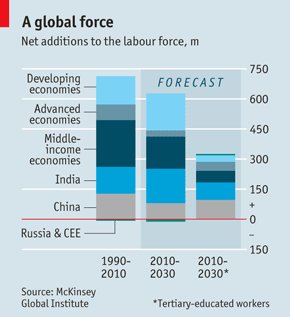

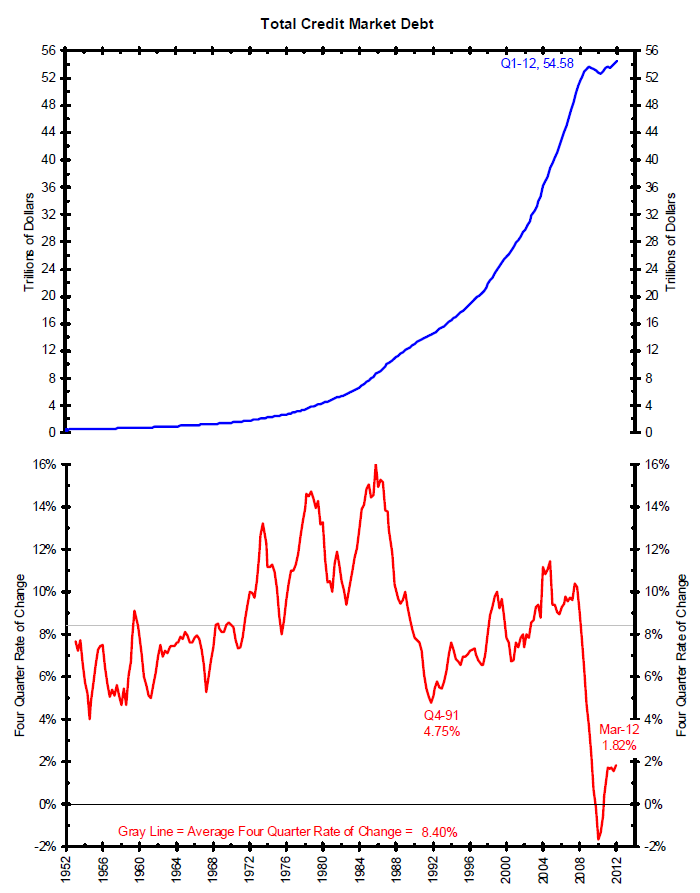
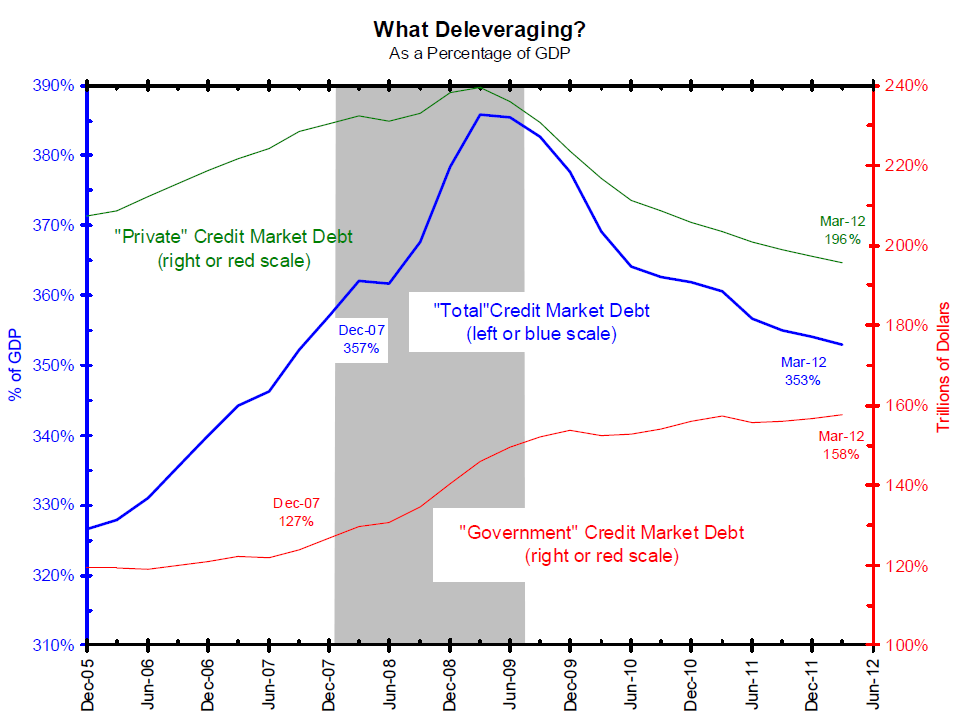


| You are subscribed to email updates from The Big Picture To stop receiving these emails, you may unsubscribe now. | Email delivery powered by Google |
| Google Inc., 20 West Kinzie, Chicago IL USA 60610 | |



0 comments:
Post a Comment