


The Big Picture |

- Top 5 RMBS Cases to Watch: No. 3
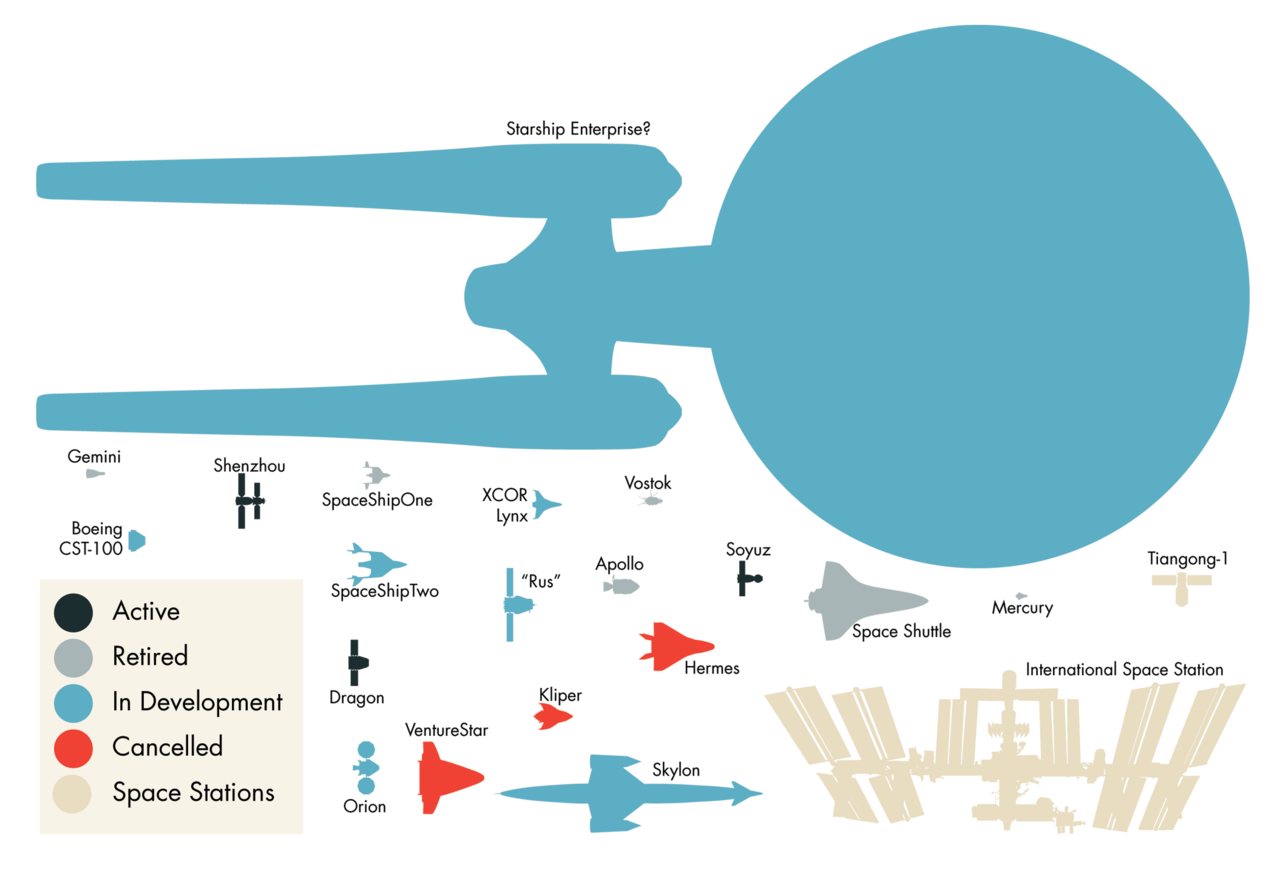
- Spaceships Relative Sizes
- EFSF already has capability of buying bonds
- The value of numbers
- Fed twists more, benefit little, BS risks grow
- 10 Mid-Week AM Reads
- Millionaires in Asia Outnumber North America
- Macro Tides: Special Update
- Process, Outcome And The Complexity Of It All
- Another day debating what the Fed will do
| Top 5 RMBS Cases to Watch: No. 3 Posted: 20 Jun 2012 11:30 AM PDT All this week, we will be looking at Isaac Gradman's Top 5 RMBS Cases to watch this Summer (author bio at bottom). ~~~ My Top 5 RMBS Cases to Watch series began earlier this week with a look at a long-running lawsuit by bond insurer Syncora against EMC and a novel investor lawsuit against Bank of New York Mellon, as Trustee, both of which are being heard in federal court in New York. Today, I will tackle a state court case that doesn't deal directly with RMBS, but which was engendered by, and could have a major influence over, the allocation of mortgage derivative losses. As our Top 5 Countdown continues with Case No. 3, let's examine how the impact of a Judge's forthcoming decision after weeks of "quasi-trial" will reverberate throughout other ongoing lawsuits, including several cases over which the same Judge will be presiding. No. 3 – ABN AMRO Bank v. Dinallo (Article 78 proceeding) A few weeks ago, I wrote about some last-minute shenanigans that took place in ABN AMRO Bank v. Dinallo and were worthy of a prime time television courtroom drama. Namely, with only a few days to go before the parties were to present what has variously been called a "quasi-trial" or a "glorified oral argument" on BofA and Societe Generale's challenge to MBIA's restructuring, the parties held an impromptu call with the Judge to argue over the scope of the proceeding and whether there should be a "trial" at all. On the call, Judge Barbara Kapnick reiterated that there would be some kind of trial, that she would hear from live witnesses on any questions of fact she deemed relevant, and then ultimately hung up on the parties when they overstayed their welcome. Since that time, Judge Kapnick has indeed conducted what amounted to a "glorified oral argument" on the Article 78 challenge (a special vehicle under New York law for
challenging agency decisions ), but declined to hear from any live witnesses, and instead opted for no less than seven rounds of oral argument from the various parties. This has resulted in a proceeding with very little of the drama or entertainment value that preceded it. In fact, the banks challenging the restructuring wrapped up their final arguments last Thursday, clearing the way for Judge Kapnick to make a ruling in this widely-followed precursor to BofA's plenary action against MBIA (over which Judge Kapnick will also preside) and MBIA's put-back case against BofA (before Judge Eileen Bransten). As Judge Kapnick begins her deliberations on the merits of the Article 78 challenge, she can't help but be cognizant of the following external factors:
These external conditions will certainly factor into the Judge's decision, even if not cited directly.
For example, Judge Kapnick has stated on the record that she expects her decision to be appealed, which gives us some clues as to how she might be leaning based on how the "quasi-trial" played out. As Alison Frankel has pointed out on her blog, the fact that Judge Kapnick declined to hear testimony from live witnesses such as Jack Buchmiller and Eric Dinallo, the two New York Insurance Department (NYID) officials whose names came up repeatedly during these proceedings, supports the impression that she's not inclined to rule in the banks' favor. Should Kapnick have had serious doubts about the steps they took in approving MBIA's transaction, I would have expected her to want to hear from those gentlemen herself, to see them subjected to thorough cross-examination (either by the banks' counsel or by Her Honor herself), and have them explain to the Court what they did and why. This would lay the groundwork for Kapnick to make a finding against the Department based on a credibility determination, something about which appellate courts are generally highly deferential. Suffice it to say, if Judge Kapnick was going to stick her neck out and make the extraordinary ruling that the NYID acted arbitrarily and capriciously in approving MBIA's restructuring, I would expect to have seen her take pains to create a record in support, which would bolster her ruling on appeal. Instead, the outcome of the "trial" suggests that Kapnick did not feel there were disputed issues of fact, or that anything raised in the banks' presentation constituted reversible error by the NYID on its face, which leads me to believe she'll rule in favor of the NYID. Ms. Frankel has noted that this factor could also point the other way, in that Kapnick may face reversal for not allowing live testimony and giving the banks a full and fair hearing, but I think that the limited nature of the Article 78 proceeding will work in Kapnick's favor in this case. Rather than holding a de novo review of the merits of the NYID's decision, Kapnick's role was to provide a highly deferential review of an agency decision, informed largely by the administrative record. Unless she intends to rule against the NYID without even reaching the "arbitrary and capricious standard" (unlikely, as my reading of the case law would not support such a finding in this case), the absence of live testimony signals a rubber stamp of the transformation. Regardless of the outcome, though this is not technically a case about RMBS, this decision is certainly one to watch for, as a win for BofA could force MBIA to unwind its company-saving restructuring (or at least into a favorable settlement of its put-back claims), while a win for the Department of Insurance would clear the way for MBIA to inflict major mortgage put-back pain on its bank counterparties as it continues to push forward with its put-back lawsuits. Recall that the reason MBIA was forced to restructure is that mounting losses from its mortgage-related insurance products threatened to overwhelm the monoline's healthier municipal bond business. Yet, even with the restructuring, MBIA has apparently been able to satisfy all of its mortgage-related insurance policy claims. As I have discussed in the past, I view the banks' challenge to MBIA's restructuring to have been brought as a litigation counterweight in the first place, to provide the banks (and particularly BofA) with a bargaining chip with which to drive down the settlement cost of MBIA's auspicious mortgage repurchase claims. The fact that all but a handful of the 16 or so of the banks originally challenging the restructuring have now settled with MBIA, save the one bank with the most potential exposure to MBIA's claims, only bolsters this view. For those interested in reading through the nitty-gritty details of this Article 78 "trial," MBIA has conveniently posted transcripts from each day of proceedings on its website. Though most of the parties' presentations dealt with arcane issues of financial modeling and accounting rules, one argument in particular caught my attention and illustrated the overlap between this case and other RMBS litigation. In arguing that the NYID's decision to approve MBIA's restructuring was "arbitrary and capricious," the banks raised an allegation that either MBIA or the Department of Insurance should have hired BlackRock to conduct a solvency analysis on the bond insurer, as BlackRock "is the best modeling firm in the world." (June 1 Transcript at 1509:24) MBIA attorney Mark Kasowitz responded, in turn, that the NYID had no responsibility to hire a third party to conduct a solvency analysis when the third party's process lacked transparency, stating:
But what really caught my eye was that the banks raised the fact that BlackRock had asserted put-back claims against Countrywide and BofA as evidence that BlackRock was impartial and non-conflicted. In response, Kasowitz proceeded to identify several conflicts of interest that existed between BlackRock and Bank of America as further support of MBIA's decision not to hire the firm. These arguments are very likely to be raised in the separate Article 77 proceeding in which Judge Kapnick is being asked to approve Bank of New York's $8.5 billion settlement with, among others, BlackRock. This may make Judge Kapnick more open to conflict-of-interest-based challenges to the supposedly adversarial process through which the trustee and institutional investors reached their settlement over Countrywide put-back claims. In the Article 77 case (which just might make our Countdown later this week), BlackRock is part of an investor group that claims to represent the interests of the majority of bondholders. However, as I've detailed in the past, there are many reasons to believe that BlackRock, PIMCO and the other funds supporting this sweetheart settlement have little interest in obtaining fair value for their claims. Kasowitz touched on some of those reasons during his sur-reply presentation in the Article 78 proceeding:
While the argument over the failure to hire BlackRock evoked interesting parallels to ongoing RMBS litigation, it is ultimately a sideshow in the Article 78 proceeding. It does, however, highlight how much subjectivity and how many judgment calls were involved in the NYID's decision to approve MBIA's restructuring. It's just these types of subjective calls that Kapnick is unlikely to second guess. Though the banks make much of the fact that MBIA had insufficient earned surplus to issue the dividend it did as part of the transaction (and indeed, this is likely the banks' best argument), I just don't see Judge Kapnick feeling confident enough that this transformation ran afoul of the complex accounting and insurance law standards at play to find that the Insurance Commissioner's decision was wholly irrational. At the end of the "trial," Kapnick suggested that it would take her several weeks, if not months, to go through all the evidence presented by the parties during their 3 years of litigation, meaning we should expect a decision on the propriety of MBIA's restructuring sometime before the end of the summer. Though this certainly will not be the last we hear of the challenges to MBIA's restructuring, this initial ruling should have a major influence on the risk analyses of, and the course of negotiations between, two of the biggest players in RMBS litigation. Click here to continue to Case No. 2 in our Top 5 Countdown, and find out why time is of the essence in one big bank's efforts to put the mortgage crisis behind it. [Correction: an earlier version of this article featured an typo in the name of the Article 78 case (hat tip reader Alex Ryer) - IMG] |
| Posted: 20 Jun 2012 11:07 AM PDT |
| EFSF already has capability of buying bonds Posted: 20 Jun 2012 11:01 AM PDT Trading by headlines continue with this now, “There is no concrete planning that I know about, but there is a possibility of purchasing sovereign bonds on the secondary market.” Since the ESM doesn’t exist yet, she is likely referring to the EFSF which already has the capability of intervening “in the debt primary and secondary markets. Intervention in the secondary market will be only on the basis of an ECB analysis recognizing the existence of exceptional financial market circumstances and risks to financial stability.” http://www.efsf.europa.eu/about/index.htm. Thus, this is not for Merkel to decide as the EU already has their entity to buy bonds with only the question of when and whether to use it. But as seen with the ECB bond buying, this is just dealing with the symptoms and not the disease. |
| Posted: 20 Jun 2012 10:00 AM PDT The value of numbers View more presentations from Ethos3 |
| Fed twists more, benefit little, BS risks grow Posted: 20 Jun 2012 09:55 AM PDT As widely expected, the FOMC will “continue through the end of the year its program to extend the average maturity of its holdings of securities.” Specifically, the Committee intends to purchase Treasury securities with remaining maturities of 6 yrs to 30 yrs at the current pace and to sell or redeem an equal amount of Treasury securities with remaining maturities of approximately 3 yrs or less.” The $ amount will be $267b by the end 2012 vs the $400b of what is expiring at month end. The thought of shifting twist to the MBS did not happen but the Fed will continue reinvesting principal payments from its MBS holdings into agency MBS. They also said they are prepared to “take further action as appropriate…” Lacker dissented and wanted to end Twist. Bottom line, from a market perspective, sell on the news as we got what most expected. From an economic standpoint, the operation is irrelevant as the bond market has already lowered rates for them. Negatively, the Fed is tying their own hands by extending the duration of its portfolio, thus making it more interest rate sensitive and subject to losses when they want to exit in the yrs to come by selling Treasuries. I just don’t get the benefit relative to the growing risks they continue to take with their balance sheet and putting aside the daily misallocation of capital that their policy encourages with the artificial cost of money. |
| Posted: 20 Jun 2012 06:45 AM PDT Some morning reads for my Acela ride to DC:
What are you reading?
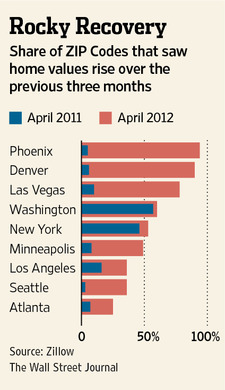
Housing Prices Rise, but Not for Everyone |
| Millionaires in Asia Outnumber North America Posted: 20 Jun 2012 06:33 AM PDT Asia-Pacific millionaires outnumbered those in North America for the first time last year as the world’s wealthy saw a decline in their fortunes, according to a report by Capgemini SA and RBC Wealth Management.
Source: Bloomberg |
| Posted: 20 Jun 2012 05:30 AM PDT
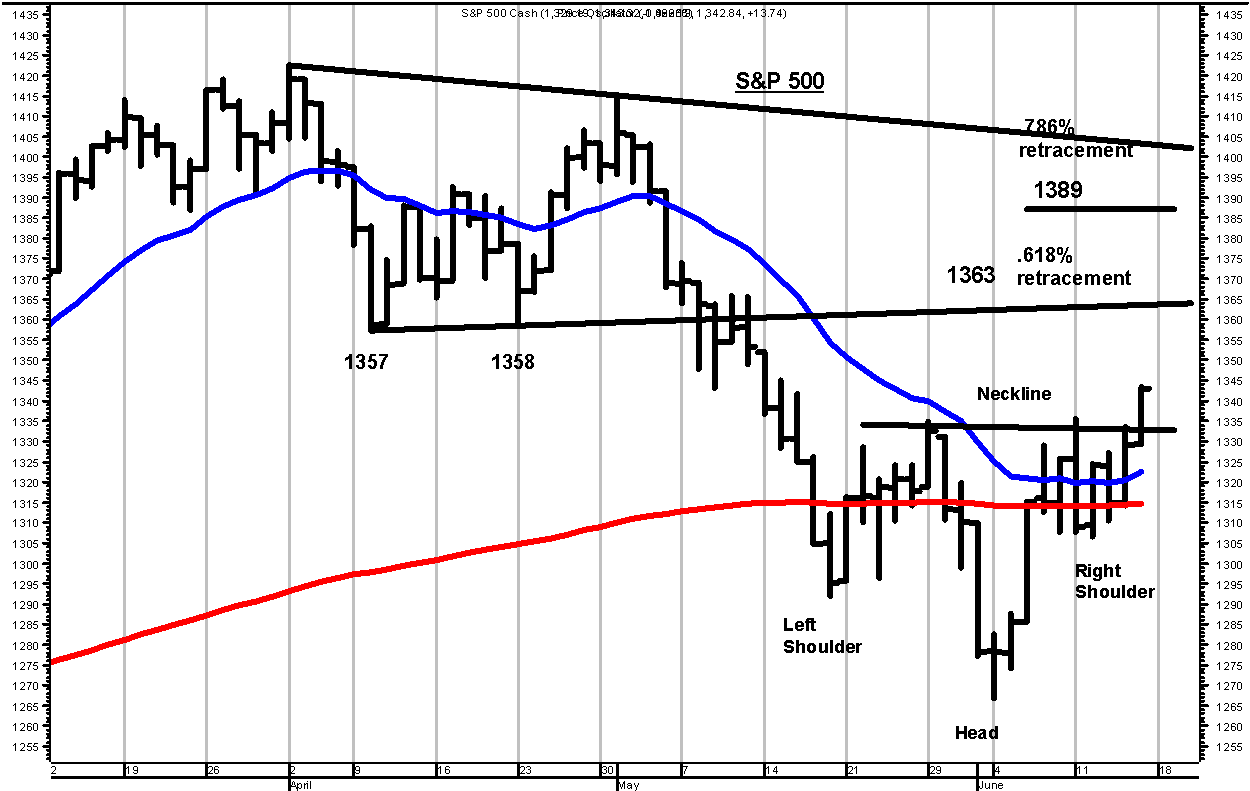
: : We have been traveling the last two weeks meeting with clients, so this month's investment letter will be a little late. In the mean time . . . "Will Sunday's Greece Elections Prove to be a 'Lehman Brothers Moment'? Maybe. This headline caught our attention yesterday, since it is bound to raise the fear level of anyone reading it. We have thought Greece a sideshow, even though Greece will eventually leave the European Union, since it is in an untenable position. Greece is the current distraction from the far bigger somewhat intractable problems bearing down on Europe. There are too many countries in the EU that have too much debt and too little growth, which has been the case for years. This longer term imbalance has intensified, because Greece, Portugal, and Spain are in recession, which is driving up the costs of their social safety nets, while tax revenues plunge, causing budget deficits to remain high. Compounding the problem are the numerous insolvent banks in each country, which are being further weakened by the recession and falling asset prices. This has resulted in a sharp decline in lending, which only weakens the economy even more, as small and medium sized businesses are unable to access credit. This forces these firms to lay off workers, causing unemployment rates to rise and consumer incomes to fall, lessening the demand for goods and services. As demand declines, the recession becomes deeper, causing the cost of social safety nets to jump, and tax revenues fall. This is a classic vicious cycle, and to date, the policy makers in Europe have expertly managed to stay one step behind the curve, which has allowed this wave of economic destruction to gain momentum. Once it takes on a life of its own, they will be unable to stop it. We don't know whether we have already reached this point of no return, but think the odds of it occurring are uncomfortably high and rising. We do not think another 'Lehman Brothers Moment' happens as a result of the Greek election. Too many are bracing for it, and more importantly, have had the time to adjust their portfolio accordingly. Markets are generally not so accommodating. Policy makers in Europe, with the ECB and IMF, have cobbled a strategy to keep Greece, Portugal, and Spain afloat, with an approach that is almost certainly destined to bring them all down. As each of the weak country's ship has sprung a leak, all the other countries in the E.U. have steered their ships to come along side those taking on water. With all hands on deck, the sailors on the Greek, Portugal, and Spaniard boats grab buckets and begin to bail water as fast as they can, passing their buckets to the sailors on all the other ships, who pour the water down into their ships hold. As the leaks in Greece, Portugal and Spain grow and they take on water even faster, the call goes out for bigger buckets, which, after a number of high level Summits, are requisitioned. Soon the sailors are bailing even more water into the holds of the healthy ships in the E.U., causing them to gradually sink lower too. So while most hold their breath waiting for the outcome of the Greek elections, we have to wonder if anyone is noticing the course the European policy makers have set is aimed at an iceberg of debt that grows with each new rescue package. Eventually Italy and even France my begin to take on water. By then, it will be almost impossible for everyone not to see the coming iceberg. When the siren sounds, it will be every country for itself, and it won't be pretty. Stocks As noted, markets are rarely accommodating, and this may be one of those times. Most investors are very concerned with what's going on in Europe, and the Greek election has the potential to be the straw that breaks the back of Europe's financial system. What the markets are not positioned for is a relatively benign outcome in Greece's election, or a mammoth response by global central banks that in the short run causes the stock market to rally sharply. We think this is the more likely outcome. In the May 30 Special Update we wrote, "We think the S&P will fall below 1,292 and test the 200 day average near 1,282 soon. Our guess is that the S&P could find support between 1,265 and the 200 day average." As it turned out, the S&P bottomed on June 4 at 1266.74. For the following discussion, please review the chart on the next page. In a client meeting on June 5, we said we expected a rally, with the first upside target being 1335. On June 11, the S&P reached 1335.52, before pulling back to 1306.62 on June 12. In meetings on June 13 and June 14 with clients, we told them we expected the S&P to push above 1335, with the next target being 1357 – 1363, which is the .618% retracement level of the decline from the April 2 high of 1422, to the June 4 low at 1267. The S&P had a low on April 10 at 1357 and 1358 on April 23, so this area of 1357 to 1353 should represent some resistance. The S&P also formed an inverted head and shoulders pattern (upside down head and shoulders) between May 16 and June 14. The distance between the head (low at 1267) and the neckline connecting the two shoulders at 1335 is 68 points. An upside target is measured by adding 68 points to the neckline at 1335, which projects to 1403. Interestingly, a trend line connected from the April 2 high at 1422 and 1415 on May 1 comes through right near 1403. The .786% retracement level of the decline from the April 2 high of 1422, to the June 4 low at 1267 is 1389. If the S&P drives above the area of resistance at 1357 – 1363, the next target would be 1389 – 1403. We think there is a decent chance the S&P will test this higher area of resistance, and potentially, in a short amount of time if the Greek election surprises. We would recommend doing some selling if the S&P reaches 1357 – 1363, and more aggressive selling if 1389 – 1403 is reached. Conversely, the first warning our expected positive outcome is going awry will come if the S&P drops below 1320. A close below 1306 would suggest the rally is over, with new lows below 1267 to follow.
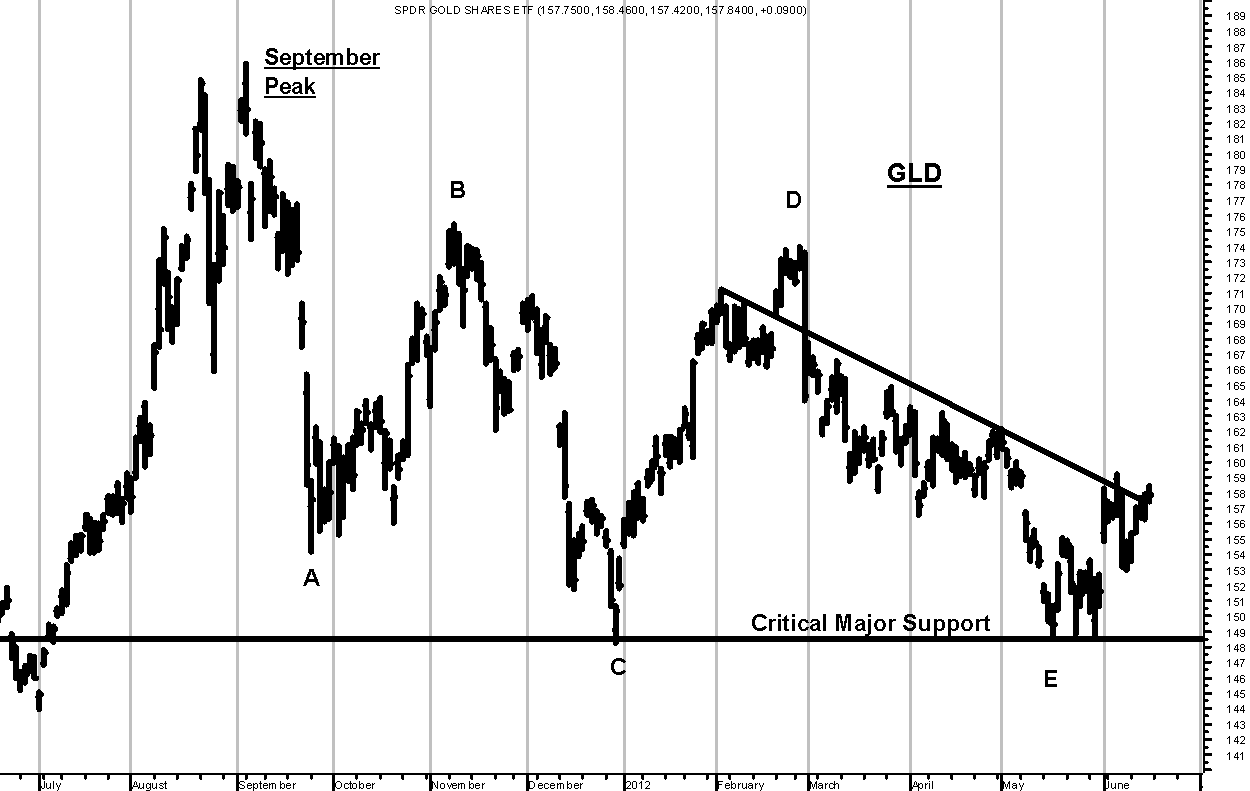
Bonds In February, we recommended buying TLT in three stages: the open on 2/24 at $117.23, at $113.91 after closing below $115.49, and below $112.85. The average cost was $114.66. We thought TLT would exceed $125.03 before year end, as the European debt crisis intensified. In our May 22 letter, we recommended selling half if TLT traded above $124.45, which it did on May 23 for a gain of 8.45% on the half sold at $124.46. In our May 30 Special Update we recommended selling the remaining half if TLT reached $128.10. TLT reached $129.08 on May 31 and $130.38 on June 1. The gain on the second half of the position was 11.72%, for an overall gain of 10.08%. If the stock market rallies, the bond market is likely to sell off in the short run. Dollar In our May 2011 letter, we recommended going long the Dollar via its ETF (UUP) at $21.56, and in our July 31, 2011 Special Update, we suggested adding to the UUP position below $20.91. The average price is $21.24. The carrying charges associated with UUP, which we estimate to exceed 3% on an annual basis, have caused it to lag behind the cash dollar index far more than we expected. We still believe the cash dollar will eventually reach 89.00 – 92.00 at some point. The Dollar is likely to remain the least ugly girl at the dance, as the European crisis causes global investors to buy more Dollars. In our May 30 Special Update we suggested selling half if UUP traded above $23.00. It traded up to $23.02 on May 31, for a gain of 5.1%. Lower the stop to $22.35 from $22.40 on the remaining half position. Gold After pushing above $1900 last September, we felt Gold might finish the correction it began by declining to $1,525 – $1,550. On May 16 Gold dropped to $1,527, which may have completed a an A,B,C,D,E triangle pattern from last September's high above $1,900. In our May 22 letter, we recommended establishing a 50% position in Gold via the ETF GLD on weakness. On May 23, GLD opened at $151.50, traded down to $148.84, before closing at $151.62. We used the mid-point of the range ($151.50-$148.84) at $150.17 as the entry. In our May 30 Special Update we recommended selling half of the position if GLD traded above $157.50. On June 1, GLD traded as high as $158.31, for a gain of 4.88% if sold at $157.50. Raise the stop on the remaining 25% position from $150.25 to $152.50. If GLD closes decisively below $148.50 for more than two days, and Gold below $1525.00, it would signal to us that the liquidity crisis in Europe was escalating.
|
| Process, Outcome And The Complexity Of It All Posted: 20 Jun 2012 05:25 AM PDT I very much appreciated this perspecitve offered by Dylan Grice of Société Générale:
Good stuff . . . > |
| Another day debating what the Fed will do Posted: 20 Jun 2012 04:52 AM PDT While I wish for the day when the millions of market participants daily set the price of money based on the natural supply of it and demand for it, instead of relying on the chief arbiter of economic growth, employment, inflation and asset prices, the Federal Reserve, here we are at another day debating what the Fed will do. Putting aside what they should do, what they will do is something because the last thing they did is expiring. Operation smother the yield curve as I call it will likely shift to the MBS market to close the spread b/w it and treasuries. Twisting the curve is not free though as the Fed further floods their balance sheet with more interest rate sensitive, longer term securities, a noose if they need to reverse policy in the next few years. If twisting is all we get, if at all, stocks are a sell on the news b/c I believe the only thing keeping this rally alive are the hopes and wishes for bailout/easing help. It is certainly not on the outlook for global economic growth. |



| You are subscribed to email updates from The Big Picture To stop receiving these emails, you may unsubscribe now. | Email delivery powered by Google |
| Google Inc., 20 West Kinzie, Chicago IL USA 60610 | |



0 comments:
Post a Comment